Comment: CIA Deaths a Failure of Intelligence, Not Security

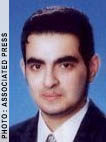
Khalil al-Balawi

Khalil al-Balawi

By JOSEPH FITSANAKIS | intelNews.org |
Early on Thursday, rumors began spreading among intelligence observers that the December 30 suicide blast in Khost, Afghanistan, which killed seven and seriously injured six CIA personnel, went off in the open air, and not inside a gym on the base, as had previously been reported. Soon afterwards, an article written by CIA director Leon Panetta for the Sunday edition of The Washington Post, dated January 10, was published by the paper two days early. The op-ed is an apparent attempt by the CIA leadership to officially get the word out that suicide bomber Humam Khalil al-Balawi “was about to be searched by our security officers –a distance away from other intelligence personnel– when he set off his explosives”, according to Panetta. Read more of this post

News you may have missed #0248

  • Cuba insists jailed US contractor is secret service agent. Cuban officials say that a US citizen working for Maryland-based international aid group Development Alternatives Inc., who was arrested in Havana last month, was actually recruiting local Cubans to spy on the government.
  • Analysis: Spying in Eastern Europe heats up again. The Cold War may be 20 years dead and buried, but it seems that the old East-West spying game is not only alive and kicking, but gaining vigor in places like Warsaw, Prague and Tallinn.
  • Obama designates new list of secrecy gatekeepers. The US president has designated over two dozen officials as “original classification authorities” (OCAs), who have the power to classify government information as Top Secret or Secret, and (in most cases) to delegate such authority to their subordinates. Importantly, the directive says that OCAs will lose their job if they fail to “receive training in proper classification […] at least once a calendar year”.

Bookmark and Share

Analysis: Germany’s spies struggle to adapt to post-Cold War changes

BND logo

BND logo

By IAN ALLEN | intelNews.org |
Nearly everyone in Germany recognizes that the global intelligence landscape has changed, almost beyond recognition, in the years since the end of the Cold War. Current challenges are far more underground in nature, far more flexible, far more unpredictable. The question is, has Germany’s primary intelligence agency, the BND, changed along with the times? The answer is not so simple. The BND continues to struggle immensely with bureaucratic inefficiency and substandard human and financial resources, explains Deutsche Welle‘s Peter Philipp. Even when it does produce useful intelligence, its advice is not always taken into consideration by German government officials, who tend to have their own opinions on political developments. “Most politicians do have their own view of the world order”, says former BND chief Hans-Georg Wieck, “so [we] must address the[m] in a way that makes them more likely to act on [our] information”. Philipp’s interesting editorial can be accessed here.

Bookmark and Share

News you may have missed #0247

  • US government lowers threshold for inclusion on no-fly lists. According to senior US State Department officials, the government has already lowered the threshold for information deemed important enough to put suspicious individuals on a watch list or no-fly list. CNN reports that suspects will now include citizens of the notorious Islamist country of Cuba….
  • CIA starts sharing data with climate scientists. This blog has kept an eye on the CIA’s Climate Change Center, which was established late last year. It now turns out the Agency had started monitoring climate change in 1992, under project MEDEA (Measurements of Earth Data for Environmental Analysis), but the program was shut down in 2001 by the Bush Administration. The Climate Change Center, therefore, represents the re-establishment of an earlier effort.
  • How the KGB tried to recruit an NBC News reporter. FBI files show that the Soviet KGB tried to recruit the late NBC News reporter Irving R. Levine, while he was stationed in Moscow in the 1950s.

Bookmark and Share

News you may have missed #0246

Bookmark and Share

Comment: Is CIA Lying About its Blackwater Contacts?

Blackwater logo

Blackwater logo

By JOSEPH FITSANAKIS | intelNews.org |
After CIA director Leon Panetta revealed last summer that private contractor Blackwater was part of a covert CIA hit squad, tasked with summary killings and assassinations of al-Qaeda operatives, the CIA vowed to sever its contacts with the trigger-happy security firm. But did it do so? It doesn’t look like it. Last November, it became known that the company, (recently renamed Xe Services) remains part of a covert CIA program in Pakistan that includes planned assassinations and kidnappings of Taliban and al-Qaeda suspects. More recently, it was revealed that two of the seven Americans who died in the December 30 bomb attack at Forward Operating Base Chapman in Khost, Afghanistan, were actually Blackwater employees subcontracted by the CIA.

Read more of this post

News you may have missed #0246 (CIA bombing edition)

  • Analysis: Strike on CIA base tests US assessment of al-Qaeda. The militant group appears to have achieved a new level of sophistication and may not be as weakened as US officials had thought.
  • Photo of CIA suicide bomber published. Qatar-based Arabic news network Al Jazeera has published a photograph of Jordanian doctor Humam Khalil Abu-Mulal al-Balawi, 36, who last month killed at least 7 CIA agents in Khost, Afghanistan.
  • Al-Qaida CIA bomber was furious over Gaza war. Suicide bomber Humam Khalil Abu-Mulal al-Balawi was furious over Israel’s Gaza offensive, the London-based Arabic daily Al-Quds Al-Arabi reported on Thursday, citing the man’s sister.
  • Analysis: The view from Jordan on CIA’s deaths in Khost. For Jordan, far more embarrassing than its role in the Khost suicide bombing, is its connection with the CIA, which while relatively well-known before, has now been put out in the public sphere for all to see –especially the Arab street.
  • London Arabic newspaper visits home of CIA bomber. The Jordanian authorities have imposed a security cordon around al-Balawi’s family home, which is located in the residential al-Nuzha district, close to the Jabal al-Hussein Palestinian refugee camp in the Jordanian capital of Amman. But a London-based Arabic-language newspaper correspondent managed to visit the location and speak with the bomber’s family members and neighbors.

Bookmark and Share

Polish officials reveal arrest of alleged Russian spy

Valentin Korabelnikov

V. Korabelnikov

By IAN ALLEN | intelNews.org |
The Polish government has announced the arrest of a Russian resident of Warsaw, on charges of spying for Russia. The man, whose identity has not been released, was apparently arrested last February or March, after a six-month surveillance operation by Poland’s Internal Security Agency (ABW). Polish officials did not say why the arrest was kept secret for so long, but revealed that the alleged spy’s capture was known only to Poland’s president, the prime minister and the office of the prosecutor. The alleged spy is said to be a Russian citizen and a fluent Polish speaker, who has lived in Poland under permanent residency status for at least decade. His legal income appears to have come from his ownership of a hunting-rifle accessories store. Read more of this post

News you may have missed #0245 (CIA edition)

  • CIA saw Jordanian double spy as valuable asset. Before detonating a suicide bomb in Afghanistan last week, Jordanian double spy (or was he?) Humam Khalil Abu-Mulal al-Balawi was considered by US spy agencies “the most promising informant in years about the whereabouts of Al Qaeda’s top leaders”.
  • CIA going through worst spell since 9/11. America’s most recognizable intelligence agency is currently going through its worst time since 9/11, what with Christmas Day bomber Umar Farouk Abdulmutallab and the loss of at least seven of its agents in Khost, Afghanistan.
  • US intel in Afghanistan is broken, irrelevant, says US insider. A new report (.pdf) by US Major General Michael Flynn, the top intelligence aide to International Security Assistance Force Commander General Stanley McChrystal, says the US intelligence community “is only marginally relevant to the overall strategy” in Afghanistan. The report recommends “[s]weeping changes to the way the intelligence community thinks about itself, from a focus on the enemy to a focus on the people of Afghanistan”.

Bookmark and Share

News of CIA/Blackwater hit squad upset German government

Mamoun Darkazanli

M. Darkazanli

By JOSEPH FITSANAKIS | intelNews.org |
German politicians have finally caught up with the startling revelations of Blackwater founder and CEO, Erik Prince, who last month told Vanity Fair that he worked as a CIA spy, carrying out secret missions with the help of a Blackwater hit squad. The Vanity Fair article revealed that, among other targets, the squad planned to assassinate Mamoun Darkazanli, an alleged al-Qaeda financier living in Hamburg, Germany. But did anyone in Washington think to ask the German government whether it was OK for a Blackwater/CIA assassination team to run around the country, planning extrajudicial murders of alleged al-Qaeda members? Apparently no, says German newsmagazine Der Spiegel, adding that the revelation has upset members of German Chancellor Angela Merkel’s Christian Democratic Union, as well as opposition Social Democrats and Greens, who are now demanding a special investigation into the matter. Read more of this post

News you may have missed #0244

  • Former S. African spy chief dies. Mike Louw former head of South Africa’s apartheid-era National Intelligence Service (NIS) and later the South African Secret Service (SASS), has died. As deputy director general at NIS, Louw helped facilitate some of the very first meetings between the government of F.W. De Klerk and Nelson Mandela, the then imprisoned leader of the African National Congress.
  • Kiwi spies get augmented cyber-surveillance powers. Reports from New Zealand indicate that new “cyber-monitoring measures have been quietly introduced”, giving the country’s law enforcement and intelligence services increased online surveillance powers. Veteran intelligence observer Nicky Hager describes the changes as “the largest expansion of police and [intelligence] surveillance capabilities [in New Zealand] for decades”.

Bookmark and Share

News you may have missed #0243

Bookmark and Share

Comment: Is There a ‘DNA Problem’ in US Spying?

Sam Tanenhaus

Sam Tanenhaus

By IAN ALLEN* | intelNews.org |
The controversy of the apparent ineffectiveness of US intelligence agencies to uncover the so-called Christmas Day bomb plot has reignited the discussion about the operational shortcomings of the US intelligence community. Sam Tanenhaus, editor of of The New York Times Book Review, has authored an interesting commentary, in which he delves into some of what he sees as the design deficiencies in American intelligence.

Read more of this post

News you may have missed #0242

Bookmark and Share

Files reveal previously unknown UK-Soviet diplomatic scuffle

Aubone Pyke

Aubone Pyke

By JOSEPH FITSANAKIS | intelNews.org |
A previously unknown fracas between two British diplomatic officials, their wives, and a team of Soviet intelligence agents, has been revealed in declassified British government reports. The documents, which were released last weekend, show that two employees of the British embassy in Moscow were detained, along with their wives, allegedly for photographing a Soviet military installation. The British diplomats were Lieutenant-Commanders Ian Clapham and Aubone Pyke, who was the embassy’s assistant military attaché. Escorted by their wives, the two officials were allegedly taking a tour of Leningrad (now St. Petersburg), in February of 1979, when a group of “about 25” Soviet intelligence agents rapidly approached them. The agents proceeded to confiscate a cameral belonging to Pyke, after rapidly pulling down his trousers, an old trick aimed to prevent a suspect from running away. Read more of this post