Probe launched into suspicious death of Belarusian opposition activist in Ukraine

Minsk Belarus

Authorities in Ukraine have opened an investigation in to the death of a leading Belarusian opposition activist, whose body was found hanging from a tree near his house in Kiev, a day after he went missing. Vitaly Shishov, 26, was a vocal critic of Belarusian President Alexander Lukashenko. For the past year, Shishov had been the director of the Belarusian House in Ukraine (BDU), an activist organization that specializes in assisting political refugees arriving in Ukraine from Belarus

Among other things, BDU is known for helping Belarusian immigrants apply for political asylum in Ukraine, as well as finding them employment and accommodation in Kiev and other Ukrainian urban centers. Alongside Poland and Lithuania, Ukraine has become a major hub for Belarusian exiles, who have been fleeing abroad in their thousands in the past year. Many of them seek to escape a violent crackdown by the authorities, which is ongoing. The crackdown is widely seen as President Lukashenko’s response to the widespread popular protests, which were prompted by his return to power, following the heavily disputed presidential election of 2020.

In addition to his work with BDU, Shishov was known as a particularly outspoken critic of the Belarusian government on social media and in blogs. He frequently organized and led large protest rallies in Kiev, many of them within sight of the Belarusian embassy there. He had also publicized the identities of people, whom he accused of being agents of the Belarusian government. He and his associates often claimed that they were being followed in the streets of Kiev by individuals whom they suspected of being in the service of the government of Belarus.

Shishov’s partner reported him missing on Monday, after he failed to return to his home from a morning jog. Ukrainian authorities said on Tuesday that his body had been found hanging from a tree in a small forested area near his home. Notably, his personal cell phone and other belongings, including his wallet, were found with him. Some reports indicate that his body bore visible bruises, but forensic examinations of the body are ongoing. A Ukrainian police spokesman said on Tuesday that the possibility that Shishov’s death was a murder that had been made to look like a suicide was among several theories being examined. The Belarusian government has not commented on the case.

Author: Joseph Fitsanakis | Date: 04 August 2021 | Permalink

Iranian hackers used Gmail, Facebook, to spy on US aerospace contractor

Computer hacking

A GROUP OF HACKERS, who are known to operate under the direction of the Iranian government, used fictitious Gmail and Facebook accounts to compromise employees of a United States defense contractor. A report issued on Monday by the California-based cybersecurity company Proofpoint identified the hackers behind the espionage campaign as members of a group codenamed Threat Actor 456 (TA456).

Known also as Imperial Kitten and Tortoiseshell, TA456 has a history of pursuing espionage targets at the direction of the Iranian government. According to Proofpoint, TA456 is among “the most determined” Iranian-aligned threat actors. The cybersecurity firm adds that the espionage activities of TA456 often target Western “defense industrial base contractors” that are known to specialize in the Middle East.

The most recent operation by TA456 involved a fictitious online personality that went by the name “Marcella Flores”, also known as “Marcy Flores”, who claimed to live in the British city of Liverpool. The group used a Gmail account and fake Facebook profile to reinforce the fictitious profile’s credibility, and to approach employees of United States defense contractors. One such employee began corresponding with Flores on Facebook toward the end of 2019.

In June 2021, after having cultivated the relationship with the defense employee for over a year, Flores sent the employee a link to a video file, purportedly of herself. The file contained a malware, known as LEMPO, which is designed to search targeted computers and provide the hacker party with copies of files found on penetrated systems.

Facebook is apparently aware of the espionage campaign by TA456. Last month, the social media company said it had taken action “against a group of hackers in Iran [in order] to disrupt their ability to use their infrastructure to abuse [Facebook’s] platform, distribute malware and conduct espionage operations across the internet, targeting primarily the United States”.

Author: Joseph Fitsanakis | Date: 03 August 2021 | Permalink

Polish government re-arrests former Huawei official accused of spying for China

Huawei PolandPOLAND’S COUNTERINTELLIGENCE SERVICES HAVE arrested for the second time a former executive of the Chinese telecommunications manufacturer Huawei Technologies, who is accused of spying for Beijing. As intelNews has previously reported, Wang Weijing was arrested in early 2019 in Poland, as part of an investigation of Huawei’s operations in the Polish capital Warsaw. The probe involved the seizure of electronic hardware and documents from Huawei’s offices, as well as the arrest of another man, identified as Piotr Durbajlo, who was allegedly being handled by Wang.
Durbajlo, a Polish national, is allegedly a mid-level executive of Orange, a French-headquartered telecommunications carrier that is Huawei’s main domestic partner in Poland. Polish media also reported at the time that, prior to joining Orange, Piotr D. served as deputy director of an unnamed Polish intelligence agency. That agency is now believed to be the country’s Internal Security Agency (ABW), which is Poland’s equivalent of the United States Federal Bureau of Investigation. Polish counterintelligence also searched Wang’s house, in which he reportedly lived for over a decade, after having learned Polish at the Beijing Foreign Studies University.

Interestingly, Huawei announced that it had decided to fire Wang soon after his arrest, saying that his actions had “no relation to the company”. In July of 2019, after six months of pre-trial detention, Durbajlo was released on a $31,500 bail, pending trial. Before the end of the year, Wang was also released on bail —allegedly in order to appease Chinese government officials, who were seeking at the time to deepen economic ties between Beijing and Warsaw.

Late last week, however, the ABW announced that Wang had been detained again, after a judge in the Polish capital reversed an earlier decision to release the suspect, in response to an appeal by the ABW. The former Huawei executive is now once again in pre-trial detention in Warsaw. He denies all charges against him and has pleaded not guilty to espionage. Meanwhile, hearings and depositions in the case of Wang and Durbajlo are continuing to take place behind closed doors. Each of the two suspects faces up to 15 years in prison, if found guilty.

Author: Joseph Fitsanakis | Date: 02 August 2021 | Permalink

Ex-Spanish King’s former mistress claims intelligence service spied on her

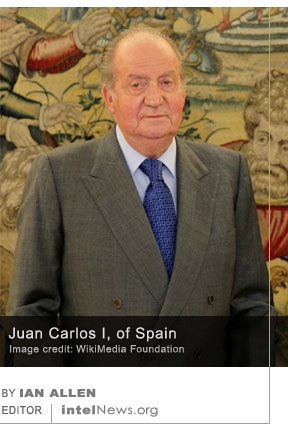
Juan Carlos ITHE EX-MISTRESS OF SPAIN’S former king has sued him in a British court, claiming that he deployed agents from Spain’s intelligence service in a “campaign of unlawful covert and over surveillance” against her. Juan Carlos I, 83, was king of Spain from 1975 until his abdication from the throne in 2014. He now lives in self-imposed exile in the United Arab Emirates, having left Spain in August. His departure came amidst a barrage of media reports revealing his involvement in a host of financial scandals, which are still being investigated by Spain’s authorities.


In 2012, it became known that the king had a six-year love affair with German-born Danish business consultant Corinna zu Sayn-Wittgenstein, 57, who is based in Britain. Since the end of the affair, in 2009, it is alleged that Carlos has been trying to retrieve nearly £60 million ($84 million), which he reportedly gifted to Wittgenstein when they were lovers. According to some media reports, Wittgenstein claims that the funds were given to her by the then-monarch “as an expression of his love” for her.

Late last year, Wittgenstein filed a lawsuit in Britain, in which she accuses her former lover of a campaign of harassment against her. She also claims that he employed agents of the Spanish National Intelligence Agency (Centro Nacional de Inteligencia , or CNI) to spy on her. The lawsuit, made public on Wednesday, alleges that, starting in 2012, current or former CNI agents were deployed by the ex-king to keep Wittgenstein “under physical surveillance”. Wittgenstein’s lawyers claim that she was followed throughout Europe, and that her personal cellphones and computers were hacked by the CNI, or by private investigators. They also claim that a team of spies broke into her estate in Britain, and installed surveillance equipment through a “perfectly drilled hole” in her bedroom window.

The business consultant is now asking for a large sum —believed to be in the tens of millions of euros— to be paid to her as compensation for alleged damages caused to her reputation. She is also asking for a restraining order against Carlos, the CNI, and anyone working for the ex-king. The former monarch denies the charges.

Author: Ian Allen | Date: 30 July 2021 | Permalink

Taiwan’s former deputy defense minister implicated in espionage investigation

National Defense University Taiwan

THE FORMER THIRD-IN-command at Taiwan’s Ministry of National Defense is being investigated in connection with an alleged Chinese espionage operation that targeted Taiwanese military officials, according to reports. General Chang Che-Ping served as Taiwan’s Deputy Minister of National Defense from July 2019 until June of this year. Upon leaving his position, he assumed the presidency of Taiwan’s National Defense University, which is the island nation’s foremost military academy.

Taiwanese and other Southeast Asian media reported on Wednesday that General Chang is under investigation for allegedly sharing Taiwanese defense secrets with a man referred to as an intelligence officer working for China. The man has been named only as “Xie” in the Taiwanese media. He reportedly made regular trips to Taiwan from Hong Kong in recent years, pretending to be a business executive. In reality, however, Xie is believed to have operated in Taiwan as an intelligence officer for the Chinese Ministry of National Defense’s Central Military Commission (CMC). The CMC is chaired by China’s President, Xi Jinping, and functions as the country’s highest military policy-making institution.

During his multiple trips to Taiwan, Xie is believed to have met repeatedly with a number of Taiwanese military officials, including General Chang. Subsequently, Xie hosted the general’s wife during a trip she made to Hong Kong —though it is claimed that he did not cover the cost of the trip. It is not known whether General Chang’s wife is also a subject of the investigation, which is being conducted by the Taipei District Prosecutor’s Office. One of its spokesmen said on Wednesday that another matter, which relates to the case of General Chang, is also being investigated, but he refused to provide further information.

General Chang is the highest-ranking government official in Taiwan to be investigated in an espionage-related case in over 30 years. According to reports, he has offered to cooperate fully with the investigators. He has not been detained or charged for the time being.

Author: Joseph Fitsanakis | Date: 29 July 2021 | Permalink

Jordanian intelligence thwarted Islamic State plan to kill soldiers in Jordan, Israel

Ghor es-Safi Jordan

THE INTELLIGENCE SERVICES OF Jordan allegedly thwarted a plan by a cell of Islamic State fighters to carry out an armed attack across two countries, with the ultimate aim of killing Jordanian and Israeli troops. The state-owned Jordanian newspaper Al-Ra’I said on Tuesday that the attack was to be carried out in Gawr as-Safi, a sparsely inhabited area of the Jordan Valley, which is adjacent to the southern portion of Israel’s Dead Sea region.

The paper said that Jordan’s General Intelligence Department caught on to a suspected Islamist militant in December of 2020. The suspect led them to a larger cell of three other militants, who were arrested in February of this year. Their goal was reportedly to attack a Jordanian border post in Gawr as-Safi and kill the border guards there. They then planned to cross into Israel and open fire on Israeli soldiers, with the aim of killing them, in what appears to have been planned as a murder-suicide mission.

In the indictment of the four men, Jordanian authorities claim that they were found to be hoarding a cache of weapons, which they planned to use to carry out their attack in Jordan and Israel. They now face charges of conspiring to commit an act of terrorism and propagating the ideology of the Islamic State, which the Jordanian government designates as an international terrorist organization.

Meanwhile, a new assessment of the Islamic State by the Analytical Support and Sanctions Monitoring Team of the United Nations’ Security Council, warns that the militant organization remains strong in parts of the Middle East. The report, issued this week, recognizes that the Islamic State has suffered setbacks in recent years. But it cautions against dismissing the threat, noting that the militant group “has evolved into an entrenched insurgency” that is “exploiting weaknesses in local security to find safe havens and [is] targeting [government] forces” across the region.

Author: Ian Allen | Date: 28 July 2021 | Permalink

Settlement reached in spying scandal that rocked Credit Suisse

Credit Suisse

CREDIT SUISSE, ONE OF the world’s most powerful banking firms, has announced that a settlement has been reached in a case in which it stood accused of having paid private investigators to spy at former executives. The case, which shocked Swiss public opinion in recent years, prompted the resignation of several Credit Suisse senior officials, and some claim it may have prompted a suicide.

In October of 2019, two senior Credit Suisse executives resigned amidst a high-stakes espionage operation, whose alleged target was Iqbal Khan, the former Chief Executive Officer of Credit Suisse’s wealth-management division. Khan alleged that, once he left the firm, he was spied on by private investigators paid for by Credit Suisse. In a dramatic turn of events, one of the private investigators involved in the case, described as “an external security expert”, who mediated between Credit Suisse and the investigation firm, committed suicide.

At the time, Credit Suisse described the surveillance on Khan as “strictly an isolated incident”. Later, however, two more Credit Suisse executives came forward alleging that they too had been spied on after leaving their job at the firm. These allegations prompted concerns that spying on former —and even current employees— may have been a standard operating procedure at Credit Suisse.

There is now a strong chance the allegations will never be investigated fully. On Sunday, a Credit Suisse spokesperson announced that the lawsuits brought by Khan against the firm, as well as against the private detectives who allegedly spied on him, would be dropped. The move followed a settlement between the three sides, which was reached out of court. When asked about the financial terms of the settlement, the spokesperson said no comment would be made about that.

Author: Joseph Fitsanakis | Date: 26 July 2021 | Permalink

More evidence uncovered of Chinese spy programs that target expatriates

Chinese Ministry of State Security

AN INVESTIGATION INTO THE activities of China’s state security apparatus has uncovered more evidence of the existence of a worldwide spy operation aimed at forcibly repatriating fugitives and dissidents living abroad, including many who reside in Western countries. The operation, code-named FOXHUNT (first reported in 2015), and a sister-project, code-named SKYHUNT, were launched in 2014. They reportedly constitute a major pillar of the nationwide campaign against corruption, which was initiated in 2012 by Chinese Premier Xi Jinping. This extensive campaign is so far believed to have led to the indictment of over 100,000 people for financial crimes, though critics say it is also being used by Xi to neutralize political opponents and dissidents across China.

The investigative group ProPublica, which carried out the study of FOXHUNT and SKYHUNT, said on Thursday that the same techniques used to capture international fugitives wanted for financial crimes, are also employed against expatriates who criticize the Chinese state’s politics. Most of the targets of these operations live in countries that are located near China —such as Vietnam, Laos, or Malaysia. Thousands of others, however, live in Western Europe, Australia and the United States, where “hundreds of people, including US citizens”, have been targeted by the Chinese state, according to ProPublica.

Operations FOXHUNT and SKYHUNT are carried out by “undercover repatriation teams” of Chinese government agents, who allegedly enter foreign countries “under false pretenses”, according to ProPublica. At the same time, Chinese intelligence officers enlist expatriates as assets and use them as “intermediaries to shield Chinese officers”, said the report. These intermediaries are coached to “relentlessly hound their targets”, or surveil their activities and report about them to their handlers.

In several countries, including Vietnam and Australia, Chinese “undercover repatriation teams” have at times abducted their targets, “defying with impunity [local] laws” and international borders, the ProPublica report claims. But in countries like the United States, the Chinese tread more lightly, relying mainly on coercion aimed at compelling their targets to voluntarily return to China. In many cases, according to the report, authorities in China have subjected their targets’ family members to “harassment, jail [or] torture”. Allegedly, they have even recorded “hostage-like videos” that were shown to the targets of the repatriation operations, in an effort to force them to return to China.

Alongside wealthy Chinese tycoons with oversized offshore bank accounts, repatriation targets have reportedly included political dissidents and whistleblowers who had managed to escape abroad. Other victims were members of the Tibetan or Uighur communities in exile, as well as followers of religious sects, such as the Falun Gong. The Chinese government denies that operations FOXHUNT and SKYHUNT exist. But critics claim that Beijing’s forced repatriation program is real, and reflects “the authoritarian nature of the Chinese government and their use of government power to enforce conformity and repress dissent”, ProPublica reports.

Author: Joseph Fitsanakis | Date: 23 July 2021 | Permalink

Alleged Pegasus phone-tapping list includes phones of at least 14 heads of state

Emmanuel Macron

AT LEAST FOURTEEN CURRENT or former heads of state, including presidents, prime ministers, and one king, are included in a list of 50,000 telephone numbers that were allegedly compromised through a controversial surveillance software. Known as Pegasus, the controversial spyware is marketed by NSO Group Technologies, an Israeli digital surveillance company based near Tel Aviv.

Pegasus is able to install itself on targeted telephones without requiring their users to click a link, or download an application. Upon installation, it provides the spying party with near-complete control of a targeted telephone. This includes the ability to browse through the device’s contents, such as photographs and videos, record conversations, as well as activate the telephone’s built-in microphone and camera at any time, without its user’s consent or knowledge.

Earlier this week, a consortium of newspapers from several countries said they had analyzed a leaked list of 50,000 victims of Pegasus, which allegedly includes the names of senior government officials, lawyers, labor leaders, human-rights activists and investigative journalists in almost every country. New in a new report, The Washington Post, which participated in the initial investigation into Pegasus, claims that the leaked list contains the names of 14 current or former heads of state.

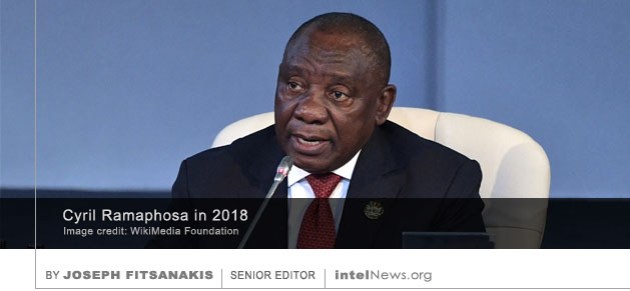
According to the newspaper, the list contains telephone devices belonging to three presidents, France’s Emmanuel Macron (pictured), South Africa’s Cyril Ramaphosa, and Iraq’s Barham Salih. The telephone devices of three current prime ministers are also on the list, says The Post. These are, Morocco’s Saad-Eddine El Othmani, Egypt’s Mostafa Madboul, and Pakistan’s Imran Khan.

Also on the list are three former prime ministers, who were in office when they were allegedly targeted by Pegasus users: France’s Édouard Philippe, Belgium’s Charles Michel, Italy’s Romano Prodi, Lebanon’s Saad Hariri, Kazakhstan’s Bakitzhan Sagintayev, Uganda’s Ruhakana Rugunda, Algeria’s Noureddine Bedoui, and Yemen’s Ahmed Obeid bin Daghr. A telephone number belonging to the king of Morocco, Mohammed VI, is also reportedly on the list. Finally, the list allegedly includes several senior officials of international organizations, including the head of the World Health Organization, Dr Tedros Adhanom Ghebreyesus.

The Post report also includes part of a statement by NSO Group Technologies, in which the company says it keeps tabs on the use of its software by its clients, and has the power to block any misuse of Pegasus. The company also states that it intends to “continue to investigate all credible claims of misuses [of Pegasus] and take appropriate action” if needed, including “shutting down of a customers’ system”, which it has done “multiple times in the past and will not hesitate to do again if a situation warrants”.

Author: Joseph Fitsanakis | Date: 22 July 2021 | Permalink

France launches probe into spying on media by Moroccan intelligence services

NSO Group

PROSECUTORS IN FRANCE HAVE opened an investigation into claims that the intelligence services of Morocco spied on French journalists’ phones, using a controversial surveillance software marketed by an Israeli firm. Since 2018, IntelNews has covered the controversial spyware, Pegasus, and its maker, NSO Group Technologies, an Israeli digital surveillance company based in Herzliya, a small coastal town located north of Tel Aviv.

The Pegasus surveillance software is able to install itself on targeted telephones without requiring their users clicking a link, or downloading an application. It then provides the spying party with near-complete control over the targeted telephone. Among other things, it gives the spying party the ability to browse through the telephone’s contents, including photographs and videos, record telephone conversations, as well as activate the telephone’s built-in microphone and camera at any time, without its user being aware that these devices are on.

Earlier this week, an investigative report published by a consortium of newspapers, including The Washington Post (United States), Le Monde (France) and The Guardian (United Kingdom), claimed that Pegasus’ victims number in their tens of thousands. Reporters said they had analyzed a leaked list of 50,000 victims of Pegasus, which include senior government officials, lawyers, labor leaders, human-rights activists and investigative journalists in almost every country in the world.

The recent revelations have made headlines in France, where the names of well-known journalists from several newspapers, magazines and news agencies feature on the leaked list of Pegasus’ victims. On Tuesday, the French investigative website Mediapart filed a legal complaint, claiming that two members of its staff, including its founder, Edwy Plenel, had been spied on by the Moroccan intelligence services through the Pegasus software. Another French investigative outlet, the newspaper Le Canard Enchaine, said it would also launch a complaint against the intelligence services of Morocco. More media outlets are expected to follow suit.

NSO Group Technologies denies that its Pegasus software is being used maliciously, and claims that it only sells the software to government agencies who use it in legitimate law enforcement investigations. The government of Morocco also denied the claims against its intelligence agencies, saying that it “never acquired computer software to infiltrate communication devices”.

However, the Office of the Paris Prosecutor said on Tuesday that it had launched an official investigation on the use of the Pegasus software by Moroccan intelligence. In a statement published on its website, the prosecutor’s office said it would examine the complaints by media companies from the perspective of as many as 10 possible charges, including criminal association, fraudulent access to personal electronic devices, and breach of personal privacy.

Author: Joseph Fitsanakis | Date: 21 July 2021 | Permalink

Israeli AG investigating claims that ex-Mossad chief had extra-marital relationship

Yossi CohenTHE GOVERNMENT OF ISRAEL is reportedly investigating allegations that Yossi Cohen, who recently stepped down from the helm of the Mossad, Israel’s external spy agency, had an extra-marital affair for two years. It is also claimed that the extra-marital relationship took place while Cohen was director of the Mossad, and that he shared classified information with his alleged mistress, who is reportedly a flight attendant.

Cohen, 59, with four children, assumed the directorship of the Mossad in 2015. He is a 35-year veteran of Israel’s pre-eminent spy agency, which he left briefly in 2013 to chair Israel’s National Security Council and advise the prime minister. He is known as one of former Israeli Prime Minister Benjamin Netanyahu’s most trusted advisers. Cohen grew up in Jerusalem and became a fighter pilot before joining the Mossad. He gradually rose through the agency’s ranks to become its deputy director. Prior to that role, he led for several years the Mossad’s Department of Collections, which handles operations officers around the world. He then led the agency’s Political Action and Liaison Department, which is tasked with facilitating cooperation between the Mossad and foreign intelligence agencies.

According to Israel’s privately owned Channel 13 television, Israel’s Ministry of Justice is currently handling an official complaint, according to which Cohen has been having “a close relationship” for the past two years with a woman who is not his wife, and who is believed to be a flight attendant. Additionally, the complaint claims that Cohen shared classified information with his alleged mistress during the course of their affair. According to Channel 13, the complaint has been handed over to the Attorney General of Israel, Avichai Mandelblit, who is reviewing it.

The Channel 13 report said Cohen has strongly denied the allegations, saying that “there is no flight attendant [and] there is no close relationship”. The former Mossad chief added that he had not been contacted by Attorney General Mandelblit about the complaint, or for any other reason. The television station gave no further information about the alleged complaint, the identity of the flight attendant, or the state of the Attorney General Mandelblit’s investigation.

Earlier this month, it was announced that Cohen would head the Israel-based investment arm of SoftBank, a Japanese-headquartered multinational conglomerate holding company, which specializes in investing in firms in the financial, energy and technology sectors of the economy.

Author: Joseph Fitsanakis | Date: 20 July 2021 | Permalink

Two dozen US diplomats in Vienna show signs of ‘Havana syndrome’, report claims

Vienna Austria

ABOUT TWO DOZEN PERSONNEL of the United States embassy in the Austrian capital Vienna have been experiencing unexplained neurological symptoms that are similar to the so-called “Havana syndrome”, a mysterious medical condition that continues to puzzle brain scientists. The condition is believed to have afflicted at least 130 American and Canadian diplomats around the world in recent years.

The matter first came to light in 2017, when Washington recalled the majority of its personnel from its embassy in Havana, Cuba, and at least two more diplomats from its consulate in the Chinese city of Guangzhou. The evacuees reported experiencing “unusual acute auditory or sensory phenomena” and hearing “unusual sounds or piercing noises”. Subsequent tests showed that the diplomats suffered from sudden and unexplained loss of hearing, and possibly from various forms of brain injury.

Now a new report by The New Yorker’s Adam Entous claims that “about two dozen” personnel at the US embassy in Vienna have shown Havana syndrome symptoms “since Joe Biden took office” in January of this year. If accurate, this number of incidents would mean that the Austrian capital is now the largest Havana syndrome location in the world after Cuba. In his report, Entous cited a spokesman for the US Department of State, who said that department was “vigorously investigating” reports of “possible unexplained health incidents” among US diplomats and other embassy personnel in Vienna. The expression “unexplained health incidents” is the official term that the US government uses to refer to what is informally known as the Havana syndrome.

Meanwhile, the Reuters news agency reported a statement issued on Saturday by the Austrian Federal Ministry for European and International Affairs. It said the ministry was “working with the US authorities on jointly getting to the bottom of this”, adding that the Austrian government took “these reports very seriously”, as they potentially affected “the safety of the diplomats sent to Austria and their families”, which was a “top priority” for the Austrian government.

Author: Joseph Fitsanakis | Date: 19 July 2021 | Permalink

Two decades after 9/11, West must refocus on threats by state actors, MI5 chief says

MI5 HQ Thames HouseNearly 20 years after the terrorist attacks of September 11, 2001, it is time for Western intelligence agencies to refocus on stopping covert operations by foreign state actors, according to the director of Britain’s domestic intelligence agency. General Ken McCallum is a 20-year career officer in the Security Service (MI5), Britain’s counter-terrorism and counter-intelligence agency. He assumed the position of director in April of 2020, amidst the coronavirus pandemic.

In a rare public speech on Wednesday, General McCallum said it made sense why, in the aftermath of the 9/11 attacks, Western spy services dedicated unprecedented attention and resources to countering terrorist threats. Efforts during these two decades have concentrated on preventing attacks by religious extremists, both domestically and abroad. General McCallum went on to say that, in light of the ongoing instability in Afghanistan, Syria and elsewhere, religious extremism will continue to require both attention and resources by Western spy agencies.

But he added that, even though counter-terrorism remains MI5’s primary task, the agency recognizes the need to “refocus attention” to threats from state actors. The attention given in the past two decades to non-state groups has allowed countries like Russia, China and Iran to develop “a growing assertiveness” in the areas of covert operations, said General McCallum. As a result, their activities in the fields of espionage, sabotage, and even assassinations, have become “increasingly daring” and threatening.

Spies working for foreign countries have killed targets, stolen sensitive technology, and tried to recruit public figures and other key individuals through blackmail. They have also attacked telecommunications infrastructure and have perfected a host of methods for launching cyber-attacks on both the public and private sectors, with potentially catastrophic consequences, he said.

The MI5 chief illustrated his statements by revealing that British counterintelligence officers have “disrupted hostile power activity” on British soil, which could otherwise have resulted in the killing of a targeted individual. He said that this operation took place after the attempted assassination of former Russian military intelligence officer Sergei Skripal in Salisbury, England, in the spring of 2018, but provided no further details.

General McCallum’s statement came as prosecutors in the United States charged four Iranian intelligence officers with participating in a plot to kidnap Masih Alinejad, an Iranian-American New York-based journalist and human-rights activist, who is known for her critical stance of the government in Tehran.

Author: Joseph Fitsanakis | Date: 14 July 2021 | Permalink

Haiti assassination probe uncovers more plotters with United States ties

Jovenel MoïseThe United States Drug Enforcement Administration (DEA) has said that at least one of the assailants who killed Haiti’s president, Jovenel Moïse, last week, had been its confidential source in the past. It also appears that one of the middlemen of the operation is a Haitian-born pastor based in the US state of Florida. It was he, according to Haitian police, who hired the assassins through a Venezuelan security company headquartered in Florida. However, this is disputed by the alleged middleman himself, who claims he was “duped”.

In a statement published on Monday, the DEA confirmed media reports that at least one of the men who participated in the assassination of President Moise was “at times […] a confidential source to the DEA”. It also appears that, following the dramatic raid on Moïse’s residence in Port Au-Prince on July 7, the suspect contacted his former DEA handler, who urged him to surrender to the Haitian authorities. The DEA is now believed to be co-operating with the Haitian National Police in its investigation of the assassination.

Additionally, at a press conference held on Sunday, Haitian police officials announced the arrest of an alleged middleman in the murky plot, who allegedly assembled the team of assassins. They named the suspect as Christian Emmanuel Sanon, 63, a native of Haiti who has lived in Florida for over two decades. Although a Christian pastor by profession, Sanon reportedly began to speak publicly against what he regarded as Haiti’s corrupt political elite in the months after the disastrous 2010 earthquake on the island.

According to the Haitian National Police, Sanon recruited the assassins using a “Florida-based Venezuelan security firm”. He then traveled to Haiti “with political intentions”, in the words of Haitian officials. He allegedly used a private airplane, which carried, apart from himself, members of what would eventually become the assassination squad. Haitian officials said that the team was initially assembled as Sanon’s bodyguard, but their mission eventually changed to encompass a “hit-squad” role. One of the alleged assassins is believed to have contacted Sanon several times on his cell phone while being on the run following the assassination.

Interestingly, however, the Associated Press reported that a Florida-based friend of Sanon claimed the 63-year-old pastor had been “duped by people claiming to represent the US State and Justice departments”. These people allegedly told Sanon they wanted to install him as president of Haiti after removing Moise. In any case, Haitian officials do not see Sanon as the mastermind of the operation; however, with Sanon now under arrest, more information about what authorities refer to as “the intellectual authors” of the assassination plot is likely to emerge.

Author: Joseph Fitsanakis | Date: 14 July 2021 | Permalink

Moscow denounces ‘NATO propaganda’ as Albania probes alleged Russian spies

DEFENDER-Europe 21

THE RUSSIAN GOVERNMENT HAS accused media in Albania of channeling “propaganda”, as authorities in the Balkan country are investigating alleged military espionage by two Russian citizens. The case centers on DEFENDER Europe 21, a large-scale multinational military exercise, which is held every year under the auspices of the United States Army and the North Atlantic Treaty Organization (NATO). A portion of the exercise, which brings together nearly 30,000 troops from 26 nations, took place in Albania in April and May of this year.

Late last month, reports in the Albanian media said that the Office of the Prosecutor in the capital Tirana was investigating two Russian and five Czech citizens, who may have engaged in espionage activities. According to the reports, one of the Russian citizens had entered Albania on May 12, and traveled to Durres, Albania’s second most populous city, which is centrally located along the country’s Adriatic coast. Durres is the closest urban center to the site of the DEFENDER Europe 21 exercise. A few days later, the Russian citizen was found deploying a drone, according to the Tirana prosecutor.

The Albanian authorities then began looking into the case of another Russian citizen, who had entered the country in March, and was based in Orikum, a small coastal town southern Albania. Like Durres, Orikum is in close proximity to military training facilities. Albanian authorities have not disclosed any information about the fate of the five Czech nationals. But they said last week that a criminal case had been opened against the two Russians.

Last Friday, the Russian Ministry of Foreign Affairs accused the Albanian media of “fueling the hype” about the two Russians, adding that the case was “an exercise in NATO propaganda”. Meanwhile, the Russian embassy in Tirana said that it had sent a formal inquiry about the criminal case to Albania’s Ministry for Europe and Foreign Affairs. Relations between the former Warsaw Pact allies are currently at a low point. In January of this year, Tirana expelled a Russian diplomat, accusing him of ignoring safety protocols relating to COVID-19. In 2018, two Russian diplomats were expelled from Albania after they allegedly engaged in espionage. Shortly afterwards, Moscow expelled two Albanian diplomats in return.

Author: Joseph Fitsanakis | Date: 12 July 2021 | Permalink