Settlement reached in spying scandal that rocked Credit Suisse
July 26, 2021 Leave a comment

CREDIT SUISSE, ONE OF the world’s most powerful banking firms, has announced that a settlement has been reached in a case in which it stood accused of having paid private investigators to spy at former executives. The case, which shocked Swiss public opinion in recent years, prompted the resignation of several Credit Suisse senior officials, and some claim it may have prompted a suicide.
In October of 2019, two senior Credit Suisse executives resigned amidst a high-stakes espionage operation, whose alleged target was Iqbal Khan, the former Chief Executive Officer of Credit Suisse’s wealth-management division. Khan alleged that, once he left the firm, he was spied on by private investigators paid for by Credit Suisse. In a dramatic turn of events, one of the private investigators involved in the case, described as “an external security expert”, who mediated between Credit Suisse and the investigation firm, committed suicide.
At the time, Credit Suisse described the surveillance on Khan as “strictly an isolated incident”. Later, however, two more Credit Suisse executives came forward alleging that they too had been spied on after leaving their job at the firm. These allegations prompted concerns that spying on former —and even current employees— may have been a standard operating procedure at Credit Suisse.
There is now a strong chance the allegations will never be investigated fully. On Sunday, a Credit Suisse spokesperson announced that the lawsuits brought by Khan against the firm, as well as against the private detectives who allegedly spied on him, would be dropped. The move followed a settlement between the three sides, which was reached out of court. When asked about the financial terms of the settlement, the spokesperson said no comment would be made about that.
► Author: Joseph Fitsanakis | Date: 26 July 2021 | Permalink



 THE GOVERNMENT OF ISRAEL is reportedly investigating allegations that Yossi Cohen, who recently stepped down from the helm of the Mossad, Israel’s external spy agency, had an extra-marital affair for two years. It is also claimed that the extra-marital relationship took place while Cohen was director of the Mossad, and that he shared classified information with his alleged mistress, who is reportedly a flight attendant.
 Nearly 20 years after the terrorist attacks of September 11, 2001, it is time for Western intelligence agencies to refocus on stopping covert operations by foreign state actors, according to the director of Britain’s domestic intelligence agency. General Ken McCallum is a 20-year career officer in the Security Service (MI5), Britain’s counter-terrorism and counter-intelligence agency. He assumed the position of director in April of 2020, amidst the coronavirus pandemic.
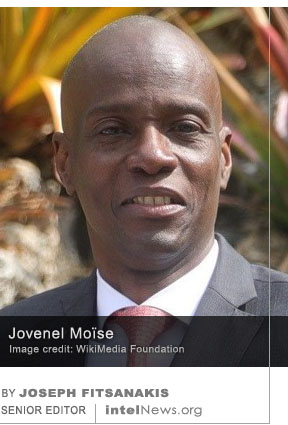 The United States Drug Enforcement Administration (DEA) has said that at least one of the assailants who killed Haiti’s president, Jovenel Moïse, last week, had been its confidential source in the past. It also appears that one of the middlemen of the operation is a Haitian-born pastor based in the US state of Florida. It was he, according to Haitian police, who hired the assassins through a Venezuelan security company headquartered in Florida. However, this is disputed by the alleged middleman himself, who claims he was “duped”.









 intelNews.org
Jordanian intelligence thwarted Islamic State plan to kill soldiers in Jordan, Israel
July 28, 2021 by Ian Allen Leave a comment
THE INTELLIGENCE SERVICES OF Jordan allegedly thwarted a plan by a cell of Islamic State fighters to carry out an armed attack across two countries, with the ultimate aim of killing Jordanian and Israeli troops. The state-owned Jordanian newspaper Al-Ra’I said on Tuesday that the attack was to be carried out in Gawr as-Safi, a sparsely inhabited area of the Jordan Valley, which is adjacent to the southern portion of Israel’s Dead Sea region.
The paper said that Jordan’s General Intelligence Department caught on to a suspected Islamist militant in December of 2020. The suspect led them to a larger cell of three other militants, who were arrested in February of this year. Their goal was reportedly to attack a Jordanian border post in Gawr as-Safi and kill the border guards there. They then planned to cross into Israel and open fire on Israeli soldiers, with the aim of killing them, in what appears to have been planned as a murder-suicide mission.
In the indictment of the four men, Jordanian authorities claim that they were found to be hoarding a cache of weapons, which they planned to use to carry out their attack in Jordan and Israel. They now face charges of conspiring to commit an act of terrorism and propagating the ideology of the Islamic State, which the Jordanian government designates as an international terrorist organization.
Meanwhile, a new assessment of the Islamic State by the Analytical Support and Sanctions Monitoring Team of the United Nations’ Security Council, warns that the militant organization remains strong in parts of the Middle East. The report, issued this week, recognizes that the Islamic State has suffered setbacks in recent years. But it cautions against dismissing the threat, noting that the militant group “has evolved into an entrenched insurgency” that is “exploiting weaknesses in local security to find safe havens and [is] targeting [government] forces” across the region.
► Author: Ian Allen | Date: 28 July 2021 | Permalink
Filed under Expert news and commentary on intelligence, espionage, spies and spying Tagged with Gawr as-Safi (Jordan), General Intelligence Department (Jordan), Islamic State, Israel, Jordan