News you may have missed #0004

News you may have missed #0003

  • CIA declassifies 1960 estimate report on Israeli nukes. The report, which is still heavily redacted, suggests a nuclear Israel would “be less inclined than ever to make concessions and would press its interests in the area more vigorously”. According to recent estimates, Israel has approximately 200 nuclear bombs and warheads.
  • Accused spies were planning to flee US, says Bureau. FBI prosecutors say the couple’s sailboat and maps of Cuban waters are evidence they planned to flee to Cuba. An entry on a personal calendar found at the couple’s home shows they planned to go sailing in the Caribbean in November, with no return date.
  • CIA defends Panetta’s remarks on Cheney. Director didn’t say that former US Vice-President Dick Cheney would like to see the US attacked, says Agency spokesperson Paul Gimigliano.
  • Senior al-Qaeda figure says he lied under CIA torture. Alleged al-Qaeda senior leader Khalid Sheikh Mohammed says pain he suffered under torture forced him to “make up stories” and falsely admit he was behind “nearly 30 terror plots”. Meanwhile, the CIA has released more torture transcripts after a lawsuit by the American Civil Liberties Union.

New clues in case of missing Polish intelligence officer

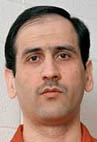
Stefan Zielonka

Stefan Zielonka

By JOSEPH FITSANAKIS | intelNews.org |
Last month we reported on the mysterious case of Stefan Zielonka, a senior signals officer with Poland’s Military Intelligence Services (SWW), who disappeared without trace in early May. We then stated as “certain” that Zielonka had “extensive knowledge of Polish agents working overseas, including their code names and contacts”. This is now slowly being confirmed by a number of Polish news outlets, who are coming to the realization that Zielonka’s job description at SWW far exceeded those of a typical SIGINT (signals intelligence) officer. Specifically, Polish newspaper Dziennik appears to have confirmed that the missing officer trained illegals –that is, elite Polish spies operating abroad independently of embassies and thus without diplomatic immunity. Read more of this post

New book examines KGB poison lab

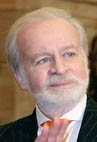
Lugovoy

Lugovoy

By JOSEPH FITSANAKIS | intelNews.org |
Former Soviet military intelligence officer Boris Volodarsky has given an extensive interview to Radio Svoboda (RFE/RL’s Russian language service) about his newest book, KGB Poison Factory: From Lenin to Litvinenko. At the heart of his book is the 2006 murder of Alexander Litvinenko, a former KGB intelligence officer who had defected and was living with his family to the UK, until he came down with a fatal dose of polonium 210. Volodarsky agrees with most intelligence experts that Litvinenko’s murder carries with it all the marks of a KGB assassination operation. But the former intelligence officer, who now lives in Vienna and London, believes Litvinenko’s poisoning was not carried out by Andrey Lugovoy, as is claimed by British authorities, but by an unknown member of the KGB’s mysterious “C” directorate. Lugovoy, who is wanted in Britain for Litvinenko’s murder, served in the KGB and in Russia’s Federal Protective Service (FSO) from 1987 to 1996, and is currently a member of the Russian Duma. Volodarsky’s interview is available in Russian here.

Analysis: Former CIA agent warns of Pentagon takeover

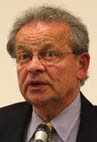
Robert Baer

Robert Baer

By IAN ALLEN | intelNews.org |
Robert Baer, the former CIA agent whose memoirs were behind the film Syriana, has written a new column for Time magazine, in which he warns that a Pentagon takeover of the CIA may be again in the works. The bureaucratic infighting between military and civilian agencies for control of the CIA is old news. But Baer believes that the military background of Admiral Dennis Blair, President Barack Obama’s new Director for National Intelligence (DNI), may be a factor in placing the Pentagon closer to its ultimate goal of swallowing the CIA. The former CIA agent mentions the dispute between Admiral Blair and CIA Director Leon Panetta over the appointment of Washington’s new intelligence chief in Kabul. Rumor has it that Blair is preparing to name a uniformed officer for the position, whereas Panetta wants to maintain the CIA tradition of appointing a civilian intelligence official. Read more of this post

News you may have missed #0002

Another Israeli-handled spy in the US walks away free

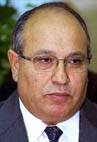
Franklin

Franklin

By JOSEPH FITSANAKIS | intelNews.org |
On April 23 intelNews first reported, and on May 4 confirmed, that the two American Israel Public Affairs Committee (AIPAC) lobbyists involved in the Lawrence Franklin spy case in the US would escape trial. Lawrence Anthony Franklin was a US Defense Department analyst who in 2006 was given a 12-year prison sentence for handing classified US military information to Israeli agent Uzi Arad, Israeli Embassy official Naor Gilon, as well as to Steve Rosen and Keith Weissman, both former AIPAC lobbyists. But last month US Justice Department prosecutors dropped all charges against the two former AIPAC members due to “significant reservations about the case”, even though several Department officials believe that Rosen and Weissman “acted imprudently”, according to The New York Times. As IntelNews learned, the decision was taken despite significant objections from FBI officials, who desperately pressured the Department to go forward with the trial until the very last minute. The Bureau appears to be infuriated about the dismissal, which is rumored to be partly based on fears that classified information exposed during a trial could harm US national security. But this appears to be making no difference. In a final blow to the Bureau, a US federal judge has now decided to let Larry Franklin walk scot-free, despite his former conviction for espionage against the United States.  Read more of this post

Phone hacking ring helped groups evade eavesdroppers

By JOSEPH FITSANAKIS | intelNews.org |
Even though computer hacking tends to monopolize information security headlines, phone hacking, or phreaking, as it is technically known, remains a major source of headache for communications security professionals. Last Friday, law enforcement agencies in several countries announced the arrest of more than half a dozen individuals in the US, Italy and the Philippines, who were operating a major international phreaking network. The group had apparently broken into thousands of corporate telephone networks in Australia, Canada, the US, and Europe, and was channeling near-free telecommunications services to several criminal and militant organizations around the world. According to law enforcement insiders, “the hacked networks might have been used by terrorist organizations to thwart eavesdropping and tracking by intelligence agencies”. Read more of this post

News you may have missed #0001

Most Canadians want former KGB spy to stay

By IAN ALLEN | intelNews.org |
Less than a fifth of Canadians want a former KGB officer living in British Columbia deported from the country, according to a new nationwide poll published last Friday. IntelNews has reported before on the case of Mikhail Alexander Lennikov, a former KGB spy living in Canada with his wife and teenage son since 1992, awaiting the result of an asylum claim. Late last February, however, Canada’s Public Safety Ministry rejected Lennikov’s claim and notified him that he “can be ordered deported from the country in as early as a few weeks”. Canadian authorities have refused to reveal the precise reason for the former KGB agent’s pending deportation. But in 2007, commenting on the case of former KGB Lieutenant-Colonel Givi Abramishvili, who was deported from Canada, a government representative had said that “Canada […] is not a safe haven for those that may be a danger to national security”. Read more of this post

Australian military absolves itself over ministerial spy scandal

By JOSEPH FITSANAKIS | intelNews.org |
Last March, the Australian press published allegations that the Australian military spied on the country’s defence minister because of his intimate relationship with a Chinese woman. According to the allegations, the Defence Signals Directorate (DSD), the Australian military’s communications interception organization, spied on defence minister Joel Fitzgibbon’s private communications and hacked into his computer. The purpose of the alleged operation was to gather information about the minister’s relationship with Helen Liu, a Chinese businesswoman with reported ties to the Chinese military. Last week however, the Australian Defence Department secretary, Nick Warner, released a declassified report detailing the outcome of the Department’s own investigation into the allegations. Read more of this post

CIA now actively hiring failed investment bankers

By JOSEPH FITSANAKIS | intelNews.org |
It’s been several months now since Dennis Blair announced that “the primary near-term security concern of the United States is the global economic crisis and its geopolitical implications”. Barack Obama’s Director of National Intelligence even hired James Rickards, a self-described “threat finance” expert, to advise him on “[c]ountries [that] might […] be tempted to engage in financial warfare” against the United States. It now appears that the rapid rise of microeconomic concerns to the top of the US intelligence community’s threat list has also affected the CIA. The Agency has announced a new recruitment program targeting fired investment bankers to work in its Directorate of Intelligence. Speaking on National Public Radio’s Marketplace, CIA official Jimmy Gurule said the new recruitment drive is part of creating “a national strategy […] to deal with these types of financial issues”. Unfortunately, Marketplace’s piece is extremely superficial. A more in-depth analysis of what “these types of financial issues” may mean, is available here.

Groundbreaking book on international spying now online

By IAN ALLEN | intelNews.org |
Nicky Hager’s groundbreaking book Secret Power: New Zealand’s Role in the International Spy Network, is now freely available as an eBook on the writer’s personal website. The book, originally published in 1996, first revealed the existence of the UK-USA Security Agreement (reportedly also known as AUSCANZUKUS) a peculiar intelligence-sharing arrangement between the United States, the United Kingdom, Australia, Canada and New Zealand, which has existed since World War II. Secret Power focused on New Zealand’s role in the agreement and also documented the US-managed ECHELON, a signals intelligence (SIGINT) collection and analysis network that serves as an intelligence-sharing platform between the UK-USA signatories. Hager, who is widely considered to be New Zealand’s leading investigative journalist, has written several books since Secret Power, including Secrets and Lies and The Hollow Men. His personal website is available here.

W. German cop behind fatal 1967 shooting was a spy, documents show

By JOSEPH FITSANAKIS | intelNews.org |
On June 2, 1967, West German police opened fire on leftist students demonstrating against a visit to Berlin by the Shah of Iran. One of the shots fired by the police killed student protester Benno Ohnesorg. His killing was dubbed in Germany “the shot that changed the republic”. It had a major role in radicalizing the West German student movement in the late 1960s and early 1970s and directly sparked the creation of the militant student organization Red Army Faction –also known as the Baader-Meinhof Group. But a group of researchers working at Germany’s Office of the Federal Commissioner Preserving the Records of the Ministry for State Security of the German Democratic Republic (BStU), led by archivist Marianne Birthler, now claim they have discovered that the West German police officer who fired the shot that killed Ohnesorg was actually an East German spy. Read more of this post

IntelNews reviews Secret Wars, by Gordon Thomas

Secret Wars

Secret Wars

By JOSEPH FITSANAKIS | intelNews.org |
IntelNews is pleased to present a review of Gordon Thomas’ book Secret Wars: One Hundred Years of British Intelligence (St. Martin’s Press, 2009), a useful historical narrative of MI5 and MI6, the publication of which coincides with the centennial year of Britain’s intelligence and security services. The book’s strength rests on Thomas’ skilled storytelling, which, coupled with some interesting new information, will appeal to both popular enthusiasts and scholarly devotees of intelligence history. Please click here to read the review. IntelNews is interested in reviewing both popular and academic publications on the politics of espionage and intelligence, intelligence history, analysis, terrorism and counterterrorism, as well as foreign policy, among other subjects. Authors, editors and publicists may contact intelNews for more information.