Kremlin dismayed after US retains Kyrgyz air base

Bakiyev

Bakiyev

By JOSEPH FITSANAKIS | intelNews.org |
The recent decision by the Kyrgyz government to halt the eviction of US forces from the Manas air base has been hailed as a foreign policy success for the US government, and a rare defeat for Russia’s resurgence. Russian foreign ministry officials admitted earlier this week that the Kyrgyz reversal was a setback for Moscow’s plans and hinted that the Kremlin had been deceived by the government of Kyrgyz President Kurmanbek Bakiyev. As intelNews reported last February, Kyrgyzstan had announced that it would expel US forces from Manas, which experts have described as the “primary logistics hub” for the US military’s operations in Afghanistan. The decision of the Kyrgyz government came soon after it received an unprecedented $2.2 billion in Russian loans and aid. But President Bakiyev changed his mind after the US government agreed to “triple its rent for Manas”, and –it appears— cease its criticism of Kyrgyzstan’s rapidly deteriorating human rights record. Read more of this post

News you may have missed #0010

  • Kim Jong Il’s son to head North Korea secret police. Since 1987, Kim Jong Il has been the official leader of the State Security Department of North Korea. However, South Korea’s Dong-a Ilbo reports that Kim Jong Un, Kim Jong Il’s third son, has now been named as the agency’s head. There are rumors in South Korea that the move could signify that a handover of power in Pyongyang may be imminent.
  • First US economic espionage trial winds down. A US court is preparing to sentence Dongfan “Greg” Chung, a Chinese-born engineer accused of passing critical trade secrets on the US space program to China for three decades. 
  • US and Venezuela to restore expelled ambassadors. The move appears to be a thawing gesture toward the new leadership in Washington by Venezuelan President Hugo Chavez. The Latin American leader has toned down his criticism of US foreign policy since Barack Obama took office in January, partly because the US president is popular in Latin America in contrast to his predecessor George W. Bush. 
  • US to send ambassador to Damascus. Washington has confirmed it is to send an ambassador to Damascus, ending a four-year diplomatic absence in Syria. The US envoy in Syria was withdrawn in 2005, following the assassination of Lebanon’s former PM Rafiq Hariri. 
  • Cuban Five spy case an obstacle to US-Cuban thaw, says Havana. The Cuban Five were arrested in 1998 and convicted of spying on anti-Castro exile groups on behalf of Havana. Cuba regards them as political prisoners and has lobbied intensively for their release. Cuban President Raúl Castro has said he would be willing to swap jailed political dissidents for the Five, but the US government has rejected the idea.

News you may have missed #0009

  • Head of Spain’s secret service accused of misuse of public funds. The Spanish Ministry of Defense says it has requested “complete” information on allegations concerning secret service chief Alberto Saiz, who has been accused by the daily newspaper El Mundo of using public money for diving and hunting trips in Mexico, Senegal, Mali and Morocco. Saiz, who heads Spain’s National Intelligence Center, denies the accusations. 
  • No Obama apology for CIA in Latin America. US President Barack Obama declined to apologize on Tuesday for past CIA interventions and coup attempts in Latin America, after talks with Chilean leader Michele Bachelet. Obama was asked by a Chilean journalist whether he would apologize for past CIA operations in the region, like the US-backed coup attempt in Chile in 1973. “I’m interested in going forward, not looking backward”, replied the US President. 
  • Consumers boycott Nokia, Siemens for selling to Iran. As intelNews has been reporting since April, The Wall Street Journal has disclosed that the Iranian government has acquired some of the world’s most sophisticated communications surveillance mechanisms with the help of some of Europe’s leading telecommunications hardware and software manufacturers. The latter appear to have been all too happy to supply Tehran with advanced means to spy on its own people. Now Western consumers are calling for a boycott of Nokia and Siemens, whose Nokia Siemens Networks collaboration is a key supplier of Iran’s extensive surveillance system. 
  • Ex-CIA columnist claims CIA “harrassment”. Former CIA operations manager, Stephen Lee, who now blogs for The Washington Examiner, says he is “being subjected to a campaign of low-level harrassment” by the Agency.

How many spy drones did Russia purchase from Israel?

MK II UAV

MK II UAV

By IAN ALLEN | intelNews.org |
Back in April, intelNews reported on a $53 million agreement between Russia and Israel to provide Moscow with three Israeli-made intelligence-gathering drones. Much was made at the time of the purchase of those unmanned aerial vehicles (UAVs), which was interpreted as an indirect admission by Moscow that its armed forces severely lacked aerial intelligence. The purchase of the three Israel-made drones was reportedly designed to cover immediate needs, while the Russians were working on a plan to start building their own UAVs. It turns out, however, that neither the Israelis nor the Russians were quite upfront in their public announcement of the deal. Last April the two sides said that Russia would receive “three unmanned aircraft” from Israel Aerospace Industries (IAI). In reality, $53 million is much too high a fee to purchase just three UAVs. This puzzled Washington, which does not want to see Russia improve its aerial reconnaissance capabilities. The US Pentagon thus sought –and subsequently received– assurances from Israel that it was not planning to sell Moscow its state-of-the art, super-expensive Heron UAV model. But the Americans were correct to be suspicious of the high cost of the deal. Russian media now reports that the Russians will be receiving, not three, but twelve UAVs for their $53 million. Read more of this post

Foreign spy services active in Pakistani army’s war with the Taliban

Fazlullah

Fazlullah

By JOSEPH FITSANAKIS | intelNews.org |
Pakistani military and security officials alleged earlier this week that foreign intelligence services are helping pro-Taliban warlords fight the Pakistani army in Swat and in other tribal areas in Pakistan’s North-West Frontier Province. According to news reports from Islamabad, the officials have presented the Pakistani government with an extensive report alleging covert assistance to pro-Taliban forces from Indian and Israeli agents. The classified report alleges that Israel supplies tribal warlords “with modern technology”, including radio equipment, while Indian agents, operating out of Indian consulates in the region, are providing the Taliban with weapons and probably training. Pakistani military officials claim they have proof of visits by Indian operatives to Taliban training camps and of meetings between Indian operatives and leading pro-Taliban military leaders and propagandists, such as Maulana Fazlullah and Baitullah Mehsud. Read more of this post

News you may have missed #0008

  • Moderate Virginia Republican is Obama’s leading cybersecurity czar. Time magazine identifies Tom Davis as a leading candidate for the newly created position, citing “sources familiar with the White House’s deliberations on the subject”. Davis served in the House of Representatives for seven terms before retiring last fall. But Ryan Singel, of Wired, points out that Davis is “no friend of privacy”. While in the House of Representatives, “Davis voted repeatedly to expand the government’s internet wiretapping powers, and helped author the now-troubled national identification law known as REAL ID”, reminds Singel.
  • New Zealand spooks spied on high school students. Last February, intelNews reported on revelations that the New Zealand Security Intelligence Service (NZSIS) has been keeping a file on an elected Green Party parliament Member, Keith Locke, since he was 11 years old. New information shows that NZSIS has been monitoring two other Green parliamentarians, Sue Bradford and Catherine Delahunty, since they were in high school. Moreover, their files remained active until 1999 and 2002, respectively. 
  • US Supreme Court refuses Plame CIA case. The Court declined to take up the case of Valerie Plame, a former CIA agent, who sought compensation after she was publicly revealed to be a secret operative. Plame and her husband, former ambassador Joseph Wilson, wanted to sue several Bush administration officials, including former vice president Dick Cheney, over the 2003 revelation. 
  • US Homeland Security said to kill domestic spy satellite plan. A senior Homeland Security official has said that Homeland Security Secretary Janet Napolitano has decided to kill a controversial Bush administration plan to use satellites for domestic surveillance in the US. The plan first surfaced in 2007, but it has been delayed due to concerns by privacy and civil liberties advocates that it would intrude on the lives of Americans. 
  • US National Security Advisor to visit India. Jim Jones will visit New Delhi at the request of President Obama, in order “to further deepen and strengthen our key bilateral partnership with India” says the White House. He will also be visiting Pakistan and Afghanistan. 
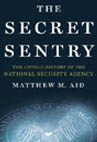
  • Researcher unearths declassified documents on NSA’s history. The documents, obtained by Matthew M. Aid for his new book, The Secret Sentry, confirm that prior to the launch of the first spy satellites into orbit by the National Reconnaissance Office (NRO) in the early 1960s, the Signals Intelligence collected by the National Security Agency and its predecessor organizations was virtually the only viable means of gathering intelligence information about what was going on inside the Soviet Union, China, North Korea, North Vietnam, and other communist nations.  However, the NSA and its foreign partners could collect bits and pieces of huge numbers of low-level, unencoded, plaintext messages.

More agents fired in Colombian wiretap scandal probe

Juan M. Santos

Juan M. Santos

By IAN ALLEN | intelNews.org |
Last April, Colombia’s Administrative Department of Security (Departamento Administrativo de Seguridad, or DAS) suffered one of the most extensive purges in its history, when 22 of its detectives were fired in connection with an investigation into illegal wiretapping against several public figures in Colombian political life. On Saturday, the scandal-plagued agency firedanother 11 of its operatives, which raises the running total of purged DAS agents to 33. Last April, intelNews reportedthat those targeted by the illegal wiretappers included Supreme Court judges, prominent journalists, as well as the chief of the Colombian National Police, former president Cesar Gaviria, and even the minister of defense Juan Manuel Santos. Read more of this post

News you may have missed #0007

  • German counterintelligence chief accuses Russia of commercial spying. Burkhard Even, Germany’s director of counterintelligence at the Federal Office for the Protection of the Constitution, has told German newspaper Die Welt am Sonntag that Russian spies have intensified espionage operations on the German energy sector to help Russian firms gain commercial advantages. On May 26, intelNews reported on similar accusations by the German Association for Security in Industry and Commerce (ASW). Its director told Mitteldeutsche Zeitung that the targeting of German research and commercial enterprises by mainly Chinese and Russian agents is so extensive that it usually costs the German economy over €20 billion per year, and it may be costing as high as €50 billion per year since 2007.
  • Spanish intelligence agents kicked out of Cuba. Spanish newspaper ABC reports that the recently expelled officers of Spain’s National Intelligence Centre (CNI) were secretly recorded at Havana cocktail parties “making derogatory comments about the Castro brothers and other [Cuban] government officials”. 
  • Proposed US bill would boost congressional oversight of covert spy programs. Key lawmakers in Washington have endorsed a proposed bill that would force the president to make fuller disclosure of covert spy programs. The legislation, which has already been approved by the House Intelligence Committee, would force the president to disclose classified operations to all members of Congress’ intelligence oversight panels. 
  • Report claims CIA, Mossad scoring points against Hezbollah. A new report claims American and Israeli intelligence organizations have scored notable recent successes against Hezbollah, in places such as Azerbaijan, Egypt and Colombia.

News you may have missed #0006

Western companies help Tehran spy on protestors

NSN Logo

NSN Logo

By JOSEPH FITSANAKIS | intelNews.org |
Numerous celebratory articles have appeared recently in several blogs that praise Western Internet firms for “help[ing] out the pro-democracy movement inside [Iran]”. These articles overlook Tehran’s extremely powerful Internet and telephone spying capabilities, which experts describe as “one of the world’s most sophisticated mechanisms”. Moreover, as intelNews reported last April, the Iranian government acquired these mechanisms with the help of some of Europe’s leading telecommunications hardware and software manufacturers, who were all too happy to supply Tehran with advanced means to spy on its own people. Read more of this post

Low-tech radio ciphers helped Myers couple avoid detection for years

Walter Myers

Walter Myers

By IAN ALLEN | intelNews.org |
The recent arrest in the US of Walter and Gwendolyn Myers, on charges of spying for Cuba for over 30 years,  have prompted discussions about how the couple managed to escape detection by US counterintelligence authorities for so long. The reasons are many, and undoubtedly include careful spycraft and shrewd handling. But Carmen Gentile offers another suggestion in The Washington Times: low-tech shortwave radio transmissions. Specifically, the Walter and Gwyn Myers “appears to have avoided capture for 30 years because their communications with [Cuba] were too low-tech to be detected by sophisticated US monitors”. Read more of this post

Is new MI6 head really an outsider?

Sir John Sawers

Sir John Sawers

By JOSEPH FITSANAKIS | intelNews.org |
Soon after Downing Street announced the pending appointment of Sir John Sawers to the post of Director of MI6, Britain’s primary external intelligence agency, many hurried to call the choice a “break with tradition”. This is because Sir John’s official career description is that of a diplomat. It is true that appointing anyone other than a seasoned intelligence professional to the helm of MI6 or MI5 is highly unusual. The last time this happened was in 1968, when Sir John Rennie, also a diplomat, was tasked to head MI6. But how much of an intelligence outsider is Sawers, really? The truth is that he will actually be rejoining MI6, where he began his career in 1977, serving in Syria and Yemen, among other places. The question that nobody in Whitehall will answer is when exactly Sawers left the service. The London Times claims he did so “in the 1980s”, when he joined the diplomatic service. The question is, of course, did he actually leave MI6? Or did he linger in one of the agency’s many desks that overlap with Her Majesty’s Diplomatic Service? Read more of this post

Comment: Board overseeing US intelligence practices still without members

Mike McConnell

Mike McConnell

By JOSEPH FITSANAKIS | intelNews.org |
Intelligence insiders in the US are beginning to wonder why US President Barack Obama has yet to appoint any members to the President’s Intelligence Advisory Board (PIAB). The PIAB, first established in 1956 by President Eisenhower, is tasked with conducting executive oversight of US intelligence practices. Its sensitive role is accentuated by its main focus, which is to alert the White House about US intelligence activities that may be illegal or may in any way go beyond Presidential authorization. This part of its mission makes the Board extremely critical in ensuring adequate executive oversight of the US intelligence community. But now, lacking any members whatsoever, the PIAB is being managed by its administrative staff and is in a sort of “autopilot” mode, according to its counsel, Homer Pointer, who spoke to the Federation of American Scientists’ Secrecy News. Read more of this post

News you may have missed #0005

  • Republican Senator’s extra-marital affair endangered national security. John Ensign is a member of the Senate Homeland Security and Governmental Affairs Committee, including its Permanent Subcommittee on Investigations, giving him and his staff access to extremely sensitive national defense information. His extra-marital affair made him vulnerable to blackmail by hostile spy services or other interests eager to pry secrets from his position on sensitive national security committees, veteran counterintelligence officials say.
  • Thank goodness reformists didn’t win in Iran election, says Mossad. Israel spy chief Meir Dagan, told the Knesset Foreign Affairs and Defence Committee on June 17 that if reformist candidate Mir Hossein Mousavi had won the elections “Israel would have a more serious problem because it would need to explain to the world the danger of the Iranian threat”.
  • CIA still fighting full release of detainee report. According to two intelligence officials, the CIA is pushing the Obama administration to suppress passages describing in graphic detail how the agency handled its detainees, arguing that the material could damage ongoing counterterrorism operations by laying bare sensitive intelligence procedures and methods.
  • US electricity industry to scan grid for spies. The planned scan is part of a pilot initiative to see whether Chinese spies have infiltrated computer networks running the US power grid. IntelNews has been keeping an eye on revelations that foreign spies have penetrated the electronic infrastructure of America’s electrical supply grid.
  • US Supreme Court declines review of Cuban Five case. It and its supporters argue Cuban spies received a fair trial in heart of Miami Cuban-American community, but Cuban government says it will continue to campaign for their release.

Analysis: What is the state of Cuban spying in the US?

Gwen Myers

Gwen Myers

By IAN ALLEN | intelNews.org |
The recent arrest by the FBI of Walter Kendall Myers and his wife Gwendolyn Steingraber Myers, on charges of spying for Cuba for over 30 years, offers a good opportunity to contemplate the current state of Cuban espionage in the US. In an article published in The Miami Herald, Juan Tamayo relays a brief history of Cuban espionage in the US, from the first decades (1950-1980), when the island’s intelligence services were “regarded as among the world’s best”, to the purges of the late 1980s, to today. Read more of this post