US-based Afghan man who planned election-day attack ‘worked as CIA guard’

CIAAN AFGHAN NATIONAL BASED in the United States, who was allegedly planning to carry out a terrorist attack during the upcoming Election Day, previously worked for the Central Intelligence Agency (CIA) as a guard, reports claim. According to the US Department of Justice, Nasir Ahmad Tawhedi, 27, was arrested by the Federal Bureau of Investigation (FBI) on October 7, alongside a number of co-conspirators who have so far not been named.

Tawhedi’s arrest occurred shortly after he purchased two AK-47 assault rifles, 10 magazines, and several rounds of ammunition from an FBI employee posing as a seller of the merchandise. The suspect allegedly told at least two FBI informants working on the case that he intended to use the weaponry to target “large gatherings of people” on Election Day. Tawhedi is also reported to have boasted that he expected to die in the attack. His indictment suggests that he planned to carry out the attack on behalf of the Islamic State of Iraq and al-Sham (ISIS).

Tawhedi has lived in the US for a little over three years, having arrived on US soil soon after Washington began withdrawing its forces from Afghanistan, following a two decades-long military campaign. Like thousands of other Afghans, Tawhedi was able to enter the US through an emergency entry privilege known as a “humanitarian parole”. He then applied for a Special Immigrant Visa, which is customarily offered by the US government as a form of protection to foreign nationals who have provided services to its military and security agencies. According to reports, Tawhedi’s Special Immigrant Visa application had been approved and was in the last stages of being officially issued.

Last week, the American television network NBC reported that Tawhedi had been employed as a guard by the CIA in Afghanistan. The network cited “two sources with knowledge of the matter”. Later on the same day, another American television network, CBS News, said it had been able to independently verify the earlier report by NBC. It is notable that, according to both NBC and CBS, Tawhedi worked as a guard for a CIA facility, rather than an informant or an asset for the intelligence agency.

The recent media reports about Tawhedi have yet to answer the question of whether he had been communicating with identifiable ISIS handlers, or whether he was independently radicalized through his online activity. It is also not known whether Tawhedi was a supporter or an affiliate of ISIS during his stint with the CIA, or whether he became radicalized after arriving in the US in September 2021.

Author: Joseph Fitsanakis | Date: 14 October 2024 | Permalink

Leaked documents reveal plans for extensive Russian influence campaign in Israel

2023 Israeli judicial reform protestsLEAKED INFORMATION PUBLISHED BY leading German media outlets has revealed Russia’s plans for an influence campaign targeting Israel. The information was leaked earlier this month by the German newspaper Süddeutsche Zeitung and German television stations Norddeutscher Rundfunk (NDR) and Westdeutscher Rundfunk (WDR), as well as by Israeli news outlets. It allegedly came from Social Design Agency (SDA), a Moscow-based firm hired by the Kremlin, which operates in Israel and several countries in the West.

Founded in 2017, the SDA is reportedly one of a host of firms and organizations that are collaborating with Russian intelligence in its efforts to influence public opinion worldwide. Earlier this year, the United States imposed sanctions on SDA, “for providing services to the government of Russia in connection with a foreign malign influence campaign”. The SDA’s founder is Ilya Gambashidze, who is said to be in direct contact with Russian President Vladimir Putin and other Kremlin officials.

Israel has been a central target of SDA’s Russian influence campaign. The country’s internal situation, with mass demonstrations against the legal reform is “perfect for launching a campaign to influence public opinion”, an SDA document from 2023 reads. The document accurately describes the political and social situation in Israel and names a number of influential Russian expatriates whose activities should be monitored.

According to the leaked documents, the purpose of the planned campaign was to raise support for Russia in its war against Ukraine, and strengthen the proportion of Israelis who espouse anti-Ukrainian sentiments. Another central goal was to ensure that no party in the Knesset —the IsraeliQ Quote parliament— would support a possible transfer of military aid to Ukraine.

From the documents, it appears that the conclusions formulated by the SDA were infused into around 50 cartoons distributed every month on social networks, around 20 fictitious articles appearing on websites pretending to be legitimate, and many reactions on various social networks. Among other things, the company distributed through paid ads on Facebook cartoons showing Ukrainian President Volodymyr Zelensky burning the Israeli flag, as well as cartoons accusing Israeli leftists of supporting Hamas.

One of the main revelations of the recent leaks is that the Arab community in Israel constitutes a target of the Russian influence campaign. For example, a fake Arabic-language article that was circulated online claimed that Israel did not have in its possession enough precision weapons, because it had given them to Ukraine. The article went on to claim that the lack of such weapons would lead to failures on the battlefield. “The good news should be heard by all believers living under occupation”, the article states. “The policy of the occupation government will soon lead to its defeat. We will wait for a spark to ignite our war of liberation, in which the entire Muslim world will support us”. The purpose of the article appears to be to prompt the Israeli-Arab population to turn against the Israeli government based on Israel’s alleged weakness, and to support Israel’s enemies. Read more of this post

US government wants to ban Chinese-made smart cars over espionage, sabotage fears

Chinese car industryTHE UNITED STATES DEPARTMENT of Commerce is proposing new regulations that seek to ban the sale of Chinese-made cars in the United States, over concerns that they could be used for espionage or sabotage. Several reports on the proposal noted that it was hurriedly introduced last week as a “national security action,” rather than a trade-related dispute between the US and China.
American government officials said that the new proposals come out of lengthy investigations into the software and technical specifications of Chinese cars. The investigations raised concern about “[c]ertain technologies originating from the [People’s Republic of China] or Russia” that are often found in Chinese-made cars. Such technologies include vehicle cameras, microphones, tracking devices, and several software packages that connect the cars to the world wide web.

Washington is concerned that these devices, and the software that runs them, could be used to collect the personal data of users, or to facilitate espionage activities on a large scale. Concerns have also been raised by US officials that Chinese-made smart cars could be remotely manipulated and used for sabotage during wartime. According to the US Department of Commerce, a central source could potentially “take control of all [the Chinese-made] vehicles operating in the US all at the same time, causing crashes, block[ed] roads, etc.”

When asked by reporters to justify the proposed regulations, Jake Sullivan, White House national security adviser, replied that the US had “already seen ample evidence of the [People’s Republic of China] pre-positioning malware on our critical infrastructure for the purpose of disruption and sabotage. And with potentially millions of vehicles on the road, each with 10- to 15-year lifespans, the risk of disruption and sabotage increases dramatically”.

Author: Ian Allen | Date: 23 September 2024 | Permalink

Spain and US reject claims they planned to assassinate Venezuelan officials

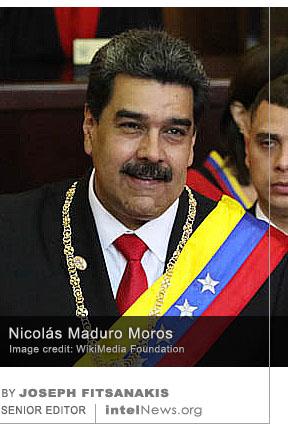
Nicolás MaduroTHE GOVERNMENTS OF SPAIN and the United States have strongly rejected allegations they were involved in an operation that aimed to kill leading Venezuelan officials, including the country’s President Nicolás Maduro. The allegations were made by a senior Venezuelan cabinet minister, following the arrests on Sunday of three Americans, as well as two Spanish and one Czech citizens. The six men have been charged with plotting to destabilize the Venezuelan government by killing Maduro and other top officials.
The allegations against the six foreign men were aired on live television by the Venezuelan Minister of the Interior Diosdado Cabello, who is a close ally of Maduro. Cabello accused the US Central Intelligence Agency (CIA) of “leading this operation” with the participation of special forces troops. The Venezuelan official went on to claim that at least one of the American citizens who were arrested over the weekend is a member of the US Navy Sea, Air, and Land (SEAL) Teams, commonly known as Navy SEALs.

Cabello referred to the six men as “mercenaries” with prior service in Colombia, Iraq, and Afghanistan. He added that they had been in contact with “French mercenaries in Eastern Europe” who had supplied them with “hundreds of weapons”. Cabello told reporters that Venezuelan authorities had seized over 400 rifles when they arrested the six men. The Venezuelan cabinet minister also claimed that the two Spanish citizens were employees of National Intelligence Center, Spain’s primary intelligence organization.

Late yesterday, however, Spanish officials issued strong denials of Cabello’s allegations. One Spanish government spokesperson told the Agence France Presse news agency that Madrid “denied and categorically rejected” Venezuela’s claims. Meanwhile, a statement issued by the US Department of State rejected as “categorically false […] any claims of US involvement in a plot to overthrow Maduro”. The French and Czech governments had yet to issue any official statements as of late last night.

Meanwhile, the BBC reported yesterday that the Spanish government has requested that Venezuelan authorities provide details of the detainees and that the Spanish embassy in Caracas is seeing to gain access to the two Spanish detainees.

Author: Joseph Fitsanakis | Date: 16 September 2024 | Permalink

Spy’s release by higher court shows Austria is unable to find its intelligence footing

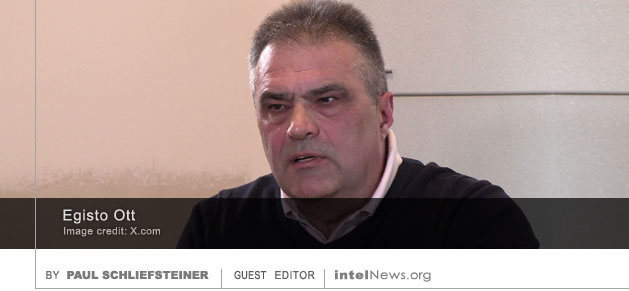
Egisto OttON JUNE 26, THE longwinded case of Austria’s counter intelligence failure regarding a possible inside threat took yet another —quite surprising— turn: the state court of Vienna (Landesgericht Wien) released from pre-trial detention (Untersuchungshaft) Egisto Ott, a former member of the Federal Office for the Protection of the Constitution and Counterterrorism (BVT) —Austria’s now-dissolved domestic intelligence agency. Ott, who was accused of spying against Austria, had been arrested (again) at the end of March on suspicion of obtaining classified information for which he could provide no reason, as well as for presumably selling it. Among the suspected recipients of the classified information were Russian assets and —more or less directly— Russian intelligence.
However, the three-judge panel called to decide on the detention complaint came to the conclusion that, while there remains a strong suspicion (dringender Tatverdacht) against Ott, the reasons for his further detention were not sufficiently given. In the judges’ view, all activities that could carry a pre-trial detention were committed before Ott was arrested and released for the first time in 2021. Back then, Ott had also been released after a short detention, following a decision by the same court. Briefly summarized, in 2021 the Landesgericht concluded that Ott could no longer spy against Austria as he did not have access to classified information, having been removed from the domestic intelligence agency years earlier. Additionally, since the BVT was in the process of reorganization and reformation at that point, the judges deemed the possibility of further criminal behavior by Ott to be unrealistic.
The recent assessment that Ott did not conduct additional punishable offences following his first release is surprising, since the prosecutor alleged —with a certain undertone directed against the initial decision to release Ott, which can be noted in the arrest warrant— that Ott had resumed his information-gathering and handling activities immediately upon being set free in 2021. Specifically, Ott is accused of having unlawfully retrieved data from the Central Register of Residents (Zentrales Melderegister) on March 24 of that year and then passing it on. The information accessed by Ott concerned the Bulgarian investigative journalist Christo Grozev, who was living in Austria at the time. Consequently, Grozev had to leave Vienna, since his life was deemed to be in severe danger. Today, whenever Grozev returns to Austria to visit members of his family who remain there, he has to do so under heavy protection by the Austrian authorities.

Between June and November 2022, when Ott had been released from his first pre-trial detention, there was also an alleged transfer to Russia of three mobile phones, or their data, as well as a highly-encrypted SINA-workstation laptop. However, the judges of the Landesgericht concluded that, while information or intelligence provided to foreign services does not have to be secret to constitute criminal espionage against Austria, “concrete and vital interests of Austria” have to be violated by such a transfer. The judges did not deem that the evidence furnished by the prosecutor met their criteria. Die Presse, Austria’s ‘newspaper of record’, published a detailed explanation of the court decision. Read more of this post

Profile of Tang Yuanjun, alleged asset for Chinese intelligence 2018-2023

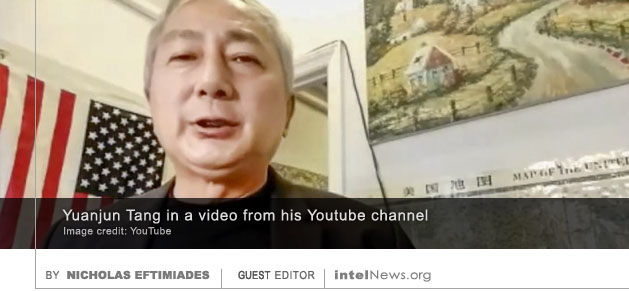
Yuanjun TangTANG YUANJUN WAS ARRESTED by the United States Federal Bureau of Investigation (FBI) in August 2024. He allegedly worked as a Chinese Ministry of State Security (MSS) asset between 2018 and 2023. He reported on the following categories of information that were of interest to the MSS:

  • Prominent U.S.-based Chinese democracy activists and dissidents.
  • US Chinese-American Member of Congress Xiong Yan, from New York.
  • Immigration claims from dissidents wanting to leave China for the US.

According to the US Department of Justice (DoJ), Tang expressed his desire to see his aging family in China. A prominent dissident such as Tang would not be able to travel to China without being arrested, unless his travel had been approved by authorities. An acquaintance helped him establish secure online contact with the MSS. After being recruited, Tang reported to the MSS using an email account, encrypted chats, text messages and audio and video calls. Tang helped the MSS infiltrate a group chat on WhatsApp; used by numerous People’s Republic of China (PRC) dissidents and pro-democracy activists to communicate about pro-democracy issues and express criticism of the PRC government. In fact, this was what users called a “super group”. It is a group that consists of many other groups. Members could not even identify who was the sponsor of the group chats [1].

In addition, Tang reportedly video-recorded a June 2020 Zoom discussion commemorating the anniversary of the Tiananmen Square massacre in the PRC. The Zoom online discussion was led by Zhou Fengsuo, Director of the June 4th Memorial Museum in New York City and a leading advocate for democracy in China. The Ministry of Public Security also infiltrated these discussions with the assistance of Zoom China and US based employees [2].

Tang was Secretary General of the overseas headquarters of the China Democratic Party United Headquarters in New York City. This non-profit organization assists mainland Chinese dissidents in immigration and asylum applications for the US. Tang allegedly provided information on these individuals to the MSS [3]. Tang also allegedly identified ten immigration attorneys to support MSS efforts to place assets in the US. Other dissident organizations in New York and Los Angeles provide similar visa application services to generate income.

In 2022, reportedly Tang met with the MSS in Changchun City, Jilin Province, China, where an officer installed a software on Tang’s phone which Tang believed to be a “bug” that caused all photographs and videos captured on the phone to be transmitted to the MSS. In his role as leading democracy advocate Tang encouraged dissidents to attend protests in Manhattan and Washington DC. He used the compromised phone to take photographs of the events. The Chinese Communist Party (CCP) then used the photographs as evidence against overseas dissidents. Read more of this post

Dutch prime minister bans wireless devices from meetings to ward off espionage

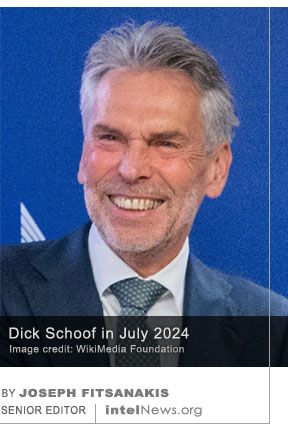
Dick SchoofTHE NETHERLANDS’ NEW PRIME minister has officially banned the use of all wireless devices from cabinet meetings, reportedly to defend against espionage operations from foreign actors. The move comes following warnings by Dutch intelligence services that the country is being targeted by Russian and Chinese spies with more intensity than at any time since the Cold War.
The current Dutch government, led by the far-right Freedom Party (PVV), was formed following the general election of November 2023. Although the PVV, headed by populist Geert Wilders, emerged as the leading political force in the Netherlands with 23% of the vote, it found it difficult to form a governing coalition. In June of this year, following lengthy negotiations, a rightwing coalition was formed between the PVV, the People’s Party for Freedom and Democracy (VVD), the Farmer-Citizen Movement (BBB), and the New Social Contract (NSC).

A key feature of the agreement was that none of the individual parties’ leaders, including Wilders, could serve as prime minister. Instead, the three parties settled on Dick Schoof as a form of compromise. The 67-year-old Schoof led the Netherlands’ Immigration and Naturalization Service from 1999 until he was appointed to head the Ministry of Security and Justice in 2010. From 2013 to 2018, he became the National Coordinator for Security and Counterterrorism —the Netherlands’ main counter-terrorism unit, which operates as part of the Ministry of Security and Justice.

In 2018, Schoof was appointed director-general of the General Intelligence and Security Service (AIVD), the nation’s primary intelligence agency. The AIVD is tasked with foreign and domestic duties, as well as signals intelligence. Prior to his prime ministerial post, the culmination in Schoof’s career as a public servant came with his appointment as secretary-general of the Ministry of Justice and Security, in 2020. In 2021, after 30 years of being a member, Schoof officially left the Labor Party (PvdA), the Netherlands’ mainstream social-democratic, left-of-center political party. In subsequent public comments he appeared to endorse the PVV, but never officially joined it.

Speaking to reporters last week, Schoof said he was “taking a different approach” to security at cabinet meetings, which was “based on his former job in the intelligence community”. He added, “maybe I have a bit more experience with that sort of thing” and stressed that banning wireless devices from cabinet meetings was “a completely natural measure” for him. Members of the Dutch cabinet “agreed immediately” with the new measure, said the new prime minister.

Author: Joseph Fitsanakis | Date: 02 September 2024 | Permalink

Is Israel preparing to carry out intelligence operations on US soil?

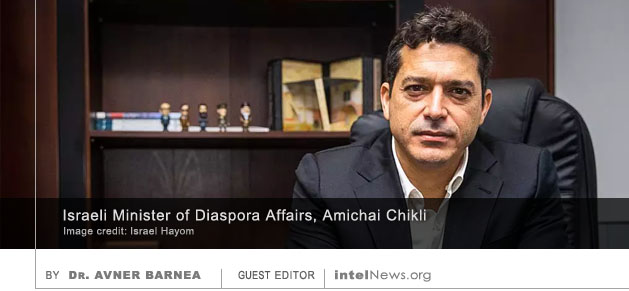
Amichai ChikliSEVERAL WEEKS AGO, ISRAEL’S Minister of Diaspora Affairs, Amichai Chikli, reportedly met with the chief executive officer (CEO) of Israeli private intelligence company Black Cube. According to Israeli newspaper The Marker, the purpose of the alleged meeting was to propose an intelligence operation to be carried out on American soil by Black Cube, on behalf of the Israeli government. The intelligence operation would allegedly target a United States-based organization that stands at the forefront of demonstrations against Israel on university campuses in the United States —demonstrations that the state of Israel views as anti-Semitic.

According to The Marker report, the alleged meeting between Minister Chikli and the CEO of Black Cube, Dan Zorla, took place in a private residence in Herzliya near Tel Aviv. Minister Chikli was personally involved in the discussions with Black Cube, with the understanding that intelligence operations carried out by the firm on American soil would not be officially attributed to the State of Israel. However, it is unclear whether such intelligence operations were indeed authorized to proceed.

The organization against which Chikli reportedly asked Black Cube to target is “Students for Justice in Palestine”. The group has staged numerous demonstrations on university campuses across the United States since the outbreak of the Israel-Hamas war last October.

The alleged use of a private intelligence company against an American-based organization, whose leaders are primarily American citizens, may be perceived as a violation of American sovereignty. Such an activity could further-damage the relationship between Israel and the American government and stigmatize Israel’s image among the American public.

Following the publication of The Marker report, the Ministry of Diaspora Affairs claimed the proposal for the intelligence operation had been initiated by Black Cube and that Ministry officials ultimately rejected it. Still, at least three different sources appear to confirm the exact opposite —namely, that the spying initiative was prompted by the Ministry. Black Cube reportedly rejected it based on concerns that such a high-risk operation could damage the company’s standing with the United States government and harm its ability to do business on American soil in the future.

An official statement issued by the Ministry of Diaspora Affairs said: “Since the beginning of the war, the ministry has held meetings with dozens of organizations seeking to assist the efforts of the State of Israel in various fields. At the company’s [Black Cube’s] request, a meeting was held with the ministry’s professional echelon, and at the end of it, it was decided not to proceed with any engagement”. Read more of this post

Israel releases findings of internal probe into October 7 intelligence disaster

Hamas GazaTHE OFFICIAL INTERNAL INVESTIGATION into the performance of Israel’s Military Intelligence Directorate (MID) during the run-up to the Hamas attack of October 7, 2023, has been released. Known as The Road to War, the report addresses the central question of: how did the MID –the main military intelligence body of the Israel Defense Forces, or IDF– miss all the signs of the pending Hamas attack, and how did all the available warnings go unheeded?

To compline the report, the Intelligence Directorate of the IDF investigated how the most significant intelligence failure in the history of the State of Israel occurred, as well as how the MID analysts and other members of the intelligence community failed to notice the attack that Hamas had been planning.

According to the findings of the investigation, Hamas began planning its attack between seven and eight years ago, which means that Israeli intelligence should have been able to observe the relevant warnings as early as 2016. However, the IDF’s intelligence division missed the early signs.

It appears that the MID assumed Hamas had been deterred by Israel. There was also a prevailing assumption that the group’s military wing, led by Yahya Sinwar, had settled on improving the economic situation of Gaza Strip residents while securing its internal sovereign status in the Gaza Strip. The MID intelligence analysts were uniformly immersed in the concept that Hamas “did not want to and could not” go to war against Israel.

The main findings of the investigation are as follows: Read more of this post

At least four Russians released in prisoner exchange with West are verified ‘illegals’

SVR hqAT LEAST FOUR OF the eight Russians released by the United States and its allies last week, in exchange for 16 people held in Russian prisons, are verified ‘illegals’ —the term used to describe Russian non-official-cover intelligence personnel. All four operated using third country identity documents, including passports. In every case but one, these identity documents had been illegally acquired.

In intelligence parlance, the term ‘illegals’ emerged during the Cold War to describe Russian intelligence personnel who operated without any formal association with Russian diplomatic facilities. In many cases, these operatives used third country passports. This enabled them to operate with an unusual degree of flexibility and evade the attention of rival intelligence services. At the same time, however, the absence of diplomatic credentials prevented these operatives from claiming diplomatic immunity if caught. It thus exposed them to the possibility of lengthy prison terms upon discovery.

THE TWO GRU ILLEGALS

Among the prisoners exchanged last week was Pavel Alekseyevich Rubtsov. Rubtsov was born in the Soviet Union as the grandson of a Spanish evacuee, who had been taken to Moscow as a child by the leftist Spanish Republic during the Spanish Civil War. At the age of 9, Rubtsov moved with his mother to Spain, where he had his name legally changed to Pablo González Yagüe and grew up in Catalonia and the Basque Country. He was arrested in Poland in 2022 and charged with participating in foreign intelligence activities against Poland on behalf of the Main Directorate of the Russian Armed Forces’ General Staff, which is commonly known as GRU.

IntelNews has previously reported on the case of Mikhail Valeryevich Mikushin, who was also released and returned to Russia on Thursday. Mikushin lived for several years in Canada and Norway using a Brazilian passport under the name of José Assis Giammaria. When he was arrested by Norwegian authorities, Mikushin was working as a researcher on arctic security affairs for the Arctic University of Norway. Among other things, Mikushin was a volunteer researcher for a UiT GreyZone, a scholarly project that studies contemporary hybrid threats and grey zone warfare. Like Yagüe, Mikushin is also believed to have been employed by the GRU.

THE TWO SVR ILLEGALS

Arguably the most unusual case of illegals among those unveiled last week is that of Artem Dultsev and Anna Dultseva. The couple moved from Argentina to Ljubljana, the capital of Slovenia, in 2017. They brought with them their two young children, a boy and a girl, both of whom appear to have been born in Argentina. Artem Dultsev’s Argentinian passport bore the name Ludvig Gisch, born in 1984 in the West African country of Namibia. Dultsev posed as an information technology executive. His wife, Anna Dultseva, who operated an art gallery, used the cover name Maria Rosa Mayer Munos and went by Mayer. Read more of this post

South Korea’s top HUMINT agency probes potentially catastrophic data breach

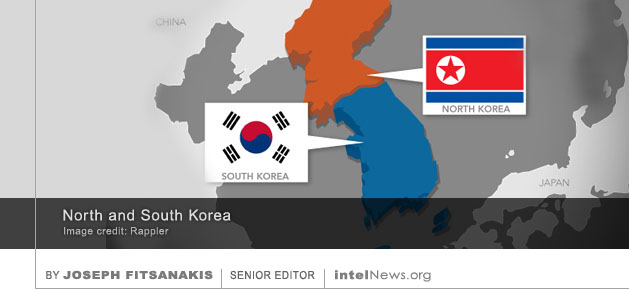
North South KoreaIN A HIGHLY UNUSUAL move, authorities in Seoul have publicly acknowledged a data leak that may have resulted in the outing of a number of South Korean undercover human intelligence (HUMINT) operatives abroad. The South Korean Ministry of National Defense said on Sunday it was investigating an alleged link of highly sensitive data belonging to the Korea Defense Intelligence Command (KDIC).

Formed under American tutelage in 1946, KDIC is today considered South Korea’s most secretive intelligence agency. It operates under the Defense Intelligence Agency (DIA), which makes it part of the Ministry of National Defense’s chain of command. Unlike DIA’s civilian counterpart, the National Intelligence Service, KDIC rarely surfaces in unclassified news reporting, and it almost never issues press releases. Its operations primarily involve HUMINT activities, thus making it South Korea’s most active HUMINT-focused agency.

Predictably, KDIC’s primary intelligence target is North Korea. The agency gathers much of its intelligence on the North through an extensive network of undercover officers operating with diplomatic credentials. KDIC also handles non-official cover (NOC) operatives, who are located mostly in Asia. There have been periodic claims in the unclassified literature that some KDIC NOCs have operated inside North Korea at times –though such claims remain speculative.

On Saturday, the Seoul-headquartered Yonhap News Agency alleged that classified information relating to KDIC had been “leaked”. According to Yonhap, the leak included personally identifiable information about KDIC official and non-official cover personnel stationed abroad. The report claimed that the leak was discovered by South Korean authorities a month ago, and that the discovery had resulted in the recall of several KDIC undercover operatives serving overseas “due to concerns over their identities being exposed”.

The Yonhap report claimed that, according to an ongoing probe, the leak may have originated from a personal laptop computer belonging to a civilian KDIC employee. The employee has since claimed that the laptop had been hacked, but some investigators believe the suspect may have “intentionally left the laptop vulnerable to hacking by North Koreans”.

According to an official statement released on Sunday by the Ministry of National Defense, the case is “currently under investigation by military authorities”.

Author: Joseph Fitsanakis | Date: 29 July 2024 | Permalink

Ex-CIA analyst accused of spying for South Korea had prior warnings from FBI, CIA

NIS South KoreaA FORMER INTELLIGENCE ANALYST for the Central Intelligence Agency (CIA), who is married to a high-profile columnist for The Washington Post, remains under arrest for allegedly spying for South Korea. According to an indictment unsealed last Tuesday in the Southern District of New York, the former CIA analyst is Sue Mi Terry, 54, of New York. Terry is a naturalized American citizen born in Seoul, South Korea, who grew up in Virginia and received a PhD from Tufts University in Massachusetts.

Terry joined the CIA in 2001 but resigned in 2008, allegedly “in lieu of termination” because her employer “had ‘problems’ with her contact with” officers from South Korea’s National Intelligence Service (NIS). After leaving the CIA, Terry worked briefly for the National Security Council and the National Intelligence Council, before transitioning to academia. Her most recent post was that of a senior fellow at the Council on Foreign Relations, where she became known as an exert on East Asian affairs with a focus on the Korean Peninsula. For over a decade, Terry has made frequent appearances on television and radio, as well as on several podcasts. She is married to the Washington Post columnist Max Boot.

The Department of Justice accuses Terry of failing to register under the Foreign Agents Registration Act and deliberately conspiring to violate that law, thus effectively operating as an unregistered agent of a foreign power. The indictment claims that Terry was gradually recruited by the NIS, beginning in 2013, two years after she stopped working for the United States government. Terry allegedly continued to work for the NIS for a decade, during which she was handled by NIS intelligence officers posing as diplomats in South Korea’s Washington embassy and permanent mission to the United Nations in New York.

It is alleged that throughout that time Terry provided her NIS handlers with access to senior US officials, disclosed “nonpublic US government information” to the NIS, and promoted pro-South Korean policy positions in her writings and media appearances. In return, Terry is alleged to have received luxury goods, free dinners at expensive restaurants, and nearly $40,000 in “covert” funding, nominally to operate a public policy program on Korean affairs. It is worth noting that, according to the unsealed indictment, the Federal Bureau of Investigation warned Terry that she should be wary of being approached by NIS officers seeking to offer her funding. Read more of this post

Analysis: Secret Service failed Trump because it can’t keep up with the growing threat

Trump 2016THE UNITED STATES SECRET Service is among the world’s most prestigious law enforcement agencies. Its institutional experience in protecting US presidents and presidential candidates dates to 1901. Given its high-stakes protective mission —safeguarding the executive leadership of the world’s most powerful nation— the agency has historically placed emphasis on flawlessness: it simply can’t afford to fail.

Yet it did just that on Saturday in Butler, Pennsylvania. Presidential candidate Donald Trump did not survive the attempted assassination because his Secret Service detail neutralized the threat to his safety in time. Instead he survived because the shooter, 20-year-old Thomas Matthew Crooks, from the small suburb of Bethel Park in Pittsburgh, missed. How are we to explain this abject failure by one of the world’s most venerated law enforcement agencies?

POLICING IN A DEMOCRACY

Unlike tyrannical regimes, where law enforcement is nearly omnipresent, policing functions in democratic societies are relatively limited. They rely on what can be essentially described as a numbers game. Under this model, the effectiveness of policing functions inherently rests on the assumption that the vast majority of the population will comply with legal norms voluntarily, and that it will do so most of the time.

Thus, the sustainability of law and order in democratic societies hinges, not just on the capabilities of the enforcement agencies, but significantly on the general populace’s commitment to uphold the rule of law. This tacit social contract allows law enforcement agencies to operate with a relatively small logistical footprint. It also allows police forces to focus their efforts on a relatively small number of individuals, or groups, who do not adhere to the law.

WIDESPREAD BREAKDOWN

The US has relied on this model of policing since the Civil War. However, this model tends to falter once a substantial segment of the population refuses to voluntarily adhere to legal conventions. In such a scenario, the sheer number of non-compliant individuals can overwhelm the policing system, leading to a widespread breakdown in law and order.

The US has witnessed such incidents with alarming intensity in recent years. Examples include the 2014 Bundy standoff and the 2016 occupation of the Malheur National Wildlife Refuge by armed groups of anti-government extremists. It also witnessed the —often gratuitously violent— George Floyd protests, as well as the armed occupation of the Capitol Hill neighborhood of Seattle, Washington, in 2020.

Most notably, America witnessed widespread civil disobedience on January 6, 2021, when thousands of frenzied Trump supporters stormed the US Capitol and attempted to bring an end to the Constitutional order in one of the world’s oldest democracies. In addition to exposing the fragility of American democracy, the January 6 attack drew attention to the ineffectiveness of the state’s policing functions, thus further-eroding public trust and compliance.

AMERICANS ARE EMBRACING VIOLENCE

There is no denying that Americans are viewing violence as an element of national politics with an alarming rate. Last summer, a survey conducted by the University of Chicago’s Project on Security and Threats revealed that 4.4 percent of the adult population of the US —12 million Americans— believed that violence was justified to restore Donald Trump to power. Granted, very few of those survey responders would actually be willing to act on such extreme beliefs. But even a mere 1 percent of those 12 million people who appear to endorse violence in support of Trump amounts to 120,000 individuals. That’s an enormously large number of radicalized Americans. Read more of this post

Former director of Dutch intelligence service sworn in as prime minister

AIVD HollandTHE FORMER DIRECTOR OF the Netherlands’ intelligence service has been sworn in as prime minister at the head of a rightwing coalition government that has pledged to radically reform the nation’s immigration system. The appointment of Dick Schoof brings an end to a seven-month deadlock that resulted from the general election of November 2023. The far-right Freedom Party (PVV), headed by populist Geert Wilders, emerged as the leading political force with 23% of the vote. However, it subsequently found it difficult to form a governing coalition.

Last month, following prolonged negotiations, a rightwing coalition was formed between the PVV, the People’s Party for Freedom and Democracy (VVD), the Farmer–Citizen Movement (BBB), and the New Social Contract (NSC). A key feature of the agreement is that none of the individual parties’ leaders, including Wilders, can serve as prime minister. Instead, the three parties settled on Schoof as a form of compromise.

The 67-year-old Schoof led the Netherlands’ Immigration and Naturalization Service from 1999 until he was appointed to head the Ministry of Security and Justice in 2010. From 2013 to 2018, he became the National Coordinator for Security and Counterterrorism –the Netherlands’ main counter-terrorism unit, which operates as part of the Ministry of Security and Justice. In 2018, Schoof was appointed director-general of the General Intelligence and Security Service (AIVD), the nation’s primary intelligence agency that is tasked with foreign and domestic duties, as well as signals intelligence. Prior to his prime ministerial post, the culmination in Schoof’s career as a public servant came with his appointment as secretary-general of the Ministry of Justice and Security, in 2020.

In 2021, after 30 years of being a member, Schoof officially left the Labor Party (PvdA), the Netherlands’ mainstream social-democratic, left-of-center political party. In subsequent public comments he appeared to endorse the PVV, but never officially joined it. In his first comments since swearing in as prime minister, Schoof said he intends to govern “on behalf of all citizens of the Netherlands”, adding that his work will not be influenced by Wilders and the PVV. Schoof went on to say that his government intends to implement the most stringent immigration and asylum policy in Dutch history. There are also reports that Schoof’s government is considering a plan to move the Dutch embassy in Israel from its current location in Tel Aviv to Jerusalem.

Author: Joseph Fitsanakis | Date: 04 July 2024 | Research credit: C.E. | Permalink

Military and intelligence officials arrested in Bolivia over coup attempt

Luis Arce

Luis Arce

NEARLY 20 MILITARY AND intelligence officials have so far been arrested in Bolivia, less than a week after a former military commander led a failed coup against the government of President Luis Arce (pictured). Several military units stormed the Casa Grande, the presidential palace in La Paz, the Bolivian capital. An armored vehicle was used to ram the main gate of the palace, allowing soldiers to enter the building. However, soldiers were later seen withdrawing from the plaza in front of Case Grande, and police took back control.

Within hours, Bolivian forces loyal to President Arce had arrested the apparent leader of the coup, General Juan José Zúñiga. Arce had appointed Zúñiga commander general of the Bolivian armed forces in 2022. The commander of the Bolivian Navy, Juan Arnez Salvador, has also reportedly been arrested, as well as over a dozen other military and intelligence officers. According to reports, over 200 military and intelligence personnel participated in the failed coup, including high-ranking officers. A press statement issued on Saturday by the Bolivian government said that the investigation into the coup will continue until all participants in the coup are identified.

Meanwhile, President Arce denied claims made by Zúñiga that he had been secretly asked by Arce to create instability in the country, in order to prompt the Bolivian population to rally around the government. In a press conference held in La Paz on Thursday, the president denied he had any involvement in the planning of the coup or that he had prior knowledge of the coup plot. Earlier on the same day, Bolivia’s Minister of the Interior, Eduardo del Castillo, had said in a radio interview that his ministry had received intelligence about potential attempts to destabilize the government. However, during his press conference, President Arce denied the existence of intelligence reports warning about a coup: “We were never informed about [Zúñiga’s] reports […]. We were surprised”, he said.

Arce, a 60-year-old former minister of economics, rose to the presidency in 2020. The 2020 elections followed a period of widespread political turmoil in Bolivia, which led to the forced resignation of then-President Evo Morales. Arce’s rise to power facilitated the return of Morales to Bolivia after a period of self-exile. However, Morales and Arce, who were once close political allies, fell out after Morales’ return to Bolivia. They now lead rival factions of the once unified Movement to Socialism (MAS).

The United States, China, and Russia, which compete for influence and access to resources in Bolivia, have remained largely silent since the coup. Arce’s government has prompted discontent in Washington by signing agreements with Chinese and Russian firms to exploit reserves of lithium, which are ample in Bolivia. Lithium is essential for the production of batteries for laptops, cell phones and other electronics, as well as electric vehicles.

Author: Joseph Fitsanakis | Date: 01 July 2024 | Permalink