Star on CIA’s memorial wall honors employee who took her own life
May 21, 2019 3 Comments
 A new star that was recently added to the United States Central Intelligence Agency’s memorial wall is seen by some as a way to draw attention to the mental pressures that come with the job, while others view it as disrespectful to the Agency’s mission. The specially designated wall is located at the main entrance lobby of the CIA’s headquarters in Langley, Virginia. It was created in 1974 and displays a star for each of the CIA’s personnel who have perished in the line of duty while working for the Agency. Today it displays nearly 130 stars, which span the CIA’s 72-year history.
The CIA holds an annual ceremony in recognition of its fallen members, at which time new stars are usually added to the memorial wall. Among them there is a star for Ranya Abdelsayed, who died on August 28, 2013, while employed by the CIA in Kandahar, Afghanistan. However, unlike the other 19 known deaths of CIA personnel in Afghanistan since 2001, Abdelsayed reportedly died by suicide. Her lifeless body was found by a colleague after she shot herself to death at Firebase Gecko, an International Security Assistance Force base in Afghanistan, which is commanded by the North Atlantic Treaty Organization. It is believed that Abdelsayed’s star is the only star on the CIA’s memorial wall that recognizes a CIA employee who took her own life.
In an article published on Sunday, The Washington Post’s Ian Shapira reports that not everyone at CIA agrees that Abdelsayed deserves to have a star on the Agency’s memorial wall. Shapira spoke to Nicholas Dujmovic, a recently retired CIA historian, who claims that Abdelsayed’s star “must absolutely come off the wall” because it violates the CIA’s own criteria for this highest of honors. Dujmovic opines that the memorial wall is reserved for deaths of CIA personnel that are “of an inspirational or heroic character”, typically deaths that are caused by hazardous conditions or violent actions by adversaries. The CIA historian tells The Washington Post that he has researched past deaths of CIA personnel and fears that “there has been an erosion of understanding in CIA leadership for at least two decades about what the wall is for and who is it that we’re commemorating”.
The paper reports that Dujmovic made his views known to CIA officials when the Agency’s Merit Awards Board decided to include a star in honor of Abdelsayed. But the Board upheld its decision, and so did the CIA’s director at the time, John Brennan. He told The Post that he stands by that decision today, arguing that Abdelsayed’s death was “something the Agency needed to recognize as being one of those unfortunate consequences of the global challenges the CIA addresses”.
► Author: Joseph Fitsanakis | Date: 21 May 2019 | Permalink
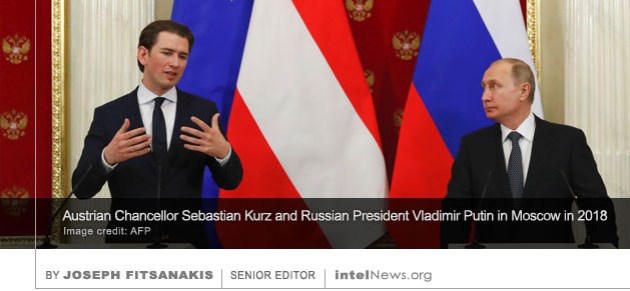 A day after Austria’s political system was thrown into a disarray by a covert video featuring the country’s vice chancellor and a woman posing as a Russian investor, German intelligence sources have raised fears that Russia may have penetrated the Austrian government with informants. Heinz-Christian Strache, who heads Austria’s far-right Freedom Party, stepped down from the post of vice chancellor on Saturday. His resignation came a day after two German media outlets aired a
 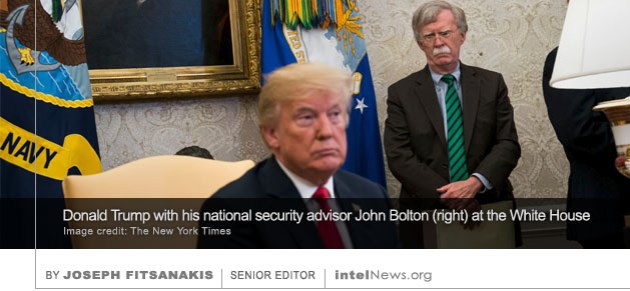 The escalating tension between the United States and Iran, and the ensuing military buildup in the Persian Gulf, may have resulted from a misreading of intelligence by both sides, according to a new report in The Wall Street Journal. Reports from the Middle East continue to describe the situation there as tense, while the political rhetoric by both Washington and Tehran remains heightened. Last week, the White House ordered the USS Abraham Lincoln carrier strike group to sail to Middle Eastern waters, following intelligence
 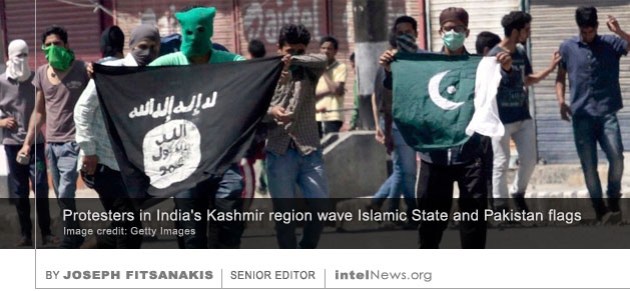 The group calling itself the Islamic State has announced the establishment of a new overseas province in Pakistan, just days after proclaiming another new overseas province in northern India. Until recently, the Islamic State’s operations in Asia were conducted under the banner of the Islamic State – Khorasan Province, or IS-KP. The shadowy group was founded in early 2015 and was led by former Taliban warlords who pledged allegiance to Abu Bakr al-Baghdadi, the spiritual leader and self-proclaimed emir of the Islamic State. Since that time, at least two of IS-KP’s leaders have been killed by United States forces, while the group has been engaged in a war against rival militant groups in Afghanistan and Pakistan, notably the Taliban.
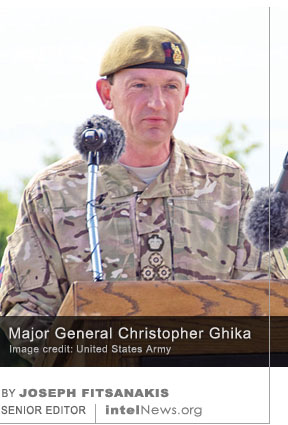 The most senior British military officer in the war against the Islamic State contradicted American assessments of a heightened threat from Iran, prompting an unusually strong rebuke from Washington. Last week, the White House ordered the USS Abraham Lincoln carrier strike group to sail to Middle Eastern waters, following intelligence
 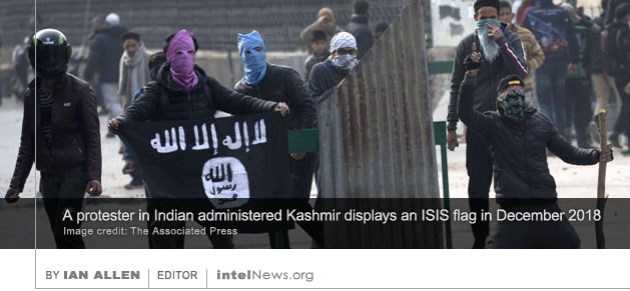 The group calling itself the Islamic State has announced the establishment of a new overseas province in India’s Jammu and Kashmir state. The announcement was made over the weekend by Amaq, which serves as the news agency of the Islamic State. According to the news release, the Islamic State (known also as the Islamic State of Iraq and Syria) has named the new province “wilayah al-Hind” (province of Hind), and said it is based in the Muslim-majority Kashmir Valley, which is located in one of the three administrative divisions of the Indian administered state of Jammu and Kashmir.
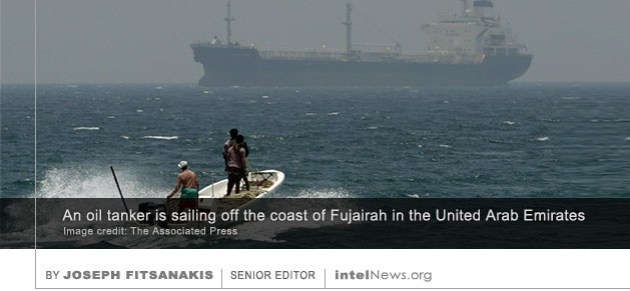 Authorities in the United Arab Emirates said on Sunday that four commercial ships were targeted by “sabotage operations”, but did not point to possible culprits. The announcement came hours after false reports circulated in Iranian and Lebanese media stating that explosions had been witnessed at the port of Fujairah, a major Emirati commercial shipping facility that borders the Sultanate of Oman and is visible from the coast of Iran. The alleged explosions were first
 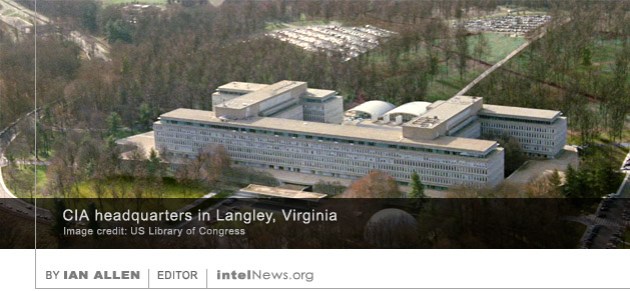 An untypical high-level meeting was convened at the headquarters of the United States Central Intelligence Agency last week to discuss Iran, according to NBC News. The meeting, which NBC
  The sudden decision by the United States to deploy significant firepower to the Middle East was partly in response to intelligence that was given to Washington by Israeli officials, according to a report. On Wednesday, the US announced that the USS Abraham Lincoln carrier strike group had received instructions to sail to the Middle East. The aircraft carrier is
  In an effort to persuade senior members of the Venezuelan government to defect, the United States has lifted punitive financial sanctions on the country’s intelligence director, who left his post on April 30. General Christopher Figuera became director of the Bolivarian National Intelligence Service (SEBIN) in October 2018. SEBIN is Venezuela’s primary intelligence agency and has a dual domestic and international role. Much of its domestic mission is to protect and defend the Bolivarian Revolution, which forms the ideological framework of the government headed by President Nicolás Maduro. It follows that SEBIN’s employees are all trusted supporters of Venezuela’s embattled President.
 The younger brother of Algeria’s deposed president Abdelaziz Bouteflika has been arrested along with two former directors of the country’s spy services. All three men are known as some of the North African country’s most powerful figures. Saïd Bouteflika, 61, served as senior advisor to his brother for over a decade. In 2013, when President Bouteflika suffered a debilitating stroke, Saïd became what many see as Algeria’s de facto leader and its primary decision-maker. He had not been seen in public since February 22, when mass demonstrations broke out across the country just hours after President Bouteflika, 82, announced that he would run for the highest office in the land for a record fifth time. The massive protests forced Bouteflika, who had held the presidency for two decades, to resign on April 2.
 The second of two female assassins who killed the half-brother of North Korean leader Kim Jong-un in 2017 in Kuala Lumpur has been released from prison by the Malaysian state, after a mostly secret trial. The two women, Doan Thi Huong of Vietnam and Siti Aisyah of Indonesia (pictured),
 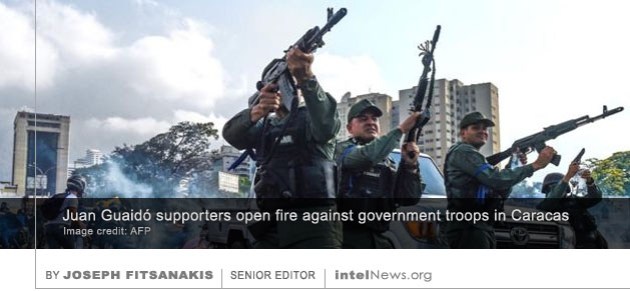 The embattled President of Venezuela, Nicolás Maduro, has reportedly fired his intelligence director, as news emerged early on Thursday that members of his inner circle were considering removing him from power. These reports circulated shortly after Juan Guaidó, President of the Venezuelan National Assembly, openly called on the country’s Armed Forces to remove Maduro from power. Guaidó has been recognized by over 50 countries —including the United States and much of the European Union— as the legitimate president of Venezuela. But Maduro continues to be supported by a number of powerful allies, including China and Russia, which
 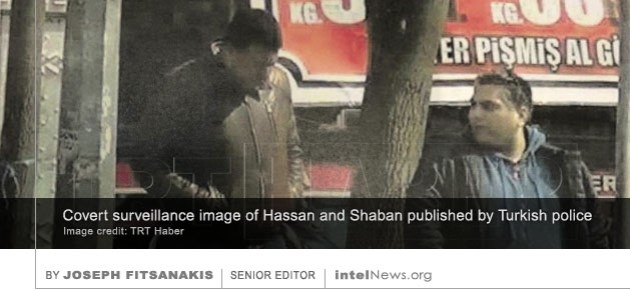 The family of a man who died in a Turkish prison on Sunday while awaiting trial for allegedly spying for the United Arab Emirates has called for an international investigation into this death. Zaki Mubarak Hassan and Samer Shaban —both Palestinians— were reportedly






 intelNews.org
ISIS threatens stability of former Soviet Republics, says Russian spy chief
May 22, 2019 by Joseph Fitsanakis 1 Comment
Thousands of Islamic State fighters are operating in Afghanistan’s northern border regions and are attempting to destabilize former Soviet Republics with substantial Muslim populations, according to Russia’s domestic spy chief. This warning was issued by Alexander Bortnikov, director of Russia’s Federal Security Service (FSB), which functions as Russia’s primary counter-terrorism agency. Bortnikov made these remarks during a visit to the capital of Tajikistan, Dushanbe, for a meeting of the heads of intelligence agencies of the Commonwealth of Independent States (CIS), an intergovernmental organization comprised of former Soviet Republics in the Eurasian region. The meeting was reportedly held behind closed doors, but Russia’s government-owned news agency TASS carried a summary of Bortnikov’s remarks.
The Russian intelligence chief said that, with the aid of the intelligence services of CIS states like Uzbekistan, Azerbaijan, Tajikistan, Kyrgyzstan, and others, the FSB was able to uncover and suppress eight Islamic State cells in the past year, which operated in the Central Asian region. However, the reach of the CIS countries does not extend to Afghanistan, said Bortnikov, where as many as 5,000 Islamic State fighters are congregating along the country’s border with three CIS states, namely Turkmenistan, Uzbekistan and Tajikistan. Many of these fighters are Turkmens, Uzbeks, Tajiks, Russians, and other citizens of CIS states, who previously fought with the Islamic State in Syria and elsewhere, and now form integral components of the Islamic State’s fighting force in Afghanistan and Pakistan. It appears that the Islamic State is now attempting to exploit the mountainous and porous borders of northern Afghanistan in order to destabilize neighboring countries, he said. These fighters intend to exploit “migrant and refugee flows [in Central Asia] in order to operate covertly from the Afghan battle zones to neighboring countries” and from there possibly to Russia, according to Bortnikov.
These covert activities of Islamic State fighters have already caused an escalation of tensions in the region and can be expected to continue to do so, as these groups radicalize and co-opt Muslim communities in CIS countries, noted Bortnikov. He added that popular responses to Islamist radicalization are prompting increasing incidents of “anti-Islamic terrorism”, which further-fuel religious and ethnic tensions in the region. As a reminder, last week the Islamic State announced that its so-called Khorasan Province fighters would be amalgamated into a new armed group calling itself Islamic State – Pakistan Province. Earlier this month, the group also proclaimed the establishment of a new overseas province in India’s Jammu and Kashmir state, called “wilayah al-Hind” (province of Hind). In addition to these two forces, there are currently an estimated 3,000 to 4,000 Islamic State fighters in Afghanistan’s Pashtun regions.
► Author: Joseph Fitsanakis | Date: 22 May 2019 | Permalink
Filed under Expert news and commentary on intelligence, espionage, spies and spying Tagged with Afghanistan, Alexander Bortnikov, Azerbaijan, FSB, Islamic State, Kyrgyzstan, News, Russia, Tajikistan, Uzbekistan