November 5, 2018
by Joseph Fitsanakis
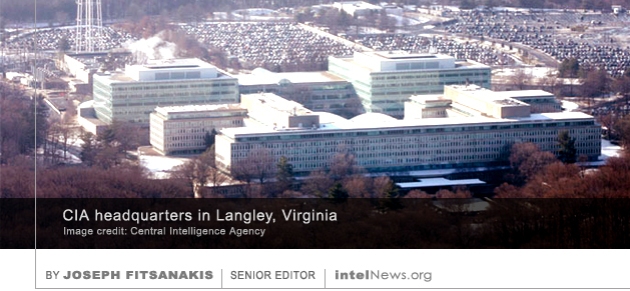 The United States Central Intelligence Agency suffered a “catastrophic” compromise of the system it uses to communicate with spies, which caused the death of “dozens of people around the world” according to sources. This is alleged in a major report published on Friday by Yahoo News, which cites “conversations with eleven former US intelligence and government officials directly familiar with the matter”. The report by the online news service describes the compromise of an Internet-based covert platform used by the CIA to facilitate the clandestine communication between CIA officers and their sources —known as agents or spies— around the world.
According to Yahoo News, the online communication system had been developed in the years after 9/11 by the US Intelligence Community for use in warzones in the Middle East and Central Asia. It was eventually adopted for extensive use by the CIA, which saw it as a practical method for exchanging sensitive information between CIA case officers and their assets in so-called ‘denied areas’. The term refers to regions of the world where face-to-face communication between CIA case officers and their assets is difficult and dangerous due to the presence of ultra-hostile intelligence services or non-state adversaries like the Taliban or al-Qaeda. However, it appears that the system was flawed: it was too elementary to withstand sustained scrutiny by Internet-savvy counterintelligence experts working for state actors like Iran, China or Russia.
In September of 2009, Washington made a series of impressively detailed revelations about the advanced status of Iran’s nuclear program. These angered Tehran, which redoubled its efforts to stop the US and others from acquiring intelligence information about the status of its nuclear program. Some sources told Yahoo News that one of the CIA assets inside Iran’s nuclear program was convinced by the Iranians to become a double spy. He proceeded to give Tehran crucial information about the CIA’s online communication system. Based on these initial clues, the Iranians allegedly used Google-based techniques “that one official described as rudimentary” to identify an entire network of CIA-maintained websites that were used to communicate with assets in Iran and elsewhere. The Iranians then kept tabs on these websites and located their users in order to gradually unravel an entire network of CIA agents inside their country. Around that time, Iranian media announced that the Islamic Republic’s counterintelligence agencies had broken up an extensive CIA spy ring consisting of more than 30 informants.
The Yahoo News report says that the CIA was able to successfully exfiltrate some of its assets from Iran before the authorities were able to apprehend them. The agency also had to recall a number of undercover officers, after they were identified by the Iranians. The effects of the compromise, however, persisted on a global scale, according to former US intelligence officials. In 2011 and 2012, another network of CIA spies was busted in China, leading to the arrest and execution of as many as three dozen assets working for the US. Many, says Yahoo News, believe that the Iranians coached the Chinese on how to use the CIA’s online communication system to identify clandestine methods and sources used by the agency.
Along with other specialist websites, IntelNews monitored these developments as they took place separately in Iran and China. However, the Yahoo News report is the first to piece together these seemingly disparate developments and suggest that they were likely triggered by the same root cause. What is more, the report suggests that the CIA had been warned about the potential shortcomings of its online communication system before 2009, when the first penetrations began to occur. In response to the compromise, the CIA has reportedly modified, and at times completely abandoned, its online communication system. However, the implications of the system’s compromise continue to “unwind worldwide” and the CIA is “still dealing with the fallout”, according to sources. The effects on the agency’s operational work are likely to persist for years, said Yahoo News.
► Author: Joseph Fitsanakis | Date: 05 November 2018 | Permalink
 Authorities in France have announced the arrest of six individuals who were allegedly involved in a plot to kill French President Emmanuel Macron. Government prosecutors said on Tuesday that the six were arrested for planning “a violent action against the president of the Republic”. A former economy and industry minister, Macron resigned from the cabinet of left-of-center Prime Minister Manuel Valls in 2016 in order to lead a new right-of-center movement called En marche (Forward). In 2017 he won the presidential election with 66.1 percent, becoming the youngest president in the history of France.
 A new book reveals for the first time the name of a former intelligence officer of the Soviet KGB who helped American authorities arrest Robert Hanssen, an American spy for the Soviet Union and Russia. The son of a Chicago police officer, Hanssen joined the Federal Bureau of Investigation in 1976 and was eventually transferred to the Bureau’s Soviet analytical unit, where he held senior counterintelligence posts. It wasn’t until 2000, however, that the FBI realized Hanssen had spied for Moscow since 1979. Following Hanssen’s arrest in 2001, it emerged that he had betrayed the names of 50 FBI and CIA assets or informants, many of whom perished in the hands of the Russian intelligence services.
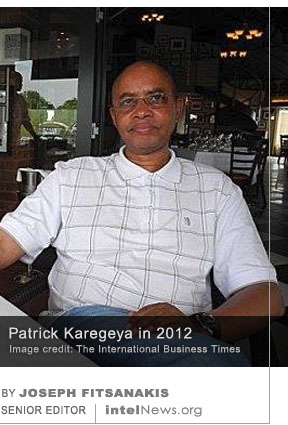 South Africa is preparing to launch an official inquest into the mysterious death of the former director of Rwanda’s external intelligence agency, who was
 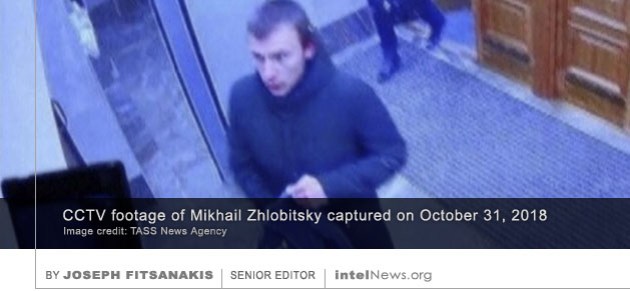 A teenager who killed himself with an improvised explosive device in the lobby of a regional office of Russia’s domestic intelligence agency appears to have identified himself as an “anarchist-communist” on social media. At 8:52 am local time on Wednesday, the 17-year-old entered the regional office of Russia’s Federal Security Service (FSB) in the city of Archangelsk, located 800 miles north of Moscow. On CCTV footage released by the Russian security services, he is seen reaching into his backpack and taking out an object, which soon
 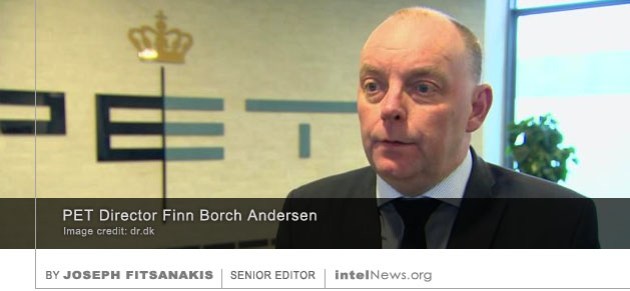 The Danish government has recalled its ambassador from Iran and has accused the intelligence services of the Islamic Republic of plotting an assassination operation on Danish soil. Danish government officials also said that Copenhagen would seek to impose further economic and diplomatic sanctions on Tehran, in coordination with the European Union. The accusations against Iran were leveled during an emergency news conference in the Danish capital on Tuesday, led by Anders Samuelsen, Denmark’s Minister of Foreign Affairs, and Finn Borch Andersen (pictured), Director of the Danish Security and Intelligence Service, known as PET.
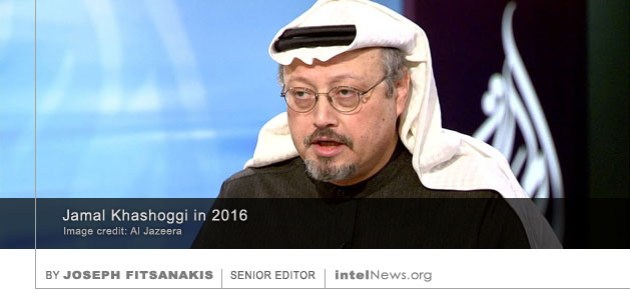 British intelligence had prior knowledge of a plot by the Saudi government to target Jamal Khashoggi, the dissident journalist who was killed in the hands of Saudi intelligence officers in Istanbul on October 2, and allegedly warned Riyadh not to proceed with the plan, according to a report. Khashoggi was a former Saudi government adviser who became critical of the kingdom’s style of governance. He is
  The online arm of the Islamic State, which was once one of the organization’s most noticeable trademarks, has declined markedly in 2018, according to expert observers in the United States and elsewhere. This is especially applicable to the militant group’s online propaganda and recruitment campaign, which appears to have effectively ceased, say experts.
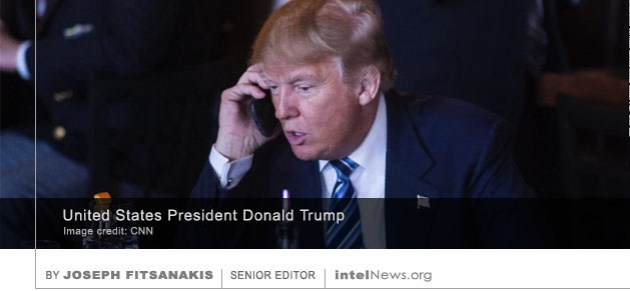 Officials in the White House are concerned about President Donald Trump’s insistence on using an unsecured iPhone to communicate with friends and associates, despite warnings that foreign spies may be listening in. Prior to being elected president, Trump used an Android phone, made by Google, which the NSA advised him to abandon due to security concerns. That is when he switched to using iPhones. Since his election to the presidency, Trump has routinely used three iPhone cell phones. He uses one of them to access a limited list of authorized applications, including Twitter. He uses the second iPhone for phone calls, but cannot use it to send texts, take pictures, or download and install applications. Both of these iPhones have been vetted and secured by the National Security Agency (NSA).
 A French government report warns of an “unprecedented threat” to security after nearly 4,000 leading French civil servants, scientists and senior executives were found to have been accosted by Chinese spies using the popular social media network LinkedIn. The report was authored by France’s main intelligence agencies, the General Directorate for Internal Security (DGSI) and the General Directorate for External Security (DGSE). According to the Paris-based Le Figaro newspaper, which
  Russian espionage activities in Switzerland are increasing and are crossing long-established “red lines”, according to senior Swiss defense and intelligence officials who spoke at a news conference last week. The claims were made by Guy Parmelin, head of Switzerland’s Federal Department of Defense, and Jean-Philippe Gaudin, director of the Swiss Federal Intelligence Service (NDB). The two men spoke on Friday before reporters in Bern. Following the news conference, Gaudin spoke with reporters from the Reuters news agency.
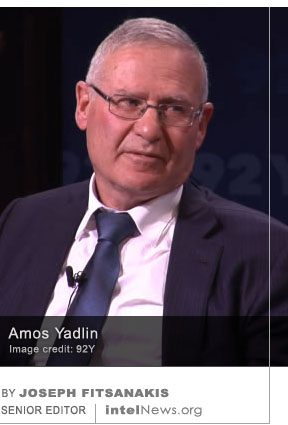 The government of Iran is smuggling parts for ballistic missiles to Lebanon, where they are secretly assembled in clandestine factories operated by the Shiite militant group Hezbollah, according to Israel’s former spy chief. For several months now, the international news agency Reuters has been
 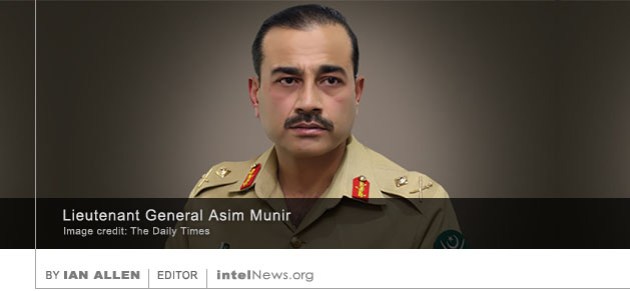 The hardline former director of Pakistan’s military intelligence agency is preparing to take the helm of the country’s powerful spy agency, the Inter-Services Intelligence directorate (ISI). Lieutenant General Asim Munir, who has spent more than two decades as a career military officer, has been officially appointed as director-general of ISI. In one of his first notable assignments, Munir served as a military attaché in Pakistan’s embassy in Saudi Arabia. After being promoted to a two-star general, he was appointed commander of Force Command Northern Areas in Gilgit-Baltistan, Pakistan’s northernmost region. The area borders Jammu and Kashmir, an autonomous Indian-administered region, which the Pakistanis claim belongs to them. Gilgit-Baltistan is also a strategic geopolitical corridor that connects Pakistan with one of its major regional allies, China.
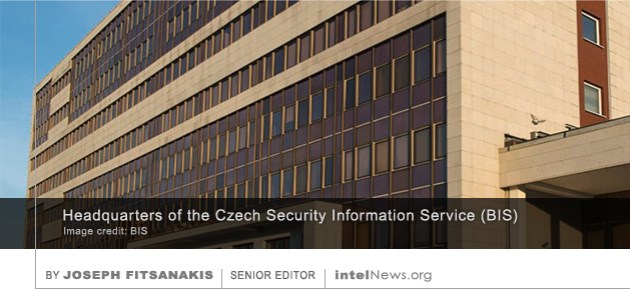 Officials in the Czech Republic have announced that the country’s spy agency headed an operation in several countries, aimed at neutralizing a cyberespionage network operated by the Lebanese militant group Hezbollah. Early last week, the Security Information Service (BIS), the primary domestic national intelligence agency of the Czech Republic, issued a short






 intelNews.org
ISIS using Turkey as strategic base to reorganize, Dutch intelligence report says
November 8, 2018 by Joseph Fitsanakis Leave a comment
The 22-page report argues that the government of Turkey does not see Sunni Islamist groups, such as al-Qaeda and the Islamic State (also known as the Islamic State of Iraq and Syria, or ISIS), as a pressing national security threat. Instead, Turkish security services are far more concerned with the ethnic Kurdish insurgents of the Kurdistan Workers’ Party (PKK) in Turkey and the People’s Protection Units (YPG) in Syria. Therefore, although Turkish authorities do sometimes take action to combat al-Qaeda and ISIS, “Turkish interests do not always correspond with European priorities on the field of counter-terrorism”, says the report. For that reason, Turkey served as a large transit center of tens of thousands of foreign fighters who poured into Syria to fight for Sunni Islamist groups during the height of the Syrian Civil War. At least 4,000 of those fighters are believed to be Turkish citizens, according to the AIVD report.
Today Turkey is home to tens of thousands of sympathizers of both al-Qaeda and ISIS —two organizations that maintain an active presence throughout the country— claims the report. The hands-off approach of the Turkish government is giving these groups “enough breathing space and freedom of movement” to operate relatively freely on Turkish soil. Additionally, al-Qaeda and ISIS members exploit the relative peace and stability of Turkey to forge plans to attack Western target, claims the AIVD report. It is from Turkey, it argues, that the Islamic State plans to shape and direct its pending underground war on the European continent.
► Author: Joseph Fitsanakis | Date: 08 November 2018 | Permalink
Filed under Expert news and commentary on intelligence, espionage, spies and spying Tagged with AIVD (Netherlands), al-Qaeda, counterterrorism, Islamic State, Netherlands, News, Turkey