Ex-CIA case officer was arrested after being lured back to US at least once
January 18, 2018 2 Comments
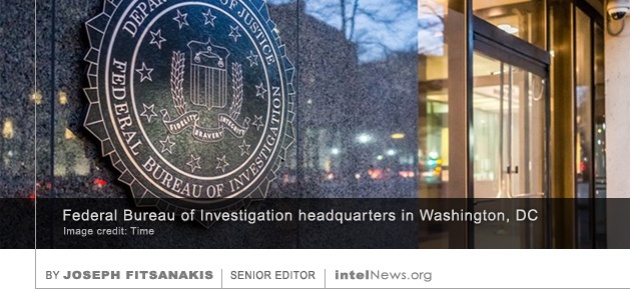 A former case officer in the Central Intelligence Agency, who was arrested this week for violating the United States Espionage Act, was lured back to America from Hong Kong at least once by counterintelligence investigators, according to reports. Jerry Chun Shing Lee, 53, served in the CIA from 1994 to 2007. He was arrested by Federal Bureau of Investigation officers on Monday, as soon as he arrived in the US from Hong Kong. He is accused of carrying with him top-secret information about CIA agents and operations, which he was not authorized to possess. It now appears that the FBI had been investigating Lee since 2010, and that he was lured to the US in 2012 so that he could be investigated. It is also possible that he was lured back to the US from his home in Hong Kong on Monday, so that he could be arrested by the FBI.
The New York Times said on Wednesday that a consortium of FBI agents and CIA officers identified Lee as a suspect in a counterintelligence case involving the loss of over a dozen CIA assets in China between 2010 and 2012. By that time, Lee had left his job as a case officer —essentially a spy handler— in the CIA and was living in Hong Kong. According to NBC, the FBI decided to lure Lee back to American soil by creating a job for him in the nation’s capital. That was the reason why Lee traveled with his family back to the US in August of 2012. The family stopped in Hawaii, where, according to court documents, the FBI surreptitiously searched Lee’s possessions in a Honolulu hotel. FBI officers also searched Lee’s belongings in a hotel in Virginia a few days later. Lee was found to have with him two notebooks containing “operational notes from asset meetings”, “operational phone numbers” and even “the addresses of CIA covert facilities” —safe houses where CIA case officers meet their assets in privacy.
According to The Times, the FBI confronted Lee five times in subsequent months, but did not inform him that his belongings had been surreptitiously searched or that he had been found to possess classified information without authorization. But the FBI did not press charges against Lee, nor did it prevent him from returning to Hong Kong with his family in the summer of 2013. Instead, it focused on establishing a connection between Lee and the catastrophic loss of CIA assets in China. It was only this week, when Lee returned to the US, that authorities decided to arrest him. The reason why Lee decided to return to the US remains unknown. The possibility that he may have been lured back to the US by the FBI, just as he was in 2012, should not be excluded.
It appears that investigators have not at this point connected Lee with the more serious charge of conveying the classified information to foreign agents. Instead, the former CIA officer is charged simply with possessing top-secret information, but not with communicating it. The charge is believed to be “the same single charge that could have been brought years ago”, namely when Lee was found to be carrying classified information with him in Hawaii.
► Author: Joseph Fitsanakis | Date: 18 January 2018 | Permalink
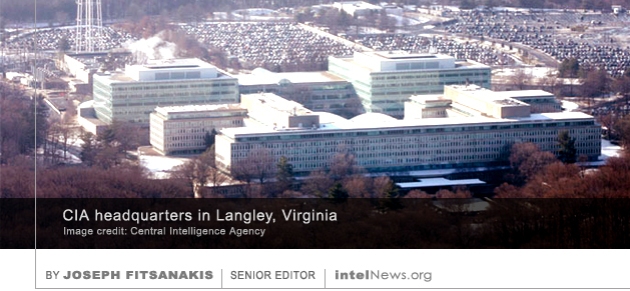 A former operations officer in the United States Central Intelligence Agency has been arrested on charges of illegally possessing top secret information, including lists of real names of foreign assets and addresses of CIA safe houses. The news emerged on Tuesday, as the US Department of Justice announced that the Federal Bureau of Investigation had filed a criminal complaint over the weekend. The complaint identifies the former case officer as Jerry Chun Shing Lee, also known as Zhen Cheng Li. Lee, a 53-year-old naturalized American, served in the CIA from 1994 to 2007 “in various overseas positions and locations”, according to court documents. Lee has
 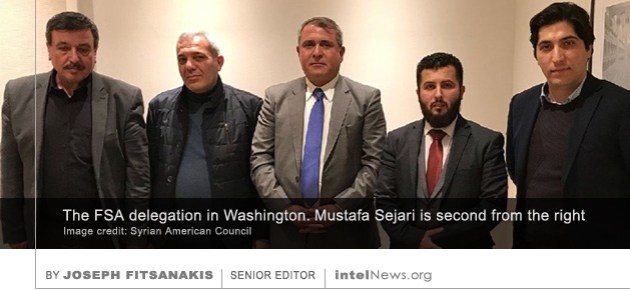 A delegation of Syrian rebels is currently in Washington to ask that that United States President Donald Trump authorizes the Central Intelligence Agency to resume giving them military assistance. In 2013, the then-US President Barack Obama instructed the CIA to provide covert support to fighters in Syria. The CIA promptly began to assist fighters affiliated with the Free Syrian Army (FSA), whose goal was to topple the regime of Syrian President Bashar al-Assad. Under the project, which was codenamed TIMBER SYCAMORE, CIA personnel trained FSA fighters and gave them light weaponry. But in July of last year, President Trump
  A group of hardline Bosnian Serbs, some of whom have been trained in military tactics by Russian instructors, are secretly creating a paramilitary group to undermine the territorial integrity of Bosnia, according to reports. Information about the alleged paramilitary group was published on the Friday edition of Žurnal, a nonpartisan investigative newsmagazine. The allegations exposed by Žurnal were later repeated by Dragan Mektić, Bosnia and Herzegovina’s Minister for Security, who is himself a Bosnian Serb. Žurnal’s
 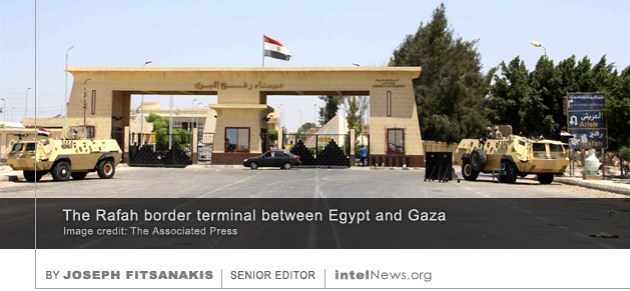 The Islamic State in Egypt’s Sinai Province has declared war on the Palestinian militant group Hamas, in a move that experts say will furhter-complicate an already volatile security situation in eastern Egypt. Many observers see the group, Wilayat Sinai, as the
 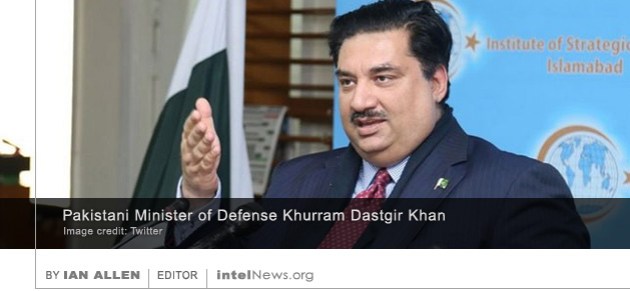 Pakistan said on Tuesday that it had suspended military and intelligence cooperation with the United States in the wake of Washington’s decision to stop security assistance to Pakistan. On Tuesday, Pakistan’s Minister of Defense, Khurram Dastgir Khan, said that his country had terminated all cooperation with the US in the areas of defense and intelligence. He said that the move was a response to the announcement by US President Donald Trump last week that Washington would stop providing security assistance to Pakistan. American officials stated that the change in policy took place because Pakistan had allegedly deceived America in the global war on terrorism. On Thursday last week, the President Trump
  A man who attended the “Unite the Right” rally in Charlottesville, Virginia, with members of a neo-Nazi organization, has been charged with terrorism offences after he tried to derail a passenger train. Taylor M. Wilson, of St. Charles, Missouri, was arrested by federal law enforcement officials on October 22, after he
 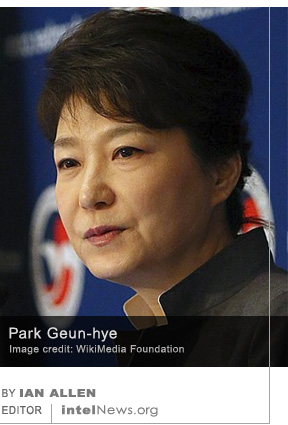 South Korea’s disgraced former president, Park Geun-hye, has been charged with accepting bribes amounting to millions of dollars from the country’s spy agency, according to reports. Park made history in 2013, by becoming the first woman president in South Korean history. However, almost as soon as she assumed office, her administration became embroiled in successive corruption scandals. By 2016, Park’s presidency had been brought to a standstill due to mass protests urging her removal from power, while increasing numbers of officials and administrators were refusing to work with her. She was eventually impeached in 2017, after the Constitutional Court of Korea found that she had violated the country’s laws by promoting the interests of personal friends and private corporations in return for cash and favors. She is currently in custody awaiting trial for 18 different charges, including abuse of power, coercion, blackmail and bribery.
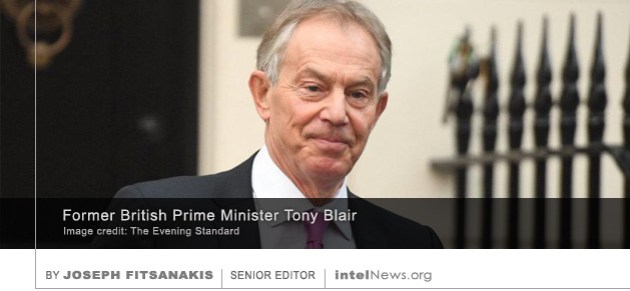 A spokesman for Tony Blair has dismissed as “categorically absurd” allegations that the former British Prime Minister warned the White House that President Donald Trump was targeted by British spy agencies. The claims are made in the book Fire and Fury: Inside the Trump White House, which is due to be published next week. Its author, Michael Wolf, says he based the information in the book on more than 200 interviews that he held with President Trump and members of his inner circle during the past year.
 Since 2008, when we launched intelNews, it has been our
  04. Unprecedented security changes are taking place in Saudi Arabia. Analysts agree that the Kingdom of Saudi Arabia is undergoing its most important political changes in generations. On November 4, 2017, nearly 50 senior Saudi officials, including at least 11 princes, some of them among the world’s wealthiest people, were suddenly
  taking place in the intelligence infrastructure of South Korea, which are arguably as important as developments north of the 38th parallel. In June, the new center-left government of President Moon Jae-in
  assist policy-makers, including the president. So when the CIA and the FBI conclude that the Russian government launched an extensive and sophisticated campaign to undermine the 2016 US presidential election, one expects the president to take that advisement under serious consideration. However, the US leader has openly dismissed the conclusions of his own Intelligence Community and has
  Since 2008, when we launched intelNews, it has been our
  as a result of “acute poisoning from an undefined substance”, according to his doctors. Also in February, Kim Jong-nam, half-brother of North Korean Supreme Leader Kim Jong-un, was killed in an
  support for the rebels could backfire by causing the suddenly unemployed fighters to join jihadist organizations. In August, there were reports that US troops
  Since 2008, when we launched intelNews, it has been our
  10.
10. 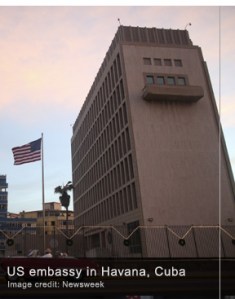 the alleged device may have been deployed by an intelligence service of a third country —possibly Russia— without the knowledge of the Cuban authorities. In October, the White House expelled 15 Cuban diplomats from the US in response to the incident. But the question of what harmed the health of at least 20 employees at the US embassy in Havana remains largely unanswered.
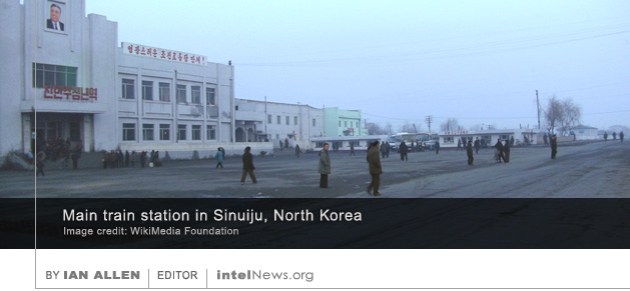 A North Korean nuclear scientist who defected to China but was involuntarily sent back to North Korea in November reportedly killed himself in his North Korean cell hours before he was due to be interrogated. Information about the scientist’s alleged suicide was issued on Thursday by Radio Free Asia (RFA), a multilingual news service based in Washington, DC, which is funded by the United States government. The service said its reporters spoke to an anonymous source in North Hamgyong province, North Korea’s northernmost region that borders China. The source identified the late scientist as Hyun Cheol Huh, but cautioned that this may not be his real name, because the North Korean security services are known to “use […] fake names when referring to important persons” in their custody.
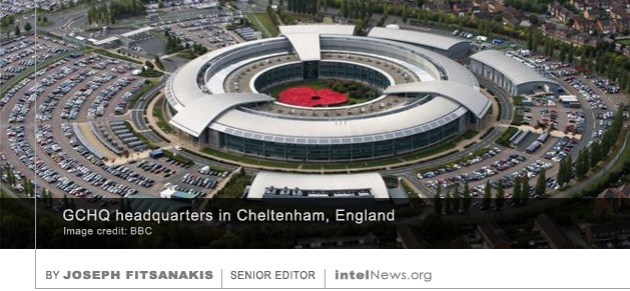 The Government Communications Headquarters (GCHQ), one of Britain’s most powerful intelligence agencies, says it plans to accelerate its vetting process because it is losing top recruits to the private sector. Founded in 1919 and headquartered in Cheltenham, England, the GCHQ is tasked with communications interception. It also provides information assurance to both civilian and military components of the British state. It primarily hires people with technical expertise in communications hardware and software. But in the past fiscal year, the agency fell notably short of its recruitment target, according to a new government report published this week.








Lebanese spy agency used Android app to spy on thousands, say researchers
January 19, 2018 by Joseph Fitsanakis Leave a comment
According to the Lookout/EFF research team, the trojanized phone application was camouflaged as a secure messaging service, resembling popular applications like Signal or WhatsApp. However, once an Android user downloaded it, it gave remote users access to the compromised phone’s cameras and microphone, thus turning it into a bugging device. The virus also stole email and text messages, pins and passwords, lists of contacts, call logs, photographs, as well as video and audio recordings stored on the compromised device. The report states that compromised devices were found in over 20 countries, including Lebanon, France, Canada, the United States and Germany. The majority of those targeted by the virus were civilian and military officials of foreign governments, defense contractors, and employees of manufacturing companies, financial institutions and utility providers.
On Thursday, Reuters contacted Major General Abbas Ibrahim, who serves as director general of GDGS. He insisted that the GDGS is known for collecting intelligence using human sources, not cyber technologies. “General Security does not have these type[s] of capabilities. We wish we had these capabilities”, General Ibrahim told the news agency.
► Author: Joseph Fitsanakis | Date: 19 January 2018 | Permalink
Filed under Expert news and commentary on intelligence, espionage, spies and spying Tagged with cellular telephony, communications interception, Electronic Frontier Foundation, GDGS (Lebanon), Lebanon, Lookout Mobile Security, News