US Pentagon wasted $450 million in Afghan spy training program, says watchdog
August 3, 2017 5 Comments
 Nearly half a billion of American taxpayers’ funds were wasted by contractors hired by the United States government to train Afghan intelligence personnel, according to a scathing report by a Congressional body. The funds were spent between 2010 and 2013 by the US Department of Defense, in order to train several thousand members and a few dozen aspiring trainees of the Afghanistan National Defense and Security Forces (ANDSF). Two companies, Legacy Afghanistan R&D and Afghanistan Source Operations Management, oversaw the training program. It was primarily executed by a contractor, Imperatis Corporation, and a subcontractor, New Century Consulting, at a total cost of $457 million to the US taxpayer.
But according to a new report, the four-year program was a monumental, multimillion dollar waste. The report was written by the Special Inspector General for Afghanistan Reconstruction (SIGAR). The body was established by the US Congress in 2008 to supervise the effectiveness of US government-funded reconstruction programs in Afghanistan. Dated July 2017, the SIGAR report says it is “almost impossible” to evaluate the effectiveness of the ANDSF intelligence-training program, because none of the contractors and subcontractors involved in it kept adequate training records. Based on the available information, the SIGAR report concludes that there is virtually “no indication of improvement in intelligence operations” by ANDSF as a result of the four-year training program.
Part of the reason for the poor value of the program is that “a significant portion” of the intelligence trainees enrolled in it performed below the minimum standards required. Additionally, few trainees actually completed the courses that were required prior to graduation. Shockingly, the US Pentagon paid the contractors in full despite the fact that they had failed to keep adequate records of their performance, an omission which legally entitled the Pentagon to refuse to payment. Even more incredibly, the SIGAR report also found that Imperatis Corporation billed the US taxpayer nearly $4 million between March and December of 2011 for training courses that had been canceled and were not being offered.
The training program’s subcontractor, New Century Consulting (owned by retired US Special Forces Colonel Tim Collins), was criticized two years ago in another SIGAR report for spending $130 million of US taxpayers’ funds on “unsupported” and “questioned” purchases. The program’s main contractor, Imperatis Corporation, went out of business in May 2016.
► Author: Ian Allen | Date: 03 August 2017 | Permalink
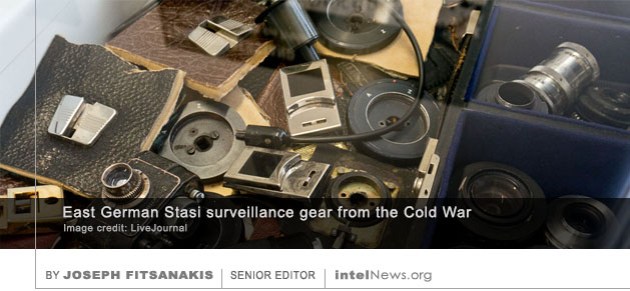 State-sponsored industrial espionage aimed at stealing foreign technical secrets may boost a country’s technological sector in the short run, but ultimately stifles it, according to the first study on the subject. The study is based on over 150,000 declassified documents belonging to the East German Ministry for State Security, known as Stasi. The now-defunct intelligence agency of communist-era East Germany was known for its extensive networks of informants, which focused intensely on acquiring technical secrets from abroad.
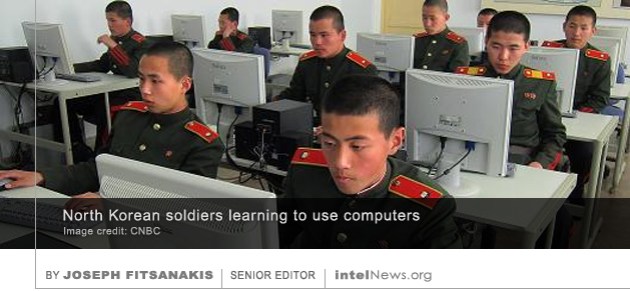 North Korea’s intelligence establishment has shifted its attention from spying for political gain to spying for commercial advantage –primarily to secure funds for the cash-strapped country, according to a new report. Since the 1990s, the Democratic People’s Republic of Korea (DPRK) has used computer hacking in order to steal political and military secrets from its rivals. But there is increasing evidence that Pyongyang is now deploying armies of computer hackers in order to steal cash from foreign financial institutions and internet-based firms. This is the conclusion of a new report by the Financial Security Institute of South Korea, an agency that was set up by Seoul to safeguard the stability of the country’s financial sector.
 A cyber espionage group that has alarmed security researchers by its careful targeting of government agencies has links to the Iranian state, according to a new report. The existence of the group calling itself CopyKittens was first confirmed publicly in November of 2015. Since that time, forensic analyses of cyber attacks against various targets have indicated that the group has been active since at least early 2013. During that time, CopyKittens has carefully targeted agencies or officials working for Jordan, Saudi Arabia, Turkey, Israel, the United States, and Germany, among other countries. It has also targeted specific offices and officials working for the United Nations.
 The director of the United States National Security Agency appears to have backed away from a proposal to set up a joint American-Russian cyber security working group, with the aim of defending both countries from hackers. Earlier in July, US President Donald Trump said he was considering the establishment of what he described as “an impenetrable cyber security unit” that would be a joint project between the United States and Russia. The unit would have the task of defending both countries from cyber attacks aimed at hacking their election systems and other vital state functions. The US president said he had discussed the idea with his Russian counterpart, President Vladimir Putin, during the G20 summit in German city of Hamburg. Last week, a Russian official confirmed that Moscow and Washington were considering the creation of a working group that would examine the creation of a joint cyber defense force.
 Dozens of Western European and American citizens are participating in the ongoing takeover of Raqqa, the de facto capital of the Islamic State in Syria, despite being prohibited from doing so by their own governments, according to recent news reports. Much has been written about foreign fighters who enter Iraq and Syria in order to join the ranks of the Islamic State, the Sunni militant group that previously went by the name Islamic State of Iraq and Syria (ISIS). But relatively little attention has been paid to the thousands of foreign fighters who have traveled to the region to join the war against ISIS.
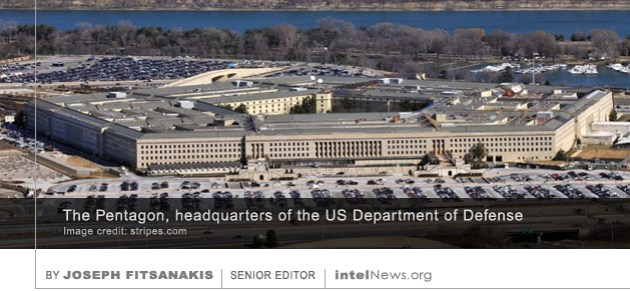 The White House will soon announce its decision to strengthen the United States Cyber Command and separate cyber war operations from intelligence functions, according to insider reports. For many decades, the National Security Agency has been in charge of protecting America’s cyber network and combating online threats. But in 2009, the Administration of US President Barack Obama established a brand new Cyber Command, proposing that the online environment represented a new theater of war. Since that time, the US Department of Defense has been campaigning in favor of strengthening the new Cyber Command and completely removing it from the patronage of the NSA –despite the fact that the latter is also a Pentagon agency.
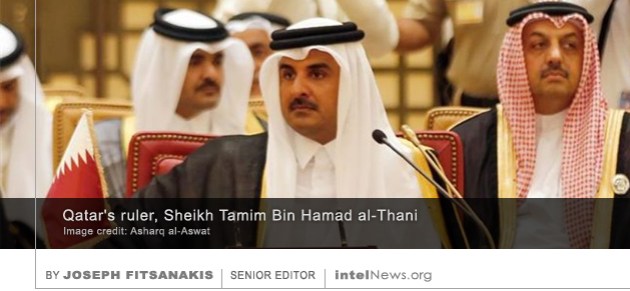 American officials appear to confirm Qatar’s allegations that its news media were hacked by its Gulf adversaries, who then used the fake news posted by hackers to launch a massive campaign against it. Tensions between Qatar and other Muslim countries have risen since late May, when the country’s state-controlled news agency appeared to publish an incendiary
 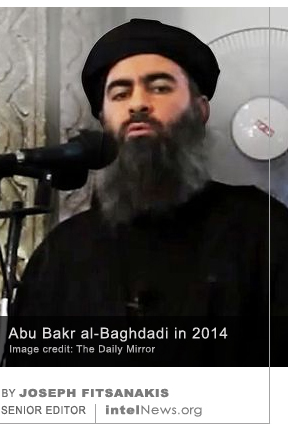 A senior Iraqi intelligence official has rejected assurances given by Russia that Abu Bakr al-Baghdadi, the founder and leader of the Islamic State, is dead, insisting instead that the Iraqi-born cleric is alive in Syria. In mid- June, Russia’s Ministry of Defense said that, according to its sources, al-Baghdadi
 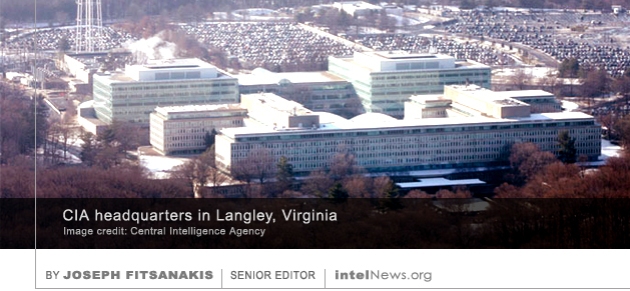 A contractor for the United States Central Intelligence Agency has complained in an interview that no action has been taken in the seven years since he revealed a “billion-dollar fraud” and “catastrophic intelligence failure” within the Agency’s ranks. John Reidy argues that his case illustrates the unreasonable delay that impedes investigations by whistleblowers like him inside the CIA. Individuals like him, he argues, are forced to seek justice through leaks to the media, something which could be avoided if the CIA’s Office of the Inspector General addressed concerns more promptly.
 Staff at a Russian disaster relief center in southern Serbia have rejected claims by American officials that the facility operates as an espionage arm of Moscow’s foreign policy in the Balkans. The Russian-Serbian Humanitarian Center was built in 2012, at a cost of nearly $40 million, following an agreement between Belgrade and Moscow. Its
  Russia is planning to expel approximately 30 American diplomats from its territory, and seize buildings and property belonging to the United States Department of State, according to Russian media reports. The expulsions will be in response to the expulsion last December of 35 Russian diplomats stationed in the US by the administration of President Barack Obama. In addition to expelling the diplomats, Washington also reclaimed two “recreational facilities” (in reality intelligence outposts) that were used by the Russians in New York and Maryland. The White House said that the expulsions were ordered in response to alleged efforts by Russia to interfere in the 2016 US presidential election.
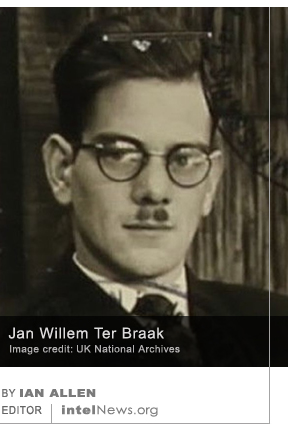 The unmarked grave of a Dutch-born Nazi spy, who killed himself after spending several months working undercover in wartime Britain, will be marked with a headstone, 76 years after his death by suicide. Born in 1914 in The Hague, Holland, Englebertus Fukken joined the National Socialist Movement in the Netherlands, the Dutch affiliate of the National Socialist German Workers’ Party led by Adolf Hitler, in 1933. In 1940, shortly after the German invasion of Holland, Fukken, who had been trained as a journalist, was recruited by the Abwehr, Nazi Germany’s military intelligence. Abwehr’s leadership decided to include Fukken in the ranks of undercover agents sent to Britain in preparation for Operation SEA LION, Germany’s plan to invade Britain.
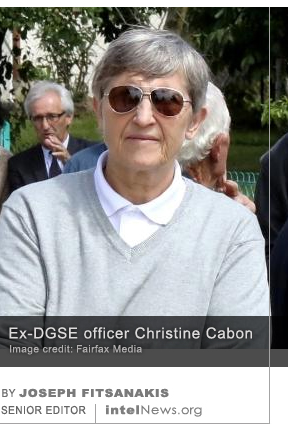 A French spy who infiltrated the environmentalist group Greenpeace and in 1985 helped bomb the organization’s flagship, the Rainbow Warrior, has spoken to the media for the first time. The British-based activist organization had purchased the trawler from the British government in 1977 and used it to carry out maritime research and other operations. In July 1985, the Rainbow Warrior, captained by the American environmental activist Peter Wilcox, was docked at the port of Auckland, New Zealand. It was being prepared to lead a flotilla of vessels to the French Polynesian atoll of Mororoa, in order to try to stop a planned nuclear test by the French military.







CIA’s withdrawal from Syria could cause pro-US rebels to join Islamists, experts warn
August 4, 2017 by Ian Allen 1 Comment
Codenamed TIMBER SYCAMORE, the CIA program was designed to mirror a similar project run by the US military in support of local troops fighting the Islamic State. On the one hand, the White House wanted to use the CIA’s support for the FSA to weaken militarily the regime in Damascus. On the other hand, Washington hoped that the CIA’s involvement in the region would be able to control the influx of weapons, money and fighters that were streaming in from neighboring countries. Under TIMBER SYCAMORE, for over three years, CIA personnel trained Free Syrian Army fighters in irregular warfare, while also providing them with light weaponry including machine guns, sniper rifles and off-road vehicles.
But on July 19 of this year, US President Donald Trump abruptly ended the CIA program, which he called “dangerous and wasteful”. Some observers argued that the termination of TIMBER SYCAMORE was an attempt by the Trump administration to come to an agreement with Russia on Syria. It is believed that America’s local allies, such as Saudi Arabia and the United Arab Emirates, are also terminating their clandestine support for the Free Syrian Army, not wishing to go against the White House. This development, therefore, may signal the effective termination of substantial foreign support for the most important anti-Assad rebel group in Syria.
What does that mean for the fate of the Free Syrian Army and its thousands of fighters? Some experts say that their fate is uncertain, and warn that some of them may turn against their former benefactors. Writing in The Christian Science Monitor, Taylor Luck, said earlier this week that the Free Syrian Army reported 50 defections of its fighters in July. Some of these fighters, says Luck, are joining the Pentagon’s program in support of forces fighting the Islamic State, and are currently heading to the eastern and northern battlefronts. But many others are being tempted to join al-Qaeda affiliated groups, who are still fighting President Assad’s forces. Many do so for financial reasons, after seeing their CIA income suddenly disappear. Others, says Luck, are feeling very emotional and bitter against what they see as a betrayal by Washington. “We lost our brothers, our sisters, our children”, says one of these fighters, before vowing to fight Assad until the end. According to Luck’s report, Saudi Arabia and the United Arab Emirates are trying to come up with ways to continue to pay the Free Syrian Army rebels, in an attempt to stop them from joining rival jihadist groups.
► Author: Ian Allen | Date: 04 August 2017 | Permalink
Filed under Expert news and commentary on intelligence, espionage, spies and spying Tagged with CIA, covert action, Free Syrian Army, News, Syria, Syrian Civil War, TIMBER SYCAMORE, United States