Analysis: Unease in Europe as Turkey intensifies espionage abroad
March 30, 2017 Leave a comment
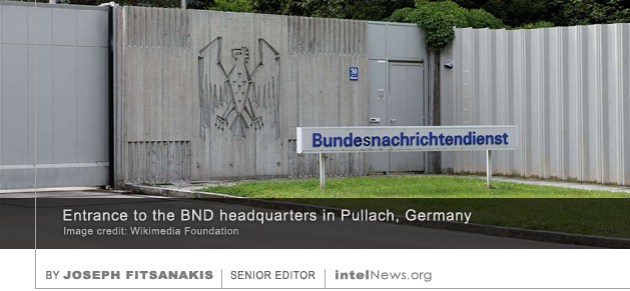 Earlier this week, it was revealed that the German government rejected a request by the head of Turkish intelligence to spy on Turks living in Germany. The rejection was an important moment in German-Turkish relations and highlights the growing unease in high-level exchanges between Turkey and the European Union.
On Monday, Germany’s Süddeutsche Zeitung newspaper alleged that the head of Turkey’s National Intelligence Organization (MİT), gave his German counterpart a list containing the names hundreds of Turks living in Germany, and asked him to spy on them. According to the newspaper, the list was given by MİT chief Hakan Fidan to Bruno Kahl, head of the Bundesnachrichtendienst, Germany’s Federal Intelligence Service, known as BND. The two men reportedly met at a security conference held in Munich last February. The Süddeutsche Zeitung claims that the list given to Kahl included 300 individuals and approximately 200 groups and organizations that the MİT wanted the BND to monitor.
It is extremely uncommon for information of this kind to be communicated informally between directors of intelligence organizations. Typically the exchange of information between cooperating intelligence agencies happens in a very formal and prescribed environment, not circumstantially during a conference. The episode described by the Süddeutsche Zeitung demonstrates a degree of amateurism on behalf of Turkey’s MİT. It is also symptomatic of the pressure that the agency is under by the Turkish government, following last July’s failed military coup in Ankara and Istanbul.
The government of Turkish President Recep Tayyip Erdoğan accuses members of the so-called Gülen movement of orchestrating the failed coup, which included an armed attack on the country’s parliament and the murder of over 200 people across Turkey. The Gülen movement consists of supporters of Muslim cleric Fethullah Gülen, who runs a global network of schools, charities and businesses from his home in the United States. The government of Turkey has designated Gülen’s group a terrorist organization and claims that its members have stealthily infiltrated state institutions since the 1980s. In responding to the post-coup security pressures, MİT has been stretched to its limit. Asking the BND for assistance illustrates the Turkish agency’s limitations, especially when it comes to spying abroad. Read more of this post
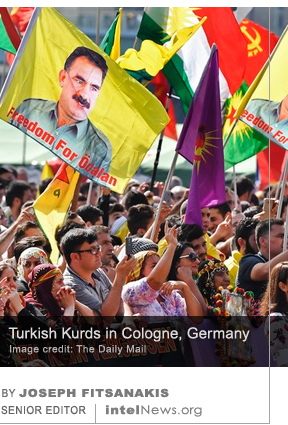 German intelligence and security agencies have publicly rejected a direct request made by Turkey’s intelligence chief to gather information on Turks who are living in Germany and are critical of the Turkish government. The request reportedly relates to attempts by the Turkish government to round up its critics, following a failed military coup in July of last year. The government of Turkish President Recep Tayyip Erdoğan accuses members of the so-called Gülen movement of orchestrating the coup, which included an armed attack on the country’s parliament and the murder of over 200 people across Turkey. The Gülen movement consists of supporters of Muslim cleric Fethullah Gülen, who runs a global network of schools, charities and businesses from his home in the United States. The government of Turkey has designated Gülen’s group a terrorist organization and claims that its members have stealthily infiltrated state institutions since the 1980s.
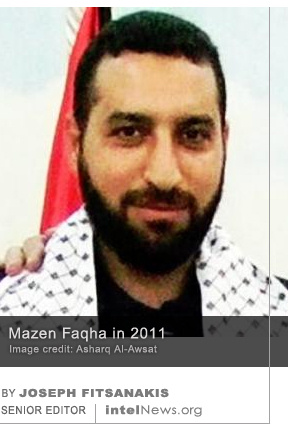 The sophistication behind the killing of a senior Hamas official, who was assassinated in his home in the Gaza Strip on Friday evening, points almost certainly to Israel, according to observers. Mazen Faqha, 38, helped plan several lethal operations by the Palestinian militant group, including a 2002 suicide bombing that killed nine and wounded over 50. Following an extensive manhunt, Israeli authorities arrested Faqha in the West Bank and in 2003 convicted him to nine life sentences. But in 2011, Faqha was among 1,027 Palestinian and Arab-Israeli prisoners that Israel released in exchange for Gilad Shalit, a soldier in the Israel Defense Forces, who was held prisoner by Hamas. Since that time, Faqha had lived in the Gaza Strip, the Hamas-controlled Palestinian enclave that has been under strict Israeli blockade since 2006.
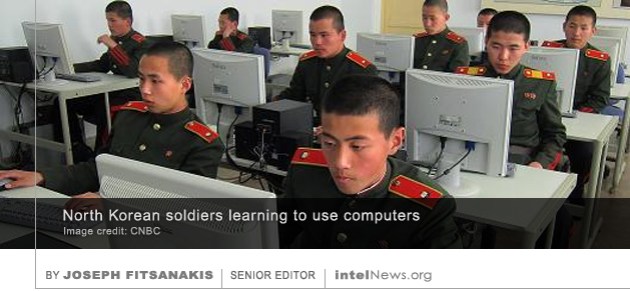 Comments made by a senior American intelligence official on Tuesday appeared to suggest that the North Korean government was behind an attempt to steal nearly $1 billion from a Bangladeshi bank last year. The heist took place in February of 2016, when a computer malware was used to issue several requests to transfer funds from Bangladesh Bank —the state-owned central bank of Bangladesh— using the SWIFT network. The hackers were able to transfer five separate sums of $101 million each to a linked Bangladesh Bank account at New York’s Federal Reserve Bank. However, when further requests were issued, Federal Reserve Bank employees contacted Bangladesh Bank and blocked further transactions. Eventually, most of the transferred funds, which neared $1 billion, were recovered; but the hackers managed to get away with approximately $81 million worth of funds.
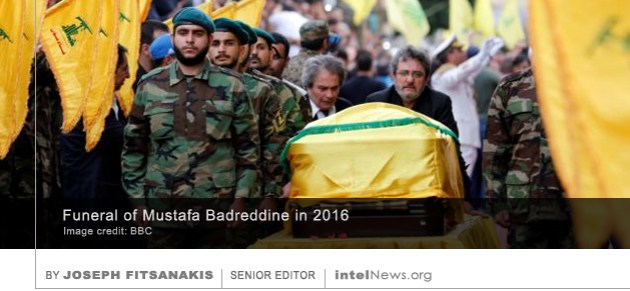 An Israeli military official has repeated claims in the Arab media that the Lebanese Shiite group Hezbollah killed its own military commander in Syria, following a dispute with Iran. Mustafa Amine Badreddine, 55, an expert in explosives and former bomb-maker, was a senior military commander in the military wing of Hezbollah. He rose through the ranks of the organization to become a trusted adviser to Hezbollah’s Secretary General, Hassan Nasrallah. In 2011, the Special Tribunal for Lebanon, set up by the United Nations, charged Badreddine with organizing the assassination of Lebanese Prime Minister Rafik Hariri. Hariri was killed with over 20 other people in a massive bomb blast in Beirut, in February of 2005.
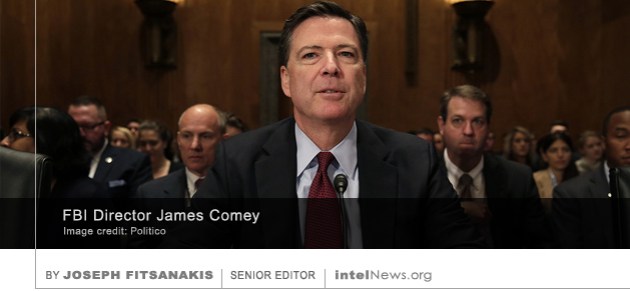 Monday’s official announcement that an investigation is underway into alleged Russian involvement in the 2016 United States presidential election was an important moment in American political history. It exposed the chaotic state of American politics and added yet another layer of complexity in an already intricate affair, from which the country’s institutions will find it difficult to recover for years to come. This is regardless of the outcome of the investigation, which is being conducted by the Federal Bureau of Investigation. Even if it fails to produce a ‘smoking gun’, the very fact that the country’s chief counterintelligence agency is examining the possibility that a US president was elected with help from Russia, is an astonishing development without parallel in modern American history.
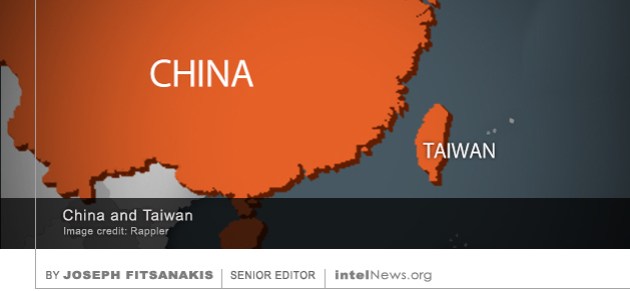 A Taiwanese government official has alleged that China maintains an army of more than 5,000 spies in Taiwan, many of whom have infiltrated the highest levels of government and industry. The allegation came after two sensational arrests were made in Taiwan last week, of people accused of spying for Beijing. Taiwanese counterintelligence officers reportedly arrested a bodyguard of Annette Lu, Taiwan’s former vice president. The bodyguard, who has been identified in Taiwanese media as Wang Hong-ju, has been charged with receiving payments from his Chinese intelligence handler in return for providing information about Mrs. Lu. This incident followed another arrest, made earlier in the week, this time of a Chinese man who is believed to have initially come to Taiwan as a student. Zhou Hong-xu is
 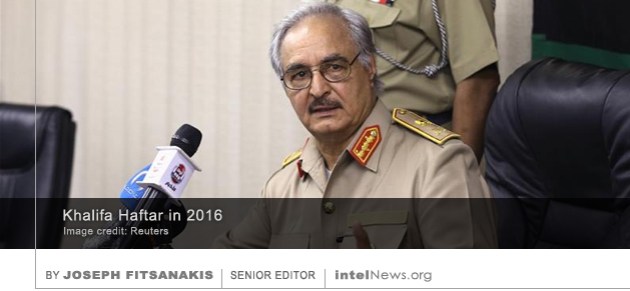 Russia may have become the latest country to deploy special forces soldiers in Libya, according to news reports citing anonymous United States officials. Late on Tuesday, the Reuters news agency
 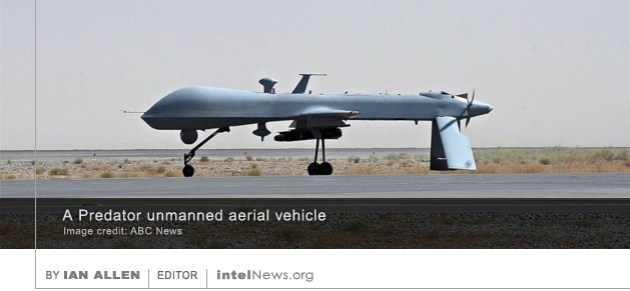 United States President Donald Trump has reportedly authorized the Central Intelligence Agency to bring back the routine use of lethal airstrikes by unmanned aerial vehicles (UAVs), which his predecessor, Barack Obama, curtailed in 2013. Washington began employing limited strikes by UAVs, otherwise known as drones, in the early 1990s, during the administration of President Bill Clinton. But it was under the Obama administration that the use of drone strikes reached an all-time high, with hundreds of such attacks documented after 2008. It is believed that Obama used this remote attack method to combat the Taliban and al-Qaeda, while at the same time keeping his promise of bringing back American troops from the Middle East and Central Asia. However, in 2013 the US president severely curtailed the controversial program, which some say damaged America’s image by inflicting civilian casualties.
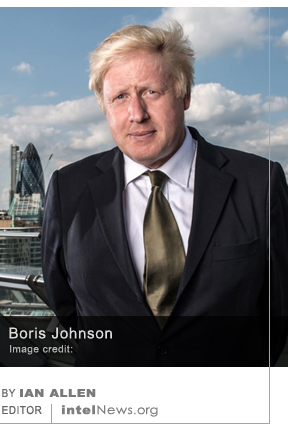 Boris Johnson, the British foreign secretary has said in an interview that Russian spies may have orchestrated last year’s failed attempt to kill the then-prime minister of Montenegro, Milo Dukanović. Mr. Johnson, a senior figure in the Conservative Party of the United Kingdom, was a major contender for the prime minister’s position in 2016, after the administration of David Cameron collapsed under the weight of the Brexit vote result. Speaking on Sunday morning to reporter Robert Peston, of Britain’s ITV television network, Mr. Johnson said that the West should “engage” with Russia, but warned that it should also “beware” of Moscow’s “dirty tricks” in Europe and the United States.
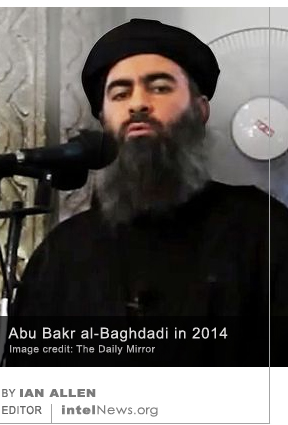 The leader of the Islamic State has abandoned the city of Mosul and is hiding in the desert zone of western Iraq, according to intelligence sources. Meanwhile Mosul, once the most populous city under the Islamic State’s control, is now reportedly being defended by a diminishing cadre of fewer than 3,000 Sunni militants, who are facing a 110,000-strong invading army.
 The United States federal government has launched a criminal investigation into the public disclosure of thousands of documents that purportedly belong to the Central Intelligence Agency. The documents were
 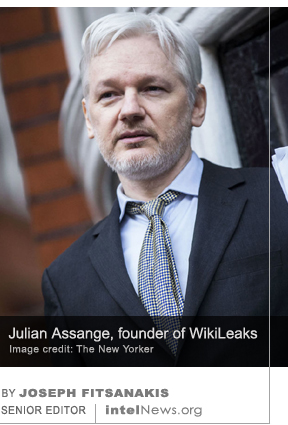 Thousands of documents belonging to the United States Central Intelligence Agency, which were released on Tuesday by the international anti-secrecy website WikiLeaks, are almost certainly genuine. They reveal an entire universe of technical intelligence collection methods used by the CIA to extract information from digital applications and electronic devices, ranging from flash drives to smart screen televisions. WikiLeaks named the collection
  The sensational assassination of Kim Jong-nam, half-brother of North Korea’s Supreme Leader Kim Jong-un, on February 13, revealed much about the current operational mindset of Pyongyang. But it also brought to light the shady network of front companies set up by the North Korean regime to facilitate the country’s illicit financial activities around the world. This extensive network permits Pyongyang to evade international sanctions against it, and to coordinate the activities of hundreds of clandestine operatives around the world. Through these activities, the reclusive country has been able to develop its weapons of mass destruction program unabated, despite concerted efforts by the United Nations to prevent it from doing so.






 intelNews.org
FBI accuses US State Department official of contacts with Chinese spies
March 31, 2017 by Ian Allen 3 Comments
However, federal prosecutors said earlier this week that Claiborne interacted on a regular basis with Chinese intelligence personnel without informing her employer. According to court documents, her contacts with the Chinese were extensive and occurred from 2011 until earlier this year. The Chinese gave Claiborne gifts, including computers and smartphones, tuition-free studies in a Chinese technical school, and an all-expenses-paid holiday to Thailand. They also gave her a regular stipend and provided her with a furnished apartment abroad, according to prosecutors. In return, Claiborne allegedly gave the Chinese information relating to American economic policy on China, among other topics.
It appears that the FBI monitored the State Department employee for a while, after securing a Foreign Intelligence Surveillance Act court warrant. When it confronted Claiborne, she apparently denied the accusations and lied to FBI agents. She is now charged with obstruction of justice and providing false statements to the FBI. Claiborne is currently under house arrest and will remain there until April 18, when she will appear at a preliminary hearing in Washington. She is reportedly facing a maximum of 25 years in prison.
► Author: Ian Allen | Date: 31 March 2017 | Permalink
Filed under Expert news and commentary on intelligence, espionage, spies and spying Tagged with Candace Claiborne, China, counterintelligence, espionage, FBI, News, United States, US Department of State