News you may have missed #598 (US edition)

Brian Kelley

Brian Kelley

►►CIA officer wrongly accused of being KGB mole dies. CIA officer Brian J. Kelley, who was falsely accused by his own agency, as well as by the FBI, of supplying covert information to Moscow, has died at the age of 68. The real mole, the FBI agent-turned-spy Robert P. Hanssen, was apprehended in 2001, but not before Mr Kelley had been followed, interrogated, suspended and told that he might well be charged with a capital offense.
►►NSA working on secure smartphone technology. Troy Lange,  mobility mission manager at the US National Security Agency, says he is developing a secure smartphone that can be used to access classified information and apps while on the move. He is working on a pilot project using a smartphone that looks like any bought in stores but with security configurations to allow top-secret communication.
►►Kabul attack kills CIA contractor. An Afghan working for the US government killed a CIA contractor and wounded another American in an attack on the intelligence agency’s office in Kabul, making it the latest in a series of high-profile attacks this month on US targets. An anonymous US official in Washington said the Afghan attacker was providing security to the CIA office and that the American who died was working as a contractor for the CIA.

US openly accuses Pakistan of waging ‘proxy war’ in Afghanistan

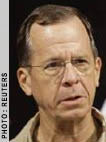
Mike Mullen

Mike Mullen

By JOSEPH FITSANAKIS | intelNews.org |
For the first time a senior American official has openly accused the intelligence services of Pakistan of using Taliban-linked groups to wage a “proxy war” in neighboring Afghanistan. United States Admiral Mike Mullen, Chairman of the Joint Chiefs of Staff, has described the Haqqani Network, an insurgent group closely allied with the Taliban, as Pakistan’s proxy-army in Afghanistan. The Haqqani Network, which is considered by US military commanders as “the most resilient insurgent force in Afghanistan”, is widely seen as responsible for the massive attack on the US embassy and several other targets in Kabul, earlier this month. Some military observers have compared the attacks to the 1968 Tet Offensive by the Viet Cong. Speaking on Tuesday at an event hosted by the Carnegie Endowment for International Peace, Admiral Mullen said he had pressed the government and intelligence agencies of Pakistan to break their links with the Haqqani Network. He did so during a recent meeting with the chief of Pakistan’s armed forces, which reportedly lasted over four hours. By “intelligence services”, Mullen means the Inter-Services Intelligence directorate (ISI), Pakistan’s most powerful spy agency. According to Admiral Mullen, the meeting centered on “the need for the […] ISI to disconnect from [the] Haqqani [Network] and from this proxy war that they’re fighting” in Afghanistan. He also said that “the ISI has been […] supporting proxies for an extended period of time” and described the ISI-Haqqani collaboration as “a strategy in the country”, rather than simply a series of isolated incidents by shadowy groups operating within the Pakistani intelligence services. Read more of this post

New Zealand base in Afghanistan was secret CIA station, book claims

Nicky Hager

Nicky Hager

By JOSEPH FITSANAKIS | intelNews.org |
A Kiwi “peacekeeping” and “civil reconstruction” base in Afghanistan was a secret station for the US Central Intelligence Agency, according to a new book by New Zealand’s preeminent investigative writer. Nicky Hager first made international headlines in 1996, with his groundbreaking book Secret Power: New Zealand’s Role in the International Spy Network. In it, he revealed the existence of the UK-USA Security Agreement and of ECHELON, a US-managed signals intelligence (SIGINT) collection and analysis platform that serves as an intelligence-sharing mechanism between UK-USA signatories. The publication of his latest book, entitled Other People’s Wars: New Zealand in Afghanistan, Iraq and the War on Terror, is scheduled to coincide with the ten-year anniversary of 9/11. The book focuses on —among other things— the Bamyan Province base in central Afghanistan, which serves as the center of operations for the New Zealand Provincial Reconstruction Team in the Central Asian country. It serves as a symbol of New Zealand’s cautious contribution to the NATO-led war in Afghanistan, by allowing Kiwi forces to participate with boots on the ground, while performing strictly noncombatant functions, officially described as “peacekeeping” and “civil rebuilding”. But Hager’s book alleges that the “noncombatant” mission of the Bamyan base was simply a cover, devised by the New Zealand Defence Forces’ public relations apparatus, and aimed at pacifying the country’s population. The real mission of the Bamyan base, says Hager, was to “help the Americans” by essentially concealing a covert CIA station. The author further alleges that the Kiwi forces at Bamyan were instructed to keep the presence of the CIA team secret. This they did, even as they shared daily meals with American spies in civilian clothes, who refused to disclose even basic details of their mission to their New Zealand guardians. Hager alleges that New Zealand’s defense establishment took the decision to help the CIA as part of a broader strategy of rapprochement between Wellington and Washington. Why rapprochement? It was in 1984, when, under mounting popular pressure, New Zealand’s Labour government of David Lange voted to bar nuclear-powered or nuclear-armed ships from entering New Zealand territorial waters. At the time, the nuclear ban imposed by New Zealand was heralded by the global nuclear disarmament movement as a major victory. But Washington did not see it this way. Read more of this post

News you may have missed #560 (new books edition)

Khalil al-Balawi

Khalil al-Balawi

►►New book on CIA’s Khost bomb disaster. Washington Post reporter Joby Warrick has authored a new book, examining the December 31, 2009, killing of seven CIA operatives by Jordanian doctor Humam Khalil al-Balawi in Khost, Afghanistan. In the book, entitled The Triple Agent, Warrick quotes several “anonymous” sources from within CIA and Jordan’s General Intelligence Department (GID), which was involved in running al-Balawi. Aside from blaming GID, Warrick says the CIA’s Amman station chief was partly responsible for the botched operation.
►►Hollywood producer was Mossad spy, says new book. The book Confidential: The Life of Secret Agent Turned Hollywood Tycoon Arnon Milchan, says that Milchan was a full-fledged operative for Israel’s now-defunct intelligence agency, Lakam. The agency, which was also known as Israel’s Bureau of Scientific Relations, collected scientific and technical intelligence abroad. It was disbanded in 1986 following the arrest of US Navy analyst Jonathan Pollard for engaging in espionage on behalf of Israel. The book’s authors, Meir Doron and Joseph Gelman, argue that Milchan, who produced such movies as Love and Other Drugs and Knight and Day, worked for Israeli intelligence by supervising government-backed accounts and front companies that financed “the special needs of the entirety of Israel’s intelligence operations outside the country”.
►►Book alleges US-Russian spy swap deal. In 2010 the CIA considered a swap deal that would have delivered to Moscow two Americans currently imprisoned in the US for spying for Russia. This information is included Read more of this post

Former US spy chief questions ‘war on terrorism’ logic, tactics

Dennis Blair

Dennis Blair

By JOSEPH FITSANAKIS | intelNews.org |
America’s former top intelligence official has publicly questioned the logic and methods informing Washington’s “war on terrorism”, and called for the CIA unmanned drone assassination program in Afghanistan and Pakistan to be grounded. Dennis C. Blair, who was Director of National Intelligence (DNI) until May of 2010, was speaking last week at the Aspen Security Forum in Colorado.  In an hour-long forum conversation with television journalist Leslie Stahl, Blair —a retired Admiral— explained that, in his view, America’s “war on terrorism” is misconceived, strategically counterproductive and ludicrously expensive. Speaking on the CIA’s unmanned drone war in Afghanistan and Pakistan, Admiral Blair agreed that the drone attacks have killed some “mid-level” Taliban or al-Qaeda operatives, but said that the strikes have had a negligible overall impact on American security. As a terrorist outfit, al-Qaeda has shown that it is able to easily “sustain its level of resistance to an air-only campaign”, said Blair. Additionally, the former DNI said that unilateral air strikes are legally questionable and have proven strategically damaging, by “alienating the countries concerned” and dominating Washington’s relations with key nations such as Pakistan, Yemen and Somalia (click here to read intelNews’ criticism of American raids in Somalia). In doing so, the drone attacks tend to “threaten the prospects of long-term reform” in those countries, said the retired Admiral. Earlier in the conversation, Blair had questioned the economic basis of America’s “war on terrorism”, telling his audience that the US intelligence and security establishment currently spends around $20 million a year for each member of al-Qaeda scattered around the world. Read more of this post

Bodyguard who killed Karzai’s brother was CIA agent

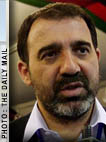
Wali Karzai

Wali Karzai

By JOSEPH FITSANAKIS | intelNews.org |
The bodyguard who killed Afghan President Hamid Karzai’s half-brother was a trusted aide of British and American intelligence and had worked with US Special Forces in Afghanistan, before turning on his employer, according to American and British news media. Ahmed Wali Karzai, influential Afghan drug lord and CIA agent, was shot dead on July 12 by no other than his trusted bodyguard, Sardar Mohammad. The killing shocked Afghan and American officials, who believed Mohammad’s trustworthiness and loyalty to be beyond reproach. Initial reports blamed Karzai’s killing on internal feuds that often feature in bloody Afghan politics. But these early reports may need to be revised following the revelation in The Washington Post that Mohammad had been working closely for years with the CIA and US Special Forces in Afghanistan, prior to turning against his boss. According to the paper, not only was Mohammad working with the CIA, but two of his brother-in-laws served in the Kandahar Strike Force, a notorious paramilitary unit trained and armed by the CIA. Based on this new information, The Post explains Karzai’s killing as yet another spectacular triumph by Taliban intelligence, who must have managed to recruit Mohammad and turn him against the US-supported Afghan government. Commenting on Mohammad’s CIA background, an unnamed “Western intelligence analyst” told British newspaper The Independent that Karzai’s assassination is indicative of the Taliban’s “increasingly sophisticated intelligence apparatus” in Afghanistan. Western intelligence agencies “probably […] underestimate the [Taliban’s] intelligence components”, said the analyst, even though the latter “do have dedicated intelligence officers. And that’s not just about gathering information but also about infiltration, using whatever combination of blackmail or ideological levers [they need to]”. But there is also another possibility, which neither The Post nor The Independent appear to entertain: namely that Mohammad was still acting under the commands of the CIA when he killed Karzai. Read more of this post

News you may have missed #538

Wali Karzai

Wali Karzai

By IAN ALLEN | intelNews.org |
►►Egyptian diplomat dead in London after bizarre suicide attempt. Police in London are trying to solve the mysterious apparent suicide of Ayman Mohammed Fayed, a 41-year-old employee of the Egyptian embassy, who plunged to his death from one of the embassy’s third-floor windows last week. Embassy officials said he did so after hurriedly signing a brief suicide note to his family. Interestingly, one witness saw him trying to get back into the building from the window, apparently having changed his mind about killing himself. But, says The Daily Mail, he seems to have “lost control and fell”. The death does not seem to be related to the political changes that have taken place in Egypt this year. ►►CIA agent Wali Karzai dead in Afghanistan. Another death, that of Afghan President Hamid Karzai’s brother, has featured all over the news media in the past few days. Ahmed Wali Karzai, Afghan drug lord and influential strongman, was shot dead by his bodyguards last Tuesday. Wali Karzai’s role as a CIA agent is less widely advertised in obituaries (with a few notable exceptions). IntelNews readers will remember that, in October of 2009, The New York Times revealed that Wali Karzai had been financially sustained by the CIA ever since the initial US invasion of Afghanistan, in 2001, and that he was still —as of 2009— receiving “regular payments” from the Agency.  Read more of this post

News you may have missed #524 (analysis edition)

  • US intelligence shift shows change in Afghan war aims. American military intelligence officers were scrambling a year ago to collect and analyze the social, economic and tribal ins and outs of each valley and hamlet in Afghanistan. But the gradual scaling back of US operations (and ambitions) in Afghanistan is driving a shift away from that labor-intensive attention to detail. Now targeting insurgent leaders and their close support networks is seen as an important part of the US exit strategy (some would call this settling old scores before the US leaves the area).
  • Ex-CIA officer questions West’s motives in Syria. The European and American intervention in Syria is designed to harm Iran and to protect Israel and Lebanese Christians, not Syrian people, according to Robert Baer, a retired CIA officer with direct experience in the region.
  • Will new CIA director rein in the drone war? When General David Petraeus takes heads to the CIA, he’ll put “relentless pressure” against al-Qaida, he told senators last week. But in a rare public discussion of the CIA’s drone war in Afghanistan and Pakistan, Petraeus suggested it may not be his first counterterrorism option.

Comment: Five Surprising Truths About the Killing of Bin Laden

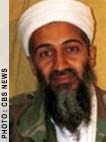
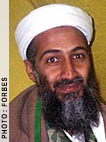
Osama bin Laden

Osama bin Laden

By JOSEPH FITSANAKIS* | intelNews.org |
For intelligence and terrorism experts, the frustrating part of Osama bin Laden’s assassination is not the lack of details on the operation, nor the diplomatic ping-pong currently taking place between America and Pakistan. Rather it is the media spectacle that has unfolded around the story ever since it first made headlines. The cacophony of conjecture that has hijacked the global news agenda is maintained by an army of talking heads, who rely on rumor and speculation to satisfy sensationalist media editors. The outcome is a sterile media circus, devoid of substance, which leaves news consumers confused and uninformed. To counter this trend, intelNews lists here five truths of critical importance about Osama bin Laden’s assassination. In summary: One, America does not have to prove it killed bin Laden. Two, bin Laden’s assassination is not a victory against terrorism. Three, it likely will not reduce —and may even increase— terrorism. Four, it will not have the slightest effect on the Taliban or the war in Afghanistan. Five, even if the Pakistani government consciously shielded bin Laden, there is not much the US can do about it. More specifically:

Read more of this post

Analysis: Myths and Questions on bin Laden’s Assassination

Osama bin Laden

Osama bin Laden

By J. FITSANAKIS and I. ALLEN | intelNews.org |
The assassination of al-Qaeda leader, Osama bin Laden, has helped dispel several myths about him and the organization he founded in 1988 in Soviet-occupied Afghanistan. Among them is the idea that the Saudi-born militant was leading a primitive existence in some remote hillside in Waziristan, sheltered by mountainous tribes that were supposedly loyal to him. Nothing could be further from the truth. Despite his reputation as a hardened mujahedeen, bin Laden had chosen to spend his days in the unmatched comfort of a sprawling luxury compound located only an hour’s drive from Pakistan’s capital, Islamabad. The compound is located in a relatively wealthy suburb of the city of Abbottabad, which is also home to the Kakul Military Academy, Pakistan’s elite army training school. More importantly, the descriptions of bin Laden’s luxurious hideout fly in the face of the predominant view of al-Qaeda as an organization that knows how to blend in with its surroundings. Not only did the compound stand out, but, according to one American official, it was “eight times larger than the other homes in the town”. It featured 3,000 feet of living space, to house bin Laden, his four wives, and several advisors and guards. It appears to have been custom-built to bin Laden’s specifications in 2005, which would explain the existence of numerous built-in security features, including at least two heavily fortified security gates, seven-foot-high perimeter walls, and even solid blast-proof enclosures on all balconies. Continue reading →

News you may have missed #463

  • Iranian spy minister admits hacking emails. Iran’s Intelligence Minister Heydar Moslehi has publicly admitted that the Iranian government has hacked into the emails of Iranian opposition members. He claimed the hacking, conducted by Iran’s Intelligence Ministry, revealed messages exchanged between “foreigners and their elements inside Iran”.
  • Details on CIA officer killed in Afghanistan. An interesting article in The Washingtonian offers an interesting background story on Jennifer Matthews, a CIA officer who was killed nearly a year ago in Afghanistan in a suicide bombing by Taliban double-agent Humam Khalil Abu-Mulal al-Balawi.
  • China jails South Korean alleged spy. China is getting tougher with South Korean spies caught on Chinese soil collecting intelligence on North Korea, and has jailed one of them for more than a year, despite pleas from Seoul, according to news reports.

Largest Afghan narcotrafficker was CIA, DEA informant

Haji Juma Khan

Haji Juma Khan

By JOSEPH FITSANAKIS | intelNews.org |
The history of operational collision between the Central Intelligence Agency and illicit narcotics traders is both long and largely documented. But new revelations published in The New York Times this week come to add a new chapter in this ever-expanding saga. The revelations this time concern Haji Juma Khan, perhaps the most notorious of Afghanistan’s drug lords, who has been described by US federal officials as arguably the most dangerous narcotrafficker in Central Asia. In 2008, Khan was finally arrested in New York, where he was charged with conspiracy to fund terrorist operations through trading in narcotics. American prosecutors allege that Khan literally “helped keep the Taliban in business”, providing them with weapons and cash on a systematic basis. But The Times reveal that, over a number of years, Khan also acted as an informant for both the CIA and the Drug Enforcement Administration and was “paid a large amount of cash” in return for his services. Read more of this post
More underreported WikiLeaks revelations

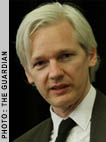
Julian Assange

Julian Assange

By JOSEPH FITSANAKIS | intelNews.org |
As the world’s media shift their attention to the consequences of the WikiLeaks revelations for its founder Julian Assange, as well as the reactions of American officials, the leaked diplomatic cables keep coming in, almost on an hourly basis. Some of the least noticed revelations include a 2009 dispatch from a US diplomat in Tel Aviv, which appears to confirm the close secret relations between Israel and the United Arab Emirates, despite the fact that these two countries have no official diplomatic connections. Another diplomatic cable reveals that Iranian intelligence officials approached their Canadian counterparts in 2008 and offered to share with them “information on potential attacks in Afghanistan”. Perhaps not surprisingly, the Canadians reacted guardedly, with Canadian Security Intelligence Service Director Jim Judd stating that his agency had “not figured out what they [the Iranians] are up to”. Read more of this post

Some underreported WikiLeaks revelations

WikiLeaks

WikiLeaks

By JOSEPH FITSANAKIS | intelNews.org |
There is little point in recapping here the bulk of disclosures contained in the ongoing WikiLeaks revelations. The news sphere is jam-packed with them —and perhaps this is the real story in the WikiLeaks revelations, namely the fact that espionage and intelligence issues have near-monopolized the global news cycle for the first time since the post-Watergate Congressional investigations of the 1970s. But it is worth pointing out a handful of news stories on the WikiLeaks revelations that have arguably not received the media coverage that they deserve. Undoubtedly the most underreported disclosure concerns a 2007 meeting between US officials and Meir Dagan, the then Director of Israel’s Mossad intelligence agency. During the meeting, Dagan apparently “presented US with five-step program to perform a coup in Iran“.  But there are other underreported disclosures. Take for instance the revelation that US Secretary of State Hillary Clinton personally authorized US diplomats to engage in all-out and indiscriminate spying on senior United Nations officials. Although there is nothing here that will surprise seasoned intelligence observers, the breadth of intelligence collection that US diplomats are instructed to engage in (which includes collecting credit card numbers and biometric data of UN officials) is astonishing and certainly unprecedented. Moreover, it should be noted that many senior UN officials are in fact American, which leads to the intriguing question of whether US diplomats are routinely required to engage in intelligence collection against American UN officials. Read more of this post

News you may have missed #441

  • US officials admit terrorist suspect was DEA informant. US government officials have told The Washington Post what the world’s media has been saying for almost a year, namely that Pakistani-American David Coleman Headley, who was arrested by the FBI in October for plotting an attack on a Danish newspaper, was working as a Drug Enforcement Administration informant while training with Islamist insurgents in Pakistan.
  • Ex-CIA officer decries Israeli policies. Philip Giraldi, a former counter-terrorism specialist and military intelligence officer at the CIA, has said in an interview that Israel’s policies in Palestine “are manifestly evil”.
  • Bomber who killed seven at CIA base was not vetted. Humam Khalil Abu-Mulal al-Balawi, a Jordanian al-Qaeda sympathiser who killed himself and seven CIA agents at a remote base in eastern Afghanistan in January had not been properly vetted, the CIA has said.