Ex-CIA counterterrorist chief says al-Qaeda to turn to computer hacking

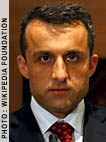
Cofer Black

Cofer Black

By JOSEPH FITSANAKIS | intelNews.org |
The strategic retreat currently being experienced by al-Qaeda will force the group to concentrate on inflicting damage on its enemies through the Internet. This is the opinion of Cofer Black, the straight-talking CIA veteran who retired in 2002 as Director of the Agency’s Counterterrorism Center. Black, who is known for his hawkish views on Washington’s ‘war on terrorism’, gave the keynote speech on Wednesday at the Black Hat Technical Security Conference in Las Vegas, Nevada. He told an audience of nearly 7,000 conference participants that “the natural thing” would be for al-Qaeda in the post-bin-Laden age to continue to engage in terrorism by “fall[ing] back to things that are small and agile”, with computer hacking being an ideal candidate. Black, who since 2002 has worked for private contractors, including Blackwater/Xe, illustrated his point by referring to Stuxnet, the elaborately programmed computer virus that targeted electronic hardware in Iran’s nuclear energy program in July of 2010. “The Stuxnet attack is the Rubicon of our future”, said the former CIA official, adding that it was the computer virus designed to cause “physical destruction of a national resource”. Black is rightly revered by intelligence observers for having warned US government officials of a large-scale terrorist attack in August of 2001, one month prior to the September 11 hijackings. Having said this, it is not exactly prophetic to state, as he did, that “cyber will be a key component of any future conflict”. Read more of this post

News you may have missed #558

Amrullah Saleh

Amrullah Saleh

►► US government says Iran aids al-Qaeda. The US Treasury Department has accused the Iranian authorities of aiding al-Qaeda, saying Tehran had entered into financial agreements with six people believed to be al-Qaeda operatives in Iran, Kuwait, Qatar and Pakistan. According to Treasury officials, one of the six “is believed to have recently ascended to the No. 2 position in Al Qaeda, reporting directly to the organization’s new leader, Ayman al-Zawahri”.
►►Interview with Afghan spy chief. CNN has an exclusive interview with Amrullah Saleh, the –usually media-shy– former head of Afghanistan’s National Directorate for Security. The interview is essentially one long attack on Pakistan, which Saleh blames for destabilizing Afghanistan, hiding and sheltering al-Qaeda members, and providing funding and arms to the Taliban.
►►Sudan’s spy chief secretly visited France in June. The director of Sudan’s National Security and Intelligence Services (NISS), Mohamed Atta al-Moula Abbas, secretly traveled to Paris last June. He held talks there with Read more of this post

News you may have missed #552

Nikolai Kuznetsov

Nikolai Kuznetsov

►►This just in: South Korea arrests five for spying for North. South Korean prosecutors have arrested five people on charges of “setting up an underground communist group on the instructions of an espionage unit of North Korea’s ruling Workers Party”, a report from South Korea’s Yonhap news agency said on Friday. According to the report, South Korean authorities are “investigating about 20 other people including union activists and opposition party members”. We will publish more information as it comes in.
►►Some US intel analysts believe al-Qaeda near collapse. Citing classified intelligence reports and closed-door Capitol Hill briefings from the CIA, the National Counterterrorism Center and other agencies, some US officials are telling The Washington Post that bin Laden’s death has “pushed al-Qaida to the brink of collapse”. One official told the paper that al-Qaeda is now “largely incapable” of mass-casualty attacks against the United States. Could the ‘Leon Panetta Legacy Committee’ be the source of this report?
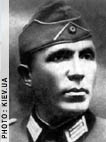
►►Russia and Ukraine commemorate legendary Soviet spy. Russia and Ukraine are celebrating 100 years from the birth of legendary Soviet spy Nikolai Kuznetsov. Kuznetsov, who operated in Nazi-occupied Ukraine, uncovered Read more of this post

News you may have missed #544

Google

Google

By IAN ALLEN | intelNews.org |
►►Russia a ‘leading suspect’ in cyberespionage attack on US. I wrote on Monday about the cyberespionage operation that targeted a leading US defense contractor last March, and resulted in the loss of tens of thousands of classified documents. US Deputy Defense Secretary William J. Lynn III, who disclosed the operation, said only that it was conducted by “a foreign intelligence service”. According to the last sentence of this NBC report, US officials see Russian intelligence as “one of the leading suspects” in the attack. ►►Al-Qaeda acquires Pakistani spy service manuals. Jamestown Foundation researcher Abdul Hameed Bakier reports that al-Qaeda operatives have managed to get access to espionage training manuals used by Pakistan’s Inter-Services Intelligence directorate (ISI). Copies of the documents have apparently been posted on Internet forums that are sympathetic to al-Qaeda, and bear the mark of the As-Sahab Foundation, al-Qaeda’s media wing. ►►Google-NSA collaboration documents to remain secret —for now. Even before Google shut down its operations in China, following a massive cyberattack against its servers in early 2010, the company has maintained close contact with American intelligence agencies. But after the 2010 cyberattack, some believe that Google’s relationship with the US intelligence community has become too cozy. In February of 2010, the ACLU said it was concerned about Google’s contacts with the US National Security Agency (NSA). Other groups, including the Electronic Privacy Information Center (EPIC), have filed Freedom of Information Act (FOIA) requests seeking access to the inner workings of Google’s relationship with NSA. Read more of this post

News you may have missed #539

Milt Bearden

Milt Bearden

By IAN ALLEN | intelNews.org |
►►Former CIA officer urges US-Pakistan reconciliation. During the 1980s, CIA officer Milt Bearden managed the CIA’s covert assistance to the Mujahedeen, who were fighting the Soviet army in Afghanistan. This means Bearden was dealing with Pakistan’s Inter-Services Intelligence directorate (ISI) on an almost daily basis. He has now written an article for Foreign Policy journal, in which he advises CIA and ISI officials to “cut through the shrillness, the schoolyard taunts that characterize […] the current feud between their services; decide on what is worth fixing; agree on important common goals; and get to work”. He also reminds policymakers in Washington that America’s “influence in the Indian Ocean is slipping as China and India flex their growing economic muscle”, and that the US needs Pakistan’s assistance to remain relevant in that part of the world. ►►Pakistan spy director comes to US following aid cut. Meanwhile, Washington’s decision to withhold nearly a billion dollars in annual military aid to Pakistan has shaken up Islamabad. The Associated Press reports that high-level US-Pakistan meetings are quickly “unfolding”. One such meeting involves ISI’s fiery Director, Lt. Gen. Ahmed Shuja Pasha, who just made an emergency visit to Washington, reportedly “for talks”. Pakistani officials insist, however, that “the trip was planned for some time”. Sure. In case you are wondering, Pasha’s visit went “very well“, according to both US and Pakistani officials. ►►Secret CIA site in Somalia revealed. While most intelligence observers are concerned with the latest US-Pakistan spat, Jeremy Scahill, one of America’s most tireless investigative reporters, has revealed that the CIA maintains a large secret site in Somalia. Read more of this post

News you may have missed #537 (bin Laden edition)

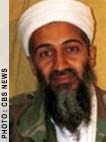
Osama bin Laden

Osama bin Laden

By IAN ALLEN | intelNews.org |
►►Ex-CIA chief speaks on al-Qaida after Osama. The killing of Osama bin Laden will force al-Qaeda to limit its ambitions and scope of its operations, according to former CIA and NSA director Michael Hayden. General Hayden’s comments on numerous issues tend to make the news almost every other week. In his latest interview, with The Associated Press, Hayden expressed the opinion that al-Qaeda’s “future attacks are going to be more numerous but less complex, less well organized, less likely to succeed, and less lethal if they do succeed”. ►►CIA organized fake vaccination drive to get bin Laden family DNA. Speaking of Osama bin Laden, British newspaper The Guardian reported earlier this week that the CIA tried to collect DNA evidence on the late al-Qaeda founder by running a phony vaccination program in Abbottabad, the quiet Pakistani town where bin Laden was believed to be hiding along with his family. But Shakil Afridi, the Pakistani doctor who administered the vaccination program, failed to get access to bin Laden’s family DNA, even though he managed to enter the family’s compound, said the paper. It is worth noting that, as soon as Pakistani authorities learned of the fake vaccination program, they arrested Dr Afridi for collaborating with a foreign intelligence agency. ►►CIA moves to protect key analyst in bin Laden raid. Bin Laden may be dead, but it seems that he still haunts the CIA. The Agency had to move one of its senior analysts undercover this week, after he was identified in a photograph that was published by US media, following the Obama administrator’s celebratory announcement of the al-Qaeda leader’s assassination. The photo showed President Obama and other national security officials gathered in the White House situation room on the night of the bin Laden raid. Most media outlets have been referring to the analyst by his middle name, John.

News you may have missed #524 (analysis edition)

  • US intelligence shift shows change in Afghan war aims. American military intelligence officers were scrambling a year ago to collect and analyze the social, economic and tribal ins and outs of each valley and hamlet in Afghanistan. But the gradual scaling back of US operations (and ambitions) in Afghanistan is driving a shift away from that labor-intensive attention to detail. Now targeting insurgent leaders and their close support networks is seen as an important part of the US exit strategy (some would call this settling old scores before the US leaves the area).
  • Ex-CIA officer questions West’s motives in Syria. The European and American intervention in Syria is designed to harm Iran and to protect Israel and Lebanese Christians, not Syrian people, according to Robert Baer, a retired CIA officer with direct experience in the region.
  • Will new CIA director rein in the drone war? When General David Petraeus takes heads to the CIA, he’ll put “relentless pressure” against al-Qaida, he told senators last week. But in a rare public discussion of the CIA’s drone war in Afghanistan and Pakistan, Petraeus suggested it may not be his first counterterrorism option.

Spy defectors claim Iran had foreknowledge of 9/11

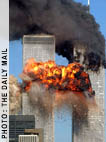
9/11 attack

9/11 attack

By IAN ALLEN | intelNews.org |
A new filing in a nine-year court case in Manhattan contains testimony by two defectors from Iran’s intelligence service, who claim that Tehran had “foreknowledge of the 9/11 attacks”. According to The New York Times, the two unnamed defectors also claimed that the Iranian intelligence services helped al-Qaeda in planning the attacks, and that operatives of the Iranian government funded and helped train the 9/11 hijackers. The filing also claims that Hezbollah, the Iranian-linked militant group that controls large parts of Lebanon, helped shelter al-Qaeda members in the months and years following the American invasion of Afghanistan. The filing was submitted to a US federal court on last week, in support of a lawsuit seeking damages from the government of Iran for its alleged “direct support for, and sponsorship of, the most deadly act of terrorism in American history”. The lawsuit was initiated 2002 on behalf of families of people who died in the 9/11 attacks. But neither the names of the Iranian defectors nor the precise content of their testimony has been revealed to the public, as their assertions were submitted to the presiding judge under seal. Read more of this post

Comment: Bin Laden’s Alleged ‘Magazine Stash’ May be CIA PsyOp

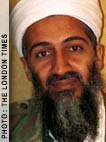
Osama bin Laden

Osama bin Laden

By IAN ALLEN| intelNews.org |
Rumors of an alleged discovery of “a stash of pornography” in Osama bin Laden’s hideout in Pakistan have spread like wildfire since Friday, when Reuters published an “exclusive” report on the subject. The report, written by Mark Hosenball and Tabassum Zakaria, cites “current and former US officials […] who discussed the discovery […] on condition of anonymity”. According to the allegations, “[t]he pornography recovered in bin Laden’s compound in Abbottabad, Pakistan, consists of modern, electronically recorded video and is fairly extensive”. The report was almost immediately picked up by several news outlets, including The New York Times, which notes that the disclosure “will be welcomed by counter-terrorism officials because it could tarnish [the al-Qaeda founder’s] legacy and erode [his] appeal”. Indeed. It appears that only Danger Room‘s Spencer Ackerman thought it wise to air a brief disclaimer to the effect that the “welcomed disclosure” may in fact be “a CIA information operation”. He has a point. Read more of this post

News you may have missed #506 (bin Laden edition)

Comment: Five Surprising Truths About the Killing of Bin Laden

Osama bin Laden

Osama bin Laden

By JOSEPH FITSANAKIS* | intelNews.org |
For intelligence and terrorism experts, the frustrating part of Osama bin Laden’s assassination is not the lack of details on the operation, nor the diplomatic ping-pong currently taking place between America and Pakistan. Rather it is the media spectacle that has unfolded around the story ever since it first made headlines. The cacophony of conjecture that has hijacked the global news agenda is maintained by an army of talking heads, who rely on rumor and speculation to satisfy sensationalist media editors. The outcome is a sterile media circus, devoid of substance, which leaves news consumers confused and uninformed. To counter this trend, intelNews lists here five truths of critical importance about Osama bin Laden’s assassination. In summary: One, America does not have to prove it killed bin Laden. Two, bin Laden’s assassination is not a victory against terrorism. Three, it likely will not reduce —and may even increase— terrorism. Four, it will not have the slightest effect on the Taliban or the war in Afghanistan. Five, even if the Pakistani government consciously shielded bin Laden, there is not much the US can do about it. More specifically:

Read more of this post

News you may have missed #505 (bin Laden edition)

  • Bin Laden assassins confiscated digital devices. According to US officials, members of the US elite forces that raided Osama bin Laden’s residence in Pakistan “carried off five computers, 10 hard drives and more than 100 storage devices, such as DVDs and removable flash drives”.
  • Bin Laden compound was once spy agency safe house. Reports from the United Arab Emirates suggest that the compound in Abbottabad where Osama bin Laden was killed was once used as a safe house by the Inter-Services Intelligence Directorate, Pakistan’s premier spy agency.
  • CIA says it will release bin Laden pictures. The White House says that it intends to release images of Osama bin Laden’s assassination, but warns that they are “gruesome” and “could be inflammatory”.

Comment: Some early remarks on bin Laden’s assassination

Osama bin Laden

Osama bin Laden

By JOSEPH FITSANAKIS* | intelNews.org |
It is tempting to consider the impact of Osama bin Laden’s assassination on al-Qaeda-inspired groups and, more broadly, on America’s “global war on terrorism”. Yet any such endeavor at this point would be inevitably speculative. The truth is, nobody has the slightest idea of the possible strategic spillover of bin Laden’s killing, and this includes the White House, the CIA and NATO. There are, however, some general remarks, mostly of operational nature, that can safely be made on the basis of the limited factual information that has been made available. To begin with, it appears that the assassination of al-Qaeda’s senior figurehead was conducted by ground forces, and not remotely, as has been the case with the vast majority of US assassination operations carried out in Afghanistan and Pakistan during the past several years. This potentially strengthens the argument, made frequently by Western and Pakistani officials, that significant achievements in the field of counterterrorism can only be conducted by surgical-type ground operations, based on accurate and actionable intelligence.

Read more of this post

News you may have missed #503

  • Dutch forces’ covert operations in Africa revealed. Dutch forces have for several years been training government soldiers in Mali, Senegal and Chad, without the Dutch parliament being informed, according to Dutch newspaper AD, which cites documents from the US Congress and the Pentagon.
  • Israel destroys spying devices found in Gaza. Hamas sources have told Egyptian newspaper al-Ahram that they discovered several “audio-visual spying devices” in the sand hills south of Gaza City. But, as soon as they started removing the devices, they “received a phone call from Israeli intelligence elements” telling them that the site would be bombed “within three minutes” —which is precisely what happened, according to al-Ahram. Regular readers of this blog will know this incident was not a first.
  • Leaked documents reveal Guantanamo secrets. A batch of leaked US government intelligence documents, not meant to surface for 20 years, shows that intelligence collection at Guantánamo often was much less effective than the George Bush administration has acknowledged. According to the documents, the US military used interrogation and detention practices that they largely made up as they went along.

News you may have missed #502