News you may have missed #713 (analysis edition)

RAW headquarters, New Delhi, IndiaBy IAN ALLEN | intelNews.org |
►►Israel wary of changes in the Arab world. For decades, Israel had been hoping for change in the Arab world. Yet now that the region is in upheaval, its not just Israeli citizens who are concerned. The government has shown a preference for walling itself in rather than exploring new opportunities. The Jewish state has tried to integrate itself into the Middle East for decades. Now it is trying to cut the cord between itself and the surrounding region, blocking out the changes in its neighborhood.
►►Melting Arctic may redraw global geopolitical map. If, as many scientists predict, currently inaccessible sea lanes across the top of the world become navigable in the coming decades, they could redraw global trading routes —and perhaps geopolitics— forever. This summer will see more human activity in the Arctic than ever before, with oil giant Shell engaged in major exploration and an expected further rise in fishing, tourism and regional shipping. But that, experts warn, brings with it a rising risk of environmental disaster not to mention criminal activity from illegal fishing to smuggling and terrorism.
►►Why Indian intelligence doesn’t work too well in Pakistan. Sources in the RAW, India’s external agency, say India lacks both political will and the capability to carry out a hit inside Pakistan. “We do not have the mandate to do what Mossad does. Our charter does not include the job of getting [or assassinating] people from other countries. If such political will is there, the agency would be able to do it”, says a senior RAW official. Another former officer, who has spent a considerable time studying these outfits, attributes it to the fundamental difference between India and Pakistan in dealing with espionage. “It takes a great deal of money and time to cultivate sources in foreign soil. We don’t have either in plenty, unlike countries in the West. Pakistan’s ISI is better off in this as the state sponsors terrorism”, he says.

Interview with ex-Mossad director Meir Dagan

Meir DaganBy JOSEPH FITSANAKIS | intelNews.org |
The former director of Israel’s most revered intelligence agency has given an extensive interview on why he believes a military strike against the Iranian nuclear program “should be the last option” for Israel. In November 2010, Meir Dagan stepped down from his post as the head of the Mossad after having led the agency for over eight years —the longest tenure of any Mossad director. During his leadership, the Israeli intelligence agency augmented its notoriety by assassinating Imad Mughniyah, security chief of the Lebanese militant group Hezbollah, and allegedly killing Islamic Hamas weapons procurer Mahmoud al-Mabhouh. The Mossad is also said to have played a role in Operation ORCHARD, the 2007 Israeli air attack on what is thought to have been a secret nuclear reactor in Al-Kibar, Syria. However, when it comes to the Iranian nuclear program, the 67-year-old retired spy is adamant that the military option would be a strategic error of gigantic proportions. Last year, Dagan admonished calls by hawkish Israeli politicians to bomb Iran as “the stupidest idea” he had ever heard. In an interview with Reuters news agency published on Thursday, April 5, Dagan said the word “stupid” was “a harsh expression” and “not something [he is] very proud of”. But he insisted that the military option should be last on the table, and said that it would be a mistake for Israel to lead international action against the Iranian nuclear program. Instead, the “Iranian problem” should be “left in the hands of the international community”, said Dagan. The Mossad veteran went on to identify three main problems with the military option. To begin with, he said, military action, no matter how damaging in the physical sense, “cannot disarm the core factor of the Iranian program: knowledge” about how to build a nuclear device. Second, Dagan argued that, even if a military strike managed to eliminate a considerable portion of the Iranian nuclear program’s infrastructure —which is not at all assured— it would likely cause a significant backlash. That backlash would culminate in “a regional war” that would involve simultaneous actions by non-state forces allied with Iran, including Hamas, Islamic Jihad, and Hezbollah. Read more of this post

News you may have missed #705

Neil HeywoodBy IAN ALLEN | intelNews.org |

►►UK man found dead in China had links to intel company. It has emerged that Neil Heywood, a British citizen and China expert, who was recently found dead in a hotel room in China, was an adviser to Hakluyt, a corporate intelligence firm founded by former MI6 officers. Hakluyt has confirmed that Heywood prepared periodic reports for it, but said he had not been working for the company at the time of his death.
►►Analysis: Iraq war ghosts haunting CIA in tackling Iran. At America’s top spy agency, the ghosts of Iraq are never far away. One CIA analyst who had helped develop some of the intelligence about Saddam Hussein’s supposed weapons of mass destruction had a breakdown, months after the Iraq war began; he had participated in the post-invasion hunt there that found the weapons did not exist. When he eventually was given a new assignment assessing Iran’s nuclear program, he confided a fear to colleagues: that the intelligence community might get it wrong again.
►►Interview with African-American CIA official. Starting in the early 1980s, as a standout undergraduate student at Colgate University, Harvard-trained lawyer and master of several languages, Justin Jackson is now the most senior African-American at the CIA. From 1983 to 2010, he served under five presidents and 10 CIA directors. “My job was to collect foreign intelligence from those human sources who were reporting on the plans and intentions of our adversaries. I also conducted covert action as directed by the administration and I ran counterintelligence operations to detect efforts that foreign countries were making against us”, he says.

Analysis: US spy agencies stil in the dark about Syria

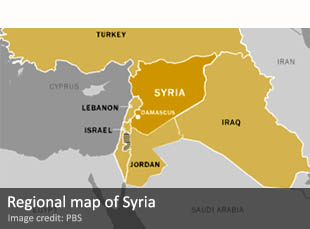
Regional map of SyriaBy JOSEPH FITSANAKIS| intelNews.org |
It has been almost a year since the ongoing anti-government uprising erupted in Syria. But intelligence agencies in the United States are still struggling to make sense of most aspects of the spiraling conflict. In February, the US Department of State closed down its embassy in the Syrian capital Damascus and recalled all of its diplomatic personnel, including US Ambassador to Syria, Robert Ford, to Washington. Since then, the Central Intelligence Agency, which conducted its operations in Syria largely out of the US embassy there, has been forced to rely on scattered fragments of its agent network in Damascus, as well as on the work of a handful of allied intelligence services, including those of Jordan, Turkey, Israel, and Saudi Arabia. Naturally, the closure of the US embassy in Syria has boosted the role of the signals intelligence collection and satellite reconnaissance. But, none of these intelligence collection channels have been able to compensate for the lack of adequate human intelligence collection from inside Syria. As a result, according to The Washington Post, which cites “senior US officials”, US intelligence-gathering on the situation in Syria is currently “fragmentary [and] out of focus”. Specifically, the US intelligence community remains unclear about the tactical and strategic intentions of the regime of Syrian President Bashar al-Assad, and has limited information about the makeup and strength of the opposition forces in the country. Perhaps more importantly, American intelligence analysts have little evidence on which to base any sort of firm conclusions about the extent of involvement of militant Islamists in the funding and operations of the Syrian opposition. Read more of this post

News you may have missed #688

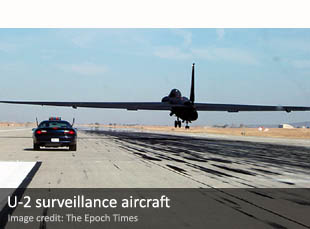
U-2 surveillance aircraftBy IAN ALLEN| intelNews.org |
►►Analysis: StratFor email leaks offer frightening view of government intelligence. As promised in December, WikiLeaks has begun to release a stash of emails related to the modus operandi of the private intelligence sector, using Texas-based StratFor as a case study. The CIA has long used private intelligence firms for ‘black ops’, allowing for plausible deniability in the event that an operation goes pear-shaped and public accountability threatens. But these emails suggest that there’s now far more to the incompetence of America’s intelligence services than meets the eye.
►►US still using U-2 to spy on North Korea. For more than 35 years, the U-2 has been one of Washington’s most reliable windows into military movements inside North Korea. Unlike satellites, U-2s can be redirected at short notice to loiter over target areas. Last month, the US Air Force postponed at least until 2020 any plans to replace them with costlier, unmanned Global Hawks. Now, as the world watches for signs of instability during North Korea’s transition to a new leadership, the U-2 operations are as important ―or more so― than ever.
►►Thin line separates cyberspies from cybercriminals. New research appears to raise questions over the conventional wisdom that pure nation-state cyberspies rarely dabble in traditional financial cybercrime. Dell SecureWorks Wednesday shared details of a complex study it conducted of two families of espionage malware that have infected government ministry computers in Vietnam, Brunei, Myanmar, Europe, and at an embassy in China.

News you may have missed #687

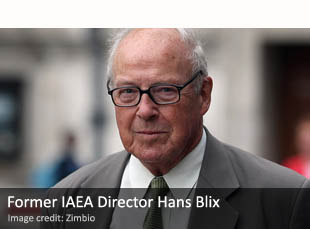
Hans BlixBy IAN ALLEN | intelNews.org |

►►Analysis: Is Obama abusing the US Espionage Act? Prosecutors may still attempt to indict WikiLeaks founder Julian Assange under the 1917 Espionage Act, though their case will likely depend on exactly how he received his information. But, WikiLeaks aside, the Obama administration has made increasing use of the act to clamp down on whistleblowers.
►►Ex-head admits IAEA does work with spies (shock, horror). The International Atomic Energy Agency, which acts as the nuclear watchdog of the United Nations has been closely cooperating with the world’s spy agencies, including on Iran and Syria, for years, according to its former director. Hans Blix told RT that the IAEA’s cooperation with the world’s intelligences started following the Iraqi crisis of the 1990s. “Of course, intelligence can always try to fool everybody”, he said. “Half of the information may be true, half of it may be disinformation, and therefore they have to examine it critically”.
►►Afghanistan arrests diplomat on spying charges. Afghanistan’s State Intelligence Agency (KHAD) on Monday said that a senior foreign ministry diplomat and three other government officials had been arrested over charges of spying for Iran and Pakistan. The men were detained “on charges of spying for neighboring regions” and “the arrests were made with concrete evidence”, KHAD’s spokesman, Lutfullah Mashal, said. An unnamed source in the same agency also claimed that the deputy head of KHAD’s Asia desk and two government employees had been arrested in a similar incident in the eastern Afghan province Nangarhar a month before.

News you may have missed #686

Folkert Arie van KoutrikBy IAN ALLEN| intelNews.org |
►►WikiLeaks to publish 5 million StratFor emails. In its latest high-profile data dump, WikiLeaks is to reveal five million internal and external emails from StratFor today. In a press release late Sunday, Wikileaks said the emails “show StratFor’s web of informers, pay-off structure, payment-laundering techniques and psychological methods”, and reveal “how StratFor has recruited a global network of informants who are paid via Swiss banks accounts and pre-paid credit cards. Stratfor has a mix of covert and overt informants, which includes government employees, embassy staff and journalists around the world”.
►►Analysis: Blurred line between espionage and truth under Obama. “There is plenty of authorized leaking going on, but this particular boat leaks from the top. Leaks from the decks below, especially ones that might embarrass the administration, have been dealt with very differently […]. And it’s worth pointing out that the administration’s emphasis on secrecy comes and goes depending on the news. Reporters were immediately and endlessly briefed on the “secret” operation that successfully found and killed Osama bin Laden. And the drone program in Pakistan and Afghanistan comes to light in a very organized and systematic way every time there is a successful mission”.
►►Nazis had spy in MI5 but failed to use him. Dutchman Folkert Arie van Koutrik was the first German agent to ever infiltrate MI5 when he was employed by them in 1940, just a month before Anthony Blunt, who was later exposed as a Soviet spy. Koutrik had already worked for Abwehr, the German secret service, before the war as a double agent with MI6 in Europe and exposed some of the UK’s top agents. But, incredibly, after he moved to the UK and joined MI5 all contact appears to have broken off.

News you may have missed #685

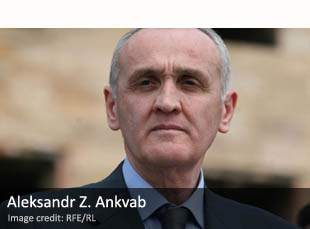
Aleksandr Z. AnkvabBy IAN ALLEN| intelNews.org |
►►Abkhazia President survives assassination attempt. Unidentified assassins tried on Wednesday to kill Aleksandr Z. Ankvab, the president of Abkhazia, a Russian-backed rebel enclave of Georgia. The assailants used automatic rifles, grenade launchers and a powerful roadside bomb in an attack that raised fresh questions about Moscow’s ability to preserve order there.
►►Groups object to CIA declassification charges. Open government advocates are protesting a recently adopted CIA policy that allows the agency to charge up to $72 an hour to review requests to declassify secret records. The effect “will be to price the public out of submitting” requests for “mandatory declassification review,” the American Library Association, Sunlight Foundation and more than 30 other organizations said in a letter Thursday to CIA Director David Petraeus.
►►Analysis: Fallout from Syrian colonel’s abduction in Turkey. The smokescreen surrounding the abduction of Syrian Col. Hussein Harmush, who defected to Turkey in June 2011 before being handed over to the Syrian secret service in September 2011, has begun to clear in recent weeks following a judicial probe. Claims that Turkey’s spy agency, the National Intelligence Organization (MİT), was involved in handing Harmush over to Syria were finally confirmed on February 2 when the Adana Chief Public Prosecutor’s Office issued a written statement saying one MİT agent had been arrested for questioning and further MİT officials had been called to testify as “suspects” in the scandalous repatriation case.

Analysis: The How and Why of Modern Assassinations

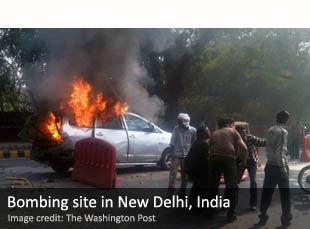
Bomb blast site in New Delhi, IndiaBy JOSEPH FITSANAKIS | intelNews.org |
Reports on the discovery last week of a synchronized plan to attack Israeli diplomats in India, Georgia, and Thailand, are still unfolding. At least four people —including the wife of an Israeli diplomat— were injured in New Delhi, when a bomb ripped through a van belonging to the Israeli embassy there. Another bomb was defused by Georgian counterterrorist forces after it was found fastened under an Israeli diplomatic vehicle in Tbilisi. And in Bangkok, two Iranian nationals were arrested after a bomb they were manufacturing exploded prematurely in a rented house in the Thai capital. In an interview I gave this past weekend to The Journal, one of Ireland’s most popular newsmagazines, I noted that the use of targeted assassinations as a means of achieving broader political goals is, of course, not new. But there are definite trends that we have been able to see developing during the past decade or so. For starters, even though the methods of assassination vary greatly, there are common trends one can point out, particularly in the organizational infrastructure of state-sponsored assassination operations. There is, to be precise, an increasing complexity in the way these operations are planned prior to their execution by specialized hit teams. I told The Journal’s interviewer, Susan Ryan, that the increasing sophistication of these types of operations can be appreciated by comparing older examples with case studies that are more recent. Take, for instance, the Black September killings, conducted by Israeli intelligence in response to the 1972 massacre of Israeli athletes at the Munich Olympics. Read more of this post

Research: Spies increasingly using Facebook, Twitter to gather data

Spying on social networkingBy JOSEPH FITSANAKIS | intelNews.org |
During the past four years, this blog has reported several incidents pointing to the increasing frequency with which spy agencies of various countries are utilizing social networking media as sources of tactical intelligence. But are we at a point where we can speak of a trend? In other words, is the rapid rise of social networking creating the conditions for the emergence of a new domain in tactical intelligence collection? This past week saw the publication of a new research paper (.pdf), which I co-authored with Micah-Sage Bolden, entitled “Social Networking as a Paradigm Shift in Tactical Intelligence Collection”. In it, we argue that recent case studies point to social networking as the new cutting edge in open-source tactical intelligence collection. We explain that Facebook, Twitter, YouTube, and a host of other social networking platforms are increasingly viewed by intelligence agencies as invaluable channels of information acquisition. We base our findings on three recent case studies, which we believe highlight the intelligence function of social networking. The first case study comes out of the Arab Spring, which, according to one report, “prompted the US government to begin developing guidelines for culling intelligence from social media networks”. We also examine NATO’s operations during the 2011 Libyan civil war (Operation UNIFIED PROTECTOR), when Western military forces systematically resorted to social networking media to gather actionable intelligence, by utilizing open sources like Twitter to pinpoint targets for attack. Finally, we examine the sabotage by Israeli security services of the 2011 “Welcome to Palestine Air Flotilla” initiative, a campaign organized by several European groups aiming to draw worldwide attention to the travel restrictions imposed by Israeli authorities on the Occupied Territories. Read more of this post

Analysis: Why is Israel so chatty about a possible strike on Iran?

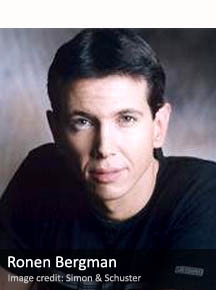
Ronen Bergman By JOSEPH FITSANAKIS | intelNews.org |
This past Sunday, Israeli intelligence expert Ronen Bergman published an extensive cover story in The New York Times Magazine, titled simply: “Will Israel Attack Iran?”. He answers his question in the affirmative, saying that “after speaking with many senior Israeli leaders and chiefs of the military and the intelligence, I have come to believe that Israel will indeed strike Iran in 2012”. Bergman, who a year ago wrote an excellent, well-informed account of the Mahmoud al-Mabhouh assassination, sees a “small and ever-diminishing” window of opportunity to stop the looming war.  But he says that few in Israel believe that the United States administration of President Barack Obama is willing or able to prevent an Israeli attack on Iran. Instead, the predominant sentiment in the Jewish state is that “only the Israelis can ultimately defend themselves”, he writes. But the intense discussion about a possible Israeli attack on Iran begs a critical question, which is asked by Laura Rozen, Senior Foreign Affairs Reporter for Yahoo News. She asks, why are Israeli leaders so chatty on the topic? One would think that, by being so vocal about their intentions, they risk losing a major strategic advantage that Israel’s military has relied on in the past: namely the element of surprise. In her search for an answer, she did what good reporters usually do: she actually picked up the phone and called Bergman in Israel. A condensed version of their interesting discussion is provided here. In it, she queries the Israeli intelligence expert about the widespread view that, if Israeli planes were indeed preparing to strike Iran, Tel Aviv would be very discrete about it. Bergman’s response is somewhat convincing; he says that most Israeli statements on the subject are “not meant for Israeli ears” —though they often reverberate inside Israel. Read more of this post

News you may have missed #670: Analysis edition

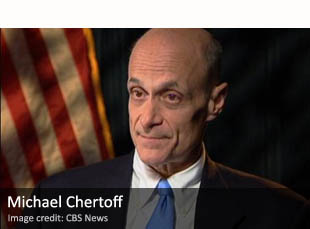
Michael ChertoffBy IAN ALLEN | intelNews.org |

►►Some argue US DHS should change intelligence mission. A decade after Congress created the Department of Homeland Security, the Aspen Homeland Security Group, which is co-chaired by former Homeland Security Secretary Michael Chertoff (pictured), says it is time for the agency to shift its focus from foreign threats to working with local governments and the private sector. Aspen pushes for even more intelligence outsourcing —no surprises there.
►►Not-so-covert Iran war buys West time but raises tension. “Ten out of 10. They hit the target and nobody got caught”, former US intelligence officer Robert Ayers told Reuters of the January 11 killing of Iranian nuclear scientist Mostafa Ahmadi-Roshan. “What makes these things so impressive is they gather a lot of information and do their ‘on the ground’ homework, which can take months”. Sidney Alford, a British explosives expert, says the hit was technically “professional. It worked and it worked very well”.
►►Inside Mossad’s war on Tehran. “In the five attacks on nuclear scientists, the hit squad has used a motorbike every time. The motorcyclist is ubiquitous in the capital’s traffic jams, often wearing a surgical mask for protection against the heavy pollution and able to move close to the target between the lines of stationary cars without attracting attention”.

News you may have missed #664

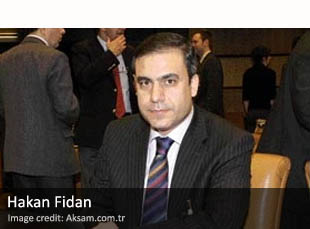
Hakan FidanBy IAN ALLEN | intelNews.org |
►►Iran nuclear defector’s family spared deportation from Canada. Family members of a top defector who worked for Iran’s nuclear energy program have been temporarily spared deportation from Canada, after claiming they will be tortured by Iran’s secret police. The defector, his daughter and mother, have not been identified in media reports. The names of their lawyers were not made public either.
►►Turkish spy services to be “among world’s largest”. Turkey commemorates the 85th anniversary of its National Intelligence Organization, known as MİT. The agency’s undersecretary, Hakan Fidan (pictured), told Turkish media that within the next two to three years, they aim to become one of the largest intelligence services in the world, and that they are “synthesizing the CIA-FBI model”.
►►Analysis: New rules for CIA drones in Pakistan. The current pause in CIA drone strikes in Pakistan (55 days and counting) is now the longest during Barack Obama’s presidency. The break in drone strikes was enforced by Islamabad after NATO killed 24 Pakistani soldiers in November. The break coincided with a major policy reappraisal by Washington, and it has given Islamabad room to refocus on its own strategic needs. In the coming weeks CIA drone attacks are expected to resume in Pakistan. But according to leaks and hints, there are likely to be far fewer strikes, and far fewer casualties.

News you may have missed #660

Margaret ThatcherBy IAN ALLEN | intelNews.org |
►►Taiwan President accused of spying on political opponents. Taiwan’s opposition challenger for the presidency, Tsai Ing-wen, has accused intelligence services under the control of incumbent President Ma Ying-jeou of tracking her campaign events for political advantage. The allegations – unproven and denied by Ma – conjure up memories of Taiwan’s one-party past when Ma’s party, the Nationalists, used their total control of the state apparatus to persecute opponents.
►►Analysis: Has Israeli-Australian spy relationship been restored? Intelligence sharing between Israel and Australia was halted this time last year, when a Mossad hit squad with forged Australian passports assassinated senior Hamas official Mahmoud al-Mabhouh in in Dubai. But Australian newspaper The Age reports that “the flow of top secret intelligence between the two countries has now been restored”, in a move apparently initiated by the Australian side.
►►Thatcher threatened to ban BBC program on MI5 and MI6. The Conservative government of British Prime Minister Margaret Thatcher threatened to “veto” a BBC investigative program about British intelligence services MI5 and MI6, because it would reveal details about how they operated and question their public accountability. In a letter marked “top secret and personal”, cabinet secretary Sir Robert Armstrong, recommended that Margaret Thatcher consider invoking the rarely used power, saying that “the government has the power to ban any program”. Thatcher wrote on the note: “I would be prepared to use the veto”.

News you may have missed #659

China and PakistanBy IAN ALLEN | intelNews.org |
►►China wants military bases in Pakistan. An Indian intelligence report leaked in the country’s press appears to reveal that China and Pakistan are in secret negotiations to allow Beijing to build military bases on Pakistani soil. The report states that “China’s desire for a military presence in Pakistan has been discussed by the political and military leadership of that country in the recent months. China’s deepening strategic penetration of Pakistan and joint plans to set up […] oil pipelines/rail/roads as well as naval and military bases are a matter of concern”.
►►Turkey ‘almost shot down’ Israeli spy drone. An Israeli drone flying over Turkey was nearly intercepted by Turkish aerial defense forces, an Istanbul-based media outlet reported on Tuesday. According to the report, “by the time the order [to shoot down the Israeli drone] was given, [it] had already left the area”. A spokesperson for the Israel Defense Forces refused to comment on the Turkish report.
►►Analysis: Global apparatus for drone killing emerges under Obama. “The Obama administration’s counterterrorism accomplishments are most apparent in what it has been able to dismantle, including CIA prisons and entire tiers of al-Qaeda’s leadership. But what the administration has assembled, hidden from public view, may be equally consequential”. Excellent analysis by Greg Miller, who argues that “the rapid expansion of the drone program has blurred long-standing boundaries between the CIA and the military”.