New paper sheds light on Russian and Chinese influence in Italy
August 18, 2022 3 Comments
 A NEW PAPER, PUBLISHED by the United Kingdom’s Royal United Services Institute (RUSI) for Defence and Security Studies, sheds light the complex relationship between Italy and the West’s two principal adversaries, Russia and China. Italy is a major global economic power. It is a prominent member of the Group of Seven (G7), which collectively account for more than 50 percent of global net wealth. It is also a member of the North Atlantic Treaty Organization (NATO) and the European Union (EU).
Despite —or perhaps because of— its central place in the Western alliance, Italy has long been a leading advocate for cooperation and dialogue between the West and Russia. In 2019, it became the first G7 member and the first major European Union power to sign a Memorandum of Understanding with China on Beijing’s Belt and Road Initiative. Additionally, the Italian private sector has been far more hesitant than those of other Western countries to abandon Russia following its invasion of Ukraine, with only a single Italian company having completely exited the Russian market since February of this year.
According to two Italian researchers, RUSI Senior Associate Fellow Raffaello Pantucci, and Eleonora Tafuro Ambrosetti, of the Italian Institute for International Political Studies (ISPI), Italy’s cooperative attitude toward China and Russia has led some to accuse Rome of being a “Trojan horse in Europe”. But in their research paper published by RUSI earlier this week, Pantucci and Ambrosetti argue that the reality is far more complex, especially in the case of Italian-Russian relations. They point out that Italy has, in fact, been a leading voice in favor of the imposition of harsh sanctions on Moscow in response to its invasion of Ukraine. Currently the Italian state is actively seeking to disengage its energy-import sector from Russia.
Strategy of Engagement
The research paper, entitled “Russian and Chinese Influence in Italy”, argues that Italy’s tendency to “hedge between its close transatlantic ties and its longstanding connections with Moscow and Beijing” is not new. In fact it reflects a longstanding Italian strategy, which tends to remain relatively constant and “does not change according to the political color of the government in charge” in Rome. As a result, Italy’s relations with Russia and China “show a roughly consistent pattern” in the post-Cold War era, as Rome is largely oriented “toward engagement” with both Moscow and Beijing. Read more of this post
 A GROWING CONVERGENCE BETWEEN the Central Intelligence Agency (CIA) and the United States military has been one of the most notable changes in American intelligence after 9/11.
 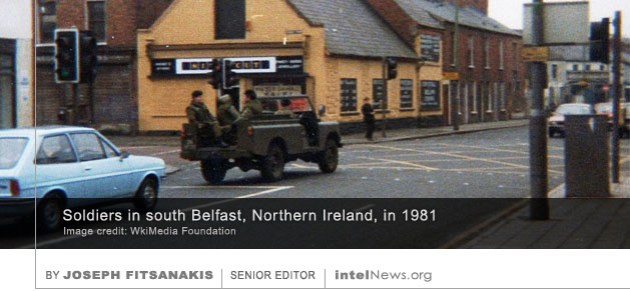 THE NORTHERN IRISH CONFLICT was a 30-year irregular war involving the government of the United Kingdom and an assortment of paramilitary groups. By the mid-1990s, when most of these groups had declared ceasefire, over 3,600 people had been killed and over 40,000 injured. The major paramilitary groups that participated in the conflict were the separatist Provisional Irish Republican Army (IRA) and Irish National Liberation Army (INLA), and the pro-UK, or ‘loyalist’, Ulster Volunteer Force (UVF) and Ulster Defence Association (UDA).
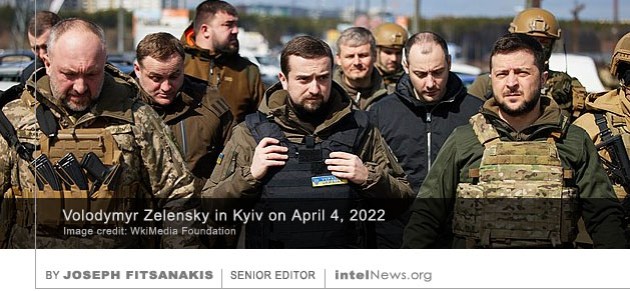 ON SUNDAY, JULY 17, the Ukrainian administration of President Volodymyr Zelenskiy announced the most extensive shake-up of the nation’s security leadership since the Russian military invasion. Two key members of Zelenskiy’s inner circle, Ukraine’s Prosecutor General Iryna Venediktova and domestic security chief Ivan Bakanov, were
 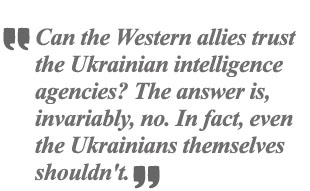 invariably, no. In fact, even the Ukrainians themselves are not in a position to trust their own intelligence services.
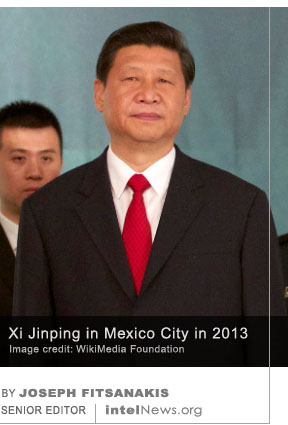 INTELLIGENCE OBSERVERS OFTEN REFER to the Communist Party of China (CPC) as “the world’s largest secret society”. Barring brief periods of relative openness in the late 1990s and early 2000s, the closed decision-making system of the CPC has presented Western intelligence analysts with cascading intractable enigmas for over half a century. This problem has become even more pressing under the decade-long leadership of Xi Jinping, during which the imposition of rigorous counterintelligence measures have turned China into a text-book hard intelligence target.
 social media, to social-science-based quantitative studies. Sverdrup-Thygeson and Stenslie explain that the two extremes of Beijingology are invariably disconnected from what is actually happening on the ground in China, and are thus of limited value.
 MORE THAN HALF OF all terrorist groups fail within a year, while 95 percent of them are extinct within a decade. Yet al-Shabaab, Somalia’s al-Qaeda-affiliated terrorist outfit, has been projecting strength in the Horn of Africa for over 15 years, despite having faced much stronger opponents. Today, with an operational presence in both Somalia and Kenya, the group maintains a force of between 5,000 and 10,000 full-time fighters. Pointing to its longevity, some observers view it as the most successful terrorist group of the 21st century.
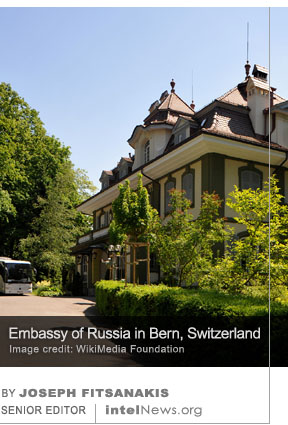 SINCE LATE FEBRUARY, WHEN Russian troops invaded Ukraine, over 500 Russian diplomats have been expelled from Western countries. Even former Russian allies have contributed to the growing list of expulsions —most recently Bulgaria, which
  IN THE OPENING STAGES of the Russian invasion of Ukraine, there was a widespread
  related legislation” with Western standards, as well as aligning them with NATO standards, so that Ukrainian cyber-warfare units can make use of advanced technologies and systems. Could it be, therefore, that Ukraine has improved its cyber-security posture enough to be able to defend itself against relentless Russian cyber-attacks?
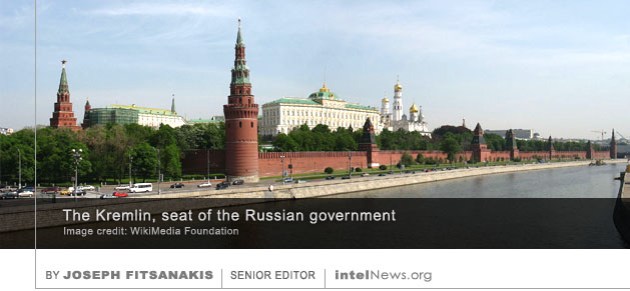 RUSSIANS ARE AWARE OF the phrase “there is no such thing as a former chekist”. The term “chekist” dates from the Bolshevik-era All-Russian Extraordinary Commission (VChK, pronounced “cheka”), which was formed in 1917 as the first Soviet-era state security agency. By the 1940s, intelligence posts had come to be seen as life-long relationships between chekists and the Soviet government, which continued even after one’s retirement. In
  with reference to three Russian intelligence agencies, all of which trace their origins to the Soviet-era Cheka —namely the Foreign Intelligence Service (SVR), the Federal Security Service (FSB), and the Federal Protective Service (FSO).
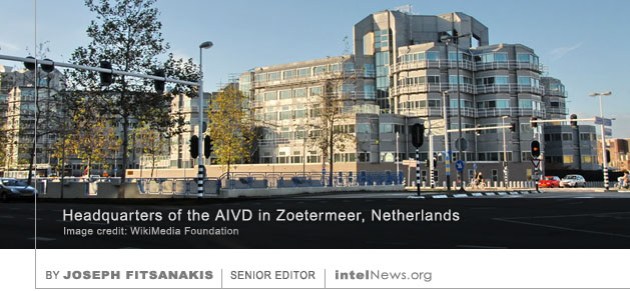 AT A TIME WHEN dozens of countries are routinely expelling
  Naturalization Service, which detained Cherkasov upon his arrival at Amsterdam’s Schiphol International Airport. The Dutch government declared the alleged GRU officer persona non grata and promptly expelled him back to Brazil “on the first flight out”.
 “THERE ARE DECADES WHERE nothing happens; and there are weeks where decades happen”. These words by the Russian revolutionary Vladimir Lenin offer a fitting description of the cataclysmic events witnessed since February 24. In the early hours of that day, the largest country in the world launched a strategic ground offensive against the largest country in Europe. What began as a “special military operation” has now escalated into the most extensive military conflict in Europe since World War II. It is clear that Russia’s original plan for this war collapsed within hours of the initial attack. But the correlation of forces continues to overwhelmingly favor the Russian side. Moreover, the bulk of the Russian forces are heading for Kyiv. This could result in the largest and most deadly urban battle since World War II.
 flee to Lviv. At the same time, elite formations from the Main Directorate of the Armed Forces’ General Staff (GRU) and Spetsnaz (special operations forces) were sent to the Ukrainian capital to assassinate leading government figures.
 AS THE FULL-SCALE invasion of Ukraine by the Russian Armed Forces continues to unfold, some Western commentators have begun to
  THE DIRECTOR-GENERAL OF Pakistan’s Inter-Service Intelligence (ISI) directorate, which is one of the country’s most powerful institutions, has been replaced, following weeks of speculation. On Wednesday, a press release issued by the Pakistani military announced that Lieutenant General Faiz Hameed would step down from his post of director of ISI, and will be







 intelNews.org
Spy agencies must regulate ethics of manipulation in HUMINT, researcher argues
November 7, 2022 by Joseph Fitsanakis 3 Comments
In an article entitled “The Good, the Bad, and the Tradecraft: HUMINT and the Ethics of Psychological Manipulation”, which was published last month in the peer-reviewed journal Intelligence and National Security, Lau argues that the concept of manipulation, which is often central in HUMINT, is nothing new. In fact, he explains, manipulation is a type of social influence that occurs naturally in human interactions, and may even have positive outcomes, depending on the case. Indeed, researchers have analyzed manipulation as a form of beneficial influence, which can help further commonly established social goals and norms. If anything, therefore, argumentative —also known as persuasive— forms of influence are normative aspects of interpersonal negotiation between humans.
COERCIVE INFLUENCE AND MANIPULATION
There is, however, a darker side, Lau explains, which relates to coercive influence —i.e. using threats or force to modify a person’s behavior. The subject becomes even more complicated when manipulation is instrumentalized as “a piece in the toolbox of HUMINT tradecraft”. The author goes on to suggest that manipulative influence in HUMINT can be distinguished between legitimate (harmless) and illegitimate (harmful). It follows that it is possible to attach a degree of ethical responsibility to the actions of case officers, or other covert operators, who engage in clandestine HUMINT activities as part of their work. Read more of this post
Filed under Expert news and commentary on intelligence, espionage, spies and spying Tagged with academic research, Analysis, ethics, HUMINT