November 1, 2017
by Joseph Fitsanakis
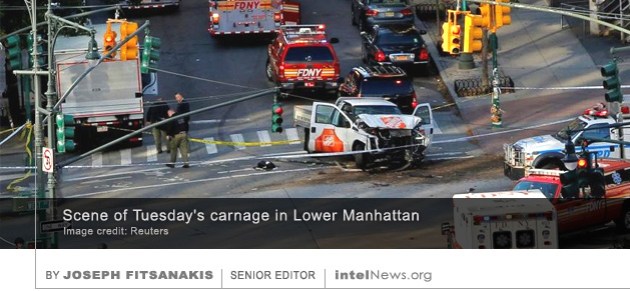 News reports hastened to describe Tuesday’s atrocity in Lower Manhattan as “the worst terror attack in New York since September 11, 2001”. The comparison may be numerically accurate. Moreover, the deaths caused by the attack are nothing short of tragic. But if the Islamic State’s deadliest response to its retreat in the Middle East is a clumsy truck driver armed with a pellet gun, then Americans have little to fear from the terrorist group.
For months now, Western counter-terrorism experts have been bracing for a change of tactics by the Sunni group, which in 2014 controlled territory in Iraq and Syria equal to the size of England. The prevailing theory in security circles is that, as the Islamic State is forced to retreat in the Middle East, it will unleash waves of sleeper cells against Western targets abroad. This concern is logical, given the militant group’s obsession with its public image. At every turn since its dramatic rise in 2013, the Islamic State has consciously tried to project an appearance of strength that is far greater than its actual capabilities. In its public statements, the group has consistently extolled its ability to strike at distant targets regardless of its territorial strength in the Middle East. This applies especially to attacks by the Islamic State in Europe, which have tended to come in response to intense media speculation that the group’s territorial hold may be weakening.
One presumes that a terrorist attack in New York, a symbolic site in the ‘war on terrorism’, would aim to do just that: namely project an image of continuing strength and convince global audiences that the group remains potent. Yet, despite the tragic loss of eight lives, Tuesday’s attack in Manhattan did nothing of the sort.
To begin with, an attack on cyclists with a rented utility vehicle is hardly ground-breaking at this point. In the past 18 months, we have seen similar types of attacks in London (on two separate occasions), in Barcelona’s Las Ramblas mall, in downtown Berlin, and in Nice, where a 19-ton cargo truck was used to kill 86 people. Terrorist groups are by nature conservative in their operations, preferring to use low-tech, time-tested methods to dispense  violence, rather than risk failure by breaking new ground. But at a time like this, when the very existence of the Islamic State hangs in the balance, one would think that the group would consciously try to intimidate its opponents by showing off some kind of revolutionary new weapon. That did not happen on Tuesday.
Additionally, the perpetrator of the attack, Uzbek immigrant Sayfullo Saipov, is hardly an inspiring figure for Islamic State supporters. After running over a group of unsuspecting cyclists, the 29-year-old Florida resident clumsily smashed his rented truck head-on into a vehicle that was far larger and heavier than his own, thus completely destroying his vehicle’s engine and effectively disabling his only weapon. He then jumped out of the truck, apparently wielding a pellet gun and a paintball gun. Mobile phone footage captured from a nearby building shows Saipov walking in a disoriented manner through Manhattan traffic before being shot by police officers. If —as it seems— the Islamic State was behind that attack, it would mean that modern history’s most formidable terrorist group failed to get a pistol in a country where firearms are in some cases easier to secure than nasal decongestant.
Choice of weapon aside, one does not need to be a counter-terrorism expert to conclude that Saipov lacked basic operational and planning skills. His attack behavior shows that he had failed to carry out even rudimentary prior reconnaissance of the area where he launched his attack. He even appears to have failed to read Tuesday’s New York Post. Had he done so, he would have known that  the heavily attended annual Village Halloween Parade was scheduled to take place on the very same street, just two hours after he launched his deranged attack.
Once again, the question is: if the Islamic State does not utilize its deadliest and most capable operatives now, when its very existence in its Middle Eastern stronghold is being directly challenged, then when will it do so? By all accounts, the militant group’s leaders are well-read on recent history. They are therefore fully aware that, in the post-9/11 age, clumsy, low-tech, limited terrorist strikes by lone-wolf operatives lack the capacity to intimidate civilian populations, especially in New York.
Western counter-terrorism agencies and citizens alike should remain vigilant; but early evidence shows that the Islamic State is simply too weak to launch sophisticated, large-scale strikes against Western targets abroad. As I have argued before, the threat level would change if the militant group acquires chemical weapons or other tools of mass terrorism. For now, however, it is safe to state that the Islamic State’s capabilities do not pose anything close to an existential threat to the West.
► About the author: Dr. Joseph Fitsanakis is Associate Professor in the Intelligence and National Security Studies program at Coastal Carolina University. Before joining Coastal, Dr. Fitsanakis built the Security and Intelligence Studies program at King University, where he also directed the King Institute for Security and Intelligence Studies. He is also deputy director of the European Intelligence Academy and senior editor at intelNews.org.
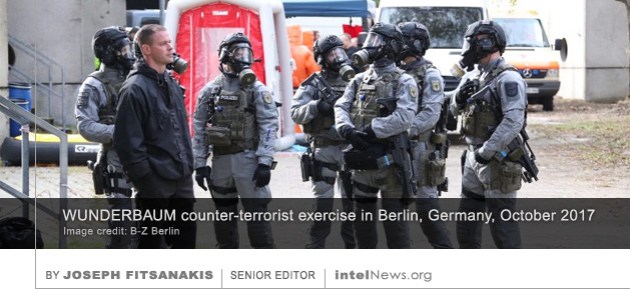 A German newspaper reported last week that at least one European intelligence agency has already warned that the Islamic State is exploring the use of chemicals for attacks in Europe. Such an eventuality would be a radical departure from prior attacks by the Islamic State in the West. In the past, the militant group has shown a strong preference for low-tech means of dispensing violence, such as firearms, vehicles and knives. But it has utilized chemical substances in Iraq and Syria, and its technical experts have amassed significant knowledge about weaponized chemicals.
 There’s a reason why America has not experienced another 9/11, and it’s not because militants are not trying. Through a series of sweeping reforms prompted by the tragic events of that day, United States intelligence and security agencies have become extremely efficient at preventing large-scale terrorist and criminal violence. Using increasingly sophisticated methods of intelligence collection, analysis and even prediction, counter-terrorism and security experts have neutralized countless attempts to replicate —or even surpass— the horror of 9/11.
 Montana. Most important of all, they work alone, which makes it immensely difficult to sense their murderous intentions. Counter-terrorism and security experts are trained to detect possible attacks by penetrating the communications between members of a conspiracy. When the operative is a lone wolf, and does not communicate his or her plans, the points of possible penetration diminish, as does the possibility of detection.
 The security map of the Middle East changed within a few hours on Wednesday, when the Islamic State managed to strike Iran for the first time. Six assailants —five men and a woman— stormed the Islamic Consultative Assembly, which serves as the parliament of Iran, and the mausoleum of the founder of the Islamic Republic, Ayatollah Khomeini. By the time they killed themselves, or were killed by security forces, the six had murdered 12 people and injured over 60. The Islamic State, which carried out the attack, had warned for several months that it would launch a direct assault at the heart of
  the world’s largest Shiite state. It tried to do so before, several times, and failed. But
 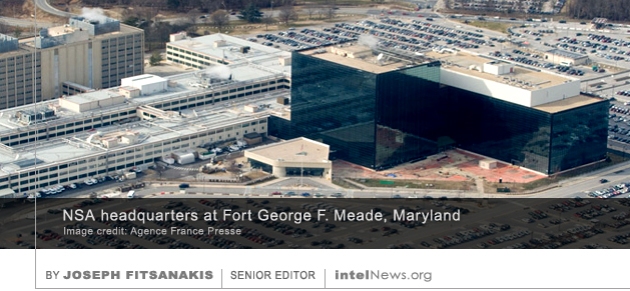 At first sight, the case of Reality Leigh Winner, a United States federal contractor who has been
  between leakers based on their motives. It does, however, distinguish between simple leakers and whistleblowers. If a US government employee uncovers evidence of abuse of power, or becomes aware of a specific and critical threat to the security of Americans, he or she is required to notify his or her superiors. If the latter refuse to take action, then the employee is justified under the law in taking all necessary actions to warn the public of impending peril. That is precisely the function of the 1989 Whistleblower Protection Act, which affords protection to insiders who expose abuses of authority, or a concrete and critical threat to public safety.
 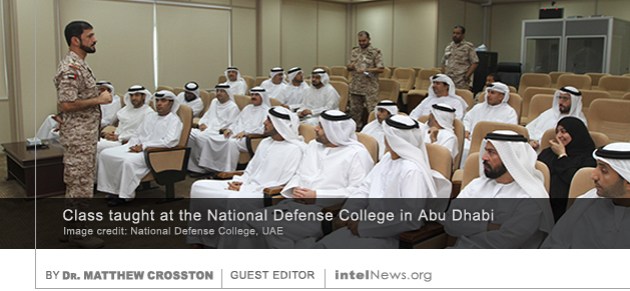 Emirati intelligence has to be seen in two disparate tiers: actual home-grown intelligence efforts, which usually revolve within the small policing and military forces of the United Arab Emirates (UAE); and more elaborate, highly secretive, outsourced activities that use the UAE as a facilitating conduit or go-between with a clear advantage to Emirati interests.
 ultra-modern intelligence capabilities, and cooperates with international organizations, other countries, and policing agencies. In addition, the UAE leadership has taken initiatives recently to create a domestic level of intelligence scholarship and professionalization, namely in the form of the
 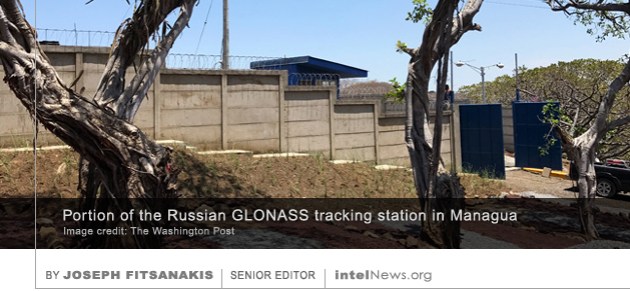 A Russian facility built on a hillside facing the United States embassy in the Nicaraguan capital Managua is seen by some experts as symptomatic of Russia’s renewed presence in the Americas. The official Russian explanation for the heavily protected facility, which is surrounded by high walls, is that it is meant to operate as a tracking station for GLONASS, Russia’s version of the global positioning system (GPS). The Russians do not use GPS, because it is owned by the US government and operated by the US Air Force. But some believe that only part of the compound is dedicated to GLONASS activities, and that a major portion is a Russian listening base that sweeps US communications from throughout the region.
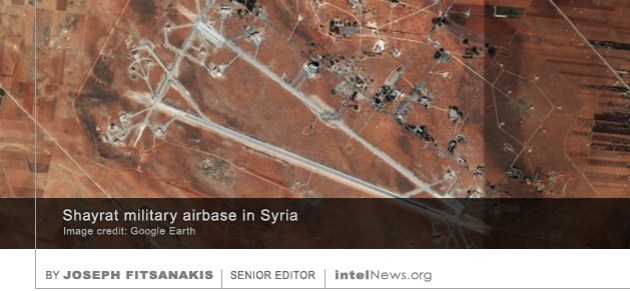 The nearly 60 Tomahawk missiles that the United States fired at Syria in the early hours of Friday local time were not the first. Nor were they the first that struck a Syrian government installation. In September of 2016, for example, a United States airstrike hit a
  given that Washington’s attack took place during the official visit to the United States by Xi Jinping, premier of China, another strong Syrian ally. Finally, it is worth considering possible Iranian responses to the US attack, especially if Iranian citizens end up on the casualty list.
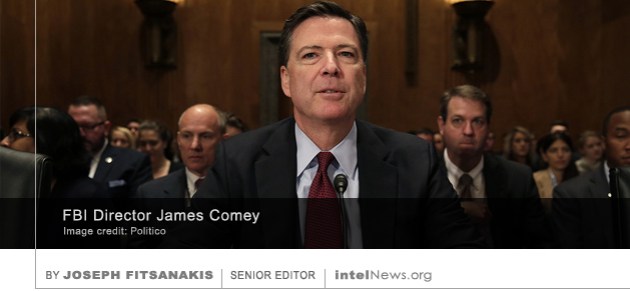 Monday’s official announcement that an investigation is underway into alleged Russian involvement in the 2016 United States presidential election was an important moment in American political history. It exposed the chaotic state of American politics and added yet another layer of complexity in an already intricate affair, from which the country’s institutions will find it difficult to recover for years to come. This is regardless of the outcome of the investigation, which is being conducted by the Federal Bureau of Investigation. Even if it fails to produce a ‘smoking gun’, the very fact that the country’s chief counterintelligence agency is examining the possibility that a US president was elected with help from Russia, is an astonishing development without parallel in modern American history.
 The sensational assassination of Kim Jong-nam, half-brother of North Korea’s Supreme Leader Kim Jong-un, on February 13, revealed much about the current operational mindset of Pyongyang. But it also brought to light the shady network of front companies set up by the North Korean regime to facilitate the country’s illicit financial activities around the world. This extensive network permits Pyongyang to evade international sanctions against it, and to coordinate the activities of hundreds of clandestine operatives around the world. Through these activities, the reclusive country has been able to develop its weapons of mass destruction program unabated, despite concerted efforts by the United Nations to prevent it from doing so.
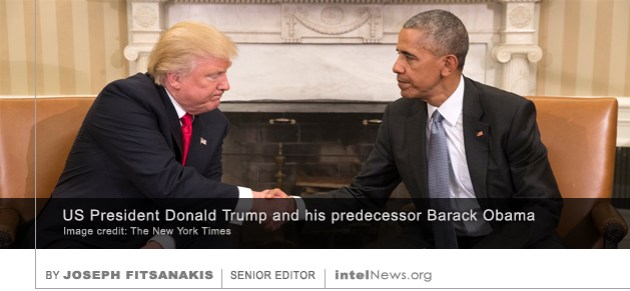 The absurdity of American politics reached new heights over the weekend, as President Donald Trump dramatically alleged on Twitter that his predecessor, Barack Obama, wiretapped his telephones last year. Even for a highly impulsive public figure known for his sensational and often-unsubstantiated allegations, Mr. Trump’s latest claims prompted a new sense of abnormality and astonishment in Washington. If the president is unable to prove his dramatic claims, his reliability will be further-eroded, and what little is left of his relationship with the American intelligence and national-security communities will disintegrate. If his allegations are proven, they will cause a scandal of unprecedented proportions from which American political institutions —including the presidency— will find it difficult to recover.
 order at the highest levels of the American government, Mr. Trump’s claims cannot possibly be true. American presidents have not been legally allowed to order wiretaps since 1978, when the Foreign Intelligence Surveillance Act (FISA) was established. Prompted by the abuse of executive power revealed through the Watergate scandal, FISA forces government agencies to seek the approval of specially mandated judges before installing wiretaps. If an agency like the Federal Bureau of Investigation (FBI) wants to wiretap an individual or group suspected of acting as agents of a foreign power, it must convince one of 11 federal district judges who rotate on the FISA court that the case warrants a wiretap order. Thus, before authorizing the wiretap, a FISA judge must be convinced by examining the available evidence presented before him or her.
 For a very long time, the field of Intelligence Studies has been dominated by analysis of the Five Eyes community, which is comprised of the United States, Great Britain, Australia, New Zealand, and Canada. In reality, that study is more often the study of intelligence in the US and the UK. While not entirely fair to characterize this as Western prejudice —access to data is better in these two countries and intelligence scholars and analysts for the most part do not fear retribution or reprisal— more voices need to come forward to consider intelligence and its role on societies beyond the Five Eyes.
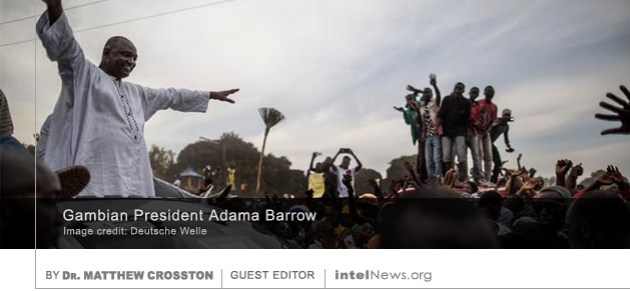
 electoral reforms back in April of 2016. The protests were geared to influencing the December 2016 presidential election, which ultimately saw the defeat of incumbent President/Strongman Yahya Jammeh to Adama Barrow. Jammeh had corruptly governed the country since rising to power as a young military officer in a bloodless military coup in 1994.
 The ongoing security crisis in the United States reached new heights last night as Michael Flynn, President Donald Trump’s national security advisor, resigned. In his letter announcing his decision, the former general
 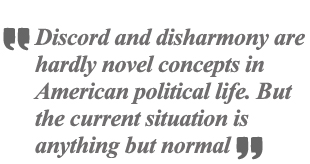 number of former insiders warn that senior intelligence officials are —in the words of former National Security Agency officer
 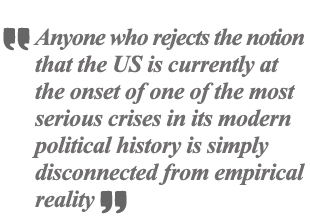 Mr. Trump summarily fired the head of the Department of Justice and openly
  inconceivable magnitude, with implications that may well shape the future of America and its place in the world.
 There has been much consternation and confusion over the maneuverings engineered by United States President Donald Trump with the National Security Council (NSC). By now everyone knows the Chairman of the Joint Chiefs of Staff and the head of the Office of the Director of National Intelligence (ODNI) have been essentially demoted down to Principals Committee meetings, with the no-doubt unsatisfying caveat that “when their specific expertise” is needed they will be asked to attend the main Principals meeting with the President. The irony, of course, is that both of these offices have always been oversight and unifying leadership positions: the Chairman of the Joint Chiefs oversees and coordinates discussion and debate between the heads of all the military branches while the ODNI was basically created to go do the thing the Department of Homeland
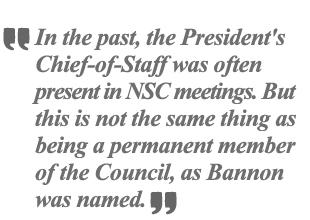 Security was initially meant to do after 9/11 —coordinate and improve communication and cooperative transparency across the entire US Intelligence Community. It is therefore somewhat mystifying as to why two deeply experienced actors with comprehensive knowledge of military and intelligence affairs writ large would be inexplicably categorized as ‘knowledge specialists’, not required for the big general meeting. It is not like the ODNI came into the NSC meetings pre-Trump as the ‘Basque subject matter expert’ alone, or the Chairman of the Joint Chiefs laid claim to being the world’s only ‘Gulf of Aden’ maritime security specialist. While it is still too early to know, it seems a logical bet that there is some personality conflict or discomfort between these two men and the incoming member(s) that Trump has designated. Safe money is on General Michael Flynn. But since that right now will remain unsubstantiated rumor and gossip, we are left with nothing but conjecture.
 There is no doubt whatsoever that Russia has compiled ‘information’ on United States President Donald Trump. Russian intelligence considers it a rightful duty to compile information on persons of relevance, especially when they are conducting significant business or maintain political relations with Russia. Trump qualified under that definition long before he even thought about running for president. Even I have been followed, during my numerous times in Russia, both openly and tacitly. I have had my computer hacked and hotel phone bugged. And my affairs in Russia have come nowhere near to the financial or political relevance of Donald Trump.
 intelligence on Trump has nothing to do with American celebrity culture. If it truly exists, this would have been done under the edict of ‘national security’ for Russian geopolitical interests. As such, the proper Russian intelligence behavior would be to deny its existence and hold on to anything it has until a time deemed strategically best. The least efficient usage of that compromising material would be to just embarrass him publicly before he is inaugurated, TMZ ‘gotcha’ style. Russians simply don’t work that way. Rather, keeping it secret and using it in a non-public but strategically effective manner for their national interests is the Russian way.






 intelNews.org
Analysis: Despite tragic deaths, New York attack reveals a weakened ISIS
November 1, 2017 by Joseph Fitsanakis 2 Comments
For months now, Western counter-terrorism experts have been bracing for a change of tactics by the Sunni group, which in 2014 controlled territory in Iraq and Syria equal to the size of England. The prevailing theory in security circles is that, as the Islamic State is forced to retreat in the Middle East, it will unleash waves of sleeper cells against Western targets abroad. This concern is logical, given the militant group’s obsession with its public image. At every turn since its dramatic rise in 2013, the Islamic State has consciously tried to project an appearance of strength that is far greater than its actual capabilities. In its public statements, the group has consistently extolled its ability to strike at distant targets regardless of its territorial strength in the Middle East. This applies especially to attacks by the Islamic State in Europe, which have tended to come in response to intense media speculation that the group’s territorial hold may be weakening.
One presumes that a terrorist attack in New York, a symbolic site in the ‘war on terrorism’, would aim to do just that: namely project an image of continuing strength and convince global audiences that the group remains potent. Yet, despite the tragic loss of eight lives, Tuesday’s attack in Manhattan did nothing of the sort.
To begin with, an attack on cyclists with a rented utility vehicle is hardly ground-breaking at this point. In the past 18 months, we have seen similar types of attacks in London (on two separate occasions), in Barcelona’s Las Ramblas mall, in downtown Berlin, and in Nice, where a 19-ton cargo truck was used to kill 86 people. Terrorist groups are by nature conservative in their operations, preferring to use low-tech, time-tested methods to dispense violence, rather than risk failure by breaking new ground. But at a time like this, when the very existence of the Islamic State hangs in the balance, one would think that the group would consciously try to intimidate its opponents by showing off some kind of revolutionary new weapon. That did not happen on Tuesday.
Additionally, the perpetrator of the attack, Uzbek immigrant Sayfullo Saipov, is hardly an inspiring figure for Islamic State supporters. After running over a group of unsuspecting cyclists, the 29-year-old Florida resident clumsily smashed his rented truck head-on into a vehicle that was far larger and heavier than his own, thus completely destroying his vehicle’s engine and effectively disabling his only weapon. He then jumped out of the truck, apparently wielding a pellet gun and a paintball gun. Mobile phone footage captured from a nearby building shows Saipov walking in a disoriented manner through Manhattan traffic before being shot by police officers. If —as it seems— the Islamic State was behind that attack, it would mean that modern history’s most formidable terrorist group failed to get a pistol in a country where firearms are in some cases easier to secure than nasal decongestant.
Choice of weapon aside, one does not need to be a counter-terrorism expert to conclude that Saipov lacked basic operational and planning skills. His attack behavior shows that he had failed to carry out even rudimentary prior reconnaissance of the area where he launched his attack. He even appears to have failed to read Tuesday’s New York Post. Had he done so, he would have known that the heavily attended annual Village Halloween Parade was scheduled to take place on the very same street, just two hours after he launched his deranged attack.
Once again, the question is: if the Islamic State does not utilize its deadliest and most capable operatives now, when its very existence in its Middle Eastern stronghold is being directly challenged, then when will it do so? By all accounts, the militant group’s leaders are well-read on recent history. They are therefore fully aware that, in the post-9/11 age, clumsy, low-tech, limited terrorist strikes by lone-wolf operatives lack the capacity to intimidate civilian populations, especially in New York.
Western counter-terrorism agencies and citizens alike should remain vigilant; but early evidence shows that the Islamic State is simply too weak to launch sophisticated, large-scale strikes against Western targets abroad. As I have argued before, the threat level would change if the militant group acquires chemical weapons or other tools of mass terrorism. For now, however, it is safe to state that the Islamic State’s capabilities do not pose anything close to an existential threat to the West.
► About the author: Dr. Joseph Fitsanakis is Associate Professor in the Intelligence and National Security Studies program at Coastal Carolina University. Before joining Coastal, Dr. Fitsanakis built the Security and Intelligence Studies program at King University, where he also directed the King Institute for Security and Intelligence Studies. He is also deputy director of the European Intelligence Academy and senior editor at intelNews.org.
Filed under Expert news and commentary on intelligence, espionage, spies and spying Tagged with Analysis, counterterrorism, Joseph Fitsanakis, Newstex, terrorism