Russian spy may have been poisoned by nerve agent smeared on car’s door handle

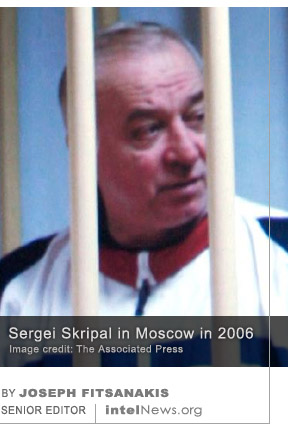
Sergei SkripalThe nerve agent that poisoned a Russian double spy in England last week may have been smeared on his car’s door handle, according to sources. Sergei Skripal, 66, and his daughter Yulia, 33, are in critical condition after being poisoned on March 4 by unknown assailants in the English town of Salisbury. Skripal, a Russian former military intelligence officer, has been living there since 2010, when he was released from a Russian prison after serving half of a 13-year sentence for spying for Britain. The British government said on Monday that it believes Skripal and his daughter were poisoned by a military-grade nerve agent, thought to have been built in the Soviet Union during the Cold War. Britain’s counterterrorism experts continue to compile evidence on the case. Moscow denies any involvement.

On Tuesday, Neil Basu, spokesman for the Metropolitan Police Service, which houses Britain’s counterterrorism force, said that the investigation into the Skripals’ poisoning was complex and painstaking. Speaking to reporters in London, Basu said that hundreds of witnesses had been contacted and nearly 400 items had been collected from various crime scenes that related to the March 4 attack on the two Russians. He added that investigators were still looking into the whereabouts of the Skripals during a 40-minute period when they were driving in Mr. Skripal’s car. According to British newspaper The Daily Mail, Mr. Skripal’s dark red BMW is now “at the center of the investigation” into his poisoning. There are claims, said the paper, that the former spy and his daughter came in physical contact with the nerve agent by touching the door handles of the BMW as they entered the car on the evening of March 4. Some investigators appear to believe that the nerve agent may have been smeared on the car’s door handles.

The Metropolitan Police are now appealing for witnesses who may have seen the Skripals driving around downtown Salisbury in the red BMW, or arriving at the car park of Sainsbury’s, part of a British nationwide supermarket chain, on the early afternoon of March 4. Basu said that it was not known whether the pair met anyone during those 40 minutes. The police spokesman said that the Skripals were still fighting for their lives at a local hospital. He added that the inquiry into their poisoning would “take many weeks”.

Author: Joseph Fitsanakis | Date: 14 March 2018 | Permalink

UK blames Russia, says it will not invoke NATO Article 5 in attack on ex-spy

Theresa MayThe British prime minister said on Monday that it was “highly likely” the nerve agent used to attack a Russian defector in England last week was developed by Russia. But sources in London told the BBC that the British government would not invoke Article 5 of the North Atlantic Treaty Organization (NATO), which states that an attack on one member of the alliance is an attack on all. Theresa May was referring to an assassination attempt carried out on March 4 by unknown assailants against former KGB Colonel Sergei Skripal. The 66-year-old former spy and his daughter were found in a catatonic state in the town of Salisbury. It was later determined that they were attacked with a nerve agent.

Speaking in the British House of Commons, Mrs. May said that “world-leading experts” in chemical weapons had concluded Mr. Skripal had been attacked with a “military-grade nerve agent”. It was, she added, part of a group of nerve agents developed by the USSR in the 1970s and 1980s, known collectively as novichok (newcomers). The existence of these nerve agents took place in secret, but was later revealed by Russian government agents who defected to the West. British officials also disclosed yesterday that the British Foreign Office summoned the Russian Ambassador to London, Alexander Yakovenko, to seek an explanation about the attack. Additionally, London has called on Moscow to provide a “full and complete disclosure” of its novichok nerve agent program to the Organization for the Prohibition of Chemical Weapons, an intergovernmental agency based in the Netherlands, which oversees the 1997 Chemical Weapons Convention.

Meanwhile NATO Secretary General Jens Stoltenberg told reporters on Monday that the alliance viewed the use of a military-grade nerve agent on British soil as “horrendous and completely unacceptable” and that it was in contact with British officials about the matter. But British government officials told the BBC that London had no intention of invoking Article 5 of the NATO treaty, which requires all member-states to rally to the defense of a member under attack. The only time that Article 5 has been invoked by a member was by the United States, in response to the September 11, 2001, attacks. In Washington, White House Press Secretary, Sarah Huckabee Sanders said on Monday that the United States was “monitoring the incident closely” and took it “very seriously”. Mrs. Sanders described the attack on Mr. Skripal as “reckless, indiscriminative and irresponsible”, and extended the American government’s “support […] to our closest ally”, the United Kingdom. But she refused to respond to questions about whether the Russian government was behind the attack, saying that British experts were “still working through […] some of the details” of the case.

On Monday, during an official visit to the southern region of Krasnodar, Russian President Vladimir Putin was asked by a BBC reporter to comment on the attack on Skripal. He responded to the British reporter saying that the government in London would first have to “sort this out for yourselves first, then come talk to us”. He then walked away. Commenting from Moscow on Mrs. May’s allegations, Russian Foreign Ministry spokeswoman Maria Zakharova said that her statement in the British Parliament had been “a circus show”.

Author: Joseph Fitsanakis | Date: 13 May 2018 | Permalink
British intelligence to tighten security protection for Russian defectors

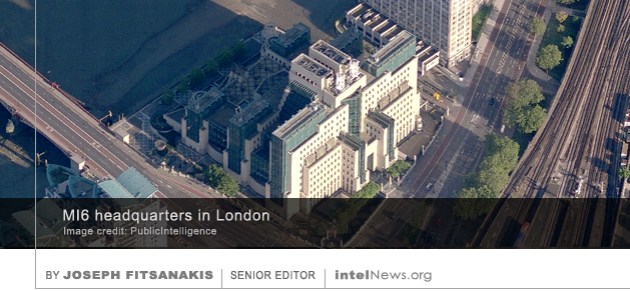
MI6The British secret services have begun tightening the physical security of dozens of Russian defectors living in Britain, a week after the attempted murder of former KGB Colonel Sergei Skripal in southern England. The 66-year-old double spy and his daughter, Yulia, were found in a catatonic state in the town of Salisbury on March 4. It was later determined that they had been attacked with a nerve agent. Russian officials have vehemently denied that the Kremlin had any involvement with the brazen attempt to kill Skripal. But, according to The Times, the British intelligence community has concluded that Skripal and his daughter were attacked on Moscow’s orders —most likely the GRU, Russia’s military intelligence agency, where Skripal worked until his arrest for spying for Britain in 2004.
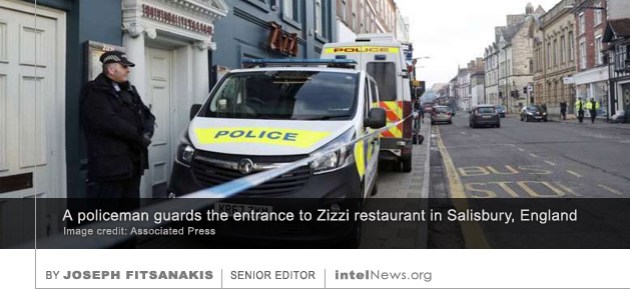
Citing an unnamed source from Whitehall, the administrative headquarters of the British government, The Times said that initial assessments of Skripal’s poisoning were damning for Britain’s intelligence community. They raised questions, said the source, about the ability of Britain’s two primary spy agencies, the Security Service (MI5) and the Secret Intelligence Service (MI6), to provide security to their assets. The source told The Times that it was “impossible to reduce […] to zero” the risk of serious physical harm against individuals like Skripal, and before him Alexander Litvinenko, a former KGB officer who was poisoned to death in London in 2006. But the attack on Skripal is being viewed as an intelligence failure, said the source, and part of the response to it involves a comprehensive review of risk to British-based Russian double spies and defectors from “unconventional threats”. The latter include attacks with chemical and radiological weapons, said The Times.

The report came as another British-based Russian defector, Boris Karpichkov, told The Daily Mirror newspaper that the Kremlin has tried to poison him three times since 2006. Karpichkov, 59, joined the KGB in 1984, but became a defector-in-place for Latvian intelligence in 1991, when the Soviet Union disintegrated. He claims to have also spied on Russia for French and American intelligence. In 1998, carrying two suitcases filled with top-secret Russian government documents, and using forged passports, he arrived in Britain with his family. In 2006, while living in the UK, Karpichkov says he was warned by MI5 to leave the country because his life may be in danger. He temporarily relocated to New Zealand, where he says he was attacked with an unidentified nerve agent. He told The Mirror that he lost nearly half his weight during the following weeks, but survived due to good medical care. However, he was attacked again, he said, four months later, while still living in New Zealand.

Karpichkov told The Mirror he had been warned that his name was on a shortlist of eight individuals that the Kremlin wanted to kill. He also claimed that he was told by a source to watch out for people carrying electronic cigarettes, because Russian intelligence had developed nerve-agent weapons that were disguised as e-cigarette devices.

Author: Joseph Fitsanakis | Date: 12 March 2018 | Permalink

Analysis: All evidence points to professionals behind Skripal poisoning

Skripal SalisburyMost state-sponsored assassinations tend to be covert operations, which means that the sponsoring party cannot be conclusively identified, even if it is suspected. Because of their covert nature, assassinations tend to be extremely complex intelligence-led operations, which are designed to provide plausible deniability to their sponsors. Consequently, the planning and implementation of these operations usually involves a large number of people, each with a narrow set of unique skills. But —and herein lies an interesting contradiction— their execution is invariably simple, both in style and method. The attempted assassination of Sergei Skripal last Sunday in England fits the profile of a state-sponsored covert operation in almost every way.

Some have expressed surprise that Skripal, a Russian intelligence officer who was jailed in 2004 for selling Moscow’s secrets to British spies, would have been targeted by the Russian state. Before being allowed to resettle in the British countryside in 2010, Skripal was officially pardoned by the Kremlin. He was then released from prison along with four other Russian double agents, in exchange for 10 Russian deep-cover spies who had been caught in the United States earlier that year. According to this argument, “a swap has been a guarantee of peaceful retirement” in the past. Thus killing a pardoned spy who has been swapped with some of your own violates the tacit rules of espionage, which exist even between bitter rivals like Russia and the United States.

This assumption, however, is baseless. There are no rules in espionage, and swapped spies are no safer than defectors, especially if they are judged to have caused significant damage to their employers. It is also generally assumed that pardoned spies who are allowed to resettle abroad will fade into retirement, not continue to work for their foreign handlers, as was the case with Skripal, who continued to provide his services to British intelligence as a consultant while living in the idyllic surroundings of Wiltshire. Like the late Russian defector Alexander Litvinenko, who died in London of radioactive poisoning in 2006, Skripal entrusted his personal safety to the British state. But in a country that today hosts nearly half a million Russians of all backgrounds and political persuasions, such a decision is exceedingly risky.
On Wednesday, the Metropolitan Police Service announced that Skripal, 66, and his daughter Yulia, 33, had been “targeted specifically” by a nerve agent. The official announcement stopped short of specifying the nerve agent used, but experts point to sarin gas or VX. Both substances are highly toxic and compatible with the clinical symptoms reportedly displayed by the Skripals when they were found in a catatonic state by an ambulance crew and police officers last Sunday. At least one responder, reportedly a police officer, appears to have also been affected by the nerve agent. All three patients are reported to be in a coma. They are lucky to have survived at all, given that nerve agents inhaled through the respiratory system work by debilitating the body’s respiratory muscles, effectively causing the infected organism to die from suffocation.

In the past 24 hours, at least one British newspaper stated that the two Russians were “poisoned by a very rare nerve agent, which only a few laboratories in the world could have produced”. That is not quite true. It would be more accurate to say that few laboratories in the world would dare to produce sarin or VX, which is classified as a weapon of mass destruction. But no advanced mastering of chemistry or highly specialist laboratories are needed to manufacture these agents. Indeed, those with knowledge of military history will know that they were produced in massive quantities prior to and during World War II. Additionally —unlike polonium, which was used to kill Litvinenko in 2006— nerve gas could be produced in situ and would not need to be imported from abroad. It is, in other words, a simple weapon that can be dispensed using a simple method, with little risk to the assailant(s). It fits the profile of a state-sponsored covert killing: carefully planned and designed, yet simply executed, thus ensuring a high probability of success.
By Wednesday, the British security services were reportedly using “hundreds of detectives, forensic specialists, analysts and intelligence officers working around the clock” to find “a network of highly-trained assassins” who are “either present or past state-sponsored actors”. Such actors were almost certainly behind the targeted attack on the Skripals. They must have dispensed the lethal agent in liquid, aerosol or a gas form, either by coming into direct physical contact with their victims, or by using a timed device. Regardless, the method used would have been designed to give the assailants the necessary time to escape unharmed. Still, there are per capita more CCTV cameras in Britain than in any other country in the world, which gives police investigators hope that they may be able to detect the movements of the attackers. It is highly unlikely that the latter remain on British soil. But if they are, and are identified or caught, it is almost certain that they will be found to have direct links with a foreign government.

Author: Joseph Fitsanakis | Date: 08 March 2018 | Permalink

British intelligence already sees Kremlin behind ex-spy’s poisoning, say sources

Sergei SkripalBritain’s counterintelligence service is nearing the conclusion that a foreign government, most likely Russia, tried to kill a Russian double spy and his daughter, who are now fighting for their lives in a British hospital. Sergei Skripal, 66, and his daughter Yulia Skripal, 33, are said to remain in critical condition, after falling violently ill on Sunday afternoon while walking in downtown Salisbury, a picturesque cathedral city in south-central England. Skripal arrived in England in 2010 as part of a large-scale spy-swap between the United States, Britain and Russia. He was among four Russian citizens that Moscow released from prison and allowed to resettle in the West, in exchange for 10 Russian deep-cover intelligence officers, who had been arrested earlier that year by the Federal Bureau of Investigation in the United States.
Since Skripal’s poisoning made headlines on Monday morning, the basic details of his story have been reported extensively. He is believed to have served in Soviet and Russian military intelligence for several decades, rising to the rank of colonel. But in 2004 he was arrested and eventually convicted by Russian authorities for spying on behalf of the British Secret Intelligence Service (MI6). He had served nearly 7 years of a 13-year sentence in 2010, when he was pardoned by then-Russian President Dmitry Medvedev and allowed to resettle in England with his immediate family. He did so in Salisbury, where he was found in a near-fatal state last Sunday, slumped on a street bench next to his equally catatonic daughter. Inevitably, the story brought back memories of the assassination of Alexander Litvinenko, a former officer in the Soviet and Russian intelligence services, who defected to Britain but was poisoned to death with a radioactive substance in 2006. His murder prompted London to expel four Russian diplomats from Britain, a move that was countered by Moscow, which also expelled four British diplomats from the country.

Despite the close parallels between Litvinenko and Skripal, the British government has not publicly blamed Russia for Sunday’s attempted killing. But according to The Times newspaper, officials at the Security Service (MI5), Britain’s counterintelligence agency, are already pointing to Russia as the culprit of the attempt on Skripal’s life. The London-based paper cited anonymous sources in Whitehall, the administrative headquarters of the British government, who said that MI5 experts were already briefing government officials about the details of the assassination attempt by Russian government agents.

Actions taken by the British government in the past 24 hours also point to Whitehall viewing the attempt on Skripal’s life as an operation sponsored by a state, most likely by Russia. The investigation of the incident is now being led by the counterterrorism branch of the Metropolitan Police Service in London. Additionally, samples of the victims’ tissue, as well as blood and other bodily fluids, have been sent for examination by toxicologists at the Ministry of Defence’s top-secret Science and Technology Laboratory in Porton Down. It also emerged last night that British Home Secretary Amber Rudd has called an emergency meeting of the British government’s Cabinet Office Briefing Rooms (COBR, also known as Cobra) group, which she chairs. The group consists of cabinet ministers, senior civil servants, and the leadership of the Metropolitan Police and the intelligence services, who meet to respond to developing emergencies of a national scale.

Author: Joseph Fitsanakis | Date: 06 March 2018 | Permalink

Sweden grants citizenship to man accused by Iran of being a Mossad spy

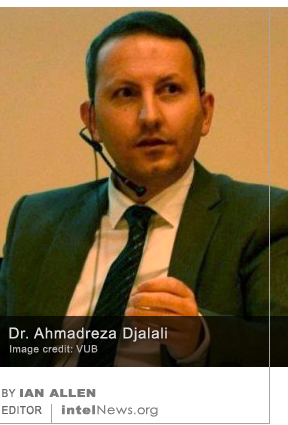
Ahmadreza DjalaliThe government of Sweden has granted citizenship to an academic who is on death row in Iran for allegedly helping Israel kill Iranian nuclear scientists. Sweden’s Foreign Affairs Ministry confirmed on Saturday that Ahmadreza Djalali, who lives in Sweden and has lectured at Stockholm’s renowned Karolinska Institute, is now a Swedish citizen. IntelNews has covered extensively the case of Dr. Djalali, 45, a professor of disaster medicine who has also taught at the Vrije Universiteit Brussel (VUB) in the Belgian capital, as well as in the VUB’s European Master’s program in Disaster Medicine in Italy.
It is believed that Djalali was arrested in Iran in 2016, during a visit from Sweden, where he has been living for several years. He was sentenced to death last year for allegedly helping Israel assassinate nuclear scientists and sabotage Tehran’s nuclear program. Four Iranian physicists, who were employed in Iran’s nuclear program, are known to have been assassinated between 2010 and 2012. Most were killed by magnetic bombs that were placed on their vehicles by unknown assailants, who were then able to escape on motorcycles. Tehran believes that the assassinations were carried out by the Mossad, Israel’s external intelligence agency, with the help of agents recruited by the Israelis from within Iran’s nuclear program.

The office of Tehran’s public prosecutor claims that Djalali admitted holding “several meetings with the Mossad”, during which he allegedly “provided [the Mossad] with sensitive information about Iran’s military and nuclear installations”. The Iranians further claim that Djalali gave Israel the names and addresses of at least 30 senior members of the country’s nuclear program. The list included nuclear physicists, engineers, as well as intelligence and military officials with nuclear specializations. In return for supplying inside information, the Israelis allegedly helped Djalali secure permanent residency in Sweden and financed his move there. Iran claims that the information given to the Mossad by Djalali resulted in the assassination of at least one Iranian scientist. But in a letter written from prison in Iran, the jailed academic claims that he was sentenced to death after he refused to carry out espionage operations on behalf of the Iranian state.

A spokeswoman for Sweden’s Ministry of Foreign Affairs said on Saturday that the Swedish government was aware that Djalali had been granted citizenship by the country’s Migration Board. Consequently, the Ministry was in touch with Iranian authorities and had requested access to the jailed scientist, she said. She added that the Swedish government’s demand was that “the death penalty is not carried out” in the case of Djalali.

Author: Ian Allen | Date: 19 February 2018 | Permalink

Lebanese media accuses Mossad of assassination attempt in Sidon

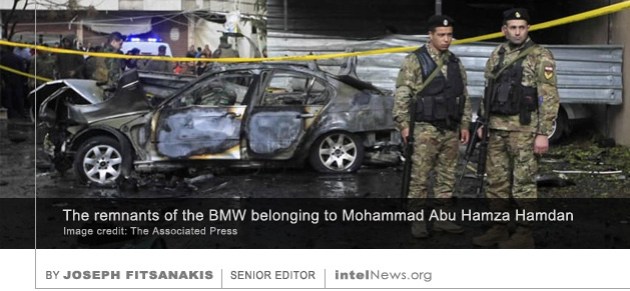
Mohammad HamdanMedia reports from Lebanon claim that Israel was behind a bomb explosion that injured an official of the Palestinian group Hamas in the southern Lebanese city of Sidon eight days ago. The official, Mohammad Abu Hamza Hamdan, who is originally from the Gaza Strip, suffered light wounds when his parked car blew up on January 14. Television footage posted online by Lebanon24 from the site of the alleged attack shows smoke coming out of a white BMW car, parked on the courtyard of Hamdan’s home. Reporters at the site said the car belonged to Hamdan and that it had been booby-trapped by unknown assailants. Hamdan was reportedly transported to a nearby hospital, where he received treatment for light wounds.
Reports quoted Lebanese officials who pointed to the fact that the booby-trapped car was parked inside the enclosed courtyard of Hamdan’s home as evidence that the attack was specifically targeted at Hamdan. Others said that the attackers may have originally planned to kill Hamdan’s brother, Osama Hamdan, also from the Gaza Strip, who has served as Hamas’ Lebanon representative for 30 years. Now a new article published by Lebanon’s Al Akhbar newspaper has accused Israel’s Mossad intelligence agency of having orchestrated the assassination attempt. The paper also said that Lebanese security officials had managed to identify the Mossad operatives that carried out the attack. It said they were headed by Ahmed Battiya, a Dutch-born Lebanese man who was recruited by the Mossad in Holland and has participated in prior assassination operations perpetrated by the Israeli spy agency. Al Akhbar said that Battiya had traveled extensively inside Lebanon on behalf of the Mossad, in order to identify Hamas officials and track their movements. The article was published hours after Hassan Nasrallah, leader of the Shiite paramilitary group Hezbollah, also accused Israel of attempting to kill Hamdan.

In Israel, however, government officials appeared to reject claims that the Mossad was behind the attack on Hamdan. The country’s Minister of Defense, Avigdor Liberman, told reporters that the Lebanese media blames Israel for everything that happens in Lebanon, and warned Hamas not to open a “new front against Israel from Lebanon”. Yisrael Katz, Israel’s Minister for Intelligence, said that, if Israel had been involved in the attack against Hamdan, “this wouldn’t have ended with him lightly wounded”.

Author: Joseph Fitsanakis | Date: 22 January 2018 | Permalink

Western agencies warned Lebanese prime minister of assassination plot, say Saudis

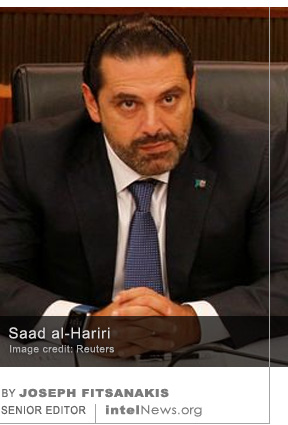
Saad al-HaririWestern intelligence services warned Lebanon’s former Prime Minister Saad al-Hariri of an assassination plot against him, thus prompting him to resign on Sunday, according to Saudi news media. Hariri is a Saudi-born Lebanese politician, reputed to be one of the world’s wealthiest people. He is the second son of the late Rafiq Hariri, who ruled Lebanon for much of the 1990s but was assassinated in 2005. Saad al-Hariri spent most of his life in Saudi Arabia, the United States and France, but returned to Lebanon in 2014 to lead the Future Movement, a center-right political party supported by Sunni Muslims and some Christians. He became prime minister in 2016.
On Friday, Hariri flew from Beirut to Riyadh for a scheduled high-level visit. But on Sunday he shocked the Arab world by announcing his resignation from the post of prime minister. He did so in a surprise television address from the Saudi capital, which was broadcast live in Lebanon. Hariri told stunned Lebanese audiences that he was resigning in order to protect himself from a plot that was underway to assassinate him. He added that the political climate in Lebanon was intolerably tense and reminded him of the conditions that led to the assassination of his father 12 years ago. He also accused Iran and Hezbollah of acting as the primary destabilizing factors in Lebanon and much of the Middle East. Hariri and his supporters believe that Hezbollah was behind his father’s assassination in 2005. There was intense speculation in Lebanon on Monday that Hariri would remain in Saudi Arabia for the foreseeable future, fearing for his life if he returned to Lebanon.

On Sunday, the Saudi-based newspaper Asharq al-Awsat claimed that Hariri decided to resign after he “received warnings from Western governments” that there would be an assassination plot against him. The newspaper did not name the Western governments, nor did it identify those who are allegedly trying to kill Hariri. Later on Sunday, Saudi television station al-Arabiya al-Hadath alleged that an assassination attempt against Hariri had been stopped at the last minute in the Lebanese capital Beirut earlier in the week. Both news media cited “sources close” to the Lebanese leader, but did not provide specific information, nor did they give details of the alleged plot or plots. It is worth noting, however, that Lebanese security officials denied these reports from Riyadh. Lebanese media quoted senior security official Major General Abbas Ibrahim as saying that no information about assassination plots had been uncovered. Major Ibrahim, who heads Lebanon’s General Directorate of General Security, said that his agency had no information about attempts to kill Hariri or other Lebanese political figures.

This could mean that the information about a possible assassination plot against Hariri was given directly to him by Western intelligence agencies, probably because the latter fear that Lebanese security agencies are infiltrated by Hezbollah sympathizers. Or it could mean that the Saudi media reports are inaccurate. Lebanon is now awaiting further details by Hariri regarding the alleged assassination plot against him. In the meantime, the already fragile political life of Lebanon appears to be entering a period of prolonged uncertainty.

Author: Joseph Fitsanakis | Date: 07 November 2017 | Permalink | Research Credit: B.M.

Attack kills wife of Ukraine commander behind alleged plan to assassinate Putin

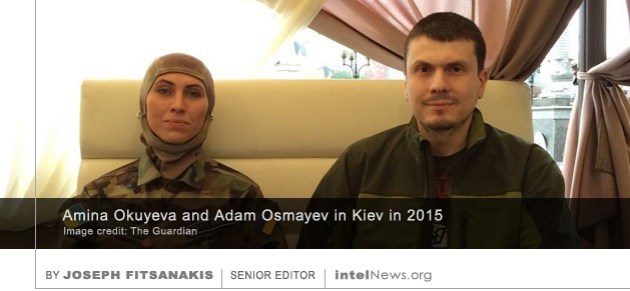
Amina Okuyeva Adam OsmayevAn armed attack in the outskirts of Kiev has killed the wife of a Chechen commander of a Ukrainian paramilitary unit, who is wanted in Russia for an alleged plan to kill President Vladimir Putin. Adam Osmayev is believed to have survived the attack, but his wife, Amina Okuyeva, was reportedly shot in the head and died on the spot. Osmayev, a Russian Chechen, became widely known in Ukraine in February of 2012, when he was arrested by police in Odessa, a major port city located on the northwestern shore of the Black Sea in the country’s south. He was found to be carrying forged identity documents. When police searched his apartment, they found large quantities of illegal explosives. Authorities in Moscow told the Ukrainian government that Osmayev was involved in a conspiracy to kill Russian President Vladimir Putin. A Chechen associate of Osmayev, Ilya Pyanzin, was handed over to Russia by the Ukrainians and was given a 10-year prison sentence by a Moscow court.
But Osmayev’s legal team was able to argue that his human rights would not be guaranteed if Ukraine extradited him to Russia. In 2013, the European Court of Human Rights ruled that Osmayev should serve his sentence in Ukraine, at which point Kiev rejected Moscow’s extradition request. In late 2014, Osmayev was released from prison and allowed to remain in Ukraine. Soon after his release from prison, Osmayev entered the ranks of the Dzhokhar Dudayev battalion. The armed group was one of over 30 paramilitary units organized by Ukraine’s Ministry of Defense to combat pro-Russian separatists in southeastern Ukraine. By early 2015, Osmayev had risen to the rank of commander of the battalion and was increasingly treated as a celebrity by Ukrainian nationalists. But he continued to face threats from Russia and pro-Russian separatists in Ukraine. On June 1 of this year, Osmayev and Okuyeva survived an apparent assassination attempt by a man who was wounded but managed to escape following a shootout with the couple.

Ukrainian media reported on Monday that Okuyeva was killed earlier that day, after the car that her husband was driving was ambushed by a group of masked assailants on the outskirts of Kiev. According to eyewitnesses’ accounts, the assailants opened fire at Osmayev’s car as it was passing through a railway crossing. Osmayev was reportedly injured in the attack, but Okuyeva was shot in the head and died at the scene. Footage aired on Ukrainian national television showed Osmayev’s heavily damaged car, which reportedly sustained “a hail of bullets” fired by the attackers. The Chechen paramilitary commander told reporters that the attackers’ main goal was to assassinate him. No group or government has claimed responsibility for the attack.

Author: Joseph Fitsanakis | Date: 31 October 2017 | Permalink

Iran upholds death sentence for man accused of helping Mossad kill scientists

Ahmadreza DjalaliA court in Iran has sentenced a prominent Iranian academic to death for allegedly helping Israel assassinate nuclear scientists and sabotage Tehran’s nuclear program. Four Iranian physicists, who were employed in Iran’s nuclear program, are known to have been assassinated between 2010 and 2012. Most were killed by magnetic bombs that were placed on their vehicles by unknown assailants, who were then able to escape on motorcycles. Tehran believes that the assassinations were carried out by the Mossad, Israel’s external intelligence agency, with the help of agents recruited by the Israelis from within Iran’s nuclear program.

On Tuesday, Iranian authorities revealed that one of these alleged Israeli agents has been sentenced to death following a secret trial. The office of Tehran’s public prosecutor did not name the alleged agent, but said that he admitted holding “several meetings with the Mossad”. During those meetings, the agent allegedly “provided [the Mossad] with sensitive information about Iran’s military and nuclear installations”, according to Iranian authorities. The Iranians claim that the agent, who is himself a physicist, gave Israel the names and addresses of at least 30 senior members of Tehran’s nuclear program. The list included nuclear physicists, engineers, as well as intelligence and military officials with nuclear specializations. In return for supplying inside information, the Israelis helped the alleged agent secure permanent residency in Sweden and financed his move there, according to the Iranian prosecutor’s office. Iran claims that the information given to the Mossad by the agent resulted in the assassination of at least one Iranian scientist.

In a statement published on Monday, the international human-rights pressure group Amnesty International identified the alleged Mossad agent as Ahmadreza Djalali, an expert in disaster medicine. Djalali’s name had been reported before in connection with a trial in Iran, but authorities in Tehran had not mentioned any connection between the accused and the assassination of Iranian nuclear scientists. Amnesty said that Djalali has taught and carried out research at several European universities, including the Universiteit Brussel in Brussels, lUniversity of Eastern Piedmont in northern Italy, and the Karolinska Institute in Stockholm, Sweden. It is believed that he was arrested in Iran in 2016, during a visit from Sweden, where he has been living for several years. Iranian media said that Djalali was sentenced to death on October 21, and must appeal by November 10 if he wants to challenge his death verdict.

Author: Ian Allen | Date: 25 October 2017 | Permalink

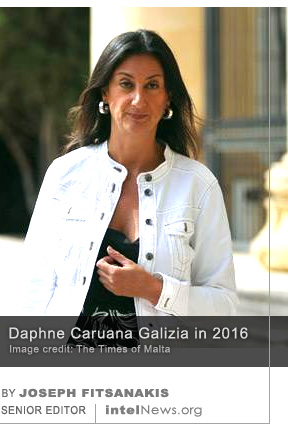
Maltese reporter who exposed high-level political corruption killed in car bomb

Daphne Caruana GaliziaMalta’s best known investigative journalist, whose reporting about offshore tax evasion prompted a major political crisis in the European Union member-state, has been killed by a powerful bomb near her home. Daphne Caruana Galizia, who died Monday, aged 53, gained international prominence last year, when she used information from various sources, including the leaked “Panama Papers”, to accuse senior members of Malta’s government of implication in tax-evasion schemes. Her reporting led to the resignation and eventual re-election of the country’s Labor government last year.
Caruana Galizia began her career in the late 1980s as a regular columnist for The Sunday Times of Malta, before being appointed associate editor of The Malta Independent. She eventually launched her personal English-language news blog, called Running Commentary, which became one of Malta’s most influential websites. The site’s popularity was only augmented by the fact that it reported scandals affecting both of Malta’s main political parties, the governing Labor Party and the opposition Nationalist Party. In April of 2016, following the release of the so-called Panama Papers, Caruana Galizia accused senior members of the Labor government, as well as the prime minister’s wife, of being involved in large-scale tax-evasion schemes and receiving bribes from oil-rich Azerbaijan’s ruling family. The allegations led to the resignation of the government and national elections, which the Labor Party won.

On Monday, Caruana Galizia died instantly when the rented Peugeot 108 car she was driving exploded near her home in the village of Bidnija, near Mosta, in central Malta. Eyewitnesses said that the explosion was so powerful that it tore apart the vehicle and was heard from several miles away. Subsequent reports in the Maltese media alleged that the investigative journalist had recently filed reports with the police, claiming that she was receiving threats against her life from persons unknown.

The bomb attack shocked Maltese society and immediately threw the European Union member-state’s political life into disarray. The country’s Prime Minister, Joseph Muscat, said in a statement that he was “devastated” by Caruana Galizia’s assassination, adding that he had instructed the island country’s police and intelligence agencies to “take all necessary steps to investigate” the murder and uncover its culprits. The killing was also condemned by nearly every senior European Union official and by the International Consortium of Investigative Journalists, the international arm of the Washington-based Center for Public Integrity, which uncovered the existence of the Panama Papers.

Author: Joseph Fitsanakis | Date: 17 October 2017 | Permalink | Research credit: J.A.

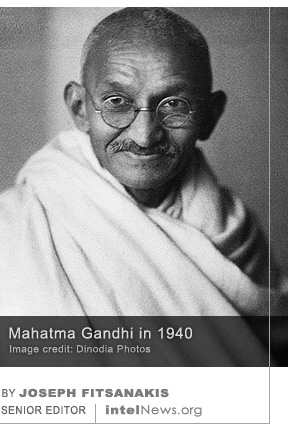
Researcher seeks access to classified US document about Gandhi killing

Mahatma GandhiA researcher is seeking access to a potentially revealing classified telegram sent by a United States diplomat who witnessed the assassination of Indian leader Mahatma Gandhi in 1948. Gandhi, the leader of the Indian movement for independence, and a towering civil rights figure of the 20th century, was assassinated on January 30, 1948, as he was about to hold a prayer meeting in downtown New Delhi. His assassin, Nathuram Vinayak Godse, was a member of a Hindu nationalist paramilitary group, who blamed Gandhi for the bloody partition of India. He and a co-conspirator, Narayan Apte, were arrested for Gandhi’s murder and put to death in 1949.

But there are many who claim that Gandhi’s assassination resulted from a far larger conspiracy, involving many more people and groups, but was covered up. One such proponent is Mumbai-based researcher Dr Pankaj Phadnis, who has been pushing for a new official investigation into Gandhi’s assassination since 1996. Last week, Dr Phadnis petitioned India’s Supreme Court, arguing that an American intelligence officer was present during Gandhi’s assassination and filed a report that may point to a broader conspiracy to kill the Indian civil rights leader. Dr Phadnis also argues that American intelligence agencies may have been involved in a secret effort to protect Gandhi from physical danger.

The Mumbai-based researcher told the Indian Supreme Court that he was able to obtain access to American diplomatic documents during one of his recent visits to the US National Archives and Research Administration in Washington, DC. Among them were telegrams sent to the Department of State by the US embassy in New Delhi before and after Gandhi’s assassination. The two most telling telegrams, said Dr. Phadnis, were written shortly after the assassination by a longtime American diplomat, Herbert Tom Reiner. According to many eyewitness accounts, including Reiner’s own, Reiner was present during Gandhi’s assassination, and was standing no more than five feet from the Indian leader when he was shot by Godse. The American diplomat helped apprehend the assassin before he and others surrendered him to the authorities.

Reiner submitted two telegrams to Washington as soon as he returned to the US embassy following Gandhi’s assassination, which Dr Phadnis was able to access. But a third one, sent at 8:00 p.m. that same evening, remains classified and out of the reach of researchers. Dr Phadris said he filed a Freedom of Information Act request with the US government and is expecting an answer. Now he is trying to get the Indian courts to agree that the existence of new evidence, including Reiner’s telegrams, justify the reopening of the probe into Gandhi’s assassination.

Reiner left India in the summer of 1949 and served briefly as assistant attaché in Budapest, Hungary, before being transferred again, this time to Seoul, South Korea. He then held posts in Sierra Leone, South Africa and Canberra. He died in 1999 in the US state of Massachusetts.

Author: Joseph Fitsanakis | Date: 02 October 2017 | Permalink

Iraqi Kurds claim they have captured senior Turkish intelligence officers

Cemîl BayikThe Turkish government has refused to comment on reports from Iraq, which suggest that Kurdish forces have captured at least two senior Turkish intelligence officers. News of the arrests first emerged in mid-August, when pro-Kurdish media in Turkey’s Anatolia region claimed that an armed Kurdish group in Iraq had captured two members of the National Intelligence Organization (MİT), Turkey’s principal intelligence agency.

According to the reports, the Turkish intelligence officers had used forged identity papers to travel from eastern Turkey to the northern Iraqi city of Erbil. From there, they went to Sulaimaniyah, a metropolitan center in Iraq’s Kurdish north. Allegedly, the Turkish officers traveled to Iraq in order to assassinate Cemîl Bayik, a co-founder and senior leader of the Kurdistan Worker’s Party (PKK). Founded in 1978, the PKK is a leftwing secessionist paramilitary organization that seeks an independent homeland for Turkey’s Kurdish minority. Iraq’s Sulaimaniyah region is controlled by another Kurdish armed group, the Patriotic Union of Kurdistan (PUK), which has close relations with Iran. But a rival Kurdish group, the Kurdistan Democrat Party (KDP), which is supported by Turkey and opposes the PKK’s secessionist aims, also has a strong presence in the area. It is not known whether KDP forces were aware of —or even assisted— the Turkish intelligence officers in Sulaimaniyah.

Kurdish sources claim that the two Turkish intelligence officers were arrested by PUK forces. Notably, media reports suggest that one of arrestees serves as the MİT’s deputy undersecretary for foreign operations, while the other heads the MİT’s PKK desk. The PUK is now threatening to publish photographs of the two men, which would blow their cover. But there has been no comment on this story from Ankara, where Turkish government officials refuse to confirm or deny that the arrests happened or that the two men are indeed MİT employees. Some observers, however, note that the Turkish government shut down the PUK’s office in the Turkish capital on August 23, and expelled the organization’s representatives. The group has maintained an office in Ankara since 1991, so the Turkish government’s surprising move may signify that the media reports about the arrests of the two MİT officers are indeed accurate.

Author: Joseph Fitsanakis | Date: 08 September 2017 | Permalink

Ukrainian military intelligence commander killed in Kiev car explosion

Colonel Maksim ShapovalA senior military intelligence officer, who commanded a Ukrainian special-forces unit that fought against the Russians in eastern Ukraine, was killed on Monday when his car exploded in broad daylight in Kiev. Initially, the Ukrainian government sources simply said that the dead driver of the car was a member of the Ministry of Defense’s Main Directorate of Intelligence. Later, the casualty was identified as Colonel Maksim Shapoval, a senior commander of the Main Directorate of Intelligence, who led an elite special-forces unit. Subsequent media reports said that Colonel Shapoval’s unit had fought against Russian-backed guerillas in eastern Ukraine in the past year.

A police report said that Colonel Shapoval died instantly when his car exploded at an intersection in central Kiev. The explosion took place at 8:15 a.m. local time on Monday, and was reportedly caused by a powerful bomb that had been attached to the outer floor of the vehicle, right below the driver’s seat. A video taken at the scene of the explosion showed the charred frame of a silver-colored sedan in the middle of a city street, surrounded by debris.

A Ukrainian government spokesman said on Tuesday afternoon that Kiev was treating the incident as an act of terrorism. When asked about possible suspects, the spokesman said that Colonel Shapoval’s killing appeared to be the work of professionals. He added that investigators were looking for possible evidence of Russian state involvement in the attack. Authorities in Ukraine have repeatedly accused Russia of involvement in the extrajudicial killings of Ukrainian leaders or Russian dissidents since 2014, when Moscow illegally annexed the Ukrainian province of Crimea. Since then, the Kremlin is believed to be secretly supporting pro-Russian rebels who have taken over several regions of southeastern Ukraine. Ukraine’s Chief Military Prosecutor alleged on Tuesday that the killings of Colonel Shapoval and others were perpetrated by Russian intelligence operatives. He added that his office would launch a detailed investigation into Colonel Shapoval’s killing.

Author: Joseph Fitsanakis | Date: 28 June 2017 | Permalink

Did North Korean leader’s brother meet with a US spy before he was assassinated?

Kim Jong-nam murderThe exiled half-brother of North Korea’s leader, who was assassinated in Malaysia in February, is thought to have met with a man believed to be an American intelligence officer shortly before he was killed, according to reports. Kim Jong-nam the grandson of North Korea’s founder Kim Il-Sung, died after two women approached him at the Kuala Lumpur International Airport and splashed his face with liquid poison on February 13 of this year. Kim was about to board a flight to Macau, where he had been living in self-exile with his family since 2007. His relations with his brother, North Korean Supreme Leader Kim Jong-un, and the regime in Pyongyang, were adversarial, and some suggest that he had survived at least one assassination attempt in the past.

According to Malaysian investigators, who have been probing Kim’s murder, the estranged half-brother of the North Korean dictator arrived in Kuala Lumpur from Macau on February 6, a week before he was killed there. Two days later, on February 8, he traveled to Langkawi, a resort island in the Andaman Sea, located 20 miles from Malaysia’s mainland coast, near the Thai border. According to the Japanese newspaper Asahi Shimbun, a day after his arrival at Langkawi, Kim met with a man believed by Malaysian authorities to be in the employment of American intelligence. The man, who has not been named, is reportedly middle-aged, Korean-American with United States citizenship, and lives in Bangkok. The Osaka-based paper said that Malaysian police have accessed footage from the Langkawi hotel’s security cameras, which show Kim and the American man enter a hotel suite and staying there for nearly two hours before departing.

The newspaper further claims that Malaysian counterintelligence has been tracking the American man each time he has entered Malaysia from Thailand for quite some time, believing him to be a case officer. It is also thought that Kim had met the same man in Malaysia “several times in the past”, said Asahi Shimbun. The paper further states that Malaysian investigators believe the meeting between Kim and the American man was the reason behind North Korea’s decision to kill him. The American man reportedly left Malaysia on February 13, the same day Kim was assassinated in Kuala Lumpur.

Author: Joseph Fitsanakis | Date: 26 May 2017 | Permalink



