US threatens to end intelligence sharing if Australian state joins Chinese venture
May 25, 2020 1 Comment
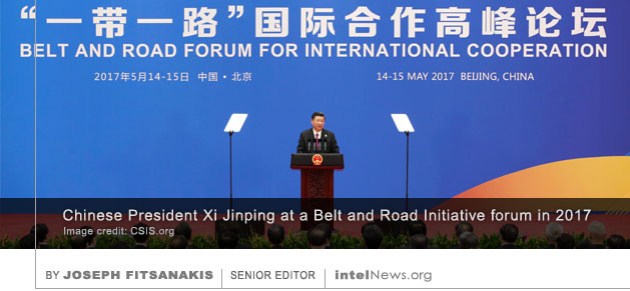 The United States has warned that it might be forced to stop sharing intelligence with Australia if the country’s second most populous state enters into a much-heralded investment agreement with China. The Australian state of Victoria has said it intends to join Beijing’s Belt and Road Initiative, a worldwide investment venture that was announced with much fanfare by Chinese President Xi Jinping in 2013.
The initial goal of the venture was to encourage economic cooperation between China and countries of the Eurasian region. Eventually, the project’s scope expanded to include agreements with countries in Asia, Africa and Europe, mostly through the Chinese-led construction of telecommunications and transportation networks, which trace the trading routes of the Silk Road of ancient times.
Although Australia is not a participant in the Belt and Road Initiative, the Australian state of Victoria announced its decision to join the project in late 2019. The decision has been criticized by senior Australian federal officials, including Prime Minister Scott Morrison and Home Affairs Minister Peter Dutton. These officials argue that any interference by China in the Australian national telecommunications network could compromise the national security of the country as a whole.
On Sunday, the US Secretary of State Mike Pompeo warned Australia that Washington would look “incredibly closely” at aspects of the Belt and Road Initiative affecting telecommunications. Pompeo, who was Director of the Central Intelligence Agency before his current post, told Sky News that some aspects of the project were designed to “build up the capacity of the Chinese Communist Party to do harm” around the world.
In his interview, Pompeo referred to the so-called “Five Eyes” alliance (also known as “UKUSA”), which is a longstanding intelligence-sharing agreement between the United States, Britain, Canada, Australia and New Zealand. He added that the US government was concerned that the Victoria state government’s decision to participate in the Chinese venture project could “have an adverse impact on our ability to protect telecommunications from our private citizens, or security networks for our defense and intelligence communities”.
If that were to happen, said Pompeo, then the US would “not take any risks to our telecommunications infrastructure, [or] any risk to the national security elements of what we need to do with our Five Eyes partners”. In the US government determined that these risks were real, “we simply disconnect, we will simply separate”, Pompeo concluded.
► Author: Joseph Fitsanakis | Date: 25 May 2020 | Permalink
 China’s influence in New Zealand is so extensive that it threatens the traditionally close intelligence contacts between New Zealand and its Western allies, according to a report written by the Canadian spy agency. Since World War II, New Zealand has been a member of what is sometimes referred to as the UK-USA Security Agreement. Known also as the UKUSA Agreement or the Five Eyes alliance, the pact, which was strengthened in 1955, provides a multilateral framework for intelligence cooperation between the United Kingdom, the United States, Canada, Australia, and New Zealand. But a new report produced by Canadian intelligence warns that Chinese political and economic influence in New Zealand is making it difficult for the Pacific Ocean island country to continue to operate within the framework of the agreement.
 The British government may relocate Sergei Skripal, the Russian double spy who appears to have survived an assassination attempt in England, to the United States, in an effort to protect him from further attacks. The BBC
  Canada says it will stop sharing certain types of intelligence with some of its closest international allies until it ensures that Canadian citizens’ information is not included in the data given to foreign spy agencies. The announcement follows an official admission, made earlier this week, that a Canadian intelligence agency failed to remove Canadian citizens’ data from information it shared with member-agencies of the so-called Five Eyes Agreement. The pact, which is sometimes referred to as the UK-USA Security Agreement, has been in existence since World War II. It provides a multilateral framework for cooperation in signals intelligence (SIGINT) between the United Kingdom, the United States, Canada, Australia, and New Zealand.
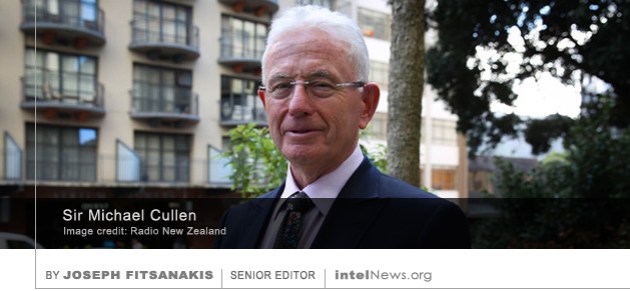 A former deputy prime minister of New Zealand, who is heading a major review of intelligence practices in the country, has said in an interview that spy agencies hurt their mission by practicing excessive secrecy. Sir Michael Cullen served as finance minister, education minister and attorney-General before serving as deputy prime minister of New Zealand, from 2002 to 2008. He was recently appointed by the government to co-chair a broad review of state intelligence agencies, with particular focus on updating the applicable legislative framework and evaluating the oversight exercised by lawmakers and the executive. The review is expected to affect the work of New Zealand’s two most visible intelligence agencies, the Security Intelligence Service and the Government Communications and Security Bureau.













 intelNews.org
Diplomat’s comments fuel speculation Japan may join US-led ‘Five Eyes’ spy alliance
April 26, 2021 by Joseph Fitsanakis 3 Comments
Ambassador Yamagami was referring to a longstanding United States-led intelligence-sharing agreement, which is also known as UKUSA. It brings together intelligence agencies of the United States, Britain, Canada, Australia and New Zealand. It came out of the five nations’ close military and intelligence cooperation during World War II. Under the agreement, the five nations share intelligence products of mutual interest, as well as raw signals intelligence, which they collect in their respective areas of operation. In some cases, Five Eyes nations collaborate with other allies, such as France, Germany, Norway, or Holland, on individual projects.
In the past, the United States, which leads the alliance in terms of resources and strategic direction, has resisted proposals to include more members. Prospective parties must share the Five Eyes nations’ strategic direction, democratic traditions, and societal values. Additionally, they must be able to demonstrate that their intelligence services are effective in preventing penetrations by adversaries. Critics suggest that the spy agencies of Five Eyes nations are themselves far from immune when it comes to counterintelligence threats. Additionally, some Five Eyes members, notably New Zealand, have at various times expressed disagreements about the strategic direction of the alliance.
Supporters of the idea of including Japan into the Five Eyes alliance point to the fact that, after Japan’s defeat in World War II, Japanese intelligence agencies developed under American tutelage. Moreover, Japan today is home to a substantial American military presence, while its intelligence agencies collaborate closely with America’s —especially in carrying out spy operations focusing on China, North Korea and Russia. Japan’s geographical proximity to these countries, coupled with its strong intelligence emphasis on China, arguably strengthen its candidacy for Five Eyes membership, according to supporters of this view.
Last week, Japan’s Prime Minister, Yoshihide Suga, visited the White House, becoming the first foreign leader to be officially hosted by President Joseph Biden. Although talks between the two men focused largely on the topic of China, there was no public mention of Five Eyes. The governments of Japan and the United States have made no on-the-record comment about a potential inclusion of Japan into the intelligence agreement.
► Author: Joseph Fitsanakis | Date: 26 April 2021 | Permalink
Filed under Expert news and commentary on intelligence, espionage, spies and spying Tagged with AUSCANZUKUS, intelligence cooperation, Japan, News, Shingo Yamagami, UKUSA