News you may have missed #0158

  • Former Los Alamos scientist is no spy, say physicists. US scientists familiar with the work of P. Leonardo Mascheroni, a former Los Alamos National Laboratory nuclear physicist whose house was recently searched by the FBI, insist he is not a spy. Mascheroni says he was told by the FBI that he is suspected of possible involvement in “nuclear espionage”.
  • Analysis: The West’s intelligence deficit on Iran. The fact is that neither a single intelligence agency nor the collective wisdom of the Brits, Israelis, French and Americans, has given Western countries a full picture of what is going on either in Iran’s nuclear program or in the minds of the leadership in Tehran.
  • Australia hires more spies. The Australian Security Intelligence Organization (ASIO) has said in its annual security review that “hostile intelligence agencies” are increasingly using the Internet to gather intelligence from Australian government computer networks. Interestingly, ASIO also noted that the number of its staff members increased from 1492 in 2008 to 1690 today.

Bookmark and Share

News you may have missed #0141

Bookmark and Share

News you may have missed #0132

  • Emirates to deport Syrian ex-spy and witness in Hariri assassination probe. A Syrian former spy was on Monday sentenced to six months in jail and deportation for entering the United Arab Emirates on a forged Czech passport. Interestingly, Mohammed Zuhair Siddiq, was a prosecution witness in the inquiry into the assassination of Lebanon’s ex-premier Rafiq Hariri. In 2005, Siddiq claimed that Lebanon’s former pro-Syrian president, Emile Lahoud, and Syrian President Bashar al-Assad, gave the order to kill anti-Syrian Hariri. It is not clear to which country Siddiq will be deported.
  • US national security advisor insists Iran cannot currently build the bomb. US National Security Advisor General James Jones has rejected claims by The New York Times that Iraq has enough information to design and build a functional nuclear bomb. Jones also stood by the conclusions of the 2007 US National Intelligence Estimate, which said Iran’s nuclear arms program is inactive.
  • Book claims CIA-linked network killed anti-drugs campaigner. A new book by Australian researcher John Jiggens claims that a CIA-linked drug smuggling network was responsible for the 1977 murder of Australian anti-drugs campaigner Donald Mackay.

Bookmark and Share

News you may have missed #0116

  • Australia blocks Chinese mining investment on security grounds. The Australian government has for the second time this year vetoed a multi-billion dollar mining project involving a Chinese company, on national security grounds (did someone say Rio Tinto?). The veto follows news earlier this month that the Australian Security Intelligence Organisation (ASIO) investigated the Australian subsidiary of Chinese telecommunications company Huawei Technologies because of its rumored links with China’s intelligence establishment.
  • Declassified files reveal massive FBI data-mining project. An immense FBI data-mining system billed as a tool for hunting terrorists is being used in hacker and domestic criminal investigations, and now contains tens of thousands of records from private corporate databases, including car-rental companies, large hotel chains and at least one national department store, according to declassified documents.
  • Book by Danish special forces soldier reveals dirty tricks. A Danish court has turned down an appeal by the country’s military to ban the publication of a book by Thomas Rathsack, former member of Jaegerkorps, an elite army unit. Among other things, the book reveals systematic breach of Geneva Convention directives by members of the unit deployed in Iraq and Afghanistan.

Bookmark and Share

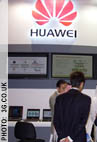
Australians investigate Chinese telecom over suspected spy links

Huawei HQ

Huawei HQ

By IAN ALLEN | intelNews.org |
The Australian Security Intelligence Organisation (ASIO), has admitted it is investigating an Australian-based subsidiary of a Chinese telecommunications firm because of its rumored links to China’s intelligence establishment. Several intelligence insiders see Huawei Technologies, based in Shenzen, China, as a covert arm of Chinese military intelligence. The company, which has business concerns in several countries around the world, has attracted the attention of American, Indian and British counterintelligence agencies, among others. As intelNews reported last December, in 2005 the government of India cancelled an initial investment of $60 million on its telecommunications superhighway by the Chinese company. Read more of this post

News you may have missed #0098

Bookmark and Share

US threatened Indonesia with war during 1999 East Timor crisis

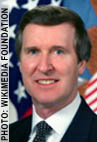
William Cohen

William Cohen

By JOSEPH FITSANAKIS | intelNews.org |
The Clinton Administration threatened to go to war with Indonesia in 1999, if Jakarta resisted an Australian-led plan to grant independence to what was then Indonesia’s province of East Timor. The revelations were made by former American and Australian military officials quoted in a new book titled The March of Patriots: The Struggle for Modern Australia. According to Pentagon official James Schear and Dr. Ashton Calvert, the late Director of the Australian Foreign Affairs Department, US Secretary of Defense William Cohen met with Indonesia’s President Bacharuddin Jusuf Habibie and Defense Minister General Wiranto, and told them that Washington would retaliate militarily if Jakarta contested the planned deployment of an Australian-led UN force in East Timor. Read more of this post

News you may have missed #0076

Bookmark and Share

Australian diplomats targeted by fake email

David Irvine

David Irvine

By IAN ALLEN | intelNews.org |
The Australian government has issued a warning to its diplomats around the world about a fake email, which it says could be part of an organized cyberespionage campaign. The email began appearing in Australian diplomatic staff’s email inboxes late last month. It is titled “Australia-China Free Trade Agreement Negotiations Update” and its sender(s) reportedly targeted Australian diplomats specializing in Australia’s economic and security relations with China. The email’s title and focus has led some observers to speculate that it originated from groups with Chinese intelligence connections. But the Australian government remains silent on the matter, saying simply that the source of the suspicious email “is under investigation”. Earlier this month, David Irvine, the recently appointed director of the Australian Security Intelligence Organisation, identified cyberespionage as “a growing national security risk”.

Bookmark and Share

News you may have missed #0068

Bookmark and Share

News you may have missed #0066

Bookmark and Share

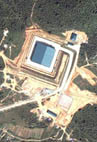
Does this satellite image show a Burmese nuclear facility?

Click for larger

Click for larger

By JOSEPH FITSANAKIS | intelNews.org |
Amateur satellite imagery observers say they have discovered a suspicious structure deep inside Burma’s thick jungle, which may be part of Rangoon’s rumored secret nuclear military program. The images, obtained through Google Earth, show a large structure, measuring 82 by 84 meters, which some say fits the requirements of a secret nuclear facility. The structure is located in central Burma, near the small jungle town of Pin Oo Lwin. Interestingly, this region, near Mandalay, is precisely where two Burmese defectors (one of whom is now dead) told two Australian researchers that they thought the Burmese army was building “a nuclear research and engineering center”. The two researchers, Phil Thornton, a journalist based in Thailand, and Desmond Ball, strategic studies expert at the Australian National University, published their claims earlier this month in The Sydney Morning Herald.

Bookmark and Share

News you may have missed #0055

Bookmark and Share

News you may have missed #0051

  • Instigator of Church committee hearings speaks about domestic intelligence. Christopher Pyle, the American whistleblower who in the 1970s sparked the Church Committee hearings on intelligence activities, has spoken about the recent revelations of US Army personnel spying on activist groups in Washington state. Pyle provided interesting historical context linking domestic espionage in the 1960s and 1970s with current developments in the so-called “war on terrorism”.
  • Declassified US President’s Daily Brief is reclassified. The CIA says that extracts of the President’s Daily Briefing (PDB) that were declassified in 2006, during the prosecution of former vice presidential aide Scooter Libby, are “currently and properly classified”. PDB declassifications occur extremely rarely.
  • Australian intelligence to focus on cybersecurity. David Irvine, the recently appointed director of the Australian Security Intelligence Organisation, has identified cyberespionage as “a growing national security risk”.

Bookmark and Share

News you may have missed #0033

Bookmark and Share