Ashraf Marwan: Israel’s ‘Angel’ or Egypt’s Double Agent?

Ashraf MarwanASHRAF MARWAN, POPULARLY KNOWN “the Angel,” is regarded as one of the greatest spies in Israeli intelligence history—the man on whom the entire Israeli government relied, and the informant who warned of the Yom Kippur War. Long-standing suspicions that he was actually a double agent have been strongly dismissed.

However, a comprehensive investigation by two Israeli journalists, Ronen Bergman and Yuval Robovitz, published in the popular Israeli newspaper Yedioth Ahronoth under the title “The Angel of Lies”, presents a different picture. Based on thousands of secret documents not yet revealed and rare conversations with people involved in the operation, their report claims that ‘the Angel’ was actually the spearhead of Egypt’s deception plan before and during the war—and that he succeeded beyond all expectations.

A Spy or Double Agent?

Bergman and Robovitz examined whether Ashraf Marwan—advisor to Egyptian President Anwar Sadat and a Mossad agent who died in 2007—was truly the best agent Israel had before the Yom Kippur War. Their findings indicate that a series of serious operational failures, combined with arrogance within the Israeli intelligence community, made Marwan one of the most dangerous spies ever to act against Israel.

They also investigated whether he was genuinely an Israeli agent who contributed meaningfully to Israel’s national security, as claimed by Mossad and by scholar Professor Uri Bar-Joseph, who wrote extensively about the Yom Kippur War intelligence failure and authored the well-known book The Angel: The Egyptian Spy Who Saved Israel. Netflix later produced a film, The Angel, based on Bar-Joseph’s book.

Or, was Marwan, as the journalists argue, a double agent working for Egypt from the beginning—since volunteering for Israeli intelligence in 1970—and who managed to deceive Israel for years, particularly by delaying his warning about Egypt’s impending attack until roughly 12 hours before it began? According to Bergman and Robovitz, Marwan knew about Egypt’s plans weeks earlier but withheld that information, allowing Egypt to launch a surprise attack.

A Public Debate

Following the article’s publication, a public debate erupted between Bergman and Robovitz on one side and Professor Uri Bar-Joseph on the other, over Marwan’s true motives. Whether he was a double agent or a loyal Israeli operative, all agree he played a key role in the intelligence drama preceding the Yom Kippur War. Read more of this post

Ex-head of Israeli Military Intelligence discusses October 7 attack in leaked recordings

Aharon HalivaIN A SERIES OF leaked recordings, the former head of Israel’s Military Intelligence Directorate, Major General Aharon Haliva, has expressed strong views about Israel’s war in Gaza. General Haliva headed Israel’s Military Intelligence Directorate (known as Aman) on October 7, 2023, when Palestinian militants took Israel by surprise in a combined arms attack, killing over 1,200 and kidnapping 250. Since resigning a year ago, Haliva has not made any public statements.

It is unclear who Haliva was speaking to when he was recorded, or by whom he was recorded. Nor is it clear when or where the recordings occurred. They were leaked last week by Israeli television station Channel 12. There follows a summary of Haliva’s comments in the leaked recordings.

Personal Responsibility. Haliva admits that the disaster occurred during his watch; therefore, he bears ultimate responsibility. At the same time, he emphasizes that responsibility is systemic and broad—not only his, but also that of the entire Israel Defense Forces (IDF), the Israel Security Agency (ISA), and the country’s senior political leadership. He states: “Anyone who voluntarily assumes a leadership position knows that his decisions will bring both great successes and great failures”.

Systemic and Cultural Failures. Haliva argues that the failure originates from a long-standing organizational culture within the Aman, rooted in arrogance, overconfidence, and the belief that “the enemy is deterred”, as well as the idea that Israel’s intelligence is all-powerful. This mindset led to operational stand-downs during Sabbaths, holidays, and in the month of August, reflecting overconfidence. He warns: “This was not a one-time accident, but something that requires dismantling and rebuilding the system”.

Responsibility of Other Bodies. Haliva points to the ISA as the agency that should have provided human intelligence alerts on the evening of October 6 and the early hours of October 7, 2023, but did not. He criticizes the government and the cabinet for not holding serious, in-depth discussions on Gaza, while for years allowing Hamas to grow stronger with the help of Qatari money and by dividing Gaza from the West Bank.

The Political Leadership and Benjamin Netanyahu. Haliva describes Netanyahu as “a very attentive man, who reads, but is very cowardly—and in the test of results, he failed”. He emphasizes that Israel’s political leadership made decisions that strengthened Hamas and hindered proper preparedness. His conclusion: “In such a biblical-scale disaster, responsibility lies with everyone—they should all step down”. Read more of this post

Senior Mossad veteran discusses recruitment of Iranian assets in rare interview

Mossad - ABTHE MOSSAD, ISRAEL’S PRIMARY foreign-intelligence agency, played a crucial role in Israel’s most recent attack on Iran. It is clear that, without unique intelligence on key Iranian figures and nuclear sites, much of it gathered by the Mossad, the Israeli Air Force could not have been so precise and deadly against Iranian targets.

It is a rare occasion to hear directly from a senior veteran of the Mossad. Oded Eilam (or Ailam), now 71, served in the Mossad for 24 years. In an interview with the German newspaper Bild, Eilam described the strategy that allowed the Israeli intelligence agency to successfully recruit and maintain an “extensive network” of spies inside Iran.

According to Eilam, the key to the Mossad’s success lies in Iran’s complex social structure. “Only 40% of [Iran’s] population of 90 million are Persians,” Eilam said, explaining that the ethnic divide makes it difficult for the Iranian government to control the population. “The [Iranian government’s] surveillance system has huge gaps; you can’t compare it to what the Stasi did in East Germany,” he added.

The former Mossad official explained that various ethnic groups inside Iran, such as Kurds, Turkmen, Baluchis, and Azeris, make up a potential pool for recruiting agents. According to Eilam, the motivation for cooperating with the Mossad is not necessarily support for Israel or financial reward, but often stems from dissatisfaction with the Iranian regime.

“Many people in Iran are unhappy. Large parts of society live in poverty,” explained Eilam. “While Iran has significant gas reserves, instead of investing this money in their country, the clerics have funneled billions into terrorist organizations like Hezbollah,” he added. Another factor that helps Mossad’s activities, according to Eilam, is Iran’s long territorial borders and the difficulty of monitoring them thoroughly. “This makes it possible to smuggle everything into the country,” he noted.

Eilam also emphasized the Mossad’s commitment to safeguarding its assets. “When someone works for us, we take care not only of them but also of their family,” he said, clarifying that the Mossad is dedicated to bringing its spies and their families to safety if needed. Although there are many opportunities to recruit agents in Iran, the Mossad is not in a rush. Eilam highlighted that the organization spends a significant amount of time on the process of selecting and screening candidates. “When we are looking for agents, we don’t just choose someone; we take a lot of time to ensure that the person is suitable.”

“When someone works for us,” the former officer noted, “the importance the Mossad attaches to verifying information. For a target, we do not use information from just one agent, but always multiple sources to be sure that the right person is hit,” said Eilam, also hinting at the extensive vetting processes the organization conducts before operational actions.

Eilam’s interview is a unique source of insight into the espionage operations of the Mossad. It is unclear why it was published—possibly to warn the Iranians to think twice before taking any offensive actions against Israel.

Author: Dr. Avner Barnea* | Date: 22 July 2025 | Permalink

Dr. Avner Barnea is a research fellow at the National Security Studies Center of the University of Haifa in Israel. He served as a senior officer in the Israel Security Agency (ISA). He is the author of We Never Expected That: A Comparative Study of Failures in National and Business Intelligence (Lexington Books, 2021).

Opinion: Amidst war with Iran, Netanyahu tries to subjugate Israel Security Agency

David ZiniTHE GOVERNMENT OF ISRAEL recently appointed a new acting chief at the Israel Security Agency (ISA, also known as Shabak or Shin Bet). Identified only by their first initial, “S.”, this individual is one of the deputies of the outgoing ISA chief, Ronen Bar, and has reportedly served in the ISA for nearly 30 years. For the first time in ISA’s history, the organization is now being led by someone without a permanent appointment, marking a significant departure from usual practice.

This temporary appointment arises from Israeli Prime Minister Benjamin Netanyahu’s insistence on nominating Major General (ret.) David Zini for the position. However, Zini’s nomination has been met with legal challenges. The Supreme Court of Israel has ruled that Netanyahu cannot appoint the chief of the ISA, due to a conflict of interest. This is because the ISA is currently conducting a comprehensive investigation into the connections of Netanyahu’s close advisors with Qatar—a case popularly referred to as Qatargate.

Yet, even amidst Israel’s war with Iran, Netanyahu finds time to advocate for Zini’s appointment as ISA chief, arguing that the ongoing war creates an urgent need for a permanent ISA chief. The matter is once again pending a Supreme Court decision. Nevertheless, it seems that, given the unique circumstances that Israel is currently facing, Zini is likely to be appointed head of the ISA.

It is important to note that Zini lacks experience in intelligence operations. Following the failure of the ISA to provide a warning before the Hamas attack on October 7, 2023, the ISA chief has been expected to have extensive experience in intelligence operations, and to be well-versed in Arab affairs, which are central to ISA’s operations.

The issues surrounding the appointment of Major General Zini are complex. There is concern about the fact that Zini is being nominated personally by the prime minister, who is also requesting that the ISA head relinquish their autonomy and comply with the Prime Minister’s directives. Thus, the ISA could be used as a tool by the Netanyahu administration to advance the prime minister’s own political agenda.

What are the potential immediate risks if Zini is appointed to the role of ISA chief?

  1. Zini will likely respond to Netanyahu’s request and impose secret surveillance on political activists who have long opposed the prime minister. Netanyahu demanded that the former ISA head, Ronen Bar, take similar action. However, Bar refused, asserting that political protest in Israel was legitimate and that political motives, rather than state interests, drove the prime minister’s request.

Read more of this post

Israeli Supreme Court dismisses spy chief’s firing as illegal

Yitzhak AmitEARLIER THIS WEEK THE High Court of Israel delivered its ruling regarding the dismissal of the head of the Israel Security Agency (ISA, more widely known as the Shin Bet), Ronen Bar, who had already announced his intention to leave his position. The court ruled that the Bar’s dismissal by Prime Minister Benjamin Netanyahu violated the law and that Netanyahu had a conflict of interest due to the ISA’s ongoing investigation into the “Qatar-Gate” affair.

Supreme Court President Yitzhak Amit and Justice Dafna Barak-Erez were in the majority, with Supreme Court Vice President Noam Solberg in the minority. “The government’s decision [to fire Bar] is unprecedented in the history of the State of Israel,” they ruled. The legal advisor to the government, Israel’s Attorney General Gali Baharav-Miara, requested that the court issue a verdict of principle regarding the relationship between a prime minister and the ISA. Her request followed an earlier request by government for the court to dismiss the petitions against the dismissal, claiming that they were no longer relevant.

Justice Amit ruled that “Israel’s security agencies, including the ISA, are responsible for maintaining the security of Israel, the security of its citizens, and the institutions of the state and the democratic regime. Their activities, roles, and powers make the security agencies a central component of the country’s governmental and legal foundations. Having been entrusted with the holiest of holies of the state, all heads of the security agencies —including the head of the ISA— owe a duty of loyalty to the public.”

According to Amit, “[t]he loyalty of the heads of the security apparatus is not a party-political loyalty to a particular government or personal loyalty to one or another prime minister. It is loyalty to the entire Israeli public, which has entrusted them with what is most precious: its life and its security. This duty of loyalty does not contradict the duty of the Shin Bet head to fulfill and promote government policy, but rather expresses the core principle of the fundamental commitment of all state authorities to the rule of law.”

Justice Amit added that, although the petitions were dismissed, as the dissenting judge, Justice Solberg, emphasized, there is still a need to create a deterrent against the government so that such cases do not recur. “The matter may repeat itself, and it is necessary to deter similar and inappropriate behavior in the future, in the sense of preempting a disaster,” he stated. “A question of legality or interpretation of a general norm arises.” Read more of this post

Before resigning, Israeli security official accuses Netanyahu of serious misconduct

Israel Supreme CourtVETERAN ISRAELI INTELLIGENCE OFFICER Ronen Bar, who has led the Israeli Security Agency (ISA, more widely known as the Shin Bet) since 2021, has submitted an affidavit to Israel’s Supreme Court, accusing Prime Minister Benjamin Netanyahu of serious misconduct. Netanyahu fired Bar in March, but the Supreme Court later suspended Bar’s firing.

Now Bar has submitted an open affidavit alongside a confidential one, alleging serious misconduct by Netanyahu, accusing him of attempting to use the ISA’s investigative powers against protestors and activists. He links this accusation to a number of conspiracies that are circulating in Israel, blaming the ISA for the October 7 intelligence failure. The veteran security official concludes his open affidavit by stating that he “will soon announce the date on which I will end my duties”. Last week, Bar said he would resign in June.

The ISA director also repeats earlier claims regarding the reasons behind Netanyahu’s statement that he “distrusts” him. Among other things, Bar claims that Netanyahu “expressed himself to me more than once in a way that sought to substantiate his expectation that the ISA should act against citizens involved in legal protest activities and demonstrations against the government”. Thus, Bar was asked to provide details about the identities of Israeli citizens, mostly protesting activists, because, according to Netanyahu, they were “following security targets”.

Furthermore, Bar claims he was asked to use the investigatory powers of the ISA to “monitor protest financiers”. He adds he was told during a conversation on the topic that, in the event of a constitutional crisis, he, as the head of the ISA, was required to take his orders from prime minister, and not from the High Court of Justice —another name for the Israeli Supreme Court. Bar notes that the full details of the matter will be provided to the Supreme Court in his confidential affidavit.

In his open affidavit, Bar clarifies that he established several criteria to address the question of whether the ISA should exercise its investigative powers without violating the constitutional right to protest. The criteria were largely based on the legal definition of subversion, defined as illegal activity involving clandestine aspects and has the potential for violence. According to Bar, actions that fail to meet this criterion are not a matter the ISA; rather, if any monitoring is warranted, the police should intervene in the interests of public order. “In borderline cases we consulted with the government’s legal counsel to ensure that the ISA’s broad powers would only be exercised within its designated framework and functions”, states Bar. He adds that “[t]he prime minister’s requests to act contrary to these criteria were refused. In quite a few cases, [Netanyahu] asked to discuss issues related to these issues at the end of working meetings, and after asking the military secretary and the typist, who operates the recording device, to leave the room with the clear goal that the exchange of words would not be recorded”. Read more of this post

Israeli soldiers working for Iranian intelligence spied on the Iron Dome

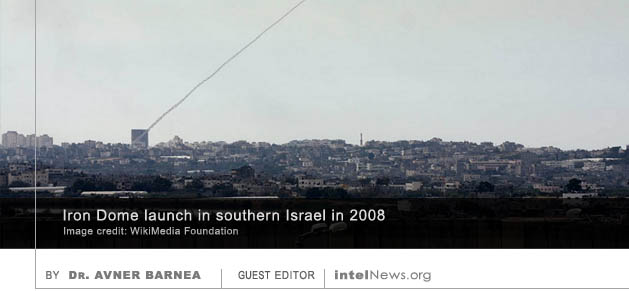
Iron Dome IsraelLAST MONTH, ISRAEL ARRESTED two reservists following an investigation that lasted several months and centered on uncovering espionage for an Iranian state entity during wartime. The two reservists had completed their regular military service before joining the reserves.

The two soldiers, identified as Yuri Eliasfov and Georgi Andreyev, held sensitive positions, and a least one was serving as a member of staff in Israel’s Iron Dome air defense system. The soldier serving in the Iron Dome is accused by the police, the Israel Security Agency (ISA), and the Israel Defense Forces (IDF), of aiding the enemy during wartime, for which the penalty is life imprisonment or death without the discretion of the court. A prosecutor’s statement has been filed against the two soldiers.

According to the investigation, the espionage affair began when one of the suspects, who served in a classified security system, sought to make contact with Iranian intelligence on social media. During his search, he contacted an Iranian operator, who asked him to complete various tasks in exchange for payments. The investigation revealed that the two soldiers were recruited by Iranian intelligence through the Internet to carry out missions in exchange for payments.

They two men were initially required to spray anti-government graffiti in Tel Aviv and in Israel’s the northern region. Giorgi Andreyev, fearing the consequences of such actions, withdrew from the operation. “We are working for Iran and doing something dangerous,” he told Eliasfov. Despite this, however, Eliasfov, who is reportedly the main suspect in the case, continued his activities.

The undercover investigation revealed that Eliasfov, who serves in the Iron Dome system, filmed a video while participating in a classified information, which he then sent to his Iranian handler. He received $3,500 from the same Iranian official, while his at-times accomplice received $70. During his interrogation, Eliasfov claimed that he committed the acts due to being in a difficult financial situation and because he sought to obtain money easily.

One of the interesting findings that emerged from the investigation of the suspects was that other soldiers and family members were aware of Eliasfov’s initial actions and warned him that he was connecting himself with Iranian elements. Despite that, Eliasfov continued his espionage activities, which included filming a video from inside an Iron Dome facility. The footage reportedly contained classified material that could significantly endanger the security of the State of Israel. Read more of this post

Analysis: Assad’s collapse in Syria was a strategic surprise to Israel

Syria IsraelTHE COLLAPSE OF THE regime of Syrian President Bashar al-Assad on December 8 caught the Israel Defense Forces (IDF) and Israel’s intelligence community —mainly Israel Military Intelligence (IMI) and the Mossad— by surprise. Assad’s collapse occurred much faster than Israel had estimated. Israel did not expect that the Syrian Arab Army would disintegrate so resoundingly, within 48 hours of the attack by the Syrian rebels.

Israeli intelligence assessed that, despite the shocks it had suffered in recent months, the so-called Axis of Resistance against Israel —mainly Hezbollah, Syria, and Iran— was stable. A scenario of rapid collapse of the government in Syria had not been assessed as a possibility, or even given a low probability tag. That was primarily because the Assad family had governed Syria for almost 60 years.

Following the Assad regime’s collapse, the focus of Israel’s intelligence is on analyzing the intentions of the major rebel organization, Hayat Tahrir al-Sham, and understanding how —if at all— it will lead the new administration in Syria. Israel is also examining developments in southern Syria, as well as what is happening at the Syrian and Russian military bases in Latakia and Tartus. Moreover, the IDF is monitoring the activities of Iranian elements in Syria, including on the border with Lebanon, to prevent the possibility of military equipment being transferred from Syria to Hezbollah.
It is clear to Israel that Turkey stands behind the Hayat Tahrir al-Sham organization and that Ankara armed and supported the group for a significant period. What is less clear is whether and how Turkey’s involvement in Syria could threaten Israel’s interests, given that Israel’s relations with Turkey have deteriorated dramatically in recent years.

Assad was a key member of the pro-Iranian Axis of Resistance. Following his fall from power, Iran and Hezbollah could lose their main logistical hub for producing, transferring, and storing weapons, as well as training their forces and militias. Additionally, Syria under Assad constantly posed the threat of turning into yet another battlefront against Israel. Without Assad, Russia could lose its grip on Syria —the only country in the Middle East where Russian influence dominates that of the United States. The Russians could also lose access to their military bases in Syria, which offered the Russian Navy access to the waters of the Mediterranean.

Despite the fall of the bitter enemy that was Assad’s Syria, and the deep shock suffered by the Iranian-led Axis of Resistance camp that has been dominant in the Middle East in recent decades, Israeli intelligence is not optimistic about the emerging situation in post-Assad Syria. Syria is a collection of minorities —Druze, Kurds, Alawites, and Christians— that have been artificially joined together despite carrying bitter, bloody scores. The latter may erupt sharply, especially against the Alawites. Concepts such as liberal politics, civil society, or a cohesive nation-state, have never existed inside Syria.

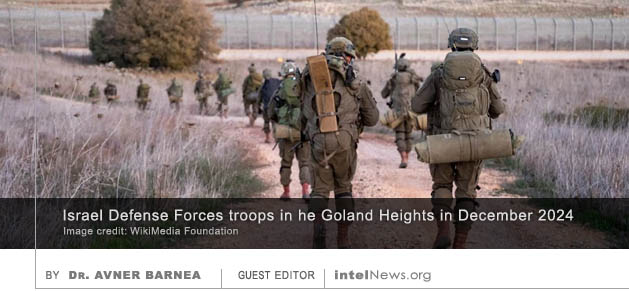
It follows that Israel is very concerned about the emerging uncertainty in Syria. Immediately after the fall of Assad, the IDF strengthened its defenses on the Golan Heights border to ensure that the chaos in Syria did not spill over into Israel. Meanwhile, Israel is in contact —both directly and through intermediaries— with several Syrian rebel groups, including Hayat Tahrir al-Sham. The Israeli message at this stage is a demand that the rebels not approach the border, along with a warning that, if they violate the separation of forces agreement, Israel will respond with force.

And a final note: assessments in relation to the Syrian regime’s collapse continue to emerge in the IDF and the Israeli intelligence community. These assessments concern the extent to which the lessons of October 7 have been sufficiently analyzed and assimilated within Israel. Specifically, there are questions about whether this new intelligence surprise in Syria may stem from the fact that an in-depth investigation into the lessons of October 7 has yet to be carried out during the 14 months of the war with Hamas.

Author: Avner Barnea* | Date: 20 December 2024 | Permalink

Dr. Avner Barnea is research fellow at the National Security Studies Center of the University of Haifa in Israel. He served as a senior officer in the Israel Security Agency (ISA). He is the author of We Never Expected That: A Comparative Study of Failures in National and Business Intelligence (Lexington Books, 2021).

Israeli citizens arrested on suspicion of working for Iranian intelligence

Ronen Bar Israeli Security AgencyTHE ISRAELI SECURITY AGENCY (ISA) has announced the arrest of 18 Israeli citizens suspected of working for Iranian Intelligence. Among them are seven Israelis, who immigrated to Israel from Azerbaijan, and are suspected of having been in contact for two years with Iranian intelligence. Some of the seven were caught carrying out surveillance against a senior Israeli Air Force officer, whom they were reportedly planning to assassinate.

Israeli authorities accuse the suspects of photographing and collecting information on military bases and facilities, including Air Force bases, Iron Dome battery sites, a power plant, and other energy infrastructure facilities. The suspects are also accused of having received from their Iranian handlers a set of maps of Israeli strategic sites, including the Golani Brigade’s training base, where four Israeli soldiers were killed by a drone attack last week. In over two years, the suspects allegedly performed approximately 600 missions under the direction of two handlers from Iranian intelligence. They did so in return for hundreds of thousands of shekels, which were paid to them in cash and various crypto-currencies.

Another Israeli citizen, who was arrested on suspicion of spying for Iranian intelligence in return for payments, has been named as Vladimir Varehovsky, 35, from Tel Aviv. Among other tasks, Varehovsky is suspected of gathering information about an Israeli scientist, whom he agreed to murder in exchange for a $100,000 payment. The suspect had reportedly acquired weapons for the assigned task, but the ISA arrested him before he could carry it out.

In another counterintelligence operation, the ISA arrested seven young Palestinians from the east of Jerusalem, who have been charged with working for Iranian Intelligence. The main suspect recruited the other six to carry out tasks for a fee. Tasks included setting cars on fire, gathering information about a city mayor in Israel, and plotting to assassinate one of the country’s top scientists. The suspects used social media for recruitment purposes. They were reportedly arrested before they were able to execute their missions. Read more of this post

Israel releases findings of internal probe into October 7 intelligence disaster

Hamas GazaTHE OFFICIAL INTERNAL INVESTIGATION into the performance of Israel’s Military Intelligence Directorate (MID) during the run-up to the Hamas attack of October 7, 2023, has been released. Known as The Road to War, the report addresses the central question of: how did the MID –the main military intelligence body of the Israel Defense Forces, or IDF– miss all the signs of the pending Hamas attack, and how did all the available warnings go unheeded?
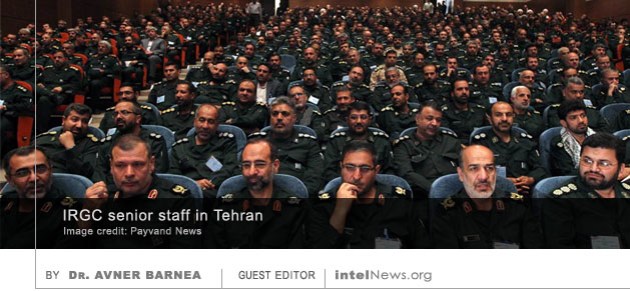
To compline the report, the Intelligence Directorate of the IDF investigated how the most significant intelligence failure in the history of the State of Israel occurred, as well as how the MID analysts and other members of the intelligence community failed to notice the attack that Hamas had been planning.

According to the findings of the investigation, Hamas began planning its attack between seven and eight years ago, which means that Israeli intelligence should have been able to observe the relevant warnings as early as 2016. However, the IDF’s intelligence division missed the early signs.

It appears that the MID assumed Hamas had been deterred by Israel. There was also a prevailing assumption that the group’s military wing, led by Yahya Sinwar, had settled on improving the economic situation of Gaza Strip residents while securing its internal sovereign status in the Gaza Strip. The MID intelligence analysts were uniformly immersed in the concept that Hamas “did not want to and could not” go to war against Israel.

The main findings of the investigation are as follows: Read more of this post

Notes on the assassination of Iranian IRGC Commander Hassan Mahdawi

IRGC - ABTHE TARGETED KILLING OF Hassan Mahdawi, a high-ranking member of Iran’s Islamic Revolutionary Guards Corps (IRGC) and the commander of the Quds Force in Syria and Lebanon, was carried out by Israel on April 1, 2024. The actual assassination was based on precise operational intelligence, while Israel’s assessment of Iran’s response was wrong.

On the day of the attack, a building adjacent to the Iranian Embassy in the Syrian capital of Damascus was attacked with rockets. The attack killed seven IRGC members: General Muhammad Reza Zahedi, also known as Hassan Mahdawi, his deputy, and five additional officers. Mahdawi is the most senior Iranian commander to be killed since the assassination of IRGC Quds Force Commander Qasem Soleimani by the United States in 2020.

Mahdawi had close ties with Hezbollah. He maintained a close relationship with Hezbollah Secretary-General Hassan Nasrallah and was perceived by Israel to be directly coordinating the military attacks on Israel from Lebanon and Syria. In Tehran’s collective memory, Israel’s history of attacks against it includes numerous strikes on Iranian nuclear sites, assassinations of scientists within Iran, and actions against Iranian proxies in Syria, Lebanon, Iraq, and Yemen. Traditionally, these attacks have been invariably met with attacks by Iran’s proxies in the region.

This time, it was different. Iran recognized Mahdawi’s assassination as a direct attack on Iran that it could not tolerate, and had to respond to differently. Just days following Mahdawi’s assassination, Iran attacked Israel. According to the Israel Defense Forces, 99 percent of the more than 330 weapons fired at Israel (including at least 185 drones and 110 surface-to-surface missiles) were intercepted, mostly over the territory of countries adjacent to Israel. Iran’s attack on Israel was unprecedented. It was launched directly from Iranian territory in contrast to prior cases, when Iran has used its proxies, supposedly leaving its hands clean.

Israel could not tolerate such a blatant infringement on its sovereignty. After Israeli officials vowed a response to the Iranian attack, the Jewish State counter-attacked, causing minor damage to the Eighth Shekari Air Base in northwest Esfahan, a dozen kilometers from the Natanz nuclear facility. It was a calculated response designed to deliver a message to Iran that Israel could and would respond to an attack. Following Israel’s counterattack, the tensions between Iran and Israel have subsided for the time being.

While the attack on General Mahdawi was based on excellent operational intelligence, it became evident that the Israeli assessment regarding a possible Iranian response was erroneous. The Israeli assessment was that the Iranian response would be similar to what occurred in the past —namely limited attacks by Hezbollah on northern Israel and attacks on the Golan heights by Iranian proxies in Syria. Israel simply did not anticipate a direct Iranian attack on Israel from Iranian territory.

It seems that Israeli senior analysts were entangled in a conception of Iran’s past behavior and anticipated that Tehran’s response would be similar to prior cases, namely utilizing Iran’s proxies. Israel did not pay enough attention to the difference between Mahdawi’s assassination and previous attacks against Iran. This time, the attack targeted the Iranian embassy in Damascus and the target was a very senior official, who was close to Iran’s Supreme Leader Ali Khamenei.

It appears that Israel’s assessment of the Iranian response to Mahdawi’s assassination was a strategic failure. It appears more likely that the Israeli War Cabinet was provided with an incorrect assessment by the nation’s intelligence community, and less likely that it was provided with an incorrect assessment, which it then decided to ignore. There is concern in Israel that the intelligence assessment was once again wrong, after the colossal failure to anticipate the October 7 attack on Israel by Hamas.

Author: Avner Barnea | Date: 26 April 2024 | Permalink

Dr. Avner Barnea is research fellow at the National Security Studies Center of the University of Haifa in Israel. He served as a senior officer in the Israel Security Agency (ISA). He is the author of We Never Expected That: A Comparative Study of Failures in National and Business Intelligence (Lexington Books, 2021).

Interview reveals state of mind of Israeli intelligence prior to October 7 attack

Israeli General Staff MilitaryON MARCH 23, CHANNEL 12 of Israeli television aired a remarkable interview with Sassi Elya, the former director of technology at the Israel Security Agency (ISA). Better known by the acronyms Shin Bet or Shabak, the ISA is Israel’s domestic security service. The interview had initially been scheduled for broadcast as part of the evening news on October 7, 2023. However, its airing was canceled due to the attack on Israel by Hamas, which occurred that morning.
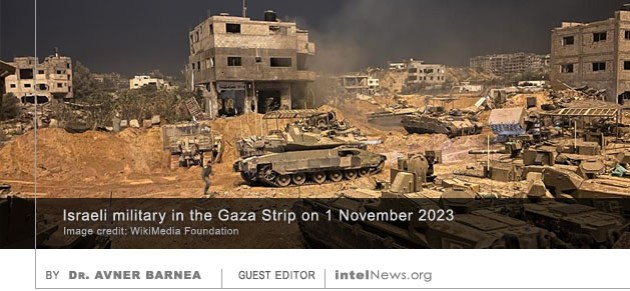
But on March 23, after about 5 months, Channel 12 aired the original interview with Elya. The retired official spoke with glee about the advanced technological capabilities developed by the ISA in order to prevent terrorist attacks against Israel. Elya said Israeli intelligence had built a unique system, known as “the Tool”, which allegedly provided intimate knowledge about the life of every Palestinian living in the West Bank and Gaza. This technologically advanced surveillance system allegedly monitored every move of its targets, all for the purpose of preventing potential terrorist attacks against the Jewish state. Elya claimed that, as a result of this advanced technological system, there was no chance that Israel would be surprised by Palestinian militants. This system was so advanced, he said, that intelligence agencies from all over the world were coming to Israel to learn about it.

Thanks to Channel 12, we can now examine Elya’s interview retrospectively, and especially in light of the ISA’s poor performance on October 7, as well as its failure to warn Israeli authorities about Hamas’ preparations for the attack. Notably, Elya was interviewed again for the same television program. Predictably, he admitted that his prior assessment had been wrong and regretted being so overly confident about the technology.

This case demonstrates the overestimation by Israeli intelligence of its own capabilities, because of arrogance and over-confidence. This approach refutes the basic premise of intelligence work: be skeptical and be modest. Furthermore, this case highlights that Israeli intelligence agencies overly relied on technology (SIGINT) in the lead-up to October 7, while seemingly neglecting the low-tech activity of gathering information through human intelligence (HUMINT).

The system that Elya described in his initial interview as the ultimate counterintelligence tool was reportedly criticized internally by some in the ISA for gathering huge amounts of information without offering sufficient analytical capability. This imbalance between collection and analysis can render an entire surveillance system practically useless. The bottom line is that, almost by accident, we are now aware of the state of mind that the ISA was in before the sudden attack by Hamas on October 7, which cost so many lives as a result of the ISA’s complacency.

► Author: Avner Barnea | Date: 01 April 2024 | Permalink

Dr. Avner Barnea is research fellow at the National Security Studies Center of the University of Haifa in Israel. He served as a senior officer in the Israel Security Agency (ISA). He is the author of We Never Expected That: A Comparative Study of Failures in National and Business Intelligence (Lexington Books, 2021).

Opinion: Five months into the war, Israeli intelligence failure looks even worse

Israel Hamas warSINCE OCTOBER 7, 2024, when Israel was caught off guard by a sudden and highly damaging attack from Hamas, more information has surfaced regarding why there was no prior warning about the attack and the failures of Israeli intelligence in this regard.
It has become clear that Israeli intelligence miscalculated Hamas’s intentions. The Israeli security concept, spearheaded by the Israel Military Intelligence (IMI) and the Israel Security Agency (ISA), was that: (a) Hamas had been deterred from launching large-scale attacks; and (b) Hamas was focused on carrying out terrorist attacks against Israelis in the West Bank and not on Israel proper. This flawed security concept, which had been fully adopted by the Israeli cabinet and the Israel Defense Forces (IDF) was proven to be groundless. In fact, Hamas successfully exploited it in order to develop and accelerate its attack strategy.

One significant reason for the failure of the IDF, both in the area of intelligence collection and operationally, was its underestimation of the capabilities of Hamas and the intentions of its leader, Yahya Sinwar. There was also an overestimation by many in Israel, including the security establishment, of Israel’s own intelligence Q Quotecapabilities. Another important insight is that the counterintelligence structures inside Hamas were successful in preventing Israeli intelligence from recruiting agents who were close enough to Sinwar to be able to alert Israel about the impending attack. Furthermore, Israel’s collection and analysis of signals intelligence was unproductive, possibly because Hamas was successful in countering Israel’s ability to produce effective intelligence from signals intercepts.


As the IDF moved deeper into Gaza, and as more information was collected from Hamas facilities, it became clear that there were significant gaps in information regarding the preparations for the attack by Hamas inside Gaza. These preparations lasted for a long time and involved numerous operatives who remained undetected by Israeli intelligence. It looks like the compartmentation system inside Hamas, based on a need-to-know only model, was highly effective.

The IDF attacked the Gaza Strip in 2014 in Operation Protective Edge. Its mission was to destroy Hamas’s ability to carry out assaults against Israel through tunnels dug deep inside Gaza and crossing the border into Israel. Indeed, about 20 such tunnels were destroyed during that operation. Later, Hamas built 250 miles of new tunnels in Gaza that were aimed at defense and to hide combatants when Israel attacked. It has been suggested that this construction project was funded by cash sent to Gaza by Qatar, with Israel’s approval —though Qatar denies this claim. Read more of this post

Analysis: Israel underestimated Hamas while overestimating its own capabilities

IDF IsraelTHE OCTOBER 7 ATTACK on Israel was a total surprise. There was no warning. There were very few signs of a possible attack. Israeli intelligence evaluated these signs as elements of a routine military exercise by Hamas, and even assessed them as parts of an imaginary scenario. It therefore gave no warning to those Israeli Defense Forces (IDF) units that were stationed on the border with Gaza. Meanwhile, what we know about the intelligence failure of October 7 will likely pale before what the commission of inquiry will reveal once it is established. That was precisely what happened in the case of the Agranat Commission of Inquiry, which made significant revelations while investigating the intelligence failings of the IDF in the run up to the 1973 Yom Kippur War.

In the eyes of the Israeli generation of the Yom Kippur War, the possibility of such a failure happening again was unthinkable. Yet there is a significant difference between the events of 1973 and the events of last October 7. In 1973 the intelligence failed, but the IDF reacted quickly and acted efficiently. This Q Quotetime, in the first two days of the conflict the IDF was confused and acted without direction, in the apparent absence of relevant action plans for what to do in the event of a massive invasion. The IDF was clearly not ready for such a scenario.

Recently, another important piece of information about the intelligence failure of October 7 was revealed. It was reported that, two months before the surprise attack by Hamas, information was received from an agent handled by the Israel Security Agency (ISA) in Gaza, with a “very high” reliability level. The agent allegedly reported that Hamas was planning “a major move in the week after Yom Kippur”. Yet that warning was not marked as significant; the assumption was that, if the warning materialized, it would be corroborated with additional intelligence. It was thus kept from higher levels of command and from Israeli Military Intelligence (IMI). The ISA did not deny the report, saying instead in a statement: “Focusing on one specific piece of news or another does not reflect the intelligence picture at the time”.

Given the high number of casualties and the horrendous destruction that resulted from the October 7 attack, many Israelis, including some in the security establishment, feel that it is far too long to wait until a commission of inquiry is established and publishes its conclusions. It will likely take at least two years Q Quotefor those conclusions to become public. What is to be done in the meantime? There is public pressure to launch the inquiry soon.

Recently the State Comptroller of Israel, Matanyahu Engelman, announced that he has begun to investigate the intelligence failure. This is an appropriate move. However, with all due respect to the state comptroller’s inquiries, we know from previous experience that his findings have no teeth. For instance, in the context of Hamas, the state comptroller’s review of Operation TZUK EITAN (the 2014 Gaza War) was published in early 2017. It revealed serious instances of misconduct in the intelligence community dating several years prior to the operation. Yet this severe criticism passed below the public’s radar and was practically ignored, while no actions were taken against IDF and ISA security personnel that were shown to have acted irresponsibly.

I would like to point to a number of stronger factors that led to the tragic complacency of October 7, drawn from the field of psychology. It relates to how a country (mainly through its intelligence analysts) perceives its enemies and how this affects the evaluations of said enemies. We know that there was a conception on the Israeli side that Hamas had no interest in attacking Israel at this stage. It seems that the State of Israel underestimated Hamas and its leader, Yahya Sinwar, based on the available evidence of Hamas and Sinwar. Read more of this post

The OSINT factor in Hamas’ operational success and Israel’s intelligence failure

Hamas GazaIT HAS BECOME CLEAR that Hamas had up-to-date intelligence on Israeli targets prior to the attack on October 7, 2023, the largest and most devastating terrorist attack in Israel’s history. Hamas did not have access to clandestine information sources but rather relied on open-source intelligence (OSINT) to understand the structure and weaknesses of Israel’s defense system along the border fence. In addition to publicly available maps, Hamas meticulously gathered online intelligence about specific sites within the Israeli communities near the Gaza Strip.

It is also possible that some of the intelligence came from human intelligence (HUMINT) sources, largely through Gazan workers who were employed in Israel. Moreover, Hamas had access to constant Israeli media broadcasts, which supplied them with invaluable intelligence on the border communities and adjacent military facilities, as well as on communities that were located further to the north and east. Although the Israeli state exercises censorship in the Q Quoteinterests of national security, the public’s ‘right to know’ purview is substantial. Thus, significant amounts of information are available online.

In assessing the behavior of Hamas in recent years, one can observe that it did not act as a terrorist group for quite some time. Rather, it operated as a government organization, while monitoring its enemy and waiting patiently for an opportune moment to attack. Simultaneously, Hamas utilized disinformation tools to conceal its attack plans. It trained its fighters within commando units that employed information effectively and relied on actionable intelligence, rather than chance. This can be observed from interrogations of Hamas members who were detained by Israeli authorities after October 7. In one example, Hamas used detailed maps of Israeli communities near the Gaza border, which are available on Google Earth, to plan its attacks of October 7. Printouts of these maps were found among the belongings of Hamas assailants that were killed during the attacks.

Some in Israel are now advocating for increased protection of OSINT, particularly for Israeli sites related to security, including civilian first-response units, defense systems guarding settlements, and civil technological assets. However, implementing such measures within the current framework of Israel’s open society seems challenging. Despite the known importance of OSINT to Hamas and its potential risk to Israel’s security, significant changes in this regard may not occur, as they could impact the country’s democratic values. However, it is still possible to improve the quality of security censorship regarding sensitive civilian information that can be used by adversaries. Such moves would include protecting databases, limiting information relating to the addresses of senior officials, or putting in place stricter policies on the movement of Gazan workers in Israel.

Contrary to Hamas’, Israel’s OSINT systems underperformed in the run-up to the October 7 attacks. That was so especially after the central OSINT unit of the Israeli Military Intelligence was dissolved, for reasons that remain to be investigated. CNN was among many news outlets that have revealed how Hamas advertised its military drills on social media, but somehow Israeli intelligence failed to pay attention to them.

When Hamas openly declared its intention to attack communities near the Gaza border, and trained its units for that purpose, the Israeli intelligence community, including the IMI and the Israel Security Agency (ISA), underestimated its real attack capabilities based on OSINT materials. This miscalculation stemmed from incorrectly assessing Hamas’s capabilities and overestimating the Israel Defense Forces’ ability to swiftly respond and prevent the attack on civil and military targets. Unfortunately, this assessment proved to be a significant mistake.

The effective use of OSINT lies at the heart of Hamas’ operational plan to attack simultaneously several Israeli targets and to cause extensive damage. It appears that Hamas was able to utilize the OSINT factor to its maximum extent, thus adding significant value to the success of the attack.

► Author: Dr. Avner Barnea | Date: 05 December 2023 | Permalink

Dr. Avner Barnea is research fellow at the National Security Studies Center of the University of Haifa in Israel. He served as a senior officer in the Israel Security Agency (ISA). He is the author of We Never Expected That: A Comparative Study of Failures in National and Business Intelligence (Lexington Books, 2021).