News you may have missed #641 (US edition)

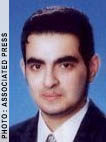
Dennis Blair

Dennis Blair

►► US Navy memo had warned Roosevelt of 1941 attack. Three days before the December 7, 1941, Japanese attack on Pearl Harbor, US President F.D. Roosevelt was warned in a memo from US naval intelligence that Tokyo’s military and spy network was focused on Hawaii. The 20-page memo has been published in the new book December 1941: 31 Days that Changed America and Saved the World, by Craig Shirley.
►►US spy agencies cut their holiday parties. Holiday gatherings have provided rare opportunities for US congressional staff, embassy aides, government officials, and the media to mix it up —off the record— with the spy set. But this year, agency budget Scrooges have taken aim at high-priced holiday merriment. The Director of National Intelligence has canceled holiday parties altogether, and the Central Intelligence Agency has drastically downsized its guest list and lavish spread by more than 50%.
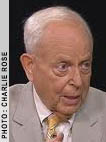
►►Ex-DNI Blair wants Pentagon in charge of drone strikes. The United States’ former Director of National Intelligence Dennis Blair, who previously proposed scaling back the armed drone operation run in Pakistan by the CIA, is now urging that the program be publicly acknowledged and placed in the hands of the US military.

News you may have missed #637

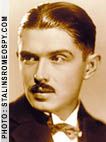
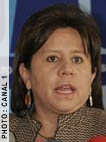
Dmitri Bystrolyotov

D.A. Bystrolyotov

►►South African spy boss to quit. Director General of the State Security Agency Jeff Maqetuka, who has been entangled in a never-ending war with Minister Siyabonga Cwele, is expected to step down this week, according to South Africa’s Sunday Independent. The paper claims that that plans are afoot to expedite Maqetuka’s departure from the country’s intelligence infrastructure by placing him on summer leave and then making sure he would not return to work in 2012.
►►Slovakian defense minister resigns over wiretap scandal. The interception of journalists’ telephone calls by the Slovakian Defense Ministry’s counterintelligence arm has cost the country’s Defense Minister, Lubomír Galko, his job. The scandal involved Slovakia’s Military Defense Intelligence (VOS). It has also emerged that the VOS operation involved wiretapping of the head of TV news channel TA3 and two senior Defense Ministry employees, according to leaked documents obtained by Slovak media outlets.
►►Book on Soviet spy Dmitri Bystrolyotov. Excerpt from Emil Draitser’s book Stalin’s Romeo Spy: The Remarkable Rise and Fall of the KGB Most Daring Operative (Northwestern University Press, 2010), about one of the 20th century’s most outstanding undercover operatives. Bystrolyotov acted in Western Europe in the interwar period, recruiting and running several important agents in Great Britain, France, Germany, and Italy.
News you may have missed #599

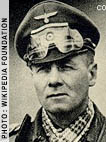
Erwin Rommel

Erwin Rommel

►►SAS planned to kill Nazi Field Marshal Rommel. The veil of secrecy surrounding Britain’s SAS special forces unit has been partially lifted to allow the publication of a new book detailing daring attacks behind Nazi lines in the Second World War. The book features an order for an ambitious but unsuccessful mission to kill or kidnap Nazi Field Marshal Erwin Rommel just after D-Day in 1944.
►►CIA says global-warming intelligence is ‘classified’. Two years ago, the US Central Intelligence Agency announced it was creating a center to analyze the geopolitical ramifications of “phenomena such as desertification, rising sea levels, population shifts and heightened competition for natural resources”. But whatever work the Center on Climate Change and National Security has done remains secret.
►►Japan sends new spy satellite into orbit. Japan at present has a total of three information-gathering satellites in orbit. All three are optical, which means they are able to capture images in broad daylight and in clear weather. The new spy satellite is said to replace one which is almost at the end of its useful life. The country is also planning to launch in two years time, radar satellites which can capture objects at night and in cloudy weather.

News you may have missed #584

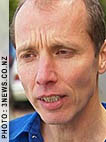
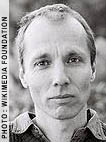
Nicky Hager

Nicky Hager

►►Billing dispute reveals details of secret CIA flights. On August 12, 2003, a conracted Gulfstream IV aircraft carrying six passengers took off from Dulles International Airport for Bangkok. When it returned four days later, it carried Indonesian terrorist Riduan Isamuddin, who had been captured in Thailand and would spend the next three years in various secret CIA prisons. The Gulfstream IV’s itinerary, as well as the $339,228 price tag for the journey, are among the details of shadowy CIA flights that have emerged in a New York courthouse, in a billing dispute between contractors. Incidentally, even the airplanes’ owners didn’t always know that the CIA was using them.
►►French admit secret service spied on reporter. French interior minister Claude Guéant has admitted that the secret service spied on investigative reporter Gérard Davet, from the newspaper Le Monde, in order to trace the source of a leak about the so-called “Bettencourt party funding scandal“, which has been a source of embarrassment for President Nicolas Sarkozy’s party.
►►NZ let Israeli spies go free in return for passports. Another revelation from Nicky Hager’s book Other People’s Wars (see previous intelNews coverage here). The investigative reporter claims that New Zealand’s Security Intelligence Service released captured Mossad spies Eli Cara and Uriel Zoshe Kelman, in return for Read more of this post

News you may have missed #581

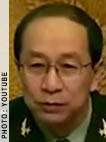
Jin Yinan

Jin Yinan

►►CIA wants to censor book by ex-FBI agent. The agent, Ali H. Soufan, argues in the book that the CIA missed a chance to derail the 9/11 plot by withholding from the FBI information about two future 9/11 hijackers living in San Diego. He also says that torture interrogation methods against terrorism detainees were unnecessary and, ultimately, counterproductive. Both these things are known and have been publicly discussed. As The Independent correctly notes, the CIA’s objections are “less for national security reasons than out of a desire to avoid re-airing incidents that show the Agency in an unflattering light”.
►►New scandal at India’s SIGINT agency. The Indian government founded the National Technical Research Organisation (NTRO) in 2004, as a potential communications nerve center for all of India’s intelligence agencies. But the SIGINT agency has been involved in one financial scandal after the other, most recently relating to an elaborate procurement scam.
►►China silent about spy lecture leak. China has remained quiet as a recently leaked video of a Chinese general’s candid remarks on sensitive spying cases continued to draw international attention. The ministries of defense and foreign affairs have not responded to media inquiries, and numerous phone calls to National Defense University, where the general, Jin Yinan (pictured), teaches, went unanswered. State media made no mention of the story.

New Zealand base in Afghanistan was secret CIA station, book claims

Nicky Hager

Nicky Hager

By JOSEPH FITSANAKIS | intelNews.org |
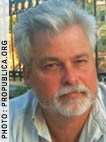
A Kiwi “peacekeeping” and “civil reconstruction” base in Afghanistan was a secret station for the US Central Intelligence Agency, according to a new book by New Zealand’s preeminent investigative writer. Nicky Hager first made international headlines in 1996, with his groundbreaking book Secret Power: New Zealand’s Role in the International Spy Network. In it, he revealed the existence of the UK-USA Security Agreement and of ECHELON, a US-managed signals intelligence (SIGINT) collection and analysis platform that serves as an intelligence-sharing mechanism between UK-USA signatories. The publication of his latest book, entitled Other People’s Wars: New Zealand in Afghanistan, Iraq and the War on Terror, is scheduled to coincide with the ten-year anniversary of 9/11. The book focuses on —among other things— the Bamyan Province base in central Afghanistan, which serves as the center of operations for the New Zealand Provincial Reconstruction Team in the Central Asian country. It serves as a symbol of New Zealand’s cautious contribution to the NATO-led war in Afghanistan, by allowing Kiwi forces to participate with boots on the ground, while performing strictly noncombatant functions, officially described as “peacekeeping” and “civil rebuilding”. But Hager’s book alleges that the “noncombatant” mission of the Bamyan base was simply a cover, devised by the New Zealand Defence Forces’ public relations apparatus, and aimed at pacifying the country’s population. The real mission of the Bamyan base, says Hager, was to “help the Americans” by essentially concealing a covert CIA station. The author further alleges that the Kiwi forces at Bamyan were instructed to keep the presence of the CIA team secret. This they did, even as they shared daily meals with American spies in civilian clothes, who refused to disclose even basic details of their mission to their New Zealand guardians. Hager alleges that New Zealand’s defense establishment took the decision to help the CIA as part of a broader strategy of rapprochement between Wellington and Washington. Why rapprochement? It was in 1984, when, under mounting popular pressure, New Zealand’s Labour government of David Lange voted to bar nuclear-powered or nuclear-armed ships from entering New Zealand territorial waters. At the time, the nuclear ban imposed by New Zealand was heralded by the global nuclear disarmament movement as a major victory. But Washington did not see it this way. Read more of this post

News you may have missed #578

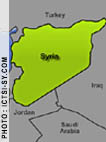
Syria

Syria

►►CIA agent who helped kill Che wants payout from Cuba. This is from the “news that isn’t” department: Gustavo Villoldo, a Cuban-born CIA operative, who helped track down and kill Che Guevara in Bolivia, has won $2.8 billion in damages from the Cuban government, for confiscating his family property after the 1959 revolution. But he is unlikely to ever collect the money because Cuba does not recognize US court rulings.
►►Cheney wanted Bush to destroy suspected Syrian nuke site. Former US Vice President Dick Cheney says in a new memoir that he urged President George W. Bush to bomb a suspected Syrian nuclear reactor site in June 2007. But, he wrote, Bush opted for a diplomatic approach expressed misgivings. Eventually Israeli jets bombed the site. Cheney’s account of the discussion appears in his autobiography, In My Time: A Personal and Political Memoir, which is to be published by Simon & Schuster next week.
►►South Korea indicts five for spying for North. Five South Koreans, including a former parliamentary aide, have been indicted for allegedly spying for North Korea, in connection with the Wangjaesan spy ring.

News you may have missed #572

David Wise

David Wise

►►New Zealand spy service now welcomes online tip-offs. Ten years ago, the New Zealand Security Intelligence Service (NZSIS) introduced a free telephone number that people could ring if they suspected any suspicious intelligence activity. Now the spy service has entered the 21st century by changing its website so the public can provide details online.
►►Book claims Coco Chanel spied for Nazis. Frankly, who gives a damn? Is anyone surprised to hear that yet another member of French high society was pro-Nazi in the lead-up to World War II? It is disappointing to see how many news outlets are going over-the-top with this story, while mostly ignoring the truly important historical revelation of the last few days, namely the declassification of the CIA’s Official History of the Bay of Pigs Invasion.
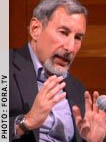
►►David Wise on Sino-American spy wars. Longtime investigative journalist David Wise, who focuses on the intelligence community, talks to Democracy Now! and Amy Goodman about his new book Tiger Trap: America’s Secret Spy War with China.

Exclusive: Interview with ex-CIA officer Charles S. Faddis

Charles S. Faddis

Charles S. Faddis

By JOSEPH FITSANAKIS | intelNews.org |
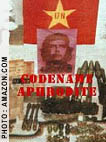
Yesterday I reviewed Charles S. Faddis’ new book, Codename Aphrodite (Orion, 2011), a gripping novel about a former CIA case officer’s freelance operation in Athens, Greece, in pursuit of November 17, one of Europe’s most notorious urban guerrilla groups. Today intelNews hosts an exclusive interview with Faddis, a straight-talking ex-CIA clandestine operations officer, who admits that his novel “is based on some very personal experiences” and that many of the book’s characters “are drawn much more from memory than they are from imagination”. Most regular readers of this blog probably know Charles “Sam” Faddis as the former head of the US National Terrorism Center‘s WMD Unit. His 20-year career as a CIA operations officer, with posts in South Asia, Near East and Europe, arguably culminated in 2002, when he led a CIA team into Iraq to help prepare the ground for the US invasion. He documented this in his 2010 book (co-authored with Mike Tucker) Operation Hotel California: The Clandestine War Inside Iraq. Following his 2008 retirement, Faddis, who was CIA Chief of Station in his last overseas tour, frequently comments on intelligence matters, most notably in his 2009 exposé Beyond Repair: The Decline and Fall of the CIA. Faddis’ answers to intelNews‘ questions are below. Read more of this post

IntelNews book review: Codename Aphrodite, by Charles S. Faddis

Codename Aphrodite

Codename Aphrodite

By JOSEPH FITSANAKIS | intelNews.org |
Most intelNews regulars know Charles S. Faddis as the former head of the US National Terrorism Center‘s WMD Unit. His 20-year career as a CIA operations officer, with posts in South Asia, Near East and Europe, arguably culminated in 2002, when he led a CIA team into Iraq to help prepare the ground for the US invasion. He documented this in his 2010 book (co-authored with Mike Tucker) Operation Hotel California: The Clandestine War Inside Iraq. Following his 2008 retirement, Faddis, who was CIA Chief of Station in his last overseas tour, frequently comments on intelligence matters. He took a stance against the CIA’s “enhanced interrogation” program (but objected to a government investigation), and has penned hard-hitting critiques of American intelligence culture and practices, most notably in his 2009 exposé Beyond Repair: The Decline and Fall of the CIA. His latest creation, Codename Aphrodite (Orion, 2011), is a gritty novel set in the backstreets of Athens, Greece, where a former CIA clandestine operations officer goes after November 17, one of the world’s most active Marxist terrorist groups. Bill Boyle and his wife, Sarah, are both clandestine officers in the CIA’s European Division. Sarah, who is pregnant with their child, is brutally killed by November 17, after a CIA operation in pursuit of the group goes horribly wrong. Haunted by his wife’s murder, which he witnessed, Boyle quits the Agency and soon ends up as a permanent fixture in a depressing Mexican beach bar. Things take an unexpected turn, however, when political winds change in Greece. Petros Salamis, an ascending Athenian politician and aspiring Prime Minister, contacts Boyle with an irresistible offer: a hefty monetary reward and the satisfaction of revenge for his wife’s death in exchange for returning to Greece and eradicating November 17. Read more of this book review

News you may have missed #566 (analysis edition)

Jeffrey Richelson

Jeffrey Richelson

►►Stuxnet virus opens new era of cyberwar. Well-argued article by quality German newsmagazine Der Spiegel on Stuxnet, the sophisticated computer virus that attacked the electronic infrastructure of Iran’s nuclear program last year. The article argues that, in terms of strategic significance, the virus, which is widely considered a creation of Israeli intelligence agency Mossad, is comparable to cracking Germany’s Enigma cipher machine by Polish and British cryptanalists during World War II.
►►The fallout from the Turkish Navy’s recent spy scandal. Recently, the Turkish High Criminal court indicted members of an alleged spy ring operating inside the Turkish Navy. According to the indictment, members of the ring stole more than 165,000 confidential documents and obtained dozens of surveillance records and classified military maps. Its biggest customers were allegedly the intelligence services of Israel, Greece and Russia.
►►New edition of classic intelligence handbook published. A new edition of Jeffrey Richelson’s encyclopedic work on Read more of this post

News you may have missed #560 (new books edition)

Khalil al-Balawi

Khalil al-Balawi

►►New book on CIA’s Khost bomb disaster. Washington Post reporter Joby Warrick has authored a new book, examining the December 31, 2009, killing of seven CIA operatives by Jordanian doctor Humam Khalil al-Balawi in Khost, Afghanistan. In the book, entitled The Triple Agent, Warrick quotes several “anonymous” sources from within CIA and Jordan’s General Intelligence Department (GID), which was involved in running al-Balawi. Aside from blaming GID, Warrick says the CIA’s Amman station chief was partly responsible for the botched operation.
►►Hollywood producer was Mossad spy, says new book. The book Confidential: The Life of Secret Agent Turned Hollywood Tycoon Arnon Milchan, says that Milchan was a full-fledged operative for Israel’s now-defunct intelligence agency, Lakam. The agency, which was also known as Israel’s Bureau of Scientific Relations, collected scientific and technical intelligence abroad. It was disbanded in 1986 following the arrest of US Navy analyst Jonathan Pollard for engaging in espionage on behalf of Israel. The book’s authors, Meir Doron and Joseph Gelman, argue that Milchan, who produced such movies as Love and Other Drugs and Knight and Day, worked for Israeli intelligence by supervising government-backed accounts and front companies that financed “the special needs of the entirety of Israel’s intelligence operations outside the country”.
►►Book alleges US-Russian spy swap deal. In 2010 the CIA considered a swap deal that would have delivered to Moscow two Americans currently imprisoned in the US for spying for Russia. This information is included Read more of this post

News you may have missed #533

María del Pilar Hurtado

María Hurtado

By IAN ALLEN | intelNews.org |
The government of Colombia will –finally– officially request from Panama the extradition of Maria Pilar Hurtado, former director of Colombia’s disgraced DAS intelligence agency, who was granted political asylum in the Central American country last year. The Colombian government has been contemplating this move for some time, as the investigation into illegal activities by the DAS is progressing extremely slowly. In Iran, the government says that it plans to try dozens of American intelligence officials in absentia. The announcement has raised the possibility that Tehran may out US spies which the Iranians claim attempted to recruit locals as part of a sophisticated intelligence-gathering operation. One former CIA operative, Glenn Carle, voluntarily came out a few years ago, following retirement, and made news headlines last month, in connection with alleged CIA spying on American academic Juan Cole. Carle, who worked for the CIA for 23 years, in Africa, the Balkans and Latin America, among other locales, has written a book. It focuses on a several-month period he spent questioning a suspected leader of al-Qaeda. The interrogations took place in two countries, which he says he is not permitted to name.

News you may have missed #525

  • Hacker group LulzSec to disband after attacks on CIA. The publicity-seeking hacker group that has left a trail of sabotaged websites over the last two months, including attacks on law enforcement and releases of private data, said unexpectedly on Saturday it is dissolving itself.
  • NSA veteran publishes book on secretive listening base. Good book review of Inside Pine Gap: The Spy Who Came in From the Desert, written by 23-year US National Security Agency veteran David Rosenberg, who worked for 18 years at the joint US-Australian intelligence facility at Pine Gap, a small technical encampment outside Alice Springs in the Australian outback.
  • Aussie spy agencies feeling budget cuts effect. Australia’s Federal Government has been urged, in a report by the Parliamentary Joint Committee on Intelligence and Security, to review the effects of its cost-saving drive on the country’s intelligence community.

News you may have missed #517

  • New Zealand to launch new cybersecurity agency. The new National Cyber Security Centre will protect high-risk government agencies from attacks by cyber spies and criminals. It will also take on the functions of the Centre for Critical Infrastructure Protection, which helps protect critical national infrastructure such as the computer networks of banks and power companies.
  • New book on China-US spy wars. An extensive review by Joseph Goulden (author of SpySpeak: The Dictionary of Intelligence) of David Wise‘s new book, Tiger Trap: America’s Secret Spy War with China, which has been published by Houghton Mifflin Harcourt.
  • Over 1,000 cyber attacks against UK MoD last year. Criminals and foreign spy agencies launched more than 1,000 cyber attacks on Britain’s Ministry of Defence last year in an effort to steal secrets and disrupt services, Britain’s Defence Secretary Liam Fox has revealed.