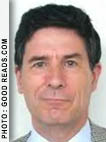
Analysis: NSA emerging as the world’s most powerful spy agency

James Bamford

James Bamford

By JOSEPH FITSANAKIS | intelNews.org |
Regular readers of this blog know that the US National Security Agency is in the process of renovating its soon-to-be-unveiled Texas Cryptology Center, a 470,000-square-foot facility that will cost “upwards of $130 million” and be used primarily to store intercepted communications data. They also know that the gigantic Agency, which is tasked with worldwide communications surveillance, as well as communications security, is also building a 1 million square foot data center at Utah’s Camp Williams. Finally, as we reported last August, the NSA is currently laying out a 20-year plan to construct 5.8 million square feet of new working and storage space on its Fort George G. Meade headquarters in Maryland, and staff it with 11,000 people. What does all this mean? Read more of this post

News you may have missed #0142

  • Egypt assisting Yemen in alleged Iranian spy infiltration. Egypt has allegedly provided Yemen with information on Iran’s intelligence activities targeting it and other Arab and African states in the region, according to Egyptian daily Akhbar Al-Youm. Meanwhile, the appeals of two Yemeni nationals convicted last October of spying for Iran are to be heard Monday in Yemeni capital Sana’a. Yemen, a major intelligence center in the Arab world, is probably the most underreported front in Washington’s so-called “war on terrorism”.
  • New book examines Operation GREENUP. A new book, They Dared Return, by Patrick K. O’Donnell, examines the operations of five German Jews, who returned to WWII Germany for Operation GREENUP, an espionage project funded by the German Operational Group of the US Office of Strategic Services –forerunner of the CIA.

Bookmark and Share

Irish leader used British-supplied bugs to spy on opponents: book

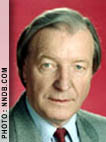
Charles Haughey

Charles Haughey

By IAN ALLEN | intelNews.org |
Charles Haughey, Ireland’s Taoiseach (head of government) in the late 1970s, and on two instances in the 1980s, used audio surveillance devices supplied by a British security officer to spy on his domestic political opponents. This allegation is made by George Clarke, a former officer in the Special Branch of the Royal Ulster Constabulary (the name of the British police force in Northern Ireland until 2001), in his book Border Crossing, which was published last week. In it, Clarke says he purchased the devices at a specialist store in London, in 1979, and later lent them to an intelligence officer in the Garda, the police of the Republic of Ireland, for use in spy operations against the Irish Republican Army (IRA). Several months later, however, when Clarke requested that the devices be returned to him, he was told that they were in the possession of Charles Haughey, and that he was so fond of them that he simply refused to give them back. Read more of this post

News you may have missed #0135

  • More revelations in “unprecedented” book on MI5 history. More revelations in Christopher Andrew’s In Defense of the Realm include the disclosure that Margaret Thatcher tried to get MI5 to spy on British trade union activists when she was Prime Minister (MI5 refused). Meanwhile, Professor Andrew has begun serializing selected chapters of the book in The London Times, here and here.
  • Court lets Canadian spies snoop on targets overseas. A court ruling has permitted the Canadian Security Intelligence Service and the Communications Security Establishment to eavesdrop on Canadian nationals traveling overseas. Until now, the two agencies could spy on Canadians so long as they were within the country’s borders.
  • CIA endorses cloud computing. The CIA is emerging as one of the US government’s strongest advocates of cloud computing, even though “cloud computing as a term really didn’t hit our vocabulary until a year ago”, according to Jill Tummler Singer, the CIA’s deputy Chief Intelligence Officer. This article, however, fails to mention that the NSA is also moving to cloud computing in a big way.

Bookmark and Share

News you may have missed #0133

  • Book examines Central Asian espionage in WWI. On Secret Service East of Constantinople, by Peter Hopkirk (John Murray Publishers), examines the role of German intelligence services in Kaiser Wilhelm’s attempt to gain influence in the Ottoman Empire, the Caucasus, Persia, Afghanistan and India. A very interesting, under-researched aspect of World War I.
  • CIA intercepted communication between Zazi and al-Qaeda. A local TV station in Denver, Colorado, quotes “intelligence officials familiar with the investigation” of Najibullah Zazi, as saying that the CIA alerted US federal agencies after intercepting a conversation between Zazi and a senior al-Qaida operative. No word yet about this from the FBI, which is supposed to handle domestic terrorism cases.
  • US defense secretary hints at more secret nuke sites in Iran. Speaking alongside Secretary of State Hillary Clinton last night at a CNN/George Washington University forum, Robert Gates dropped what seemed to be a big hint that the United States knows much more about the Iranian nuclear program than the Iranians might think.

Bookmark and Share

“Unprecedented” history of MI5 published

Dr. Andrew

Dr. Andrew

By JOSEPH FITSANAKIS | intelNews.org |
The MI5, Britain’s foremost counterintelligence organization, made headlines in 2002, when it appointed Cambridge University history Professor Christopher Andrew to produce an authorized account of its long history. The 1,032-page-long book, entitled Defense of the Realm, was published this week by Allen Lane, as announced last March, in time to mark the agency’s centennial. Despite the fact that Defense of the Realm has been officially sanctioned by MI5, (ex-director-general Stephen Lander was sitting next to Dr. Andrew during Monday’s press conference), the book makes some interesting revelations. Among them is that MI5 considered assassinating V.K. Krishna Menon, post-colonial India’s first High Commissioner (an ambassador within the British Commonwealth of Nations) to Britain. Read more of this post

News you may have missed #0116

  • Australia blocks Chinese mining investment on security grounds. The Australian government has for the second time this year vetoed a multi-billion dollar mining project involving a Chinese company, on national security grounds (did someone say Rio Tinto?). The veto follows news earlier this month that the Australian Security Intelligence Organisation (ASIO) investigated the Australian subsidiary of Chinese telecommunications company Huawei Technologies because of its rumored links with China’s intelligence establishment.
  • Declassified files reveal massive FBI data-mining project. An immense FBI data-mining system billed as a tool for hunting terrorists is being used in hacker and domestic criminal investigations, and now contains tens of thousands of records from private corporate databases, including car-rental companies, large hotel chains and at least one national department store, according to declassified documents.
  • Book by Danish special forces soldier reveals dirty tricks. A Danish court has turned down an appeal by the country’s military to ban the publication of a book by Thomas Rathsack, former member of Jaegerkorps, an elite army unit. Among other things, the book reveals systematic breach of Geneva Convention directives by members of the unit deployed in Iraq and Afghanistan.

Bookmark and Share

CIA using US consulate in Dubai to recruit Iranian spies: book

Dubai

Dubai

By JOSEPH FITSANAKIS | intelNews.org |
The CIA routinely uses the US consulate in Dubai, United Arab Emirates, to recruit Iranian spies, according to a new book. In Dubai: The World’s Fastest City, author Jim Krane quotes two unnamed American diplomats who say that US consular employees in Dubai issue travel visas to the thousands of Iranians who request them “only in exchange for inside information on the country”. Washington has no formal diplomatic relations with Tehran, and so Iranians use instead the US consular office in Dubai, which is situated right across from Iran in the Persian Gulf. Read more of this post

Soviet star hockey player was spy, claims new book

Vladislav Tretiak

Vladislav Tretiak

By IAN ALLEN | intelNews.org |
A new book claims that one of the greatest Russian ice hockey players in modern times was a spy for Soviet and Russian intelligence. Vladislav Tretiak, goaltender for the Soviet Union’s national ice hockey team in the 1970s and 1980s, is considered one of the supreme goaltenders in the history of the sport. But Nest of Spies, a new book published this week in Canada, alleges that Tretiak acted as an “international talent-spotter” for the KGB and its post-communist successor, the Russian Foreign Intelligence Service (SVR). The books’ authors, Canadian Security Intelligence Service veteran Michel Juneau-Katsuya, and investigative journalist Fabrice de Pierrebourg, claim that Tretiak performed intelligence work during his sports-related visits to Canada and elsewhere, by detecting potential spy recruits for the Russians. Read more of this post

News you may have missed #0087

Bookmark and Share

News you may have missed #0086

Bookmark and Share

Japanese intelligence history discussed in new books

By JOSEPH FITSANAKIS | intelNews.org |
In comparison to their Asian counterparts, Western intelligence organizations are oases of transparency and openness. In such Asian countries as Japan, governments have yet to recognize the existence –let alone operations– of their espionage agencies. This attitude is slowly changing in Japan, however, through a new trend of published books authored by former intelligence operatives. An article in Japan’s second-largest newspaper, Asahi Shimbun, available here in English, discusses this new trend, as well as some of the new information provided in several new memoirs by Japanese ex-intelligence professionals. One interesting aspect of postwar Japanese intelligence, revealed in such books, is its overwhelming concentration on Japan’s communist neighbors. Another is the substantial degree to which US intelligence agencies were involved in the day-to-day running of Japanese intelligence operations. Read more of this post

News you may have missed #0033

Bookmark and Share

News you may have missed #0025

  • BREAKING NEWS: Several news outlets are reporting this morning that it was former US vice-President Dick Cheney who ordered the CIA to conceal from Congress key information about a covert action intelligence program of an undisclosed nature. See here for more.
  • New book claims Ernest Hemingway was KGB agent. The new book Spies: The Rise and Fall of the KGB in America (Yale University Press), co-written by John Earl Haynes, Harvey Klehr and Alexander Vassiliev, alleges that the Nobel prize-winning novelist was on the KGB’s list of agents in America from 1941, when he was given the codename “Argo” by the Soviets.
  • Thousands of former Stasi spies still working in German civil service. A report in the German edition of The Financial Times claims that over 17,000 former members of East Germany’s Stasi remain employed as civil servants in reunified Germany. Stasi is the name commonly used for the Ministry for State Security, communist East Germany’s secret police.
  • NSA director’s secret visit to New Zealand revealed. A reporter accidentally spotted Lieutenant-General Keith Alexander, director of the US National Security Agency, entering a Wellington building accompanied by security personnel. The revelation prompted a spokesperson at the US embassy in Wellington to admit that Alexander was indeed in New Zealand “for consultations with government officials”. The close signals intelligence relationship between the US and New Zealand have been known since 1996.
  • Chinese national caught trying to purchase crypto hardware. Chi Tong Kuok was arrested by the FBI at the Atlanta International Airport en route from Paris to Panama, where he allegedly planned to purchase US military radios. The US government claims Kuok has admitted he was “acting at the direction of officials for the People’s Republic of China”.
  • Taliban say cell phone SIM cards guide US drone strikes. A Taliban circular says SIM cards planted by informants in cell phones used by militants are used to signal American drones in Afghanistan and Pakistan. As IntelNews recently explained, there are suspicions that this and similar discoveries are gradually prompting the Taliban and al-Qaeda to stop using cell phones altogether.

Bookmark and Share

Analysis: Al-Qaeda dumps phones, making interception impossible

Secret Sentry

Secret Sentry

By JOSEPH FITSANAKIS | intelNews.org |
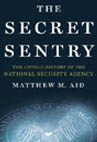
In his brief but perceptive review of Matthew M. Aid’s new book, The Secret Sentry: The Untold Story of the National Security Agency, Craig Seligman, critic for Bloomberg News, refers to an argument made in the book, which in my opinion deserves attention. Namely, in discussing the NSA’s activities in the so-called “war on terrorism”, Aid points out that, not only are Iran and North Korea increasingly converting their analog communications networks into fiber-optic cables, thus making their internal communications virtually impossible to intercept, but al-Qaeda and other militant groups are now “practically cut[ing] out the use of telephones and radios”. All of this is gradually turning the NSA, an agency that receives over $9 billion a year in US taxpayers’ money, into a gargantuan organization whose daily tasks are becoming “maddeningly difficult” –indeed, almost irrelevant. Read more of this post