Turkish media disclose identity of alleged spy for Canada
March 17, 2015 4 Comments
 By JOSEPH FITSANAKIS | intelNews.org
Turkish media have released the name, as well as video footage, of an alleged agent for Canadian intelligence, who says he helped three British schoolgirls travel to territory controlled by the Islamic State of Iraq and Syria. The three girls, aged between 15 and 16 years old, crossed into ISIS-controlled territory on February 17, after traveling by plane from London to Istanbul. The incident prompted international criticism of the Turkish government’s hands-off attitude toward a growing influx of Western Islamists who cross into Syria from Turkey, intent on joining ISIS. However, Turkey’s Minister of Foreign Affairs, Mevlut Cavusoglu said last week that the girls had been assisted by an intelligence agent working for a member-state of the military coalition fighting ISIS.
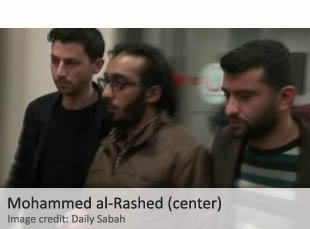
The minister declined to offer further details. But Turkish media eventually disclosed the identity of the alleged agent, who has been detained by authorities in Turkey as Mohammed al-Rashed. Also known as “Mohammed Mehmet Rashid” or “Dr. Mehmet Rashid”, the man is a Syrian national who claims to be working for the Canadian Security Intelligence Service. According to Turkey’s pro-government daily Sabah, al-Rashed is a 28-year-old Syrian dentist who fled from Syria to Jordan in 2013 to escape the civil war there. While in Jordan, he sought asylum at the Canadian embassy in Amman. He was subsequently offered Canadian citizenship, said Sabah, in return for working as an agent of CSIS. According to the Turkish daily, al-Rashed then traveled to Canada, where he stayed for several months before returning to Jordan.
Sources in Turkey say al-Rashed explained upon his detention that he had been tasked by CSIS to uncover the methods by which European and American ISIS recruits travel to Syria through Turkey. For that reason, he said, he had helped at least 15 individuals, including the three British schoolgirls, cross form Turkey to Syria. He would then provide information on the transfers —including passport data and baggage tags— to the Canadian embassy in Jordan, he said. Sabah added that the Canadians would pay for al-Rashed’s frequent trips to Jordan, where he would meet a Canadian embassy employee called “Matt”, who would then pass on the information to his superior at the embassy, called “Claude”. The Syrian alleged agent added that CSIS would compensate him for his work through frequent deposits of between $800 and $1,500 made to bank accounts opened in his name in British banks. Turkish sources added that al-Rashed had recorded details of his activities on a personal laptop, which had been seized and was being examined.
The Canadian government has yet to comment publicly on the allegations about al-Rashed. Unnamed Canadian sources said last week that he was neither a Canadian citizen nor a CSIS employee. But officials so far refused to speculate on what they describe as “operational matters of national security”.












 intelNews.org
News you may have missed #891
April 2, 2015 by Ian Allen Leave a comment
►►Sophisticated malware found in 10 countries ‘came from Lebanon’. An Israeli-based computer security firm has discovered a computer spying campaign that it said “likely” originated with a government agency or political group in Lebanon, underscoring how far the capability for sophisticated computer espionage is spreading beyond the world’s top powers. Researchers ruled out any financial motive for the effort that targeted telecommunications and networking companies, military contractors, media organizations and other institutions in Lebanon, Israel, Turkey and seven other countries. The campaign dates back at least three years and allegedly deploys hand-crafted software with some of the hallmarks of state-sponsored computer espionage.
►►Canada’s spy watchdog struggles to keep tabs on agencies. The Security Intelligence Review Committee (SIRC), which monitors Canada’s intelligence agencies, said continued vacancies on its board, the inability to investigate spy operations with other agencies, and delays in intelligence agencies providing required information are “key risks” to its mandate. As a result, SIRC said it can review only a “small number” of intelligence operations each year.
►►Analysis: After Snowden NSA faces recruitment challenge. This year, the NSA needs to find 1,600 recruits. Hundreds of them must come from highly specialized fields like computer science and mathematics. So far the agency has been successful. But with its popularity down, and pay from wealthy Silicon Valley companies way up, Agency officials concede that recruitment is a worry.
Filed under Expert news and commentary on intelligence, espionage, spies and spying Tagged with 0 After Snowden NSA faces recruitment challenge, 0 Canada’s spy watchdog struggles to keep tabs on agencies, 0 Sophisticated malware found in 10 countries ‘came from Lebanon’, Analysis, Canada, computer hacking, cyberespionage, Edward Snowden, intelligence oversight, intelligence recruitment, Lebanon, News, news you may have missed, NSA, Security Intelligence Review Committee (Canada), United States