US indicts five members of Chinese spy ring, handler remains at large

Chinese Ministry of State SecurityAUTHORITIES IN THE UNITED States have indicted five members of an alleged spy ring for the Chinese Ministry for State Security (MSS), who engaged in sabotage, bribing, harassment, intimidation and entrapment operations. The Federal Bureau of Investigation (FBI) alleges [PDF]  that the five men, Qiming Lin, 59, Shujun Wang, 73, Quiang ‘Jason’ Sun, 40, Matthew Ziburis, 49, and Fan ‘Frank’ Liu, 62, operated at the behest of the government of China, conducting several operations on US soil, with an “unlimited budget”.

Lin, Wang, Liu and Ziburis have been arrested. They each face between 10 and 20 years in prison, if convicted. Sun, who is the alleged handler of the spy ring, remains at large. The FBI claims Sun is an MSS officer and is currently in China. The FBI alleges that the five men were tasked with destroying the personal lives and careers of Chinese dissidents living in the United States. Their victims included a Chinese-born American citizen, who is running for Congress. The dissident is not identified in the FBI indictment. However, according to the Business Insider, he is believed to be Yan Xiong, a Long Island resident who escaped to the US after participating in the 1989 Tiananmen Square demonstrations.

Members of the Chinese spy ring allegedly tried to thwart Yan’s Congressional election campaign. Specifically, they are accused of conspiring to extort Yan, by luring him in a ‘honey trap’ operation involving prostitutes. They also conspired to plant child pornography in Yan’s personal computer, and even using physical beatings and intimidation in order to subvert his political career. The spy ring is also believed to have targeted Weiming Chen, a Chinese-born, California-based artist, who has produced sculptures and other artwork critical of the Chinese government.

In most cases, members of the spy ring tried to acquire personal data belonging to their victims, including their US social security numbers, as well as copies of their passports. In several cases, members of the spy ring installed covert surveillance equipment in the cars, residences and work places of their targets. These allowed them to monitor their victims’ personal lives and whereabouts. In announcing the indictments on Wednesday, US Department of Justice representatives said efforts by Chinese spies to intimidate and silence expatriate dissidents living in the US had risen at an “alarming rate” in the past year.

Author: Joseph Fitsanakis | Date: 17 March 2022 | Permalink
China may be preparing to give Russia military aid for Ukraine, sources claim

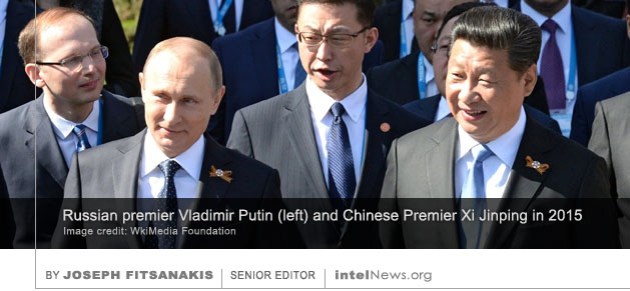
Vladimir Putin Xi JinpingTHE RUSSIAN GOVERNMENT HAS asked China to supply it with military hardware, as well as diplomatic and financial support, which would allow it to weather Western-imposed sanctions against it, according to Western officials. In what bears the marks of a controlled leak by the White House, several American and British news outlets reported late last night that Moscow had approached Beijing with a request for support across many levels, as the war in Ukraine continues to escalate.

The New York Times said that “an official” in the US government had confirmed that Russia and China were in communication about the possibility of Beijing providing Moscow with military support for its war in Ukraine. However, the official would not comment about the intelligence sources and methods that the US employed to secure this information. Separately, Politico reported yesterday that the details of Russia’s alleged request remained secret. According to the American news outlet CNN, China’s response to Russia’s request was not known as of last night.

Later in the evening, London-based newspaper The Financial Times said there were early “indicators that China may be preparing to help Russia” in Ukraine. American officials told news outlets last night that Washington was “watching closely” to see whether Moscow’s request would be granted by the Chinese. The BBC reported late last night that the administration of US President Joe Biden was urgently putting pressure on China, hoping to convince it to refrain from taking steps to help Russia in Ukraine, militarily or economically.

This development comes less than 24 hours before President Biden’s national security adviser, Jake Sullivan, is scheduled to hold a closed-door meeting in Rome, Italy, with Yang Jiechi, director of the Communist Party of China’s Central Foreign Affairs Commission. The Commission is chaired by no other than Chinese Premier and Communist Party of China General Secretary Xi Jinping. Moscow will need the Commission’s support for its request for Chinese military assistance, if it is to receive it in the coming days.

There is a general consensus among observers that the meeting in Rome between Sullivan and Yang is of critical importance for the future of the war in Ukraine. The United States will try to convince China that it has much to lose economically by siding with Russia in this war. Meanwhile, Liu Pengyu, a spokesman for the embassy of China in Washington, was telling Western news media last night that the embassy had “never heard” of a request for military assistance from Russia.

Author: Joseph Fitsanakis | Date: 14 March 2022 | Permalink

Dutch intelligence service warns public about online recruitment by foreign spies

AIVD HollandLAST WEEK, THE DUTCH General Intelligence and Security Service (AIVD) launched an awareness campaign dubbed ‘Check before connecting’. The purpose of the campaign is to inform the Dutch public about risks of foreign actors using fake accounts on social media, in efforts to acquire sensitive business information. According to the AIVD, such online campaigns frequently target and recruit employees of Dutch private sector companies. The awareness campaign is carried out via Twitter, Instagram and LinkedIn. It is aimed at raising awareness in society at-large. The AIVD will publish a number of fictitious practical examples over time, in order to educate the public.

AIVD director-general Erik Akerboom told Dutch newspaper Het Financieele Dagblad that Dutch and other Western secret services have been surprised by the sheer number of cases in which private sector employees disclosed sensitive information, after being blackmailed or enticed with money to share information. After foreign intelligence operatives make initial contact with their target via LinkedIn, the relationship quickly turns more “personal”, according to Akerboom. The new contact acts flatteringly about the unsuspecting target’s knowledge and competence. “You are asked to translate something. This can be followed by a physical meeting”, he says.

Potential targets are “ranked” by their position in an organization, position in a business network, and level of access to sensitive information. “The rankings determine which persons are prioritized for recruitment attempts”, according to Akerboom. This sometimes involves the creation of fake human resource recruitment agencies, as British, Australian and American intelligence agencies have warned about in the past.

While not a new phenomenon, the scope and effectiveness of foreign infiltration attempts have now reached a scale that has prompted the AIVD to warn the public. China and Russia have made attempts to acquire advanced technology in Western countries, including the Netherlands, via corporate takeovers, digital espionage, and human intelligence operations. Last year, the Netherlands expelled two Russian spies who successfully recruited employees at a number of Dutch high-tech companies. One of the Russians created fake profiles posing as a scientist, consultant and recruiter. The AIVD did not disclose the names of these companies. Read more of this post

Chinese officials reward fishing crews for finding underwater spy devices

Jiangsu ChinaGOVERNMENT OFFICIALS IN THE Chinese province of Jiangsu have publicly rewarded two fishing crews for finding and turning in to security authorities a number of “suspicious” underwater devices. In a leading article on its website, China’s state-owned Xinhua news agency said on Tuesday that other fishing crews should come forward upon finding similar devices, to prove their patriotism and claim financial rewards from the state.

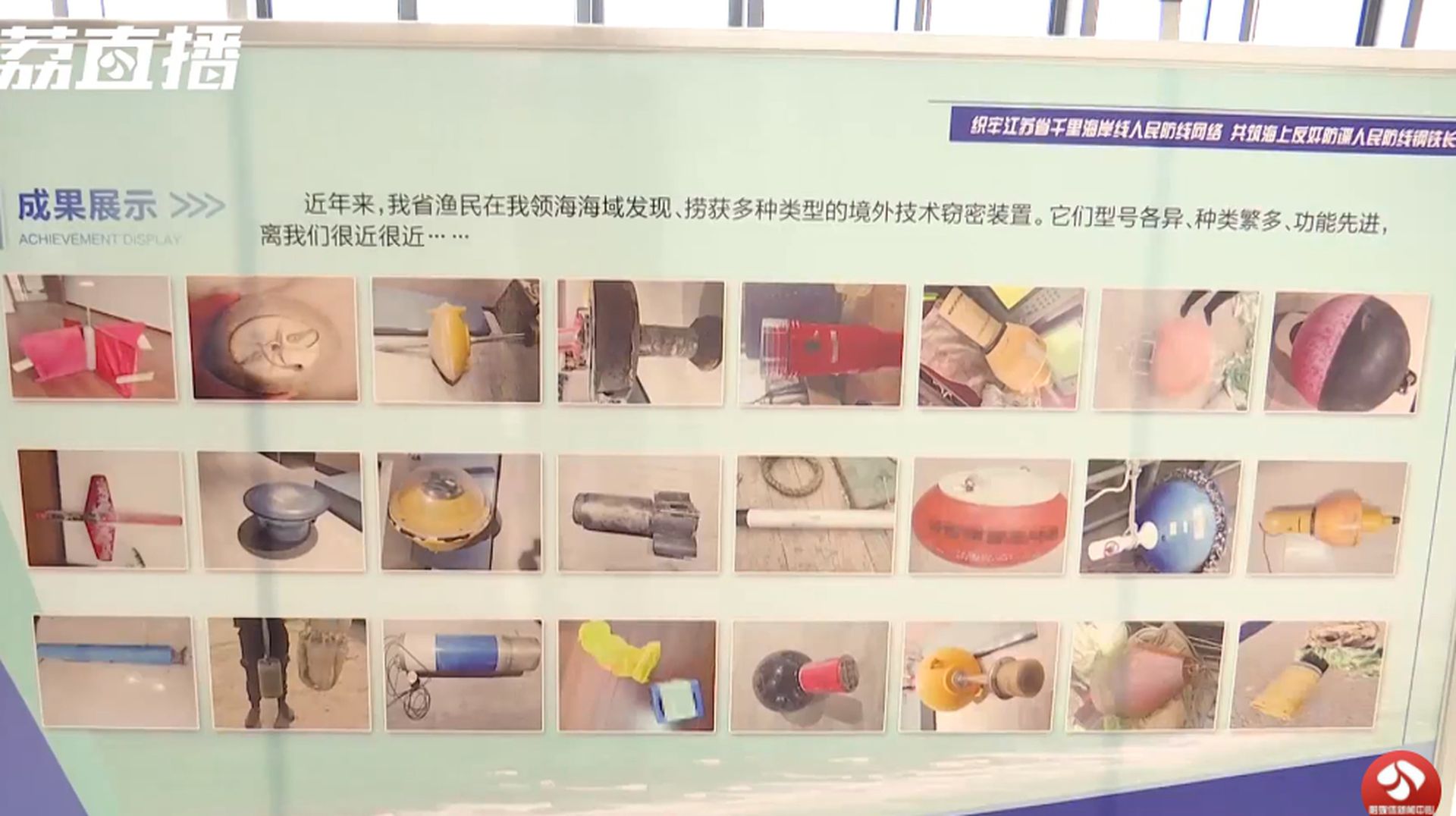
Tuesday’s rewards were handed out by state officials in Jiangsu, a largely coastal region in China’s east. It is located north of Shanghai and is among the most densely populated provinces in the country. According to Xinhua, local officials held a “Special Commendation and Reward Symposium for Coastal National Security and People’s Defense Lines”. During the ceremony, state officials reportedly commended and rewarded 11 fishing crew members and 5 land-based personnel for “salvaging and turning over” a number of “suspicious underwater” devices. The latter were described in the article as “reconnaissance devices” that had been “secretly deployed by foreign countries” in China’s territorial waters.

The report relayed an incident that prompted the initial discovery of a “device shaped like a torpedo”. The latter was collected by a member of a fishing crew and turned over to the Ministry of State Security (MSS). The device was reportedly found to pose “a national security risk”, as it had likely been deployed by “a new type of marine unmanned underwater vehicle, developed by a major country”. This alleged underwater vehicle is said to deploy reconnaissance devices that “can measure hydrological data and environmental parameters around China’s coasts”, according to the report. The report did not specify the name of the “major country” that is allegedly behind these devices.

The Xinhua report said that fishing crews in Jiangsu have found 10 underwater surveillance devices since 2020, and included a photograph of a display containing images of some of these devices. It claimed all were “foreign made”. The report concluded by congratulating the fishing crews for turning in the devices to the MSS, and urging more fishing crews to come forward with similar discoveries, so as to claim sizeable monetary awards and receive public commendations.

Author: Joseph Fitsanakis | Date: 19 January 2022 | Permalink

Chinese-linked hacker group breached Indonesian spy agency’s networks

Indonesian State Intelligence Agency

A GROUP OF COMPUTER hackers with links to the Chinese state is likely behind a major breach of networks belonging to at least ten Indonesian government ministries and agencies, including the country’s primary intelligence service. The breach was first reported on September 10 by cybersecurity firm Insikt Group, whose researchers say they have been monitoring the hacks since April of this year.

Insikt Group said experts in its threat research division noticed that a number of PlugX malware command and control servers were regularly communicating with hosts inside the networks of the Indonesian government. After forensically examining the communication patterns, the researchers concluded that the initial contact between the command and control servers and the Indonesian government networks was made in March of this year, if not earlier. The technical details of the intrusion are still being determined, according to Insikt Group.

The firm said that the breach was perpetrated by Mustang Panda, a mysterious advanced persistent threat actor, which is also known as BRONZE PRESIDENT, HoneyMyte, and Red Lich. In the past, Mustang Panda has been particularly active in Southeast Asia, targeting servers in Mongolia, Malaysia and Vietnam. The targets of this latest breach included the Indonesian State Intelligence Agency, known as BIN. According to Insikt Group, BIN was “the most sensitive target compromised in the campaign”.

The company said it notified the Indonesian government twice about these intrusions, in June and July. Although no response was forthcoming from the Indonesian government, changes in its computer networks since that time may be taken as evidence that the authorities took steps to “identify and clean the infected systems”, according to Insikt Group’s report.

Author: Ian Allen | Date: 14 September 2021 | Permalink

CIA considers establishing stand-alone China mission center, report claims

CIA headquarters

THE UNITED STATES CENTRAL Intelligence Agency is weighing the possibility of establishing a stand-alone mission center that would focus on China, according to a new report. Traditionally, questions regarding China have fallen under the agency’s Mission Center for East Asia and Pacific, which focuses on the broader geographical region that includes China. However, according to the Bloomberg news agency, that may about to change.

Quoting “three current and former officials” with knowledge of “internal deliberations” at the CIA, Bloomberg said on Thursday that the proposal to establish a stand-alone China mission center orginages from the agency’s new director, William Burns. According to the report, Burns is looking for ways to “make it easier to secure headcount, funding and high-level attention for [the spy agency’s] China-related activities”.

A stand-alone China mission center would allow the CIA to utilize and combine diverse resources across its various directorates and units. Additionally, elevating the topic of China to a stand-alone mission would reflect the policy priorities of the administration of US President Joe Biden, said Bloomberg. The report comes less than a month after Burns said during an interview that the CIA might deploy China specialists at US government facilities around the world. This would mirror the agency’s approach to the challenge posed by Soviet Union during the Cold War.

During his Senate confirmation hearing in February of this year, Burns stated that he viewed China as the most serious threat to American national security in the near and long term. He added that China’s “adversarial [and] predatory leadership” aimed to “replace the United States as the world’s most powerful and influential nation”.

Author: Ian Allen | Date: 13 August 2021 | Permalink

Germany arrests wife of alleged spy for China, says she assisted his espionage work

BND Germany

FEDERAL PROSECUTORS IN THE German city of Munich have arrested the wife of a German political scientist, who was himself arrested last month on charges of spying for China. Identified as “Klara K.”, the woman is believed to be a dual citizen of Germany and Italy. She is the wife of “Klaus K.”, 75, who began his career in the 1980s as a member of staff of the political research foundation Hanns Seidel Stiftung. The Munich-based foundation is the informal think-tank of the conservative Christian Social Union (CSU), which is the Bavarian arm of German Chancellor Angela Merkel’s Christian Democratic Union.

As part of his job, Klaus L. traveled frequently to countries in Africa, Asia and Europe, as well as to former Soviet states. It is also believed that, for over five decades, he worked as a paid informant for the German Federal Intelligence Service (BND) —Germany’s foreign intelligence agency. On July 5, Klaus L. was arrested by the German police, and charged with spying for China. His arrest came a few weeks after his home in Munich was searched by the police, as part of an investigation into his activities.

On Monday, federal prosecutors in Munich said they had also arrested Klaus K.’s wife, Klara K. She has been charged with “regularly provid[ing] Chinese secret service officials with information in the run-up to, or after, state visits or multinational conferences” in which she and Klaus K. participated. She has also been charged with providing Chinese intelligence with “information on pertinent current issues”.

Last month, German media reported that Klaus and Klara K. were arrested shortly after returning to the Bavarian capital from Italy. The couple were on their way to the Munich International Airport, from where they were scheduled to travel to the Chinese autonomous region of Macau, allegedly in order to meet their Chinese handlers. Neither the Chinese central government, nor the Chinese embassy in Berlin, have commented on the case. The BND said on Monday that it did not “comment on matters that relate to […] intelligence information or activities”.

Author: Joseph Fitsanakis | Date: 05 August 2021 | Permalink

Taiwan’s former deputy defense minister implicated in espionage investigation

National Defense University Taiwan

THE FORMER THIRD-IN-command at Taiwan’s Ministry of National Defense is being investigated in connection with an alleged Chinese espionage operation that targeted Taiwanese military officials, according to reports. General Chang Che-Ping served as Taiwan’s Deputy Minister of National Defense from July 2019 until June of this year. Upon leaving his position, he assumed the presidency of Taiwan’s National Defense University, which is the island nation’s foremost military academy.

Taiwanese and other Southeast Asian media reported on Wednesday that General Chang is under investigation for allegedly sharing Taiwanese defense secrets with a man referred to as an intelligence officer working for China. The man has been named only as “Xie” in the Taiwanese media. He reportedly made regular trips to Taiwan from Hong Kong in recent years, pretending to be a business executive. In reality, however, Xie is believed to have operated in Taiwan as an intelligence officer for the Chinese Ministry of National Defense’s Central Military Commission (CMC). The CMC is chaired by China’s President, Xi Jinping, and functions as the country’s highest military policy-making institution.

During his multiple trips to Taiwan, Xie is believed to have met repeatedly with a number of Taiwanese military officials, including General Chang. Subsequently, Xie hosted the general’s wife during a trip she made to Hong Kong —though it is claimed that he did not cover the cost of the trip. It is not known whether General Chang’s wife is also a subject of the investigation, which is being conducted by the Taipei District Prosecutor’s Office. One of its spokesmen said on Wednesday that another matter, which relates to the case of General Chang, is also being investigated, but he refused to provide further information.

General Chang is the highest-ranking government official in Taiwan to be investigated in an espionage-related case in over 30 years. According to reports, he has offered to cooperate fully with the investigators. He has not been detained or charged for the time being.

Author: Joseph Fitsanakis | Date: 29 July 2021 | Permalink

More evidence uncovered of Chinese spy programs that target expatriates

Chinese Ministry of State Security

AN INVESTIGATION INTO THE activities of China’s state security apparatus has uncovered more evidence of the existence of a worldwide spy operation aimed at forcibly repatriating fugitives and dissidents living abroad, including many who reside in Western countries. The operation, code-named FOXHUNT (first reported in 2015), and a sister-project, code-named SKYHUNT, were launched in 2014. They reportedly constitute a major pillar of the nationwide campaign against corruption, which was initiated in 2012 by Chinese Premier Xi Jinping. This extensive campaign is so far believed to have led to the indictment of over 100,000 people for financial crimes, though critics say it is also being used by Xi to neutralize political opponents and dissidents across China.

The investigative group ProPublica, which carried out the study of FOXHUNT and SKYHUNT, said on Thursday that the same techniques used to capture international fugitives wanted for financial crimes, are also employed against expatriates who criticize the Chinese state’s politics. Most of the targets of these operations live in countries that are located near China —such as Vietnam, Laos, or Malaysia. Thousands of others, however, live in Western Europe, Australia and the United States, where “hundreds of people, including US citizens”, have been targeted by the Chinese state, according to ProPublica.

Operations FOXHUNT and SKYHUNT are carried out by “undercover repatriation teams” of Chinese government agents, who allegedly enter foreign countries “under false pretenses”, according to ProPublica. At the same time, Chinese intelligence officers enlist expatriates as assets and use them as “intermediaries to shield Chinese officers”, said the report. These intermediaries are coached to “relentlessly hound their targets”, or surveil their activities and report about them to their handlers.

In several countries, including Vietnam and Australia, Chinese “undercover repatriation teams” have at times abducted their targets, “defying with impunity [local] laws” and international borders, the ProPublica report claims. But in countries like the United States, the Chinese tread more lightly, relying mainly on coercion aimed at compelling their targets to voluntarily return to China. In many cases, according to the report, authorities in China have subjected their targets’ family members to “harassment, jail [or] torture”. Allegedly, they have even recorded “hostage-like videos” that were shown to the targets of the repatriation operations, in an effort to force them to return to China.

Alongside wealthy Chinese tycoons with oversized offshore bank accounts, repatriation targets have reportedly included political dissidents and whistleblowers who had managed to escape abroad. Other victims were members of the Tibetan or Uighur communities in exile, as well as followers of religious sects, such as the Falun Gong. The Chinese government denies that operations FOXHUNT and SKYHUNT exist. But critics claim that Beijing’s forced repatriation program is real, and reflects “the authoritarian nature of the Chinese government and their use of government power to enforce conformity and repress dissent”, ProPublica reports.

Author: Joseph Fitsanakis | Date: 23 July 2021 | Permalink

German think-tank researcher arrested on suspicion of spying for Chinese intelligence

Shanghai

A GERMAN POLITICAL SCIENTIST, who worked for years as a senior member of a prominent Munich-based think-tank, has been arrested by German authorities on suspicion of spying for Chinese intelligence. In line with German privacy laws, the man has been named only as “Klaus L.”. He is believed to be 75 years old and to live in Munich.

According to reports, the suspect worked since the 1980s for the Hanns Seidel Stiftung, a political research foundation named after a former chairman of the conservative Christian Social Union (CSU) of Bavaria. The Munich-headquartered foundation is the informal think-tank of the CSU, which is the Bavarian arm of German Chancellor Angela Merkel’s Christian Democratic Union.

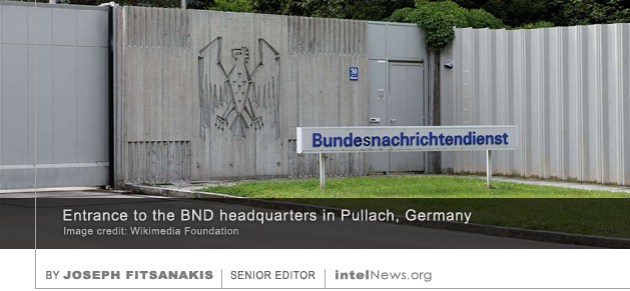
As part of his job, Klaus L. traveled frequently to countries in Africa, Asia and Europe, as well as former Soviet states. It is also believed that, for over 50 years, he had worked as a paid informant for the German Federal Intelligence Service (BND) —Germany’s foreign intelligence agency, which is equivalent to the United States Central Intelligence Agency. According to a government press statement, Klaus L. would provide the BND with information relating to his foreign travels, conference attendance and other “certain issues” of interest to the spy agency. In return, the BND allegedly funded some of his travel and conference expenses, and provided him with a regular stipend.

But in the summer of 2010, Klaus L. was allegedly approached by Chinese intelligence during a trip to the city of Shanghai. According to German counterintelligence, he was persuaded by the Chinese to cooperate with Chinese intelligence operatives, and did so until the end of 2019. In November of that year, German police searched his home in Munich, as part of an investigation into his activities. In May of this year, Klaus L. was charged with espionage and on July 5 he was formally arrested.

Interestingly, Klaus L. does not deny that he provided sensitive information to China. He argues, however, that he informed his BND handler about his contacts with the Chinese, and that these were known to German intelligence. He therefore claims that his Chinese contacts were part of a German counterintelligence operation targeting the Chinese government. His trial is scheduled for this fall.

Author: Joseph Fitsanakis | Date: 07 July 2021 | Permalink

China assesses emotions of subjects using AI technology that monitors skin pores

Xinjiang POLICE STATIONS IN CHINA are reportedly experimenting with a new technology that uses artificial intelligence to detect the emotions of subjects, and even monitors their skin pores, according to a source who spoke to the BBC. The source is a software engineer, whose identity has not been disclosed by the BBC. He said he helped install the controversial technology in a number of police stations in the Chinese region of Xinjiang.


Xinjiang, China’s most impoverished region, is home to 12 million Uighurs, most of whom are Muslims. The Chinese state is currently engaged in a campaign to quell separatist views among some Uighurs, while forcibly integrating the general population into mainstream Chinese culture through a state-run program of forcible assimilation. It is believed that at least a million Uighurs are currently living in detention camps run by the Communist Party of China, ostensibly for “re-education”. Xinjiang is often referred to as the world’s most heavily surveilled region.

According to the BBC’s Panorama program, patents filed by Chinese companies point to the development of facial recognition programs that can distinguish subjects by ethnicity, and appear to be “specifically designed to identify Uighur people”. Among them are artificial intelligence systems that are able to detect facial micro-expressions, so as to analyze the emotions of subjects. According to Panorama, some systems even monitor “minute changes” in skin pores on the face of subjects, as a means of detecting micro-expressions. The software then allegedly produces a pie chart that details a subject’s state of mind.

The BBC said it reached out to the Chinese embassy in London, which claimed to have “no knowledge” of these alleged surveillance programs. In a statement issued on Tuesday, the Chinese embassy said that “the political, economic and social rights and freedom of religious belief in all ethnic groups in Xinjiang are fully guaranteed”. It added that people in Xinjiang “live in harmony and enjoy a stable and peaceful life with no restriction to personal freedom”.

Author: Joseph Fitsanakis | Date: 25 May 2021 | Permalink

Chinese state-owned fishing company is cover for spy activities, report claims

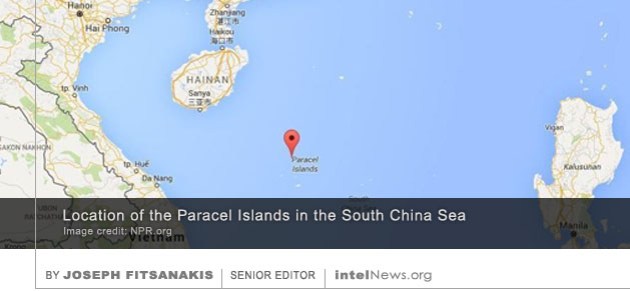
Paracel Islands

A CHINESE STATE-OWNED fisheries enterprise is in reality a front for military-related intelligence activities in the South China Sea, according to a new investigative report. The report was produced by Radio Free Asia (RFA), which is operated by the United States Agency for Global Media —an arm of the United States government. Entitled “Unmasking China’s Maritime Militia”, the report focuses on the Sansha City Fisheries Development Co., which is based on the island of Hainan, China’s southernmost province.

Established in February of 2015, Sansha City Fisheries Development Co. is a municipal state-owned enterprise that carries out industrial-scale fishing operations in the South China Sea. However, having analyzed official Chinese government data, including corporate records and third-party bidding contracts, RFA claims that “the company’s ships are engaged in more than just fishing”. In reality, the fishing company operates as an undercover arm of a shadowy force known as the Sansha City maritime militia, according to RFA.

The Sansha City maritime militia is believed to be headquartered at Woody Island (also known as Yongxing Island), the largest of the Paracel Islands in the South China Sea. It was allegedly established in 2013, with the goal of protecting China’s maritime claims in a region where Beijing is competing for influence against Malaysia, Philippines, Taiwan and Vietnam, among other regional actors. Today the maritime militia is said to consist of over 100 vessels and nearly 2,000 militiamen and women.

According to RFA, Sansha City Fisheries Development is known to prioritize hiring veterans of the Chinese People’s Liberation Army. Moreover, a number of service contracts signed between the state-owned fishing company and third party providers appear to include “state secrets protection” clauses, which typically refer to classified programs for the Chinese military or intelligence services. In recent years, at least two of the company’s ships were used to test classified information systems and command and communications systems, which “transformed [them into] mobile communications and surveillance platform[s] capable of transmitting intelligence back to the authorities on land”, according to RFA.

It should be noted that the Chinese government disputes these allegations. The RFA report quotes part of a statement by the Chinese embassy in the Philippines, which claims that “[t]here is no Chinese Maritime Militia as alleged”.

Author: Joseph Fitsanakis | Date: 20 May 2021 | Permalink

Belgian minister raises spy concerns about Chinese e-retail center at Liege airport

Liège Airport

BELGIUM’S MINISTER OF JUSTICE has raised espionage concerns about a new logistics hub that is under construction in eastern Belgium by a firm operating on behalf of Chinese e-commerce giant Alibaba. The hub is currently being built on a lot adjacent to the Liège Airport, which is situated 25 miles southwest of the Dutch city of Maastricht.

Based in the Chinese province of Zhejiang, Alibaba is a multinational technology firm that specializes in e-commerce and e-retail. It is often described as the Chinese version of the American e-retail giant Amazon. Today it is among the world’s 10 wealthiest companies and among the 30 largest public firms in the world. In its effort to expand its area of operations beyond Asia, Alibaba recently announced the construction of six global logistics hubs, which will enable it to deliver products anywhere in the world within 72 hours.

Scheduled to become operational by the end of this year, the logistics center in Liège is part of that larger effort by Alibaba. When completed, the center will be operated by Cainiao, which is Alibaba’s logistics arm. When it was announced last year, the project was praised by Belgian officials in the state of Wallonia, where the hub will be based, as a great innovation that will create new jobs and other employment opportunities for local people.

But now Belgium’s Justice Minister, Vincent Van Quickenborne, has expressed concerns about the project. Speaking last Thursday before the Belgian Federal Parliament’s Committee on Justice, Van Quickenborne was asked by a parliamentarian whether the Alibaba hub posed security concerns for the state. The minister responded saying that the placement of Chinese workers and logisticians at the hub could potentially be exploited by the Chinese government to plant intelligence operatives at the airport. Additionally, the logistics center could have access to commercial and personal data of Alibaba’s European customers, and could share them with Beijing, said Van Quickenborne.

The minister claimed that, like every other Chinese firm, Alibaba is obligated to “obey the Chinese security apparatus” and hire government spies as employees when asked to do so. He added that “this interest [by the Chinese state] is not limited to intelligence and security purposes but can be viewed within a broader political and economic framework”. Van Quickenborne concluded his remarks by saying that his ministry had been warned by the Surete de l’Etat —Belgium’s counterintelligence agency— of the security dangers embedded in China’s growing economic influence in the country.

On Friday a press statement issued by the embassy of China in Brussels decried Van Quickenborne’s comments as “baseless allegations” that harmed relations between Belgium and China. The statement added that, contrary to reports in the Western media, the Chinese state does not “demand Chinese enterprises to engage in activities that breach local laws or regulations”.

Author: Ian Allen | Date: 10 May 2021 | Permalink

Chinese technology firm denies it had access to Dutch government’s phone calls

Huawei PolandA LEADING CHINESE TELECOMMUNICATIONS firm has strongly denied a claim by a newspaper that its service personnel could listen in on calls made by Dutch telephone users, including senior government officials. The report dates from 2010 and was authored by consultancy firm Capgemini on behalf of KPN, one of Holland’s largest telecommunications service providers. The Rotterdam-based firm had hired Capgemini to conduct a risk analysis on whether more equipment should be purchased from Chinese telecommunications giant Huawei. By that time the Chinese company, one of the world’s largest in its field, was already supplying KPN with hardware and software equipment.


According to the newspaper De Volkskrant, which accessed the 2010 Capgemini report, the consultants cautioned KPN against purchasing more equipment from Huawei. They told KPN bosses that the Chinese firm had “unlimited access” to the content of phone conversations by subscribers through Huawei-built hardware and software that was already present in the Dutch company’s telephone system. These included Holland’s then-Prime Minister, Jan Peter Balkenende, and virtually every government minister. The report claimed that privacy standards existed in theory, but there was no mechanism in place to ensure that they were being followed.

On Tuesday, Huawei issued strong denials of the De Volkskrant report. The firm’s chief operating officer in the Netherlands, Gert-Jan van Eck, said that the Capgemini report allegations, as reported by the newspaper, were “just not [technically] possible”. Van Eck added that such claims were “patently untrue” and represented “an underestimation of the security of the interception environment” that Huawei was operating under in Europe. The Dutch government has made no comment on the De Volkskrant report.

Author: Joseph Fitsanakis | Date: 21 April 2021 | Permalink

Taiwan files charges against couple identified by Chinese defector as alleged spies

Wang Liqiang

AUTHORITIES IN TAIWAN HAVE filed money-laundering charges against a Chinese couple, who were identified as spies by a man who defected to Australia in 2019, claiming to be a Chinese intelligence operative. Wang “William” Liqiang, 28, from China’s eastern Fujian province, defected to Australia in October of 2019, while visiting his wife and newborn son in Sydney. He and his family are currently believed to be living under the protection of the Australian Security Intelligence Organization (ASIO).

In a 17-page sworn statement filed shortly after his defection, Wang reportedly gave details of his work as an undercover intelligence officer for Chinese military intelligence. He is also said to have shared the identities of senior Chinese intelligence officers in Taiwan and Hong Kong, and to have explained how they carry out espionage operations on behalf of Beijing. Some media reports claimed that Mr. Wang had shared details about deep-cover Chinese intelligence networks in Australia. Wang also claimed that he worked for a Hong Kong-based company called China Innovation Investment Limited (CIIL), which was in reality a front company set up to provide proprietary cover for Chinese spies like himself.

The Chinese government responded to Wang’s allegations by publicly calling him a “fraud” and claiming that his Chinese passport and Hong Kong identity papers were forgeries. Meanwhile, CIIL filed legal action against Wang for libel and spreading malicious falsehoods. But that did not stop Taiwanese authorities from arresting CIIL’s directors, Xiang Xin and Gong Qing, on November 24, 2019. The directors, a married couple, were about to board an international flight at Taiwan’s Taoyuan Airport, when they were detained by members of the country’s Investigation Bureau. Following their detention, they were barred from leaving the country until further notice.

Under Taiwanese law, authorities in the island country had until April 14 of this year to file charges against the couple, or allow them to leave the country. On Thursday, the Office of the Taipei District Prosecutor announced that money laundering charges had been filed against the two CIIL directors. According to the indictment, the couple used nearly $26 million that they allegedly acquired illicitly from China, in order to purchase three luxury apartments in Taipei’s affluent Xinyi district. Additionally, the Prosecutor’s office said the two Chinese citizens continue to be under investigation for potentially violating Taiwan’s National Security Act.

Author: Joseph Fitsanakis | Date: 09 April 2021 | Permalink