Son of senior CIA official dies ‘fighting for Russia’ in Ukraine

CIA Directorate of Digital InnovationA 21-YEAR-OLD American citizen, whose mother is a senior Central Intelligence Agency (CIA) official, died while fighting with the Russian military in Ukraine in 2024, according to a news report. Late last week, the CIA confirmed the accuracy of the story while requesting that the media afford the bereaved family “privacy at this difficult time”.

On April 25, the independent Russian media website Important Stories (known as iStories) claimed that Michael Gloss, 21, the son of CIA Deputy Director for Digital Innovation Gallina Gloss, had “died within the borders of Ukraine” while fighting for the Armed Forces of the Russian Federation. Although his death had occurred in April 2024, the information about his American citizenship and his connection to the CIA had been kept from the media until the iStories report disclosed it to the public.

Later on the same day, a spokesperson for the CIA told NBC News that the spy agency was aware of the incident, which had been treated “as a private family matter for the Gloss family, not a national security issue”. The CIA spokesperson added that Michael Gloss had “struggled with mental health issues” and relayed the Gloss family’s wish for “privacy at this difficult time”.

According to iStories, Michael Gloss voiced strong support for Ukraine early in the Russo-Ukrainian war. He eventually traveled to Europe on his own, joining the Rainbow Family, a modern-day hippie movement with roots in late-1960s counterculture. Gloss eventually traveled across Turkey, where he reportedly began posting increasingly pro-Russian messages and strong criticism of the United States on his social media accounts.

In the summer of 2023, Gloss began posting stories and images from Russia. In one instance, he stated in a social media post that he had decided to “defeat mortality and the military-industrial complex”. Shortly afterwards he enlisted in the Russian army and began posting photos and videos from his military training alongside other international volunteers. He also began participating on Russian social media platforms, such as VKontakte, where he expressed strong support for the Russian war effort and blasted what he referred to as “Western propaganda” about Ukraine and its government.

According to iStories, Michael Gloss “died within the borders of Ukraine”, though it is not known whether he participated in any fighting. An obituary published by his family in the United States makes no mention of his enlistment in the Russian military, stating only that he was “tragically killed in Eastern Europe on April 4, 2024”, while “forging his own hero’s journey”.

Author: Joseph Fitsanakis | Date: 28 April 2025 | Permalink

Is Trump signaling possible CIA covert operations against drug cartels?

CJNGTHERE WERE REPORTS LATE on Monday that United States President Donald Trump was considering authorizing covert operations by the Central Intelligence Agency (CIA) against drug cartels. During his inaugural address on Monday afternoon, Trump said he would be “designating the cartels as foreign terrorist organizations”. Later the same day, the incoming president signed an executive order to that effect.

According to US law, the Foreign Terrorist Organization (FTO) designation may be applied to non-US organizations which participate in activities that fall under the US Department of State’s definition of terrorism. Historically the FTO list has included leftwing militant groups, armed nationalist or separatist organizations, as well as Islamist violent extremist groups.

In some cases, FTO organizations have actively participated in the manufacture and distribution of illicit drugs. However, they are distinguished from purely criminal organizations by the overarching political motives that guide their activities. In contrast, drug cartels are primarily motivated by financial profit and tend to engage in politics only to the extent that doing so will boost their money-making ability.

While signing his executive order on Monday evening —one of nearly a hundred he signed that day— President Trum said he would instruct his administration “to use the full and immense power of federal and state law enforcement to eliminate the presence of all foreign gang criminal networks” from the US and Mexico.

According to some observers, the FTO designation is “a strong indication” that the new US president plans to issue a presidential finding —a classified directive issued by the commander-in-chief— authorizing the CIA to engage in covert action targeting the drug cartels. A number of Trump allies have reportedly compiled a list of targeted cartels, which are located mostly in Mexico. They include notorious criminal organizations, such as the Cartel Jalisco Nueva Generación (CJNG), the Sinaloa Cartel, and the Gulf Cartel.

Additionally, the FTO designation might constitute the first step toward an American military presence inside Mexico, or missile strikes directed against designated FTO strongholds, including drug production and storage facilities. In November of last year, there were reports in the American media claiming that key figures in the incoming Trump administration were contemplating launching a military invasion of northern Mexico.

Author: Joseph Fitsanakis | Date: 21 January 2025 | Permalink

US-based Afghan man who planned election-day attack ‘worked as CIA guard’

CIAAN AFGHAN NATIONAL BASED in the United States, who was allegedly planning to carry out a terrorist attack during the upcoming Election Day, previously worked for the Central Intelligence Agency (CIA) as a guard, reports claim. According to the US Department of Justice, Nasir Ahmad Tawhedi, 27, was arrested by the Federal Bureau of Investigation (FBI) on October 7, alongside a number of co-conspirators who have so far not been named.
Tawhedi’s arrest occurred shortly after he purchased two AK-47 assault rifles, 10 magazines, and several rounds of ammunition from an FBI employee posing as a seller of the merchandise. The suspect allegedly told at least two FBI informants working on the case that he intended to use the weaponry to target “large gatherings of people” on Election Day. Tawhedi is also reported to have boasted that he expected to die in the attack. His indictment suggests that he planned to carry out the attack on behalf of the Islamic State of Iraq and al-Sham (ISIS).

Tawhedi has lived in the US for a little over three years, having arrived on US soil soon after Washington began withdrawing its forces from Afghanistan, following a two decades-long military campaign. Like thousands of other Afghans, Tawhedi was able to enter the US through an emergency entry privilege known as a “humanitarian parole”. He then applied for a Special Immigrant Visa, which is customarily offered by the US government as a form of protection to foreign nationals who have provided services to its military and security agencies. According to reports, Tawhedi’s Special Immigrant Visa application had been approved and was in the last stages of being officially issued.

Last week, the American television network NBC reported that Tawhedi had been employed as a guard by the CIA in Afghanistan. The network cited “two sources with knowledge of the matter”. Later on the same day, another American television network, CBS News, said it had been able to independently verify the earlier report by NBC. It is notable that, according to both NBC and CBS, Tawhedi worked as a guard for a CIA facility, rather than an informant or an asset for the intelligence agency.

The recent media reports about Tawhedi have yet to answer the question of whether he had been communicating with identifiable ISIS handlers, or whether he was independently radicalized through his online activity. It is also not known whether Tawhedi was a supporter or an affiliate of ISIS during his stint with the CIA, or whether he became radicalized after arriving in the US in September 2021.

Author: Joseph Fitsanakis | Date: 14 October 2024 | Permalink

Ex-CIA analyst accused of spying for South Korea had prior warnings from FBI, CIA

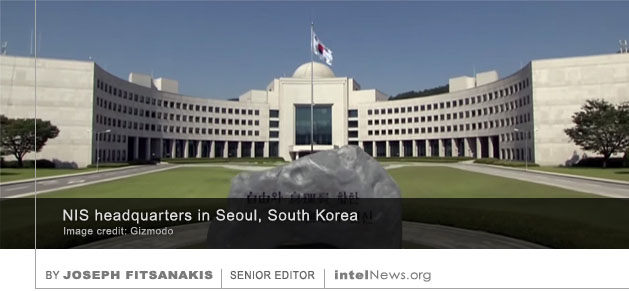
NIS South KoreaA FORMER INTELLIGENCE ANALYST for the Central Intelligence Agency (CIA), who is married to a high-profile columnist for The Washington Post, remains under arrest for allegedly spying for South Korea. According to an indictment unsealed last Tuesday in the Southern District of New York, the former CIA analyst is Sue Mi Terry, 54, of New York. Terry is a naturalized American citizen born in Seoul, South Korea, who grew up in Virginia and received a PhD from Tufts University in Massachusetts.

Terry joined the CIA in 2001 but resigned in 2008, allegedly “in lieu of termination” because her employer “had ‘problems’ with her contact with” officers from South Korea’s National Intelligence Service (NIS). After leaving the CIA, Terry worked briefly for the National Security Council and the National Intelligence Council, before transitioning to academia. Her most recent post was that of a senior fellow at the Council on Foreign Relations, where she became known as an exert on East Asian affairs with a focus on the Korean Peninsula. For over a decade, Terry has made frequent appearances on television and radio, as well as on several podcasts. She is married to the Washington Post columnist Max Boot.

The Department of Justice accuses Terry of failing to register under the Foreign Agents Registration Act and deliberately conspiring to violate that law, thus effectively operating as an unregistered agent of a foreign power. The indictment claims that Terry was gradually recruited by the NIS, beginning in 2013, two years after she stopped working for the United States government. Terry allegedly continued to work for the NIS for a decade, during which she was handled by NIS intelligence officers posing as diplomats in South Korea’s Washington embassy and permanent mission to the United Nations in New York.

It is alleged that throughout that time Terry provided her NIS handlers with access to senior US officials, disclosed “nonpublic US government information” to the NIS, and promoted pro-South Korean policy positions in her writings and media appearances. In return, Terry is alleged to have received luxury goods, free dinners at expensive restaurants, and nearly $40,000 in “covert” funding, nominally to operate a public policy program on Korean affairs. It is worth noting that, according to the unsealed indictment, the Federal Bureau of Investigation warned Terry that she should be wary of being approached by NIS officers seeking to offer her funding. Read more of this post

CIA director secretly visits Somalia and Kenya amidst rising tensions in East Africa

Al-Shabaab - IAWILLIAM BURNS, DIRECTOR OF the United States Central Intelligence Agency (CIA), reportedly visited in secret at least two East African nations last week, amidst growing tensions and instability in the region. The trip was confirmed by both the Kenyan and Somali governments after Burns had already returned to the United States.
Reports indicate that Burns held a high-level meeting on Monday in Nairobi with Kenyan President William Ruto and Noordin Haji, the director of Kenya’s National Intelligence Service. The United States Ambassador to Kenya, Margaret Whitman, was also reportedly present at the meeting. Later in the week, on Thursday, the CIA director met with Somali President Hassan Sheikh Mohamud in Mogadishu before departing for the United States.

The specific details of the discussions during Burns’ visit remain undisclosed, leading to considerable speculation. Notably, it is highly unusual for senior American intelligence officials to personally visit sub-Saharan Africa, as the CIA typically communicates with the local governments through station chiefs or American ambassadors. Burns’ in-person visit suggests compelling reasons for the direct engagement.

According to some Kenyan news outlets, discussions encompassed the escalating instability in sub-Saharan Africa, which are stemming from various sources. These include the ongoing conflict in Sudan between government-aligned forces and militias loyal to the paramilitary Rapid Support Forces. Additionally, there is growing turmoil in the Democratic Republic of Congo after last month’s elections, resulting in the re-election of President Félix Tshisekedi. Disputes over the election’s fairness have led to military deployments to maintain peace amid rising tensions throughout the country.

Washington’s concerns also revolve around the continuing presence of al-Shabaab in East Africa. Operating in Somalia, al-Shabaab, an al-Qaeda-linked armed group, engages in conflict with the Somali government and is responsible for several terrorist attacks in Kenya. The United States currently has around 500 military advisors in Somalia, supporting the Somali government in its efforts against al-Shabaab.

Notably, the CIA has not issued an official statement regarding Burns’ visit to East Africa.

Author: Ian Allen | Date: 22 January 2024 | Permalink

Ukraine’s spy services are using assassinations as weapons or war, report claims

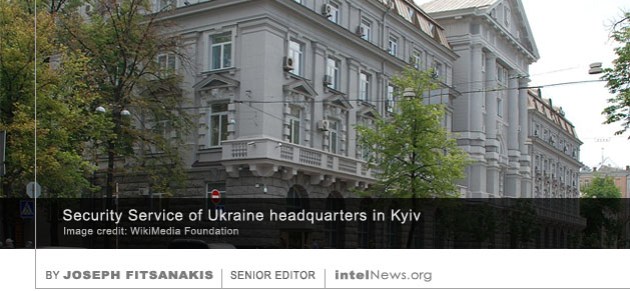
Security Service of Ukraine SBUTHE GROWING LIST OF assassinations of prominent Russians and Ukrainian separatists shows that the Ukrainian intelligence services are using “liquidations” as a weapon of war, according to The Washington Post. Citing “current and former Ukrainian and United States officials”, the paper said on Monday that funding and training by the Central Intelligence Agency (CIA) explains much of the success of Ukraine’s covert operations against Russia. However, the CIA is not involved in Ukraine’s state-sponsored assassination efforts at the operational level, and some US officials are uneasy about these activities.

A CIA Spy Directorate in Ukraine

In 2014, when Russia invaded Crimea, Ukrainian intelligence services were in an almost paralytic state. Like most of Ukraine’s state sector, the intelligence agencies were endemically bloated and closely resembled Soviet-style bureaucracies in sluggishness and corruption. More importantly, they were “riddled with Russian spies, sympathizers and turncoats”, according to observers. Few were surprised when, almost as soon as Russia annexed Crimea, the local head of the domestic security agency, the Ukrainian Security Service (SBU) defected to Russia.
According to The Washington Post, immediately after the Russian invasion of Crimea, the CIA sought to prevent further Russian encroachment in Ukraine. That is why in 2015 it built the SBU’s Fifth Directorate. That entirely new directorate was —and today remains— insulated from the rest of the SBU. The CIA also reportedly built a new division, complete with a brand-new headquarters building, inside Ukraine’s Main Directorate of Intelligence (GUR), which operates as the intelligence wing of the Ministry of Defense.

Active-Measures Training

Seeing the GUR as a more agile and flexible agency than the SBU, the CIA began to train GUR paramilitary “spetsnaz” divisions in “active measures” —a term that describes methods of political warfare, ranging from propaganda, sabotage operations, and even assassinations. However, The Washington Post claims that the CIA training focused on “secure communications and tradecraft” with an eye to enabling GUR teams to operate covertly behind enemy lines using clandestine maneuvers. Targeted assassinations were not included in the training. Read more of this post

NSA, CIA senior officials address artificial intelligence threats and opportunities

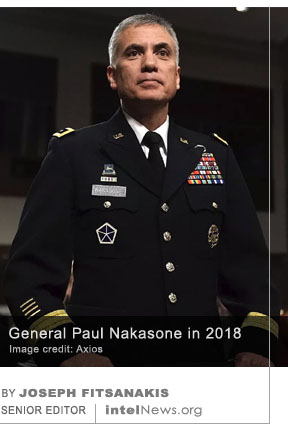
Paul NakasoneLAST WEEK, TWO SENIOR UNITED States intelligence officials shared rare insights on artificial intelligence, as they discussed some of the opportunities and threats of this new technological paradigm for their agencies. On Wednesday, Lakshmi Raman, Director of Artificial Intelligence at the Central Intelligence Agency, addressed the topic during an on-stage interview at Politico’s AI & Tech Summit in Washington, DC. On Thursday, the National Security Agency’s outgoing director, Army General Paul Nakasone, discussed the same subject at the National Press Club’s Headliners Luncheon in the US capital.
Nakasone (pictured) noted in his remarks that the US Intelligence Community, as well as the Department of Defense, have been using artificial intelligence for quite some time. Thus, artificial intelligence systems are already integral in managing and analyzing information on a daily basis. In doing so, such systems contribute in important ways to the decision-making by the NSA’s human personnel. At the same time, the NSA has been using artificial intelligence to develop and define best-practices guidelines and principles for intelligence methodologies and evaluation.

Currently, the United States maintains a clear advantage in artificial intelligence over is adversaries, Nakasone said. However, that advantage “should not be taken for granted”. As artificial intelligence organizational principles are increasingly integrated into the day-to-day functions of the intelligence and security enterprise, new risks are emerging by that very use. For this reason, the NSA has launched its new Artificial Intelligence Security Center within its existing Cybersecurity Collaboration Center. The mission of the Cybersecurity Collaboration Center is to develop links with the private sector in the US and its partner nations to “secure emerging technologies” and “harden the US Defense Industrial Base”.

Nakasone added that the decision to create the Artificial Intelligence Security Center resulted from an NSA study, which alerted officials to the national security challenges stemming from adversarial attacks against the artificial intelligence models that are currently in use. These attacks, focusing on sabotage or theft of critical artificial intelligence technologies, could originate from other generative artificial intelligence technologies that are under the command of adversarial actors.

Last Wednesday, the CIA’s Raman discussed some of the ways that artificial intelligence is currently being put to use by her agency to improve its analytical and operational capabilities. Raman noted that the CIA is developing an artificial intelligence chatbot, which is meant to help its analysts refine their research and analytical writing capabilities. Additionally, artificial intelligence systems are being used to analyze quantities of collected data that are too large for human analysts to manage. By devoting artificial intelligence resources to the relatively menial and low-level tasks of data-sifting and sorting, the CIA enables its analysts to dedicate more time to strategic-level products.

At the same time, however, the CIA is concerned about the rapid development of artificial intelligence by nations such as China and Russia, Raman said. New capabilities in artificial intelligence, especially the generative kind, will inevitably provide US adversaries with tools and capabilities that will challenge American national security in the coming years, she concluded.

Author: Joseph Fitsanakis | Date: 02 October 2023 | Permalink

Chinese government arrests second alleged CIA spy in 10 days

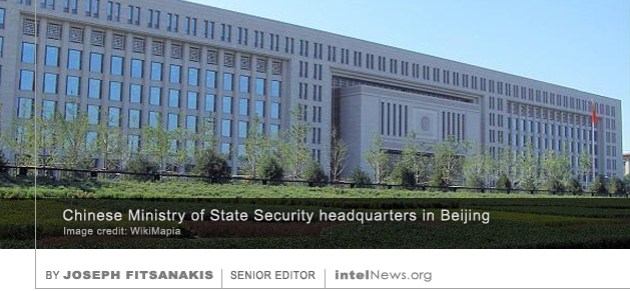
Chinese Ministry of State SecurityFOR THE SECOND TIME in 10 days, the government of China has announced the arrest of a Chinese government employee on suspicion of spying for the United States Central Intelligence Agency (CIA). In a statement issued on Monday, China’s civilian intelligence agency, the Ministry of State Security (MSS), said it had launched an investigation into an official of a government ministry, who was allegedly caught conducting espionage on behalf of the CIA.

The MSS statement did not name the government ministry where the alleged spy works. But it identified the accused by his surname, Hao, describing him as a 39-year-old Chinese national. According to the MSS statement, Hao spent a number of years as a graduate student in Japan. While he was studying in Japan, he allegedly visited the United States embassy in Tokyo, in order to apply for a travel visa. During his visit to the embassy, he met a United States embassy official, who befriended him.

Over time, Hao allegedly formed a close relationship with the unnamed American embassy official. The latter treated him to meals, sent him gifts in the mail, and secured funds for him to conduct research. Eventually, the embassy official introduced Hao to another American official, who, according to the MSS, was a CIA case officer. The CIA case officer allegedly recruited Hao to spy for the United States and instructed him to seek employment at “a core and critical department” of the government upon his return to China.

After completing his studies in Japan, Hao returned to China and secured employment in a government agency. He continued to meet regularly with his alleged CIA handler and other CIA officers, who to whom he “provided intelligence” in return for “espionage funds”, according to the MSS statement. The statement said that Hao’s case remains under investigation and that no official charges have yet been filed.

The MSS statement about Hao’s case came exactly 10 days after the spy agency posted on its WeChat social media account that it had caught another government official spying for the CIA. On August 11, the MSS said it had detained an alleged CIA spy named Zeng, whom it described as a 52-year-old “staff member of a Chinese military industrial group and an important confidential employee” of the Chinese state. Zeng had reportedly been sent to Italy by his employer, presumably in order to pursue graduate studies or receive technical training. While in there, he was allegedly accosted and eventually recruited by an employee of the United States embassy in Rome.

It is not known if the two cases are in any way connected. Government officials in Washington and at the United States embassy in Beijing have not commented on the story.

Author: Joseph Fitsanakis | Date: 23 August 2023 | Permalink

China arrests government worker who gave CIA ‘core information’ about military

US embassy Rome ItalyA CHINESE GOVERNMENT EMPLOYEE gave “core information” about China’s military to the United States, after he was recruited by a Central Intelligence Agency (CIA) officer in Italy, a Chinese state agency has said. The allegation was made in a statement that was issued on Friday by China’s civilian intelligence agency, the Ministry of State Security (MSS), on its WeChat social media account.
The MSS statement did not specify the period during which the alleged espionage took place. But it named the alleged spy as “Zeng” and described him as a 52-year-old “staff member of a Chinese military industrial group and an important confidential employee” of the Chinese state. According to China’s state-owned newspaper The Global Times, Zeng had been sent to Italy by his employer, presumably in order to pursue graduate studies or receive technical training. While in Italy, Zeng was allegedly accosted by an employee of the United States embassy in Rome, which the MSS identified as “Seth”.

According to the MSS, Seth was a CIA case officer, who befriended Zeng through “dinner parties, outings and trips to the opera”. The Chinese man “developed a psychological dependence” on Seth and was “indoctrinated” by him “with Western values”, the MSS statement claims. Seth eventually convinced Zeng to sign an agreement with the CIA to conduct espionage, after which the Chinese man allegedly received intelligence tradecraft training. Upon returning to China from his stay in Italy, Zeng is alleged to have carried out espionage on behalf of his CIA handlers. The MSS claims Zeng gave his CIA handlers “a great amount of core intelligence” during “multiple secret meetings” with them.

The information Zeng is alleged to have provided to the CIA concerned “key developments about China’s military” to which he had access through his employer. In exchange for this information, Zeng is accused of having received “a huge amount of [financial] compensation” by his CIA handlers. The latter also promised him that they would help his family emigrate to the United States, as per the MSS statement. The spy agency said that Zeng remains in detention while the case is under investigation. The MSS statement also warned other Chinese citizens living or traveling abroad of “the risks and perils” of recruitment by Western spy agencies.

The Reuters news agency said it contacted the United States embassy in Beijing about the MSS allegations, but received no response.

Author: Joseph Fitsanakis | Date: 14 August 2023 | Permalink

Russian intelligence planned to assassinate SVR defector living in the United States

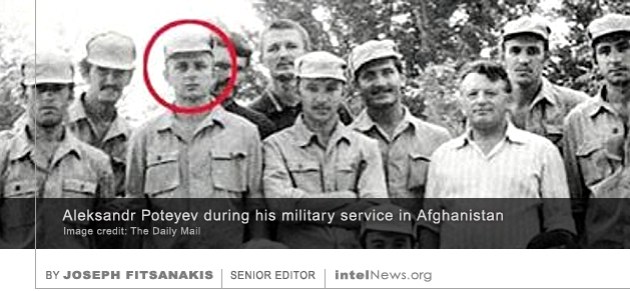
Aleksandr PoteyevTHE RUSSIAN INTELLIGENCE SERVICES planned to assassinate a Russian former intelligence officer, who had defected to the United States and was living in an apartment complex in Florida, according to a new report. The alleged assassination plan is discussed in the forthcoming book Spies: The Epic Intelligence War Between East and West (Simon and Schuster), authored by Harvard University academic Calder Walton.
According to Dr. Walton, Russian intelligence targeted Aleksandr Poteyev, who served as Deputy Director of the Russian Foreign Intelligence Service (SVR) from 2000 until 2010. Poteyev was reportedly in charge of the SVR’s Directorate “S”, which oversees the work of illegals —a term that refers to SVR operations officers who work in without official cover around the world. It is believed that Poteyev began working for the United States Central Intelligence Agency (CIA) in 1999, as an agent-in-place.

By 2010, when he openly defected to the United States, Poteyev had provided the CIA with information that led to the high-profile arrest of 10 Russian illegals by the Federal Bureau of Investigation (FBI). Some believe that the SVR defector was also responsible for the arrests of Russian spies in Germany and Holland. In 2011, a Russian court tried Poteyev in absentia and sentenced him to 25 years in prison. Poteyev remains at large and is believed to be living in the United States under the protection of the CIA’s National Resettlement Operations Center.

On Monday, The New York Times reported that it had independently confirmed Dr. Walton’s claims, with the help of “three former senior American officials who spoke” to the paper “on the condition of anonymity”. According to The Times, a 2016 report by the Moscow-based Interfax news agency, which claimed that Poteyev had died in the United States, was part of a deliberate disinformation operation by the SVR, which was aimed at enticing the defector to emerge from his hideout.

When that attempt failed, the SVR allegedly recruited a Mexican scientist who lived in Singapore, Hector Alejandro Cabrera Fuentes, to travel to Miami, Florida, in 2020, in order to locate Poteyev. But Fuentes attracted the attention of the authorities while driving around in Miami and was subsequently detained by US Customs and Border Protection agents as he was trying to board a flight to Mexico City. Fuentes then provided details of his mission to the FBI. The Bureau eventually determined that the goal of the SVR had been to assassinate Poteyev.

According to The New York Times, the realization that the SVR had planned to carry out an assassination operation on American soil “spiraled into a tit-for-tat retaliation by the United States and Russia”, which included cascading sanctions and diplomatic expulsions on both sides. The paper reports that, in April 2021, the White House ordered the expulsion of 10 Russian diplomats from the United States, including the SVR’s chief of station, who had two years left on his Washington, DC, tour. The Kremlin responded by expelling an equal number of American diplomats from Russia, including the CIA station chief in Moscow.

Author: Joseph Fitsanakis | Date: 21 June 2023 | Permalink

U.S., Russian spy agencies publish rival ads encouraging would-be informants

Russia Ukraine WarRIVAL ONLINE CAMPAIGNS BY American and Russian intelligence agencies are encouraging each other’s citizens to contact them, share information and possibly even defect. At least three ads have been  on social media, with the Federal Bureau of Investigation (FBI) issuing the earliest one in February of this year. The Central Intelligence Agency (CIA) and its Russian counterpart, the Foreign Intelligence Service (SVR), are now believed to have published similar ads.
The FBI ad initially appeared on Twitter, directing users to the website of the Bureau’s Washington Field Office. There, a text in Cyrillic urges Russian nationals to “change [their] future” by contacting the FBI. The CIA followed suit on Monday of this week by posting a video on its new channel on Telegraph, a popular social media platform among young Russians. The CIA video portrays frustrated Russian government employees morally torn by the Kremlin’s policies. It concludes with them contacting the CIA through a secure online connection. A narrator’s voice states, “my family will live with dignity thanks to my actions”. Viewers are then assured that their safety is the CIA’s highest priority, should the choose to do the same.

Shortly after the CIA video appeared online, the Russian Ministry of Foreign Affairs’ Director of Information, Maria Zakharova, said that the Russian government would respond “appropriately” to what she called a “CIA provocation”. On Wednesday, a number of Western media outlets reported that the SVR had unveiled a short recruitment video seemingly targeting Americans. The video, shared on Telegram, includes archival news footage of United States military and police personnel, flag-burning demonstrators, and protests against abortions. It concludes with footage of President Joe Biden overlaid with a sniper crosshairs. A narrator states in English: “If you want to help normalcy, help the Foreign Intelligence Service of the Russian Federation”.

Amid the ongoing war in Ukraine, both the United States and Russia are engaging in extensive cyber-enabled operations aimed at each other’s targets. However, these recruitment videos underscore the continued need for highly placed human sources and their central role in multi-platform intelligence collection efforts.

Author: Joseph Fitsanakis | Date: 18 May 2023 | Permalink

Espionage allegations prompt sharp exchanges between ex-CIA officials

CIAA BOOK BY A former Central Intelligence Agency (CIA) case officer, which alleges that a senior Agency official sabotaged American counterintelligence efforts on orders from Moscow, has prompted a series of fiery exchanges by retired CIA personnel. The primary figures in the dispute are the book’s author, Robert Baer, and Paul J. Redmond, who served as the CIA’s Associate Deputy Director of Operations for Counterintelligence.
Baer’s book, The Fourth Man: The Hunt for a KGB Spy at the Top of the CIA and the Rise of Putin’s Russia (Hachette Books, May 2022), focuses on the period following the arrests of three American intelligence insiders, who were found to have spied for the Kremlin: Federal Bureau of Investigation (FBI) agent Robert Hanssen, and CIA officers Aldrich Ames and Edward Lee Howard. By 2002, Hanssen and Ames were serving life sentences for espionage, while Howard had died in Russia where he had fled while under investigation by the FBI. Collectively, these three had been responsible for some of the CIA’s gravest operational setbacks against the Soviet KGB and its Russian successor agencies.

Some in the CIA, however, remained convinced that not all of the CIA’s failures in the 1980s and 1990s could be explained away in this fashion. They held on to the suspicion that Moscow had been able to recruit a senior CIA executive, who —among other things— had sabotaged numerous probes by some of the Agency’s most committed spy-hunters. Baer’s book discusses how, in the mid-1990s, the CIA’s Directorate of Operations actively pursued those suspicions, by setting up a Special Investigations Unit (SIU). This new unit was led by one of the CIA’s most talented counterintelligence officers, Paul Redmond.

CONTROVERSY

This is precisely the point at which Baer’s book turns wildly controversial: it alleges that the missing spy, whom Baer refers to as “the fourth man”, is none other than Redmond himself. The retired CIA case officer further alleges that even the SIU eventually concluded that Redmond —i.e. its leading member— was a spy for Moscow. The author claims that the SIU presented those findings at a briefing with Redmond among the audience. The presentation prompted Redmond to storm out of the meeting, Baer alleges.

Importantly, Baer describes his case as “inconclusive”, and claims that he relies on information from some of his former CIA colleagues. He also admits that the very idea of a “fourth man” may be nothing more than a chimera. Nevertheless, the SIU probe did occur. It also appears that the FBI opened an investigation into the matter in 2006. Baer claims to have received a visit by two FBI agents in 2021, in which he was asked about what he knew about Raymond. This, he says, left him with the impression that some sort of counterintelligence effort to find the “fourth man” was “ongoing then and is continuing” now. Moreover, according to Baer, this counterintelligence investigation is no longer confined in-house at CIA; the FBI has now taken the lead.

REDMOND’S SIDE RESPONDS

Remarkably, Baer appears to have spoken to Redmond at least twice while preparing his book. On each occasion, the retired CIA senior executive fiercely rejected Baer’s claims that he was a spy for Moscow. In recent months, Redmond voiced his dismay at Baer’s claims publicly. As SpyTalk reports, the first time Redmond spoke publicly about Baer’s book was in November of last year, during an event held by the Association of Former Intelligence Officers. Read more of this post

CIA helped Ukraine foil two Russian plots on Zelenskyy’s life, new book claims

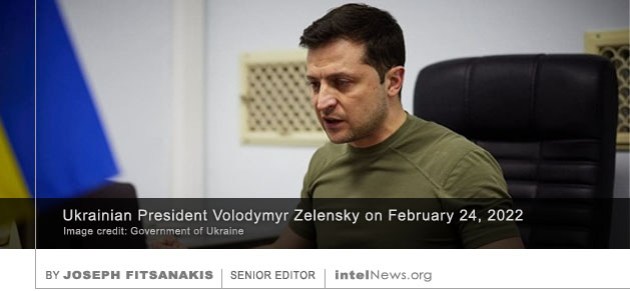
Volodymyr ZelenskyINFORMATION PROVIDED BY THE United States Central Intelligence Agency helped Kyiv foil two Russian plots against the life of Ukraine’s President, Volodymyr Zelenskyy, in the crucial early stages of the Russo-Ukrainian war, according to a new book. The claim is made in The Fight of His Life – Inside Joe Biden’s White House (Scribner) by Chris Whipple, the longtime investigative writer behind several books on American intelligence —most recently The Spymasters How the CIA Directors Shape History and the Future (2021, also by Scribner). Whipple’s latest book is scheduled for release today.
Throughout late 2021 and early 2022, the government of President Zelenskyy repeatedly dismissed American warnings, which came as early as November 2021, that Moscow was preparing to launch an unprovoked military invasion of Ukraine. Zelenskyy himself urged Washington to temper its public warnings about a possible war, because they were creating an atmosphere of panic in Ukrainian business circles. In his public statements, the Ukrainian leader insisted that Kyiv had a long history of facing —and staying calm in the face of— Russian threats against his country.

All that changed in January of 2022, just weeks before Russia launched its invasion of Ukraine. According to Whipple, Zelenskyy received a secret visit by CIA director William Burns. The two men met in Zelenskyy’s office in Kyiv, where Burns told the Ukrainian leader that he had been authorized by United States President Joe Biden to share with him “precise details of […] Russian pots”. According to Whipple, these plots were not only against Ukraine, but were aimed at Zelenskyy himself. This information, Whipple claims, “immediately got Zelenskyy’s attention; he was taken aback, sobered by this news”. Whipple suggests that the information Burns shared with Zelenskyy was specific enough to surprise and alarm the Ukrainian president. According to Whipple, the CIA’s information about the Kremlin’s assassination plots was “so detailed, that it would help Zelenskyy’s security forces thwart two separate […] attempts on his life” by Russian Special Forces.

The author further claims that the CIA also shared with Ukraine a precise “blueprint of [Russian President Vladimir] Putin’s invasion plan”. The intelligence given to Ukraine by the CIA included the Kremlin’s plans to attack the Antonov International Airport (also known as Hostomel Airport) northwest of Kyiv. The intelligence contributed substantially to Ukraine’s victory in the Battle of Antonov Airport, which took place on February 24 and 25. Ukrainian forces were successful in repelling a Russian air assault on the airport, thus keeping the airstrip under Ukrainian control during the crucial opening stages of the war. That success is often credited with preventing Russian forces from using the Antonov Airport as a strategically important staging location from which to entering and sack Kyiv in February of 2022.

Author: Joseph Fitsanakis | Date: 17 January 2023 | Permalink

Embattled Libyan government announces surprise visit by CIA director

THE GOVERNMENT OF WAR-torn Libya announced on Thursday that William Burns, director of the United States Central Intelligence Agency (CIA) was in capital Tripoli for discussions with senior Libyan officials. By visiting Tripoli, Burns became the highest-ranking American government official to travel to the North African country under the presidency of Joe Biden.


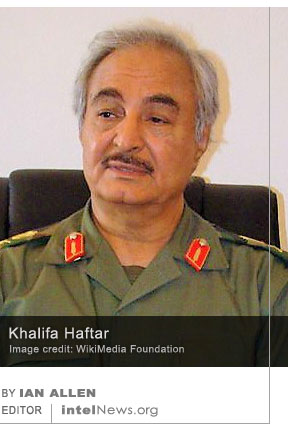
According to reports in the Libyan media, Burns spent most of Thursday in Tripoli, where he met with Abdul Hamid Dbeibah, a controversial businessman who is serving as prime minister in the Government of National Unity (GNU). Burns also met with GNU Minister of Foreign Affairs Najla al-Mangoush, as well as with Hussein al-Ayeb, who leads the GNU’s intelligence agency. The CIA director also met with Field Marshal Khalifa Haftar (pictured), head of the Libyan National Army (LNA). The LNA nominally supports the GNU’s rival government in eastern Libya, the Government of National Stability (GNS). However, Haftar is seen by many as Libya’s de facto strongman. Notably, Burns did not meet with Fathi Bashagha, the self-styled ‘prime minister’ of the GNS, which, unlike the GNU, is not recognized by the United Nations, but is supported by a number of regional powers, including NATO member Turkey.

Al-Monitor reported that the subject of the GNU’s relations with Russia was high on the agenda during Burns’ visit, as was the subject of Libya’s energy exports to Europe. Counterterrorism was also discussed, which is unsurprising, given that last month the GNU surrendered Abu Agila Mohammad Mas’ud Kheir Al-Marimi to American authorities. Washington alleges that Al-Marimi was involved in the 1988 downing of Pan Am Flight 103 over Lockerbie, Scotland, which was conceived and plotted by the regime of the late Colonel Moammar al-Gadhafi. The move was seen as an attempt by the GNU to strengthen relations with Washington, in light of the challenge it faces from the GNS and the LNA.

Author: Ian Allen | Date: 13 January 2023 | Permalink

Reuters investigation focuses on alleged loss of CIA spy networks in Iran

US embassy IranA YEAR-LONG INVESTIGATION by the Reuters news agency attempts to shed light on the alleged arrests of more than a dozen Iranian spies, who claim to have worked for the United States Central Intelligence Agency. Periodically Iran claims to have captured members of alleged CIA spy rings operating across its territory. For instance, in 2019 Iran’s Ministry of Intelligence announced the arrest of a “CIA network” consisting of 17 individuals who worked in the private sector and a number of government agencies.

The news agency said two of its reporters, Joel Schectman and Bozorgmehr Sharafedin, spent dozens of hours interviewing six Iranian former CIA assets, as well as 10 former employees of the United States Intelligence Community, who have “knowledge of Iran operations”. All six of the Iranians interviewed spent between five and 10 years in prison for their CIA connections. Two of them left Iran after serving their prison sentences, and are now refugees in central and northern Europe. At least one of them claims he was never contacted by the CIA after his release in 2019.

According to the Reuters investigation, CIA assets in Iran operate in a high risk environment, given that the United States has not had diplomatic facilities in the Middle Eastern country since 1979. Diplomatic facilities are regularly used to shelter CIA personnel, who recruit, train and handle foreign assets. Despite the absence of such facilities, the CIA is willing to take great risks in running agents inside Iran, because of the country’s geopolitical significance. The agency’s intensity in operating in Iran is matched by the Islamic Republic’s aggressive counterintelligence posture, which, according to the Reuters investigation, has “netted dozens of CIA informants” in recent years.

It is claimed that Iran’s counterintelligence efforts were inadvertently aided by a mass-produced CIA covert communications system, which the spy agency operated until 2013 in at least 20 countries around the world, including Iran. The Internet-based system was intended for use by CIA sources who were not fully vetted, but were still considered useful due to their access to secret information, according to Reuters. This appears to be a major update on a story that was first reported by Yahoo News in 2018. It claimed that that the CIA had suffered a “catastrophic” compromise of the system it used to communicate with spies, which caused the death of “dozens of people around the world” according to sources.

Reuters said it contacted CIA spokeswoman Tammy Kupperman Thorp, who declined to comment on specific allegations. The CIA spokeswoman dismissed the “notion that CIA would not work as hard as possible to safeguard” its assets around the world as “false”. The news agency said it also contacted Iran’s Ministry of Foreign Affairs and its Mission to the United Nations in New York, but received no responses.

Author: Joseph Fitsanakis | Date: 03 October 2022 | Permalink