CIA funds given to Afghan officials ended up in al-Qaeda coffers
March 16, 2015 Leave a comment
 By IAN ALLEN | intelNews.org
Millions of dollars given by the United States Central Intelligence Agency to Afghanistan following the 2001 American invasion ended up in the hands of al-Qaeda, according to documents found in the personal archive of the organization’s founder, Osama bin Laden. The documents were confiscated by US Special Forces from bin Laden’s hideout in Abbottabad, Pakistan, where he was killed in 2011. They were declassified this week for use as evidence in the trial of Abid Naseer, a Pakistani citizen accused of planning a series of suicide bombings in Britain and the US. The New York Times, which cited “interviews with Afghan and Western officials”, said the documents show that Washington “has sometimes inadvertently financed the very militants it is fighting”. The paper attributed this to poor oversight of the billions of dollars in cash payments that the CIA supplied to the corrupt Afghan government of Hamid Karzai for over a decade.
The letters used in Naseer’s trial concern $5 million paid as ransom to al-Qaeda by the Afghan government in 2010, in exchange for the release of Abdul Khaliq Farahi, Afghanistan’s consul general in the Pakistani city of Peshawar. Farahi had had been abducted by militants two years earlier and delivered to the hands of al-Qaeda, who promptly contacted Kabul demanding payment. In the spring of 2010, the Afghan government agreed to pay a $5 million ransom for the kidnapped diplomat’s release. According to The Times, at least $1 million in ransom money came from the several millions of dollars in cash that the CIA would deliver each month to the presidential palace in Kabul. The other $4 million came from Iran as well as from a number of Arab oil kingdoms, says the paper.
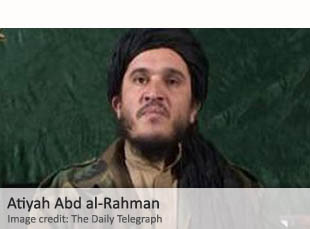
In June 2010, almost as soon as the funds were delivered to al-Qaeda’s hands, the organization’s accounts manager, Atiyah Abd al-Rahman, wrote to bin Laden: “Allah blessed us with a good amount of money this month”. The al-Qaeda founder responded by expressing surprise that the US would have allowed a ransom to be paid to the militant group, and cautioned al-Rahman to check the cash for signs of poison or radiation that may have been planted there by the Americans. It appears, however, that no trap had been set up by the CIA, and al-Qaeda was able to use the funds for weaponry and routine operational expenses. The Times said it asked the CIA whether officials at Langley were aware of the ransom paid to al-Qaeda by the Afghan government, but the Agency declined comment.










 intelNews.org
Turkish general claims CIA ‘may have had role’ in 2003 coup plot
April 7, 2015 by Joseph Fitsanakis 1 Comment
A Turkish former four-star general, who was jailed for his role in an alleged coup plot by secularists in the Turkish military, has alleged in an interview that the United States may have advised the coup plotters. Bilgin Balanli was the only active-duty four-star general to be charged in connection with the so-called Balyoz Harekâti (Operation SLEDGEHAMMER) coup-plot case. The alleged plot became widely known in early 2010, when Taraf, a liberal Turkish daily, published documents from 2003 that outlined the plotters’ plans for a military takeover of government. According to Taraf, the conspirators were secularists within the ranks of Turkey’s military and intelligence agencies, who were opposed to the rule of the Islamist Justice and Development Party (AKP), headed by Recep Tayyip Erdoğan.
The documents outlined plans to bomb two mosques in Istanbul and bring down a Turkish fighter jet over the Aegean Sea, which would be blamed on Greece. The plotters hoped that the ensuing crisis would permit the military to assume power in the country. The AKP-led government reacted swiftly: on February 21, 2010, police operations took place in nearly a dozen Turkish provinces, leading to the arrests of over 40 leading coup plotters. Another 325 were charged in the following days. The alleged plotters argued that Operation SLEDGEHAMMER was simply an exercise that had been conceived as a scenario-based simulation for a military seminar. But the courts rejected their argument and sentenced nearly 300 of the accused to prison terms ranging from a few months to several years. More recently, however, most of those sentenced were released pending retrials. Many were acquitted last month on grounds that their civil rights had been violated during their initial trial.
Among those acquitted was General Balanli, who was about to be promoted to Chief of Staff for the Turkish Air Force when he was arrested in connection to SLEDGEHAMMER in 2010. His conviction meant that he had to resign from his post and relinquish his state pension. In his first lengthy interview since his acquittal, Balanli said he believes many of the coup planning documents had been authored by a non-Turkish intelligence agency, probably the US Central Intelligence Agency. Balanli was referring to allegations, made by many of the accused during the SLEDGEHAMMER trials, that an American senator had provided some of the coup planning documents, with the help of a retired Turkish military officer based in Istanbul. According to Balanli, much of the terminology and phraseology found in the plot documents was clearly not written by Turkish-language speakers. For example, said Balanli, the Turkish-language documents used the term “ocean” to refer to the Aegean Sea. “We do not use the word ‘ocean’ to refer to our seas”, said the Turkish general. “The term ‘ocean’ is only used by the US to refer to the sea”, he argued. “I believe that these documents were translated from the English, from the original American plan”, said Balanli.
The former general’s claim, though unsubstantiated, is bound to be refuted by Washington. It will, however, reinforce Turkish President Erdoğan’s claim that his pro-Islamist government has been the subject of plots and machinations from the West, and especially from Washington.
Filed under Expert news and commentary on intelligence, espionage, spies and spying Tagged with Balyoz Harekâti, Bilgin Balanli, CIA, coup plots, Ergenekon, News, Operation SLEDGEHAMMER, Recep Tayyip Erdoğan, Turkey, United States