News you may have missed #810 (Petraeus resignation edition)

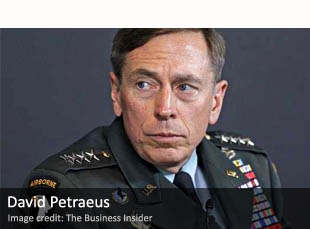
David PetraeusBy JOSEPH FITSANAKIS | intelNews.org |
►►How did Petraeus’ affair come to light? CIA Director David Petraeus resigned after a probe into whether someone else was using his email. The probe eventually led to the discovery that he was having an extramarital affair, according to The Wall Street Journal, which cites “several people briefed on the matter”. An FBI inquiry into the use of Petraeus’s Gmail account led agents to believe the woman or someone close to her had sought access to his email. An extramarital affair has significant implications for an official in a highly sensitive post, such as that held by Petraeus, because it can open an official to blackmail.
►►Who did Petraeus have an affair with? The woman with whom General David Petraeus was having an affair is Paula Broadwell, a West Point graduate and the author of a recent hagiographic book about him, entitled All In: The Education of General David Petraeus, co-written with Vernon Loeb. Slate‘s Fred Kaplan reports that “it had long been rumored that something was going on between Petraeus and Broadwell. When she was embedded with him in Afghanistan, they went on frequent 5-mile runs together. But Petraeus went on 5-mile runs with many reporters, and few people who knew him took the rumors seriously”.
►►Who is leading the CIA now? With General David Petraeus stepping down as director of the CIA, following reports of an extra-marital affair, the agency’s current deputy director will take over as director on an interim basis. His name is Michael Morell, and he was a senior CIA aide in the White House to President George W. Bush. Morell had served as deputy director since May 2010, after holding a number of senior roles, including director for the agency’s analytical arm, which helps feed intelligence into the President’s Daily Brief. He also worked as an aide to former CIA Director George Tenet.
News you may have missed #806

Mohammed DahabiBy IAN ALLEN | intelNews.org |
►►Most staff at US consulate in Libya were CIA personnel. Most of the personnel attached to the US diplomatic mission in Benghazi, the Libyan city where a US consulate was attacked ending with the deaths of four Americans, including Ambassador Christopher Stevens, were spies, according to The Wall Street Journal. The paper said 23 of the 30 Americans evacuated from Benghazi in the wake of the September 11, 2012, attack were employees of the CIA. Tyrone Woods and Glen Doherty, two of the men killed that day, and later publicly identified as contract security workers with the State Department, were in fact under contract with the CIA, said the paper.
►►India accuses Pakistan of printing counterfeit banknotes. The Central Economic Intelligence Bureau in India says that the Pakistani spy agency, the Inter-Services Intelligence Directorate (ISI) is printing counterfeit Indian and Bangladeshi currencies from the state-owned security printing presses “under special arrangement” and circulating the same through a well-organized network, which is coordinated by senior ISI officials. This is not the first time that the Indian government has accused Pakistan of counterfeiting Indian currency.
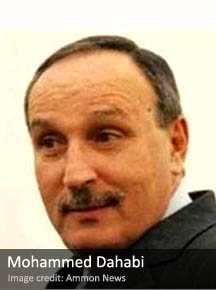
►►Jordan court to announce ex-spy chief’s sentence on November 11. A Jordanian criminal court has postponed a verdict in the case of Mohammed al-Dahabi, who ran the General Intelligence Department between 2005 and 2008 and is on trial for alleged embezzlement of public funds, money laundering and abuse of office. Presiding judge Nashaat Akhras said in court Sunday that the verdict will be pronounced November 11, without giving a reason. Dahabi was arrested in February, when inspectors from the Central Bank of Jordan suspected transactions worth millions of dollars had gone through his bank account.

News you may have missed #805 (analysis edition)

US consulate in Benghazi, LibyaBy IAN ALLEN | intelNews.org |
►►Should the US be wary of Huawei? Regular readers of intelNews know that this blog has been covering the subject of Chinese telecommunications hardware manufacturer Huawei for several years now. During the past few weeks, the United States Congress has flagged the company as being too closely associated with the Chinese intelligence establishment. Other countries have done so as well. But not everyone agrees. New York-based newspaper The Wall Street Journal said recently that “bashing Chinese companies on national security grounds seems like a risk-free strategy” for US politicians and added that, unlike Congress, American governors and mayors are eager to promote investment by Chinese companies. Moreover, Wired‘s Marcus Wohlsenemail suggests that, spies or no spies, US telecommunications companies should fear Huwaei, which is here to stay.
►►Should CIA share some of the blame for Benghazi? For the last month, the US media and Congress have been grilling the State Department for the security failures during the deadly assault on a US compound in Benghazi, Libya. But what if the State Department is the wrong target of scrutiny? According to a counter-theory advanced recently by The Washington Post‘s Dana Milbank, the CIA, not the State Department, bears some responsibility for the security lapse that led to the death of Ambassador Chris Stevens and three other Americans, but is flying under the radar due to the classified nature of its activities in Libya.
►►Could unmanned drones go rogue? Unmanned aerial vehicles, commonly known as drones, have been in the news a lot lately: the US Congress has given the green light for their use by state and local law enforcement, academic researchers, and the private sector. UAVs are rapidly becoming a new tool in patrolling US borders and in NATO military operations in Afghanistan and Pakistan. But non-state actors, including organized criminal gangs and drug cartels, may also be seeing the benefits of UAVs before too long. Read an interesting analysis piece that includes comments by intelNews‘ own Joseph Fitsanakis.

MI5 official’s diaries reveal tensions between UK, US spy agencies

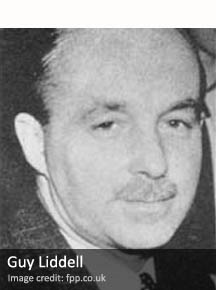
Guy LiddellBy JOSEPH FITSANAKIS | intelNews.org |
Newly declassified personal diaries belonging to a senior British intelligence official reveal tensions between British and American spy agencies in the years immediately following World War II. The National Archives, an executive agency operating under the United Kingdom’s Secretary of State for Justice, released the diaries on Friday. They belong to Guy Maynard Liddell, a longtime British intelligence operative who rose to the post of Deputy Director General of MI5, Britain’s domestic intelligence agency. Liddell meticulously kept a diary during most of the 1940s and 1950s, in which he detailed both personal information and details of his work at MI5. Two volumes of his diaries (from 1939 to 1945, edited by Nigel West) have already been published. Now a third installment has been declassified by the National Archives, containing Liddell’s diary entries from the late 1940s and 1950s. The diaries project what some intelligence historians describe as “a certain friction” between postwar British and American intelligence services. Even though the two countries were largely viewed as allies in the immediate postwar period, their respective intelligence agencies did not always see eye to eye. In one instance, Liddell describes his American colleagues as “utterly incapable […] of seeing anybody’s point of view except their own” and accuses them of being “quite ready to cut off their noses to spite their faces”. He also comes across as skeptical of the then-newly established Central Intelligence Agency, which, he writes, “someday” may be able to produce information that would be “worth disseminating, evaluating, or coordinating”. In 1947, shortly after the CIA’s founding, Liddell wrote with a degree of uncertainty that “in the course of time, [the Agency] may produce something of value”. Further on he relayed the opinion of CIA Deputy Director Edwin Kennedy Wright, who apparently told British intelligence officials that in American intelligence organizations “500 people were employed to do what 50 people would do” in the UK. Read more of this post

News you may have missed #804

Jeffrey Paul DelisleBy IAN ALLEN | intelNews.org |
►►CIA officer reportedly among dead in Afghanistan bombing. The attack, which was carried out in a remote area of Kandahar Province, occurred when a guard working for the Afghan intelligence service detonated a suicide vest as a delegation of American coalition members and Afghan intelligence officials arrived at the intelligence office in the Maruf District. The blast killed Ghulam Rasool, the deputy intelligence director for Kandahar Province, two of his bodyguards, another Afghan intelligence official, and some Americans, including the CIA officer. A spokeswoman for the CIA declined to comment.
►►Canadian intel officer was ‘on Russian payroll for years’. Former navy intelligence officer Jeffrey Paul Delisle, who pleaded guilty this month to spying, was leaking secrets to Russia, sending classified data about Canada as well as the United States, according to David Jacobson, the US ambassador in Ottawa. So far, the Canadian government has refrained from revealing the identity of “the foreign entity” to whom Delisle passed the classified information. Ambassador Jacobson refused to specify the nature of the information, saying only that “there was a lot of highly classified material”.
►►Panama wants to adopt euro as legal tender. Panama, one of the fastest growing economies in Latin America, wants to adopt the euro as legal tender to run alongside the country’s US dollar economy. Panama’s President Ricardo Martinelli made the request to German Chancellor Angela Merkel during a visit to Europe. The president indicated he had every faith that the crisis in the eurozone would soon be at an end, adding that Panama “would be possibly the only country in the world to have two currencies, the euro and the dollar”.

News you may have missed #803

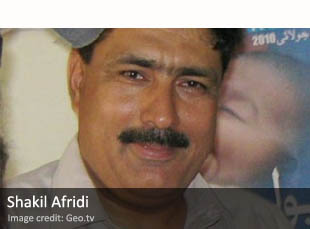
Shakil AfridiBy IAN ALLEN | intelNews.org |
►►Phone seized from Pakistani doctor who helped CIA find bin Laden. Pakistani authorities have seized a Thoraya satellite phone from jailed doctor Shakil Afridi, who helped the CIA trace Osama bin Laden, and also arrested four police commandos guarding his cell. After interrogation, one of the four arrested commandos confessed that he had provided the satellite phone to Afridi. The doctor had reportedly made more than 68 calls from the satellite phone set and most of these calls were long-distance, but the authorities are assessing the satellite phone data to ascertain the country location.
►►US whistleblower protections extended to intelligence community. US President Barack Obama has extended whistleblower protections to national security and intelligence employees. A new Presidential policy directive says employees “who are eligible for access to classified information can effectively report waste, fraud, and abuse while protecting classified national security information. It prohibits retaliation against employees for reporting waste, fraud, and abuse”. The President has also instructed agencies, including the CIA, to establish a review process, within 270 days, that allows employees to appeal actions in conflict with the directive that affect their access to classified information. It is worth noting that the Obama administration has been criticized by open-government advocates for aggressively prosecuting self-described whistleblowers.
►►What do CIA spies do after retirement? What do former spies do when they quit the spy game? Plan covert action campaigns against the nasty old ladies in their homeowners’ association? Overthrow their city council for fun? No, the majority of former CIA case officers work as consultants or contractors within the US intelligence community. However, while returning to work as intelligence consultant is the norm, some few do forge a different path, applying lessons learned from government service to a new life in the private sector.

Canadian diplomats spied for the CIA in Cuba, claims new book

Embassy of Canada in Havana, CubaBy JOSEPH FITSANAKIS | intelNews.org |
Several accredited Canadian diplomats were recruited by the United States Central Intelligence Agency to spy on Cuba in the aftermath of the 1962 missile crisis, according to a new book. Authored by Canadian retired diplomat John Graham, the book, entitled Whose Man in Havana? Adventures from the Far Side of Diplomacy, is to be published this week by Penumbra Press. In it, Graham claims that he was among a number of Canadian diplomats stationed in Cuba, who were secretly recruited by the CIA. The US agency had been essentially forced out of the island after Washington and Havana terminated diplomatic relations in 1961, soon after the government of Fidel Castro declared itself a proponent of Marxism. The closure of the US embassy meant that the CIA had no base from which to operate in the Caribbean island. Two years later, in May 1963, US President John F. Kennedy personally asked Canadian Prime Minister Lester Pearson for assistance in intelligence-gathering efforts in Cuba. The Canadian leader consented and, according to Graham, Canadian diplomatic officials actively assisted the CIA until at least 1970. The author states in his book that he himself operated in Cuba for two years, from 1962 until 1964, under the official cover of Political Officer at the Canadian embassy in Havana. Prior to that, he says, he was provided with rudimentary training by the CIA, which consisted of spending “just a few days” at the Agency’s headquarters in Langley, VA. He was then tasked with conducting physical surveillance of Soviet military bases on Cuba and, if possible, identifying weapons and electronic security measures, and noting troop movements. Read more of this post

Danish Muslim convert claims he was CIA’s mole inside al-Qaeda

Morten StormBy JOSEPH FITSANAKIS | intelNews.org |
A Danish citizen who converted to Islam in the early 2000s claims he was a spy for the United States Central Intelligence Agency and helped track down an American-born Islamist cleric who was killed by a drone strike in 2010. The man, who goes by the name Morten Storm, told Danish newspaper Jyllands-Posten that he converted to Islam while living in the United Kingdom. But he quickly grew disillusioned, he said, and in 2006 he was recruited by the Danish Police Intelligence Service (PET). In subsequent years, he traveled several times to Yemen on PET missions, and gradually managed to gain the trust of members of the al-Qaeda in the Arabian Peninsula (AQAP). Eventually, he said, he grew close to one of AQAP’s central figures, the American-born Yemeni cleric Anwar al-Awlaki. At that point, claims Storm, the PET turned him over to the CIA, who allegedly used him to gather information on al-Awlaki. The Danish Muslim convert claims that his role as a CIA informant was so important that US President Barack Obama knows his name. He also told the paper that it was his information that eventually helped the CIA track and assassinate the charismatic cleric. According to Storm, the CIA supplied him with a memory stick that contained a stealth Global Positioning System tracking device. He sent the memory stick to al-Awlaki, who used it on his computer, thus allowing the CIA to track him down. In April 2010, President Obama ordered that al-Awlaki’s name be included on a list of individuals that the CIA was officially authorized to kill. Little less than a year later, on September 30, 2011, the cleric and three other suspected members of AQAP were killed when their car was hit by two Hellfire missiles in Yemen’s northern al-Jawf province. Read more of this post

Former CIA senior analyst argues in favor of US deal with Iran

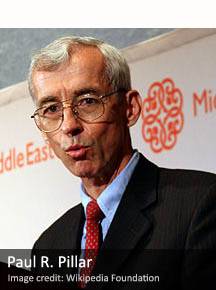
Paul R. PillarBy JOSEPH FITSANAKIS | intelNews.org |
A former senior analyst in the United States Central Intelligence Agency has come out in support of a bilateral compromise between Iran and the West on Tehran’s nuclear program. In an article published last week, Georgetown University professor Paul R. Pillar, who spent nearly three decades with the CIA, dismissed the widespread view that the differences between Iran, Israel, and the West are insurmountable. Commenting on news of a nine-step negotiation plan offered by Tehran in early October, but dismissed by Washington as “unworkable”, Pillar said the offer provided the initial steps of an “eminently achievable agreement” between the interested parties. The CIA veteran, who rose to be one of the Agency’s top analysts prior to his retirement in 2005, argued that a possible outcome of bilateral negotiations would be for Iran to curtail its enrichment of uranium to the 20 percent level in exchange for the lifting of most economic sanctions imposed on Iran by Western countries. “An agreement along these lines makes sense”, he added, “because it would meet the major concerns of each side” in the dispute. He cautioned, however, that, under such an agreement, Tehran would not only be prohibited from continuing its uranium enrichment process, but would also be required to surrender all quantities of uranium previously enriched to a level above 20 percent. Such an agreement, claimed Pillar, would mean that neither Iran nor Israel and the West would receive everything they wanted at once. Instead, the process would depend on a gradual implementation of several bilateral agreements in stages, “each side giving something and getting something at each stage”. Read more of this post

Russian court upholds 15-year prison sentence for alleged CIA spy

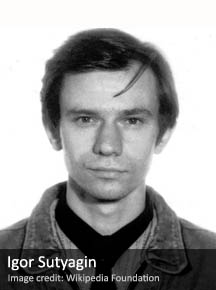
Igor SutyaginBy JOSEPH FITSANAKIS | intelNews.org |
Russia’s highest court has upheld a lengthy prison sentence given to a Russian arms control and nuclear weapons expert, who Moscow alleges was a spy for the United States. The Russian government accuses Igor Sutyagin of collaborating with Alternative Futures, a British-registered consulting company alleged by Moscow to be a front for the United States Central Intelligence Agency. Before his 1999 arrest, Sutyagin was Division Chairman on the Russian Academy of Sciences’ USA and Canada Institute. His indictment, prepared by the Russian Federal Security Service, said that he shared with the CIA “classified technical information” about nuclear submarine technology. Sutyagin maintained his innocence throughout his trial, and Human Rights Watch as well as Amnesty International classified him as a political prisoner. The two groups brought the accused spy’s case before the European Court of Human Rights, which ruled that Russian government prosecutors had violated Sutyagin’s right to a fair trial. Moreover, the Court ruled that Sutyagin’s pre-trial detention, which lasted five years, was illegal. Eventually, Moscow complied with the Court’s ruling and a retrial was ordered, to the delight of Sutyagin’s family. In the retrial, which ended last week, Russia’s Supreme Court agreed with the European Court of Human Rights that Sutyagin’s pre-trial detention had been unlawful; but the court upheld Sutyagin’s 15-yeard sentenced as “entirely legitimate”. Sutyagin was tried in absentia, however, because in the summer of 2010 he was released and fled to the West, as part of the largest postwar spy-exchange between Russia and United States. Sutyagin was one of four men behind bars in Russia, who were swapped for 10 Russian non-official-cover intelligence operatives that had been arrested in a sting operation by the Federal Bureau of Investigation. Read more of this post

Decision to evacuate eastern Libya divides US Intelligence Community

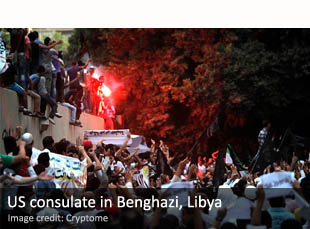
US consulate in Benghazi, LibyaBy JOSEPH FITSANAKIS | intelNews.org |
On September 12, just hours after heavily armed militia groups stormed the United States consulate in Benghazi, Libya, Washington made the decision to pull out its diplomats and intelligence officers from Eastern Libya. As US government envoys, spies and contractors started arriving at the Benina International Airport in Benghazi, many Libyans noted the “surprisingly large number” of Americans that came out of the woodwork. According to reports, at least a dozen of the American evacuees were in fact Central Intelligence Agency personnel. Their evacuation, which has essentially ended the presence of the CIA in eastern Libya’s most important city, is dividing the US Intelligence Community. On the one hand, some US intelligence insiders argue that the attack on the US consulate, which killed four US personnel, including Ambassador J. Christopher Stevens, necessitated the decision to evacuate. A number of former US government officials told The Los Angeles Times this week that the evacuation was “justified, given the dangers in Benghazi” for US personnel. Another current official told The New York Times that the evacuation of the CIA station in Benghazi does not necessarily mean that the US has lost its intelligence collection capabilities in eastern Libya. Washington can still intercept telephone calls and emails and conduct satellite reconnaissance in the North African region, said the official. Others, however, leveled sharp criticism against the decision of the White House to evacuate its diplomats and spies from Benghazi, arguing that the move marked “a major setback in [US] intelligence-gathering efforts” in the country. Robert Baer, a retired CIA officer with decades of experience in the Middle East, called the move “disastrous for US intelligence-gathering capabilities”. Writing in Time magazine, Baer said that shutting down the CIA station in Benghazi would make it “almost impossible to collect good human intelligence” in the region, and described the move as a sign of “America’s declining position” there. Read more of this post

News you may have missed #798

Alexander LitvinenkoBy IAN ALLEN | intelNews.org |
►►Britain to hold inquest over death of ex-KGB officer. Britain and Russia appear to be on a collision course over the death of Alexander Litvinenko, a former Russian intelligence officer who died in 2006 after ingesting polonium-210, a rare radioactive isotope. Britain’s Crown Prosecution Service has accused Andrei Lugovoi and Dmitry Kovtun, both former KGB agents, for the death of Litvinenko. Russia has refused British requests to extradite the two, leading to a row with Moscow and the tit-for-tat expulsion of Russian and British diplomats. Until now, the British Foreign Office had attempted to limit the scope of an inquest into the death of Litvinenko, fearing further diplomatic fallout. But coroner Sir Robert Owen said last week that he endorsed a previous ruling by his predecessor in the case, Andrew Reid, that there should be an “open and fearless” investigation into the matter.
►►Ex-CIA operative who illegally sold arms to Libya dies. Edwin P. Wilson, a former CIA officer who was convicted in 1983 for illegally shipping 20 tons of C4 plastc explosives to Libya, has died aged 84. In his trial he claimed he had shipped the weapons to Libya at the request of the CIA, because, as he said, the agency was trying to establish good relations with the Libyan government. But the court did not buy his story, so he spent over 20 years in prison, mostly in solitary confinement, until his release in 2004. He maintained his innocence to the very end.
►►Analysis: Libya an opportunity for CIA if it sticks around. The attack in Benghazi, Libya, that killed four Americans, including a US ambassador and two former Navy SEALs, has led Americans to vacate Benghazi for their safety, even though various militant groups continue their operations. It is a disaster for US intelligence efforts in the region, especially since the attack has made brutally clear how real the jihadi threat in eastern Libya remains. But there may be the smallest of silver linings to this black cloud, if American operatives are able to capitalize on it. The aftermath of the attack shows widespread displeasure with Benghazi’s jihadist groups, with thousands marching in protest. That is an opportunity the CIA could use to rebuild its intelligence gathering.

News you may have missed #795

Shakil AfridiBy IAN ALLEN | intelNews.org |
►►US ‘cannot verify authenticity’ of Afridi interview. The US says it cannot verify an alleged interview by Shakeel Afridi, a Pakistani medical doctor who helped the CIA find Osama bin Laden. In May, a Pakistani court sentenced Afridi to 33 years in jail after he was arrested following the killing by US troops of bin Laden in May 2011 at his compound in the town of Abbottabad. US television channel Fox News said Tuesday it had obtained an exclusive phone interview with Afridi from behind bars, in which he detailed months of torture by Pakistan’s shadowy Inter-Services Intelligence.
►►Evidence suggests US covered up Soviet massacre in Poland. New evidence appears to back the idea that the US administration of President F.D. Roosevelt helped cover up Soviet guilt for the 1940 Katyn massacre, in which more than 22,000 Poles were killed by the Soviets on Stalin’s orders. Historians said documents, released by the US National Archives, supported the suspicion that the US did not want to anger its wartime ally, Joseph Stalin. The documents show that American prisoners of war sent coded messages to Washington in 1943 saying that the killings must have been carried out by the Soviets, rather than the Nazis. Information about the massacre was suppressed at the highest levels in Washington, say historians.
►►Yemen President sacks intel agency heads. Yemeni President Abd-Rabbu Mansour Hadi has sacked the heads of the National Security Agency and  Military Intelligence, just a few hours after two suicide car bombs targeted the country’s Defense Minister in the capital Sana’a killing at least 12 people. The National Security Agency’s Ali Mohammed al-Anisi has been replaced with Ali Hassan al-Ahmadi, while the head of Military Intelligence, Mujahid Ali Ghuthaim, has been replaced with Ahmed Muhsin al-Yafiee. Hadi took office in February this year after year-long street protests forced former President Ali Abdullah Saleh to step down as part of an UN-backed power transfer deal in return for immunity from prosecution.

Magazine publishes CIA-trained burglar’s fascinating story

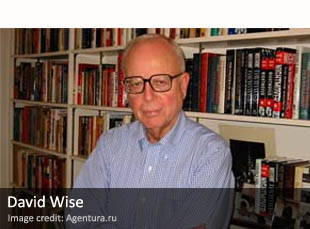
David WiseBy JOSEPH FITSANAKIS | intelNews.org |
A captivating article about a break-in specialist for the United States Central Intelligence Agency, who turned against the Agency in the 1990s, appears in the October issue of The Smithsonian magazine. Written by David Wise (The Invisible Government, The Spy Who Got Away), the article contains some new information about “The Shop”, a secretive unit under the CIA’s Special Operations Division, which conducts what the agency describes as “surreptitious entries”. Based on “more than 80 interviews with 25 people”, including over a dozen former CIA officers, Wise says the unit features highly specialized teams of lock pickers, safecrackers, photographers, experts in disabling alarm systems, and others. Their mission, he says, is to break into foreign embassies around the world in order to steal classified documents and —most of all— codebooks used by foreign diplomats to communicate securely with their colleagues back home. Unlike most CIA personnel stationed abroad, the Agency’s non-destructive entry specialists do not enjoy the protection of diplomatic cover, says Wise, which means they cannot claim diplomatic immunity if caught red-handed. The author’s main source for the article appears to be Douglas Groat, a former US Special Forces captain, underwater explosives expert and Mandarin-Chinese speaker, who joined the CIA in 1980. Wise claims that Groat, who started working for The Shop in 1982, eventually became the Agency’s “top burglar and premier lock picker”. He designed or participated in approximately 60 different CIA- or National Security Agency-sponsored operations in dozens of countries in the Middle East, Africa, South America and Europe, which earned him several commendations, medals and awards from the NSA and the CIA. The article describes one joint CIA/NSA operation that took place in 1989 at the embassy of the German Democratic Republic in Katmandu, Nepal, which Groat’s team burgled in order to steal a code machine. The operation failed, as did another a few years later in “a Middle Eastern capital”, due to sloppy preparation on behalf of the CIA, says Groat. Read more of this post

Nuclear smugglers to get reduced prison sentences ‘for helping CIA’

Urs TInnerBy JOSEPH FITSANAKIS | intelNews.org |
Three Swiss engineers imprisoned for participating in an international nuclear smuggling ring are about to have their prison sentences significantly reduced, allegedly for having acted as agents for the United States Central Intelligence Agency. Friedrich Tinner and his two sons, Urs and Marco, were arrested in 2004 in connection with a multinational investigation into the nuclear smuggling network of Dr. Abdul Qadeer Khan. The father of Pakistan’s nuclear weapons program, who is widely known as A.Q. Khan, had for years subcontracted his nuclear services to North Korea, Iran and Libya, until 2004, when he was placed under house arrest by the Pakistani government, following pressure from Washington. Since then, the Tinners have been under “investigative custody”, a peculiar state of pre-trial detention prescribed by Swiss law. In 2009, Urs Tinner gave an interview to Swiss television, in which he claimed than he, along with his brother and father, had for years informed the CIA on Khan’s activities and assisted the US intelligence agency terminate the Libyan nuclear weapons program. It later emerged that the Swiss government had “inadvertently” shredded some crucial documents required in the prosecution case against the three engineers. Late last year there was apparently concern at Langley that some CIA secrets could surface in court, after Swiss government prosecutors announced that a trial for the Tinners would go ahead. However, new prosecution documents released on Tuesday show that a plea bargain agreement has been struck between the Swiss government and the three defendants in this highly sensitive case. Read more of this post