News you may have missed #773

Tamir PardoBy IAN ALLEN | intelNews.org |
►►Conflicting reports on CIA-ISI meeting. Lieutenant General Zahir ul-Islam, who heads Pakistan’s premier intelligence agency, the ISI, held talks in Washington with his CIA counterpart General David Petraeus, between August 1 and 3. It was the first time in a year that the chief of the ISI made the trip to the US, signaling a possible thaw in relations. Depending on the source, the meeting was either “substantive, professional and productive”, or “made no big strides on the main issues”.
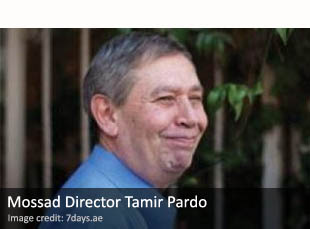
►►Senior Mossad official suspected of financial misconduct. A senior Mossad official is suspected of financial misconduct and has been forced to take a leave of absence until Israeli police complete an investigation into his alleged deeds, Israeli media reported on Sunday. The official, a department head in Israel’s spy organization, has reportedly denied any wrongdoing, but sources said he would likely not be reinstated in light of investigation findings and is effectively being forced to retire. The nature of the official’s alleged misconduct has not been reported, but it is said that the official in question has close ties to Mossad Director Tamir Pardo, who appointed him to his position last year.
►►Ex-NSA official disputes DefCon claims by NSA chief. William Binney, a former technical director at the NSA, has accused NSA director General Keith Alexander of deceiving the public during a speech he gave at the DefCon hacker conference last week. In his speech, Alexander asserted that the NSA does not collect files on Americans. But Binney accused Alexander of playing a “word game” and said the NSA was indeed collecting and indexing e-mails, Twitter writings, Internet searches and other data belonging to Americans. “The reason I left the NSA was because they started spying on everybody in the country. That’s the reason I left”, said Binney, who resigned from the agency in late 2001.

News you may have missed #772

Israeli team at the 1972 Munich OlympicsBy TIMOTHY W. COLEMAN | intelNews.org |
►►India restricts agency-to-agency contacts with CIA. According to The Deccan Herald, Indian intelligence officials are growing increasingly wary of the frequent interactions between their own intelligence personnel and the CIA. Cooperation between the US intelligence organizations and Indian government agencies has been increasing under the guise of counter-terrorism efforts. Calcutta News reports that a book published by author Prem Mahadevan, called The Politics of Counterterrorism in India, identifies at least two CIA penetrations of Indian intelligence officials since 2001.
►►Canadian spy revealed classified information in “massive leak”. As was previously reported on this blog, former Sub-Lieutenant Jeffrey Paul Delisle, a navy intelligence officer, is accused of spying for Russia. According to The New Zealand Herald, the accused Canadian spy provided the Russian government with classified information on the US, Britain, Canada, New Zealand and Australia in what is being termed a “massive leak”.
►►Germany had advance warning of 1972 Olympics massacre. Israel-based English-language newspaper The Jerusalem Post is reporting that an article in the German newsmagazine Der Spiegel, stated Germany had advance warning about a potential terrorist attack on Israeli athletes at the 1972 Olympic games. Previously classified documents accessed by Der Spiegel show that not only were there indications of a terror plot, but that there were explicit warnings and details. Perhaps more damaging are the lengths and extremes that German intelligence officials went to in order to cover up blatant mistakes in the case.

Obama authorizes CIA to conduct ‘non-lethal covert action’ in Syria

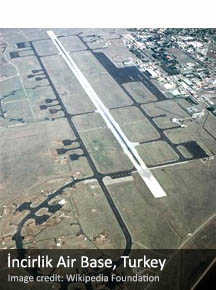
İncirlik Air Base, TurkeyBy JOSEPH FITSANAKIS | intelNews.org |
United States President Barack Obama has officially authorized the Central Intelligence Agency to assist anti-government rebels in Syria, according to a new report by the Reuters news agency. That the US Intelligence Community is operating on the side of the Syrian rebels has been known for quite some time. British media reported in as early as June of this year that American and other Western spy agencies were sharing intelligence with the Syrian Free Army. Later in the same month, The New York Times revealed that “a growing team” of CIA operatives was participating in a multinational effort to smuggle Turkish- and Saudi-supplied weapons into Syria for use by anti-government militias. And in July we explained that, according to American media reports, the CIA’s chronic shortage of reliable agents inside Syria had led the Agency to lend its weight to several existing operations led by Turkish, Jordanian, Israeli, and other intelligence organizations in Syria. Now a new report by Reuters claims that the CIA’s activities in support of the Syrian Free Army are part of an executive order handed to the Agency by the US President earlier this year. The order, formalized through what is commonly known as a ‘Presidential Finding’, effectively authorized the CIA —America’s only government agency allowed to engage in covert action— to prioritize and concentrate its resources on the ongoing Syrian uprising. Several other US government agencies are openly backing the Syrian rebels, mostly through financial support in the form of “humanitarian assistance”. But Obama’s Presidential Finding is the first indication that the US government is engaged in covert action in Syria. The Reuters report confirms earlier indications that the ‘nerve center’ of the CIA’s operations in and around Syria is located in the southern Turkish city of Adana, home of the US-run İncirlik NATO Air Base. Read more of this post

CIA sees Israel as ‘genuine counterintelligence threat’: sources

Mossad sealBy JOSEPH FITSANAKIS | intelNews.org |
The Near East Division of the Central Intelligence Agency, America’s primary intelligence organization, views Israel as the most serious threat to its secrets, according to an exposé published yesterday by the Associated Press. Citing interviews with at least five current and former US intelligence officials, the news agency said the CIA views the Israeli spy community as “a genuine counterintelligence threat” to US interests. The intelligence officials, who spoke to the Associated Press on condition of anonymity, said the CIA believes US national secrets are less safe in the hands of Israel than in those of other governments in the region, such as Turkey, Jordan, or Lebanon. The Associated Press exposé will not surprise regular readers of intelNews, as this blog has regularly covered various aspects of the complex US-Israeli intelligence relationship. Indeed, seasoned readers of this blog may recall that a 2010 survey among officers in the CIA’s National Clandestine Service showed that they considered Israeli intelligence agencies to be the world’s least friendly and most uncooperative with their US counterparts. The survey also showed that officers in the NCS (the CIA division that includes actual operatives on the ground), also considered Israeli spy services as the world’s third most aggressive in their operations on American soil. This new report by the Associated Press seems to confirm the NCS survey results, while adding a partial explanation as to why the intelligence services of one of America’s closest geopolitical allies would be considered a threat by the CIA. It is widely thought that Israel’s intelligence agencies can often match —and sometimes surpass— their American counterparts in terms of their analytical and operational capabilities. These skills, coupled with Israel’s unique access to the inner sanctums of the American national security establishment, place the Jewish state in an unparalleled position to acquire and compromise US government secrets. Read more of this post

News you may have missed #769 (analysis edition)

John McLaughlinBy IAN ALLEN | intelNews.org |
►►Is S. Korea’s spy agency losing its capabilities? The National Intelligence Service, South Korea’s primary external intelligence agency, is presumed to spend around US $1 billion a year, most of which it uses to spy on its northern neighbor. But when asked about the identity of the young woman who frequently accompanies new North Korean leader Kim Jong Un in his public appearances, the state intelligence agency offers no clear answer. Although it was seven months ago, at the time of Kim Jong-il’s funeral, that the woman was first spotted, the agency still does not know who she is. In the past 20 years, NIS has undergone a process of transformation to rid it of political functions. But the lingering question is: have the changes compromised the overall capabilities of the giant organization?
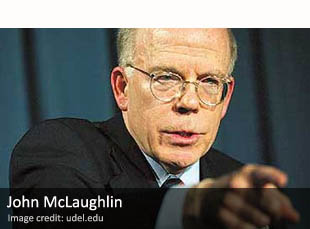
►►How 10 years of war has changed US spies. John McLaughlin, who was a CIA officer for 32 years and served as Deputy Director and Acting Director from 2000-2004, says he is often asked how American intelligence has changed in the 11 years since 9/11. His answer is that the changes are profound and have been transformative. Perhaps the most important thing to realize about American intelligence officers in 2012, he says, is that this is the first generation since Vietnam to have been “socialized” –that is hired, trained, and initiated– in wartime. And to a greater degree than even the Vietnam generation, their experience approximates that of their World War II forbears in the Office of Strategic Services (OSS) –the organization to which most American intelligence officers trace their professional roots.
►►Assessing the Social Media Battlefield in Syria. While the numerous insurgent factions and the Syrian security forces engage each other in combat in towns and cities to secure tangible battlefield gains, the warring parties are also waging a contentious information war in cyberspace, specifically within the virtual arena of online social media. The various strands of the opposition in Syria —political and violent— have taken to social media since the earliest stages of the uprising to advance their agendas. Analogous to their role in facilitating communication and information exchange during the wave of revolts that have been sweeping the Arab world since 2011, new media platforms such as the array of social media websites and related technologies that are available to the public at virtually little or no cost have become crucial to shaping how the crisis in Syria is portrayed and perceived.

News you may have missed #768

CIA headquartersBy IAN ALLEN | intelNews.org |
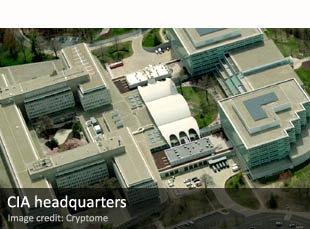
►►‘CIA could get bin Laden but can’t get a gym’. As CIA Director, General David Petraeus is credited by some as having helped turn the tide in the Iraq War, flush the Taliban from southern strongholds in Afghanistan, and infiltrated al-Qaeda in Yemen. But his campaign to improve the Agency’s fitness gyms has been a marathon effort –one that defeated other CIA directors over a course of some 16 years. Petraeus arrived at the CIA in 2011 to find two basement gyms at the Langley, Va., headquarters, one with original flooring dating to 1964. One gym is so small it can’t contain the punching bags and medicine balls that spill into the hall, where people stretch out and do mat exercises.
►►Israel convinced Hezbollah behind Bulgaria bombing. Israeli Prime Minister Benjamin Netanyahu said Sunday that his government has gathered “unquestionable intelligence” showing that the Lebanese militant group Hezbollah, backed by Iran, was behind a suicide bombing in Bulgaria last week that killed five Israeli nationals. The Israeli leader said the Mossad had drawn close parallels between the attack in Bulgaria and a foiled operation in Cyprus earlier this month, involving an alleged Hezbollah operative.
►►Hezbollah silent on reports of Israel spy arrests. Hezbollah would not comment on a local newspaper report on Wednesday, which said the Lebanese Shiite party had detained three men, including two of its own members, for spying for Israel. Lebanese daily newspaper An-Nahar said Hezbollah’s security apparatus had detained two Hezbollah members and a member of a Bekaa village municipal council on the suspicion that they have been collaborating with Israel.

US spy agencies turn to Israel, Turkey, for help in Syria war

Regional map of SyriaBy JOSEPH FITSANAKIS | intelNews.org |
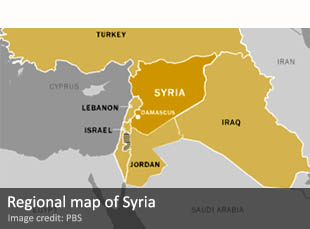
Just days after a senior United States defense official admitted Pentagon intelligence analysts missed early signs of the Arab Spring, a new report claims that Washington is still “struggling to understand” the Syrian situation, sixteen months into the uprising. Citing “interviews with US and foreign intelligence officials”, The Washington Post says that the US Intelligence Community has yet to develop a clear understanding of the intentions of the regime of Syrian President Bashar al-Assad. Nor have American analysts been able to draw a lucid picture of the fragmented opposition forces in the country. The paper says that, even though US spy agencies have intensified their intelligence-gathering efforts targeting all sides of the civil war, they have been unable to establish a physical presence inside Syria. This, according to The Post, is partly due to Washington’s decision, back in February of this year, to shut down the US embassy in Damascus, which has traditionally served as staging ground for Central Intelligence Agency operations inside Syria. This latest article confirms previous reports in The New York Times and elsewhere, of a small CIA team operating along the Syrian-Turkish border, with the task of overseeing a multinational effort to secretly deliver weapons, communications equipment and medical supplies to Syrian opposition forces. But this is about as close as the CIA has managed to get to Syria; for the most part, like its partner agencies in the US Intelligence Community, the Agency is “still largely confined to monitoring intercepted communications and observing the conflict from a distance”, says The Washington Post. As a result, US intelligence agencies are becoming increasingly dependent on their counterparts in Turkey, Jordan, and —most of all— Israel for reliable ground intelligence from inside Syria. Read more of this post

News you may have missed #766 (Arab world edition)

David SheddBy IAN ALLEN | intelNews.org |
►►Yemen busts alleged Iranian spy ring. Yemeni president Abd-Rabbu Mansour Hadi called on Tehran to stay out of Yemen’s internal affairs last week, after security officials in Sana’a, Yemen’s capital, announced they had uncovered an Iranian spy ring there. Yemen’s government-run SABA news agency said the spy cell, which was allegedly led by a former commander of Iran’s Islamic Revolutionary Guard corps, had operated in Yemen as well as in the Horn of Africa,  and that it had kept an operations center in Sana’a. An interior ministry official said all those detained were Yemenis.
►►CIA sued for killing US citizens in Yemen. Survivors of three Americans killed by targeted drone attacks in Yemen last year have sued top-ranking members of the United States government, alleging they illegally killed the three, including a 16 year-old boy, in violation of international human rights law and the US Constitution. The suit (.pdf), the first of its kind, alleges the United States was not engaged in an armed conflict with or within Yemen, prohibiting the use of lethal force unless “at the time it is applied, lethal force is a last resort to protect against a concrete, specific, and imminent threat of death or serious physical injury”. The case directly challenges the government’s decision to kill Americans without judicial scrutiny.
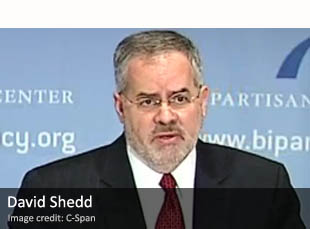
►►US intel official acknowledges missed Arab Spring signs. David Shedd, deputy director of the US Defense Intelligence Agency, the Pentagon’s intelligence arm, said analysts failed to note signs of the unrest across the Middle East and North Africa that exploded into the Arab Spring. Shedd’s comments were posted Thursday by the American Forces Press Service, a Pentagon information wire. They constitute a rare public acknowledgment of the US intelligence failure regarding the turmoil that has redrawn the Middle East’s political landscape, toppling autocratic rulers in Tunisia, Egypt, Yemen and Libya and now engulfing Syria.

News you may have missed #762

Danni YatomBy IAN ALLEN | intelNews.org |
►►Italy postpones court decision on wanted CIA operatives. The Washington Post has published a useful update on Sabrina De Sousa, one of nearly two-dozen CIA operatives who were convicted in Italy in 2007 for the kidnapping four years earlier of Egyptian cleric Hassan Mustafa Osama Nasr. The Americans kidnapped Nasr, known as Abu Omar, from the streets of Milan without the consent of Italian authorities. The Italians, who were themselves carefully monitoring Nasr, responded by convicting all members of the CIA team in absentia, and notifying INTERPOL. But last Friday, the Supreme Court of Cassation in Rome postponed its verdict after a two-day hearing aimed at deciding whether to uphold or overturn the Americans’ convictions.
►►Ex-Mossad chief urges Israel to prepare for military action in Syria. In an interview with British news network Sky News, former Mossad Chief Danni Yatom said last week that Israel must be prepared for the possibility of military attacks on Syria, which may deteriorate into war.  He said his warning stems from the fear that Syria’s hundreds of tons of chemical weapons will fall into the hands of terrorists. “We would have to pre-empt in order to prevent it. We need to be prepared to launch even military attacks […] and military attacks mean maybe a deterioration to war”, said the former Mossad Director.
►►British spy agencies failed to predict Arab Spring. The Intelligence and Security Committee of the British Houses of Parliament has said in its annual report that British spy agencies had been surprised by the spread of unrest during the Arab Spring and failed to predict the dramatic uprisings that swept the region. The report also noted that the Arab Spring had exposed Britain’s decision to scale back intelligence assets in much of the Arab world, in favor of monitoring Iran and al-Qaeda. We at intelNews wrote about this in 2011.

Pakistani militant group ‘more dangerous than al-Qaeda’: ex-CIA official

Bruce RiedelBy JOSEPH FITSANAKIS | intelNews.org |
A former senior official of the United States Central Intelligence Agency has argued that al-Qaeda is no longer the most powerful group in the global Islamist insurgency. Writing in The Daily Beast earlier this month, Bruce Riedel, who served in the CIA for nearly 30 years prior to his retirement in 2006, warned that Lashkar e-Taiba is now “the most dangerous terror group in the world”. In his editorial, the former CIA analyst, who is now a professor at the Johns Hopkins School of Advanced International Studies, said that LeT operates freely inside Pakistan and continues to have strong operational connections with the Pakistani armed forces and the country’s intelligence establishment. Since its founding in 1990, LeT’s traditional political aspiration has been to end Indian rule over the predominantly Muslim state of Jammu and Kashmir, and then integrate the latter with Pakistan. But the group’s aims appeared to expand significantly in November of 2008, when it sent ten heavily armed operatives to Mumbai on speedboats. Once they landed in India’s most populous city, the LeT operatives proceeded to strike nearly a dozen tourist-related targets in well-calculated suicide missions. By the end of the four-day terrorist spree, 166 people —including six Americans and many other Western tourists— had been killed. Riedel views the 2008 Mumbai strike as “the most significant and innovative terrorist attack since 9/11”, and says that it marked LeT’s maturation “from a Punjabi-based Pakistani terror group targeting India exclusively” to an outfit with a global outlook, “targeting the enemies of al Qaeda: the Crusader West, Zionist Israel, and Hindu India”. Today, nearly four years after the Mumbai attacks, LeT maintains a global presence, with active cells throughout the Middle East and Asia, and funding operations in North America, Australia and Europe, claims Riedel. Additionally, LeT does not appear to feel threatened by Washington. Read more of this post

News you may have missed #757

Jonathan Jay PollardBy TIMOTHY W. COLEMAN | intelNews.org |
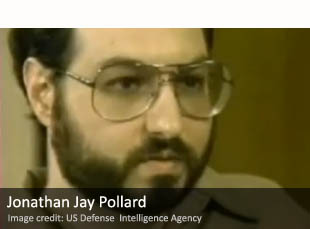
►►US government Pollard video declassified. In response to a Freedom of Information Act request initiated by the Institute for Research: Middle Eastern Policy, the Defense Intelligence Agency has released a 14-minute instructional video, which cites the Jonathan Pollard spy case. Pollard was a US Naval intelligence officer who for over 18 months provided thousands of classified documents to the Israelis government. He is serving a life sentence. The DIA’s Office of Security and Counterintelligence produced the instructional video in 1987 to urge employees to be on the lookout for suspicious behavior of fellow employees and to encourage them to report known security violations immediately. The video interviews an actor portraying the government employee who first reported Pollard’s espionage activities.
►►Senior CIA officer accused of being Mafia hitman. Enrique “Ricky” Prado’s resume reads like the ultimate CIA officer: a candidate for the CIA’s most senior post in South Korea, a top spy in America’s espionage programs against China, and deputy to Cofer Black, a chief strategist in America’s war on terror. But he is also alleged to have started out a career as a hitman for a notorious Miami mobster, and kept working for the mob even after joining the CIA. Finally, he went on to serve as the head of the CIA’s secret assassination squad against Al-Qaida. That’s according to journalist Evan Wright’s blockbuster story How to Get Away With Murder in America, distributed by Byliner. In it, Wright compiles lengthy, years-long investigations by state and federal police and tracks the history of Prado’s alleged Miami patron and notorious cocaine trafficker, Alberto San Pedro, and suspicions that Prado moved from a secret death squad from the CIA to notorious mercenary firm Blackwater.
►►Colombian pleads guilty to spy charges in Nicaragua. As previously reported on this blog, Luis Felipe Rios, a 34-year-old Colombian national, was arrested for espionage in Nicaragua on June 15. The Inside Costa Rica news agency says Rios admitted he was indeed committing espionage on behalf o foreign nation, and he is providing Nicaraguan authorities with all the details. Rios will likely be sentenced on July 9 and he faces up to 16 years in prison for violating Nicaragua’s state secrets and state intrusion laws.

Situation Report: CIA venture group funds video recorder firm

In-Q-TelBy TIMOTHY W. COLEMAN | intelNews.org |
On June 27, In-Q-Tel, the venture arm of the Central Intelligence Agency and other members of the United States intelligence community, announced a strategic partnership with Looxcie, makers of the first ever “wear and share” videocam recorders. The financial terms of the deal were not disclosed. In-Q-Tel, created in 1999, is the foremost strategic investor on behalf of the US Intelligence Community. Originally called “Peleus”, In-Q-Tel was initially associated with the CIA’s Directorate of Science and Technology (DS&T).  Interestingly enough, the “Q” in In-Q-Tel’s branding is apparently derived from a fictional character in the James Bond movies referred to as “Q”.  As many movie fans will recall, “Q” was responsible for outfitting Bond and other 00s with the famed and awe-inspiring gadgetry and technical equipment needed for missions. Having evolved from the CIA’s DS&T, whose primary purpose is to “create, adapt, develop and operate technical collection systems and apply enabling technologies to the collection, processing and analysis of information”, In-Q-Tel’s strategic investments in dual-purpose technology firms is hardly surprising. In fact, In-Q-Tel has a notable track record, especially given the fact that it is a government-run venture capital fund. Successful as it may be, In-Q-Tel represents itself quite humbly, formally explaining that it is a “not-for-profit organization […] created to bridge the gap between the technology needs of the Intelligence Community and new advances in commercial technology”. Read more of this post

News you may have missed #752

Charles SchumerBy IAN ALLEN | intelNews.org |
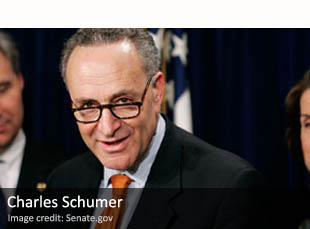
►►US companies ‘use military-style planes’ to make maps. Companies such as Apple and Google could push the limits of citizens’ privacy thanks to the use of “military-grade spy planes” when creating their next-generation mapping technologies, according to Senator Charles Schumer (D-NY). Schumer expressed his concerns in a letter to the two companies, arguing that hyper-detailed images of people’s backyards and other objects could pose a threat to both privacy and national security. The Senator also pointed out the potential for criminals and, yes, even terrorists to view detailed maps of “sensitive utilities”.
►►CIA wanted ‘torture cage’ for secret prison. Polish Senator Jozef Pinior claims prosecutors in Krakow have a document that shows a local contractor was asked to build a cage at Stare Kiekuty, a Polish army base used as a CIA prison for al-Qaeda suspects in 2002 and 2003. “In a state with rights”, Pinior told the Polish paper Gazeta Wyborcza, “people in prison are not kept in cages”. He said a cage was “non-standard equipment” for a prison, but standard “if torture was used there”. After Poland launched its official investigation of the Stare Kiekuty site, President Bronislaw Komorowski said the probe was needed because “the reputation of Poland is at stake”.
►►US Air Force spy planes facing postwar cut. The US Air Force plans to cut back on the number of Hawker Beechcraft’s MC-12 spy planes it wants to operate after the draw-down from Afghanistan and Iraq, official data indicates. With declining operations, the aircraft began to lose its priority role and recent comments indicated at least some of the aircraft would either be grounded or given to the National Guard or other services. Since the MC-12 was first deployed in Iraq, U. forces have acquired access to more sophisticated surveillance aircraft as well as drones that can perform roles previously assigned to manned aircraft.

News you may have missed #751

Leonid ShebarshinBy IAN ALLEN | intelNews.org |
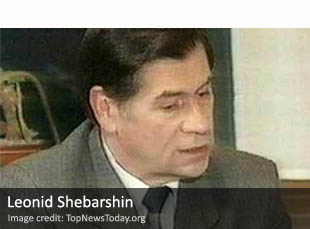
►►Ex-CIA officer remembers his KGB rival. In April, Leonid Shebarshin, a retired General of the KGB, who was often referred to as “the last Soviet spy”, was found dead in his downtown Moscow apartment. Apparently, he had committed suicide. Now Milt Bearden, who was the CIA’s Chief of the Soviet/East European Division during the final years of the USSR, has written a piece in which he remembers Shebarshin. He says that, even though Shebarshin was “the closest thing [he] had to a main adversary” in the USSR, the two became friends in the late 1990s, despite the fact that Shebarshin remained a true believer in the USSR until the very end of his life.
►►NSA won’t reveal how many Americans it spied on. Last month, US Senators Ron Wyden and Mark Udall –both members of the US Senate’s Select Committee on Intelligence– asked the NSA how many persons inside the US it had spied upon since 2008. But Charles McCullough, the Inspector General of the Office of the Director of National Intelligence, has told the two Senators that giving such a figure of how many Americans were spied on was “beyond the capacity” of NSA’s oversight mechanisms, and that –ironically– looking into this matter would violate the privacy of American citizens.
►►Russian scientist who ‘spied for China’ freed. Igor Reshetin, the former director of Russian rocket technology firm TsNIIMASH-Export, who was jailed in 2007 for selling state secrets to China, has been released on parole. Reshetin had been initially sentenced to nearly 12 years, for illegally selling state-controlled technology secrets to a Chinese firm, and with stealing 30 million rubles (US$925,000) through a scheme involving bogus companies. His initial sentence was later reduced on appeal.

CIA helping Turkey, Saudi Arabia, smuggle weapons into Syria: sources

Turkish-Syrian borderBy JOSEPH FITSANAKIS | intelNews.org |
A growing team of United States Central Intelligence Agency personnel is currently in Turkey overseeing a multinational effort to secretly deliver weapons to Syrian anti-government rebels, according to The New York Times. Quoting “American officials and Arab intelligence officers”, the paper said last week that the weapons are being smuggled into Syria primarily through the Turkish border. The financial cost of smuggling into Syria such weapons as antitank explosives, rocket-propelled grenades, and automatic rifles, has so far been covered by the governments of Turkey, Qatar and Saudi Arabia, according to the article. The funds are partly required to bribe members of what The Times describes as “a shadowy network of intermediaries”, which reportedly includes forces loyal to the Syrian Muslim Brotherhood. The latter is a Sunni group that is widely viewed as the most dominant of the anti-government factions that make up the rebel side in the ongoing Syrian uprising. The paper quotes an “Arab intelligence official”, who says the CIA contingent in Turkey “is trying to make new sources and recruit people” along the porous Turkish-Syrian border. But its presence in the volatile region, which has been constant for “several weeks”, according to The Times, is also aimed at keeping the smuggled weapons out of the reach of Syrian anti-government forces that are allied with militant Islamist groups, including al-Qaeda. The article notes that American support for the Syrian rebels has been minimal, when compared with that in Libya in 2011, mostly because of staunch Russian support for the government forces of Syrian president Bashar al-Assad. Read more of this post