News you may have missed #711 (ex-spy edition)

Glenn L. CarleBy IAN ALLEN | intelNews.org |
►►Egypt ex-spy chief to run for President. Omar Suleiman, 74, announced his candidacy on Friday and collected around 72,000 signatures of eligible voters in one day, more than twice the 30,000 required. Hosni Mubarak’s former intelligence chief insisted that his bid for the presidency does not have the support of Egypt’s military rulers and accused Islamists of sending him death threats. Mr Suleiman, made vice-president by Mubarak in the last days of his three-decade rule, symbolizes that era’s tough security regime and poses a threat to Islamists, who were routinely harassed and arrested during Mubarak’s era, and to liberals, who spearheaded Mubarak’s ouster. But his candidacy might appeal to some Egyptians hoping for an end to political instability.
►►Ex-CIA officer says evidence in alleged case was flawed. Information from the US Central Intelligence Agency used by Canada to link accused Ottawa terrorist Mohamed Harkat to al-Qaeda was untrue, according to Glenn Carle, a retired CIA case officer who interrogated Harkat at secret CIA black site prisons in 2002. Speaking to promote his blistering memoir about the case, The Interrogator: An Education, Carle said that Harkat, who was thought to be Osama bin Laden’s main financial administrator, “wasn’t the senior member of al-Qaeda that we had assessed. He wasn’t even a member of al-Qaeda”. Yet as recently as 2010, Canadian Security Intelligence Service evidence and testimony before the Federal Court of Canada continued to point to Harkat’s relationship with Haji Pacha Wazir as evidence of Harkat’s ties to the bin Laden terror network.
►►Ex-KGB agent wins South Ossetia vote. Former senior KGB agent Leonid Tibilov has won a tense run-off to lead Georgia’s rebel pro-Russian region of South Ossetia, after two earlier polls ended in turmoil. Tibilov won 54.12 percent of the vote with all ballots counted against human rights commissioner David Sanakoyev’s 42.65 percent. The peaceful end to the election contrasts sharply with the angry protests that followed a November 27 ballot in which Alla Dzhioyeva, a female candidate who opposed the local administration was disqualified after coming out ahead in the poll. Dzhioyeva was then hospitalized in February after being interrogated and allegedly beaten by police following allegations that she planned to seize power.

News you may have missed #708

Bertil StrobergBy IAN ALLEN | intelNews.org |
►►Swedish Cold War spy dies at 79. Bertil Stroberg, a former Swedish air force officer, who was convicted of spying for Poland during the Cold War, but always maintained his innocence, has died, following a yearlong battle against cancer. He was sentenced to six years in prison for spying in 1983, but released on parole after serving three years. The key evidence in his case was a letter the prosecution said he had written to the Polish embassy offering to sell military secrets. The letter was signed Sven-Roland Larsson and asked that money be sent in that name to the Central Post Office. Stroberg was arrested when he went to the post office to collect Larsson’s mail.
►►US keeping Britain in the dark on intel issues. American intelligence agencies are increasingly keeping their British counterparts in the dark on key information, for fear those secrets could end up on full display in UK courts. “The Americans have got nervous that we are going to start revealing some of the information and they have started cutting back, I’m sure, on what they disclose”, Ken Clarke, the United Kingdom’s justice secretary, said in a Wednesday interview with the BBC. The American intelligence community has become wary about sharing sensitive intelligence with the UK ever since a 2008 court case forced the British government to disclose specific details on terror detainee operations.
►►Bush official says CIA ‘committed war crimes’. Philip Zelikow, who was a top adviser to former Secretary of State Condoleezza Rice, warned the Bush administration that its use of “cruel, inhuman or degrading” interrogation techniques like waterboarding were “a felony war crime”. What is more, newly obtained documents reveal that State Department counselor Zelikow told the Bush team in 2006 that using the controversial interrogation techniques were “prohibited” under US law —“even if there is a compelling state interest asserted to justify them”. Zelikow’s memo was an internal bureaucratic push against an attempt by the Justice Department to flout long-standing legal restrictions against torture.

News you may have missed #705

Neil HeywoodBy IAN ALLEN | intelNews.org |
►►UK man found dead in China had links to intel company. It has emerged that Neil Heywood, a British citizen and China expert, who was recently found dead in a hotel room in China, was an adviser to Hakluyt, a corporate intelligence firm founded by former MI6 officers. Hakluyt has confirmed that Heywood prepared periodic reports for it, but said he had not been working for the company at the time of his death.
►►Analysis: Iraq war ghosts haunting CIA in tackling Iran. At America’s top spy agency, the ghosts of Iraq are never far away. One CIA analyst who had helped develop some of the intelligence about Saddam Hussein’s supposed weapons of mass destruction had a breakdown, months after the Iraq war began; he had participated in the post-invasion hunt there that found the weapons did not exist. When he eventually was given a new assignment assessing Iran’s nuclear program, he confided a fear to colleagues: that the intelligence community might get it wrong again.
►►Interview with African-American CIA official. Starting in the early 1980s, as a standout undergraduate student at Colgate University, Harvard-trained lawyer and master of several languages, Justin Jackson is now the most senior African-American at the CIA. From 1983 to 2010, he served under five presidents and 10 CIA directors. “My job was to collect foreign intelligence from those human sources who were reporting on the plans and intentions of our adversaries. I also conducted covert action as directed by the administration and I ran counterintelligence operations to detect efforts that foreign countries were making against us”, he says.

News you may have missed #704: Caught-red-handed edition

Zbigniew SiemiątkowskiBy IAN ALLEN | intelNews.org |
►►Would be CIA spy uses Tweeter to attack CIA. Lynnae Williams was on track to become a CIA agent. Today, the 35-year-old aspiring journalist and would-be CIA spy uses Twitter to expose what she feels are corrupt and unethical practices by the mysterious organization. In 2009, Williams spent more than three months training to become a CIA spy. She says she was sent to the CIA’s “psychological prison”, a public mental-health hospital in Virginia. There, she says, doctors pushed drugs for schizophrenia and manic depression in a white-walled environment with inedible food. Eventually, the CIA stopped paying her and suspended her security clearance. She’s now looking to sue the agency for wrongful termination. And in the meantime, she’s using BlogSpot and her @wlynnae account to post tweets.
►►US ambassador says Russia is spying on him. US Ambassador to Russia Michael McFaul suggested yesterday that the Russian government is spying on him. “Everywhere I go [Russian television station] NTV is there”, he tweeted. “Wonder who gives them my calendar? They wouldn’t tell me. Wonder what the laws are here for such things? I respect [the] press’ right to go anywhere and ask any question. But do they have a right to read my email and listen to my phone?”. McFaul also posted on his Twitter feed yesterday: “When I asked these ‘reporters’ how they knew my schedule, I got no answer”.
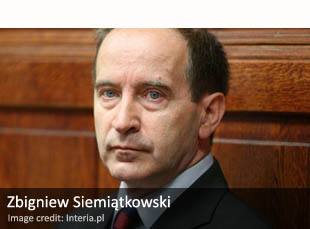
►►Poland ex-spy boss charged over CIA prison. Zbigniew Siemiątkowski, the former head of Poland’s foreign intelligence service faces charges of illegal detention and use of corporal punishment at an alleged secret CIA ‘black site’ used to house high-ranking terrorism suspects. Investigators allege the spy boss exceeded his powers and breached international law through the use of “unlawful deprivation of liberty” and “corporal punishment” against prisoners of war.

News you may have missed #703: US edition

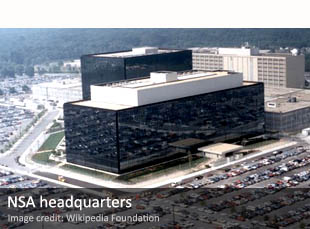
NSA headquartersBy IAN ALLEN | intelNews.org |
►►NSA pressed to reveal details on Google deal. The Electronic Privacy Information Center is locking horns with the National Security Agency over a secret deal the agency cut with Google following an attack on Gmail by Chinese hackers in 2010. The information center has filed a Freedom of Information Act request with the NSA to obtain information about the deal. That request was rejected by a federal court and an appeal process continues.
►►US spy agencies can keep data on Americans longer. Until now, the US National Counterterrorism Center had to immediately destroy information about Americans that was already stored in other government databases when there were no clear ties to terrorism. But it will now be able to store information about Americans with no ties to terrorism for up to five years under new Obama administration guidelines. The new rules replace guidelines issued in 2008 and have privacy advocates concerned about the potential for data-mining information on innocent Americans.
►►Islam convert leads CIA’s Counterterrorism Center. Roger, which is the first name of his cover identity, has been chief of the CIA’s Counterterrorism Center for the past six years. Colleagues describe Roger as a collection of contradictions. A chain-smoker who spends countless hours on a treadmill. Notoriously surly yet able to win over enough support from subordinates and bosses to hold on to his job. He presides over a campaign that has killed thousands of Islamist militants and angered millions of Muslims, but he is himself a convert to Islam. His defenders don’t even try to make him sound likable. Instead, they emphasize his operational talents, encyclopedic understanding of the enemy and tireless work ethic.

News you may have missed #697: US edition

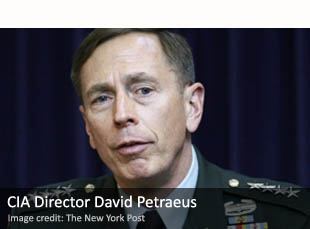
David PetraeusBy IAN ALLEN| intelNews.org |
►►What happens when CIA couples divorce? One retired CIA senior paramilitary officer, who served for more than two decades and lives in Virginia, said he was told several years ago that the divorce rate for the agency’s operations division was astonishingly high. But unlike the Pentagon, which studies how often service members split up, and knows, for instance, that 29,456 of 798,921 military couples divorced last year, the CIA does not keep official tabs on its employees’ divorce rates.
►►Spies exchange tips in the cloud. While some US federal agencies shy away from cloud computing for fear of losing control over their data, the intelligence community and military increasingly are turning to networked services expressly to exert tighter security restraints, according to Jim Heath, Senior Science Adviser for the National Security Agency.
►►CIA Chief: We’ll spy on you through your dishwasher. More and more personal and household devices are connecting to the internet, from your television to your car navigation systems to your light switches. CIA Director David Petraeus cannot wait to spy on you through them. Earlier this month, Petraeus mused about the emergence of an “Internet of things” —that is, wired devices— at a summit for In-Q-Tel, the CIA’s venture capital firm. “‘Transformational’ is an overused word, but I do believe it properly applies to these technologies”, Petraeus enthused, “particularly to their effect on clandestine tradecraft”.

Mossad, CIA, ‘agree Iran has no active nuclear weapons program’

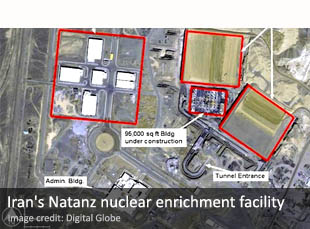
Iran's Natanz nuclear enrichment facilityBy JOSEPH FITSANAKIS| intelNews.org |
Quoting American intelligence sources, The New York Times reports that intelligence agencies from the United States and Israel agree that Iran suspended its nuclear weapons program years ago, and that Tehran is not currently attempting to revive it. As intelNews has been reporting consistently since 2009, the overwhelming consensus in the US intelligence community is that the Iranian regime suspended all efforts to build a nuclear bomb in 2003. Furthermore, the US intelligence community maintains that the decision to turn Iran into a nuclear power has yet to be conclusively taken in Tehran. This was first outlined in the 2007 US National Intelligence Estimate (NIE), an annual report cooperatively authored by the heads of all US intelligence agencies. This consensus appears even wider after Sunday’s New York Times report, which maintains that, even though many hawkish Israeli politicians advocate aggressive action against Iran, Israel’s intelligence agency, the Mossad, is in broad agreement with the premise of the 2007 NIE. The Times cites an anonymous “former senior American intelligence official”, who says that, although Israeli intelligence planners direct “very hard questions” to their American counterparts, the “Mossad does not disagree with the US on the [Iranian] weapons program”, and that “there is not a lot of dispute between the US and Israeli intelligence communities on the facts”. Undeniably, the 2007 NIE has its detractors, including some who accuse the US intelligence community of refusing to realize “that Iran now has the capability to change the balance of power in the Gulf”. The latest report in The Times does not deny that there are “significant intelligence gaps” in Washington’s ability to understand Iran’s intentions. Iran, argues the report —correctly— is “one of the most difficult intelligence collection targets in the world”. Read more of this post

News you may have missed #696

NSA's Utah Data CenterBy IAN ALLEN| intelNews.org |
►►French spies to stage labor protest. The main union representing French domestic intelligence officers, those charged with counter-espionage and anti-terror investigations, called Wednesday on its members to stage a protest. The head of the SNOP union, which represents senior police officers and is the main labor body for members of the DCRI security agency, said his members planned a “gathering” at their Paris headquarters. A smaller union said it wanted no part in the protest, and it was not clear how many of the agency’s 4,000 intelligence officers planned to take part.
►►James Bamford on the NSA’s new spy center in Utah. Under construction by contractors with top-secret clearances, the blandly named Utah Data Center is being built in Bluffdale for the National Security Agency. A project of immense secrecy, it is the final piece in a complex puzzle assembled over the past decade. Its purpose: to intercept, decipher, analyze, and store vast swaths of the world’s communications as they zap down from satellites and zip through the underground and undersea cables of international, foreign, and domestic networks. The heavily fortified $2 billion center should be up and running in September 2013.
►►Author of unauthorized CIA book gave proceeds to charity. After former CIA officer Ishmael Jones wrote a book about the CIA without gaining prior approval from the Agency, the government sought and won a judicial ruling that Jones had acted in violation of his CIA secrecy agreement, and that he could be held liable for the breach. But the government’s current efforts to seize the financial proceeds from Jones’ 2010 book, The Human Factor: Inside the CIA’s Dysfunctional Intelligence Culture, have been frustrated by the fact that the author has already given the proceeds away to charity.

Analysis: US spy agencies stil in the dark about Syria

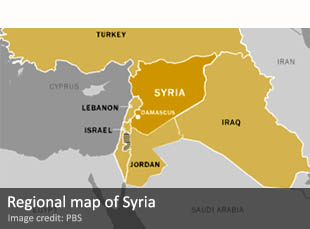
Regional map of SyriaBy JOSEPH FITSANAKIS| intelNews.org |
It has been almost a year since the ongoing anti-government uprising erupted in Syria. But intelligence agencies in the United States are still struggling to make sense of most aspects of the spiraling conflict. In February, the US Department of State closed down its embassy in the Syrian capital Damascus and recalled all of its diplomatic personnel, including US Ambassador to Syria, Robert Ford, to Washington. Since then, the Central Intelligence Agency, which conducted its operations in Syria largely out of the US embassy there, has been forced to rely on scattered fragments of its agent network in Damascus, as well as on the work of a handful of allied intelligence services, including those of Jordan, Turkey, Israel, and Saudi Arabia. Naturally, the closure of the US embassy in Syria has boosted the role of the signals intelligence collection and satellite reconnaissance. But, none of these intelligence collection channels have been able to compensate for the lack of adequate human intelligence collection from inside Syria. As a result, according to The Washington Post, which cites “senior US officials”, US intelligence-gathering on the situation in Syria is currently “fragmentary [and] out of focus”. Specifically, the US intelligence community remains unclear about the tactical and strategic intentions of the regime of Syrian President Bashar al-Assad, and has limited information about the makeup and strength of the opposition forces in the country. Perhaps more importantly, American intelligence analysts have little evidence on which to base any sort of firm conclusions about the extent of involvement of militant Islamists in the funding and operations of the Syrian opposition. Read more of this post

News you may have missed #690

Katya ZatuliveterBy IAN ALLEN| intelNews.org |
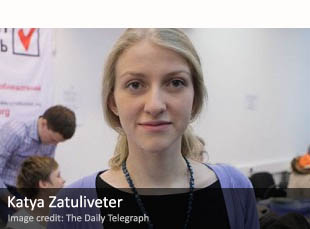
►►Interview with Katia Zatuliveter. Just over three months ago Katia Zatuliveter was fighting to clear her name over claims she was a Russian spy who had passed British military secrets to Moscow. Now, in her first newspaper interview since winning her appeal against deportation from the UK, Katia Zatuliveter has told The Daily Telegraph why she does not support Vladimir Putin.
►►US Special Forces in Afghanistan to transfer to CIA. Top US Pentagon officials are considering putting elite special operations troops under CIA control in Afghanistan after 2014. If the plan were adopted, the US and Afghanistan could say there are no more U.S. troops on the ground in the war-torn country because once the SEALs, Rangers and other elite units are assigned to CIA control, even temporarily, they are not considered soldiers.
►►Indian army accused of spying on government officials. The Indian army is accused of using two surveillance vehicles to snoop near the offices and houses of senior Indian Defense Ministry officials. The vehicles with “off the air interceptors” were alleged to be parked in various localities in the New Delhi. Similar equipment is said to be used by the National Technical Research Organisation to listen to conversations without bugging the premises. The Defense Ministry has reportedly ordered a probe by the country’s Intelligence Bureau.

News you may have missed #688

U-2 surveillance aircraftBy IAN ALLEN| intelNews.org |
►►Analysis: StratFor email leaks offer frightening view of government intelligence. As promised in December, WikiLeaks has begun to release a stash of emails related to the modus operandi of the private intelligence sector, using Texas-based StratFor as a case study. The CIA has long used private intelligence firms for ‘black ops’, allowing for plausible deniability in the event that an operation goes pear-shaped and public accountability threatens. But these emails suggest that there’s now far more to the incompetence of America’s intelligence services than meets the eye.
►►US still using U-2 to spy on North Korea. For more than 35 years, the U-2 has been one of Washington’s most reliable windows into military movements inside North Korea. Unlike satellites, U-2s can be redirected at short notice to loiter over target areas. Last month, the US Air Force postponed at least until 2020 any plans to replace them with costlier, unmanned Global Hawks. Now, as the world watches for signs of instability during North Korea’s transition to a new leadership, the U-2 operations are as important ―or more so― than ever.
►►Thin line separates cyberspies from cybercriminals. New research appears to raise questions over the conventional wisdom that pure nation-state cyberspies rarely dabble in traditional financial cybercrime. Dell SecureWorks Wednesday shared details of a complex study it conducted of two families of espionage malware that have infected government ministry computers in Vietnam, Brunei, Myanmar, Europe, and at an embassy in China.

CIA joins hunt for white British woman who joined Somali militants

Samantha LewthwaiteBy JOSEPH FITSANAKIS| intelNews.org |
American intelligence officials are said to be actively cooperating with Kenyan authorities in the hunt for a white British woman believed to have joined a Somali group that is part of al-Qaeda in East Africa. The woman, Samantha Lewthwaite, 28, was married to Jermaine Lindsay, a British suicide bomber who blew up a train at London’s King’s Cross station on July 7, 2005. Lewthwaite, who by that time had two children by Lindsay, disappeared soon after the so-called 7/7 bombings, and allegedly reappeared in England in 2009, to give birth to her third child, which she reportedly had with a Moroccan man. Today she is considered an important organizer of al-Shabaab, (The Party of Youth), which used to be the youth wing of Somalia’s Islamic Courts Union (ICU). The Sunni-Muslim ICU ruled most of Somalia until the 2006 US-supported invasion of the country by Ethiopia. Ever since that time, al-Shabaab has become one of Africa’s most highly organized militant groups, relying on hundreds of Westerners who have flocked to Kenya, Somalia, Tanzania, and elsewhere, to join a peculiar form of jihad (holy war) inspired largely by al-Qaeda. According to reports from the UK, Lewthwaite is one of at least three British planners involved in setting up al-Shabaab’s operations in Kenya, Somalia, and elsewhere. She first entered Kenya several years ago, using a forged passport belonging to a South African identity theft victim called Natalie Faye Webb. In February of 2011, she is believed to have entered Kenya again, on foot, via Tanzania. Her travels are thought to be connected with her fundraising and other organizing activities on behalf of al-Shabaab, which appear to include —aside from financing— procuring weapons and training recruits. Not long ago, Kenyan police said a white woman matching Lewthwaite’s description managed to escape during a raid at the house of a suspected Islamist militant in Kenyan capital Nairobi. Read more of this post

News you may have missed #685

Aleksandr Z. AnkvabBy IAN ALLEN| intelNews.org |
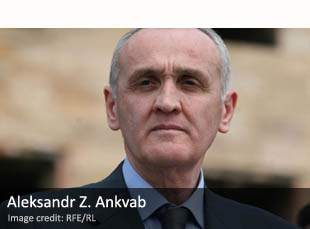
►►Abkhazia President survives assassination attempt. Unidentified assassins tried on Wednesday to kill Aleksandr Z. Ankvab, the president of Abkhazia, a Russian-backed rebel enclave of Georgia. The assailants used automatic rifles, grenade launchers and a powerful roadside bomb in an attack that raised fresh questions about Moscow’s ability to preserve order there.
►►Groups object to CIA declassification charges. Open government advocates are protesting a recently adopted CIA policy that allows the agency to charge up to $72 an hour to review requests to declassify secret records. The effect “will be to price the public out of submitting” requests for “mandatory declassification review,” the American Library Association, Sunlight Foundation and more than 30 other organizations said in a letter Thursday to CIA Director David Petraeus.
►►Analysis: Fallout from Syrian colonel’s abduction in Turkey. The smokescreen surrounding the abduction of Syrian Col. Hussein Harmush, who defected to Turkey in June 2011 before being handed over to the Syrian secret service in September 2011, has begun to clear in recent weeks following a judicial probe. Claims that Turkey’s spy agency, the National Intelligence Organization (MİT), was involved in handing Harmush over to Syria were finally confirmed on February 2 when the Adana Chief Public Prosecutor’s Office issued a written statement saying one MİT agent had been arrested for questioning and further MİT officials had been called to testify as “suspects” in the scandalous repatriation case.

News you may have missed #684

Boris KarpichkovBy IAN ALLEN | intelNews.org |
►►Pakistan sacks health workers who helped CIA locate bin Laden. Seventeen local health workers have been fired in Abbottabad for their part in a CIA scheme to try to confirm the presence of Osama bin Laden in the northern Pakistani town. The low-ranking health department employees were punished for helping Dr Shakil Afridi, who was assigned by the CIA to set up a fake vaccination scheme in Abbottabad, ahead of the US military operation that found and killed the al-Qaida leader there.
►►Estonia arrests couple for spying for Russia. Estonian prosecutors said Aleksei Dressen, who works for Estonia’s security police, and his wife, Viktoria Dressen, were arrested at Tallinn airport as she was boarding a flight to Moscow on February 22. Aleksei Dressen allegedly went to the airport to give his wife a folder that contained classified information. Meanwhile, in neighboring Lithuania, the government has released the names of 238 citizens who were reservists for the KGB during the Cold War.
►►KGB defector talks to British newspaper. Since fleeing to Britain in the late 1990s Boris Karpichkov has preferred to keep a low profile —unlike another, better-known Moscow agent who fled to London, one Alexander Litvinenko. He says he ran audacious disinformation operations against the CIA and broke into and planted bugs in the British embassy in Riga. But in 1995 he grew unhappy with the increasingly corrupt FSB (the KGB’s successor), which, he says, failed to pay him. He spent several months in a Moscow prison before slipping into Britain on one of the false passports he was given as a KGB officer. He hasn’t been back to Russia since.

News you may have missed #682

Lieutenant General Ronald BurgessBy IAN ALLEN | intelNews.org |
►►Is there a Mossad base near Iran? The London-based Sunday Times has published an interview with a man claiming to be an Azerbaijan-based agent of Israeli intelligence agency, who confirmed the existence of such a base. The man, identified in the article as “Shimon,” told the paper that there were dozens of Israeli Mossad agents working out of the base. The meeting between the agent and the London Times‘ reporter took place in Baku, near the Israeli Embassy, the report said.
►►Analysis: CIA report on Soviet bioweapons still secret. It has been three decades since the Reagan administration accused the Soviet Union and Vietnam of using chemical weapons known as yellow rain. We still do not know how the US came to this conclusion, but have good reason to believe that it was based on flawed or distorted intelligence. A classified critique of the intelligence behind those charges, written several years ago for the Central Intelligence Agency, could shed light on what happened. Last year, Matthew Meselson, a Harvard expert on chemical and biological weapons, filed a Freedom of Information Act request to get the report released. He was turned down.
►►US official says Iran unlikely to strike first. Lieutenant General Ronald Burgess, director of the US Defense Intelligence Agency, said the Iranian military is unlikely to intentionally provoke a conflict with the West. He said Iran probably has the ability to “temporarily close the Strait of Hormuz with its naval forces”, as some Iranian officials have threatened to do if attacked or in response to sanctions on its oil exports by the US and European Union. But, he added, “Iran is unlikely to initiate or intentionally provoke a conflict or launch a preemptive attack”.