CIA launches new research and development laboratory to compete with Silicon Valley
September 23, 2020 Leave a comment
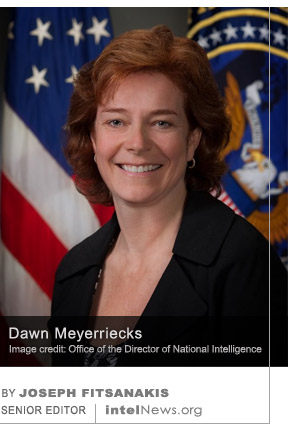 The United States Central Intelligence Agency has announced the creation of a new advanced research laboratory system that it hopes will allow it to compete with Silicon Valley for attracting top technical talent. The initiative, announced on Monday, is called CIA Labs, and it aims to attract scientists and engineers with an interest in advanced research projects that have applied potential in the area of national security.
According to Dawn Meyerriecks (pictured), who heads the CIA’s Directorate of Science and Technology, the purpose behind this new initiative is to allow the agency to attract and retain scientists and engineers, who are highly sought after by some of America’s top technology firms, like Google and Oracle. MIT’s Technology Review, which wrote about this initiative, referred to it as a “skunkworks”. The term refers to a select team of experts within an organization, who are given the flexibility to operate with independence and without restrictions by bureaucratic red tape, in order to produce something new and innovative.
According to Meyerriecks, CIA Labs will give the agency’s top technical talent the ability to file patents in the public domain. That was impossible in the past, given that virtually all of the research that takes place in the CIA’s Directorate of Science and Technology is classified. However, there may be civilian applications of some of these inventions that do not impinge on classified research. In such cases, CIA scientists who file patents will be able to profit from them, by making up to 15 percent of the income of a patent, while the Agency will keep the remaining 85 percent. The additional salary cap that an inventor is limited to is $150,000, which would more than double the yearly income of most CIA scientists.
Meyerriecks said on Monday that, ideally, CIA Labs will end up generating more funds for the agency than it costs to set up. She added that some of the areas of research that the new CIA venture is interested in include biotechnology, advanced materials science, as well as artificial intelligence, data analytics and high-performance quantum computing. The latter three are needed to help the CIA manage the immense volume of data it gathers on a daily basis, said Meyerriecks.
► Author: Joseph Fitsanakis | Date: 23 September 2020 | Permalink
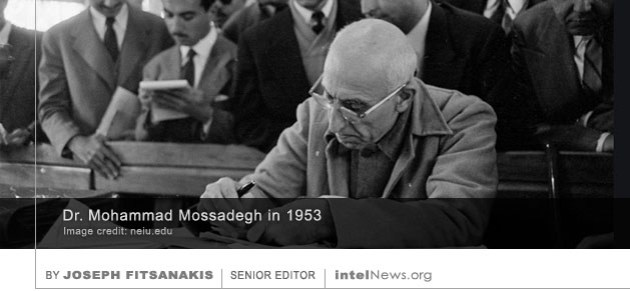 British researchers have found a lost interview by a senior British intelligence officer who led the joint Anglo-American coup in Iran in 1953. The coup overthrew the democratically elected government of Prime Minister Dr. Mohammad Mossadegh and reinstalled the shah (king) of Iran, Mohammad Reza Pahlavi, a close Western ally. London was alarmed by Dr. Mossadegh’s decision to nationalize the Anglo-Iranian Oil Company (later renamed to British Petroleum, or BP), which would deny Britain its lucrative stake in the Middle Eastern energy market. The British also viewed Dr. Mossadegh as being too close to the Soviet Union.
 Turkey’s spy agency systematically downplayed the Islamist views of men seeking to join a Syrian rebel group, which was supported by the United States Central Intelligence Agency on account of its moderate leanings. The United States
 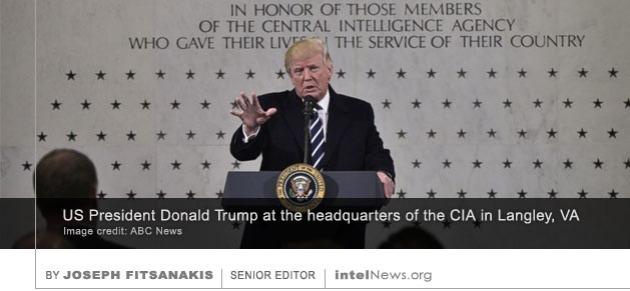 The United States Central Intelligence Agency was secretly authorized by the White House in 2018 to drastically expand its offensive cyber operation program —a development that some experts describe as a significant development for the secretive spy agency. However, the move has reportedly not pleased the Department of Defense, which sees itself as the primary conduit of American offensive operations in cyberspace.
 The spy agency of New Zealand broke into at least three foreign embassies in Wellington at the request of the United States and Britain, according to an investigative report by the country’s public radio broadcaster. Radio New Zealand reported on Tuesday that the highly controversial break-ins targeted the Indian High Commission and the Iranian Embassy in the late 1980s and early 1990s. A few years earlier, the New Zealand spy agency had allegedly broken into the Czechoslovakian embassy in Wellington.
 The general
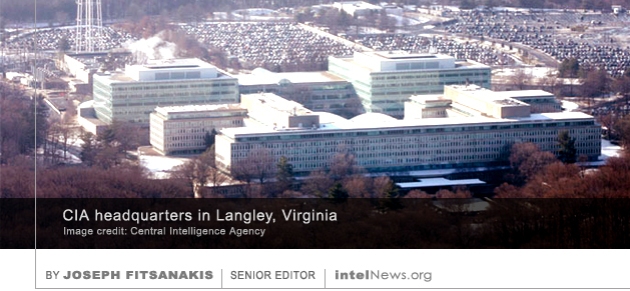
  Complacency and substandard security by the United States Central Intelligence Agency were behind the Vault 7 leak of 2017, which ranks as the greatest data loss in the agency’s history, according to an internal report. The Vault 7 data loss was particularly shocking, given that the CIA should have taken precautions following numerous leaks of classified government information in years prior to 2017, according to the report.
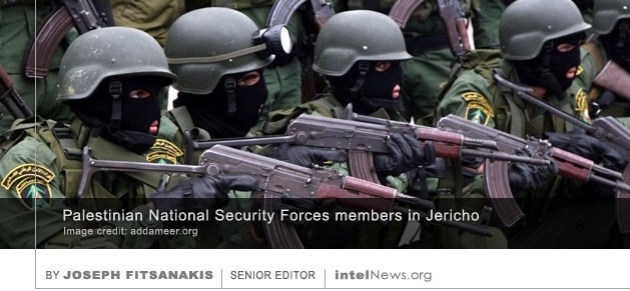 The Palestinian Authority has announced an immediate cessation to all intelligence and security ties with Israel and the United States. The announcement, made on Thursday by Palestinian Authority President Mahmoud Abbas, marks the strongest response so far by the Fatah-dominated administration to the Israeli government’s plan to annex large parts of the occupied West Bank.
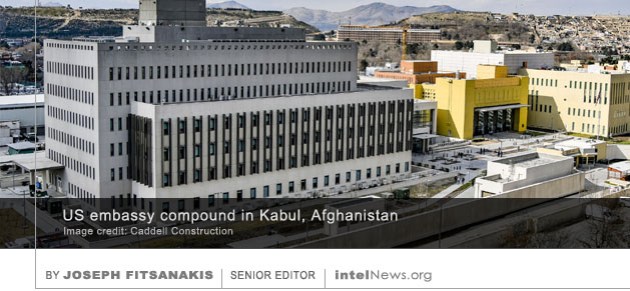 The White House is considering a plan to pull back Central Intelligence Agency officers from stations across Afghanistan, in a last-ditch effort to boost prospects for a peace deal with the Taliban. Plans for the peace deal were announced in February by representatives of the US and the Pashtun-based Sunni group, which has waged an Islamist insurgency against the US-supported government in Kabul since 2001.
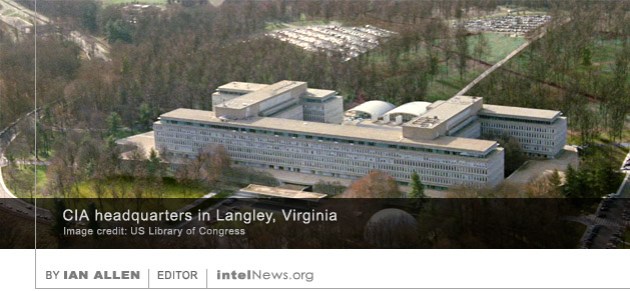 A leading Chinese cybersecurity firm has accused the United States Central Intelligence Agency of using sophisticated malicious software to hack into computers belonging to the Chinese government and private sector for over a decade.
 Switzerland’s Federal Department of Finance has filed a criminal complaint “against persons unknown” over media reports that a leading Swiss-based cryptological equipment manufacturer was secretly owned by the United States Central Intelligence Agency (CIA).
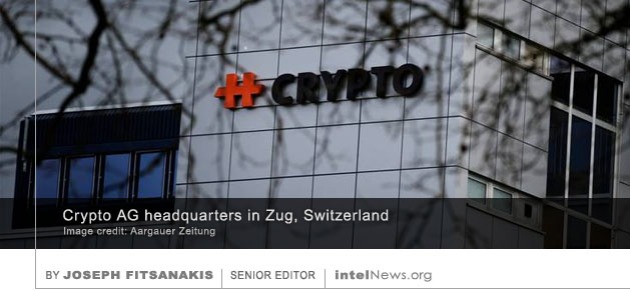 Switzerland is reeling from the shock caused by revelations last week that Crypto AG, the world’s leading manufacturer or cryptologic equipment during the Cold War, whose clients included over 120 governments around the world, was a front company owned by the United States Central Intelligence Agency.
 A day after the United States Department of Justice charged two Saudi citizens with engaging in espionage on American soil, Saudi officials hosted the director of the Central Intelligence Agency in Riyadh, reportedly to discuss “the longstanding Saudi-US partnership”.
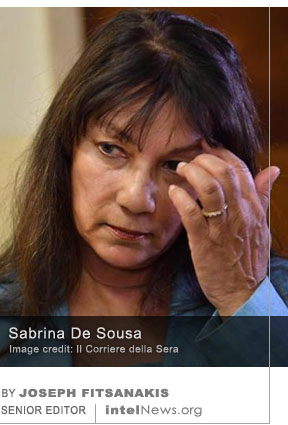 A former officer in the United States Central Intelligence Agency, who was convicted of involvement in the 2003 abduction of a Muslim cleric in Italy, says she fled Europe for the United States in fear of her safety. Sabrina De Sousa, 63, was a diplomat at the US consulate in Milan, Italy, when a CIA team abducted Hassan Mustafa Osama Nasr from a Milan street in broad daylight. Nasr, who goes by the nickname Abu Omar, is a former member of Egyptian militant group al-Gama’a al-Islamiyya, and was believed by the CIA to have links to al-Qaeda. Soon after his abduction, Nasr was renditioned to Egypt, where he says he was brutally tortured and raped, and held illegally for years before being released without charge.






 intelNews.org
CIA lost four paramilitary officers in daring South China Sea operation, say sources
September 25, 2020 by Joseph Fitsanakis 2 Comments
The four men were allegedly paramilitary operations officers (PMOOs) working for the CIA’s Maritime Branch, one of the three branches of the Agency’s Special Operations Group (SOG). The SOG operates under the CIA’s Special Activities Center (formerly Special Activities Division), which plans and supervises paramilitary and psychological operations around the world.
According to Yahoo News, the ill-fated operation took place in the South China Sea, a contested region that forms the epicenter of an ongoing rivalry between China, Taiwan, Vietnam, Malaysia and the Philippines, among other countries. The four PMOOs had been tasked with planting a sophisticated tracking device, disguised as a rock, which was designed to intercept signals produced by Chinese vessels belonging to the People’s Liberation Army (PLA) Navy.
The operation involved the use of a 40-foot vessel belonging to the CIA and registered to a front company in the Philippines. Onboard the ship were four PMOOs, according to Yahoo News: Stephen Stanek, Michael Perich, Jamie McCormick and Daniel Meeks. Stanek, the group leader, had served as an ordnance disposal diver in the US Navy before he was hired by the CIA. His co-diver, Perich, had joined the CIA after having recently graduated from the US Merchant Marine Academy. McCormick and Meeks had orders to stay onboard the vessel as supporting personnel.
Yahoo News claims the four men departed from Malaysia; they were carrying fake papers stating they had been hired by a Japanese company to transport the 40-foot ship to Japan. As they approached Luzon, the Philippines’ largest island, they decided to proceed with the mission, despite Tropical Storm Higos, which was dangerously approaching their location. The operation’s planners believed the storm would change course and would not affect the Luzon region. They were wrong, however, and the four men were lost at sea. Their bodies have never been found, according to Yahoo News.
Several months after the fatal incident, the CIA approached the families of the four late officers and invited them to Langley for a private ceremony, which was attended by the CIA’s leadership. That was the first time those family members were told that their loved ones had worked for the CIA. Yahoo News said it reached out to the family members, but they did not wish to comment on the story. The CIA also refused commenting on the report.
► Author: Joseph Fitsanakis | Date: 25 September 2020 | Permalink
Filed under Expert news and commentary on intelligence, espionage, spies and spying Tagged with CIA, covert operations, Daniel Meeks, front companies, Jamie McCormick, Michael Perich, News, paramilitary units, South China Sea, Stephen Stanek, United States