CIA not surprised by Soviet invasion of Czechoslovakia, documents show

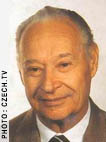
Alexander Dubček

Alexander Dubček

By IAN ALLEN | intelNews.org |
Newly declassified CIA documents from 1968 show that the Agency had warned the Lyndon B. Johnson administration that the USSR was preparing to invade Czechoslovakia later that year. Some of the documents have been released before, but were presented for the first time in an organized, searchable format last Friday, at a symposium held at the Lyndon B. Johnson Presidential Library, on University of Texas campus. The symposium, entitled “Strategic Warning and The Role of Intelligence: Lessons Learned from the 1968 Soviet Invasion of Czechoslovakia”, included participants from academia, as well as from the CIA and other intelligence agencies. Among documents presented at the gathering was a May 10, 1968, CIA memo, which termed Soviet-Czechoslovak relations a “crisis” and warned that the possibility of an armed Soviet invasion of Czechoslovakia could “no longer be excluded”. Read more of this post

News you may have missed #334

  • Analysis: Split up the CIA, says veteran officer. A 15-year CIA veteran, who goes by the pseudonym Ishmael Jones, reveals in a new book that the Agency now has only “a handful” of non-official-cover officers, i.e. spies not affiliated with a US diplomatic mission abroad. In The Human Factor: Inside the CIA’s Dysfunctional Intelligence Culture, Jones argues the CIA should be broken up and its pieces absorbed by other US intelligence agencies.
  • Turkey appoints new intelligence director. It is expected that Turkey’s National Intelligence Organization (MİT) will soon be headed by Dr. Hakan Fidan, who will replace Emre Taner. MİT’s reputation has recently been severely hit by the involvement of some of its personnel in the notorious Ergenekon affair.

Bookmark and Share

Comment: Is Palestinian Fatah Spying for Israel?

Mohammed Dahlan

Dahlan

By JOSEPH FITSANAKIS | intelNews.org |
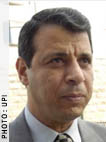
Gaza-based Palestinian movement Hamas has again accused a senior official of rival Palestinian group Fatah of spying for Israel. Speaking last week from Gaza Damascus, Syria, Hamas official Mohammed Nazal said that Fatah Central Committee member Mohammed Dahlan, who has been tipped for the post of Vice President in Fatah-controlled Palestinian National Authority, is actively gathering information on behalf of Israeli intelligence. Nazal said Hamas received a tip-off about Dahlan from a former security officer in the Palestinian National Authority, who appears to have defected to Hamas. The unnamed informant reportedly met with Hamas defense officials on Friday, and told them that Dahlan had asked him to “collect detailed information” about the March 26 execution of two Palestinians, who were accused by Hamas of working for Israeli intelligence. He also claimed that Dahlan showed him a lengthy list of known Hamas operatives and asked him to determine the precise location of their residences in the Gaza strip. Read more of this post

News you may have missed #331

  • CIA deputy director to step down. The Agency has denied it for months, but now the longtime rumor that its powerful deputy director, Stephen R. Kappes, was planning to resign has came true. Jeff Stein reports that “recently, grumbling about Kappes from within the CIA and without, on issues ranging from his nit-picking management style to his ties to the old order, has gotten louder. And now, apparently, Kappes has heard enough”.
  • US eyes cash deal for Kyrgyzstan base. How will the recent coup in Kyrgyzstan affect US-Kyrgyz arrangements on the Manas Air Base? A lot will depend on oil purchase deals between the US military and Kyrgyz autocrats.
  • Court case may reveal IRA spy’s role. Freddie Scappaticci, an IRA spy alleged to be the British army agent ‘Stakeknife’ could be forced into court by the wife of another IRA informer, who claims she suffered nervous breakdown after being kidnapped by him.

Bookmark and Share

News you may have missed #330

  • Pakistan released captured Taliban behind CIA’s back. IntelNews has not joined the chorus of commentators who have been claiming that the relationship between Pakistan’s Inter-Services Intelligence (ISI) directorate and the CIA has warmed up. It now appears that even as the ISI was collaborating with the CIA, it quietly freed at least two captured senior Afghan Taliban figures.
  • Kiwi activists accuse police of spying. New Zealand’s Peace Action Wellington has submitted an Official Information Act (OIA) request relating to domestic police surveillance, after accusing the police of “heavily spying on and running operations on protest groups”. It is not the first time that similar accusations have been directed against the country’s police force.
  • CIA suspected existence of Israeli nukes in 1974. Israel will neither confirm nor deny the rumored existence of its nuclear arsenal. But the CIA, which has kept an eye on Israel’s nuclear weapons project since at least the early 1960s, was convinced of its existence by 1974, according to a declassified report.

Bookmark and Share

News you may have missed #329

  • Iran insists US hikers had intelligence links. Iran’s intelligence minister, Heydar Moslehi, has said that Americans Shane Bauer, Joshua Fattal and Sarah Shourd, who were arrested on Iranian soil last July, “were in contact with intelligence services”. The evidence would “soon be made public”, he said.
  • Gerdes case shows difficulty of CIA jobs. The case of CIA employee Kerry Gerdes, who was recently convicted for falsifying interview reports while performing background checks on CIA employees and potential employees, reveals how difficult the job is for young CIA recruits, who expect it to be exciting or glamorous, according to seasoned investigators.
  • US still denying India access to Headley. There has been intense speculation in India and Pakistan that David Coleman Headley, a former US Drug Enforcement Administration informant, who was arrested by the FBI in October for plotting an attack on a Danish newspaper, is in fact a renegade CIA agent. Could this be why the US is denying India access to Headley?

Bookmark and Share

Analysis: Inside the US-Israeli intelligence relationship

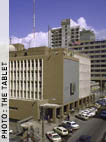
US embassy in Tel Aviv, Israel

US embassy, Israel

By JOSEPH FITSANAKIS | intelNews.org |
Yossi Melman and Dan Raviv, authors of Friends in Deed: Inside the US-Israel Alliance, have produced a lengthy, well-researched and up-to-date essay on US-Israeli intelligence relations. The essay, which appears in the latest issue of Tablet, carefully examines the highly complex subject of the CIA’s associations with the Mossad and Shin Bet. The fact is that, despite their unquestionable alliance Israel and the US have for years been among each other’s primary intelligence targets. Melman and Raviv correctly remind us that, by as early as 1954, US officials at the US embassy in Tel Aviv had already discovered several microphones in the office of the ambassador. Two years later, US counter-surveillance experts uncovered electronic bugs at the Tel Aviv residence of a US military attaché. Since then, the use of bribes and even women by the Shin Bet to lure US embassy guards has been frequent –and mostly unsuccessful. Read more of this post

News you may have missed #327

  • Cyberspies eyed Canadian visa applications. Personal information about Canadians applying for visas was swiped by cyberspies who hacked into Indian embassy computers in Afghanistan. The data theft was part of a wider cyberespionage operation launched by the underground hacking community in China and aimed primarily at political targets, according to academic researchers.
  • Israeli Arab jailed for spying on top general. Rawi Sultani, who is accused of informing Hezbollah of his membership in the same fitness club as Lieutenant-General Gabi Ashkenazi, as well as of methods of accessing the club, has been sentenced to nearly six years’ imprisonment.
  • CIA places American on assassination list. US-born al-Qaeda recruiter Anwar al-Aulaqi, who now lives in Yemen, has become the first US citizen to be placed on a CIA “targeted killing” list, which requires “special approval from the White House”.

Bookmark and Share

Interview with alleged CIA spy in Iran

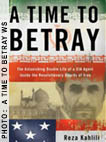
A Time to Betray

A Time to Betray

By IAN ALLEN | intelNews.org |
US government-owned Radio Liberty has aired an interview with an Iranian defector who claims to have worked as a CIA agent in the 1980s and early 1990s. The defector, who goes by the pseudonym Reza Kahlili (codename ‘Wally’), has authored what appears to be a CIA-sanctioned book, entitled A Time to Betray, in which he says he was a member of the Islamic Revolutionary Guard Corps. The IRGC is a sizable branch of the Iranian military that is ideologically committed to the defense of the 1979 Islamic Revolution. Kahlili, who now lives in California, says he concluded his studies in the US and returned to Iran shortly after the Revolution. But he quickly became disillusioned with the Islamic regime, and in 1981 met with the CIA in the United States and offered them his services. Read more of this post

News you may have missed #325

  • CIA investigator sentenced. CIA employee Kerry Gerdes, who falsified interview reports while performing background checks on CIA employees and potential employees, has been sentenced to two months in prison and six months of home confinement.
  • President Ford authorized warrantless wiretaps, memo shows. Even though he replaced Richard Nixon, who was forced to resign the US Presidency over intelligence abuses, Gerald Ford secretly authorized the use of warrantless domestic wiretaps soon after coming into office, according to a declassified document.
  • Yemeni court upholds alleged spies’ sentences. Three Yemenis, who were accused last year by the government of having “links to Israeli intelligence”, have had their sentences upheld by an appeal court.

Bookmark and Share

Analysis: Can the CIA sabotage the Iranian nuclear weapons program?

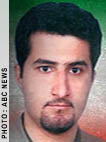
Shahram Amiri

Shahram Amiri

By JOSEPH FITSANAKIS | intelNews.org |
There is no doubt that the CIA has been actively trying to sabotage Iran’s nuclear weapons program since at least February of 2008, when US President George W. Bush authorized Langley to intensify its covert efforts against Tehran. It is also true that the US was able to partially sabotage Iran’s nuclear program by eliminating the A.Q. Khan nuclear proliferation network, and by employing scientific front companies and cooperative suppliers, who gave the Iranians faulty hardware. The defection to Washington of senior Iranian nuclear scientist Shahram Amiri provides recent evidence of the existence of a covert US project to “decapitate” the Iranian nuclear weapons program, by luring away leading Iranian researchers. On the other hand, it is worth wondering why the CIA chose to remove Amiri from the Iranian nuclear program, instead of asking him to remain an agent-in-place, which would have been far more beneficial for Langley. Read more of this post

News you may have missed #324 (CIA edition)

  • Intelligence not hampered by waterboarding ban, says CIA’s top spy. Michael Sulick, head of the CIA’s National Clandestine Service, told a student audience last week that the spy agency has seen no fall-off in intelligence since waterboarding was banned by the Obama administration.
  • CIA given details of British Muslim students. Personal information concerning the private lives of almost 1,000 British Muslim university students is to be shared with US intelligence agencies. IntelNews has frequently reported on the CIA’s increased activities in the UK.
  • CIA death at Salt Pit gets fresh attention. Jeff Stein revisits the case of Gul Rahman, who died in 2002 after weeks of interrogations at the Salt Pit secret CIA facility in Afghanistan. His death was kept off the CIA books, and his body, which was secretly buried, has never been found.

Bookmark and Share

Senior Iranian scientist defected to CIA: report

Shahram Amiri

Shahram Amiri

By JOSEPH FITSANAKIS| intelNews.org |
ABC News appears to confirm earlier rumors, which intelNews reported on last December, that a senior Iranian nuclear scientist has defected to the CIA. The Iranian government had initially accused American and Saudi intelligence agencies of kidnapping Shahram Amiri, a central figure in the Iranian nuclear research program, who disappeared last June during a hajj pilgrimage in Mecca, Saudi Arabia. However, as intelNews reported last year, French intelligence sources  claimed that Amiri’s defection was facilitated through a carefully planned intelligence operation involving the CIA, as well as French and German operatives. Moreover, the alleged defector was said to have secretly briefed International Atomic Energy Agency inspectors in Frankfurt, Germany, before they traveled to Iran to inspect a previously undeclared Iranian nuclear facility near the city of Qum. According to ABC News, which cites “people briefed on the operation by intelligence officials”, not only has Amiri defected to the CIA, but he has already been “extensively debriefed” since his defection. Read more of this post

News you may have missed #319

  • CIA asks Gulf countries to monitor terrorist funding. The CIA has reportedly asked Arab/Persian Gulf countries “to tighten surveillance and look for any suspicious movement of funds” in regional banks.
  • Questions remain in Headley terrorism case. The New York Times has aired an update on the court case of Pakistani-American David Coleman Headley, a former US Drug Enforcement Administration informant, who was arrested by the FBI in October for plotting an attack on a Danish newspaper. The paper points out that Headley “moved effortlessly between the United States, Pakistan and India for nearly seven years, training at a militant camp in Pakistan on five occasions”. There has been intense speculation in India and Pakistan that Headley is in fact a renegade CIA agent.

Bookmark and Share

News you may have missed #318

  • US State Dept. lawyer defends CIA drone attacks. State Department legal adviser Harold Koh has told a conference that “the considered view of this administration” is that the controversial CIA-operated drone attacks inside Pakistan “comply with all applicable law, including the laws of war”.
  • How the CIA let Anwar al-Aulaqi escape to Yemen. Last year, the Yemeni government asked the CIA to help collect intelligence on US-born al-Qaeda recruiter Anwar al-Aulaqi. But the CIA refused, and so did US Special Forces officials, who had been asked by the Yemenis to help them pursue Aulaqi. Just months later, US Army Major Malik Nidal Hasan, who was in contact with al-Aulaqi, killed 13 US soldiers at Fort Hood, Texas.
  • More on alleged Israeli spy caught in Algeria. Algerian authorities insist that a man (identified only as “Alberto”), who was captured after entering Algeria using a forged Spanish passport, is a Mossad agent. There are also rumors that the US embassy in Algiers has been involved in the case, and that it was for this reason that FBI deputy director John Pistole traveled to Algeria last week.

Bookmark and Share