News you may have missed #385

  • Indian, Pakistani spy chiefs meet in Islamabad. The meeting between the Director of India’s General Intelligence Bureau, Rajiv Mathur, and his Pakistani counterpart Javed Noor, took place in the aftermath of the arrest of Madhuri Gupta, second secretary at the Indian high commission in Islamabad, Pakistan, who is accused of passing on secrets to Pakistan’s ISI spy agency.
  • CIA releases documents on Korean War. The US Central Intelligence Agency has released a document collection that includes more than 1,300 redacted files consisting of national estimates, intelligence memos, daily updates, and summaries of foreign media concerning developments on the Korean Peninsula from 1947 until 1954.
  • Lebanon to probe top government officials in Israeli spy ring case. The arrest of a senior Lebanese phone firm manager, who is accused of spying for Israel, has prompted prosecutors to ask that several senior government officials be stripped of their immunity so that they can be investigated in relation to a nationwide crackdown on alleged Israeli spy rings in the country.

Bookmark and Share

CIA slowly opens up about botched 1952 mission in China

CIA HQ

CIA HQ

By JOSEPH FITSANAKIS | intelNews.org |
The CIA has produced an hour-long documentary about a failed 1952 covert mission inside China, which resulted in the death of two American pilots and the capture of two CIA paramilitary officers, who spent a total of 40 years in Chinese prisons. The documentary, which premiered last week on a restricted basis at the Agency’s Langley, Virginia, headquarters, is based on internal CIA accounts of the operation, some of which were released in 2006. The premiere was reportedly attended by John Downey and Richard Fecteau, two CIA paramilitary officers on their first mission, who were captured by Chinese People’s Liberation Army (PLA) units inside Chinese territory, after the CIA-operated C-47 Skytrain airplane that was carrying them deep inside Chinese airspace was shot down in a Chinese ambush. Read more of this post

News you may have missed #375 (analysis edition)

  • Analysis: Israel worried by new Turkey spy chief’s defense of Iran. Israel’s defense establishment, which maintains ties with Turkey’s national intelligence organization (MİT), is concerned over the recent appointment of Hakan Fidan as head of that organization, and the implications of that appointment vis-a-vis Turkish relations with Israel and Iran.
  • Analysis: How the CIA bolstered radical Islam during Cold War. The CIA’s battle with communism during the Cold War allowed radical Islamists to gain a foothold in Europe, according to a new book by Pulitzer Prize-winning author Ian Johnson, entitled A Mosque in Munich: Nazis, the CIA and the Rise of the Muslim Brotherhood in the West.

Bookmark and Share

Documents show Israel offered nukes to apartheid South Africa

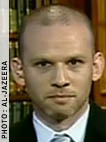
Sasha Polakow-Suransky

Polakow-Suransky

By JOSEPH FITSANAKIS | intelNews.org |
Apartheid-era government documents unearthed by an American doctoral researcher reveal that the government of Israel offered to sell nuclear warheads to the racist regime in South Africa, and could possibly provide the first documentary evidence of the existence of Israel’s purported nuclear arsenal. Successive Israeli governments have followed what is often called ‘a policy of ambiguity’, refusing to either confirm or deny the nuclear weapons’ rumored existence. But the documents, which date from 1975, contain detailed minutes of meetings between senior Israeli and South African cabinet officials, including then South African defense minister P.W. Botha and then Israeli defense minister –and Israel’s current President– Shimon Peres. Sasha Polakow-Suransky, the American academic who requested the declassification of the controversial documents, says the Israeli government tried but ultimately failed to prevent the South African government of Jacob Zuma from releasing them. Read more of this post

Former CIA couple in effort to ‘un-demonize’ agency

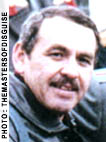
Tony Mendez

Mendez in 1990

By IAN ALLEN | intelNews.org |
A husband-and-wife CIA team, who married after retiring from the agency, after a collective career spanning over half a century, are speaking around the country in an effort to “humanize [and] un-demonize the CIA”. Antonio (Tony) and Jonna Mendez joined the agency in the 1960s, and spent the next 25 years at the CIA’s Office of Technical Services. Tony was eventually promoted to Chief of Disguise, and later Chief of the Graphics and Authentication Division, whose mission is –among other tasks– transforming the identities of CIA field operatives, by supplying them with high-quality forged documentation for use in their various missions. In 1997, he was honored by the CIA as one of the “50 trailblazers” in the agency’s history. Jonna Mendez worked for 27 years as a spy camera expert, and was tasked with training CIA officers in the use of covert technologies. Read more of this post

News you may have missed #353

  • Name of British Mossad agent handed to Interpol. Dubai police have identified another suspect in the January murder of Hamas operative Mahmoud al-Mabhouh, by Israeli intelligence agency Mossad. He is reportedly a 62-year-old British citizen, who is believed to be currently hiding in western Africa.
  • Russia jails man for spying for the US. Gennady Sipachyov, a Russian whose age and profession have been kept secret by Moscow, has been sentenced to a four-year sentence for allegedly emailing secret military maps identifying classified Russian military infrastructure to the US Pentagon in 2008. Earlier this month, a Russian court rejected an appeal by another alleged US spy, Igor Sutyagin.
  • Bulgarian government wants to copy CIA. Bulgaria’s Defense Minister, Anyu Angelov, has proposed the merging of intelligence services to create a mega-structure of the CIA type. Meanwhile, a panel investigating Bulgaria’s communist-era police files has exposed two of the country’s former counterintelligence heads as former communist state security agents.

Bookmark and Share

News you may have missed #348

  • US knew Guatemalan Army was behind notorious 1982 massacre. Declassified documents released on May 7 show that US officials knew the Guatemalan Army was responsible for the 1982 Dos Erres massacre, one of Guatemala’s most shocking human rights crimes.
  • New presiding judge in US FISA court. Three years after he was first appointed to serve on the US Foreign Intelligence Surveillance Court (FISC), John D. Bates has taken over as the presiding judge. Last week, Judge Martin Feldman was appointed to serve on the secretive court, which reviews (and invariably approves) government applications for counterintelligence surveillance and physical search.
  • UAE security sector benefits from al-Mabhouh assassination. Business for security companies in the United Arab Emirates has been brisk, with some companies reporting a 40% increase in business, as hotels spend millions bolstering their security systems. Some attribute this to last January’s killing in Dubai of Hamas operative Mahmoud al-Mabhouh, by a Mossad hit squad.

Bookmark and Share

Analysis: An Economic Security Role for European Spy Agencies?

Economic espionage

Economic spying

By JOSEPH FITSANAKIS | intelNews.org |
Last February, Spain’s intelligence service began investigating alleged suspicious efforts by foreign financial speculators to destabilize the Spanish economy. According to newspaper El País, the Spanish government asked the country’s Centro Nacional de Inteligencia (CNI) to probe links between speculative moves in world financial markets and a series of damaging editorials “in the Anglo-Saxon media”. There are indications that the National Intelligence Service of Greece (EYP) is following in the CNI’s footsteps. In February, when Athens and Brussels began to realize the magnitude of the financial crisis threatening the European common currency, several news outlets suggested that the EYP was cooperating with Spanish, Irish and Portuguese intelligence services in investigating a series of coordinated speculative attacks on money markets, most of which allegedly originated from London and Washington. Read more of this post

News you may have missed #341

  • Russian court rejects ‘spy’ scientist’s appeal. A Russian court has rejected an appeal for the release of academic Igor Sutyagin, former division head in the Russian Academy of Sciences’ USA and Canada Institute, who is serving a 15-year sentence for allegedly passing state secrets to foreign officials.
  • Ex-CIA agent’s arrest in VA was eventful, say sources. We reported earlier this week that Andrew M. Warren, the CIA’s Algiers station chief, who is accused of having drugged and raped two Algerian women at his official residence, was arrested at a Norfolk, Virginia motel, after he failed to show up for a court hearing. It now appears that Warren “had a gun in his waistband […] and officers used a taser to subdue him”.
  • Documents show CIA thought Gary Powers had defected. Declassified documents show the CIA did not believe that Gary Powers, who piloted the U2 spy plane shot down over Russia in 1960, causing the U2 incident, had been shot down. Instead, the agency spread the rumor that Powers “baled out and spent his first night as a defector in a Sverdlovsk nightclub”!

Bookmark and Share

CIA not surprised by Soviet invasion of Czechoslovakia, documents show

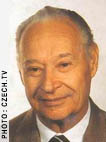
Alexander Dubček

Alexander Dubček

By IAN ALLEN | intelNews.org |
Newly declassified CIA documents from 1968 show that the Agency had warned the Lyndon B. Johnson administration that the USSR was preparing to invade Czechoslovakia later that year. Some of the documents have been released before, but were presented for the first time in an organized, searchable format last Friday, at a symposium held at the Lyndon B. Johnson Presidential Library, on University of Texas campus. The symposium, entitled “Strategic Warning and The Role of Intelligence: Lessons Learned from the 1968 Soviet Invasion of Czechoslovakia”, included participants from academia, as well as from the CIA and other intelligence agencies. Among documents presented at the gathering was a May 10, 1968, CIA memo, which termed Soviet-Czechoslovak relations a “crisis” and warned that the possibility of an armed Soviet invasion of Czechoslovakia could “no longer be excluded”. Read more of this post

News you may have missed #323 (Cold War edition)

  • Story of the Soviet Trojan seal retold. Ken Stanley, who was chief technology officer at the US State Department’s Diplomatic Security Service from 2006 to 2008, retells the story of the large wooden replica of the US Great Seal, which the Soviets gave to the US ambassador to Moscow as a present in 1945. The seal, which was, of course, bugged, hanged in the US ambassador’s office until 1952, when it was discovered.
  • Soviet spy radio found in a Welsh field. It has been revealed that a Soviet encrypted radio transmitter was found near the Welsh coastal town of Ipcress in 1960. It is speculated that it belonged to the late Goronwy Rees, an academic from Aberystwyth, who was a friend of the Cambridge Five, although his daughter disputes it.
  • 1950s-60s spy gadgets on sale at eBay. Gadgets used by British spies who trained from the 1940s to the 1960s at top-secret camp Camp X near Ontario, Canada, are being sold off on eBay. They include a camera that shoots darts, a lipstick tube containing a dagger and fake monkey dung that explodes (!).


Bookmark and Share


News you may have missed #315

  • Nuclear bunker spy comes out of hiding. A British retiree named Mike Lesser has revealed he was one of the so-called “spies for peace”, a group of peace activists who in the 1960s helped uncover Britain’s secret network of underground bunkers built to protect the government in case of nuclear war.
  • Aussie spy agency spied on little girls. Secret files kept by the Australian Security Intelligence Organisation reveal spooks tailed the teenage children of suspected socialists and communist sympathizers during the late 1960s, and anyone with whom they associated, including school friends and boyfriends.
  • Analysis: Under Panetta, a more aggressive CIA. Expectations among CIA hardliners were low when Leon Panetta arrived at the Agency’s headquarters in February 2009. But almost from the first week, Panetta positioned himself as a strong advocate for the CIA, to the extent that critics worry that Panetta has become a captive of the agency he leads.

Bookmark and Share

News you may have missed #314

  • Canadian spy agency to display cold war spy tools. The Canadian Security Intelligence Service is lifting the lid on some of Canada’s secret Cold War history with a first-ever public exhibit of the era’s exotic gadgetry and shadowy tradecraft, from a James Bond attaché case to Igor Gouzenko’s revolver.
  • Why planespotting in Egypt is a bad idea. British tourist Corbie Weastell, who was planespotting from his hotel window in Egypt, was arrested for spying, thrown in a filthy cell without food or water and left handcuffed and chained to other inmates for two days

Bookmark and Share

.

News you may have missed #313

  • British spies operated ‘renegade torture unit’ in Iraq. British military intelligence operated a secret operation in Iraq, called Joint Forward Interrogation Team (JFIT), which was authorized to utilize degrading and unlawful treatment of prisoners. The officers running the operation claimed to be answerable only “directly to London”.
  • Poland’s Jaruzelski was counter-intel officer. Documents in the infamous East German Stasi archives allegedly show that in 1952 the then colonel Wojciech Jaruzelski, who later became Poland’s last communist leader, began working for the Main Directorate of Information of the Polish Army –-the military police and counter-espionage agency in Poland.

Bookmark and Share

Philby’s granddaughter revisits Moscow in search of ‘Kim’

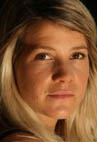
Charlotte Philby

Charlotte Philby

By JOSEPH FITSANAKIS | intelNews.org |
Charlotte Philby, daughter of John Philby, H.A.R. “Kim” Philby’s oldest son, has written an account of a recent trip to Moscow to revisit her grandfather’s apartment and grave. In her article, published in British daily The Independent, she describes her visit to Kuntsevo Cemetery, where her grandfather, a British intelligence officer, who secretly spied on behalf of the Soviet KGB and NKVD, was given a hero’s burial in 1988. Even though Kim Philby has been dead for over 20 years, his legacy is very much alive in both sides involved in the Cold War. Charlotte Philby reveals that, in 2005, she and her mother were refused service in a store in the US state of Arizona “on account of the name on our credit cards”. She also claims that “a gang of five or six of Kim’s former colleagues still meet up every month [in Moscow] and raise a toast in his honor”. Read more of this post