Thatcher was warned about CIA activities in Britain, files show

Margaret ThatcherBy JOSEPH FITSANAKIS | intelNews.org
British Prime Minister Margaret Thatcher was warned in 1984 that American intelligence carried out operations in the United Kingdom without London’s consent. Although she dismissed the warnings, she authorized British counterintelligence to investigate the matter. A secret file from the British Foreign Office, which was declassified last month, shows that concerns about alleged American spy activity in the UK were communicated to the Tory Prime Minister by Paddy Ashdown —now Lord Ashdown— a Member of Parliament for Britain’s Liberal Party. In November of 1984, Ashdown notified Thatcher that he was concerned about a series of “clandestine activities” carried out by the United States Central Intelligence Agency (CIA) aimed at preventing communist countries from acquiring advanced computer technology developed by companies based in Britain. The written warning stated that CIA operatives had made “clandestine approaches” targetting individuals employed by leading British computer firms, inquiring about technology transfers to the Soviet Bloc. Ashdown added that the American intelligence agency had failed to provide the British government with advance notice of these activities, as was customary between the two allies. In his letter to Thatcher, the Liberal Party MP concluded that, based on his personal investigation into the matter, he was convinced the CIA operation was “still continuing”. The Prime Minister responded to Ashdown with an official letter explaining that there was “no evidence of improper activity by the CIA” or that British espionage laws had been violated by American intelligence personnel. She added that there was “close cooperation” between London and Washington on enforcing multilaterally agreed export controls, which included computer technology, and concluded that saw no need for an inquiry at that time. But London-based newspaper The Guardian, which accessed the declassified files on the case, said that Whitehall ordered the Foreign Office to investigate Ashdown’s allegations. The Foreign Office then tasked the Security Service (MI5) to find out whether the US had broken an agreement between the two countries to refrain from clandestine operations on each other’s territory unless the latter were authorized by both nations. Read more of this post

Croatian court authorizes extradition of ex-spy official to Germany

Josip PerkovićBy JOSEPH FITSANAKIS | intelNews.org
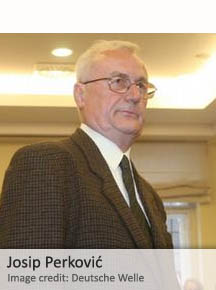
A court in the Croatian capital Zagreb has ruled in favor of the extradition of the country’s former spy chief to Germany, where he is wanted for the communist-era murder of a Yugoslav dissident. Josip Perković was a senior official in the Yugoslav State Security Service (known by its Serbo-Croatian acronym, UDBA) during the closing stages of the Cold War. He is a prime suspect in the murder of Stjepan Đureković, a Yugoslav defector who was killed by UDBA agents in 1983. Đureković, who was of Croatian nationality, defected from Yugoslavia to Germany in 1982, while he was director of the state-owned INA oil company. Upon his arrival in Germany, he was granted political asylum and began associating with Croatian nationalist émigré groups that were active in the country. He was killed on July 28, 1983, in Wolfratshausen, Bavaria, in a UDBA operation codenamed DUNAV. In 2009, following testimonies by several former UDBA agents, who were arrested in connection with the crime, the Office of the German Federal Prosecutor issued a European Arrest Warrant for Perković, who is believed to have authorized Đureković’s assassination. However, Croatia consistently refused to honor the warrant and allowed Perković to live in Zagreb. The reason, according to observers, was that the former spy official was instrumental in helping set up Croatia’s first post-independence intelligence agency, which he directed for the first few years of its existence. His contribution to the establishment of Croatia’s intelligence apparatus has contributed to his political legacy in the country, which effectively shielded him from extradition to Germany. Read more of this post
Communist-era spy allegations surface in Czech political wrangling

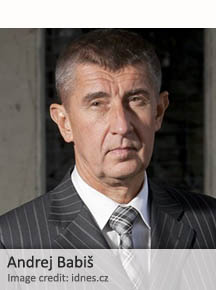
Andrej BabišBy IAN ALLEN | intelNews.org
Allegations that a senior Czech political figure was a government informant during the country’s communist period may disrupt the emergence of a national governing coalition. The Social Democratic Party won 20.5 percent in last October’s parliamentary election, emerging as the leading party in the Czech Republic’s fragmented political scene. The center-left party has said it is planning to form a governing coalition by reaching out to the centrist Christian Democratic Union, as well as a new center-right party calling itself ANO 2011 (Ano stands for ‘yes’ in Czech). The new party says it aims to end corruption in the country, abolish immunity from prosecution for elected parliamentarians, tackle unemployment, and improve the Czech Republic’s crumbling infrastructure. The party has also said it is willing on principle to join a wider government coalition, providing it is offered control of the country’s finance ministry. A leading contender for the ministerial position is ANO’s founder and main financial backer, Andrej Babiš. A business tycoon, who made his fortune importing and exporting fertilizers, Babiš is the Czech Republic’s second richest man, with an estimated fortune of $2 billion. His spectacular entrance into Czech politics was confirmed when ANO, which he founded in 2011, came in second in last October’s elections, receiving 18 percent of the national vote and gaining 47 seats in parliament. However, plans for a three-party coalition have been halted by allegations that Babiš may have been an informant for Czechoslovakia’s StB secret police during the 1980s. The claims first emerged in a Slovak newspaper shortly before last October’s elections, but failed to prevent ANO and Babiš from making a spectacular entry into Czech national politics. Later, however, the media allegations were substantiated by Slovakia’s Institute of National Memory, which provides public access to previously classified records of the StB and other Czechoslovak intelligence agencies during the country’s communist period. The Institute says that Babiš, who was a card-carrying member of the Communist Party of Czechoslovakia, had regular contact with the StB in the 1980s. At that time he was living in North Africa working for Petrimex, a Czechoslovakian government-owned international trade company. Read more of this post

KGB ‘ran two Australian politicians as agents’ in 1970s: document

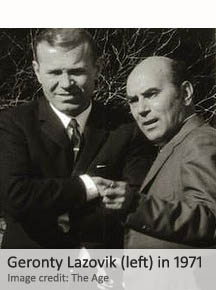
Geronty Lazovik (left) in 1971By JOSEPH FITSANAKIS | intelNews.org
Soviet intelligence recruited and ran at least two Australian elected politicians as agents for the USSR in the 1970s, according to a confidential account authored by an Australian counterintelligence officer. The report’s author is allegedly an unnamed former employee of the Australian Security Intelligence Organisation (ASIO), which is tasked with counterespionage. Australia’s Fairfax Media, which claimed yesterday to have accessed the report, described it as “an unusually candid document”. It allegedly describes Soviet intelligence activities on Australian soil during the last two decades of the Cold War and names known Soviet intelligence officers operating in Australia at the time. Among those named is Vladimir Yevgenyevich Tulayev, described in the confidential report as “a hard-eyed, well-dressed thug” who was “aggressively involved in intelligence operations in Australia”. The document also names Geronty Lazovik, considered by AFIO as a “definite agent runner”. Australian counterintelligence described Lazovik as a far more refined operative than Tulayev and kept tabs on him as he developed and cultivated “a wide range of contacts” across Australia’s Federal Parliament. The report suggest that Australian Labor Party politicians, aides and lobbyists were among Lazovik’s “contacts” in Australia, though it does not explicitly name them as agents of the Soviet KGB. Arguably the most important allegation made in the report is that another KGB operative in Australia, Vladimir Aleksandrovich Aleksyev, was able to recruit and run “two Australian politicians as agents” in the late 1960s and early 1970s. The document states that Aleksyev was able to handle the two alleged recruits “using tradecraft of a fairly high order”, suggesting that he was perhaps one of the KGB’s most successful known case officers in Australia. The confidential report alleges that the ASIO leadership approached the Australian government with information about the operations of the KGB officers. Read more of this post

The story of a suspected KGB mole who shook the FBI in the 1960s

By JOSEPH FITSANAKIS | intelNews.orgKGB
Readers of this blog will know about the infamous case of James Jesus Angleton, who headed the counterintelligence department of the Central Intelligence Agency from the 1950s to the 1970s, and led the biggest mole hunt in the Agency’s history. David Wise, author of several intelligence-related books, including the best-selling Spy, about FBI double agent Robert Hanssen, writes in a new article that the Federal Bureau of Investigation (FBI) was also shaken by a similar mole hunt, which never became public. In an article published in this month’s Smithsonian Magazine, Wise claims that the probe constituted “the first mole hunt in the history of the FBI” and that it was “one of the most sensitive investigations” in the history of the Bureau. Wise suggests that the mole hunt began in the spring of 1962, when Aleksei Kulak, a 39-year-old Soviet scientific consultant to the United Nations, who was in fact KGB operative, defected to the FBI. He was instructed by his American handlers to operate as an agent-in-place and supplied the FBI for a decade with secret information from the Soviet Union. The FBI gave him the codename FEDORA, also known in Bureau files as “Source 10”. In his article in The Smithsonian, which is based on interviews with no fewer than 30 current and former FBI agents, Wise describes FEDORA as “one of the most important sources the FBI had” at the time. Kulak and another KGB agent, Valentin Lysov, who defected to American intelligence in the mid-1960s, told the FBI that the Soviet Union kept a source inside the FBI, known as “Dick”. But neither defector knew whether Dick was the source’s real name, or whether it was simply a KGB operational codename. The FBI, says Wise, gave the alleged mole the code term UNSUB (“unknown subject”) Dick, and began a massive mole hunt. Read more of this post

Files reveal names of Americans targeted by NSA during Vietnam War

NSA headquartersBy JOSEPH FITSANAKIS | intelNews.org
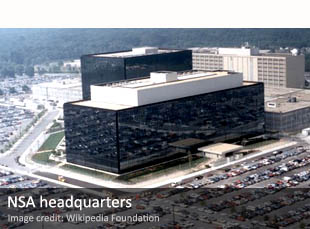
The names of several prominent Americans, who were targeted by the United States National Security Agency (NSA) during the height of the protests against the Vietnam War, have been revealed in declassified documents. The controversial communications interception operation, known as Project MINARET, was publicly acknowledged in the mind-1970s, during Congressional inquiries into the Watergate affair. We know that MINARET was conducted by the NSA between 1967 and 1973, and that it targeted over a thousand American citizens. Many believe that MINARET was in violation of the Agency’s charter, which expressly prevents it from spying on Americans. But despite the media attention MINARET received during the Watergate investigations, the names of those targeted under the program were kept secret until Wednesday, when the project’s target list was declassified by the US government. The declassification decision was sparked by a Freedom of Information Request filed by George Washington University’s National Security Archive. The two Archive researchers who filed the declassification request, William Burr and Matthew Aid, said MINARET appears to have targeted many prominent Americans who openly criticized America’s involvement in the Vietnam War. The reason for the surveillance was that US President Lyndon Johnson, who authorized the operation, was convinced that antiwar protests were promoted and/or supported by elements outside the US. The newly declassified documents show that Dr. Martin Luther King, Jr., was a major surveillance target of the government. Read more of this post

Interview with US airman who spied for East Germany

Jeff CarneyBy JOSEPH FITSANAKIS | intelNews.org
A former intelligence specialist in the United States Air Force, who became one of East Germany’s most lucrative spies in the West, has given a rare media interview. Jeff Carney was a linguist and intelligence specialist assigned to the US Electronic Security Command at Tempelhof Central Airport in West Berlin during the closing stages of the Cold War. In April of 1983, Carney, who was then aged just 19, walked across the dividing line between West and East Berlin and asked to speak to representatives of the East German government. He has since argued that his defection was prompted by his disagreement with the foreign policy of the administration of US President Ronald Reagan. But in an interview aired on Wednesday by the BBC, he claimed there was “nothing ideological about his decision to defect”, and that he, as a gay man, “felt unwanted” because of the US military’s stance on homosexuality. His plan, which he described in his interview as “an impulsive move” was to request to live in the German Democratic Republic. But instead of granting his wish, East German intelligence officials commanded him to return to his post at Tempelhof and become an agent-in-place. Carney claims that they threatened to reveal to his US Air Force superiors his attempt to defect if he refused to cooperate. The young airman returned to his base and began spying for East Germany’s Ministry for State Security (MfS), commonly known as Stasi. He was provided with a miniature camera, given the operational codename UWE, and was told supply his handler, codenamed RALPH, with classified documents, which he smuggled out of Tempelhof in his shoes and clothing. His West German tour came to an end in 1984, when he was transferred to the US state of Texas. While there, he continued to spy for the Stasi, traveling to Rio de Janeiro, Brazil, and Mexico City, Mexico, in order to meet with his East German handlers. However, in 1985, believing that his superiors in the Air Force were beginning to suspect him of espionage, he traveled to Mexico and walked in the East German embassy in Mexico City, demanding to be transferred to East Germany. The Stasi eventually smuggled him out of Mexico to Cuba, and from there to Czechoslovakia before resettling him to East Germany. Read more of this post

Dissident playwright assassinated with poison pellet 35 years ago

Georgi MarkovBy JOSEPH FITSANAKIS | intelNews.org |
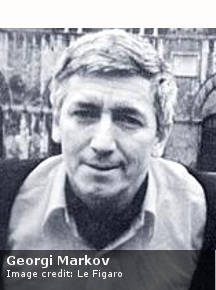
This past Sunday marked 35 years since the assassination with a poisoned umbrella pellet of Bulgarian literary icon and political dissident Georgi Markov. By 1969, when he defected from Bulgaria, Markov had achieved considerable fame in his homeland and was considered one of the Eastern Bloc’s most talented and promising young novelists. Increasingly, however, Markov fraternized with dissident artists and intellectuals, and several of his short stories and plays were disapproved by Bulgarian government censors. In 1969, while visiting his brother in Bologna, Italy, Markov decided to remain in the West. Two years later, he moved to the United Kingdom where he was offered a job at the Bulgarian unit of the BBC World Service. He also did contract work for Germany’s Deutsche Welle and Radio Free Europe, which was funded by the United States government. This prompted the Bulgarian authorities to view Markov’s actions as a defection, and he was sentenced in absentia to nearly seven years in prison by a court in Sofia. But Markov continued his work unabated, earning critical acclaim for his plays in the UK and elsewhere in the West. But on September 7, 1978, the Bulgarian dissident developed a powerful fever and was admitted to a London hospital, where he died 72 hours later, on September 11. Following an autopsy, Britain’s Metropolitan Police concluded that Markov had been poisoned by a micro-engineered pellet made of platinum, which had been filled with ricin. While on his deathbed, Markov had told police investigators that he had felt a sharp pinch on the back of his right thigh while walking across London’s Waterloo Bridge over the River Thames. When he turned around, prompted by the pinching feeling, he said he saw a well-dressed man picking up an umbrella from the ground. The man then quickly crossed the street and hailed a taxi. Since then, Soviet intelligence defectors, including Oleg Gordievsky and Oleg Kalugin, have suggested that Markov’s murder had been planned by the Soviet KGB and carried out by Bulgarian intelligence. Read more of this post

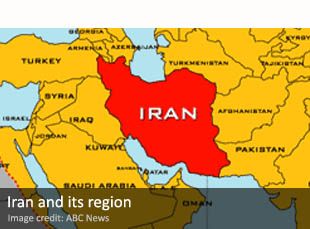
Document confirms CIA role in 1953 Iran coup

Iran and its regionBy JOSEPH FITSANAKIS | intelNews.org |
Almost exactly 60 years ago, on August 19, 1953, a military coup d’état deposed Iran’s legally elected Prime Minister, Dr. Mohammed Mossadegh, and replaced him with General Fazlollah Zahedi. Mossadegh was placed under house arrest, while his senior government associates and thousands of his supporters were arrested. Many, including Hossein Fatemi, Iran’s Minister of Foreign Affairs and Mossadegh’s trusted friend, were tortured and eventually executed. The coup, which reinstated the Shah at the helm of Iran’s government, is believed to have been planned and executed by Britain’s Secret Intelligence Service (MI6) in cooperation with the United States Central Intelligence Agency (CIA). This, however, has never been publicly acknowledged by the CIA. The Agency has consistently refused comment on the matter, saying that most of the records of its involvement in Iran at the time were “lost or destroyed” in the mid-1960s. This policy of silence, however, appears to have changed this week, after the CIA released an official document that acknowledges the Agency’s leading role in the coup. The document, entitled The Battle for Iran, is part of an internal CIA historical report produced in the mid-1970s by an Agency historian. Parts of it were declassified in 1981, but its most important chapter, titled “Section III: Covert Action”, had been redacted prior to its public release. Sometime ago, George Washington University’s National Security Archive filed a Freedom of Information Act request for the complete release of the report. This was not granted; but the CIA did release a new public version of the document, which contains fewer redacted passages. Among the newly uncovered information is a brief description of the operational side of the August 1953 coup, which the CIA codenamed TPAJAX. Read more of this post

Report reveals secret US-India Cold War collaboration

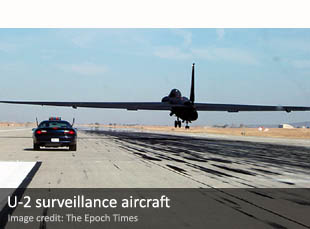
U-2 surveillance aircraftBy JOSEPH FITSANAKIS | intelNews.org |
During much of the Cold War, India enjoyed a close diplomatic and military relationship with the Soviet Union. But a newly declassified document reveals that the South Asian country allowed the United States to spy on the Soviets using its airspace. The revelation is contained in a 400-page history of the American U-2 reconnaissance aircraft program authored on behalf of the US Central Intelligence Agency (CIA). The formerly classified document, written in 1992 by CIA historians Gregory Pedlow and Donald Welzenbach, is titled: The Central Intelligence Agency and Overhead Reconnaissance: The U-2 and OXCART Programs, 1954-1974. It was declassified last week in response to a 2005 Freedom of Information Act request filed by Jeffrey T. Richelson, Senior Fellow at George Washington University’s National Security Archive. The Central Intelligence Agency had been involved in U-2 reconnaissance missions since 1954, when the spy program began. Known officially as Project HOMERUN, the U-2 program was a joint effort by the CIA and the National Security Agency that surreptitiously gathered signals and photographic intelligence on Soviet military sites. The program, which has been described by some historians as one of the most successful intelligence projects in US history, relied on the U-2’s ability to fly beyond 70,000 feet over the Soviet Union, thus avoiding detection or attack by Soviet forces. That assumption, however, proved to have been false. In reality, Soviet radars had been able to detect nearly every U-2 flight over Soviet territory. Eventually, on May 1, 1960, Soviet forces managed to shoot down one of the U-2 flights using a surface-to-air missile. This led to the so-called ‘U-2 incident’, during which India sided firmly with the Soviet Union, criticizing the US for violating Soviet airspace. But New Delhi’s attitude to the U-2 program appears to have changed drastically following the Sino-Indian conflict on October 1962, when Chinese forces launched a series of armed incursions into Indian territory, killing over 1,000 soldiers. Read more of this post

CIA kept file on American academic Noam Chomsky, say experts

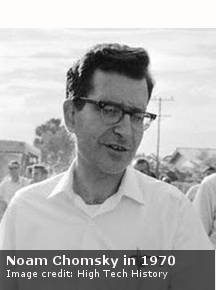
Noam Chomsky in 1970By JOSEPH FITSANAKIS | intelNews.org |
A 1970 communiqué between two United States government agencies appears to show that the Central Intelligence Agency (CIA) kept a file on the iconic American linguist and political dissident Noam Chomsky. Widely seen as a pioneer of modern linguistics, Chomsky adopted an uncompromisingly critical stance against the US’ involvement in the Vietnam War in the early 1960s. The US Intelligence Community’s systematic surveillance of antiwar and civil rights activists at the time prompted legal scholars and historians to deduce that Chomsky’s activities must have been routinely spied on by the American government. But a number of Freedom of Information Act (FOIA) requests in recent years turned up blank, with the CIA stating that it could “not locate any records” responsive to the requests. Scholars insisted, however, and a recent FOIA request unearthed what appears to be proof that the CIA did in fact compile a file on the dissident academic. The request was submitted to the Federal Bureau of Investigation (FBI) by attorney Kel McClanahan, executive director of National Security Counselors, a group specializing in “lawfully acquiring from the government material related to national security matters and distributing it to the public”. According to Foreign Policy magazine blog The Cable, McClanahan’s FOIA request revealed a memorandum sent from the CIA to the FBI on June 8, 1970. In it, the Agency seeks information about an upcoming trip by American antiwar activists to North Vietnam, which, according to the CIA, had received the “endorsement of Noam Chomsky”. The memo also asks the FBI for information on the trip’s participants, including Professor Chomsky. The Cable spoke to Marquette University Professor Athan Theoharis, domestic surveillance expert and author of Spying on Americans, who opined that the CIA request for information on Chomsky amounts to an outright confirmation that the Agency kept a file on the dissident academic. Read more of this post

News you may have missed #848

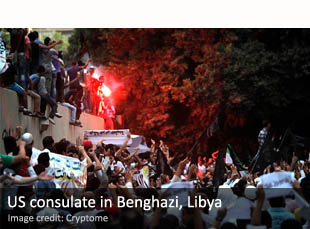
US consulate in Benghazi, LibyaBy IAN ALLEN | intelNews.org |
►►UK officials saw ‘communist spies’ in Japan in 1983. British officials believed in the early 1980s that Japanese institutions had been “slightly” penetrated by communist intelligence services, according to documents declassified last week at the National Archives in London. The documents, from 1983, assert that there were approximately 220 communist intelligence officers working in Japan: 100 for the Soviet Union, 60 for China and 60 for other communist countries.
►►‘Dozens of CIA operatives on the ground’ during Benghazi attack. CNN claims that “dozens of people working for the CIA” were on the ground the night of the attack on the US consulate in Benghazi, Libya, which killed four Americans, including Ambassador Christopher Stevens. The news station adds that, according to one source, the CIA is involved in “an unprecedented attempt to keep [its] Benghazi secrets from ever leaking out”.
►►Australians call for national debate on privatization of intelligence. Dr Troy Whitford, Associate Investigator with the Australian Research Council’s Centre of Excellence in Policing and Security, and lecturer at Charles Sturt University, has called for “a national debate on the extent, cost and consequences of Australia’s security and intelligence outsourcing”. The call was apparently prompted by news that 51% of the intelligence gathering in the US is now carried out by non-government contractors.

Germany ends spy treaty with US, UK, in response to Snowden leaks

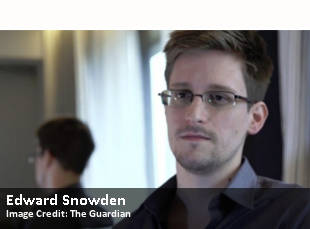
Edward SnowdenBy JOSEPH FITSANAKIS | intelNews.org |
The German government has announced the termination of a Cold-War era surveillance cooperation treaty with the United States and the United Kingdom in response to revelations made by American defector Edward Snowden. Snowden, a former computer expert for the Central Intelligence Agency (CIA) and the National Security Agency (NSA), has been given political asylum in Russia. Earlier this summer, he told German newsmagazine Der Spiegel that the United States spies on the communications of Germany and other European Union countries with the same intensity it spies on China or Iraq. In an interview with British newspaper The Guardian, Snowden also revealed the existence of Project TEMPORA, operated by Britain’s foremost signals intelligence agency, the General Communications Headquarters (GCHQ). Snowden told the paper that GCHQ collected and stored massive quantities of foreign telephone call data and email messages, many of them from Germany, and shared them with its US counterpart, the NSA. On Friday, Germany’s Minister of Foreign Affairs, Guido Westerwelle, issued a statement saying that the government in Berlin had decided to scrap a longstanding surveillance cooperation agreement with Western countries in response to Snowden’s revelations. The agreement was signed in 1968 between the governments of West Germany, the US, UK, and France. It gave Western countries with military bases on West German soil the right to conduct surveillance operations in Germany in support of their military presence there. In the statement, Foreign Minister Westerwelle argued that the cancellation of the surveillance agreement was “a necessary and proper consequence of the recent debate about protecting personal privacy”. Read more of this post

US court dismisses lawsuit against CIA over scientist’s death

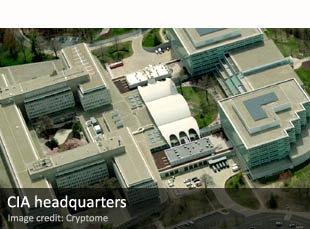
CIA headquartersBy JOSEPH FITSANAKIS | intelNews.org |

A United States federal court has dismissed a lawsuit filed against the Central Intelligence Agency over an alleged murder of an American Department of Defense scientist, which occurred in 1953. The lawsuit concerned the case of Dr. Frank Olson, a specialist in biological warfare working for the US Pentagon at Fort Detrick, Maryland. It appears that Olson, who studied the effects of toxic substances on the brain, participated —knowingly or unknowingly— in Project MKNAOMI/ MKULTRA. The project was a joint effort by the CIA and the US military to study the effects of substances such as heroin and LSD on the human brain. On November 28, 1953, Dr. Olson fell to his death from the window of his room on the 13th floor of New York City’s Statler Hotel. In an internal report that was declassified in 1975, the US government admitted that Dr. Olson had been assigned the task of military-scientific liaison with the CIA’s Technical Services Staff —the unit in charge of MKULTRA. Moreover, the report disclosed that the late scientist had been administered LSD by his CIA colleagues without his knowledge nine days prior to his sudden death. Ever since the report was aired, Dr. Olson’s family has maintained that the scientist did not voluntarily plunge from his hotel window on November 28, 1953. Rather, they claim, he was pushed to his death by CIA personnel, after he raised strong objections against the testing of chemical and biological substances on non-consenting human subjects by the Agency’s Technical Services Staff. But US District Judge James Boasberg ruled that, although the CIA had yet to come clean on the controversial history of MKULTRA, the lawsuit by Dr. Olson’s family had been “filed too late”; he added in his ruling that an earlier settlement between the dead scientist’s family and the US government effectively barred the possibility of a new lawsuit. Read more of this post

Chile launches search for suspect in alleged Neruda poisoning

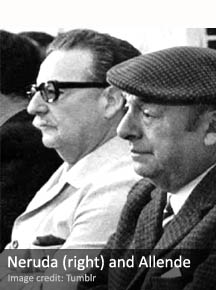
Pablo Neruda (right) and Salvador AllendeBy JOSEPH FITSANAKIS | intelNews.org |
The government of Chile has launched an official search for a United States suspect in connection with the alleged poisoning of celebrated poet Pablo Neruda. The Chilean literary icon, who was awarded the Nobel Prize in Literature in 1971, died on September 23, 1973. His death occurred less than two weeks after a coup d’état, led by General Augusto Pinochet, toppled the democratically elected Marxist government of Salvador Allende, a close friend of Neruda. The death of the internationally acclaimed poet, who was 69 at the time, was officially attributed to prostate cancer and the effects of acute mental stress over the military coup. Earlier this year, however, an official investigation was launched into Neruda’s death following allegations that he had been murdered. The investigation was sparked by a comment made by Neruda’s personal driver, Manuel Araya, who said that the poet had been deliberately injected with poison while receiving treatment for cancer at the Clinica Santa Maria in Chilean capital Santiago. Investigators are still awaiting the completion of a complex autopsy performed on Neruda’s remains, which were exhumed in April. But the Chilean government has already issued a search order for a medical doctor —or someone pretending to be a doctor— who was allegedly on Neruda’s bedside on the night of his death. The search was issued based on comments made recently by another medical doctor, Sergio Draper, who supervised Neruda’s hospital treatment in September of 1973. Dr. Draper told government investigators that he turned over his shift that night to a “Dr. Price”, a young doctor in his late 20s, who was with Neruda in the hours leading to the poet’s death. According to Rodolfo Reyes, a lawyer representing the Neruda estate, Dr.Price’s identity remains a mystery. Read more of this post