March 8, 2018
by Joseph Fitsanakis
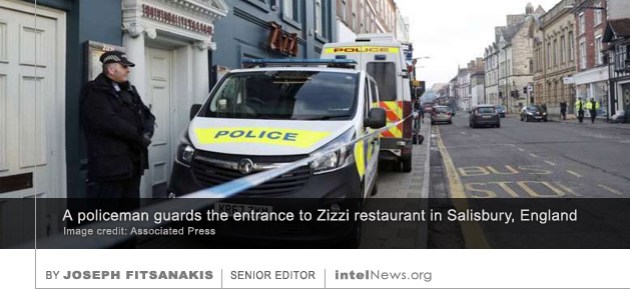 Most state-sponsored assassinations tend to be covert operations, which means that the sponsoring party cannot be conclusively identified, even if it is suspected. Because of their covert nature, assassinations tend to be extremely complex intelligence-led operations, which are designed to provide plausible deniability to their sponsors. Consequently, the planning and implementation of these operations usually involves a large number of people, each with a narrow set of unique skills. But —and herein lies an interesting contradiction— their execution is invariably simple, both in style and method. The attempted assassination of Sergei Skripal last Sunday in England fits the profile of a state-sponsored covert operation in almost every way.
Some have expressed surprise that Skripal, a Russian intelligence officer who was jailed in 2004 for selling Moscow’s secrets to British spies, would have been targeted by the Russian state. Before being allowed to resettle in the British countryside in 2010, Skripal was officially pardoned by the Kremlin. He was then released from prison along with four other Russian double agents, in exchange for 10 Russian deep-cover spies who had been caught in the United States earlier that year. According to this argument, “a swap has been a guarantee of peaceful retirement” in the past. Thus killing a pardoned spy who has been swapped with some of your own violates the tacit rules of espionage, which exist even between bitter rivals like Russia and the United States.
This assumption, however, is baseless. There are no rules in espionage, and swapped spies are no safer than defectors, especially if they are judged to have caused significant damage to their employers. It is also generally assumed that pardoned spies who are allowed to resettle abroad will fade into retirement, not continue to work for their foreign handlers, as was the case with  Skripal, who continued to provide his services to British intelligence as a consultant while living in the idyllic surroundings of Wiltshire. Like the late Russian defector Alexander Litvinenko, who died in London of radioactive poisoning in 2006, Skripal entrusted his personal safety to the British state. But in a country that today hosts nearly half a million Russians of all backgrounds and political persuasions, such a decision is exceedingly risky.
On Wednesday, the Metropolitan Police Service announced that Skripal, 66, and his daughter Yulia, 33, had been “targeted specifically” by a nerve agent. The official announcement stopped short of specifying the nerve agent used, but experts point to sarin gas or VX. Both substances are highly toxic and compatible with the clinical symptoms reportedly displayed by the Skripals when they were found in a catatonic state by an ambulance crew and police officers last Sunday. At least one responder, reportedly a police officer, appears to have also been affected by the nerve agent. All three patients are reported to be in a coma. They are lucky to have survived at all, given that nerve agents inhaled through the respiratory system work by debilitating the body’s respiratory muscles, effectively causing the infected organism to die from suffocation.
In the past 24 hours, at least one British newspaper stated that the two Russians were “poisoned by a very rare nerve agent, which only a few laboratories in the world could have produced”. That is not quite true. It would be more accurate to say that few laboratories in the world would dare to produce sarin or VX, which is classified as a weapon of mass destruction. But no advanced mastering of chemistry or highly specialist laboratories are needed to manufacture these agents. Indeed, those with knowledge of military history will know that they were produced in massive quantities prior to and during World War II. Additionally —unlike polonium, which was used to kill Litvinenko in 2006— nerve gas could be produced in situ and would not need to be imported  from abroad. It is, in other words, a simple weapon that can be dispensed using a simple method, with little risk to the assailant(s). It fits the profile of a state-sponsored covert killing: carefully planned and designed, yet simply executed, thus ensuring a high probability of success.
By Wednesday, the British security services were reportedly using “hundreds of detectives, forensic specialists, analysts and intelligence officers working around the clock” to find “a network of highly-trained assassins” who are “either present or past state-sponsored actors”. Such actors were almost certainly behind the targeted attack on the Skripals. They must have dispensed the lethal agent in liquid, aerosol or a gas form, either by coming into direct physical contact with their victims, or by using a timed device. Regardless, the method used would have been designed to give the assailants the necessary time to escape unharmed. Still, there are per capita more CCTV cameras in Britain than in any other country in the world, which gives police investigators hope that they may be able to detect the movements of the attackers. It is highly unlikely that the latter remain on British soil. But if they are, and are identified or caught, it is almost certain that they will be found to have direct links with a foreign government.
► Author: Joseph Fitsanakis | Date: 08 March 2018 | Permalink
 THERE WERE REPORTS LATE on Monday that United States President Donald Trump was considering authorizing covert operations by the Central Intelligence Agency (CIA) against drug cartels. During his inaugural address on Monday afternoon, Trump said he would be “designating the cartels as foreign terrorist organizations”. Later the same day, the incoming president signed an executive order to that effect.
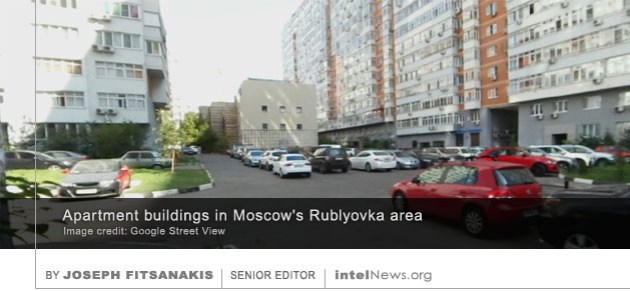 A SERIES OF COORDINATED drone strikes that struck Moscow last week were not random, but may in fact have targeted the homes of senior Russian intelligence officials, according to a new report by an American television network, which cited knowledgeable sources and data by an open-source research firm.
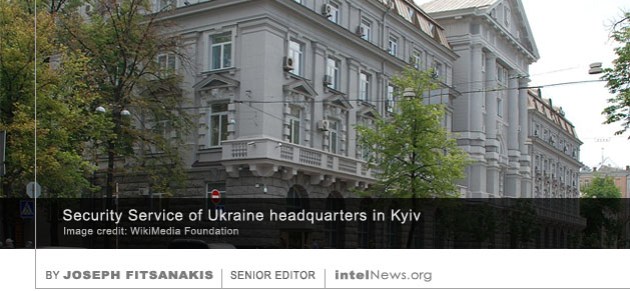 THE UKRAINIAN INTELLIGENCE SERVICES are training and arming cells of saboteurs inside Russia, who are responsible for several acts of sabotage on Russian soil, including a recent attack on the Kremlin, according to CNN. In an
 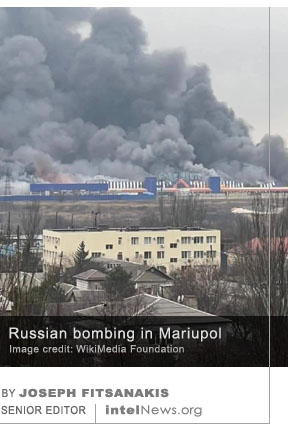 A NEW REPORT PUBLISHED by a London-based security think-tank concludes that Russia has employed unconventional operations effectively to subdue the population in occupied areas of Ukraine. These successes contrast sharply with the inferior performance of Russia’s conventional military forces, as revealed last week in a series of leaked documents belonging to the United States Department of Defense.
 ISRAEL’S PRIMARY EXTERNAL INTELLIGENCE agency, the Mossad, was likely behind a series of mysterious bombings in 1981, which targeted German and Swiss engineering firms believed to be aiding the Pakistani nuclear program, according to new exposé by a leading Swiss newspaper. Several bomb attacks targeted a number of engineering firms in Switzerland and what was then West Germany in 1981. Alongside these attacks, there were threatening telephone calls that targeted West German and Swiss engineers.
 The Islamic Revolutionary Guard Corps (IRGC) is still recovering from the damage it suffered by an offensive American cyber campaign against it that took place in June, according to sources. The attack allegedly degraded the IRGC’s ability to strike at oil tankers and other ships in the Persian Gulf. The New York Times
 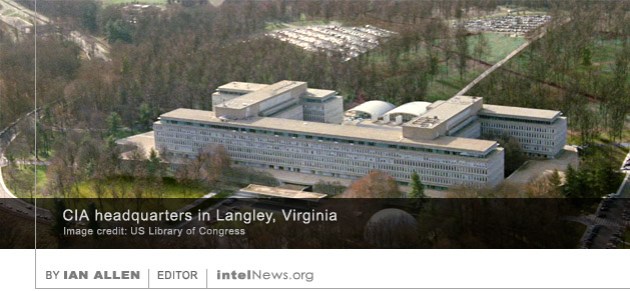 An untypical high-level meeting was convened at the headquarters of the United States Central Intelligence Agency last week to discuss Iran, according to NBC News. The meeting, which NBC
 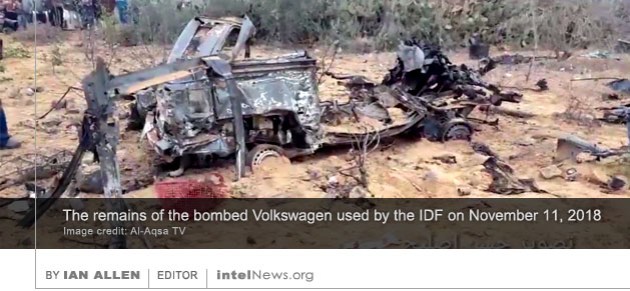 An undercover Israeli team that clashed with Hamas in Gaza on November 11 —an incident that brought the region to the brink of war— was installing an advanced surveillance system, according to Palestinian sources. Local media reports said that the Israeli undercover team —believed to be members of the Israel Defense Forces (IDF)— killed seven members of Izz ad-Din al-Qassam Brigades, the military arm of Hamas’ armed wing. The IDF troops eventually escaped into Israel with the help of air support, having lost one team member. The incident was followed by a barrage of nearly 500 rockets and mortars fired from the Gaza Strip into Israel. The Israelis responded by firing more than 160 missiles that fell throughout the Palestinian enclave. Hostilities were halted on November 13, when Hamas declared a unilateral ceasefire brokered by Egypt. The incident prompted the
  The nerve agent that poisoned a Russian double spy in England last week may have been smeared on his car’s door handle, according to sources. Sergei Skripal, 66, and his daughter Yulia, 33, are in critical condition after being
  The British prime minister said on Monday that it was “highly likely” the nerve agent used to attack a Russian defector in England last week was developed by Russia. But sources in London told the BBC that the British government would not invoke Article 5 of the North Atlantic Treaty Organization (NATO), which states that an attack on one member of the alliance is an attack on all. Theresa May was referring to an
  The British secret services have begun tightening the physical security of dozens of Russian defectors living in Britain, a week after the attempted murder of former KGB Colonel Sergei Skripal in southern England. The 66-year-old double spy and his daughter, Yulia, were found in a catatonic state in the town of Salisbury on March 4. It was later determined that they had been attacked with a nerve agent. Russian officials have vehemently denied that the Kremlin had any involvement with the brazen attempt to kill Skripal. But,






 intelNews.org
Investigation uncovers previously unknown Russian covert action unit
March 16, 2026 by Joseph Fitsanakis 6 Comments
By mid-2023, Center 795 was “fully staffed”, with its ≈500 officers coming mostly from the Main Directorate of the Russian Armed Forces’ General staff (known as GU or GRU). Other Center 795 officers came from ALPHA and VYMPEL—covert action units belonging to the Special Purpose Center of the Russian Federal Security Service (FSB). A smaller number of officers came from the Russian Armed Forces, the Federal Protective Service, and from the ALPHA Group of the Belarussian security service, known as KGB.
The structure of Center 795 features three directorates: Intelligence, Combat Support, and Assault Operations. The Directorate of Intelligence consists of nine distinct departments tasked with—among other things—collecting and analyzing intelligence from social media platforms, conducting reconnaissance using satellite networks and drones, carrying out signals intelligence, as well as executing human intelligence and covert operations, including assassinations and abductions.
The Directorate for Combat Support is staffed with explosive, air defense, armored warfare, and artillery operatives. It also maintains combat units that conduct technical maintenance, logistics, fortification, and other specialized tasks. The Assault Operations Directorate consists of four departments, which appear to conduct strictly compartmentalized functions that include airborne tasks.
Notably, unlike other special activities units in Russia’s intelligence arsenal, Center 795 does not appear to reside within the GRU. Instead, it appears to operate independently of military intelligence oversight and to report directly to General Valery Gerasimov (pictured), Chief of the Russian Armed Forces’ General Staff of and First Deputy Minister of Defense, or to one of his subordinate deputy defense ministers.
According to the investigative reports, the existence of Center 795 was revealed when one of its officers, Denis Alimov, used Google to translate a message sent to him by a Serbian operative living in the United States. This allowed the United States Federal Bureau of Investigation to use a Foreign Intelligence Surveillance Court (FISA) warrant and access the Google Translate transcripts. Alimov was eventually arrested in Bogotá, Colombia, on February 24, 2026, after arriving there on a Turkish Airlines flight from Istanbul, Turkey. He is currently awaiting extradition to New York.
► Author: Joseph Fitsanakis | Date: 16 March 2026 | Permalink
Filed under Expert news and commentary on intelligence, espionage, spies and spying Tagged with Center 795, covert action, Denis Alimov, GRU, News, Russia, Unit 75127, Valery Gerasimov, Vympel