News you may have missed #0144

  • Cuban Five convict’s sentence cut to 22 years. As intelNews reported on October 12, Antonio Guerrero, a member of the Cuban Five spy ring, has had his life sentence cut to 22 years, following a successful appeal. Given the time he has already served since his 1998 arrest, and benefits for good behavior, Guerrero could be released in seven years. The Cuban Five were sentenced in 2001 for spying on the US for Cuba.
  • Was British MP a Czech agent during Cold War? A recently published book on MI5’s history by Cambridge historian Dr. Christopher Andrew has reignited rumors that Labour Party parliamentarian John Stonehouse worked as an agent for the Czech StB intelligence agency in the 1960s.
  • West German spies collected East German jokes during Cold War. West German spies diligently recorded popular East German jokes about communism during the Cold War, in an attempt to gain insights into the public mood, according to recently released intelligence files.

Bookmark and Share

News you may have missed #0140

  • CIA Intellipedia gurus get Homeland Security Medal. Don Burke and Sean Dennehy, the CIA agents behind Intellipedia, have been awarded a medal for “promoting and expanding information-sharing in the Intelligence Community”. As intelNews noted last August, Intellipedia, the intelligence community’s version of Wikipedia, has grown markedly since its formal launch in 2006. It now averages more than 15,000 edits per day and is home to 900,000 pages and 100,000 user accounts.
  • Cuban Five resentencing delayed. A US federal judge has accepted requests from the lawyers of Antonio Guerrero, a member of the Cuban Five spy ring, to delay their resentencing, after the US government refused to turn over any national security damage assessments in the case. Washington accuses the Five of spying on the US for Cuba. But an appeals court ruled earlier this year that the sentences they received (ranging from 19 years to life) were too long. It appears that Guerrero’s sentence will be reduced from life to 20 years behind bars.
  • Was Christopher Columbus a spy? An independent researcher is raising eyebrows by suggesting that Columbus was a Portuguese spy who knew exactly what he was doing when he supposedly “got lost” in the Atlantic in 1492.

Bookmark and Share

Anti-Castro terrorist was CIA informant, declassified documents show

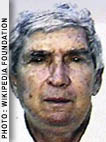
Luis Posada Carriles

Posada Carriles

By JOSEPH FITSANAKIS | intelNews.org |
An anti-Castro operative, who has admitted planting bombs against civilian targets in Cuba, and currently faces immigration fraud charges in the US, was a CIA informant, newly declassified documents show. Five CIA memoranda from 1965 and 1966 reveal that Luis Posada Carriles, code name “A15”, acted as an information link between Langley and violent anti-Castro groups in Miami, Florida, in which he was active. The five documents were declassified by the CIA between 1998 and 2003 and were made public on Tuesday by Peter Kornbluh, who heads the National Security Archive’s Cuba Documentation Project at George Washington University. Remarkably, the documents show that Posada’ handler at the CIA, Grover T. Lythcott, believed that the Cuban exile was a “moderate force” who could be counted on not to embarrass the US government or the CIA with his actions. Read more of this post

News you may have missed #0128

  • US government appeals judge’s order in Cuban Five spy case. US government officials are contending a judge’s order because they say it would be detrimental to US national security. The order requires the US government to turn over any national security damage assessments in the Cuban Five case. Washington accuses the Five of spying on the US for Cuba. Three of the five are to be given new sentences on October 13 after an appeals court ruled that the initial sentences they received (ranging from 19 years to life) were too long.
  • Indian spies want access to missed calls. Indian security agencies have told the country’s Department of Telecommunications that they need access to missed calls because “anti-social elements” may be using the system to communicate without actually making a call. Last month, India’s Intelligence Bureau asked for all VOIP (internet-based) calls in the country to be blocked until it figures out a mechanism to track them. It also said it wants access to the content of all mobile phone calls in the country.
  • New book investigates Stasi’s scientific espionage. Documents from the vaults of HVA (Hauptverwaltung Aufklärung), the foreign department of the Stasi, the East German Ministry for State Security, which were purchased by the CIA from a German informant in 1992, were made available in 2005 to Kristie Macrakis professor of history at the Georgia Institute of Technology in Atlanta. Her book, Seduced by Secrets: Inside the Stasi’s Spy-Tech World, offers a rare look into the Stasi’s secret technical methods and sources. Macrakis’s analysis of the CIA material reportedly reveals that about 40% of all HVA sources planted in West German companies, research institutions and universities were stealing scientific and technical secrets.

Bookmark and Share

Lawsuit claims US government paid reporters during Cuban Five spy trial

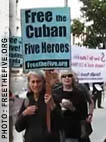
NCFCF rally

NCFCF rally

By IAN ALLEN | intelNews.org |
Campaigners in support of the release of a group of Cuban government agents jailed in the US have sued the US government for allegedly influencing media coverage of the trial by paying journalists in Miami. The Cuban Five were arrested in 1998 and convicted in 2001 of spying on US soil on behalf of the Cuban government. But now the Washington-based Partnership for Civil Justice Fund has joined forces with The National Committee to Free the Cuban Five, in accusing the US government of employing journalists to shape American public opinion about the Five. According to the lawsuit, 16 American journalists working for Radio y Televisión Martí, a US government-funded TV and radio station targeting Cuba, were employed by the US government to air critical views about the Cuban Five through non-governmental news outlets. Read more of this post

News you may have missed #0100

  • Iran says US is forging nuclear intelligence. Ali Asghar Soltanieh, Iran’s envoy to the International Atomic Energy Agency, says the US government is using forged intelligence to make the case to the UN’s nuclear watchdog group that Iran is pursuing an atomic weapons program. What is arguably missing in the Iranian nuclear debacle is conclusive IAEA confirmation of the existence of Iran’s nuclear arms program, as in the case of Syria.
  • Pakistanis call for intelligence dialogue with India. Mahmud Ali Durrani, Pakistan’s former national security adviser, has called for a “frank dialogue” between Pakistani and Indian security services. As intelNews reported earlier this year, Durrani was fired for his dovish stance vis-à-vis India and for being “too pro-American”.
  • US official was investigated for espionage. Alberto Coll, a Cuban-American who lost a senior job at the Navy War College after he was convicted of lying about a 2004 trip to Havana, was also investigated for espionage, according to an FBI document.

Bookmark and Share

CIA furious over UK-Libyan bomber release deal

Al-Megrahi

Al-Megrahi

By JOSEPH FITSANAKIS | intelNews.org |
The CIA has threatened to stop sharing intelligence with UK spy services in protest over the recent release from a Scottish prison of a Libyan intelligence agent convicted for the 1988 bombing of Pan Am flight 103, according to a British newspaper. Abdelbaset al-Megrahi, who is now back home in Tripoli, was released by British authorities on August 19 on compassionate grounds, after medical tests allegedly showed he is suffering from terminal cancer. Many observers, including former CIA agent Robert Baer, voiced suspicion about the reasons behind al-Megrahi’s release, while several British newspapers, including The London Times, alleged that the release was part of a lucrative oil exploration deal between British Petroleum (BP) and the Libyan government. Now an article in British newspaper The News of the World claims that the CIA leadership has vowed to terminate intelligence cooperation with the UK over the Libyan’s release. Read more of this post

News you may have missed #0092

Bookmark and Share

Brazil conspired with US to overthrow Allende, memos show

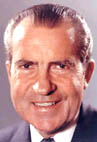
Richard Nixon

Richard Nixon

By JOSEPH FITSANAKIS | intelNews.org |
Four official documents from 1971, recently declassified by the US Department of State, show high-level collaboration between the US and Brazil in plans to overthrow the lawfully elected government of Chile. The documents include accounts of a frank discussion between US President Richard Nixon and Brazilian President Emilio Médici on ways to bring down the democratically elected Chilean leader Salvador Allende, as well as the government of Cuba, so as to “prevent new Allendes and Castros”, in Nixon’s words. The memorandum, which contains the official State Department account of the discussion between the two men, is dated December 9, 1971. Read more of this post

News you may have missed #0050

  • Cuban Five to be given new sentences in October. Washington accuses the Five of spying on the US for Cuba. But an appeals court has ruled that the sentences they received (ranging from life to 19 years) were too long. New sentences will be imposed on October 13. The Cuban government has said that it would be willing to swap jailed political dissidents for the Five.
  • CIA invests in web-based software company –again. The CIA’s venture-capital investment arm, In-Q-Tel, appears to be really fond of Lingotek, a tiny software company in Draper, Utah. Last month, In-Q-Tel funded another software start-up, Lucid Imagination.
  • Canada to investigate spy service’s role in Abdelrazik’s torture. Canada’s Security Intelligence Review Committee has agreed to probe the case of Abousfian Abdelrazik, who was renditioned to Sudan by Canada’s Canadian Security Intelligence Service (CSIS). He says he was severely tortured by Sudanese guards and interrogators.

Bookmark and Share

Obama administration denies UN access to Guantánamo, CIA prisons

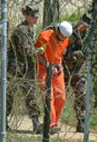
Guantánamo

Guantánamo

By JOSEPH FITSANAKIS | intelNews.org |
The US government has turned down calls by United Nations human rights monitors for access to the US Pentagon’s Guantánamo Bay prison camp and to CIA prison sites around the world. It is the second time that Obama administration officials have declined this request by UN monitors, despite the administration’s rhetorical commitment to increasing its collaboration on human rights issues with the international agency. Commenting anonymously to The Washington Post, which is one of a handful of US news outlets that are running this story, US government officials said that the Obama administration “support[s] the work of the UN human rights researchers”, but is “constrained in releasing information on sensitive intelligence matters”. The news comes ten days after unconfirmed reports that the US Department of Justice is considering the appointment of a special prosecutor to investigate the use of torture by US intelligence agencies after September of 2001.

Bookmark and Share

News you may have missed #0010

  • Kim Jong Il’s son to head North Korea secret police. Since 1987, Kim Jong Il has been the official leader of the State Security Department of North Korea. However, South Korea’s Dong-a Ilbo reports that Kim Jong Un, Kim Jong Il’s third son, has now been named as the agency’s head. There are rumors in South Korea that the move could signify that a handover of power in Pyongyang may be imminent.
  • First US economic espionage trial winds down. A US court is preparing to sentence Dongfan “Greg” Chung, a Chinese-born engineer accused of passing critical trade secrets on the US space program to China for three decades. 
  • US and Venezuela to restore expelled ambassadors. The move appears to be a thawing gesture toward the new leadership in Washington by Venezuelan President Hugo Chavez. The Latin American leader has toned down his criticism of US foreign policy since Barack Obama took office in January, partly because the US president is popular in Latin America in contrast to his predecessor George W. Bush. 
  • US to send ambassador to Damascus. Washington has confirmed it is to send an ambassador to Damascus, ending a four-year diplomatic absence in Syria. The US envoy in Syria was withdrawn in 2005, following the assassination of Lebanon’s former PM Rafiq Hariri. 
  • Cuban Five spy case an obstacle to US-Cuban thaw, says Havana. The Cuban Five were arrested in 1998 and convicted of spying on anti-Castro exile groups on behalf of Havana. Cuba regards them as political prisoners and has lobbied intensively for their release. Cuban President Raúl Castro has said he would be willing to swap jailed political dissidents for the Five, but the US government has rejected the idea.

News you may have missed #0007

  • German counterintelligence chief accuses Russia of commercial spying. Burkhard Even, Germany’s director of counterintelligence at the Federal Office for the Protection of the Constitution, has told German newspaper Die Welt am Sonntag that Russian spies have intensified espionage operations on the German energy sector to help Russian firms gain commercial advantages. On May 26, intelNews reported on similar accusations by the German Association for Security in Industry and Commerce (ASW). Its director told Mitteldeutsche Zeitung that the targeting of German research and commercial enterprises by mainly Chinese and Russian agents is so extensive that it usually costs the German economy over €20 billion per year, and it may be costing as high as €50 billion per year since 2007.
  • Spanish intelligence agents kicked out of Cuba. Spanish newspaper ABC reports that the recently expelled officers of Spain’s National Intelligence Centre (CNI) were secretly recorded at Havana cocktail parties “making derogatory comments about the Castro brothers and other [Cuban] government officials”. 
  • Proposed US bill would boost congressional oversight of covert spy programs. Key lawmakers in Washington have endorsed a proposed bill that would force the president to make fuller disclosure of covert spy programs. The legislation, which has already been approved by the House Intelligence Committee, would force the president to disclose classified operations to all members of Congress’ intelligence oversight panels. 
  • Report claims CIA, Mossad scoring points against Hezbollah. A new report claims American and Israeli intelligence organizations have scored notable recent successes against Hezbollah, in places such as Azerbaijan, Egypt and Colombia.

Low-tech radio ciphers helped Myers couple avoid detection for years

Walter Myers

Walter Myers

By IAN ALLEN | intelNews.org |
The recent arrest in the US of Walter and Gwendolyn Myers, on charges of spying for Cuba for over 30 years,  have prompted discussions about how the couple managed to escape detection by US counterintelligence authorities for so long. The reasons are many, and undoubtedly include careful spycraft and shrewd handling. But Carmen Gentile offers another suggestion in The Washington Times: low-tech shortwave radio transmissions. Specifically, the Walter and Gwyn Myers “appears to have avoided capture for 30 years because their communications with [Cuba] were too low-tech to be detected by sophisticated US monitors”. Read more of this post

News you may have missed #0005

  • Republican Senator’s extra-marital affair endangered national security. John Ensign is a member of the Senate Homeland Security and Governmental Affairs Committee, including its Permanent Subcommittee on Investigations, giving him and his staff access to extremely sensitive national defense information. His extra-marital affair made him vulnerable to blackmail by hostile spy services or other interests eager to pry secrets from his position on sensitive national security committees, veteran counterintelligence officials say.
  • Thank goodness reformists didn’t win in Iran election, says Mossad. Israel spy chief Meir Dagan, told the Knesset Foreign Affairs and Defence Committee on June 17 that if reformist candidate Mir Hossein Mousavi had won the elections “Israel would have a more serious problem because it would need to explain to the world the danger of the Iranian threat”.
  • CIA still fighting full release of detainee report. According to two intelligence officials, the CIA is pushing the Obama administration to suppress passages describing in graphic detail how the agency handled its detainees, arguing that the material could damage ongoing counterterrorism operations by laying bare sensitive intelligence procedures and methods.
  • US electricity industry to scan grid for spies. The planned scan is part of a pilot initiative to see whether Chinese spies have infiltrated computer networks running the US power grid. IntelNews has been keeping an eye on revelations that foreign spies have penetrated the electronic infrastructure of America’s electrical supply grid.
  • US Supreme Court declines review of Cuban Five case. It and its supporters argue Cuban spies received a fair trial in heart of Miami Cuban-American community, but Cuban government says it will continue to campaign for their release.