Russian hackers accessed Obama’s email correspondence
April 27, 2015 Leave a comment
 By JOSEPH FITSANAKIS | intelNews.org
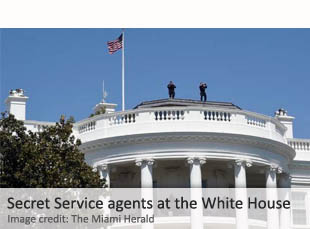
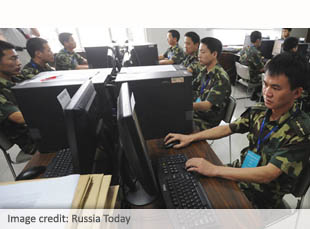
Computer hackers believed to be connected to the Russian government were able to access emails belonging to the president of the United States, according to American officials briefed about the ensuing investigation. The cyberattack on the White House was announced by American government officials in October of last year, soon after it was discovered by security experts. But The New York Times said on Saturday that the hacking was far more intrusive than had been publicly acknowledged and that the information breach resulting from it was “worrisome”. The paper said that the individuals behind the cyberattack were “presumed to be linked to the Russian government, if not working for it”. It also quoted one unnamed senior US official, who said that the group that perpetrated the hacking was “one of the most sophisticated actors we’ve seen”.
Little concrete information has emerged on the hacking, but it appears to have started with attempts to compromise computers at the US Department of State. As CNN reported earlier this month, the hackers essentially managed to take control of the State Department’s declassified computer network and exploit it for several months. In most American government departments, senior officials operate at least two computers in their offices. One is connected to the government’s secure network used for classified communications; the other is used to communicate unclassified information to the outside world. In theory, those two systems are supposed to be separate. However, it is common knowledge that the publicly linked computers often contain sensitive or even classified information. It is this unclassified part of the network that the alleged Russian hackers were able to access, in both the State Department and the White House.
According to The Times, by gaining access to the email accounts of senior US government officials, the hackers were able to read unclassified emails sent or received by, among others, President Barack Obama. The US president’s own unclassified account does not appear to have been breached, said the paper, nor were the hackers able to access the highly classified server that carries the president’s mobile telephone traffic. Nevertheless, the operation to remove monitoring files placed in US government servers by the hackers continues to this day, and some believe that the presence of the intruders has yet to be fully eradicated from the system. The Times contacted the US National Security Council about the issue, but was told by its spokeswoman, Bernadette Meehan, that the Council would “decline to comment”. The White House also declined to provide further information on the incident and the ensuing investigation.













 intelNews.org
France’s ex-cyber spy chief speaks candidly about hacking operations
September 16, 2016 by Joseph Fitsanakis Leave a comment
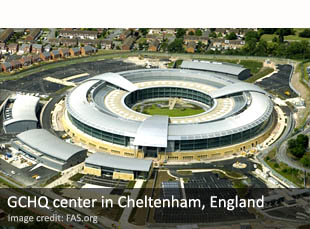
Earlier this month, Barbier was interviewed on stage during a symposium held by the CentraleSupélec, a top French engineering university based in Paris. He spoke with surprising candor about France’s cyber espionage operations. In the first part of his interview, which can be watched on YouTube, he recounted the history of what he described as “France’s cyber army”. He said that France began to build “teams of hackers” in 1992. Around that time, the DGSE purchased an American-built Cray supercomputer, said Barbier, and soon discovered that it could use the machine’s immense computing power to break passwords. More recently, said the former cyber spy chief, the DGSE has been trying to “catch up” with its American and British counterparts, the National Security Agency and the Government Communications Headquarters, by increasing its annual budget to over half a billion and hiring hundreds of young hackers. Many of these new employees have little to no university education, said Barbier, and are instead self-taught, having started hacking in their teenage years.
Like most governments, France will not officially admit to conducting offensive cyber operations using computer hacking and other techniques. But Barbier said during his interview that France was behind an offensive cyber operation that targeted Iran in 2009. He added that the DGSE has also directed cyber operations against Canada, Ivory Coast, Algeria, Norway, as well as its European Union partners Spain and Greece. He also complained that French government executives do not understand the importance of cyber operations and are not aiming high enough when it comes to planning, direction and hiring. The DGSE’s technical division still needs between 200 and 300 more staff members, Barbier argued in his interview.
► Author: Joseph Fitsanakis | Date: 16 September 2016 | Permalink
Filed under Expert news and commentary on intelligence, espionage, spies and spying Tagged with Bernard Barbier, computer hacking, cyberespionage, DGSE (France), France, interviews, News