Czech spy agency says it neutralized Hezbollah cyberespionage network
October 17, 2018 Leave a comment
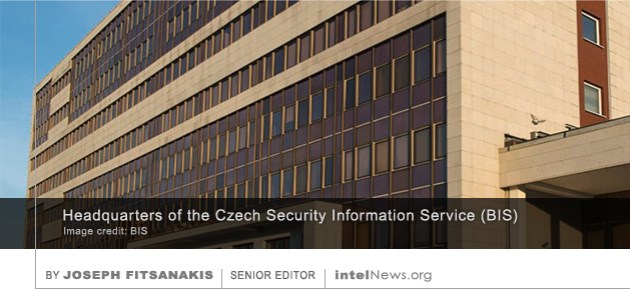 Officials in the Czech Republic have announced that the country’s spy agency headed an operation in several countries, aimed at neutralizing a cyberespionage network operated by the Lebanese militant group Hezbollah. Early last week, the Security Information Service (BIS), the primary domestic national intelligence agency of the Czech Republic, issued a short statement saying that it “played a big part in helping to identify and disconnect Hezbollah servers in the Czech Republic, other EU member states and the US”. But it did not elaborate. On Tuesday, however, ZDNet’s Zero Day security blog published more information from the Czechs about the BIS operation.
According to the BIS, its cyber security force discovered a number of servers located on Czech soil, which were “almost certainly” used by Hezbollah, the Shiite militant group that controls large swathes of territory in Lebanon. The servers were allegedly used in a wide-range cyberespionage operation that began in 2017 by a group of Hezbollah hackers based in Lebanon. It was there, said the BIS, where the command-and-control facilities of the operation were located. The servers located on Czech soil were used to download phone apps that contained malicious software. The hackers targeted individual phone users located mainly in the Middle East, according to the BIS, but other targets were in eastern and central Europe. It is believed that the majority of targets were Israeli citizens. Invariably, targeted individuals were approached online, mostly through fake Facebook profiles. Most of the targets were men, and the fake Facebook profiles featured pictures of attractive young women. After initial messages were exchanged via Facebook, the targets were convinced to download phone applications that would allow them to continue communicating with the ‘women’. These applications would install spyware on their phones, thus allowing Hezbollah hackers to capture the content of messages and calls made on the phones. The latter could also be used as eavesdropping devices.
According to BIS Director Michal Koudelka, the spy agency “played a significant role in identifying and uncovering the hackers’ system. We identified the victims and traced the attack to its source facilities. Hacker servers have been shut down”, he said. Koudelka added that some of the servers used by Hezbollah were located in other European Union countries and in the United States. These were shut down following a joint cyber operation by BIS and “partners”, said Koudelka, though he did not identify them.
► Author: Joseph Fitsanakis | Date: 17 October 2018 | Permalink













 intelNews.org
Czechs accuse Moscow of ‘most serious wave of cyberespionage’ in years
December 5, 2018 by Joseph Fitsanakis Leave a comment
According to the document, the cyberespionage attacks were carried out by a hacker group known as APT28 or Fancy Bear, which is believed to operate under the command of Russian intelligence. The hacker group allegedly targeted the Czech Ministry of Defense, the Ministry of Foreign Affairs and the headquarters of the country’s Armed Forces. As a result, the electronic communication system of the Ministry of Foreign Affairs was compromised “at least since early 2016”, said the report (.pdf). More than 150 electronic mailboxes of ministry employees —including diplomats— were accessed, and a significant number of emails and attachments were copied by the hackers. The compromise was terminated a year later, when BIS security personnel detected the penetration. The BIS report goes on to say that a separate cyberespionage attack was carried out by a Russian-sponsored hacker group in December of 2016. An investigation into the attacks concluded that the hackers were not able to steal classified information, says the report. It adds, however, that they were able to access personal information about Czech government employees, which “may be used to launch subsequent attacks [or to] facilitate further illegitimate activities” by the hackers.
The BIS report concludes that the hacker campaign was part of “the most serious wave of cyberespionage” to target the Czech Republic in recent years. Its perpetrators appear to have targeted individuals in “virtually all the important institutions of the state” and will probably continue to do so in future attacks, it says. Moreover, other European countries probably faced similar cyberespionage breaches during the same period, though some of them may not be aware of it, according to the BIS. Czech Prime Minister Andrej Babis told parliament on Tuesday that his cabinet will discuss the BIS report findings and recommendations early in the new year.
► Author: Joseph Fitsanakis | Date: 05 December 2018 | Permalink
Filed under Expert news and commentary on intelligence, espionage, spies and spying Tagged with APT28, cyber security, cyberespionage, Czech Ministry of Defense, Czech Ministry of Foreign Affairs, Czech Republic, Czech Security Information Service (BIS), Fancy Bear, News, Russia