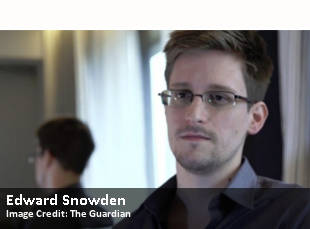
Defector reveals thousands of Islamic State internal documents

ISIS - JFTens of thousands of classified documents belonging to the Islamic State have been released by a disillusioned former member of the organization, who says that the group has been taken over by secularists. According to British-based agency Sky News, the documents were provided on a memory stick stolen from the Islamic State by a Syrian former member of the organization, who goes by the name “Abu Hamed”. Hamed allegedly stole the documents from the Islamic State’s “internal security police”, which Sky News also refers to as “the group’s Security Service”. He took it with him when he defected from the organization, which he says he joined as a convert from the non-Islamist Free Syrian Army. He told Sky News’ Stuart Ramsay that he left the group after concluding that it had been “taken over” by former Iraqi soldiers belonging to Ba’ath, the secularist party that was at the heart of the regime led by the late Iraqi President Saddam Hussein. As a result, “Islamic rules […] have totally collapsed” inside the Islamic State, said Hamed.

The documents that Hamed gave Sky News are said to number in the “tens of thousands” and reportedly identify nationals from over 50 countries who are members of the Islamic State. Many of the documents contain the 23-question form that all prospective members of the Islamic State have to complete before being admitted into the organization. The questionnaires contain the prospective members’ names and aliases, contact information and family background, among other identifying data. Ramsay said he met Hamed “in a secret location in Turkey”, where the former Free Syrian Army soldier is now living after defecting from the Islamic State. According to the Sky News reporter, Hamed said he abandoned the Islamist organization because its current leadership consists almost exclusively of Ba’athists, who are not known for their religious views or lifestyle.

Ramsay reports that many of the names of Islamic State members that are contained in the documents are already “well-known” to Western and Middle Eastern intelligence agencies. But the collection of members’ names contains several individuals from the Middle East, Northern Africa, Europe, as well as North America, who were allegedly not included in intelligence agencies’ lists. One file surrendered by Hamed is headlined “Martyrs”, and allegedly features the names of members of a brigade that consists “entirely of fighters who wanted to carry out suicide attacks and were trained to do so”. Hamed is also reported to have told Sky News that the Islamic State is gradually abandoning its self-described state capital of Raqqa in Syria and relocating to Iraq. Sky News said it had informed Western government agencies about the documents.

Author: Joseph Fitsanakis | Date: 14 March 2016 | Permalink

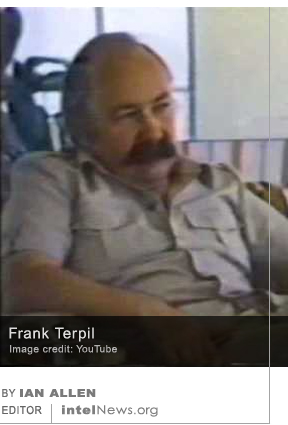
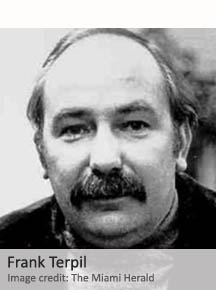
Frank Terpil, CIA operative who defected to Cuba, dies

Frank TerpilFrank Terpil, a former operative of the United States Central Intelligence Agency, who defected to Cuba in 1981 to avoid charges of criminal conspiracy, has died. He was 76. Terpil resigned from the CIA in 1970, allegedly after he was caught running a pyramid scheme in India, where he had been posted by the CIA. Soon after his forced resignation from the Agency, US federal prosecutors leveled criminal charges on Terpil and his business partner. The former CIA operative was also charged with conspiracy to commit murder, after it was found that he had helped facilitate the illegal transfer of over 20 tons of plastic explosives to the government of Libya.

Terpil managed to leave the US and reappeared in Lebanon in 1980, shortly before a court in New York sentenced him in absentia to five decades in prison for conspiring to smuggle 10,000 submachine guns to African warlords, including Uganda’s dictator Idi Amin. As agents of various countries started to zero in on Terpil’s Lebanon hideout, he disappeared again and resurfaced in 1981 in Havana, Cuba. Shortly afterwards, Cuba’s General Intelligence Directorate hired him as an operative under the operational alias CURIEL. Since that time, Terpil has been repeatedly mentioned as having played a part in Cuban intelligence operations around the world, but rarely gave interviews. He appeared again in 2014, however, in a documentary entitled “Mad Dog: Inside the Secret World of Muammar Gaddafi”. The film was made by British company Fresh One Productions on behalf of Showtime, an American premium cable and satellite television network. In the documentary, Terpil admitted that he helped the Libyan dictator “eliminate” his opponents —most of them Libyan exiles living abroad.

British newspaper The Observer, which published news or Terpil’s death, said the former CIA operative’s legal status in Cuba “was never quite clear”. He had allegedly expressed concerns in recent months that the rapprochement between Washington and Havana could threaten his sanctuary in the Caribbean island. His Cuban wife told The Observer that complications from diabetes had caused his legs to be amputated in recent months. She told the paper that Terpil “died peacefully” on March 1, of heart failure.

Author: Ian Allen | Date: 07 March 2016 | Permalink
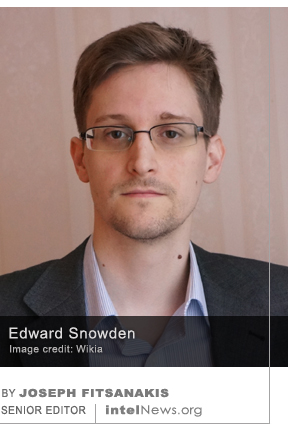
CIA airplane sent to capture Edward Snowden in 2013, documents show

Edward SnowdenDocuments acquired through Denmark’s freedom of information act appear to show that the United States deployed an airplane, which had previously been used to rendition terrorism detainees, in an attempt to capture the American defector Edward Snowden. Snowden, a computer expert for the United States Central Intelligence Agency and the National Security Agency, is currently living in Russia, where he defected in June 2013, after initially fleeing to Hong Kong with millions of stolen US government documents in his possession. A few weeks ago, Danish news website Denfri.dk published a set of documents that confirm the deployment over Danish airspace of an American airplane in June 2013. The plane had previously been used by the CIA to carry out extraordinary renditions of terrorism detainees during the Administration of US President George W. Bush.
The documents, which were acquired by Denfri.dk after it filed a lawsuit under Denmark’s Access to Public Administration Files Act, are heavily redacted. But they do show the deployment of the Gulfstream V aircraft with registration number N977GA, which landed at an airport in Danish capital Copenhagen, after flying over the British Isles. The flight occurred at the same time that Snowden was trying to acquire political asylum in Russia, according to Denfri. The website said that the documents it received from the Danish government included a “heavily redacted” email exchange between high-level officials in the country’s Justice and Foreign Affairs Ministries, as well police and military personnel. Among them was Anders Herping Nielsen, a Danish government official specializing in the extradition of detainees who are wanted for crimes abroad.

Denfri said it contacted the Danish government to ask why the documents had been so heavily redacted before being released. It was allegedly told by the Ministry of Justice that the redacting occurred in order to avoid complications in Danish-American relations. “Denmark’s relationship with the US would be damaged if the information [contained in the redacted portion of the documents] becomes public knowledge”, said an email from the Ministry.

Author: Joseph Fitsanakis | Date: 08 February 2016 | Permalink

New study documents views of defectors from Islamic State

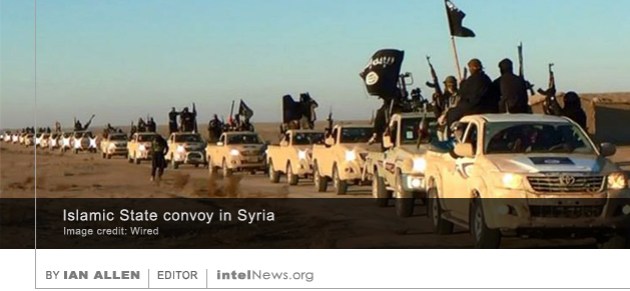
Islamic State convoy in SyriaA new study by a British-based organization details for the first time the views of dozens of former Islamic State fighters who have defected from the group in the past year. The study shows that most defectors were disillusioned after witnessing high levels of corruption among Islamic State members, or in response to the extreme violence perpetrated by the group against other Sunni Muslims. The research was carried out by the London-based International Center for the Study of Radicalization and Political Violence (ICSR), which said it gathered the publicly expressed views of nearly 60 Islamic State members who left the organization between August 2014 and August 2015.
According to ICSR Director Peter Neumann, who authored the report (.pdf), just over 30 percent of the defectors from the Islamic State are Syrian citizens, while one in four were born in other Middle Eastern countries. Neumann told a press conference held in London on Monday that many of the defectors saw life under the rule of the Islamic State as too austere. They also believed that the group was too unforgiving against fellow Sunni Muslims who did not agree with its stern doctrine. Some of the defectors complained that Islamic State commanders were more interested in launching attacks against other Sunni rebel groups than against the government of Syria, which is ostensibly the Islamic State’s foremost rival. Additionally, some defectors said that Islamic State commanders were obsessed and paranoid about alleged traitors and spies within the group’s ranks, and that they often ordered the execution of Islamic State fighters based on little or no evidence.

A smaller number of defectors said they had experienced racism from other Islamic State members, while others said that combat duties under Islamic State command was neither action-filled nor heroic. Moreover, luxury goods looted from civilians were rarely handed down to regular Islamic State troops by their commanders. Some defectors also stated that non-Arab fighters were used “as cannon fodder” by the Islamic State in battles that took place in Syria and Iraq. Neumann told reporters on Monday that the ICSR study challenged the portrayal of harmony and dedication that the Islamic State had carefully cultivated on social media.

Author: Joseph Fitsanakis | Date: 23 September 2015 | Permalink

Cambridge spy’s last years in Russia are detailed in new biography

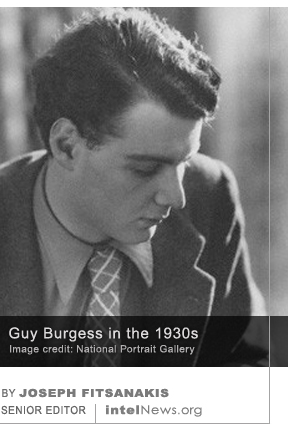
Guy BurgessThe life of Guy Burgess, one of the so-called ‘Cambridge Five’ double agents, who spied on Britain for the Soviet Union before defecting to Moscow in 1951, is detailed in a new biography of the spy, written by Andrew Lownie. Like his fellow spies Kim Philby, Donald Maclean, Anthony Blunt and John Cairncross, Burgess was recruited by the Soviets when he was a student at Cambridge University. He shook the British intelligence establishment to its very core when he defected to the USSR along with Maclean, after the two felt that they were being suspected of spying for the Soviets.
A few years after his defection, Burgess wrote to a close friend back in the UK: “I am really […] very well and things are going much better for me here than I ever expected. I’m very glad I came”. However, in his book, entitled Stalin’s Englishman: The Lives of Guy Burgess, Lownie suggests that Burgess’ life in the USSR was far from ideal. After being welcomed by the Soviets as a hero, the Cambridge University graduate was transported to the isolated Siberian city of Kuybyshev. He lived for several months in a ‘grinder’, a safe house belonging to Soviet intelligence, where he was debriefed and frequently interrogated until his Soviet handlers were convinced that has indeed a genuine defector.

It was many years later that Burgess was able to leave Kuybyshev for Moscow, under a new name, Jim Andreyevitch Eliot, which had been given to him by the KGB. Initially he lived in a dacha outside Moscow, but was moved to the city in 1955, after he and Maclean spoke publicly about their defection from Britain. He was often visited in his one-bedroom apartment by Yuri Modin, his Soviet intelligence handler back in the UK. According to Lownie, Burgess often complained to Modin about the way he was being treated by the Soviet authorities. His apartment had apparently been bugged by the KGB, and he was constantly followed each time he stepped outside.

The British defector worked for a Soviet publishing house and produced foreign-policy analyses for the Soviet Ministry of Foreign Affairs. He also produced a training manual for KGB officers about British culture and the British way of life. But he did not like living in the USSR and argued that he should be allowed to return to the UK, insisting that he could successfully defend himself if interrogated by British counterintelligence. Eventually, Burgess came to the realization that he would never return to his home country. He became depressed, telling friends that he “did not want to die in Russia”. But in the summer of 1963 he was taken to hospital, where he eventually died from acute liver failure caused by his excessive drinking.

Andrew Lownie’s Stalin’s Englishman: The Lives of Guy Burgess, is published by Hodder & Stoughton in the UK and by St Martins’ Press in the US. It is scheduled to come out in both countries on September 10.

Author: Joseph Fitsanakis | Date: 04 September 2015 | Permalink

Is brother of China’s ex-chief of staff seeking to defect to the US?

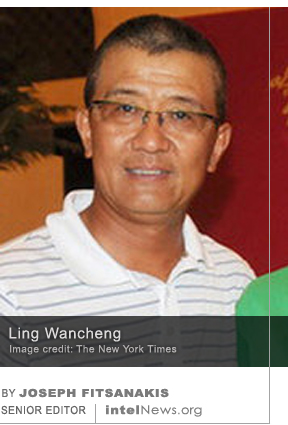
Ling WanchengA well-connected Chinese businessman, described by officials as potentially one of the most damaging defectors in the history of modern China, is reputed to have requested political asylum in the United States. Ling Wancheng, 54, is the multimillionaire brother of Ling Jihua, a close aide of China’s former premier, Hu Jintao, who rose through the ranks of the Communist Party of China to eventually lead its Central Committee’s General Office. With the help of his brother’s connections and political influence, Ling Wancheng transformed himself from a journalist to an entrepreneur in the early 2000s. Soon after receiving his graduate degree in business administration, he founded an investment firm and joined China’s nouveau riche elite. His wealth, which is estimated to be in the hundreds of millions of dollars, coupled with his older brother’s senior position within the Communist Party, made him one of China’s most politically connected entrepreneurs.
However, the Ling family’s fortunes turned dramatically for the worse in March of 2012, when Ling Jihua’s 23-year-old son was killed in a Beijing street while driving a Ferrari after a night of wild partying. Two half-naked women, who were also riding in the car, were seriously injured; one later died of her wounds. The circumstances of the crash, as well as Ling Jihua’s failed efforts to cover it up, were seen as symbolic of a spoiled generation of government officials, whose corrupt practices have isolated the Communist Party from the Chinese populace. Soon afterwards, the new administration of President Xi Jinping initiated a massive anti-corruption campaign as a means of restoring the reputation of the Communist Party. Ling was immediately demoted, cut off from the top echelons of the Chinese government, and in 2014 there were rumors that he would soon be facing a corruption investigation. In July of this year, it was officially announced that Ling had been expelled from the Communist Party and that he would be facing trial on charges of accepting bribes.

The announcement of Ling’s trial stated that he was accused of “accepting certain bribes for himself and on behalf of his family”. But no charges were filed against Ling Wancheng, and there were rumors that he was being pressured by Communist Party officials to testify against his brother. But it appears that the multimillionaire businessman, who owns several properties in the US, was able to flee China and is now in an undisclosed location on US soil. The New York Times, who tried to locate Ling earlier this week, spoke to unnamed American officials, who confirmed that he had indeed fled China and was in the US. The officials refused to confirm that Ling had applied for asylum. But they said that, if he did defect to America, Ling “could become one of the most damaging defectors in the history of the People’s Republic”, due to his political connections.

The Times added that Beijing had contacted the White House requesting that Ling be extradited to China. But the administration of US President Barack Obama appears unwilling to satisfy the Chinese government’s request, given that Chinese hackers are believed to be responsible for the recent theft of up to 24 million American government workers’ personal data.

Author: Joseph Fitsanakis | Date: 04 August 2015 | Permalink

Macau authorities deny CIA tried to assassinate Snowden

PLA Macao GarrisonBy JOSEPH FITSANAKIS | intelNews.org
Authorities in the Chinese region of Macau have denied news reports that Chinese Special Forces averted an attempt by the United States Central Intelligence Agency to kill or capture American defector Edward Snowden. The reports were initially published on March 8 on the website of China News Service, China’s second-largest state-owned news agency after Xinhua. The news agency, which serves China’s Special Administrative Regions of Hong Kong and Macau, said that a secretive unit of the Chinese People’s Liberation Army held a private function to celebrate its success against an alleged attempt by the CIA to kill Snowden. The American former computer expert worked for the CIA and the National Security Agency before defecting to Russia in the summer of 2013. Prior to arriving in Russia, however, Snowden first sought refuge in Hong Kong, where he stayed until June 23.

According to Chinese media reports, the US sent a CIA assassination squad to Hong Kong in mid-June 2013, in an effort to either abduct or kill Snowden. However, the defector’s life was allegedly saved by men from the so-called “Sharp Swords” Special Forces unit of the PLA’s Macao Quick Reaction Platoon. The latter, which is part of the PLA’s Macau Garrison, had reportedly been urgently dispatched to Hong Kong by the Chinese government, in order to guard the high-profile American defector. Some reports suggest that a fierce firefight took place between the Chinese Special Forces troops and the CIA hit squad, which eventually left four CIA officers dead, including “a senior member of the CIA’s network in Hong Kong”. When Snowden transferred to Russia, the PLA unit returned to its base in Macau, where it remains today. Chinese news media alleged that a special “special event” was held in honor of the PLA unit, during which several of its members received “first-class merit awards” for protecting Snowden and neutralizing the alleged CIA operatives.

On Monday, however, the First Secretary of the Security Office of Macau, Wong Sin Chat, told local media that the reports of a PLA award ceremony were “nothing more than rumors”. He added that there had been no attempt by anyone to assassinate Snowden, and noted that, on behalf of Macau’s state authorities, he could “absolutely confirm” that the news reports had been inaccurate. Washington has yet to comment on the allegations.

Senior Iranian aide defects during nuclear talks in Lausanne

Amir Hossein MotaghiBy JOSEPH FITSANAKIS | intelNews.org
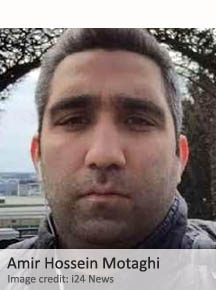
A media advisor to the Iranian president, who was in Switzerland to cover the ongoing international negotiations on the country’s nuclear program, has defected. Amir Hossein Motaghi is credited with having helped secure the impressive ascent of Hassan Rouhani to Iran’s presidency in 2013. Rouhani, who swept to power with over 50 percent of the vote, over 30 percentage points ahead of his nearest rival, owes much of his victory to his popularity among the youth. Motaghi led the media team that promoted Rouhani’s image among younger voters by cleverly employing online platforms such as Facebook and Twitter.

Following Rouhani’s victory, however, Motaghi repeatedly voiced impatience with the slow pace of social and political reforms in Iran. Recently he spoke in favor of the release of Jason Rezaian, the Iranian-American Tehran bureau chief for The Washington Post, who has been denounced as a spy and imprisoned by the Iranian government. There have been rumors in the Iranian media that Motaghi had been ordered to report once a week to Iran’s Ministry of Intelligence; some say he had been privately warned that he faced arrest upon his return to Iran.

Motaghi had reportedly been sent to the Swiss city of Lausanne by the Iran Student Correspondents Association (ISCA). His task was to cover the ongoing talks that aim to bring an end to the dispute between the Islamic Republic and a group of nations that have come to be known as P5+1, representing the five permanent members of the United Nations Security Council plus Germany. However, according to Iranian opposition sources, the media aide resigned from his ISCA post before filing an application for political asylum in Switzerland.

Soon afterwards, Motaghi gave an interview to Irane Farda, a pro-reform Iranian television station based in London, in which he explained the reasons for his defection. He accused the Iranian government of controlling Iranian media reports about the talks, by staffing its reporter entourage in Lausanne with undercover intelligence officers. He also said he could no longer pursue his profession conscientiously because he was only allowed to report approved news items. Furthermore, he accused the American delegation to the talks as “mainly speak[ing] on Iran’s behalf with […] the 5+1 countries [so as to] convince them to consent to an agreement”.

Late on Sunday, ISCA, the press agency believed to have sent Motaghi to Switzerland, released a statement claiming it did not employ the journalist and that his job had been terminated prior to the nuclear talks in Lausanne.

Swedish double spy who escaped to Moscow in 1987 dies at 77

Stig BerglingBy IAN ALLEN | intelNews.org
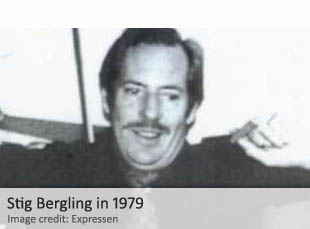
Sweden’s most notorious Cold-War spy, who went on the run for nearly a decade after managing to escape from prison in 1987, has died in Stockholm. Born in the Swedish capital in 1937, Stig Eugén Bergling became a police officer in the late 1950s prior to joining SÄPO, the Swedish Security Service, in 1967. He initially worked in the Service’s surveillance unit, and later joined several counterintelligence operations, mostly against Soviet and East European intelligence services. In 1979, while posted by SÄPO in Tel Aviv, he was arrested by the Israelis for selling classified documents to the GRU, the military intelligence agency of the USSR.

He was promptly extradited to Sweden, where he stood trial for espionage and treason. His trial captivated the headlines, as details about the spy tradecraft he employed while spying for the Soviets, including radio transmitters, invisible ink and microdots, were revealed in court. He said in his testimony that he sold over 15,000 classified Swedish government documents to the Soviets, not due to any ideological allegiance with the Kremlin, but simply in order to make money. Bergling was sentenced to life in prison, while lawyers for the prosecution argued in court that the reorganization of Sweden’s defense and intelligence apparatus, which had been caused by Bergling’s espionage, would cost the taxpayer in excess of $45 million. For the next six years, the convicted spy disappeared from the headlines, after legally changing his name to Eugen Sandberg while serving his sentence.

But in 1987, during a conjugal visit to his wife, he escaped with her using several rented cars, eventually making it to Finland. When they arrived in Helsinki, Bergling contacted the Soviet embassy, which smuggled him and his wife across to the USSR. The couple’s escape caused a major stir in Sweden, and an international manhunt was initiated for their capture. In 1994, the two fugitives suddenly returned to Sweden from Lebanon, where they had been living, claiming they were homesick and missed their families. They said they had lived in Moscow and Budapest under the aliases of Ivar and Elisabeth Straus. Bergling was sent back to prison, while his wife was not sentenced due to ill health. She died of cancer in 1997. Bergling changed his name again, this time to Sydholt, and lived his final years in a nursing home in Stockholm until his recent death. He was 77.

Revealed: Letters between Margaret Thatcher and KGB defector

Oleg GordievskyBy IAN ALLEN | intelNews.org
Files released this week have revealed part of the personal correspondence between the late British Prime Minister Margaret Thatcher and one of the Cold War’s most important Soviet spy defectors. Oleg Gordievsky entered the Soviet KGB in 1963. He soon joined the organization’s Second Directorate, which was responsible for coordinating the activities of Soviet ‘illegals’, that is, intelligence officers operating abroad without official diplomatic cover. Gordievsky’s faith in the Soviet system was irreparably damaged in 1968, when Warsaw Pact troops invaded Czechoslovakia. In 1974, while stationed in Danish capital Copenhagen, he made contact with British intelligence and began his career as a double agent for the United Kingdom. In 1985, shortly before he was to assume the post of KGB station chief at the Soviet embassy in London, he was summoned back to Moscow by an increasingly suspicious KGB. He was aggressively interrogated but managed to make contact with British intelligence and was eventually smuggled out of Russia via Finland, riding in the trunk of a British diplomatic vehicle. His defection was announced a few days later by British Prime Minister Margaret Thatcher, who had personally approved his exfiltration from the USSR. Files released this week by the British National Archives show that the British Prime Minister took a personal interest in Gordievsky’s wellbeing following his exfiltration, and even corresponded with him after the Soviet defector personally wrote to her to ask for her intervention to help him reunite with his wife Leila and two daughters, who remained in the Soviet Union. In his letter, written in 1985, Gordievsky told Thatcher that his life had “no meaning” unless he was able to be with his family. On September 7, 1985, the British Prime Minister responded with a letter to the Soviet defector, urging him not to give up. “Please do not say that life has no meaning”, she wrote. “There is always hope. And we shall do all to help you through these difficult days”. She added that the two should meet once the “immediate situation” of the worldwide media attention caused by his exfiltration subsided. Thatcher went on to publicly urge for Moscow to allow Gordievsky’s family to reunite with the Soviet defector, “on humanitarian grounds”. But it was in 1991, after the collapse of communism in the USSR, when Gordievsky’s family was finally able to join him in the UK.

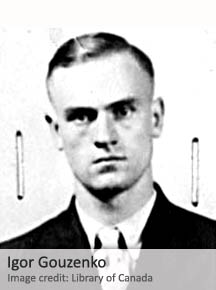
Remembering Gouzenko, the defector who triggered the Cold War

Igor GouzenkoBy ANDREW KAVCHAK* | intelNews.org
In 1998, my wife and I moved to downtown Ottawa, the capital of Canada. In 1999, when my first son was born I took several months off work to stay home with him. Every day I would take him to the local park. It was called Dundonald Park, located on Somerset Street, between Bay and Lyon. While my son was enjoying the outdoors and the fresh air in the park, I was routinely distracted by an old brick two-story building across the street. Something very dramatic happened there decades ago. And yet, there was no marker, no plaque, no statue, no monument…nothing. On the way home my son would typically fall asleep in the stroller. And in my free time I began making some phone calls to city officials and federal government offices. What would it take to erect some sort of historic marker to indicate that the first significant international incident of the Cold War happened in downtown Ottawa, so that generations of future Canadians and tourists in the nation’s capital could be informed or reminded of the historic events that transpired here?

The Japanese formally surrendered to General Douglas MacArthur on the deck of the USS Missouri in Tokyo Bay on September 2, 1945. The world assumed that peace and reconstruction would replace war and destruction. However, just three days later, on September 5, Igor Gouzenko, a cypher clerk at the Soviet embassy in Ottawa walked out of the embassy with over 100 secret documents detailing the existence of a vast Soviet espionage network in Canada and other countries of the West. He wanted to expose the Soviet activity and warn the West. He went to the night editor of the Ottawa Journal and provided him with what could have been the scoop of the century, but the night editor told him to come back the next day. He spent the night with his pregnant wife and infant son at their apartment at 511 Somerset Street. The next day he returned to see the day time editor at the newspaper. Read more of this post

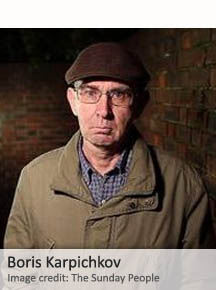
Former KGB officer says Snowden was ‘tricked into going to Russia’

Boris KarpichkovBy JOSEPH FITSANAKIS | intelNews.org
A former major in the Soviet KGB has told the British press that a team of Russian intelligence operatives posing as diplomats “tricked” American intelligence defector Edward Snowden into going to Moscow. Many believe that Snowden, a former computer expert for the United States Central Intelligence Agency and the National Security Agency, was recruited by Russian intelligence before defecting to Moscow in June 2013. But former Soviet and Russian intelligence operative Boris Karpichkov has said in an interview that Snowden never intended to defect to Russia, but was lured there by a team of Russians spies. Karpichkov was a major in the Soviet KGB and its domestic-security successor, the FSB, where he worked for 15 years. In the mid-1990s, however, he gradually fell out with his employer and was imprisoned for several months before managing to leave his homeland using one of several false passports that had been supplied to him by Russian intelligence. In 1998 he entered Britain, where he lives with his family today, having been granted political asylum. He told British tabloid newspaper Sunday People that Snowden had first attracted the attention of Russian intelligence in 2007, while he was posted by the CIA to Geneva, Switzerland. During his time there, Snowden posed as a diplomat while maintaining the security of the CIA’s computer facilities located on Swiss soil. According to Karpichkov, the SVR, the post-Soviet successor of the KGB’s foreign-intelligence department, first opened a file on Snowden at that time, and kept updating it for six years, having identified the American computer technician as a “potential defector”. The former KGB operative told the British newspaper that the SVR moved quickly after it emerged that Snowden had abandoned Hawaii, where he had been posted by the NSA, and was hiding in a Hong Kong hotel. He was eventually accosted by a group of SVR spies posing as Russian diplomats. The group managed to persuade him, says Karpichkov, that the Russian government would be able to offer him protection in Moscow while he made up his mind over which country to apply to for political asylum. Read more of this post

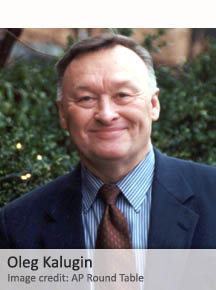
News you may have missed #877

Oleg KaluginBy IAN ALLEN | intelNews.org
►►China to ditch US consulting firms over suspected espionage. State-owned Chinese companies will cease to work with US consulting companies like McKinsey and Boston Consulting Group over fears they are spying on behalf of the US government. Last Thursday, China announced that all foreign companies would have to undergo a new security test. Any company, product or service that fails will be banned from China. The inspection will be conducted across all sectors —communications, finance, and energy.
►►Ex-KGB general says Snowden is cooperating with Russian intelligence. Former National Security Agency contractor Edward Snowden probably never envisioned that he would someday be working for the Russian Federal Security Service, or FSB. But according to former KGB Major General Oleg Kalugin, he is now, albeit as a consultant or technical advisor. “The FSB are now his hosts, and they are taking care of him”, Kalugin claimed in an interview. “Whatever he had access to in his former days at NSA, I believe he shared all of it with the Russians, and they are very grateful”, added the former Soviet spy.
►►Snowden claims he was ‘trained as a spy’. American intelligence defector Edward Snowden says he knows how US spies operate because he was trained as one of them. In an interview with NBC News, Snowden dismissed allegations that he was just a low-level analyst with the US government before revealing highly classified details of US spying activities in 2013. “I was trained as a spy in sort of the traditional sense of the word in that I lived and worked undercover overseas, pretending to work in a job that I’m not, and even being assigned a name that was not mine”, he said in a portion of the interview that aired on Tuesday.

Pattern of leaks suggests Snowden ‘may have been a Russian spy’

Edward SnowdenBy JOSEPH FITSANAKIS | intelNews.org
It has been nearly a year since British newspaper The Guardian unveiled the identity of American defector Edward Snowden, whom Pentagon Papers leaker Daniel Ellsberg has called the source of the most significant leak in the history of the United States. The case of Snowden, a former computer technician for the United States Intelligence Community, who is currently under Russian protection, continues to divide Americans. His defenders see him as a heroic whistleblower who sacrificed his comfortable life and promising career in order to expose the government’s encroachment into the private lives of American citizens. His detractors want him to account for stealing nearly 2 million classified documents and sharing American secrets with Moscow. Last January, American lawmakers with senior positions in Congressional intelligence committees expressed strong views that Snowden was working with Russian intelligence prior to his defection. Last Friday, American investigative journalist Edward Jay Epstein appeared to side with Snowden’s detractors. Writing in The Wall Street Journal, Epstein opined that the narrative of Snowden acting alone to bravely expose “the evils of government surveillance” was likely created by Snowden himself. But this popular whistleblowing narrative, said Epstein, is “at best incomplete [and] at worst fodder for the naïve”. The veteran journalist argued that Snowden’s heroic image seems to suffer when one considers his sleuthing actions prior to his defection. Specifically, the American defector left for Hong Cong, and eventually Russia, after having broken into at least 24 carefully compartmentalized areas of electronically stored classified intelligence inside the NSA. To do so, the computer expert had to consciously borrow, steal or forge multiple entry passwords. Once he had gained access to the compartmentalized systems, he planted “spiders”, stealthy intelligence-collection programs that looked for specifically targeted data to steal. This, says Epstein, is how Snowden managed to acquire 1.7 million documents from the Kunia Regional SIGINT Operations Center on the island of Hawaii, where he was stationed. What is interesting, argues Epstein, is that only “a minute fraction” of the documents stolen by Snowden were related to domestic surveillance by American government agencies. The journalist quotes General Martin Dempsey, Chairman of the Joint Chiefs of Staff, who said last March that the vast majority of the documents sought out by Snowden were related to America’s military capabilities. Read more of this post

CIA operative who defected to Cuba resurfaces in British film

Frank TerpilBy IAN ALLEN | intelNews.org
An operative of the United States Central Intelligence Agency, who defected to Cuba in 1981 to avoid charges of criminal conspiracy, has reemerged in a British documentary film about the late Libyan dictator Muammar al-Gaddafi. Frank Terpil, 74, resigned from the CIA in 1970, allegedly after he was caught running a pyramid scheme in India, where he had been posted by the CIA. Soon after his forced resignation from the Agency, US federal prosecutors leveled criminal charges on Terpil and his business partner. The former CIA operative was also charged with conspiracy to commit murder, after it was found that he had helped facilitate the illegal transfer of over 20 tons of plastic explosives to the government of Libya. Terpil managed to leave the US and reappeared in Lebanon in 1980, shortly before a court in New York sentenced him in absentia to five decades in prison for conspiring to smuggle 10,000 submachine guns to African warlords, including Uganda’s dictator Idi Amin. As agents of various countries started to zero in on Terpil’s Lebanon hideout, he disappeared again and resurfaced in 1981 in Havana, Cuba. Shortly afterwards, Cuba’s General Intelligence Directorate hired him as an operative under the operational alias CURIEL. Since that time, Terpil has been repeatedly mentioned as having played a part in Cuban intelligence operations around the world, but has rarely given interviews. He resurfaced again this month, however, in a documentary entitled “Mad Dog: Inside the Secret World of Muammar Gaddafi”. The film was made by British company Fresh One Productions on behalf of Showtime, an American premium cable and satellite television network. The film’s co-producer, Michael Chrisman, told news agencies that Terpil was interviewed “at his home” in Cuban capital Havana, where he apparently still lives, along with his “much younger” Cuban girlfriend. Read more of this post