News you may have missed #443

  • First budget cuts in a decade for UK spy agencies. Spending on Britain’s intelligence agencies is set to fall by 7%, for the first time in more than a decade. This is be expected to force MI5, MI6 and GCHQ to cap staff numbers, merge some of their operations, and scrap plans to modernize some of their buildings. Looks like even more British spies will be moving to Australia.
  • South Koreans arrested for trying to defect to North. Three South Koreans, including a medical doctor, are being investigated after allegedly trying to defect to North Korea from China. It is extremely unusual for South Koreans or other nationals to attempt to defect to the North.
  • Plame calls Fair Game movie ‘accurate portrayal’. CIA agent Valerie Plame has said the movie Fair Game, based on her book, is a “really good, accurate portrayal of what we went through, both personally and in the political maelstrom that we live through”. The Bush administration was accused of blowing Plame’s cover as retaliation after her diplomat husband openly challenged the reasoning behind the Iraq War.

News you may have missed #439

  • Book critical of Russian FSB published. In a new book entitled The New Nobility, Russian journalists Andrei Soldatov and Irina Borogan claim that the Russian Federal Security Service (FSB) is less repressive but ultimately more dangerous than its predecessor, the Soviet KGB.
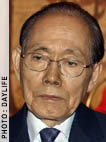
  • Senior-most North Korean defector dies. Hwang Jang-yop, the theoretician behind North Korea’s Songun and Juche state doctrines, who defected to South Korea in 1997, has died at his home in Seoul, aged 87. Last April, South Korea charged two North Korean government agents with attempting to assassinate Hwang.
  • ‘Low morale’ leads MI6 spies to apply for Australian jobs. More than 50 spies at Britain’s MI6 have allegedly responded to a recruitment drive by the Australian Secret Intelligence Service (ASIS). According to insiders, there has been growing uncertainty among MI6’s 2,600 staff over looming budget cuts and inquiries into alleged complicity in the torture of terrorism suspects.


News you may have missed #425 (US edition)

  • US Pentagon considering pre-emptive cyber-strikes? This is what The Washington Post is reporting, noting that military officials are “still wrestling with how to pursue the strategy legally”. If anyone in the DoD discovers a legal method of launching pre-emptive aggression, we’d sure like to know.
  • More changes in US FISA court. After a recent change of leadership, the US Foreign Intelligence Surveillance Act (FISA) court is considering new compliance rules for handling surveillance requests by US counterspy agencies. The court authorizes requests by agencies for surveillance of foreign suspects operating inside the US.
  • Why do US officials want to deport Chinese defector? Washington wants to deport Li Fengzhi, a Chinese ex-intelligence agent who defected to the US in 2004, back to China, where he could be executed for treason. There are rumors that Li may have “oversold” himself to the FBI and the CIA.

Russian alleged CIA spy gives interview

Igor Sutyagin

Igor Sutyagin

By IAN ALLEN | intelNews.org |
Of the four Russians alleged spies that the US and the UK received from Moscow in exchange for the 11 Russian illegals in July, only one is talking to the media. The Russian government convicted Igor Sutyagin, a nuclear proliferation expert, of having links with Alternative Futures, a British consulting company alleged by Moscow to be a CIA front. This past weekend, Sutyagin, who now lives in an undisclosed London location, gave a detailed interview to Natalya Golitsyna, a London-based correspondent for US government-owned Radio Liberty’s. As in his previous statements to the press, the Russian scientist rejected he was ever a spy, claiming that “[t]he first thing in my mind […] was doing and thinking for my country”. He also rejected accusations that he provided Alternative Futures with classified information on Russian nuclear weapons policy: “there was no transfer of information”, said Sutyagin, noting that the information he shared with the British-registered company “was just an illustration of the processes that are going on in Russia tasks”. Read more of this post

Did fugitive spy Metsos lead to Russian spy arrests?

Christopher Metsos

C.R. Metsos

By JOSEPH FITSANAKIS | intelNews.org |
Soon after the June 27 arrests of 10 Russian non-official-cover (NOC) spies in several US cities, one name came to the attention of intelligence observers: Sergei Tretyakov. Tretyakov was a senior Russian Foreign Intelligence Service (SVR) officer who defected to the US in 2000, while second-in-command at the SVR station in Russia’s United Nations mission in New York –the same outfit that run the deep-cover operatives arrested in June by the FBI. The Bureau’s own admission that it began monitoring the operatives around 2001, has caused many to believe that Tretyakov, who died suddenly on June 13, at age 53, may have tipped off the FBI about the NOCs. But Russian investigative journalist Yulia Latynina has raised a second possibility, no less intriguing than the first. Namely that it was not Tretyakov who betrayed the deep-cover operatives to the FBI, but rather the mysterious so-called 11th spy, Christopher R. Metsos, a seasoned SVR operative who is said to have acted as a go-between and financier for all 10 Russian spies. Read more of this post

News you may have missed #398

  • Britain’s first spy chief ordered Rasputin’s murder. Mansfield Cumming, or ‘C’ as he became known, was the first chief of Britain’s Secret Intelligence Service (MI6). In December 1916, he sent three agents in Russia to eliminate Grigori Rasputin, an influential Orthodox Russian priest who had a positive view of Germany.
  • Russian spy network moved money to Zimbabwe. A Zimbabwean company called Southern Union is alleged to have been used by exposed Russian spy Anna Chapman in a money smuggling operation involving a syndicate linked to the Robert Mugabe regime.
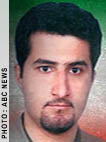
  • Iran says nuclear scientist gave valuable info on CIA. Iran’s semiofficial Fars news agency says that Iranian nuclear scientist Dr. Shahram Amiri, who resurfaced and returned home last week from the United States, after having disappeared during a 2009 religious pilgrimage to Mecca, has provided Iran with “valuable information” on the CIA.

Bookmark and Share

Comment: Defector’s Wish to Return to Iran Not Unusual

Shahram Amiri

Shahram Amiri

By IAN ALLEN | intelNews.org |
This website has covered extensively the case of Dr. Shahram Amiri, a scientific researcher employed in Iran’s nuclear program, who disappeared during a religious pilgrimage to Mecca in May or June of 2009. Tehran maintains that Dr. Amiri was abducted by CIA agents. However, most intelligence observers, including this writer, believe that the Iranian researcher willfully defected to the West, following a long, carefully planned intelligence operation involving the CIA, as well as French and German intelligence agencies.

Read more of this post

Dead defector not connected to Russian spies, insists friend

Sergei Tretyakov

Sergei Tretyakov

By IAN ALLEN | intelNews.org |
On July 2, based on an excellent analysis by Stratfor of the 10 Russian deep-cover agents arrested in the US in June, we entertained the possibility that Sergei Tretyakov, a senior Russian SVR agent who defected to the US in 2000, may have helped the FBI identify the Russian spy ring. Last Friday, it emerged that 53-year-old Tretyakov had died at his home in Florida. When he defected to the US, along with his wife and daughter, Tretyakov was second-in-command at the SVR (Russian external intelligence) station operating out of Russia’s United Nations mission in New York. This is the same outfit that coordinated the 10 Russian deep-cover agents arrested by the FBI in June. Tretyakov’s death was announced by the late Russian spy’s friend and confidante Pete Earley, who in 2008 wrote a book about the defector. It is worth noting that Tretyakov actually died on June 13, but his wife, Helen Tretyakov, requested that his death not be publicly announced until the precise cause of death was determined. Read more of this post

Analysis: What we know about the Russian spy ring case

SVR seal

SVR seal

By JOSEPH FITSANAKIS | intelNews.org |
If you are frustrated with the increasingly idiotic and sex-obsessed media coverage of the Russian spy ring recently busted by the FBI, you are not alone. Less than a week since news of the arrests in the US of ten alleged deep-cover agents of Russia’s SVR intelligence agency emerged, sensationalist media hacks have left no stone unturned. Thankfully, Stratfor Global Intelligence has produced an excellent early summary of this developing story, complete with a useful diagram of the known members of the SVR spy ring. The summary correctly points out some of the critical issues in the espionage case, including the fact that the 11 suspects appeared to be primarily run out of the SVR residence at the Russian mission to the United Nations in New York, and not out of the Russian Embassy in Washington DC. Read more of this post

News you may have missed #359

  • Another alleged North Korean spy captured in South. A month after two alleged North Korean assassins, posing as defectors, were arrested in the South, Seoul has announced that another defector, an unnamed 36-year-old female, was captured for receiving “Seoul subway information from a former high-ranking subway official”, with whom she had a romantic relationship.
  • New book on GCHQ out in July. A new book on the history of Britain’s secretive General Communications Headquarters, authored by Warwick University Professor Richard J. Aldrich, is to be published in a few weeks. The book, entitled GCHQ: The Uncensored Story of Britain’s Most Secret Intelligence Agency, will be published by Harper Collins.
  • Ex-DIA officials skeptical about rumored new DNI. Two former top US Defense Intelligence Agency officials, Jeffrey White and W. Patrick Lang, say retired Air Force Gen. James R. Clapper, Jr., a leading candidate to be the next Director of National Intelligence, nearly wrecked the agency’s analysis wing when he ran the organization in the mid-1990s.

Bookmark and Share

News you may have missed #341

  • Russian court rejects ‘spy’ scientist’s appeal. A Russian court has rejected an appeal for the release of academic Igor Sutyagin, former division head in the Russian Academy of Sciences’ USA and Canada Institute, who is serving a 15-year sentence for allegedly passing state secrets to foreign officials.
  • Ex-CIA agent’s arrest in VA was eventful, say sources. We reported earlier this week that Andrew M. Warren, the CIA’s Algiers station chief, who is accused of having drugged and raped two Algerian women at his official residence, was arrested at a Norfolk, Virginia motel, after he failed to show up for a court hearing. It now appears that Warren “had a gun in his waistband […] and officers used a taser to subdue him”.
  • Documents show CIA thought Gary Powers had defected. Declassified documents show the CIA did not believe that Gary Powers, who piloted the U2 spy plane shot down over Russia in 1960, causing the U2 incident, had been shot down. Instead, the agency spread the rumor that Powers “baled out and spent his first night as a defector in a Sverdlovsk nightclub”!

Bookmark and Share

News you may have missed #337

  • Another Iranian nuclear researcher reportedly defects. An academic linked with Iran’s nuclear program has defected to Israel, according to Ayoub Kara, Israel’s deputy minister for development in the Negev and Galilee. Kara said it “is too soon to provide further details”, adding that the defector is “now in a friendly country”.
  • Dutch spies to become more active abroad. The Dutch secret service, the AIVD, has announced a shift in strategy, deployed increasingly more officers abroad: “in Yemen, Somalia, and the mountains between Afghanistan and Pakistan”.
  • Why did the CIA destroy waterboarding evidence? It has been established that Porter J. Goss, the former director of the CIA, in 2005 approved the destruction of dozens of videotapes documenting the brutal interrogation of two terrorism detainees. But why did he do it? Former CIA officer Robert Baer examines the question.

Bookmark and Share

South charges North Korean agents with assassination plot

Hwang Jang-yop

Hwang Jang-yop

By JOSEPH FITSANAKIS | intelNews.org |
Two North Koreans who defected to South Korea last November have allegedly admitted to being intelligence officers on a mission to assassinate a North Korean former senior official. The official, Hwang Jang-yop, caused a sensation on both sides of the border when he defected to the South in 1997. A former secretary of the Korean Workers’ Party, Hwang was the North’s primary theorist and the ideological architect of juche, the philosophy of self-reliance, which is North Korea’s officially sanctioned state dogma. Since his defection, the 87-year-old Hwang, who is believed to have ideologically mentored North Korean leader Kim Jong-il, has been living in the South with around-the-clock security protection. The two self-confessed spies, Tong Myong Kwan and Kim Myung Ho, both 36, have allegedly admitted posing as defectors, while in reality being on an assassination mission on behalf of the intelligence unit of the North Korean Ministry of Defense. Read more of this post

Interview with alleged CIA spy in Iran

A Time to Betray

A Time to Betray

By IAN ALLEN | intelNews.org |
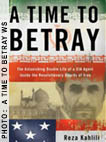
US government-owned Radio Liberty has aired an interview with an Iranian defector who claims to have worked as a CIA agent in the 1980s and early 1990s. The defector, who goes by the pseudonym Reza Kahlili (codename ‘Wally’), has authored what appears to be a CIA-sanctioned book, entitled A Time to Betray, in which he says he was a member of the Islamic Revolutionary Guard Corps. The IRGC is a sizable branch of the Iranian military that is ideologically committed to the defense of the 1979 Islamic Revolution. Kahlili, who now lives in California, says he concluded his studies in the US and returned to Iran shortly after the Revolution. But he quickly became disillusioned with the Islamic regime, and in 1981 met with the CIA in the United States and offered them his services. Read more of this post

Analysis: Can the CIA sabotage the Iranian nuclear weapons program?

Shahram Amiri

Shahram Amiri

By JOSEPH FITSANAKIS | intelNews.org |
There is no doubt that the CIA has been actively trying to sabotage Iran’s nuclear weapons program since at least February of 2008, when US President George W. Bush authorized Langley to intensify its covert efforts against Tehran. It is also true that the US was able to partially sabotage Iran’s nuclear program by eliminating the A.Q. Khan nuclear proliferation network, and by employing scientific front companies and cooperative suppliers, who gave the Iranians faulty hardware. The defection to Washington of senior Iranian nuclear scientist Shahram Amiri provides recent evidence of the existence of a covert US project to “decapitate” the Iranian nuclear weapons program, by luring away leading Iranian researchers. On the other hand, it is worth wondering why the CIA chose to remove Amiri from the Iranian nuclear program, instead of asking him to remain an agent-in-place, which would have been far more beneficial for Langley. Read more of this post