Spy archivist discusses fate of Swedish diplomat abducted by KGB

Raoul Wallenberg

Raoul Wallenberg

By JOSEPH FITSANAKIS | intelNews.org |
The fate of Swedish diplomat Raoul Wallenberg, who was abducted by Soviet intelligence officers in the closing stages of World War II, is one of the unsolved mysteries of 20th century espionage. The 33-year-old Wallenberg was a shrewd businessman who, in the summer of 1944, was posted as Sweden’s ambassador in Budapest, Hungary. During his time in Budapest, he was able to save over 20,000 Hungarian Jews from the Nazi concentration camps, by supplying them with Swedish travel documentation, or smuggling them out of the country through a network of safe houses. He is also reported to have managed to dissuade German military commanders from launching an all-out attack on Budapest’s Jewish ghetto. But Wallenberg was also an American intelligence asset, having been recruited by a US spy operating out of the War Refugee Board, an American government outfit with offices throughout Eastern Europe. In January of 1945, as Soviet forces descended on Axis ally Hungary, Moscow gave orders for Wallenberg’s arrest on charges of spying for Washington. The Swedish diplomat disappeared, never to be seen in public again. Some historians speculate that Joseph Stalin initially intended to exchange Wallenberg for a number of Soviet diplomats and intelligence officers who had defected to Sweden. But according to official Soviet government reports, Wallenberg died of a heart attack on July 17, 1947, while being interrogated at the Lubyanka, a KGB-affiliated prison complex in downtown Moscow. Despite the claims of the official Soviet record, historians have cited periodic reports that Wallenberg may have managed to survive in the Soviet concentration camp system until as late as the 1980s. Earlier this week, Lt. Gen. Vasily Khristoforov, Chief Archivist for the Russian Federal Security Service (FSB), one of two successor agencies to the old Soviet KGB, gave an interview about Wallenberg to the Associated Press. Read more of this post

Former Finnish diplomat reveals she worked for the CIA

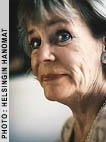
Marja-Liisa Linkoaho

Linkoaho

By JOSEPH FITSANAKIS | intelNews.org |
A Finnish diplomat in Cold-War East Germany has revealed how she was recruited by the US Central Intelligence Agency in the 1960s, shortly after the construction of the Berlin Wall. Marja-Liisa Linkoaho spoke to the Sunday edition of Finland’s Helsingin Sanomat newspaper, and admitted that she worked for American intelligence. She did so despite representing Finland, which was notably pro-Soviet during the presidency of ‘neutralist’ Finnish statesman Urho Kekkonen. She told the paper that, in 1961, at age 27, she became an assistant at the Finnish trade mission in East Germany, which at the time served as Finland’s de facto embassy in the communist country. The trade mission was headed by Consul General Olavi Wanne, and was centrally located on Mauerstrasse, within walking distance from the border between East and West Berlin. In August of 1961, less than three months after Linkoaho moved to East Germany, the country’s government, under Walter Ulbricht, took the decision to begin the construction of the Berlin Wall. However, as a foreign diplomat, Linkoaho was able to travel freely between East and West Germany despite the construction in Berlin of the heavily policed partition barrier. Several months later, Linkoaho borrowed a sum of money by one of her Finnish co-workers at the trade commission, which she used to purchase a German-made Volkswagen Beetle, from an American car dealership in West Berlin. However, shortly after she returned to East Berlin with her new car, it was stolen. Interestingly, Linkoaho said that, soon after the theft of her car, she was contacted by the CIA and asked to work for them as an agent, in return for money and a new car. The Finnish former diplomat told the Helsingin Sanomat that she had been contacted by the CIA “a few times before”, but had politely declined the Agency’s offers for work. This time, however, she needed the money, and the car, so she took up the offer. Read more of this post
News you may have missed #554

Bat Khurts

Bat Khurts

►►UK and US tried to delay Pakistan nuclear weapons program. We have written before about attempts by the CIA to delay or stop Pakistan’s nuclear program. Now newly declassified documents show that the United States and Great Britain undertook a coordinated secret diplomatic campaign between 1978 and 1981 to prevent Pakistan’s attempted covert purchasing of “gray area” technology for its nuclear weapons program.
►►FBI monitoring new phone technologies. According to an internal FBI document, obtained by the Federation of American Scientists through a FOIA request, the FBI continuously monitors the surveillance challenges posed by new mobile phone technologies. The document highlights the Bureau’s concerns that that 4G will require agencies to “deal with significantly higher data rates than in current wireless network intercepts”.
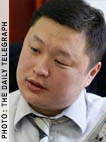
►►Mongolian ex-spy chief to be extradited to Germany. Britain has decided to extradite Bat Khurts, former director of the General Intelligence Agency of Mongolia, to Germany. Read more of this post

Lithuania recalls Austria ambassador over ex-KGB general’s release

Mikhail Golovatov

Mikhail Golovatov

By JOSEPH FITSANAKIS | intelNews.org |
The government of Lithuania has recalled its ambassador to Vienna, in protest over the release by Austria of a former Soviet intelligence official, who is wanted in Vilnius for war crimes. Last Thursday, Austrian authorities arrested Russian citizen Mikhail Golovatov, a former general of the KGB, who was stationed in Lithuania during the final years of the Soviet Union. Golovatov’s detention was facilitated by a European arrest warrant issued by the office of the Lithuanian prosecutor. The latter accuses Golovatov of authorizing crimes of war as head of Alpha Group —also known as Spetsnaz Grupp Alfa— a special forces unit within the KGB’s First Chief Directorate. On January 13, 1991, Alpha Group forces spearheaded a counterinsurgency attack on the State Radio and Television Building and the Vilnius TV Tower in the Lithuanian capital, in an attempt to quash the Soviet Republic’s growing secessionist movement. The latter had unilaterally declared Lithuania’s independence on March 11, 1990. The attack resulted in the death of 14 and the injury of over 700 people. During the past two decades, the Lithuanian state has sponsored an international campaign for the arrest of numerous officials who represented the Soviet security apparatus in Lithuania during the final months of the USSR’s existence. But, to Vilnius’ shock, Austrian authorities released Golovatov 24 hours after arresting him, arguing that the European arrest warrant issued by the Lithuanian prosecutor’s office was “too vague” to justify the former KGB general’s continued detention. Read more of this post

US summons Syrian ambassador for spying on protesters

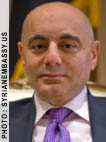
Imad Moustapha

Imad Moustapha

By JOSEPH FITSANAKIS | intelNews.org |
American government officials acknowledged late last week that they warned Syria’s ambassador to Washington to stop his diplomats from spying on anti-government activists operating in the United States. The State Department said that Eric Boswell, Assistant Secretary for Diplomatic Security, summoned the ambassador of the Syrian Arab Republic, Imad Moustapha, and conveyed “a number of […] concerns with […] reported actions of certain Syrian embassy staff in the United States”. The concerns center on what appear to be confirmed sightings of Syrian diplomats conducting technical surveillance against Syrian and American citizens participating in demonstrations and other legal political activities in several US cities. There are also reports that intelligence gathered by Syrian diplomats in the United States is used by the Syrian security services in Syria to intimidate family members of Syrian and Syrian-American dissidents who are active in the United States. According to The Washington Times, the State Department was first alerted to the alleged political surveillance by the activists themselves, who began noticing in June the presence of suspected Syrian government informants in their Washington gatherings. Read more of this post

US helped France go nuclear to keep Europe divided, documents show

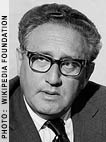
Henry Kissinger

Henry Kissinger

By JOSEPH FITSANAKIS| intelNews.org |
The government of the United States secretly helped France expand its nuclear arsenal, in order to promote its rivalry with Britain, according to newly declassified documents. The clandestine assistance to France, which tested its first nuclear bomb in Africa in 1960, began during the Richard Nixon administration, and was actively directed by Henry Kissinger, Nixon’s senior National Security Advisor. The documents, which were obtained by researchers at the George Washington University and the Woodrow Wilson International Center for Scholars, include a 1973 memorandum authored by Kissinger, in which he writes: “We want to keep Europe from developing their unity as a bloc against us. If we keep the French hoping they can get ahead of the British, this would accomplish our objective”. Toward that goal, the US ought to provide the French with information that will make them “drool but doesn’t give [them] anything but something to study for a while”. By doing so, Washington would be able to force Britain to stop “behaving shitty” and conform to American foreign policy objectives: “if they know we have another option, they might buck up”, writes Kissinger. Read more of this post

Leaked US cable reveals concern about China spying in Chile

WikiLeaks

WikiLeaks

By JOSEPH FITSANAKIS | intelNews.org |
A leaked US government document reveals strong concerns expressed by the US embassy in Santiago about Chinese intelligence operations in Chile. The document, classified “secret”, and dated August 29, 2005, was released by whistleblower website WikiLeaks. It contains a report sent by the embassy to the US Department of State, concerning Chinese intelligence collection activities in the South American nation. The report points out that the Chinese embassy in the Chilean capital is one of the largest in Latin America, with 22 employees, who are “all good Spanish speakers”. It also notes that Chinese news agency Xinhua maintains three full-time correspondents in Chile, who are “assumed [to be] involved in some kind of collection activity”. But the leaked document focuses mostly on alleged Chinese intelligence collection activities aimed at the Chilean military, which is heavily subsisted by the United States. It suggests that bilateral ties between the Chinese and Chilean military were significantly strengthened in 2004, when, during an official visit to China, the then Chief of the Chilean Army, General Juan Emilio Cheyre, adopted a Chinese proposal to establish a Mandarin-language training program for selected officers of the Chilean military, which became operational shortly after. Read more of this post

News you may have missed #491

News you may have missed #480 (Libya edition)

  • Unconfirmed: Gaddafi fires spy chief. A Benghazi-based Libyan newspaper has said that Muammar Gaddafi has fired the director of Libya’s intelligence service, Abdullah Al-Senussi, who is considered a key player in a brutal crackdown against anti-regime protesters. The paper said that the Libyan leader named one of his bodyguards, Mansur Al-Qahsi, in Al-Senussi’s place.
  • Libya replaces ambassador to US who defected. The US said it received word Monday that Libya has got rid of its ambassador in Washington, Ali Aujali, after he defected to the opposition, and has now replaced him with a charge d’affaires at the embassy, who is a regime supporter. Changes in Libya’s diplomatic representation in the US are extremely important, since communication links between Washington and Libya may have a drastic impact on the situation in the North African country.
  • Libya’s poison gas stockpiles reportedly unaffected by turmoil. A senior US administration official has told The Washington Post that the White House has no reason to believe the current turmoil in Libya has made its chemical weapons stockpiles more vulnerable to theft. Experts believe that some 10 metric tons of mustard sulfate and sarin gas precursor are stockpiled in barrels at three locations in the Libyan desert south of Tripoli, where Muammar al-Gaddafi has holed up in a last-ditch fight to keep from being overthrown.

US reducing spy presence in Pakistan, say papers

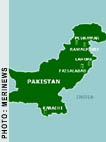
Pakistan

Pakistan

By JOSEPH FITSANAKIS | intelNews.org |
Several Pakistani publications report that the United States has suspended some of its intelligence operations in Pakistan and is pulling several of its operatives out of the country. The Islamabad-based Express-Tribune, which is partnered with The International Herald Tribune (the global edition of The New York Times), says that the US move is designed to pre-empt an ongoing investigation by Pakistani authorities into the whereabouts and activities of hundreds of US diplomats in several of the country’s regions. According to the paper, Pakistan’s foreign ministry is in the process of conducting its first detailed investigation into the US diplomatic community in Pakistan in almost three years. The ministry has told the Express Tribune that it has detected 851 Americans operating in Pakistan with diplomatic immunity, of whom nearly 300 “are not working in a diplomatic capacity”. The paper also cites sources inside Pakistan’s ministry of the interior, which claim that as many as 414 American diplomats operating in Pakistan are members of the US intelligence community. Over 40 US intelligence operatives have allegedly left the country or have completely suspended their activities in recent weeks. Read more of this post

Media concealed agent’s CIA capacity at US request

Raymond Allen Davis

Raymond Davis

By IAN ALLEN | intelNews.org |
Several American news outlets withheld information about the CIA capacity of a US citizen who was arrested in Pakistan last month after killing two men. Raymond Allen Davis (note: this may not be his real name), who holds a United States diplomatic passport, was detained in Lahore on January 25, after using an unregistered Glock semi-automatic pistol to shoot dead two men, who he says tried to assault him. There has been intense speculation about Davis’ professional capacity, with many observers suspecting he works in intelligence. His CIA role was confirmed earlier this week by British newspaper The Guardian, which cited officials in Pakistan and the US in revealing that Davis, 36, is “beyond a shadow of a doubt” an employee of the CIA. Shortly after that revelation, three US-based news outlets, The Washington Post, The New York Times, and the Associated Press, confirmed Davis’ CIA credentials, saying that they had been aware of them for weeks. The Times and the Post both suggested that they decided to consciously suppress Davis’ CIA role after the Obama administration told them that not doing so would endanger the CIA operative’s life. Read more of this post

American held in Pakistan is acting CIA station chief

Raymond Allen Davis

Raymond Davis

By JOSEPH FITSANAKIS | intelNews.org |
A British and a Pakistani newspaper have confirmed that an American diplomat, who is being held in Pakistan for killing two armed men in Lahore, is in reality an employee of the Central Intelligence Agency. On January 25, former US Special Forces member Raymond Allen Davis (note: this may not be his real name) used an unregistered Glock semi-automatic pistol to shoot dead two passengers on a motorcycle, who he says tried to assault him while he was driving his car in Pakistan’s second largest city. Witnesses say Davis shot dead the one of the two men by firing ten shots from inside his vehicle, before stepping outside to shoot the second man as he was running away from the scene of the crime. Pakistani authorities say Davis’ claim to self-defense is discredited by the fact that the second man’s body was found almost 10 meters away from the motorcycle, bearing bullet wounds in his back. A third individual was struck and run over by a car carrying several armed Americans, whom Pakistanis say were also CIA operatives. The latter have since returned to the United States, according to Pakistani officials. Soon after Davis’ arrest, US President Barack Obama insisted that Pakistani authorities had illegally captured a “US consulate worker” of an “administrative and technical” capacity, attached to the US consulate in Lahore. Read more of this post

US denies smuggling spy equipment into Argentina [updated]

Argentina

Argentina

By JOSEPH FITSANAKIS | intelNews.org |
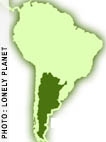
The United States has denied charges by Argentine officials that it tried to smuggle espionage equipment into the South American country under the pretext of transporting training supplies for Argentine Federal Police. The charges were leveled on Thursday, after Argentine customs officials conducted what the US Department of State called an “unusual and unannounced” inspection of a US Air Force C-17 cargo plane that landed in the country. According to the Argentine government, the inspection turned up communications interception equipment, “powerful GPS” hardware, as well as “technological elements containing codes labeled secret”, among other items. The material, which had apparently not been listed in the plane’s manifest, was confiscated, while the C-17, along with its American passengers, most of whom were members of the US Special Forces, flew back to the US. Authorities in Argentina are now accusing the US Pentagon and the Department of State of trying to smuggle in the equipment without declaring it to customs officials, as is prescribed under international air cargo transportation laws. Read more of this post

Leaked cable confirms end of US-NZ spy quarrel

Hillary Clinton

Hillary Clinton

By JOSEPH FITSANAKIS | intelNews.org |
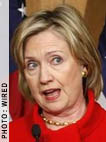
To regular readers of this blog, this is not so much a revelation, as it is a confirmation. Back in October of 2009, we wrote about a peculiar comment made Hillary Clinton. The United States Secretary of State had told a press conference that “we [the US] are resuming our intelligence-sharing cooperation [with New Zealand], which we think is very significant”. Resuming? When had it been disrupted, and why? Most intelligence observers agree that the only glitch that could have caused the cooperation to end would have been New Zealand’s nuclear ban. It was in 1984 when, under mounting popular pressure, the Labour government of David Lange voted to bar nuclear-powered or nuclear-armed ships from entering New Zealand territorial waters. At the time, the ban was heralded by the global nuclear disarmament movement as a major victory. But Washington did not see it that way. Successive US administrations pressured Wellington to repeal the nuclear-free legislation and allow US warships to make use of strategic New Zealand ports. Washington’s pressure increased in the years after 9/11, culminating in 2006, when it threatened to cancel a free-trade agreement between the two countries if New Zealand refused to repeal the ban. It appears that, at some point in time, possibly after 9/11, the US actually terminated intelligence sharing between the two countries in order to force New Zealand to comply. Read more of this post

Three more Latin American countries recognize Palestinian state

Israel, Palestine

Israel, Palestine

By IAN ALLEN | intelNews.org |
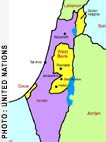
Three more Latin American countries officially recognized the state of Palestine last week, prompting harsh diplomatic responses from Israel and the United States. The recognitions were announced by the governments of Brazil, Argentina and Uruguay, which make up the majority of Mercosur, a South American common market area modeled after the European Union. All three nations said they officially recognized a Palestinian state based on internationally established borders prior to the 1967 Six Day War, during which Israel illegally occupied the West Bank and Gaza. The official recognitions were immediately endorsed by Riyad al-Maliki, Foreign Affairs Minister of the Palestinian National Authority (PNA) in the West Bank, who said that the PNA expected Paraguay —Mercosur’s fourth member— to follow suit early next year. The new recognitions by Brazil, Argentina and Uruguay follow earlier similar moves by Nicaragua, Venezuela, Costa Rica and Cuba. Diplomatic observers expect Palestine to soon be officially recognized by the vast majority of Latin American nations, with Colombia, Peru and a handful of Central American states being the few exceptions. Read more of this post