Spy activity heats up in Berlin, recent arrests show

Syrian embassy in BerlinBy IAN ALLEN | intelNews.org |
During the Cold War, Berlin was considered one of the world’s paramount intelligence hotspots —a gathering place for spies from Western Europe, the Soviet bloc, America, and beyond. But recent developments in the German capital show that the city’s illustrious espionage heritage is far from over. On Wednesday, German authorities announced the arrest of a 56-year-old man on charges of spying on Western Saharan opposition activists operating on German soil. The man, who has been identified only as “Mohammed B.”, is reportedly a German-Moroccan dual citizen, and the statement by the German prosecutor’s office hints that he is an accredited intelligence officer. According to the official press release by the prosecutor, Mohammed B. was arrested for operating as an unregistered agent of the Moroccan intelligence services. His main targets appear to have consisted of activists involved with the POLISARIO Front, the main political vehicle of the Western Saharan independence movement, which seeks to separate the territory from Moroccan control. POLISARIO, along with its military wing, the Sahrawi People’s Liberation Army, was founded after 1975, when Morocco unilaterally annexed the former Spanish colony. A police spokesman in Berlin said German authorities searched Mohammed B’s apartment, as well as businesses and houses belonging to “two other suspects”, who do not appear to have been apprehended. The arrest took place exactly a week after the German government summarily expelled four Syrian diplomats, whom it accused of engaging in “activities incompatible with their diplomatic status” —code language for espionage. Read more of this post

News you may have missed #678

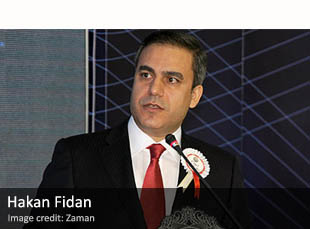
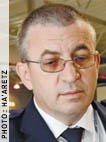
Hakan FidanBy IAN ALLEN | intelNews.org |
►►Russia ‘exposed 199 spies’ last year. Outgoing Russian President Dmitry Medvedev said Tuesday that Russian counterintelligence had exposed 199 spies working for foreign powers last year. He was speaking at a meeting of the Federal Security Service. He also urged the FSB to “take extra measures to protect Russian interests” and reinforce the country’s borders in the Arctic.
►►Germany expels four Syrian diplomats. As tensions mount between Western nations and Syria, the German authorities said Thursday that they had ordered the expulsion of four Syrian diplomats after arresting two men accused separately of spying on opponents of President Bashar al-Assad. The four diplomats —three men and a woman who were not identified by name— have been given three days to leave Germany.
►►Turkey summons spy chief over talks with Kurds. Prosecutors have summoned Hakan Fidan, head of Turkey’s National Intelligence Agency (MİT), as well as his predecessor, Emre Taner, for questioning, over reports of secret peace talks in Norway between Turkish intelligence agents and Kurdish militant leaders. Predictably, MİT has appealed the move.

Canada reportedly expels Russian diplomats over spy affair

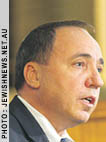
Jeffrey Paul DelisleBy JOSEPH FITSANAKIS | intelNews.org |
Canadian government officials have refused to confirm or deny media reports that Ottawa expelled several Russian diplomats recently in connection with an alleged espionage affair. The alleged expulsions are reportedly connected with the case of Royal Canadian Navy Sub-Lieutenant Jeffrey Paul Delisle. Earlier this week, Delisle became the first person to be charged under Canada’s post-9/11 Security of Information Act, for allegedly passing protected government information to an unspecified foreign body. According to media reports, Delisle, who had top-level security clearance, worked at Canada’s ultra-secure TRINITY communications center in Halifax. Canadian authorities have refused to reveal the country for which Delisle allegedly spied. But late last night, CTV revealed that the names of two Russian diplomats and two technicians stationed at the embassy of the Russian Federation in Ottawa had been quietly dropped from the list of recognized diplomatic officials in Canada. The list, which is approved periodically by the Canadian Ministry of Foreign Affairs and International Trade, contains the names of all foreign diplomats legally permitted to operate in Canada. One of the missing names, that of Lieutenant Colonel Dmitry V. Fedorchatenko, bears the title of the embassy’s Assistant Defense Attaché. Russian consular officials in Canada rejected speculation that the missing diplomats were expelled by the Canadian government in connection with the Delisle affair. It appears that Canadian counterintelligence investigators had been monitoring Jeff Delisle for quite some time, perhaps even before 2010. If Delisle acted —as he is reported to have done— as an unregistered foreign agent of Russia, it is certainly not surprising that he was a naval officer. He was probably selected by the Russians because he was a member of the Royal Canadian Navy. Ever since Canada joined NATO, in the late 1940s, its tactical contribution to the Organization has been mostly naval. Read more of this post

Turkey expelled Dutch spy posing as diplomat, says newspaper

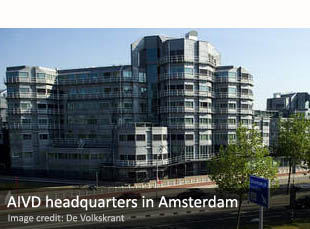
AIVD headquarters in AmsterdamBy JOSEPH FITSANAKIS | intelNews.org |
The government of Turkey secretly deported a Dutch intelligence officer posing as a diplomat, according to a leading Dutch newspaper. According to Amsterdam-based De Volkskrant, the unnamed Dutch spy held a diplomatic post at the embassy of the Netherlands in Turkish capital Ankara. In reality, however, he was an intelligence officer in the General Intelligence and Security Service (AIVD), Holland’s domestic intelligence agency. He was quietly expelled last year, says the paper, and is currently serving at another Dutch embassy in the Middle East. De Volkskrant notes that the reason why the Turkish government decided to expel the AIVD officer remains unclear. The paper quotes one unnamed member of the Dutch Ministry of Foreign Affairs who, when questioned about the expulsion, said simply: “sorry but that’s a no go zone […]; I love my career and my family”. However, the article hints that the intelligence spat may have been sparked by differences between Ankara and Amsterdam over Turkey’s Kurdish minority and its nationalist organizations, including the Kurdistan Workers Party (PKK). Founded in the 1970s, the PKK leads Kurdish secessionist aspirations for a Kurdish homeland incorporating parts of Turkey’s far-eastern Anatolia region, as well as parts of Iraq and Syria. According to De Volkskrant, in 2006 the AIVD stationed for the first time a liaison officer at the Dutch embassy in Ankara, whose mission was to collaborate with Turkey’s MİT intelligence service in collecting intelligence on Kurdish secessionist groups. However, the collaboration appears to have turned sour after Turkey accused the Dutch government of allowing many Kurdish activists, which it accuses of inciting terrorism, to claim political asylum in Holland. Moreover, Ankara has accused Dutch authorities of turning a blind eye to PKK recruiting and fundraising operations in Holland, organized by the sizeable Kurdish expatriate community in the country. Read more of this post

US expels Venezuelan diplomat over cyberespionage allegations

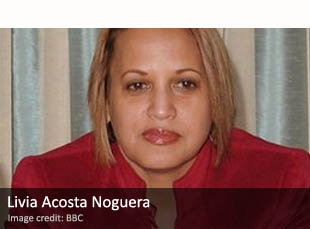
Livia Acosta NogueraBy JOSEPH FITSANAKIS | intelNews.org |
The United States has ordered the immediate expulsion of the head of the Venezuelan consulate in Miami, over allegations that she helped coordinate a cyberattack against US government targets in 2008. The diplomat, Livia Acosta Noguera, was declared “persona non grata” (an unwelcome person) by the US Department of State last Friday, and was given 72 hours to leave the country. State Department officials refused to discuss the reasons for Acosta’s expulsion. But the BBC said that the expulsion order was prompted by a letter sent last month to US Secretary of State Hillary Clinton by four members of the US Congress. The letter’s authors reportedly raised concerns about a documentary aired in December by Univision, a US-based Spanish-language broadcaster, titled “The Iranian Threat”. According to reports, the documentary alleged that Acosta was part of a multinational team of diplomats from Venezuela, Iran and Cuba, who, while stationed in Mexico in 2008, helped orchestrate a cyberespionage operation against US targets. The alleged operation was aimed at computer servers belonging to the US government computer, including some at the Department of Defense, the National Security Agency, the Central Intelligence Agency, and the White House. Computer servers at several nuclear power plants across the US were also reportedly targeted. The documentary exposé, which later appeared in print in US-based Spanish-language newspaper El Nuevo Herald, included allegations that Acosta is in fact a member of the Bolivarian Intelligence Service, Venezuela’s foremost external intelligence agency. Read more of this post

Australian government feared KGB spy scandal, documents show

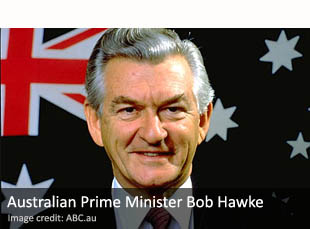
Bob HawkeBy JOSEPH FITSANAKIS | intelNews.org |
Declassified papers from a 1983 Australian Cabinet meeting reveal that the Labor government of the day feared it could be brought down by revelations of spying by a Soviet diplomat in Canberra. The spy was Valeriy Nikolayevich Ivanov, First Secretary at the Soviet embassy in the Australian capital. Suspecting the Soviet diplomat of espionage activities, the Australian Security Intelligence Organisation (ASIO) had bugged his home, and by 1982 had concluded that he was “a professional KGB intelligence officer”. Moreover, ASIO counterintelligence officials believed that Ivanov had been actively cultivating a relationship with an Australian citizen with a possible view to recruitment. Their concern apparently intensified after the Australian citizen began meeting Ivanov at his diplomatic residence, at the Soviet official’s request. On April 20, 1983, ASIO Director General Harvey Barnett met newly installed Australian Prime Minister Bob Hawke, and informed him that the Australian citizen in question was no other than David Combe. A former National Secretary of the Australian Labor Party (ALP) from 1973 to 1981, Combe was also the Prime Minster’s personal friend and close associate. A member of the Australia-USSR Friendship Society, Combe had come to know Ivanov in 1982, when he asked the Soviet embassy in Canberra for assistance in preparing for a business trip to the Soviet Union. Combe had exited politics before the 1983 national election, which had resulted in a landslide victory for the ALP, and he had entered a career as a business consultant and lobbyist. But his close relationship with Hawke alerted senior ALP officials. Meeting minutes of the government’s National and International Security Committee, released last week by the National Archives of Australia, show that Hawke chose to take Director General Barnett and other ASIO officers with him to brief senior cabinet members on April 21, the day after he himself had been briefed about the Ivanov affair. Read more of this post

Newspaper reveals name of Russian ‘spy’ expelled from Britain

Mikhail Repin

Mikhail Repin

By JOSEPH FITSANAKIS | intelNews.org |
In December of 2010, the British government quietly ordered the expulsion of a diplomat from the Russian embassy in London, whom it accused of “activities incompatible with his diplomatic status” —technical terminology implying espionage. Moscow quickly responded with an expulsion of a British diplomat stationed in the Russian capital. The tit-for-tat incident saw no publicity, and neither man was named, as is customary in such cases. But, in its Saturday edition, British newspaper The Daily Telegraph identified the expelled Russian diplomat as Mikhail Viktorovich Repin, Third Secretary in the Political Section at the Russian embassy in London. The paper said that Repin, a fluent English speaker, was a junior officer of the political directorate of the SVR, Russia’s Foreign Intelligence Service, operating under standard diplomatic cover. Repin arrived in London in late 2007, shortly after the British government expelled four Russian diplomats in connection with the fatal poisoning of former KGB officer Alexander Litvinenko, who had defected to Britain. A “tall, suave, urbane young man”, “Michael”, as he identified himself, quickly became a permanent fixture on the embassy reception circuit and the various events hosted by London-based organizations and think tanks. He specifically joined —and regularly attended meetings of— the Royal United Services Institute, the International Institute of Strategic Studies, and Chatham House —formerly known as the Royal Institute of International Affairs. Most people that met him in those gatherings took him for “a fast-track civil servant, defense industry high flier or political adviser”, says The Telegraph. Read more of this post

Expelled Israeli spy was after Russian-Arab arms deals, says FSB

Vadim Leiderman

Vadim Leiderman

By IAN ALLEN | intelNews.org |
The military attaché at the Israeli embassy in Moscow, who was unceremoniously expelled by the Russian government last week, was allegedly gathering intelligence on Russian arms exports to the Arab world. The FSB, Russia’s foremost counterintelligence agency, said Soviet-born Vadim Leiderman, a colonel in the Israeli army, was “caught red-handed” during a sting operation in Moscow, which is said to have occurred on May 12. His arrest led to the first expulsion of an Israeli diplomat from Russia in over two decades. Commenting on the case, a spokesperson from Russia’s Ministry of Foreign Affairs said that the Kremlin had intended to conceal Leiderman’s expulsion from the media, as a “gesture of goodwill” to Israel. But its effort to keep the operation secret collapsed after Russia’s RBC TV aired a surveillance video of Leiderman’s arrest by a group of FSB officers, as the seemingly unsuspecting Israeli diplomat was dining with another man at an exclusive Moscow restaurant. Read more of this post

News you may have missed #495

News you may have missed #490

  • How Moussa Koussa defected to Britain. This is the best account (so far) of the recent defection of the Libyan former intelligence chief, by The Independent of London, republished here by The New Zealand Herald.
  • Mossad does not play by the rules, says ex-MI6 director. “Israel plays by a different set of rules than the rules that we observe in the UK”, said former MI6 director Sir Richard Dearlove in a conference Wednesday, adding that British intelligence isn’t always forthcoming with sharing information with the Mossad.
  • Kuwait may expel Iranian diplomats over spying affair. Kuwait’s foreign minister said yesterday that three Iranian diplomats may be expelled over a spying row in the Gulf Arab state, and that his government had withdrawn its ambassador from Tehran.

News you may have missed #486

  • Hundreds of US officials to leave Pakistan in Davis deal [unconfirmed]. Pakistani newspaper The Express Tribune claims that 331 US officials in Pakistan have been identified by Islamabad as spies and are “to leave the country”, under a secret deal between Pakistan and the United States. The alleged deal was reportedly struck between the two sides as part of the release of Raymond Davis, a CIA operative who shot dead two people in Lahore.
  • Australian government unveils new spy legislation. The Intelligence Services Legislation Amendment Bill, which has been unveiled by the Australian government, contains changes to the intelligence services and criminal code legislation designed to “improve the operational capabilities of key spy agencies“, according to the country’s Attorney-General.
  • Dutch military intelligence: closed on Sundays. A Dutch government-commissioned report has revealed that the country’s military intelligence service, the MIVD, played no role in the decision, earlier this month, to attempt an evacuation operation by helicopter near the Libyan city of Sirte. The reason is because the evacuation took place on a Sunday, and requests for intelligence went unnoticed at MIVD headquarters.

News you may have missed #461

  • London expels Russian diplomat for spying. Britain’s troubled relations with Moscow suffered another blow on Tuesday, when London announced the expulsion of an unnamed Russian diplomat in London following “clear evidence” of spying. The request was communicated to the Kremlin on December 10, and was reportedly countered by Russia with a tit-for-tat expulsion of a British diplomat from the country.
  • Syria saw Israel behind aide’s assassination, leaked cables show. Syria suspected Israel of carrying out the murder of Brigadier General Mohammed Sleiman, a top security aide of President Bashar al-Assad, who was assassinated by a sniper in August of 2008, according to US diplomatic cables leaked by WikiLeaks. The killing empowered hardliners in Syria and put an end to moves by President al-Assad for rapprochement between Damascus and Tel Aviv, according to the cables.
  • Israel to publicly press for release of spy held in US. Israeli Prime Minister Benjamin Netanyahu plans to officially and publicly appeal to US President Barack Obama in the coming days for the release of Jonathan Jay Pollard, an American serving a life term in a US jail for spying on the US for Israel.

Russia, Romania, expel diplomats in spy tit-for-tat

Gabriel Grecu

Gabriel Grecu

By IAN ALLEN | intelNews.org |
The Russian and Romanian governments have expelled each other’s diplomats in a spy scandal that made headlines in both countries last week. The spy affair began last Monday, August 16, when Russia’s Federal Security Service (FSB) announced the arrest of a Romanian diplomatic official, who was allegedly caught in the act of espionage. The official was later named as Gabriel Grecu, who was First Secretary of the Political Department of the Romanian embassy in Moscow. According to a laconic FSB press release, Grecu was detained while “attempting to solicit classified military information from a Russian national”. According to Russian media, the Romanian official was found “in possession of various pieces of espionage equipment”. Read more of this post

South Korean spy reportedly expelled from Libya

Seal of the National Intelligence Service of the Republic of Korea

NIS seal

By IAN ALLEN | intelNews.org |
Libya has expelled a South Korean intelligence officer and has shut down its mission in Seoul, according to South Korean diplomatic sources. The unnamed officer, who was expelled by the Libyans on June 18, is reportedly a member of South Korea’s National Intelligence Service who was stationed in the Libyan capital Tripoli. He was arrested in early June, after having been kept under surveillance for three months by Libyan counterintelligence officers. During that period, he was reportedly photographed in the act of bribing a Libyan intelligence officer. Some reports suggest that the expelled spy attempted to collect intelligence on Libyan leader Muammar al-Gaddafi, his family and senior Libyan government members. Other sources allege that he was gathering information on defense industry contacts between Libya and North Korea. Read more of this post

Israeli envoy ‘in alarm’ after Australia expels Mossad agent

Yuval Rotem

Yuval Rotem

By IAN ALLEN | intelNews.org |
The Israeli ambassador to Australia, who was in Israel on business, expedited his return to Canberra yesterday, immediately after Australia announced the expulsion of Israel’s senior Mossad representative in the country. Israeli newspaper Ha’aretz reports that ambassador Yuval Rotem decided to cut short his trip to Israel “in alarm”, as the “escalated crisis” between Israel and Australia appears to be deepening. As intelNews readers read on April 14, Australia had announced the pending expulsion after official investigations by Australian law enforcement and intelligence authorities revealed beyond doubt that the Israeli spy agency Mossad had forged at least four Australian passports. The passports were among several Western identity documents employed by Mossad agents in targeting Hamas official Mahmoud al-Mabhouh, who was assassinated in a luxury Dubai hotel last January. Read more of this post