News you may have missed #784
August 24, 2012 Leave a comment
 By IAN ALLEN | intelNews.org |
►►US agencies still not sharing intelligence. Nearly half of US federal agencies are not sharing documented incidents of potential terrorist activity with US intelligence centers, according to officials in the Office of the Director of National Intelligence. Federal and police officials are supposed to deposit reports of suspicious behavior through a system known as the Nationwide Suspicious Activity Reporting Initiative (NSARI). It is a virtualized inventory of tips that can be reached by federal, state or local government authorities. But progress in connecting local agencies to fusion centers through the NSARI appears to be slow-going. Almost exactly a year ago, a similar report by the US Congressional Research Service found that US intelligence agencies were still struggling to strengthen their information-sharing networks.
►►Russian spies ‘top priority’ for Czech intelligence. A new report by the Czech Security Information Service (BIS) says that Russian intelligence services are the most active foreign espionage organizations in the Czech Republic. The report, published last Wednesday, states that Russian spies work under different covers, mainly at Russian diplomatic missions, and in numbers that are utterly unjustified, given the current status of Czech-Russian relations. “Russian intelligence officers were spotted at different public and corporate events, where they tried to resume old contacts and meet new people”, the report said. It is worth noting that the BIS report devoted nine paragraphs to Russian espionage and only one to Chinese. Chinese intelligence officers “do not pose an immediate risk to Czech citizens”, the report said.
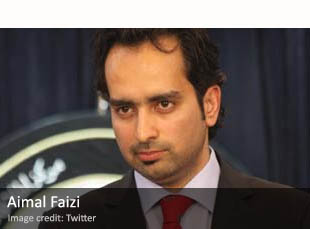
►►Afghanistan blames ‘foreign spies’ for insider attacks. Some of Afghan President Hamid Karzai’s top advisers said this week that the recent rise in insider attacks on NATO troops is the product of foreign spy agencies infiltrating Afghanistan’s security forces. They said that Afghanistan’s National Security Council has concluded that both Pakistani and Iranian intelligence organizations are recruiting young Afghans to enlist in the army and police with the intention of targeting Western service members. The officials suggested that the ultimate aim of the alleged efforts by foreign agencies is to destabilize Afghanistan’s forces. One of the Afghan government’s spokesmen, Aymal Faizi (pictured), said that the allegations from Kabul rested on classified evidence from “documents, telephone calls, pictures and audio that show direct contact between these individuals and foreign spy agencies”.


















 intelNews.org
Is US-Mexico anti-drug intelligence cooperation about to end?
April 30, 2013 by Joseph Fitsanakis 2 Comments
Some senior American officials believe that the anti-drug intelligence cooperation between the United States and Mexico is in its closing stages, following tens of thousands of deaths in the past decade. Intelligence cooperation between the two countries reached unprecedented levels in the post-9/11 era, following the establishment of the US Office of the Director of National Intelligence (ODNI). In the past decade, cooperation between Mexico’s Center for Research and National Security (CISEN) and ODNI, as well as the Central Intelligence Agency, resulted in what some observers call “unprecedented bilateral action” directed against Latin American narcotics cartels. This arrangement culminated under the administration of Mexico’s President Felipe Calderón, when the CIA —and to a lesser extent the US Drug Enforcement Administration and the National Security Agency— were given unprecedented access to Mexican territory and civilian communications networks. However, in an extensive article published Sunday, The Washington Post says the close operational connection between Mexican and US intelligence agencies is quickly winding down. Citing interviews with over “four dozen current and former US and Mexican diplomats, law enforcement agents, military offices and intelligence officials”, the paper suggests that Mexico City is wary about Washington’s involvement in the so-called ‘war on drugs’. The major change on the Mexican side, says The Post, occurred last December with the inauguration of Mexico’s new President, Enrique Peña Nieto, of the Institutional Revolutionary Party (PRI), which has returned to power after 13 years in opposition. Under Nieto’s administration, the Mexican security establishment, worn out by over 60,000 deaths and as many as 25,000 forced disappearances in the past few years, is intent on shifting its priorities. Instead of focusing on so-called ‘beheading operations’ —arresting or otherwise neutralizing the leadership of drug cartels— it has decided to stabilize the situation by containing —rather than eliminating— the operations of drug networks. Read more of this post
Filed under Expert news and commentary on intelligence, espionage, spies and spying Tagged with CISEN (Mexico), DNI, Eduardo Medina Mora, Enrique Peña Nieto, intelligence cooperation, Mexico, narcotics trade, News, United States, war on drugs