British spy agency calls Trump’s espionage claim ‘utterly ridiculous’

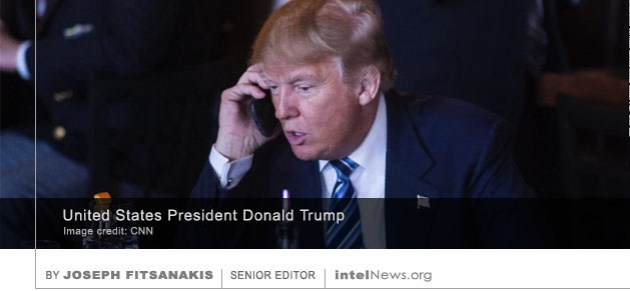
GCHQThe Government Communications Headquarters (GCHQ), Britain’s primary signals-intelligence agency, has called claims by United States President Donald Trump that it spied on his election campaign “utterly ridiculous”. President Trump’s allegations are not new. They apparently rest on claims made in March 2017 by a Fox News commentator, that the GCHQ spied on Trump on orders of then-US President Barack Obama. The claim was repeated on March 17 at the White House by Sean Spicer, Trump’s then-press secretary, who said that Obama had used the GCHQ to spy on Trump so as to evade American privacy laws. At the time, Spicer’s claim prompted an angry response from the British government in London and from the British spy agency itself. In a rare public comment, GCHQ called the allegations “utterly ridiculous”.

This past Wednesday, the US president appeared to repeat his claim that GCHQ had spied on his election campaign, via a post on the popular social networking platform Twitter. Responding to a reiteration of the claim on the conservative cable television channel One America News Network, Trump tweeted “WOW! It is now just a question of time before the truth comes out, and when it does, it will be a beauty!”. The president’s tweet appeared just hours after the British government confirmed that Trump had been invited for a four-day state visit to the United Kingdom in June. The visit is believed to include a meeting with British Prime Minster Theresa May and dinner with Queen Elizabeth II at Buckingham Palace.

Following Trump’s tweet, the US newsmagazine Newsweek contacted GCHQ with a request for a response to the US president’s allegation. A GCHQ spokesperson referred the newsmagazine to the agency’s 2017 statement, and repeated: “The allegations that GCHQ was asked to conduct ‘wire tapping’ against the then president-elect are nonsense. They are utterly ridiculous and should be ignored”. It is extremely rare for GCHQ —one of Britain’s most secretive and publicity-shy agencies— to respond publicly to stories in the media. Late on Wednesday, British Foreign Affairs Secretary Jeremy Hunt said that the invitation to President Trump to visit London would not be rescinded, and insisted that Britain’s “special relationship” with the US remained “intact”.

Author: Joseph Fitsanakis | Date: 25 April 2019 | Permalink

US Secret Service arrests Chinese woman for entering Trump’s vacation property

Donald TrumpA Chinese woman who entered President Donald Tump’s Mar-a-Lago resort in Palm Beach, Florida, was found to be in possession of two passports, four mobile phones and a flash drive containing “malicious software”, according to the United States Secret Service. Secret Service agents told a US District Court for the Southern District of Florida on Monday that the woman, identified as Yujing Zhang, entered the private club –which serves as President Trump’s vacation home– on Saturday afternoon. She allegedly approached Secret Service personnel and sought entrance to the property. When asked to identify herself, she reportedly took out of her bag two Chinese passports and said she intended to use the Mar-a-Lago swimming pool.

When Mar-a-Lago personnel could not find her name on the list of the private club’s members, Zhang told them that she was related to a man with the same last name, who appeared on the membership list. She was allowed onto the property on the assumption that the club member was her father, in what security personnel later described as an error caused by “a language barrier issue”. Once inside Mar-a-Lago, Zhang then reportedly told a receptionist that she was there to attend a meeting of the United Nations Chinese American Association. Some of the club personnel, who knew that no such event had been scheduled to take place at Mar-a-Lago, contacted the Secret Service. Zhang told Secret Service agents that she had been told by “a friend” called “Charles” to travel from Shanghai to Florida in order to attend the United Nations Chinese American Association meeting. But she said she was unable to provide further details.

After detaining her, Secret Service agents found that she was carrying –aside from the two Chinese passports– four cellphones, a laptop computer with an external hard drive attached to it, and a thumb drive. Secret Service agents said that, upon further examination, the thumb drive was found to contain “malware”. Zhang was then arrested for entering a restricted property and making false statements to Secret Service officials. On Tuesday, Zhang’s lawyer said she was “invoking her right to remain silent”. The US Department of Justice said it would not comment on the case. If found guilty, Zhang could spend up to five years behind bars.

Author: Joseph Fitsanakis | Date: 03 April 2019 | Permalink
CIA report says Saudi crown prince sent text messages to Khashoggi killer

Saud al-QahtaniSaudi Crown Prince Mohammed bin Salman sent at least eleven text messages to the man in charge of the 15-member hit team that killed journalist Jamal Khashoggi last month, according to a classified report produced by the United States Central Intelligence Agency. The CIA report was leaked to The Wall Street Journal, which said in a leading article on Saturday that the Saudi royal had sent the messages in the hours before and after Khashoggi’s brutal murder at the Saudi consulate in Istanbul, Turkey, on October 2, 2018. Khashoggi, 59, was a Saudi government adviser who moved to the US and became a vocal critic of the kingdom’s style of governance. He was killed and later dismembered by a hit team inside the Saudi consulate in Istanbul, where he had gone for a scheduled visit in order to be issued written proof of his divorce from his former wife in Saudi Arabia.
Late last month, the CIA and its British equivalent, the Secret Intelligence Service (MI6), were reported to have concluded that Khashoggi’s murder was directly ordered by Prince Salman. But US President Donald Trump and leading members of his cabinet, including Secretaries of State Mike Pompeo and Defense James Mattis, have disputed these claims, saying there is “no smoking gun” that proves Prince Salman’s involvement. The US president said that Saudi Arabia was “a great ally” of Washington and that Prince Salman’s role in Khashoggi’s murder was unclear. “Maybe he did and maybe he didn’t”, he told reporters in Washington on November 20, referring to the prince, whom he considers a personal friend. Instead, the White House has placed blame for the journalist’s murder on Saud al-Qahtani (pictured), a former advisor to Saudi Arabia’s late King Abdullah, who is believed to have coordinated Khashoggi’s killing.

But new a new CIA assessment of Khashoggi’s murder that was leaked to The Wall Street Journal claims that the US spy agency has concluded with “medium-to-high” confidence that Prince Salman “personally targeted” the journalist and “probably ordered his death”. The leaked report, said The Journal, rests on several findings, including the fact that the prince sent at least 11 messages to al-Qahtani in the hours right before and right after the latter’s hit-team killed Khashoggi in Istanbul. The CIA report states that the Agency does not have access to the contents of the texts. But it states that this pattern of communication, along with other pieces of evidence “seems to foreshadow the Saudi operation launched against Khashoggi”.

Author: Joseph Fitsanakis | Date: 03 December 2018 | Permalink

Trump’s use of unsecured iPhone worries White House officials

Donald TrumpOfficials in the White House are concerned about President Donald Trump’s insistence on using an unsecured iPhone to communicate with friends and associates, despite warnings that foreign spies may be listening in. Prior to being elected president, Trump used an Android phone, made by Google, which the NSA advised him to abandon due to security concerns. That is when he switched to using iPhones. Since his election to the presidency, Trump has routinely used three iPhone cell phones. He uses one of them to access a limited list of authorized applications, including Twitter. He uses the second iPhone for phone calls, but cannot use it to send texts, take pictures, or download and install applications. Both of these iPhones have been vetted and secured by the National Security Agency (NSA).

But The New York Times said on Wednesday that, despite the advice of the NSA, the US president continues to use a third iPhone, which is his personal device. The newspaper cited “current and former American officials” who said that the president’s third iPhone has not been secured by the NSA, and is thus “no different from hundreds of millions of iPhones in use around the world”. Trump uses that third iPhone to call many of his old friends and associates. The president has been repeatedly warned, sources said, to abandon the use of his unsecured third iPhone. Moreover, US intelligence agencies have confirmed that Chinese, Russian, and possibly other spy agencies have been “routinely eavesdropping” on the US president’s calls made on his personal iPhone.

To some extent, Trump has heeded the advice of his intelligence agencies in recent months and has begun to rely on his secure White House landline to make important calls, thus avoiding cell phones altogether. But he refuses to give up use of his iPhones, despite repeated warnings by the NSA, sources told The Times. They added that “they can only hope [Trump] refrains from discussing classified information when he is on them”. The president’s use of unsecured phone devices adds to what sources described as “frustration” with his “casual approach” to communications security. In July of this year, Nada Bakos, a 20-year veteran of the Central Intelligence Agency, said in an editorial that President Trump’s “Twitter feed is a gold mine for every foreign intelligence agency”. The CIA veteran described Trump’s use of social media is too impulsive and potentially dangerous from a national-security perspective.

Author: Joseph Fitsanakis | Date: 25 October 2018 | Permalink

US intelligence officials called to resign despite Trump’s Russia retraction

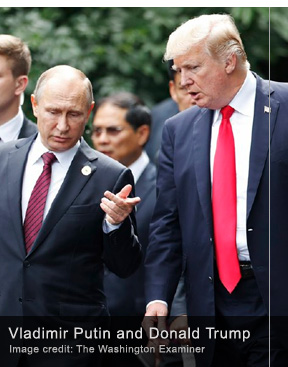
Putin and TrumpSeveral American former intelligence officials have called on their active colleagues to resign despite President Donald Trump’s retraction of his remarks about Russia’s alleged meddling in the 2016 presidential elections. On Tuesday, the US president issued an unusual retraction and correction of his public statement on Monday in Helsinki, Finland, in which he appeared to side with the Kremlin over his own Intelligence Community’s views. The Office of the Director of National Intelligence (ODNI), which is the coordinating body of the US Intelligence Community, has said that Russia tried to systematically interfere in the 2016 US presidential elections. According to the ODNI, the Kremlin’s goal was to augment the already heightened discord in American political life and deepen the mistrust between the electorate and state institutions, including Congress and the White House.
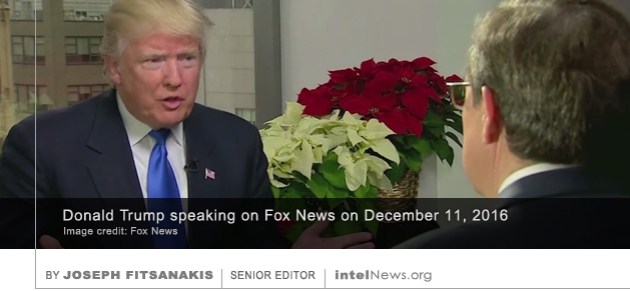
But President Trump dismissed those conclusions on Monday, while speaking alongside Russian President Vladimir Putin following the US-Russia summit in the Finish capital. During the joint press conference of the two leaders, the US president was asked to publicly adopt the US Intelligence Community’s conclusion that Russia interfered in the 2016 elections. But instead of doing so, Trump said his Russian counterpart had strongly denied the American accusations. “My people came to me”, said Trump, referring by name to his Director of National Intelligence (DNI) Dan Coats, and “said they think it’s Russia”. However, Trump continued, “President Putin […] just said it’s not Russia. I will say this, I don’t see any reason why it would be”. Following strong criticism of that comment, much of it from his own supporters, the US president retracted it on Tuesday in Washington, saying he misspoke in Helsinki. According to Trump, he said “would” when he meant to say “wouldn’t”.

The US president’s odd retraction came just hours after DNI Coats –a Trump appointee– issued a rare public statement rejecting Trump’s comments in Helsinki. “We have been clear in our assessments of Russian meddling in the 2016 election and their ongoing, pervasive efforts to undermine our democracy”, said Coats, adding that his office’s conclusion had been based on “unvarnished and objective intelligence”. Coats’ predecessor, former ODNI James Clapper, said during an interview with CNN on Tuesday that, if he still led the ODNI and had been “publicly thrown under the bus” by the president in that manner, he “would have stepped down in a heartbeat”. Read more of this post

Judge rules that Trump’s tweet did not disclose top-secret CIA operation in Syria

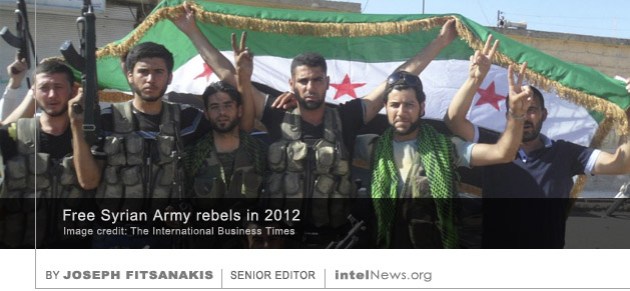
Free Syrian ArmyA United States federal judge ruled on Monday that a tweet by President Donald Trump did not inadvertently disclose a top-secret program by the Central Intelligence Agency to aid rebel groups in Syria. The lawsuit, brought by The New York Times, centered on news reports published in 2017 by Reuters, The Washington Post, and others, claiming that the US president had terminated an extensive CIA program that provided assistance to rebel forces engaged in the Syrian Civil War. The program was reportedly initiated by US President Barack Obama, who in 2015 instructed the CIA to assist armed groups operating under the umbrella of the Free Syrian Army. Aside from training, the CIA assistance reportedly included the provision of light and heavy ammunition, such as antitank missiles, mines and grenades.
But President Trump allegedly terminated $1 billion program soon after he took office. Last July, the president openly disputed an account by The Washington Post’s Greg Jaffe and Adam Entous, which claimed that Trump had ended the program as a concession to Russia. In a tweet, Trump said: “The Amazon Washington Post fabricated the facts on my ending massive, dangerous, and wasteful payments to Syrian rebels fighting Assad”. Shortly afterwards, another newspaper, The New York Times, filed a Freedom of Information Act (FOIA) request, arguing that the president’s tweet had effectively disclosed the existence of the covert CIA program and seeking full details from the government. But the CIA rejected the The New York Times’ rationale, at which point the paper took the case to court.

But on Monday, US District Court Judge Andrew Carter Jr. dismissed the paper’s argument. In a 20-page decision, posted online by the US-based news website Politico, Judge Carter said that President Trump’s tweet had been too vague and ambiguous to be considered as effectively declassifying the secret CIA program. At no point did the US president “make an unequivocal statement, or any statement for that matter, indicating that he was declassifying information”, said the judge. Additionally, Trump’s tweet and other public statements on the matter did not undermine the legal authority of the US government to continue to keep details about the CIA program under wraps. According to Politico, which reported on Judge Carter’s decision, this development will make it difficult for other FOIA filers to use Trump’s tweets as justification for seeking information about secret government programs. Meanwhile, The New York Times said on Monday that it would seek to appeal Judge Carter’s decision.

Author: Joseph Fitsanakis | Date: 04 July 2018 | Permalink

Trump’s Twitter feed is ‘gold mine’ for foreign spies, says ex-CIA analyst

Trump 2016With nearly 53 million Twitter followers, United States President Donald Trump could easily be described as the most social-media-friendly American leader in our century. It is clear that Trump uses Twitter to communicate directly with his followers while circumventing mainstream media, which he views as adversarial to his policies. However, according to former Central Intelligence Agency analyst Nada Bakos, foreign intelligence agencies are among those paying close attention to the president’s tweets. Bakos spent 20 years in the CIA, notably as the Chief Targeter of the unit that tracked down Abu Musab al-Zarqawi, the founder of al-Qaeda in Iraq, which later evolved into the Islamic State of Iraq and Syria. In a June 23 editorial in The Washington Post, Bakos argues that President Trump’s “Twitter feed is a gold mine for every foreign intelligence agency”.

All intelligence agencies, explains Bakos, build psychological profiles of foreign leaders. These profiles typically rely on information collected through intelligence operations that are “methodical, painstaking and often covert”. The final product can be crucial in enabling countries to devise strategies that counter their adversaries, says Bakos. But with Trump, covert intelligence-collection operations are not needed in order to see what is on his mind, since “the president’s unfiltered thoughts are available night and day”, she claims. The former CIA analyst points out that President Trump’s tweets are posted “without much obvious mediation” by his aides and advisors, something that can be seen by the frequency with which he deletes and reposts tweets due to spelling and grammatical errors. These unfiltered thoughts on Twitter offer a “real-time glimpse of a major world leader’s preoccupations, personality quirks and habits of mind”, says Bakos.

Undoubtedly, she argues, foreign intelligence agencies are utilizing President Trump’s tweets in numerous ways while building his personality profile. The most obvious ways are by performing content analysis of his tweets, which could then be matched against information collected from other sources about major US policy decisions. Additionally, foreign intelligence agencies could identify media sources that the US president seems to prefer, and then try to feed information to these sources that might sway his views. Countries like Saudi Arabia and Russia may have done so already, claims Bakos. The US president’s views, as expressed through Twitter, could also be compared and contrasted with the expressed views of his aides or senior cabinet officials, in order to discern who he agrees with the least. It is equally useful to analyze the issues or events that the US president does not tweet about, or tweets about with considerable delay. One could even derive useful information about Trump’s sleeping patterns based on his tweets, says the former CIA analyst.

Bakos does not go as far as to suggest that the US president should abstain from social media. But she clearly thinks that the US leader’s use of social media is too impulsive and potentially dangerous from a national-security perspective. She also laments that, throughout her career in the CIA, she and her team “never had such a rich source of raw intelligence about a world leader, and we certainly never had the opportunity that our adversaries (and our allies) have now”, thanks to Trump’s incessant social media presence.

Author: Joseph Fitsanakis | Date: 03 July 2018 | Permalink

Analysis: Trump has made record use of US Special Forces since becoming president

special forcesWith reports about the activities of the United States Special Forces continuously surfacing in the media lately, it is important to remember that the White House has drastically increased Special Forces deployments since Donald Trump assumed the presidency. In December last year, it was reported that President Trump had ordered the deployment of Special Forces troops more often than any other president in American history. At that time, US Special Forces troops were deployed in 150 nations, a number that represented 75 percent of all nations on the planet, according to government data. The figures were published by TomDispatch, which said it received them directly from the US Special Operations Command. The website said that American Special Forces troops were participating in wars, counter-insurgency operations and covert-action activities across Africa, Asia and the Middle East, and saw action every day.

According to the statistics provided by the US Special Operations Command, it appears more than 10 percent (8,000 troops) of the US Special Operations Command’s 70,000 troops are deployed each day. These deployments take place daily in more than 80 countries. This rate of deployment represents a significant increase from the eight years of the administration of US President Barack Obama, which ended in 2016. That year, US Special Forces troops were deployed in 138 countries, according to media reports. The Trump administration’s use of Special Forces troops also represents a jump of approximately 150 percent from the last Republican administration, that of George W. Bush, which ended in early 2008.

Africa represents an area of consistent rise in the rates of deployment of US Special Forces. Currently, US Special Forces troops are active in no fewer than 33 countries across Africa. Most of these countries are witnessing activity by Islamist groups that are described as terrorist by the region’s governments. But the US Special Operations Command has also deployed contingents in Europe, said TomDispatch. Currently, the US maintains Special Forces troops at every country bordering Russia’s western region, with the exception of Belarus.

These numbers echo the record growth of the US Special Forces community since September 11, 2001, when Washington declared its global war on terrorism. Observers estimate the post-9/11 numerical growth of US Special Forces at 75 percent. However, little is known about the nature of campaigns in which US Special Forces are deployed, and whether they are effective in establishing security, or whether they inflame tensions across different battlefronts. There is also limited information about the resulting casualties. The US government has admitted that US Special Forces troops died in 2017 in Syria, Iraq, Afghanistan, Yemen, Niger, Mali and Somalia.

Author: Ian Allen | Date: 22 March 2018 | Permalink

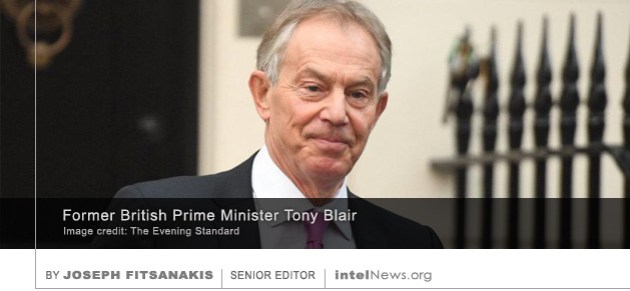
Tony Blair denies he warned Donald Trump British spies were after him

Tony BlairA spokesman for Tony Blair has dismissed as “categorically absurd” allegations that the former British Prime Minister warned the White House that President Donald Trump was targeted by British spy agencies. The claims are made in the book Fire and Fury: Inside the Trump White House, which is due to be published next week. Its author, Michael Wolf, says he based the information in the book on more than 200 interviews that he held with President Trump and members of his inner circle during the past year.

Wolf alleges that Blair, who was Britain’s prime minister from 1997 to 2007, visited the White House in secret in February of 2017. He allegedly did so as a private citizen, as he has held no public position since 2015, when he stepped down from his post as a Middle East envoy for the United Nations. While at the White House, Blair reportedly met with Jared Kushner, Trump’s son-in-law and senior aide. During that meeting, says Wolf, Blair told Kushner that Trump could have been under surveillance by British intelligence during his presidential election campaign. The former British prime minister allegedly said that any surveillance on Trump would have been carried out by the Government Communications Headquarters (GCHQ), Britain’s signals intelligence agency. Wolf further alleges that the administration of US President Barack Obama never asked London to spy on Trump. Instead, the White House “hinted” that intelligence collection about Trump would be “helpful”, says Wolf. The reason why Blair volunteered this information to Kushner, claims Wolf, was that he was hoping to gain the US president’s trust and be appointed as Washington’s envoy to the Middle East.

Blair’s revelation, which Wolf describes in his book as a “juicy nugget or information”, allegedly “churned and festered” in Trump’s mind. It was the basis for claims made on March 14, 2017, by a Fox News commentator that the GCHQ had spied on Trump on behalf of the White House. The claim was repeated on March 17 at the White House by Sean Spicer, Trump’s then-press secretary, who said that Obama had used the GCHQ to spy on Trump so as to evade American privacy laws. Spicer’s claim prompted an angry response from the British government in London and from the British spy agency itself. In a rare public comment, GCHQ called the allegations “utterly ridiculous”.

Late on Wednesday, a spokeswoman for the office of Tony Blair said in an email that Wolf’s claims in Fire and Fury were “a complete fabrication […], have no basis in reality and are simply untrue”. Last year, another spokesman for Blair dismissed claims that the former British prime minister had lobbied to be appointed Trump’s Middle East envoy. This claim was so “completely overblown” and “so far beyond speculation there isn’t a word for it”, said the spokesman. President Trump has not commented on Wolf’s claim about Blair’s alleged visit and subsequent meeting with Kushner.

Author: Joseph Fitsanakis | Date: 04 January 2018 | Permalink

Israeli armed raid in Syria reportedly led to US banning laptops on some flights

Ibrahim al-AsiriA temporary ban issued by United States authorities on laptop computers onboard some commercial flights earlier this year came from a tip by Israeli intelligence, according to a new report. The report was published last week in the American magazine Vanity Fair. It claimed that Israeli commandos carried out a dangerous night-time operation deep inside Syria, in order to acquire physical proof that the Islamic State had  built bombs that were not detectable by X-ray screening systems at airports. But some Israeli intelligence officials became infuriated with Donald Trump after the US President allegedly gave Russia background information about the commando operation, according to the article.
The order to temporarily ban electronic devices larger than cellphones was issued by the US government on March 20, 2017. It applied to direct flights to the US departing from a dozen international airports in the Middle East. In June, the New York Times alleged that the ban was aimed at stopping Islamic State operatives from bringing onboard airplanes bombs disguised as laptop batteries. The paper also said that the information about these bombs had been acquired by Israeli government hackers who had penetrated Islamic State computer systems. But now a new report by Vanity Fair claims that Tel Aviv tipped off the Americans following a commando raid deep inside Syrian territory, which acquired physical evidence of the bombs. The magazine alleges that the raid was carried out by the Sayeret Matkal, an elite unit of the Israel Defense Forces, under the supervision of the Mossad, Israel’s external spy agency. Its target was a highly secretive cell of explosives experts, who were led Ibrahim al-Asiri, a Saudi militant who built bombs for the Yemen-based Al-Qaeda in the Arabian Peninsula. The Mossad shared some of the intelligence from that raid with the Central Intelligence Agency, which in turn told President Trump. That led to the decision to ban laptops from selected flights, until X-ray machines at airports were modified to detect the new type of bomb.

The Vanity Fair article repeats earlier claims that President Trump shared intelligence given to him by the Israelis with Russian Foreign Minister Sergei Lavrov and Russian Ambassador to the United States Sergei Kislyak, when he met them in May of this year. According to Israeli sources, Mr. Trump did not tell the Russian officials that Israel was behind the operation. But he allegedly identified the city in Syria where the raid took place, and in doing so placed the life of an Israeli human asset at risk, according to some. The Israeli government will not comment on these allegations. Additionally, Vanity Fair said that one “former Mossad officer with knowledge of the operation and its aftermath” would not say whether the asset in question had been safely exfiltrated from Syria or even whether he or she was still alive.

Author: Joseph Fitsanakis | Date: 27 November 2017 | Permalink

FBI acting head says he will report attempts to stop Russia probe

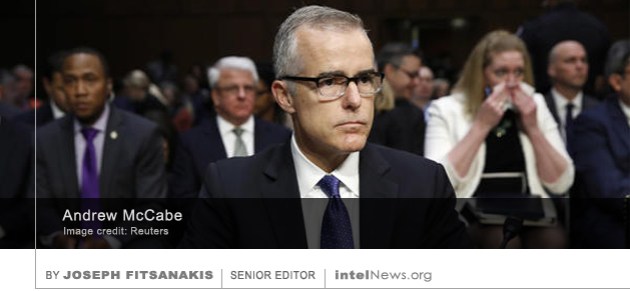
Andrew McCabeThe interim director of the Federal Bureau of Investigation has told an intelligence panel in the United States Senate that he will not hesitate to report any attempts by the White House to interfere with an official investigation into Russia’s role in the 2016 presidential election. Andrew McCabe assumed the leadership of the FBI on Tuesday, after US President Donald Trump abruptly fired the Bureau’s director, James Comey. A trained lawyer who joined the FBI in 1996, McCabe amassed significant experience in countering organized crime and terrorism before being appointed Deputy Director of the Bureau in 2016.
It is worth noting that Republican Party officials have criticized McCabe for being close to former Democratic Party presidential candidate Hillary Clinton. McCabe’s wife, Dr. Jill McCabe, campaigned for a seat in the Virginia State Senate in 2015, on a Democratic Party ticket.

McCabe spoke on Thursday before the US Senate’s Select Committee on Intelligence, along with the directors of five other American intelligence agencies, including the Central Intelligence Agency and the National Security Agency. During their testimony, the six intelligence officials repeated their agencies’ previously stated claims that Moscow engaged in systematic efforts to assist the election of Donald Trump in last November’s presidential elections. McCabe also responded to specific questions by Democratic senators about alleged attempts by the White House to prevent probes in to Russia’s alleged intervention.

When asked by Democratic Senator Mark Warner whether he would inform the Senate’s Select Committee on Intelligence of attempts by the Trump administration to stop the probe, McCabe responded saying: “I absolutely do”. There are currently at least three parallel investigations into Russia’s alleged involvement in the US presidential elections, of which the Senate’s is one. The US House of Representatives and the Department of Justice are also conducting separate investigations.

Author: Joseph Fitsanakis | Date: 12 May 2017 | Permalink

Trump trying to assert control over intelligence agencies, say sources

Dan CoatsRelentless bureaucratic skirmishes between the White House and the United States Intelligence Community are occurring daily, with administration officials attempting to “seize the reins” of agencies, according to sources. The Associated Press reports that senior officials around US President Donald Trump continue to “deep[ly] distrust” the Intelligence Community”. This tendency is reportedly more prevalent among those of Mr. Trump’s senior political advisers who are “government newcomers” and have never before been privy to classified information or intelligence programs.
According to the Associated Press, the US president has been trying various ways to “seize the reins” of the Intelligence Community. The news agency cites unnamed “US officials” who claim that Mr. Trump and his senior advisers have requested that they be given access to raw intelligence. At the same time, they have expressed little interest in being exposed to the analysis of raw intelligence produced by intelligence professionals. Typically, White House officials will rely primarily on the expert opinions of intelligence analysts and will not seek to access the raw data that these opinions rest on. But it appears that Mr. Trump and his team of advisers do not think highly of the analytical assessments of the Intelligence Community, preferring instead to make up their own mind based on their own reading of raw intelligence reports. According to the Associated Press report, that appears to be one of the ways in which the White House has been trying to assert its power over the Intelligence Community.

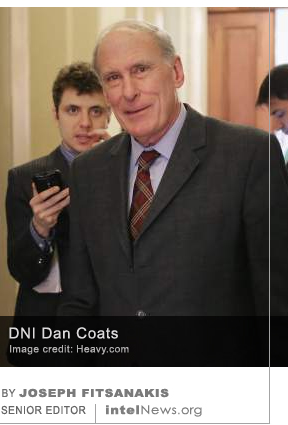
Meanwhile, Mr. Trump’s advisers are pressing on with a comprehensive review of the structure and operations of the Intelligence Community. The review is now being led by Dan Coats, a Congressman from Indiana and former US Ambassador to Germany, who last month was confirmed to serve as the Director of National Intelligence. According to sources, Coats resisted initial plans by the White House to abolish the Office of the Director of National Intelligence, which was set up after the 9/11 attacks to coordinate the work of the Intelligence Community. The Trump team still plans to “trim and optimize” the Intelligence Community, but probably will not outright dismantle agencies like the Office of the Director of National Intelligence, according to the Associated Press.

Author: Joseph Fitsanakis | Date: 03 April 2017 | Permalink | Research credit: SF

US politics in uncharted waters as FBI announces probe into Russian activities

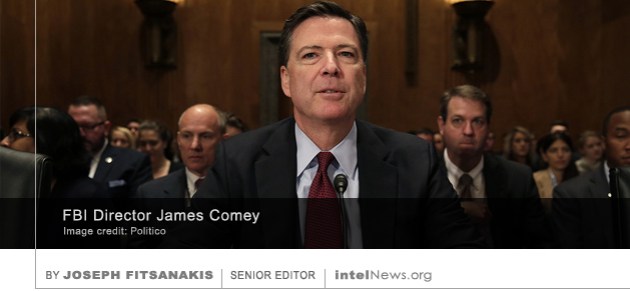
James ComeyMonday’s official announcement that an investigation is underway into alleged Russian involvement in the 2016 United States presidential election was an important moment in American political history. It exposed the chaotic state of American politics and added yet another layer of complexity in an already intricate affair, from which the country’s institutions will find it difficult to recover for years to come. This is regardless of the outcome of the investigation, which is being conducted by the Federal Bureau of Investigation. Even if it fails to produce a ‘smoking gun’, the very fact that the country’s chief counterintelligence agency is examining the possibility that a US president was elected with help from Russia, is an astonishing development without parallel in modern American history.
It is important to recognize that the FBI would never have initiated such a controversial and politically charged investigation without having concrete proof of Russia’s interference in last year’s presidential election. No agency of the US federal government would choose to dedicate enormous resources and personnel, and risk the political fallout that such a probe inevitably entails, without first having amassed indisputable evidence that necessitates it. Moreover, the FBI is not acting alone; its investigation almost certainly encompasses and incorporates similar probes carried out by other American security agencies, and possibly by agencies in allied countries, including the United Kingdom. It follows that the FBI investigation will undoubtedly confirm the existence of a systematic Russian intelligence operation that was aimed at influencing the outcome of last year’s American election.

As the present author has previously stated, it would be “extremely unusual and highly uncharacteristic of Russian spy agencies if they did not launch at least a rudimentary covert campaign to target the 2016 US presidential election […]. Indeed, the opposite would have been strange”. The central question, of course, is: what types of activities were part of the Kremlin’s covert campaign? Did it mostly involve the methodical production and dissemination of so-called ‘fake news’? Did it involve substantial funding of individual candidates or political parties? Or were there perhaps instances of extortion and blackmail of targeted individuals? These questions must be answered in full, and their inherent complexity explains fully why the FBI Director James Comey would not discuss details of the investigation on Monday.

Crucially, the FBI probe will have to answer conclusively the question of whether members of the administration of US President Donald Trump, or indeed the president himself, were implicated in the Kremlin’s actions. Did the president and his senior campaign team know that the Kremlin was —allegedly—assisting their efforts? If so, how did they know? And if not, did they deliberately ignore concrete warnings pointing to the contrary?

Every American, regardless of political persuasion, who genuinely cares about his or her nation’s political stability, hopes that the FBI probe finds no collusion between the Kremlin and the Trump campaign. However, there is an important sense in which, no matter the outcome of the investigation, serious damage has already been done. The reputation of American political institutions as a whole has been severely shaken, and mistrust between American civil society and its political institutions continues to rise exponentially. Meanwhile, it is safe to say that it will take months for the FBI’s probe to conclude. By then, the current chaotic state of American politics could be the a new permanently reality in Washington, a city that has witnessed much tumult in its history, though perhaps never as perplexing as the current crisis.

Author: Joseph Fitsanakis | Date: 21 March 2017 | Permalink

Trump authorizes CIA to bring back regular use of drone strikes

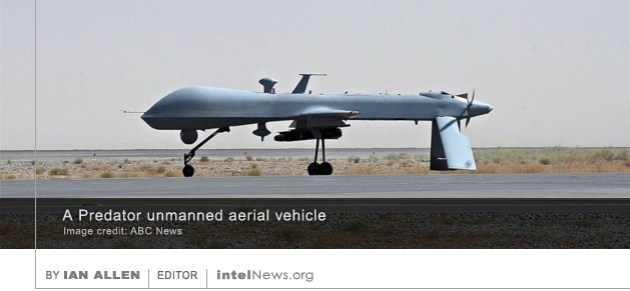
DroneUnited States President Donald Trump has reportedly authorized the Central Intelligence Agency to bring back the routine use of lethal airstrikes by unmanned aerial vehicles (UAVs), which his predecessor, Barack Obama, curtailed in 2013. Washington began employing limited strikes by UAVs, otherwise known as drones, in the early 1990s, during the administration of President Bill Clinton. But it was under the Obama administration that the use of drone strikes reached an all-time high, with hundreds of such attacks documented after 2008. It is believed that Obama used this remote attack method to combat the Taliban and al-Qaeda, while at the same time keeping his promise of bringing back American troops from the Middle East and Central Asia. However, in 2013 the US president severely curtailed the controversial program, which some say damaged America’s image by inflicting civilian casualties.
But on Monday, The Wall Street Journal reported that President Trump had resuscitated the drone program and authorized the CIA to begin using Predator drones on a regular basis against identified targets in the Middle East and Central Asia. According to the newspaper, the president gave senior CIA project mangers the right to authorize drone strikes. Under the Obama administration, the president himself, or especially designated National Security Council officials, had to give the go-ahead before the CIA could carry out drone strikes around the world.

The Wall Street Journal said that President Trump made the decision on January 21, just hours after taking office, following a secret meeting with senior officials from the CIA. According to the report, the CIA requested some time to rebuild the program. But the agency has allegedly conducted at least one drone strike, which targeted Abu al-Khayr al-Masri, a known al-Qaeda senior commander in Syria, who was reputed to be a son-in-law of the late al-Qaeda leader Osama bin Laden.

Author: Ian Allen | Date: 15 March 2017 | Permalink

Opinion: Trump’s astonishing wiretapping claims deepen volatility of US politics

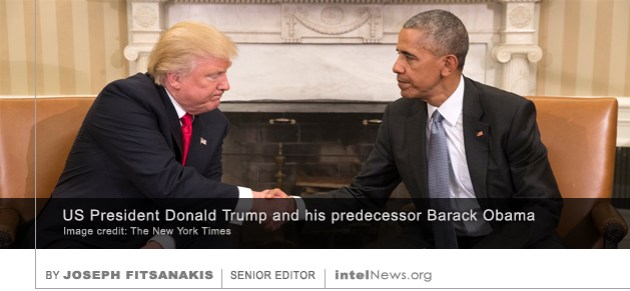
Trump and ObamaThe absurdity of American politics reached new heights over the weekend, as President Donald Trump dramatically alleged on Twitter that his predecessor, Barack Obama, wiretapped his telephones last year. Even for a highly impulsive public figure known for his sensational and often-unsubstantiated allegations, Mr. Trump’s latest claims prompted a new sense of abnormality and astonishment in Washington. If the president is unable to prove his dramatic claims, his reliability will be further-eroded, and what little is left of his relationship with the American intelligence and national-security communities will disintegrate. If his allegations are proven, they will cause a scandal of unprecedented proportions from which American political institutions —including the presidency— will find it difficult to recover.
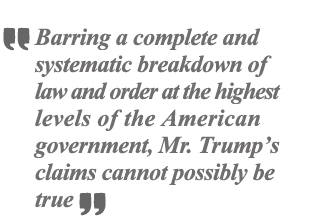
Mr. Trump appears to claim that Mr. Obama personally instructed the machinery of government to intercept the telecommunications of his campaign in the run-up to the 2016 US presidential election. But experts —including the present author, whose PhD focuses on government-sponsored wiretapping— correctly note that, barring a complete and systematic breakdown of law and q-quoteorder at the highest levels of the American government, Mr. Trump’s claims cannot possibly be true. American presidents have not been legally allowed to order wiretaps since 1978, when the Foreign Intelligence Surveillance Act (FISA) was established. Prompted by the abuse of executive power revealed through the Watergate scandal, FISA forces government agencies to seek the approval of specially mandated judges before installing wiretaps. If an agency like the Federal Bureau of Investigation (FBI) wants to wiretap an individual or group suspected of acting as agents of a foreign power, it must convince one of 11 federal district judges who rotate on the FISA court that the case warrants a wiretap order. Thus, before authorizing the wiretap, a FISA judge must be convinced by examining the available evidence presented before him or her.


Usually FISA counterintelligence cases involve foreign subjects who are suspected of operating in the US as unregistered agents of a foreign power —that is, spies or handlers of spies. However, if the case proposed by the FBI involves the targeting of American citizens’ communications, then the application for a wiretap must be personally reviewed by the US attorney general. Only if the attorney general approves the application does it get sent to a FISA judge. That is precisely why President Trump’s allegation is so explosive: if Mr. Obama personally directed a law enforcement or intelligence agency to wiretap the Trump campaign’s telecommunications, it would mean that a US president deliberately violated FISA regulations and kept the Department of Justice in the dark while wiretapping the telecommunications of American citizens. Read more of this post