Israeli couple who spied for Iran made ample use of digital applications

Israel and IranTHE ISRAEL SECURITY AGENCY (ISA) recently announced the arrests of an Israeli couple of Azeri origin on suspicion of spying for Iran. The couple, both 32 years old, were allegedly recruited by an Iranian handler of Azeri origin named Elshan Agheev. As part of their activities, and for about two years, the couple gathered intelligence on critical infrastructure and security sites in Israel, and even conducted surveillance on an academic working for the Institute for National Security Studies, allegedly in order to kill her.

The case demonstrates how software that is easily accessible on the Internet makes it possible to encrypt information communicated between a handler and an agent, as well as how money is transferred to the agent. The official indictment reveals details about the couple’s modus operandi, including the identity of the particular software the spies used to communicate with their Iranian handler.

One of the applications the couple used is Zangi, which facilitates the exchange of encrypted instant messages. According to the company’s website, Zangi offers voice and video calling, text messaging, and file transfer services “without registration and without data collection”. In fact, according to Zangi, the data is saved on the user’s device only. In addition to using the Zangi application, the couple also appear to have used the Zolotaya Korona money-transfer platform. The couple allegedly used the platform in order to receive payments by their Iranian handlers, and to transfer funds to other parties involved in Iranian-led espionage activities inside Israel.

Another application allegedly used by the couple is Ecos Dos, a digital wallet for storing and transferring digital currencies. Ecos Dos is a software wallet that can be installed on a computer or mobile phone. It supports a wide variety of crypto-currencies and is used to store and transfer cryptocurrencies. It is known for its simplicity of use and friendly interface. It is popular among users who wish to maintain anonymity when transacting in digital currencies. It does not require identifying a user’s details when operating, so anyone can create an account and receive funds anonymously.

The suspects are also believed to have used a software called Encryptor in order to encrypt information. This software allows files and folders to be encrypted so that only those who have the encryption key can open them. The couple allegedly used Encryptor to encrypt the information they collected before passing it on to their Iranian handlers, thus making it difficult for Israeli authorities to decipher the information.

The use of these applications attests to the sophistication of the Iranian spy network that was recently busted in Israel, and its efforts to hide its activities inside the Jewish state. The recent indictment against the couple details a collection of serious security offenses, including aiding the enemy in war and providing information to the enemy to harm the security of the state. Iran is clearly stepping up its efforts to recruit Israeli citizens for espionage and terrorist activities.

Author: Avner Barnea | Date: 11 November 2024 | Permalink

Dr. Avner Barnea is research fellow at the National Security Studies Center of the University of Haifa in Israel. He served as a senior officer in the Israel Security Agency (ISA). He is the author of We Never Expected That: A Comparative Study of Failures in National and Business Intelligence (Lexington Books, 2021).

Facing skepticism by experts, NSA backs down in global encryption standards debate

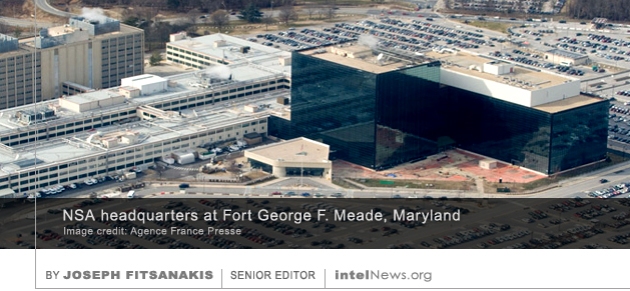
NSARepresentatives from the United States National Security Agency (NSA) withdrew a proposal to introduce new global industry standards for data encryption, after encountering prolonged skepticism by experts representing other Western countries. Some observers have interpreted this development as indicative of the damaged relationship between the NSA and its Western counterparts following revelations by American defector Edward Snowden.

Deliberations for establishing new industry standards for data encryption have been taking place for over three years under the supervision of the International Organization for Standardization (ISO). The ISO is a worldwide standard-setting body founded in 1947, which brings together representatives from national standards organizations. The US delegation, had proposed the adoption of two new data encryption techniques, known as ‘Simon’ and ‘Speck’. The techniques had the approval of the US national standards organization, which is known as the American National Standards Institute (ANSI) . However, it also had the approval of the NSA, America’s signals intelligence agency, whose representatives were members of the US delegation to the ISO. According to the Reuters news agency, the presence of the NSA representatives in ANSI prompted skepticism among other national delegations.

Eventually, encryption experts from countries including Israel, Japan, Germany, and the United Kingdom, rejected ‘Simon’ and ‘Speck’. The reason, according to Reuters, was that they were “worried that the [NSA] was pushing the new techniques not because they were good encryption tools, but because it knew how to break them”. Some commentators believe that this incident illustrates the suspicion with which the NSA is seen by American allies following headline-grabbing revelations made Edward Snowden, a former employee of the NSA who defected to Russia in 2013. Some of Snowden’s most sensational revelations involved alleged NSA operations targeting Germany, France, Israel, Japan, and other American allies. The revelations shocked public opinion in Europe and elsewhere, and resulted in the unprecedented expulsion of the CIA station chief in Berlin —the most senior US intelligence official in the country. ISO delegates are now thought to be working on a revised plan to keep some of ANSI’s proposed standards but enhance them with stronger layers of encryption, said Reuters.

Author: Joseph Fitsanakis | Date: 22 September 2017 | Permalink
NSA ‘broke, circumvented Internet encryption standards’

NSA headquartersBy IAN ALLEN | intelNews.org |
The United States National Security Agency (NSA) has been able to crack or get around basic encryption standards used daily by hundreds of millions of Internet users, according to newly leaked documents. The New York Times said on Friday that it was in possession of documents that prove that the NSA is not restrained by universal encryption standards used in the US and abroad. The NSA, which is America’s largest intelligence agency, and is tasked by the US government with intercepting electronic communications worldwide, is now able to routinely circumvent Secure Sockets Layer or virtual private networks, as well as encryption protection standards used on fourth-generation cell phones. It therefore has instant access to the content of billions of encrypted messages exchanged by users of some of the Internet’s most popular email companies, including Gmail, Hotmail, Yahoo and Facebook. The paper said it obtained the documents from Edward Snowden, a technical contractor for the NSA who defected to Russia this past summer. They include internal NSA memoranda that suggest the NSA deployed specially built supercomputers to break Internet encryption standards. In other cases, the Agency worked with selected companies and convinced them to “build entry points into their products”. The multi-billion effort was apparently launched by the NSA in the early 2000s, soon after the US government lost a lengthy battle with the communications industry centering on the so-called ‘clipper chip’. Read more of this post

News you may have missed #527

  • Has Microsoft broken Skype’s encryption? The US Congress has finally discovered Skype. But the timing may be bad, since there are rumors that Microsoft has found a way to break the encryption behind Skype communications, rendering all Skype calls potentially open to surveillance by governments. The company (Microsoft) has even filed a related patent application. Communications interception experts have been trying for some time to achieve this.
  • Ex-CIA agent loses legal battle over ‘unauthorized’ book. A former CIA deep-cover operative, who goes by the pseudonym ‘Ishmael Jones’, may have to financially compensate the Agency for publishing a book without the CIA’s approval, after a US judge ruled against him. Jones maintains that the CIA is bullying him because of his public criticism of its practices.
  • Family of accused Australian spy seeks support. The family of Australian-Jordanian citizen Eyad Abuarga, who has been charged with being a technical spy for Hamas, have called on the Australian government to do more to help him, with less than a month before he is due to face trial in Israel.

Emirates police says US, Israel, use BlackBerry to spy

Dahi Tamim

Dahi Tamim

By IAN ALLEN | intelNews.org |
The alleged use of encrypted BlackBerry communications by adversary intelligence services operating in the United Arab Emirates (UAE) is prompting local authorities to consider a nationwide ban on the popular phone. This was revealed late last week by Dubai Police chief, Lt. General Dahi Khalfan bin Tamim, who repeated a warning by UAE authorities that BlackBerry services in the country will be curtailed on October 11, unless the government is given access to BlackBerry’s encryption code by the manufacturer. Several other countries in the Middle East and beyond have made similar moves, including Lebanon, Syria, Saudi Arabia, India and Indonesia, all of which have cited security reasons for the ban. But Lt. General Tamim’s comments provide the first known connection between a threat to ban BlackBerry and its alleged use by rival intelligence agencies. Read more of this post

Police see ‘professional job’ in British spy’s death

Gareth Williams

Gareth Williams

By JOSEPH FITSANAKIS | intelNews.org |
As authorities investigate the recent death of British spy Dr. Gareth Williams, the country’s notorious tabloid media industry is having a field day disorienting interested observers. It is thus easy to miss important news breakthroughs in the cacophony of sensationalized headlines about Williams, whose body was discovered a week ago, stuffed in a sports duffle bag in the bath of his London apartment. One such breakthrough was yesterday’s report by Britain’s widely respected Channel 4, which said that law enforcement investigators described Williams’ death as “a neat job”, a term used to refer to professional killings. The Channel 4 report was preceded by strong official denials by police that Williams’ murder was sex-related, as had been previously reported. Some investigators now believe that Williams was killed by a foreign agent, who then deliberately “planted a trail of clues” pointing to a homosexual link to the death. Read more of this post

NSA whistleblower prosecutions continue under Obama

Thomas Drake

Thomas Drake

By JOSEPH FITSANAKIS | intelNews.org |
Legal observers were surprised late last week when a grand jury in Baltimore indicted a former senior official of the US National Security Agency (NSA) for leaking classified information to a local newspaper reporter. The indictment, which was publicized last Thursday, accuses Thomas A. Drake of exchanging hundreds of email messages with a reporter, in which he exposed aspects of the NSA’s alleged mismanagement and operational deficiencies. Court documents do not identify the reporter, or the news outlet for which she worked. But most observers have identified her as Siobhan Gorman, who now works for The Wall Street Journal. Between 2006 and 2007, while working for The Baltimore Sun, Gorman authored a series of articles on the NSA, exposing, among other things, severe mismanagement of outsourced signals collection programs, as well as the Agency’s trouble in securing enough electrical supply for its computational requirements. Read more of this post

News you may have missed #0173

  • Russia, Georgia, in secret border reopening talks. Russia and Georgia, whose borders have been shut since the 2006 South Ossetia War, are in secret negotiations to reopen their only common border checkpoint, according to Russia’s Kommersant newspaper.
  • Why Shin Bet is taking over Israeli domestic investigations. Israel’s Shin Bet, the country’s domestic intelligence service, is overtaking the role of the police forces in solving criminal cases. The reasons are primarily political.
  • Interview with Bruce Schneier. A Q&A session with the cryptography legend, author of Secrets and Lies and Beyond Fear. Interesting quote: “[W]e now know that the NSA vacuums up all sorts of electronic communications, e-mail included. So maybe it would be a good idea for all of us to routinely encrypt our e-mail”.

Bookmark and Share