Australian spy agency says it is facing ‘unprecedented’ espionage threat
October 18, 2017 Leave a comment
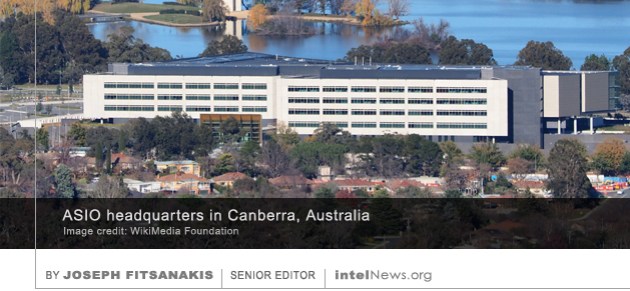 The primary intelligence agency of Australia says its resources are overextended as the country faces “espionage and foreign interference [of an] unprecedented” scale. In its annual report to the Australian houses of parliament, which was produced on Tuesday, the Australian Security Intelligence Organisation (ASIO) says it lacks resources to counter “harmful espionage” and “malicious activity” against the country. The unclassified report is published every year as a summary of a much longer classified report, which is shared with senior government officials and senior civil servants. It is endorsed by ASIO Director Duncan Lewis, who serves as Australia’s Director-General of Security.
In its report for 2016-2017, the ASIO said its officers identified “a number of states and other actors” that were “conducting espionage and foreign interference against Australia”. Many of these were “foreign intelligence services”, which used a variety of intelligence-collection methods of seeking “access to privileged and/or classified information on Australia’s alliances and partnerships”. Foreign intelligence services also spied for information on Canberra’s position on various economic, diplomatic and military issues, and sought information on the country’s energy policy and the volume of its energy and mineral resources. Additionally, espionage was detected against Australian scientific and technical research centers, says the report.
The report goes on to describe the ASIO’s counterterrorism investigations and operations as being of “high volume and tempo”, and states that its services were sought “in higher levels” than ever by “many across both government and industry”. Combined with the “unprecedented scale” of espionage and foreign interference against Australia that it is called to combat, these demands meant that ASIO’s resources would “remain overextended” in the new year, according to the report.
In the past year, the agency says it was able to identify “foreign powers” that secretly sought to influence Australian public opinion, and shape the views of Australian media professionals, industry and government officials, and others, on matters that advanced the interests of other countries, says the report. There was also espionage by foreign powers against members of ethnic communities in Australia, as well as harassment and other covert influence operations that sought to minimize criticism of foreign governments by members of those ethic communities.
The unclassified ASIO report does not identify the “foreign powers” that allegedly sponsored espionage operations against Australia, nor does it specify whether any foreign agents were apprehended, jailed or expelled from the country for carrying out espionage.
► Author: Ian Allen | Date: 18 October 2017 | Permalink
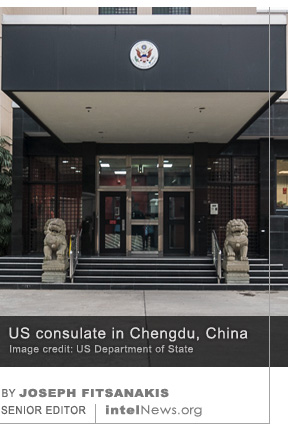 An American diplomat stationed in China was abducted and interrogated for several hours by Chinese authorities, who believed him to be an officer of the Central Intelligence Agency working under official cover. The alleged abduction took place in early 2016 but was revealed this week by the online news outlet Politico. The website said that the diplomat, who has not been named, was stationed at the United States consulate general in Chengdu, a city of 14 million that is the administrative capital of western China’s Sichuan province. Founded in 1985, the US consulate in Chengdu is one of Washington’s seven diplomatic and consular posts in China. It is staffed by 130 people, approximately 30 of whom are Americans and 100 are locally hired Chinese citizens. The facility’s consular district includes several Chinese provinces, including the politically sensitive Tibet Autonomous Region.
 A symposium about the life, activities and legacy of World War I-era double spy Mata Hari is to take place in London this month, on the 100th anniversary of her death by execution. Mata Hari was born Margaretha Geertruida Zelle in Holland in 1876. In 1895 she married Rudolf MacLeod, a Dutch Army Captain of Scottish descent serving the Dutch colonial administration of what is now Indonesia. She eventually divorced the alcoholic and abusive MacLeod, who was 20 years her senior, and joined the circus in Paris. Eventually she became wildly popular as an exotic dancer, a position that placed her in direct and close contact with several influential men in France, including the millionaire industrialist Émile Étienne Guimet, who became her longtime lover. Several of her male devotees came from military backgrounds from various European countries. Most historians agree that by 1916 Mata Hari was working for French intelligence, gathering information from her German lovers. However, in February of the following year she was arrested by French counterintelligence officers in Paris and accused of spying on behalf of the German Empire. French prosecutors accused her of having provided Germany with tactical intelligence that cost the Triple Entente the lives of over 50,000 soldiers.
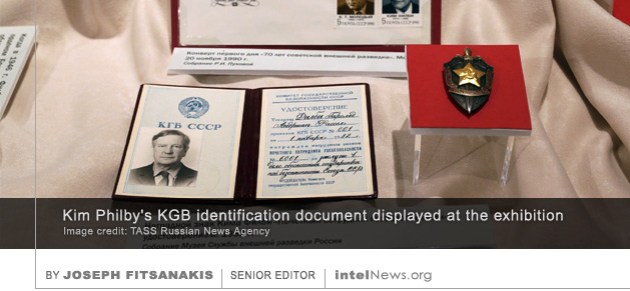 The life of Kim Philby, one of the Cold War’s most recognizable espionage figures, is the subject of a new exhibition that opened last week in Moscow. Items displayed at the exhibition include secret documents stolen by Philby and passed to his Soviet handlers during his three decades in the service of Soviet intelligence. While working as a senior member of British intelligence, Harold Adrian Russell Philby, known as ‘Kim’ to his friends, spied on behalf of the Soviet NKVD and KGB. His espionage lasted from about 1933 until 1963, when he secretly defected to the USSR from his home in Beirut, Lebanon. Philby’s defection sent ripples of shock across Western intelligence and is often seen as one of the most dramatic incidents of the Cold War.
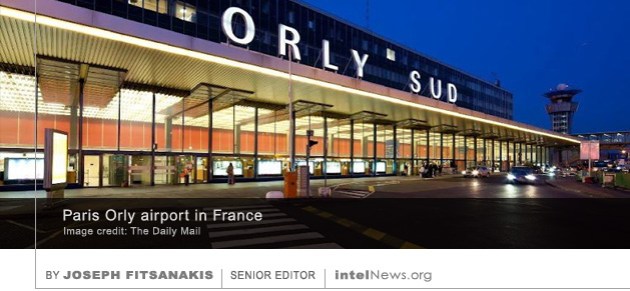 A French police officer has been charged with illegally sharing secret government documents in an espionage case involving France’s border police and diplomats from Morocco and Algeria. According to information published by the French daily Libération, the police officer supplied Moroccan intelligence with classified information about France’s border-control policies and procedures. He also gave the Moroccans information about the movements in France of Moroccan nationals and senior Algerian government officials.
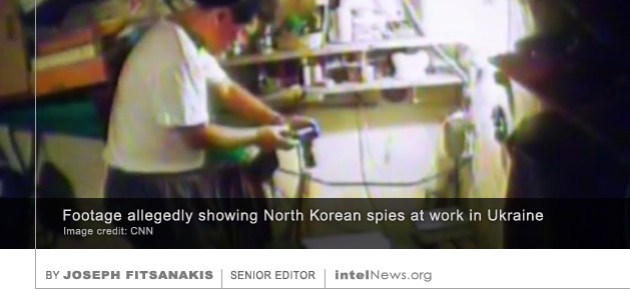 Ukrainian authorities have released rare surveillance footage filmed during a sting operation that ended with the capture of three North Korean spies. The North Koreans, two of whom are now serving prison sentences in Ukraine, had traveled there in 2011 believing they would be given missile technology secrets. Last July, North Korea surprised missile technology experts by successfully testing two intercontinental ballistic missiles (ICBMs). Government-controlled media in Pyongyang claimed that North Korean ICBMs were capable of reaching the United States’ mainland.
 Germany has launched an unprecedented investigation into three officers of Switzerland’s intelligence agency on suspicion that they spied on German tax investigators who were probing the activities of Swiss banks. News of the investigation comes three months after authorities in Germany
  Russian espionage in the United States has become increasingly sophisticated and brazen, and American counterintelligence professionals are finding it difficult to contain it “after years’ worth of inattention” according to sources.
  Ukrainian security service personnel raided the offices of a Russia-based internet search engine firm in two cities on Tuesday, as part of a treason investigation. The probe is reportedly related to the ongoing dispute between Kiev and Moscow, which intensified after 2014, when Russia unilaterally annexed the Russian district of Crimea. The Ukrainian government also accuses the Kremlin of clandestinely supporting pro-Russian insurgents in southeastern Ukraine, something that Moscow denies.
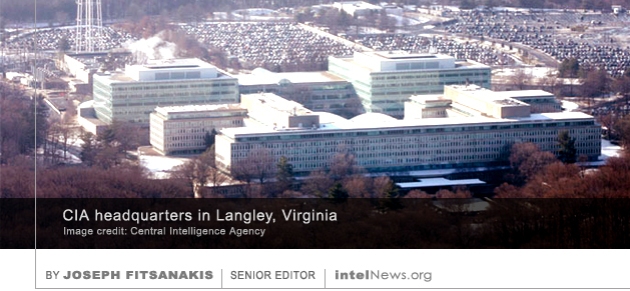 A few years ago, China busted an extensive network of secret operatives run by the United States Central Intelligence Agency. The CIA has yet to recover from the massive blow to its operations, say sources. The CIA has devoted substantial resources to gathering intelligence in China in recent years, and has painstakingly built a network of spies. The latter are Chinese nationals recruited by CIA officers to spy on Beijing on behalf of the United States. But,
 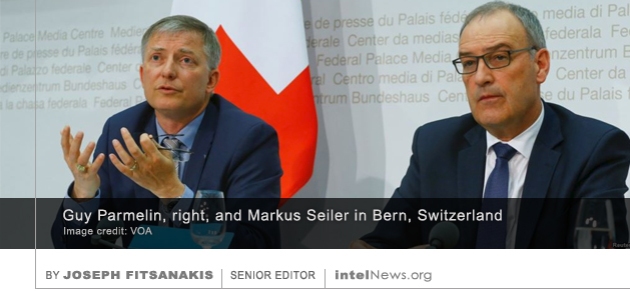 Senior Swiss government officials, including the defense minister and the director of the country’s intelligence agency, have defended Switzerland’s right to spy on European tax-fraud investigators who meddle in Swiss affairs. Earlier this week, German authorities
  Authorities in Germany have announced the arrest of a Swiss national who was allegedly spying on the activities of German tax-fraud investigators in Frankfurt. According to prosecutors in the German state of Hesse, of which Frankfurt is the largest city, the Swiss man was arrested on Friday and is currently in custody. He has been identified only as Daniel M., and is believed to be in his mid-50s. According to news reports, German counterintelligence officers had been monitoring the suspect for over a year. They were issued a warrant for his arrest in December of last year, but waited until he was on German soil to arrest him. He was arrested at Frankfurt Airport.
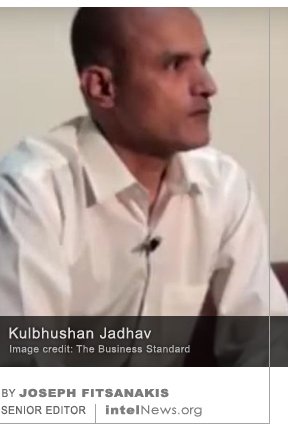 Analysts warn that South Asia may witness its worst crisis since the 2008 Mumbai attacks if Pakistan carries out its threat to execute an Indian former naval officer whom it accuses of espionage. Authorities in Islamabad say Kulbhushan Jadhav (pictured) worked for the Indian Navy until 2003, when he was recruited by India’s Research and Analysis Wing (RAW), a government intelligence agency that conducts operations abroad. The Pakistanis claim that Jadhav was arrested in southwest Pakistan in 2016, where he was engaged in funding and training secessionist militants from Pakistan’s Baluch minority. The Baluch are an Iranic people, most of whom live in a region known as Baluchistan, which is split between Iran and Pakistan. There are populous Baluch communities in the southern city of Karachi, one of Pakistan’s most populous ports. Some members of the Baluch community have secessionist aspirations and are accused of terrorism by Iranian and Pakistani authorities.
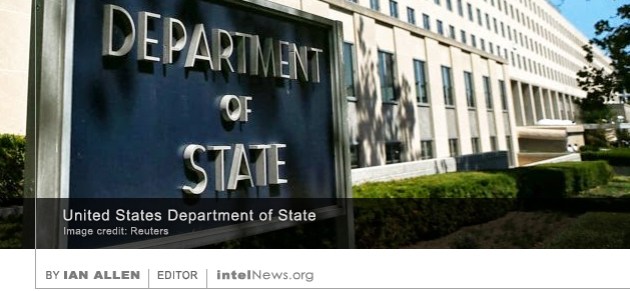 An employee of the United States Department of State has been charged with lying to authorities about her contacts with Chinese intelligence operatives, who gave her money and gifts in return for information. Candace Claiborne, 60, joined the Department of State in 1999 as an office management specialist. She lives in Washington, DC, but has served overseas in American diplomatic facilities in Baghdad, Iraq, Khartoum, Sudan, and China, where she was stationed in Beijing and Shanghai. According to information provided by the Federal Bureau of Investigation, Claiborne had a top security clearance, which required her to report contacts with foreign nationals.






 intelNews.org
Netanyahu allegedly asked Trump to let spy Jonathan Pollard move to Israel
November 2, 2017 by Joseph Fitsanakis 1 Comment
Pollard, who was given Israeli citizenship in recognition for his services to the Jewish state, has repeatedly stated his desire to renounce his American citizenship and immigrate to Israel. However, the conditions of his release prevent him from doing so. Since his release, he has been forced to wear a GPS monitoring device at all times and is not allowed to leave his New York apartment between 7:00 p.m. and 7:00 a.m., nor is he allowed to leave the United States for any reason. It is speculated that this restriction is designed to prevent him from accessing close to $1 million in spy wages that his Israeli handlers are reputed to have deposited in a Swiss bank account.
But with a new administration now in Washington, the Israeli government believes that it may be able to press for the relaxation of some of the restrictions imposed on Pollard. According to the Israeli television station Channel 2, Prime Minister Netanyahu has personally lobbied President Trump to allow Pollard to leave America for Israel. According to the report, the Israeli prime minister told Mr. Trump that, if allowed to move to Israel, Pollard would abide by the same restrictions that he currently follows in New York. These reportedly include a strict daily curfew and limitations on foreign travel. Channel 2 said that Israeli is seeking to get custody of Pollard in return for its alleged efforts to re-enter negotiations with Fatah, the Palestinian group that governs the Occupied Territories. The television station said that American officials appear hesitant to allow Pollard to go to Israel. Even if Israel’s request is granted, the American side does not want to link Pollard’s case to the Arab-Israeli peace process, it said.
► Author: Joseph Fitsanakis | Date: 02 November 2017 | Permalink
Filed under Expert news and commentary on intelligence, espionage, spies and spying Tagged with espionage, Israel, Jonathan Jay Pollard, News, United States