Swedish intelligence says it identified foreign spies searching for secrets
February 27, 2017 1 Comment
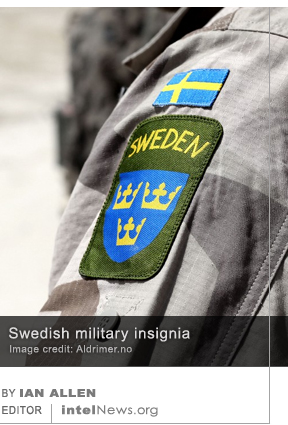 The military intelligence service of Sweden warned last week that there were increasing incidents of espionage perpetrated against Sweden by operatives identified “beyond doubt” as agents of foreign powers. In its annual report for 2016, the Swedish Military Intelligence and Security Service (MUST) said large numbers of spies were detected around “sensitive installations” mostly of a military nature. Headed by an Army general, MUST is responsible for military intelligence and counterintelligence in Sweden. Every year it produces a report of its activities for the Swedish government and defense establishment, and also publishes a declassified version. Its latest report warns about growing attempts by foreign countries to “gather intelligence about Sweden’s defense assets and capabilities”.
On Friday, Swedish newspaper Svenska Dagbladet published an interview with senior MUST official Jan Kinnander. He told the paper that MUST was able to identify beyond doubt that certain individuals were “connected to the intelligence services of foreign states”. These persons traveled to Sweden “under false pretenses”, according to the official. A few of them were diplomats, said Kinnander, while most attempted to travel around the Scandinavian country using “conspiratorial methods”. Many were detected prowling around government installations that are linked to Sweden’s national defense while having “no reasonable cause” to be there, said Kinnander.
When asked to identify the countries that engage in espionage against Sweden, Kinnander said he could not elaborate, except to say that MUST linked the alleged spies with “several countries, including Russia”. In December of last year, MUST Director Gunnar Karlsson told Swedish media that Russia was a leading perpetrator of intelligence operations against Sweden. These operations included active measures involving propaganda, deception and other psychological activities, he said. In recent years, the Swedish authorities have arrested Polish, Lithuanian and other Eastern European nationals, allegedly because they were seen photographing Swedish military installations.
► Author: Ian Allen | Date: 27 February 2017 | Permalink
 Indonesian authorities said on Sunday that they will investigate a North Korean restaurant in the country, after a Singaporean news agency claimed it was being used as a center for espionage. The announcement comes amidst heightened tensions between North Korean and its neighbors, following the
 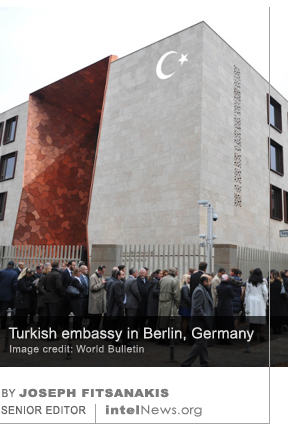 Turkish state agencies have asked the country’s diplomats stationed all over Europe to spy on Turkish expatriate communities there, in an effort to identify those opposed to the government, according to a German report. The government of Turkish President Recep Tayyip Erdoğan accuses members of the so-called Gülen movement of orchestrating a military coup in July of last year, which resulted in an armed attack on the country’s parliament and the murder of over 200 people across Turkey. The Gülen movement consists of supporters of Muslim cleric Fethullah Gülen, who runs a global network of schools, charities and businesses from his home in the United States. The government of Turkey has designated Gülen’s group a terrorist organization and claims that its members have stealthily infiltrated state institutions since the 1980s.
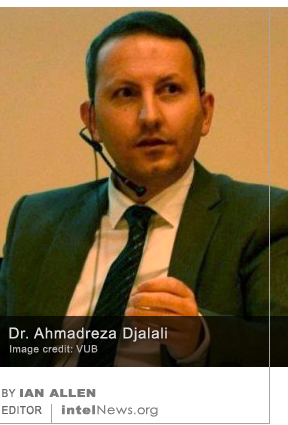 An Iranian scientist who works at a university in Belgium has been sentenced to death in Iran, allegedly for spying. According to his family and his employer in Belgium, Dr. Ahmadreza Djalali is currently in prison in Tehran. Dr. Djalali, 45, is professor of disaster medicine at the Vrije Universiteit Brussel (VUB), a Dutch-speaking university located in the Belgian capital. For the past few years, Dr. Djalali has been based in Italy, where he teaches in the VUB’s European Master’s program in Disaster Medicine. According to an
 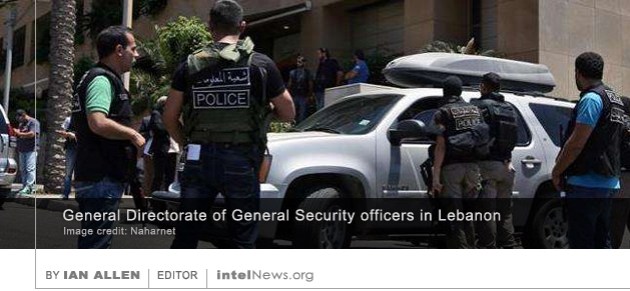 The security services of Lebanon announced on Wednesday that they had arrested five foreign nationals who were allegedly spying of Israel. A brief statement issued by Lebanon’s General Directorate of General Security (GDGS, also known as the General Security Directorate) said the five individuals were members of a “spy ring” set up by the Mossad, Israel’s external intelligence agency. The five —three men and two women— are accused of contacting Israeli embassies in countries in the Middle East, Europe and Asia, with the aim of passing information about domestic Lebanese affairs.
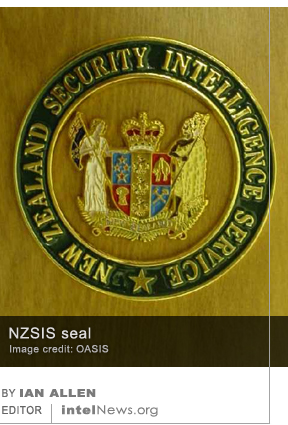 The intelligence agency of New Zealand has issued a report warning that the country is being targeted by foreign spies who operate using fake covers. Many of them aim to infiltrate some of the highest levels of the government, according to the agency. The warning appeared in the annual report of the New Zealand Security Intelligence Service (NZSIS), the country’s main national intelligence organization, which is responsible for intelligence, counterintelligence and counter- terrorism. The NZSIS’
  A man at the center of the first case of Chinese nuclear espionage in United States history will be pleading guilty on Friday, according to court documents. This could mean that the alleged spy has decided to give the Federal Bureau of Investigation (FBI) details of Chinese nuclear espionage in the US. The accused man is Szuhsiung ‘Allen’ Ho, a Taiwanese-born engineer and naturalized American citizen. Ho was arrested by the FBI in April on charges of sharing American nuclear secrets with the government of China.
 Since 2008, when we launched intelNews, it has been our end-of-the-year tradition to take a look back and highlight what we think were the most important intelligence-related stories of the past 12 months. In anticipation of what 2017 may bring in this highly volatile field, we present you with our selection of the top spy stories of 2016. They are listed below in reverse order of significance. This is part two in a two-part series; you can access part one
  Since 2008, when we launched intelNews, it has been our end-of-the-year tradition to take a look back and highlight what we think were the most important intelligence-related stories of the past 12 months. In anticipation of what 2017 may bring in this highly volatile field, we present you with our selection of the top spy stories of 2016. They are listed below in reverse order of significance. This is part one in a two-part series; part two is
 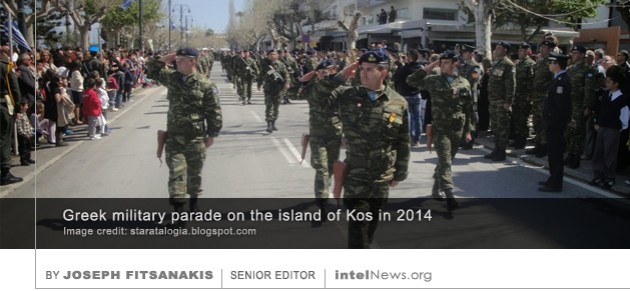 A German retiree living in Greece, who admitted in court that he was part of a network of German and other Western European residents of Greece recruited as spies by Turkish intelligence, has been jailed for 14 years. The 65-year-old man, who has not been named, was arrested two years ago in the southeastern Aegean island of Kos. He was born in Cold-War-era East Germany and worked as a locksmith before serving for 15 years in the East German National People’s Army. From 2009 to 2012, he lived in Turkey before moving permanently to Greece.
 A Chinese diplomat, who made international news headlines in 2005 when he defected to Australia, has ended a decade of silence to warn about an alleged increase in Chinese espionage operations against his adopted country. Chen Yonglin was a seasoned member of the Chinese diplomatic corps in 2001, when he was posted as a political affairs consul at the Chinese consulate in Sydney, Australia. His job was to keep tabs on the Chinese expatriate community in Australia, with an emphasis on individuals and organizations deemed subversive by Beijing. He later revealed that his main preoccupation was targeting members of the Falun Gong spiritual movement, which is illegal in China. He also targeted supporters of Taiwanese independence, as well as Tibetan and East Turkestan nationalists who were active on Australian soil.
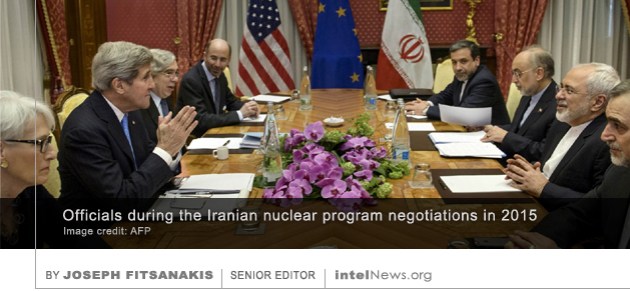 Iranian authorities have reportedly arrested at least 12 members of the country’s team of nuclear negotiators on charges of espionage. The 12 are believed to have represented Iran in international talks about its nuclear program between the Islamic Republic and a group of nations known as P5+1, representing the five permanent members of the United Nations Security Council plus Germany.
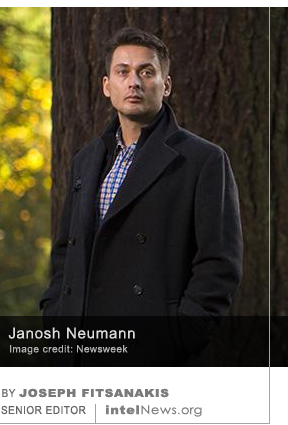 Two Russian intelligence officers, who defected to the United States in 2008, claim that they had to fend for themselves after American spy agencies failed to protect them despite promises to the contrary. Janosh Neumann (born Alexey Yurievich Artamonov) and his wife Victorya were employees of Russia’s Federal Security Service (FSB) specializing in investigations of money laundering and corruption. But in 2008 they traveled from Russia to Germany and from there to the Dominican Republic. Once in the Caribbean island, they entered the US embassy and offered to work for the Central Intelligence Agency (CIA).
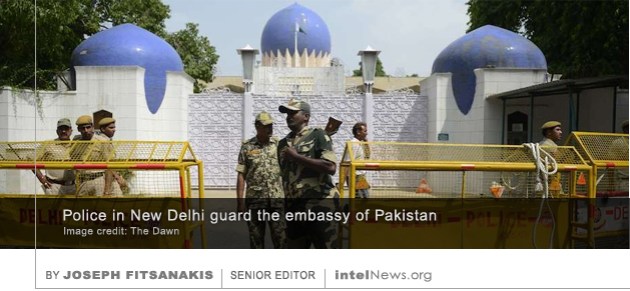 India is in the process of recalling eight of its diplomats from Pakistan, after their names and photographs were published in Pakistani newspapers with accusations that they are intelligence officers. According to anonymous sources in the government of Pakistan, three of the eight recalled diplomats have already left Islamabad for New Delhi. Five more are expected to leave the country before the end of the week. The three who left Pakistan yesterday were






 intelNews.org
China has 5,000 spies in Taiwan, says official amidst espionage arrests
March 20, 2017 by Joseph Fitsanakis 1 Comment
Following reports of the arrests, Taiwanese media quoted an official, who spoke on condition of anonymity, as saying that Beijing maintains “about 5,000 individuals” who spy in Taiwan. These agents are allegedly tasked with “collecting state secrets” in the island country, over which China claims ownership. The anonymous Taiwanese official said that authorities in Taipei had uncovered no fewer than 60 espionage plots linked to China since 2002. Less than a third of those were uncovered before 2009, said the official. The year is important, because it marks the time when communications and transportation systems between the two nations were reestablished after decades of mutual isolation. The ease with which people from the two countries can travel in each other’s territory has increased exponentially since 2009. But so have instances of espionage by China, said the Taiwanese official.
Asked about the alleged targets of Chinese espionage in Taiwan, the official said that nearly 80 percent of identified cases of espionage by Beijing’s agents were aimed at military targets, with only 20 percent focusing on the civilian sector. However, the apparent disparity in numbers does not mean that China shows more interest in Taiwanese military secrets. Rather, the Taiwanese military has better counterintelligence defenses and thus a higher detection rate than the country’s civilian sector, said the anonymous source.
► Author: Joseph Fitsanakis | Date: 20 March 2017 | Permalink
Filed under Expert news and commentary on intelligence, espionage, spies and spying Tagged with China, counterintelligence, espionage, News, Taiwan