Muslim man held in New York prison claims he was CIA spy

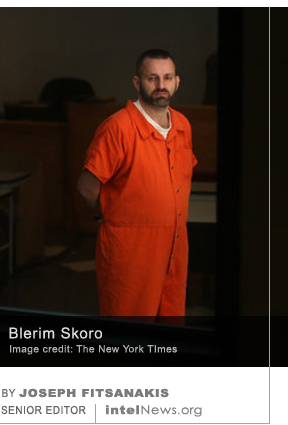
Blerim SkoroAn ethnic Albanian man facing deportation from the United States says he was trained by the Central Intelligence Agency to spy on “the most ruthless, dangerous terrorists in the Balkans and the Middle East”. Blerim Skoro, 45, from the former Yugoslav Republic of Kosovo, was arrested last February in Brooklyn, New York, for illegally using a discounted student MetroCard. He was then found to have entered the US illegally and is currently in prison in New Jersey, facing possible deportation back to Kosovo. But Skoro told The New York Times in an interview published on Wednesday that he cannot be sent back to Kosovo because he operated there as a spy for the CIA.

According to The Times, Skoro came to the US in 1994. Six years later, he was convicted in a New York court of transporting drugs and laundering nearly $700,000 in criminal proceeds. But while in prison, Skoro was recruited as an informant for the Federal Bureau of Investigation, and was tasked with monitoring inmates with militant Islamist leanings. In 2007, when Skoro was released from prison and deported back to Kosovo, he allegedly continued working for US intelligence. He told The Times that he was trained by US operatives in a CIA safe house in the former Yugoslav Republic of Macedonia before taking on assignments in the Balkans, the Middle East and even Pakistan. Throughout that time, Skoro says he posed as a militant Islamist who had become radicalized while serving his prison sentence in America. He claims to have supplied the CIA with intelligence relating to al-Qaeda and other Sunni Islamist groups.

However, in 2010, while traveling to a CIA safe house in Macedonia for a meeting, he was shot by assailants who probably knew he was working for a foreign spy agency. That incident prompted the CIA to sever its relationship with him, dismissing him from his agent status and offering him approximately $40,000 in compensation. Soon afterwards, Skoro made his way to Canada, from where he entered the US illegally, in November 2014. Before getting arrested in Brooklyn in February, he says he made contact with US intelligence officials, offering to spy for the US against the Islamic State. But his offer was not accepted. The Times article speculates that US intelligence may have no use for Skoro because his identity has been compromised, or because his reliability has come into question.

Currently Skoro is being held without bond at the Bergin County Jail in northern New Jersey, because federal prosecutors believe he might flee if released. The Times contacted the CIA, the FBI and police sources, but all declined to comment.

Author: Joseph Fitsanakis | Date: 07 July 2016 | Permalink

Diplomat involved in fight with US embassy guard is CIA spy, says Russia

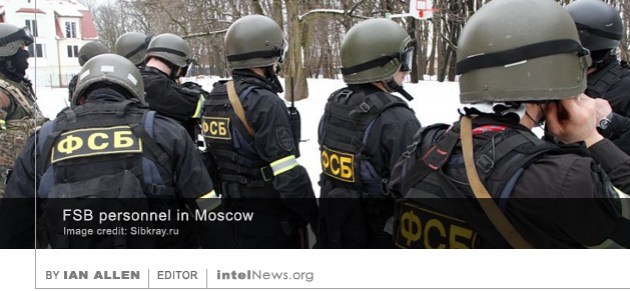
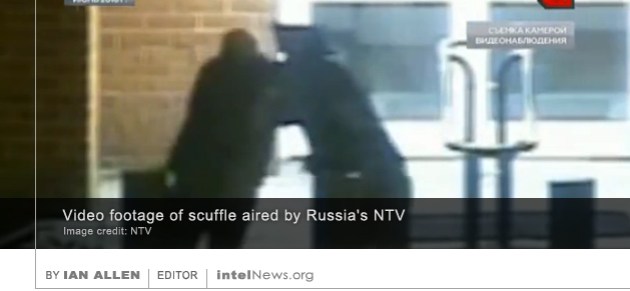
FSB - IAThe Russian government says that an American diplomat, who was allegedly beaten up by a Russian security guard outside the United States embassy compound in Moscow, is an undercover spy. The man, who has not been named, was stationed in the Russian capital by the State Department as an accredited diplomat with immunity from prosecution in Russia. However, The Washington Post reported earlier this week that the American diplomat was severely beaten by a Russian government employee while attempting to enter the US embassy compound.

The alleged incident is reported to have taken place in the early hours of Monday, June 6. The American diplomat was making his way to the front entrance of the US embassy complex, which is located in the Presnensky District in downtown Moscow. According to American sources, the diplomat was approached by an employee of the Russian Federal Security Service, the FSB, which regularly stations security personnel around the sizeable US embassy complex. The FSB claims that the guards are there to protect US diplomats, though it is common knowledge that the Russian agency, which is responsible for counterespionage, is primarily there to monitor activities in and around the US embassy. American sources claim that the diplomat presented the Russian guard with proof of identification when asked to do so. But he was then physically attacked and struck repeatedly by the FSB officer, which left him with several injuries, including a broken shoulder. According to The Washington Post, the diplomat managed to enter the embassy grounds and had to be flown out of the country for urgent medical treatment. He has not returned to Russia.

The US government believes the attack was intentional. But what caused it? One theory entertained by The Washington Post is that the diplomat was in fact an officer of the Central Intelligence Agency working in Moscow under official cover, pretending to be a State Department employee. According to this theory, the FSB was chasing the American diplomat through the streets of Moscow after a spy operation that went awry. The Russians then tried unsuccessfully to prevent him from entering the US embassy, which constitutes American soil.

On Thursday, Russian Foreign Ministry spokeswoman Maria Zakharova alleged that the diplomat in question was an intelligence officer. “It is well known”, said Zakharova, “that this very diplomat was in fact an agent of the CIA and was returning [to the US embassy], in disguise, after conducting an intelligence operation the previous night”. She also said that the Russian government employee involved in the altercation was a “police officer” who was attacked by the alleged spy when he asked to be shown proof of identification. Instead of supplying identification documents, the American diplomat “struck the guard in the face with his elbow before disappearing into the embassy”, said Zakharova. The US State Department and the CIA refused to comment on Zakharova’s allegations.

Author: Ian Allen | Date: 01 July 2016 | Permalink

Portuguese, Russian spies arrested in Rome may have accomplices

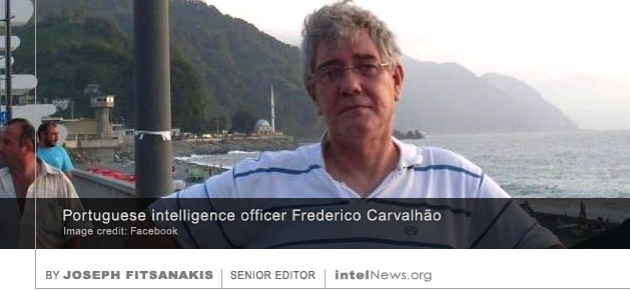
Frederico Carvalhão,A Portuguese intelligence officer arrested a week ago in Rome, allegedly while passing classified documents to his Russian handler, may have accomplices with access to North Atlantic Treaty Organization (NATO) secrets. IntelNews reported last week on the capture of Frederico Carvalhão, a section chief for Portugal’s Security Information Service (SIS), which is tasked with domestic security and counterintelligence. Carvalhão was arrested on May 23 at a café in the Trastevere district of Rome while passing a folder with six classified documents to a Russian man. The man is believed to be an employee of Russia’s Foreign Intelligence Service, known as SVR, though notably he does not have diplomatic status or immunity, and was therefore arrested. As we noted last week, this is atypical for an intelligence officer, as most of them operate as registered diplomats.

According to Portuguese media reports, the classified information that Carvalhão appears to have been sharing with the SVR since at least 2014 relate to NATO and the European Union (EU), of which Portugal is a member. However, the London-based newspaper Daily Telegraph reports that there are suspicions in Lisbon that Carvalhão was not working alone for the Russians. In other words, Portuguese investigators are looking into the possibility that the arrested spy was what is known as a ‘principal agent’. The latter signifies a mole that acts as a middle person between his foreign handlers and a cell of other agents working for him or her. The possibility that Carvalhão may not have been working alone was commented on by Portugal’s Minister of Foreign Affairs, Augusto Santos Silva, who said last week that the judicial investigation into the spy case was “ongoing”.

It appears that Carvalhão somehow managed to access NATO- and EU-related documents from the SIS’ Ameixoeira Fort headquarters in the Portuguese capital, to which he had no need-to-know access. Moreover, SIS computers do not accept flash drives, while all printed documents contain a secret watermark that identifies them as having been printed on an SIS printer. But Carvalhão appears to have somehow managed to acquire non-watermarked documents without having extracted them from an SIS computer with the use of a flash drive. Does that mean that someone else from inside SIS provided him with the documents? The EU and NATO are eagerly waiting for an answer.

Author: Joseph Fitsanakis | Date: 30 May 2016 | Permalink

Russian, Portuguese intelligence officers arrested in Rome on espionage charges

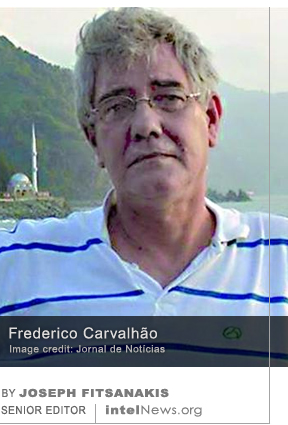
Frederico CarvalhãoTwo intelligence officers, one Russian and one Portuguese, have been arrested by Italian authorities on charges of espionage. The arrests took place in Rome on Monday by Italian police, who were reportedly accompanied by Portuguese counterintelligence officers. It is suggested in Portuguese media that the two men were arrested in the act of exchanging classified documents and money. The Portuguese intelligence officer has been identified in news reports as Frederico Carvalhão, a section chief for Portugal’s Security Information Service, which is tasked with domestic security and counterintelligence. The Russian intelligence officer has not been identified, but is believed to be an employee of Russia’s Foreign Intelligence Service, known as SVR. Interestingly, the Russian officer does not have diplomatic status and was therefore arrested, since he holds no diplomatic immunity.

A press release by the Portuguese government prosecutor said that Carvalhão had been arrested “along with a foreign subject linked to an intelligence organization” after a lengthy investigation into “concerns that [classified] information was being exchanged for money”. It is believed that Portuguese authorities began investigating Carvalhão in 2015, and now believe that he frequently traveled abroad to meet his Russian handler. He is thought to have been recruited by the Russians in 2014. According to Portuguese media reports, the documents that Carvalhão appears to have been giving the SVR contain information about the European Union and the North Atlantic Treaty Organization, of which Portugal is a member.

Carvalhão is said to have flown from Lisbon to Rome on Friday of last week in order to meet his SVR handler. The two men were meeting in a café on Saturday when they were arrested. The Portuguese government prosecutor said that Saturday’s arrests resulted from “rigorous collaboration between Portuguese and Italian authorities”. He also thanked Eurojust, a European Union agency based in the Netherlands, which focuses on cross-national judicial cooperation between European Union member-states. Security officers also raided Carvalhão’s home in Portugal, where they allegedly seized “documents and cash”. Both he and his alleged Russian hander remain in detention in Rome, while Italy is preparing to extradite them to Portugal.

Author: Joseph Fitsanakis | Date: 26 May 2016 | Permalink | News tip: C.W.

Death sentence for Chinese computer technician accused of espionage

Chengdu, ChinaA former computer technician who worked on cryptology has been sentenced to death in China after being found guilty in what some describe as one of the country’s most damaging espionage cases in recent years. The man, Huang Yu, is reportedly a 41-year-old computer expert who worked for a government-funded research institute specializing in cryptology —the science of making and breaking secret codes. He was arrested in 2011 in Chengdu, the capital of Sichuan province in southwestern China.

According to state-run broadcaster China Central Television, Huang spied on his country from 2002 to 2011, when he was arrested. During that time, he is believed to have sold 150,000 documents to a foreign intelligence agency, in exchange for $700,000. The documents allegedly included 90 reports that were classified as ‘top-secret’, and contained Chinese military codes. Some commentators have described Huang’s espionage as having caused “one of the largest known leaks [of government secrets] in China in recent years”. However, government prosecutors have refused to release information about the foreign spy agency that Huang is accused of having worked for. In addition to giving Huang a death sentence, the court sentenced his wife to five years in prison, while her brother will spend three years behind bars.

Huang’s death sentence is the first delivered in China for espionage since late 2008, when two Chinese scientists were put to death for spying for Taiwan. Some experts believe that Huang’s case signifies an intensification of efforts by the Chinese government to protect its secrets from foreign espionage. These efforts began in 2014, when Chinese President Xi Jinping enacted new counterespionage legislation featuring harsher penalties for Chinese citizens who work as agents of foreign spy agencies. Earlier this month, the Chinese state marked the country’s first “National Security Education Day”, which included the establishment of a new “counterespionage hotline” designed to accept anonymous tips from citizens about suspected foreign spies.

Author: Joseph Fitsanakis | Date: 20 April 2016 | Permalink

Further arrests in Edward Lin spy case ‘possible’, says US official

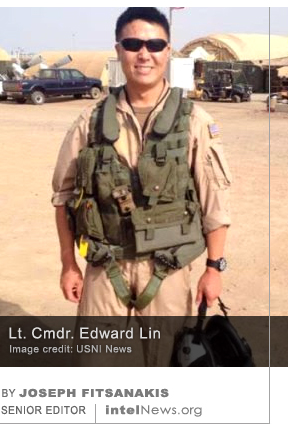
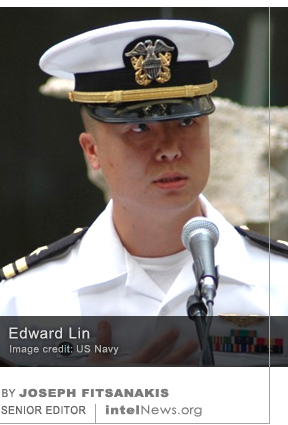
Edward LinAn American official has told Newsweek magazine that the possibility of further arrests in the espionage case of United States Navy flight officer Edward Lin should not be ruled out. Last Sunday, the US Navy reported the arrest Lt. Cmdr. Lin, who faces two counts of espionage and three counts of attempted espionage, among other charges. Aside from a three-page, heavily redacted charge sheet released by the Navy, almost nothing is known about this case. However, as intelNews opined earlier this week, there are several clues that point to the seriousness of the charges against Lin, and their potential ramifications for US national security, which are likely to be extensive.

On Thursday, longtime intelligence and security correspondent Jeff Stein wrote in Newsweek magazine that Lin appeared to have “scores of friends in sensitive places” in the US and Taiwan. That is not surprising, given that Lin served as the Congressional Liaison for the Assistant Secretary of the Navy, Financial Management and Comptroller, between 2012 and 2014. A cursory survey of Lin’s LinkedIn page, said Stein, shows endorsements by a senior commander at the US Naval Air Station at Guantanamo, Cuba, as well as the US Pacific Fleet’s senior intelligence analyst on Southeast Asia. Other endorsers include Congressional liaison officers for the US Navy, a Taiwanese military attaché, and a former official in Taiwan’s Ministry of Defense.

It is believed that Lin was arrested over eight months ago, but Stein says the investigation, which is being conducted jointly by the Naval Criminal Investigative Service and the Federal Bureau of Investigation is still underway. He quotes an unnamed “US official who asked for anonymity in exchange for discussing some details of the case” as saying that, given Lin’s extensive contacts in the US intelligence establishment, the possibility of further arrests in the case should not be ruled out. Lin is currently being held in the Naval Consolidated Brig in Chesapeake, Virginia.

Author: Joseph Fitsanakis | Date: 15 April 2016 | Permalink

Analysis: How serious is the Edward Lin spy case?

Edward LinFor the first time since 1985, when the Federal Bureau of Investigation broke the John Walker spy ring, an active United States Navy officer has been charged with espionage. On Sunday, the US Navy reported the arrest Lt. Cmdr. Edward C. Lin, who faces two counts of espionage and three counts of attempted espionage, among other charges. Aside from a three-page, heavily redacted charge sheet released by the US Navy, almost nothing is known about this case. However, there are several clues that point to the seriousness of the charges against Lin, and their potential ramifications for US national security, which are likely to be extensive.

Lin was a signals intelligence (SIGINT) specialist with the Navy, focusing on the airborne collection of maritime intelligence, mostly in the Pacific Ocean. Given that he is a naturalized citizen from Taiwan and speaks fluent Mandarin, it is almost certain that he was tasked with collecting SIGINT from targets in China and Taiwan. If that is so, then the prospect that Lin may have given classified information to Chinese or Taiwanese intelligence officers will be especially unsettling for Washington. Moreover, Lin is believed to have worked with some of the most advanced airborne intelligence-gathering platforms in the Pentagon’s arsenal, including the MQ-4C Triton, the P-3C Orion, the P-8A Poseidon, and the EP-3 Aries II, which is arguably the most advanced maritime surveillance aircraft ever used by the US Navy.

It also appears that Lin had a relatively senior position in the US Navy’s chain of command. He was a departmental head in the Navy’s Patrol and Reconnaissance Group, overseeing the work of over 7,000 sailors. Prior to that post, he served as the Congressional Liaison for the Assistant Secretary of the Navy, Financial Management and Comptroller. Lin’s critical positions in the chain of command may explain why US authorities arrested him nearly eight months ago in absolute secrecy and been holding him in pre-trial confinement without releasing any information to the media until last weekend. This level of secrecy in a national security investigation is rare and possibly points to the extent of damage assessment that needed to be completed following Lin’s arrest. Read more of this post

Turkey arrests senior official for selling weapons plans to US-based firm

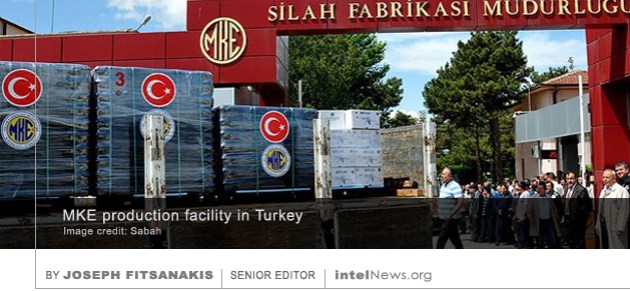
MKE TurkeyA senior official of Turkey’s state-run weapons manufacturer has been arrested on espionage charges, after he was caught selling weapons blueprints to the employee of an arms firm based in the United States. The official was named by Turkish authorities as Mustafa Tanriverdi, the general manager of one of Turkey’s largest weapons production facilities, located in the town of Kirikkale, 50 miles east of Turkish capital Ankara. Tanriverdi is reportedly employed by the Mechanical and Chemical Industry Corporation (MKE), a government-run manufacturing firm that provides much of the Turkish Armed Forces’ weaponry. The company also has a growing list of international buyers, which includes nearly 30 foreign governments.

Tanriverdi was arrested on Thursday by undercover members of Turkey’s security services, as he was leaving a restaurant in Ankara. Moments earlier, he had sold design blueprints and production plans for two MKE-manufactured weapons. According to Turkish authorities, the plans related to two Turkish-designed weapons, namely the MPT-76 infantry rifle and the MP-5 submachine gun. Tanriverdi is accused of having sold the information on the weapons for nearly $500,000 to an unnamed man working for a Turkish-owned weapons manufacturer that is based in the US.

Reports in the Turkish media said the man who purchased Tanriverdi’s documents is a US-based Turkish business executive. But his name remains unknown, as he is identified only as K.K. in news reports. Allegedly, K.K. had notified Turkish authorities about Tanriverdi and was himself part of a sting operation aimed at apprehending the Turkish official. The latter has now been charged with espionage, disloyalty to the Turkish state and exploiting state secrets for financial gain. He is said to have told the authorities that he did not sell classified information but was instead striking a “legitimate business agreement” with a man he thought was a weapons trader working for Turkey.

Author: Joseph Fitsanakis | Date: 12 April 2016 | Permalink

Russia claims arrest of alleged CIA-trained spy

Lubyanka SquareThe Russian government says it has arrested a senior Ukrainian intelligence officer, who was allegedly trained by the United States Central Intelligence Agency and tasked with infiltrating the Russian secret services. In a statement published on Thursday, Russia’s Federal Security Service, known as FSB, said the alleged infiltrator is a “senior level employee” of the SBU, the Security Service of Ukraine. The SBU is Ukraine’s primary counterterrorism and counterintelligence agency, with much of its output focused on the Russian Federation.

The FSB statement identified the Ukrainian man as Lieutenant Colonel Yuriy Ivanchenko, but did not release further information about his background and identity, nor did it specify the details of his activities in Russia. According to the Russians, Ivanchenko allegedly entered the country in recent weeks, ostensibly in order to visit family members who live in Russia. But his real goal, according to the FSB, was to make contact with Russian intelligence and infiltrate the country’s security structure. Moscow says that Ivanchenko had planned to pose as a willing spy, namely an employee of Ukrainian intelligence who was offering to provide information to Russia. He was not a genuine spy, however, but rather a ‘dangle’ —namely someone posing as a genuine spy, but who is in fact attempting to deceive a rival intelligence agency by knowingly giving it misleading or inaccurate information.

Moreover, the Russians claim that Ivanchenko was being jointly run by the SBU and the CIA, and that the American intelligence agency had trained him to pose as a ‘dangle’ in order to collect information about FSB activities in Ukraine. The goal of the CIA, said Moscow, was to “lure an FSB employee and capture him with incriminating information”. However, the FSB statement said that Ivanchenko’s SBU connection and CIA affiliation were known to Russia prior to his arrival in the country, as he had previously tried to offer his services to Moscow. He was therefore arrested and will be deported in the coming days with a persona non grata (unwelcome person) designation. The CIA and SBU have not commented on Russia’s allegations.

Author: Joseph Fitsanakis | Date: 01 April 2016 | Permalink

German court sentences intelligence officer who spied for CIA

Markus ReichelA court in Germany has sentenced a former officer of the country’s intelligence agency, who spied for the United States and Russia from 2008 to 2014. Regular readers of this website will recall the case of ‘Markus R.’, a clerk at the Bundesnachrichtendienst, or BND, Germany’s external intelligence agency. The 32-year-old was arrested in July 2014 on suspicion of having spied for the United States’ Central Intelligence Agency. Germany’s Office of the Federal Prosecutor said at the time that Markus R. voluntarily made contact with the CIA in 2008 and offered his services to the American spy agency. He began working for the United States as a double agent soon afterwards. Soon after Markus R.’s arrest was made public, the German government ordered the immediate removal from Germany of the CIA chief of station –who was essentially the top American intelligence official in the country. Berlin also instructed its intelligence agencies to limit their cooperation with their American counterparts “to the bare essentials” until further notice.

On Thursday, Markus R., identified in some German media as Markus Reichel, was sentenced for selling over 200 classified German government documents to the CIA between 2008 and 2012, for which he said he received €80,000 ($90,000). During his trial, Reichel also admitted giving German government documents to personnel at the consulate of the Russian Federation in Munich in the summer of 2014. Among the documents that the former BND clerks is said to have given the CIA was a list of thousands of German intelligence operatives —including agents— stationed abroad, which contained their operational cover names and real identities. But Reichel was caught when German counterintelligence officers intercepted correspondence between him and his handlers and then used the information to set up a successful sting operation.

During his trial, Reichel issued a formal apology for engaging in espionage against the German state. He told the court that he had been motivated by boredom and by “lust for adventure”, which he said he did not get working for the BND. He also said he was frustrated by the lack of confidence that his superiors and colleagues had in him. “At the BND, I had the impression that no one trusted me with anything”, said Reichel. “But the CIA was different. You had the opportunity to prove yourself”, he added. Reichel was found guilty of treason against the German state and sentenced to eight years in prison.

Author: Joseph Fitsanakis | Date: 17 March 2016 | Permalink

Concerns about Israeli spying prompt debate on EU security measures

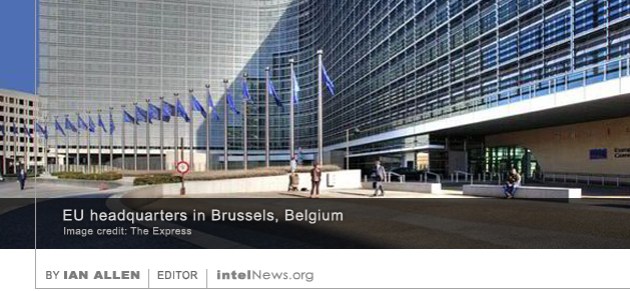
EU headquartersA debate on information security measures in the European Union was prompted last week after some officials voiced concerns that the proceedings of a closed-door meeting were secretly monitored by Israel. The meeting took place on January 15 as part of regular proceedings by the EU’s Political and Security Committee (PSC). The main item on the agenda was the EU’s Middle Eastern policy. According to some meeting participants, Israeli diplomats appeared to be aware of a statement discussed during the PSC meeting “in real time”, which prompted a wider debate on EU information security policies.

According to the Brussels-based EU Observer, which reported on the story, EU member state ambassadors present at the meeting worded a statement that contained a sentence deemed critical to Israel’s policy on Palestine. The sentence allegedly stated: “The EU will continue to unequivocally and explicitly make the distinction between Israel and all territories occupied by Israel in 1967”. According to some ambassadors who were present at the PSC meeting, “Israeli contacts sent text messages to them with requests to alter wording shortly after each new draft [of the PSC statement] went around”. Further suspicions were raised when, at the conclusion of the meeting, the Greek delegate vetoed the contentious line, standing alone against the remaining 27 delegates who had earlier supported it.

Last week, sources told the EU Observer that Israel may have placed bugs in the room where the PSC meeting took place. They added that the committee was debating whether to begin holding meetings in a secure room located in the EU headquarters building in Brussels, where the use of cell phones by meeting participants is not possible. They also said that a stricter classification policy should apply to PSC documents. Others, however, said that the source of the leak may have been the Greek delegate —the sole participant at the meeting who assumed a seemingly pro-Israeli stance. The Greek ambassador may have shared the details of the proceedings with Israeli officials, thus effectively spying on the conference on behalf of Israel, speculated the EU Observer. Another PSC meeting delegate told the paper that “the spy theory” was effectively concocted “in order to avoid confrontation” with the Greek delegation.

The EU Observer contacted the Greek mission to the EU, but was told that the Greek ambassador would never spy on the EU “as a matter of principle”. The Israeli mission to the EU declined to comment.

Author: Ian Allen | Date: 15 February 2016 | Permalink

S. Korea police says professor was secret handler of N. Korea spies

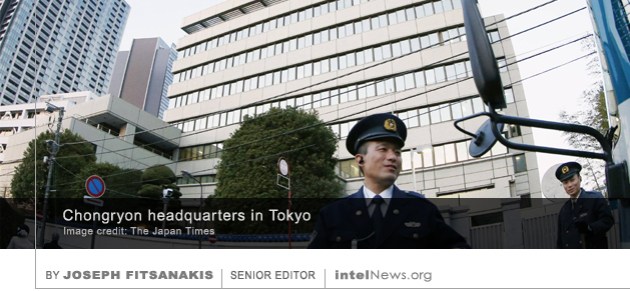
Chongryon A Korean resident of Japan, who was arrested in South Korea for credit card fraud, was allegedly a handler of North Korean sleeper agents operating in South Korea, Japan and China, according to police in Seoul. Pak Chae Hun, 49, was arrested on Tuesday at his home in Seoul by officers of the Public Security Bureau of the Metropolitan Police Department. A statement issued by South Korean police said Pak was until recently an associate professor at Korea University, a higher-education institution based in the Japanese capital Tokyo. The University is funded directly by the government of North Korea through Chongryon, a pro-Pyongyang organization otherwise known as the General Association of Korean Residents in Japan. The group represents tens of thousands of ethnic Koreans living in Japan, who are ideologically affiliated with Pyongyang.

Pak was initially investigated for purchasing computer hardware in Japan using a credit card he had obtained from a Korean company using a false identity and date of birth. But when South Korean police authorities raided his home, they found encrypted messages written on scraps of paper. Further investigations detected encrypted email messages sent to Pak from Japan. According to government sources in Seoul, the messages turned out to contain instructions from Office 225 of the North Korean Workers’ Party Korea, which is tasked with overseeing the activities of sleeper agents operating in South Korea. South Korean authorities now claim Pak was regularly receiving encrypted instructions from Pyongyang, which he relayed to North Korean agents in China and South Korea.

South Korean sources said Pak also provided North Korean agents with telephone devices, as well as cash and ATM cards, which they used to withdraw cash from banks in South Asia. Police sources in Seoul say Pak was recruited by North Korean spies over 15 years ago and regularly traveled to China to meet North Korean agents there. The former professor is now facing fraud charges, while South Korean authorities are considering the possibility of charging him with espionage, even though he was not caught in the act of spying against South Korea.

Author: Joseph Fitsanakis | Date: 03 February 2016 | Permalink

Year in Review: The 10 Biggest Spy-Related Stories of 2015, part II

End of Year ReviewEver since 2008, when we launched intelNews, we have monitored daily developments in the highly secretive world of intelligence while providing an expert viewpoint removed from sensationalism and conspiratorial undertones. As 2015 is about to conclude, we take a look back at what we think are the ten most important intelligence-related developments of the past 12 months. Regular readers of this blog will surely agree that we witnessed our fair share of significant intelligence-related stories this year. Some of them made mainstream headlines, while others failed inexplicably to attract the attention of the news media. In anticipation of what 2016 may bring, we present you with our selection of stories, which are listed below in reverse order of significance. This is part two in the series; part one was published yesterday.

5. CIA may have pulled officers from Beijing embassy following OPM hack. Up to 21 million individual files were stolen in June 2015, when hackers broke into the computer system of the US Office of Personnel Management. The office, known as OPM, handles applications for security clearances for agencies of the federal government.ch The breach gave the unidentified hackers access to the names and sensitive personal records of millions of Americans who have filed applications for security clearances. In late November it was reported that the Central Intelligence Agency (CIA) pulled a number of officers from the United States embassy in Chinese capital Beijing, following the massive cyber hacking. The irony is that, according to The Washington Post, the records of CIA employees were not included in the compromised OPM database. The latter contains the background checks of employees in the US State Department, including those stationed at US embassies or consulates around the world. It follows that US diplomatic personnel stationed abroad whose names do not appear on the compromised OPM list “could be CIA officers”, according to the paper.

4. Provisional IRA ‘still broadly in place’, says Northern Ireland police chief.. On July 28, 2005, the Provisional Irish Republican Army (PIRA), which fought British rule in Northern Ireland for decades, announced that was ceasing all paramilitary operations and disbanding as of that day. Three years later, the Independent Monitoring Commission declared that the PIRA’s Army Council, which steered the activities of the militant organization, was “no longer operational or functional”. In the ensuing years, which have seen the implementation of the Good Friday Agreement that restored peace in Northern Ireland, it has been generally assumed that the PIRA had ceased to exist. In August, however, George Hamilton, the head of the Police Service of Northern Ireland, told reporters that “some of the PIRA structure from the 1990s remains broadly in place” in the area. Hamilton was speaking in reference to the murder earlier that month of Kevin McGuigan in east Belfast. McGuigan, a 53-year-old father of nine, was a former member of the PIRA, who had fallen out with the organization. He was gunned down at his home, allegedly in retaliation for the murder last May of Gerard Jock Davison, a former commander of the PIRA, who was also shot dead in the Markets area of Belfast.

3. US Pentagon may have doctored intelligence reports on the Islamic State. Many Middle East observers, including this website, have made notably dire projections about the continuing reinforcement and territorial expansion of the Islamic State. In August, a leaked US intelligence report published by the Associated Press said the Islamic State’s strength had remained stable throughout 2014 and 2015, despite a US bombing campaign. However, earlier assessments by the Defense Intelligence Agency (DIA), which were communicated to senior US policymakers, including President Barack Obama, were far more optimistic about America’s ability to defeat the militant group. Why the discrepancy? According to The Washington Post, which published the story in late August, officials with the US Central Command (CENTCOM), the Pentagon body that directs and coordinates American military operations in Egypt, the Middle East and Central Asia, had systematically doctored the conclusions of intelligence reports about the Islamic State before passing them on to American leaders. It appears that the evidence pointing to deliberate manipulation of intelligence assessments was convincing enough to prompt the Pentagon’s Office of the Inspector General to launch an official probe into the matter.

2. China and Taiwan swap jailed spies in historic first. Few ongoing intelligence conflicts are as fierce as the one that has been taking place between China and Taiwan since 1949, when the two countries emerged following a bitter civil conflict between communist and nationalist forces. Observers were therefore surprised when, two weeks ahead of a historic November 7 meeting between Chinese President Xi Jinping and Taiwanese President Ma Ying-jeou, the two countries announced a spy swap. The exchange, which took place in secret in late October, was the first of its kind in the history of the two bitter rivals. Taipei released Li Zhihao, a mysterious Chinese intelligence officer known in spy circles as “the man in black”, who had been arrested in 1999 and was serving a life sentence. In return, Beijing freed Chu Kung-hsun and Hsu Chang-kuo, two colonels in Taiwan’s Military Information Bureau, who were arrested in mainland China’s nearly a decade ago. It is believed that they were the highest-ranked Taiwanese spies imprisoned in China. Their release, therefore, marks an unprecedented development in Chinese-Taiwanese relations.

1. Russia, Iraq, Iran, Syria, now officially sharing intelligence in war against ISIS. The increased involvement of major powers in Syria has been arguably the greatest intelligence-related development of 2015. The United States, Russia, Iran, Turkey, Israel, Germany, France, and the United Kingdom, are only some of the state and non-state actors that are now actively engaged on the ground in Syria, both with armies and with intelligence personnel. A significant related development is the growing relationship between the intelligence apparatus of US ally Iraq and a number of countries with which Washington has an adversarial relationship. Intelligence-sharing had been practiced for a while between Russia, Syria and Iran. But in September of this year, Iraq entered the intelligence alliance for the first time. According to the Baghdad-based Iraqi Joint Forces Command, the agreement entails the establishment of a new intelligence-sharing center in the Iraqi capital. It is staffed with intelligence analysts from all four participating countries, who pass on shared information to their respective countries’ militaries. In October, The Washington Times reported that Iraq had been fully integrated into the Russian-led intelligence-sharing alliance, and that the Iraqi government was already using Russian-supplied intelligence in its war against the Islamic State, according to officials in Baghdad.

Authors: Joseph Fitsanakis and Ian Allen | Date: 31 December 2015 | Permalink
Year in Review: The 10 Biggest Spy-Related Stories of 2015, part I

End of Year ReviewEver since 2008, when we launched intelNews, we have monitored daily developments in the highly secretive world of intelligence while providing an expert viewpoint removed from sensationalism and conspiratorial undertones. As 2015 is about to conclude, we take a look back at what we think are the ten most important intelligence-related developments of the past 12 months. Regular readers of this blog will surely agree that we witnessed our fair share of significant intelligence-related stories this year. Some of them made mainstream headlines, while others failed inexplicably to attract the attention of the news media. In anticipation of what 2016 may bring, we present you with our selection of stories, which are listed below in reverse order of significance. This is part one in the series; part two is available here.

10. Is the United States military sharing intelligence with Syria? Officially, the US government is opposed to the regime of Syrian President Bashar al-Assad. Washington has repeatedly stated that peace in Syria can only be achieved if the Assad family abandons power. But could it be that the common goal of combatting the Islamic State and al-Qaeda-linked groups is prompting a behind-the-scenes collaboration between the two countries? In a report published recently in The London Review of Books, veteran American investigative journalist Seymour Hersh claimed that America’s military leadership had secretly shared intelligence with Damascus in an effort to aid al-Assad’s efforts to defeat Islamist groups in Syria. What is more, Hersh alleged that the White House, including US President Barack Obama, had not authorized the intelligence sharing and was not aware of the secret arrangement. If Hersh’s sources are correct, this development would indicate a growing gap between the White House and the Pentagon over America’s position toward the Syrian Civil War.

9. After much speculation, the Mossad gets a new director. For years, intelligence observers have monitored the growing rift between Israel’s primary intelligence agency, the Mossad, and the government of Israeli Prime Minister Benjamin Netanyahu. In sharp contrast to the Likud party chairman, the Mossad has consistently argued that Iran voluntarily halted its nuclear program before 2012, and that establishing peace with the Palestinians is far more critical for Israel’s security than halting Iran’s nuclear ambitions. Moreover, senior former Mossad officials have joined calls urging Netanyahu to stop criticizing Washington’s Middle East policy and work together with the White House. In early December, the Israeli Prime Minister announced in a hastily announced press conference in Jerusalem that Yossi Cohen, a 30-year Mossad career officer, would lead the agency. Cohen left the Mossad in 2013 to chair Israel’s National Security Council and advise the prime minister, with whom he is believed to have a very close personal relationship. Does his new appointment mean that the Mossad will adopt a more pro-Likud stance on Israel’s foreign policy? Given the urgent regional pressures that Israel faces, it should not be long before we begin to find out.

8. The CIA was running a double spy inside German intelligence. In 2015, the relationship between the US and Germany continued to be negatively affected by the revelation two years ago that the National Security Agency had bugged the personal cell phone of German Chancellor Angela Merkel. However, American intelligence agencies appear to have also targeted German government secrets using human assets. In July of 2014, Germany //expelled// the Central Intelligence Agency station chief in Berlin, following the arrest of Marcus R., a 31-year-old, low-level clerk at the Bundesnachrichtendienst, or BND, Germany’s external intelligence agency. More details about the double spy emerged at his trial this year. The court was told that the spy may have given his American handlers information on the real identities, as well as operational aliases, of nearly 3,500 German intelligence operatives. German government prosecutors alleged that Marcus R. spied for the CIA for approximately two years, during which he supplied the American spy agency with around 200 classified German government documents in exchange for around €25,000 —approximately $30,000.

7. Who killed Alberto Nisman? In January of this year, Argentine state prosecutor Alberto Nisman accused the President of Argentina, Cristina Fernandez de Kirchner, and senior members of her cabinet, of having deliberately obstructed a terrorism investigation. It concerned the bombings of the Israeli embassy and a Jewish cultural center in Buenos Aires in the mid-1990s, which killed nearly 100 people. For years, Israeli authorities have accused Iran of perpetrating the attacks. But Nisman claimed that senior Argentine politicians colluded with the government of Iran to obstruct the investigation into the attacks, in exchange for lucrative commercial deals with Tehran, involving oil and arms exports. Then, on January 19, just hours before he was due to give Congressional testimony on the subject, Nisman was found dead in the bathroom of his apartment, which had been locked from the inside. In response, President Kirchner accused the Secretaría de Inteligencia del Estado (SIDE) of feeding Nisman fabricated information implicating her and her government minsters in a fictional collusion with the Islamic Republic, and then killing him in order to destabilize her rule. She has since dissolved SIDE and charged its leadership with involvement in Nisman’s killing.

6. NSA allegedly spied on every major French company. In June of this year, French President Francois Hollande convened an emergency meeting of the Conseil de la Défense, the country’s highest national security forum, to discuss revelations that the United States spied on three French heads of state, including himself. Documents leaked by American defector Edward Snowden appeared to implicate the US National Security Agency (NSA) in spying on President Hollande, as well as on Jacques Chirac and Nicolas Sarkozy, who ruled France from 1995 to 2012. Later that same month, however, further reports published by WikiLeaks suggested that the NSA collected information on export contracts by French companies and sought inside information on France’s position on international trade negotiations. According to the documents, the NSA target list included every major French company, including car makers Peugeot and Renault, banking conglomerate BNP Paribas, as well as Credit Agricole, one of Europe’s leading agricultural credit unions. It is one thing to collect political or military information on a foreign country; it is quite another to spy for financial reasons, as the US itself has argued before. But if the WikiLeaks documents are factual, it would mean that even Washington fails to refrain from economic espionage.

Authors: Joseph Fitsanakis and Ian Allen | Date: 30 December 2015 | Permalink

Marcus Klingberg, highest-ranking Soviet spy ever caught in Israel, dies

Marcus KlingbergMarcus Klingberg, who is believed to be the highest-ranking Soviet spy ever caught in Israel, and whose arrest in 1983 prompted one of the largest espionage scandals in the Jewish state’s history, has died in Paris. Born Avraham Marek Klingberg in 1918, Klingberg left his native Poland following the joint German-Soviet invasion of 1939. Fearing persecution by the Germans due to his Jewish background, and being a committed communist, he joined the Soviet Red Army and served in the eastern front until 1941, when he was injured. He then received a degree in epidemiology from the Belarusian State University in Minsk, before returning to Poland at the end of World War II, where he met and married Adjia Eisman, a survivor of the Warsaw Ghetto uprising. Together they moved to Sweden, from where they emigrated to Israeli in 1948. It is believed that Klingberg was recruited by the Soviet KGB while in Sweden, and that he moved to Israel after being asked to do so by his Soviet handlers –though he himself always denied it.

Soon after arriving to Israel, Klingberg joined the Israel Defense Force, where he advanced to the rank of Lieutenant Colonel. In 1957, he joined the Israel Institute for Biological Research (IIBR), a government outfit that conducted classified research for Israel’s biological and chemical weapons program. Klingberg worked at Ness Ziona, a top-secret government facility that conducted research on some of the most advanced chemical and biological weapons in the world. Eventually, he rose to the position deputy scientific director at IIBR, a post that he held until 1972. Additionally, Klingberg enhanced his international profile as a leading epidemiologist and conducted research in universities in Europe and the United States. Throughout that time, he was regularly passing classified information to the KGB at meetings with his handlers in Europe.

The Soviets had painstakingly trained Klingberg in espionage tradecraft, a set of skills that came in handy in the early 1960s, when the Shin Bet, Israel’s counterintelligence agency, began suspecting him of spying for a foreign intelligence service. The Shin Bet began systematically monitoring Klingberg. After failing to get results, the agency gave Klingberg a lie detector test, which he passed on the first try. Meanwhile, the Soviet government secretly awarded Klingberg the Order of the Red Banner of Labor, in recognition of the quality of the information he had passed on to the KGB. In 1982, a Soviet defector to Israel confirmed that Klingberg was indeed a KGB spy. Shortly afterwards, the Shin Bet approached Klingberg and asked him to accompany a top-secret team of Israeli technical experts to Malaysia, where a chemical plant had exploded. But instead of taking the scientist to the airport en route to Malaysia, the government car that picked him up from his house drove him to a Shin Bet safe house. After being interrogated there for nearly two weeks, Klingberg confessed to being a Soviet spy, saying he had decided to join the KGB for ideological reasons. However, in a 2014 interview with British newspaper The Observer, Klingberg claimed that he felt morally indebted to the USSR “for saving the world from the Nazis”.

Klingberg was tried in secret and sentenced to 20 years in prison. He then disappeared inside Israel’s prison system, having been given a false name and occupation by the Israeli authorities. He spent the first 10 years of his prison sentence in solitary confinement. In 1998, following pressure from human-rights groups, the Israeli government agreed to place Klingberg under house arrest, providing he was able to cover the financial cost of his detention. In 2003, having served his 20-year sentence, Klingberg was allowed to leave Israel and settle in France, where his daughter and son-in-law were living. He spent the last years of his life in Paris, where he died on November 30. He was 97.

Author: Joseph Fitsanakis | Date: 3 October 2015 | Permalink