US to release Israeli spy after 30 years in prison

Jonathan PollardA United States Navy intelligence analyst, who has served 30 years of a life sentence for spying on America for Israel, is set to be freed on Friday. Many in US counterintelligence consider Pollard, who acquired Israeli citizenship in 1995, as one of the most damaging double spies in American history. But he is widely viewed as a hero in Israel, and many Israelis, as well as pro-Israel Americans, have pressured the US administration of President Barack Obama to release him. There is intense speculation in Washington that Pollard is being released in order to quieten Israeli criticism of a recently struck international agreement on Iran’s nuclear program.
The Wall Street Journal published an article in July of this year, suggesting that the Obama administration was “preparing to release” Pollard. Citing unnamed US officials, the paper claimed Washington hoped that the move would “smooth [America’s] relations with Israel in the wake of the Iran nuclear deal”. The latter was signed last summer between Tehran and the so-called P5+1 nations, namely the five permanent members of the United Nations Security Council plus Germany. The New York Times added to the speculation soon afterwards with a detailed front-page article, which confirmed that “some in Washington appeared to be highlighting” Pollard’s upcoming 30-year parole hearing in November. It added that the White House had been contemplating using Pollard’s release to appease, not only Tel Aviv, but also pro-Israel supporters in Congress, many of whom have campaigned for years in favor of Pollard’s release.

As intelNews reported back in July, Newsweek’s veteran intelligence correspondent Jeff Stein responded to the news of Pollard’s release by posing an interesting question: when Pollard is released, will he have access to close to $1 million in spy wages that his Israeli handlers are reputed to have deposited for him in a Swiss bank account? In his article, Stein wondered whether Israel had continued to deposit $30,000 a year in Pollard’s reputed Swiss bank account, which is a standard practice for intelligence agencies. If the answer is yes, then the amount available today would be in the neighborhood of $1 million. If Pollard moves to Israel following his release on Friday, as many believe he will, will he then have access to the money he earned by spying on the US government as an unregistered agent of a foreign power? And if so, how should this be expected to affect the already rocky relations between Washington and Tel Aviv?

Stein quoted Pollard’s New York lawyer, Eliot Lauer, who called the rumors of a secret Swiss bank account “poppycock” and added that Pollard had “secured employment and housing […] in the New York area”. Additionally, there are some who speculate that Pollard may not be allowed to leave the US as part of the conditions of his parole. At this stage, however, nobody knows for sure.

Author: Joseph Fitsanakis | Date: 20 November 2015 | Permalink

Israeli military warns its soldiers against recruitment attempts by the CIA

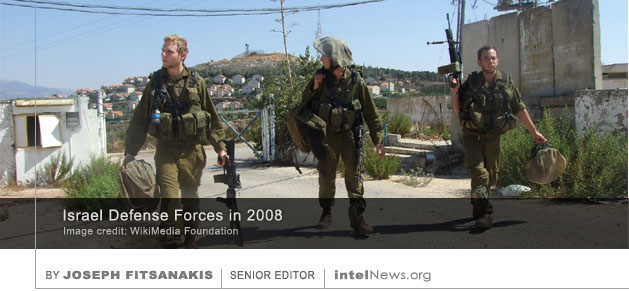
First Post HIsrael’s military intelligence agency has issued a warning to all soldiers in the Israeli armed forces to resist attempts by the United States Central Intelligence Agency (CIA) to recruit them. The existence of the highly unusual warning was revealed on Sunday by Chanel 2, one of Israel’s most popular television stations. According to the report, the communique was sent to every member of the Israel Defense Forces (IDF) by the Military Intelligence Directorate (MID). It cautioned Israeli troops to “be alert and report any unusual incidents” involving American intelligence personnel. The warning made specific reference to the CIA, saying it might be trying to recruit Israeli soldiers as informants.

The communique references a real-life case that is believed to have taken place three years ago, involving several Israeli citizens who had served in the MID. According to media reports, the Israelis, who were traveling to the US, were stopped during passport control and questioned at length by American officials. The latter, who were presumed to be CIA personnel, were alleged to have tried to persuade the Israelis to provide information about their military duties and knowledge of Israeli military affairs. But the Israelis reportedly refused to cooperate with the Americans and reported the incidents to their superiors in the Israeli military.

It is not unusual for the MID to issue warnings regarding soldiers’ use of online social media, or on topics such as confidentiality and discretion when using non-encrypted telephone networks. However, such warnings are typically only communicated to MID personnel and never mention foreign intelligence agencies by name, opting for generic language instead. It is highly unusual for such warnings to identify foreign intelligence agencies, and allied ones at that. The recent move has thus prompted intense speculation in Israel that the MID may have reacted to actual attempts by the CIA to recruit IDF personnel.

An Israeli military spokesperson told Channel 2 that the MID had indeed sent soldiers a written warning about possible recruitment attempts by the CIA. But the representative refused to discuss why the CIA was mentioned in the letter, or why the warning was issued last week.

Author: Joseph Fitsanakis | Date: 02 November 2015 | Permalink

EU parliament member loses immunity over claims he spied for Russia

European ParliamentIn a historic first, the parliament of the European Union (EU) has waived the immunity of one of its elected members over “reasonable suspicions” that he may have spied for Russia. The member of the European Parliament (MEP) is Béla Kovács, 55, who belongs to the far-right Movement for a Better Hungary. Founded in 2003, the party, known as Jobbik (movement, in Hungarian), has called for Hungary to leave the EU and instead join the Eurasian Union, an economic and political alliance led by Russia. In the 2014 parliamentary elections, Jobbik won just over 20% of the popular vote, placing third nationwide. The result was a marked difference from its performance in 2006, when it had barely received 2.2% of the vote share.

The party’s ideological proximity to Moscow, as well as its radical views on minorities and Jews, have added to its notoriety, causing many to denounce it as the EU’s most far-right political grouping. The party’s troubles grew further in September 2014, when the Hungarian public prosecutor officially requested form the European Parliament that it suspends Kovács’ immunity so that the Budapest-born politician, whose father is Russian, could be investigated for alleged ties to Russian intelligence. The EU parliament said it would consider the matter.

Meanwhile, Hungarian media published several allegations about Kovács’ alleged ties to Moscow, which, some reports suggested, date to the late 1970s. Other reports stated that Kovács’ Russian spouse, Svetlana Izstosina had been an agent of the KGB during the Cold War and that she operated as a courier for Moscow. In another bizarre twist, one report suggested that Izstosina was legally married to two other men, one of whom was a nuclear physicist working at the Lomonosov Moscow State University. Some Hungarian newspapers alleged that the government in Budapest was in possession of secret recordings of conversations between Kovács and Russian diplomats, which allegedly took place in the past six years.

An EU Parliament spokesperson told Bloomberg last week that the waiver of Kovács’ immunity did “not entail […] a judgment as to [the Hungarian MEP’s] guilt or innocence”. She added that she knew of no other cases where an MEP had been stripped of his immunity over allegations of espionage. If found guilty of spying for Moscow, Kovács could face up to eight years behind bars.

Author: Joseph Fitsanakis | Date: 19 October 2015 | Permalink

China announces arrests of Japanese citizens on espionage charges

Liaoning ChinaAuthorities in China announced last week the arrests of two Japanese citizens accused of spying for the national intelligence agency of Japan. According to a spokesman from the Chinese Ministry of Foreign Affairs, the two men were been arrested last May “on suspicion of carrying out espionage activities” for Japan’s Public Security Intelligence Agency. Administered by Japan’s Ministry of Justice, the Public Security Intelligence Agency is tasked with protecting the country’s internal security by collecting intelligence both within and without Japan. The Agency has a long history of organizing human intelligence operations in mainland China.

Following China’s announcement last week, Yoshihide Suga, Japan’s Chief Cabinet Secretary, who serves as the government’s press secretary, denied that the two men had links with Japanese intelligence. But the Tokyo-based Kyodo news agency reported on Saturday that the two men had admitted that they had links with the Public Security Intelligence Agency. Citing unnamed Chinese and Japanese diplomats, Kyodo said the two men were on a mission to collect intelligence about Chinese military facilities, as well as to spy on Chinese military activities in the border regions between China and North Korea. The news agency said that both men were civilians and did not have diplomatic credentials. One of them is believed to be a 51-year-old who travels regularly to China. He was reportedly captured in the vicinity of a military facility in China’s eastern coastal province of Zhejiang. The other man was described by Kyoto as a 55-year-old North Korean defector to Japan; he was detained in the northeast province of Liaoning (photo), near China’s border with North Korea.

Kyoto said it contacted the Public Security Intelligence Agency, but a spokesman said he was not in a position to comment on the arrest of the two alleged spies. This is the third instance of arrests of Japanese spies in China on espionage charges since 2005. In the summer of that year, Beijing expelled two Japanese nationals for allegedly stealing military secrets. Five years later, four Japanese citizens were detained in Shijiazhuang, reportedly for spying on a Chinese military base there. All were released within a year of their capture.

Author: Joseph Fitsanakis | Date: 05 October 2015 | Permalink

Russia and Estonia conduct Cold-War-style spy swap

Estonia Russia spy-swapThe Russian and Estonian intelligence services have exchanged two men accused by each country of spying for the other, in a rare public example of what is commonly referred to as a ‘spy-swap’. The exchange took place on Saturday on a bridge over the Piusa River, which forms part of the Russian-Estonian border, separating Estonia’s Polva County from Russia’s Pskov Oblast.
Russia’s Federal Security Service (FSB) said that it had handed to the Estonian government a man going by the name of Eston Kohver. Last year, Estonian officials accused Moscow of abducting Kohver, an employee of the Internal Security Service of Estonia, known as KaPo, from the vicinity of Luhamaa, a border-crossing facility in southeastern Estonia. But the Russian government said that Kohver had been captured by the FSB on Russian soil and was found to be carrying a firearm, cash and spy equipment “relating to the gathering of intelligence”.

Kohver was exchanged for Aleksei Dressen, a former Estonian KaPo officer who was arrested in February 2012 along with his wife, Viktoria Dressen, for allegedly spying for Russia. The Dressens were caught carrying classified Estonian government documents as Viktoria was attempting to board a flight to Moscow. Aleksei Dressen was sentenced to 16 years in prison, while Viktoria Dressen to six, for divulging state secrets. Russian media have since reported that Dressen had been secretly working for Russian counterintelligence since the early 1990s.

Soon after the spy- swap, KaPo Director Arnold Sinisalu told a press conference that the exchange had been agreed with the FSB following “long-term negotiations”, during which it became clear that “both sides were willing to find a suitable solution”. Kohver, sitting alongside Sinisalu, told reporters that it felt “good to be back in my homeland”.

Author: Joseph Fitsanakis | Date: 28 September 2015 | Permalink

US spied on 143-member Iran delegation to 2007 UN summit

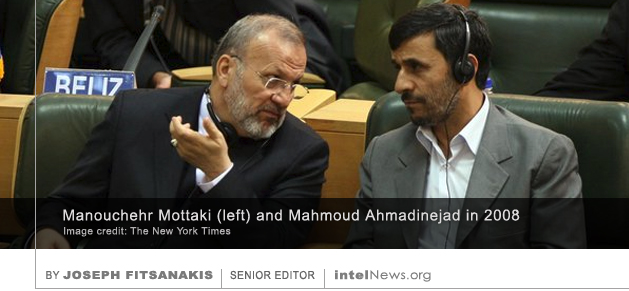
Manouchehr Mottaki and Mahmoud AhmadinejadThe United States National Security Agency spied on the Iranian president, foreign minister, and over 140 Iranian dignitaries who visited New York in 2007 to participate in the United Nations General Assembly. The allegation was aired on Wednesday by American television station NBC, which cited former intelligence officials and a top-secret report on the espionage operation. The original report was included in an October 2007 issue of SID Daily, an internal NSA newsletter published by the spy agency’s Signal Intelligence Division. The report, which is entitled “Tips for a Successful Quick Reaction Capability”, commends the espionage operation against the Iranian UN delegation as an exemplary illustration of a collaborative effort between managers, technical experts, and analysts.
The operation appears to have been directly initiated in early 2007 by the George W. Bush White House, which asked the NSA to spy on Iran’s UN delegation. The blanket permission included espionage conducted against the then Iranian President Mahmoud Ahmadinejad and Minister of Foreign Affairs Manouchehr Mottaki, who were scheduled to be in New York in September of that year to attend the 62nd session of the UN General Assembly. In response to the White House authorization, the NSA deployed a small army of technical experts and analysts to spy on the entire 143-member Iranian delegation for 19 hours a day during the summit.

The NSA teams were allegedly able to record, transcribe and analyze 2,000 conversations of various lengths per day. According to NBC, the NSA was able to intercept the personal conversations of President Ahmadinejad, a number of video conferences involving members of the Iranian delegation, as well as calls made using Skype. The latter were intercepted using a secret technology codenamed BLARNEY by NSA, while the agency also relied on bugs installed in hotel and conference rooms used by the Iranians, said NBC. The intercepted communications were subsequently examined by the NSA’s Social Network Analysis Office in an effort to map the “social networks” of the Iranian government’s senior echelons.

The Iranian government did not respond to NBC’s requests for comment. Iranian President Hassan Rouhani is scheduled to arrive in New York today to attend the 70th UN General Assembly debate.

Author: Joseph Fitsanakis | Date: 24 September 2015 | Permalink

Russia jails ex-military intelligence employee for contacting Swedish company

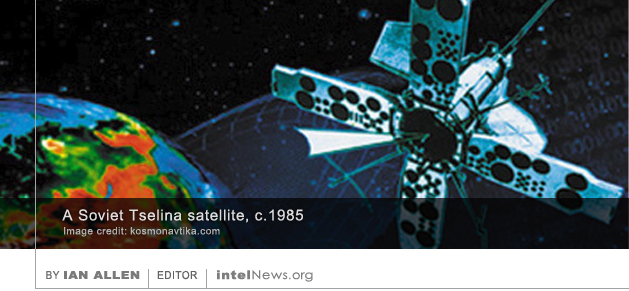
Tselina satelliteA court in Moscow has sentenced a former employee of Russia’s military intelligence agency to a lengthy prison term for seeking to work for a Swedish engineering firm. Gennady Krantsov worked for the GRU, Russia’s military intelligence agency, from 1990 to 2005. As a radio engineer, he is believed to have worked on a number of projects relating to satellite technology. The terms of his government contract reportedly forbade him from travelling outside Russia. He was also forbidden from participating in intelligence-related engineering projects for foreign governments or the private sector for a minimum of five years after leaving the GRU.

But he was arrested last year by Russia’s Federal Counterintelligence Service, known as FSK, allegedly for sending a letter to a Swedish engineering company seeking work. In 2013, when the FSK first questioned Kravtsov, it was told by the former GRU engineer that his letter to the Swedish firm contained no state secrets. Additionally, Kravtsov was not found to have received any funds from the Swedes. But the counterintelligence agency returned to arrest Kravtsov in 2014, claiming that a polygraph test he had taken showed that he had shared classified material with foreign agents. According to Russian government prosecutors, Kravtsov gave the Swedes information about Tselina-2, a military radio surveillance system designed to detect the location and activity of radio-emitting objects from space.

Kravtsov was convicted of state treason and stripped of his GRU rank of lieutenant colonel. He was sentenced on Monday to 14 years in a maximum-security penal colony. The judge said that he had violated his promise not to reveal information about his GRU-related work to foreign government officials. His lawyers, however, complained that the case had been held completely behind closed doors and that they had not been permitted to call witnesses or examine material that was central to the case.

Author: Ian Allen | Date: 22 September 2015 | Permalink

Cambridge spy’s last years in Russia are detailed in new biography

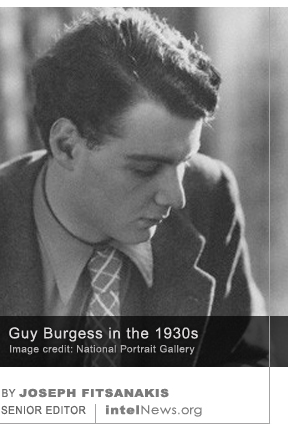
Guy BurgessThe life of Guy Burgess, one of the so-called ‘Cambridge Five’ double agents, who spied on Britain for the Soviet Union before defecting to Moscow in 1951, is detailed in a new biography of the spy, written by Andrew Lownie. Like his fellow spies Kim Philby, Donald Maclean, Anthony Blunt and John Cairncross, Burgess was recruited by the Soviets when he was a student at Cambridge University. He shook the British intelligence establishment to its very core when he defected to the USSR along with Maclean, after the two felt that they were being suspected of spying for the Soviets.
A few years after his defection, Burgess wrote to a close friend back in the UK: “I am really […] very well and things are going much better for me here than I ever expected. I’m very glad I came”. However, in his book, entitled Stalin’s Englishman: The Lives of Guy Burgess, Lownie suggests that Burgess’ life in the USSR was far from ideal. After being welcomed by the Soviets as a hero, the Cambridge University graduate was transported to the isolated Siberian city of Kuybyshev. He lived for several months in a ‘grinder’, a safe house belonging to Soviet intelligence, where he was debriefed and frequently interrogated until his Soviet handlers were convinced that has indeed a genuine defector.

It was many years later that Burgess was able to leave Kuybyshev for Moscow, under a new name, Jim Andreyevitch Eliot, which had been given to him by the KGB. Initially he lived in a dacha outside Moscow, but was moved to the city in 1955, after he and Maclean spoke publicly about their defection from Britain. He was often visited in his one-bedroom apartment by Yuri Modin, his Soviet intelligence handler back in the UK. According to Lownie, Burgess often complained to Modin about the way he was being treated by the Soviet authorities. His apartment had apparently been bugged by the KGB, and he was constantly followed each time he stepped outside.

The British defector worked for a Soviet publishing house and produced foreign-policy analyses for the Soviet Ministry of Foreign Affairs. He also produced a training manual for KGB officers about British culture and the British way of life. But he did not like living in the USSR and argued that he should be allowed to return to the UK, insisting that he could successfully defend himself if interrogated by British counterintelligence. Eventually, Burgess came to the realization that he would never return to his home country. He became depressed, telling friends that he “did not want to die in Russia”. But in the summer of 1963 he was taken to hospital, where he eventually died from acute liver failure caused by his excessive drinking.

Andrew Lownie’s Stalin’s Englishman: The Lives of Guy Burgess, is published by Hodder & Stoughton in the UK and by St Martins’ Press in the US. It is scheduled to come out in both countries on September 10.

Author: Joseph Fitsanakis | Date: 04 September 2015 | Permalink

British government releases MI5 file on little-known Cold War spy

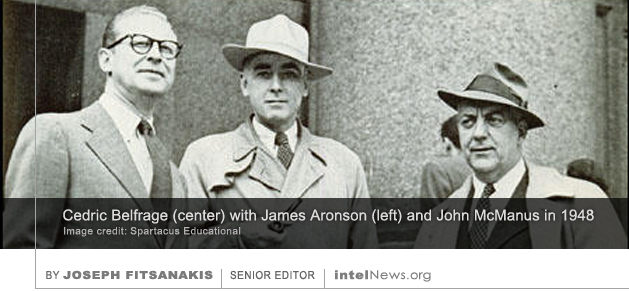
Cedric BelfrageThe British government has released a nine-volume file on an influential film critic who some believe was “one of the most important spies the Soviet Union ever had”. Cedric Belfrage was born in 1904 in London and read English Literature at Cambridge University in the 1920s. While a student at Cambridge he made a name for himself as a reviewer of motion pictures, and by the early 1930s he was known as Britain’s highest-paid film critic. Soon afterwards he moved to the American city of Los Angeles, where he became a film and theater correspondent for British tabloid newspaper The Daily Express. But a multivolume file on him compiled by the British Security Service (MI5) and released last week by the National Archives in London, confirms that Belfrage spied for Soviet intelligence under the codename BENJAMIN.

According to the file, Belfrage turned to communism after witnessing the effects of the Great Depression in the United States. After a 1936 trip to the USSR, he reached out to the Communist Party of the US, which eventually put him in touch with a number of Soviet intelligence operatives in America. In 1940, the Secret Intelligence Service (MI6) set up the British Security Coordination (BSC) in New York. It was a clandestine propaganda project aimed at turning local public opinion in favor of America’s entry into World War II. Belfrage was one of many writers and intellectuals that were recruited by the BSC to help counter the prevalent isolationist sentiment in the country. The film critic worked for MI6 until 1943, and then returned to Britain to join another wartime propaganda outfit, the Political Warfare Executive.

At war’s end, Belfrage returned to the US, only to find that he had attracted the attention of the Federal Bureau of Investigation. The FBI had discovered that the British film critic had dealings with the Communist Party in the 1930s and suspected that he may have worked for Soviet intelligence. Further investigations revealed that Belfrage had indeed conducted espionage under the guidance of Jacob Golos, a Ukrainian-born American who managed a large network of pro-Soviet spies in America in the interwar period. But when he was questioned by the FBI, Belfrage said that he had given Golos a number of British —not American— government documents under direct orders by MI6. The latter allegedly hoped that the Soviets would reciprocate the move within the context of the anti-Nazi alliance between the UK and the USSR.

Eventually, Belfrage was brought up before the House Un-American Activities Committee (HUAC) of the US Congress in 1953. The Committee was conducting public hearings aimed at unmasking suspected communist sympathizers in the American entertainment industry. But the British-born film critic refused to answer questions put to him, prompting HUAC to recommend that he should be deported from the country. The government adopted the Committee’s recommendation and deported Belfrage in 1955 for having been a member of the Communist Party under a fake name. Belfrage traveled throughout the Caribbean and Latin America before settling in Mexico, where he died in 1990, aged 86.

Interestingly, the British files reveal that MI5 decided not to prosecute Belfrage, most likely in order to avoid the embarrassment of admitting that British intelligence had employed a Soviet spy. The decision was probably not unrelated to the public scandal that followed the escape of the so-called Cambridge spies to the Soviet Union. Interestingly, Belfrage studied at Cambridge at the same time that Kim Philby (Soviet cryptonym STANLEY), Donald Duart Maclean (HOMER) and Guy Burgess (HICKS) were students there. But there is no evidence he ever collaborated with them, as he was not interested in politics at that time.

Author: Joseph Fitsanakis | Date: 24 August 2015 | Permalink

German government charges CIA spy with treason

BND GermanyA German intelligence officer, who is accused of spying for the United States Central Intelligence Agency, has been officially charged with treason by authorities in Berlin. The 32-year-old man, identified in court papers only as “Markus R.”, worked as a clerk at the Bundesnachrichtendienst, or BND, Germany’s external intelligence agency. He was arrested in July 2014 on suspicion of having spied for the CIA for approximately two years. German prosecutors say they have evidence that shows Markus R. supplied the American spy agency with around 200 classified German government documents in exchange for around €25,000 —approximately $30,000.

Germany’s Office of the Federal Prosecutor said on Thursday that Markus R. made contact with the CIA in 2008 and offered his services to the American spy agency. He began working for the United States as a double agent soon afterwards. His arrest last year added to the already tense relations between Berlin and Washington. The latter had been damaged a year earlier, when it was revealed that the US National Security Agency, America’s signals intelligence organization, had bugged the personal cell phone of German Chancellor Angela Merkel. The revelation, which was made public by Edward Snowden, an American defector to Russia who had previously worked for the NSA, showed that Chancellor Merkel had been targeted as part of a wider US spy operation against Germany.

The revelations sparked the establishment in Germany of a nine-member parliamentary committee that was tasked with evaluating Snowden’s revelations and proposing Germany’s response. It appears that Markus R. tried to spy on the activities of the committee on behalf of his American handlers. Soon after Markus R.’s arrest was made public, the German government ordered the immediate removal from Germany of the CIA chief of station –who was essentially the top American intelligence official in the country. Berlin also instructed its intelligence agencies to limit their cooperation with their American counterparts “to the bare essentials” until further notice.

It is worth noting that, before his arrest last year, Markus R. is also said to have approached Russian intelligence with an offer to work for them. He is thus believed to have supplied Moscow with classified German government documents as well.

Author: Joseph Fitsanakis | Date: 21 August 2015 | Permalink

Israel charges Swedish citizen with spying for Hezbollah

HezbollahIsraeli authorities have charged a Swedish citizen with working as an intelligence officer for the Lebanese militant group Hezbollah. It is believed that Hassan Khalil Hizran, 55, was born to Palestinian refugees in Lebanon, from where he emigrated to Sweden many years ago. But he was arrested in Tel Aviv on July 21 while disembarking a flight at Israel’s Ben Gurion International Airport and was taken into custody by the Shin Bet, Israel’s counterterrorism and counterintelligence agency. A spokesman for the agency said Hizran had confessed during interrogation to being an intelligence operative for Hezbollah, a primarily Shiite organization that controls much of Lebanon’s territory. He is said to have told his interrogators that he was recruited by the group in the summer of 2009 while visiting Lebanon from Sweden with his wife and children.

Shin Bet said that Hizran had been asked by his Hezbollah handlers to gather intelligence relating to Israeli military installations and that he visited Israel several times in order to fulfil his missions. He would then return to Lebanon after visiting a third country in order to provide his Hezbollah handlers with the information he had collected while in Israel. Sources in Tel Aviv said Hizran visited Lebanon at least twice since his 2009 recruitment, specifically in 2011 and 2013. He returned to Sweden with monetary sums given to him by Hezbollah as payment for his services, which amounted to several thousand dollars, according to Shin Bet. The Israeli security agency said the Swede was helping Hezbollah identify military targets for a future war, which it interpreted as “proof that Hezbollah is preparing for the net war with Israel by compiling a target bank”.

According to the Israelis, Hizran had also been tasked by Hezbollah with recruiting Arabs with ties to Israeli Jews, but that he was either unable or unwilling to do so. However, on Sunday he was charged with three criminal counts including contacting an agent of a foreign government and communicating sensitive information. The Swedish man’s Israeli lawyer, Leah Tsemel, denied that her client was guilty of espionage and claimed that he had “refused repeated requests to inflict harm on the national security of Israel”. The Swedish and Lebanese governments have not commented on Hizran’s arrest.

Author: Ian Allen | Date: 10 August 2015 | Permalink

Will Israeli spy Pollard receive secret spy wages after US lets him go?

Jonathan PollardLawyers for Jonathan Pollard, an American with Israeli citizenship who spied on the United States for Israel in the 1980s, confirmed on Tuesday that he will be released in November, by which time he will have served 30 years of a life sentence. The news was welcomed by Pollard’s supporters in Israel, who consider him a hero, as well as by pro-Israel Americans, who have been pressuring the US government to release him. But Newsweek’s veteran intelligence correspondent Jeff Stein responded to the news of Pollard’s release by posing an interesting question: when Pollard is released, will he have access to close to $1 million in spy wages that his Israeli handlers are reputed to have deposited for him in a Swiss bank account?
Stein was referring to a practice that is common among intelligence agencies, namely to deposit cash in offshore bank accounts as a way of compensating their assets. The latter can gradually access those funds during trips abroad, usually after their retirement, long after having ceased their espionage activities. If the asset is arrested or perishes, the funds are usually passed on to the asset’s surviving relatives. This method protects the asset from the prying eyes of counterintelligence agencies in the asset’s home country, and sends a message to future recruits that assets and their families will be taken care of by their handlers.

Following Pollard’s arrest in 1985, US government prosecutors repeatedly rejected the view, put forward by Pollard’s legal team, that the former US Navy analyst was a romantic who had spied on the US for Israel because he wanted to assist a small country surrounded by enemies. They told the court that Pollard had also spied for South Africa and had tried to spy for Australia, before finally settling for working for Israel. Far from being a romantic, they said, Pollard was a calculated businessman, who sought financial compensation for his services to the Jewish state. Indeed, according to the Naval Criminal Investigative Service and the Federal Bureau of Investigation, Pollard had pocketed at least $50,000 from his Israeli handers by the time of his arrest, in addition to receiving several expensive items as gifts. The spy had also been promised that Israel would deposit $30,000 every year in a Swiss bank account, which Pollard could access after his retirement.

In his article published Tuesday, Stein wonders whether Israel has continued to deposit $30,000 a year in Pollard’s reputed Swiss bank account, which is a standard practice for intelligence agencies. If the answer is yes, then the amount available today would be in the neighborhood of $1 million. If Pollard moves to Israel come November, as many believe he will, will he then have access to the money he earned by spying on the US government as an unregistered agent of a foreign power? And if so, how should this be expected to affect the already rocky relations between Washington and Tel Aviv?

Stein said he spoke to Pollard’s New York lawyer, Eliot Lauer, who called the rumors of a secret Swiss bank account “poppycock” and added that Pollard had been “secured employment and housing […] in the New York area”. Additionally, there are some who speculate that Pollard may not be allowed to leave the US as part of the conditions of his parole. At this stage, however, nobody knows for sure. Stein contacted the US Parole Commission, NCIS and the Central Intelligence Agency, but all declined comment.

Author: Joseph Fitsanakis | Date: 29 July 2015 | Permalink: https://intelnews.org/2015/07/29/01-1745/

Key testimony from Rosenberg spy case released after 64 years

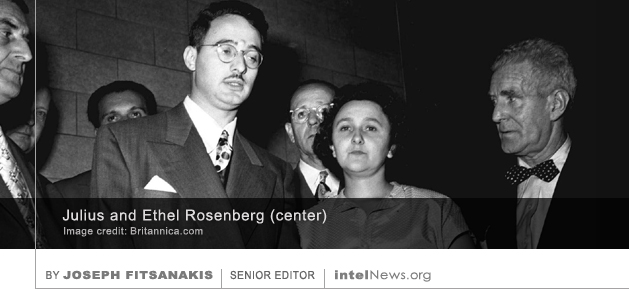
Julius and Ethel RosenbergThe final piece of sealed testimony in one of the most important espionage cases of the Cold War has been released, 64 years after it was given. The case led to the execution in 1953 of Julius and Ethel Rosenberg, an American couple who were convicted of spying for the Soviet Union. The Rosenbergs were arrested in 1950 for being members of a larger Soviet-handled spy ring, which included Ethel’s brother, David Greenglass. Greenglass agreed to testify for the US government in order to save his life, as well as the life of his wife, Ruth, who was also involved in the spy ring. He subsequently fingered Julius Rosenberg as a courier and recruiter for the Soviets, and Ethel as the person who retyped the content of classified documents before they were surrendered to their handlers. That piece of testimony from Greenglass the primary evidence used to convict and execute the Rosenbergs.


However, although historians are confident that Julius Rosenberg was indeed an active member of the Soviet spy ring, there are doubts about Ethel. Many suggest that her involvement with her husband’s espionage activities was fragmentary at best, and that she refused to cooperate with the Federal Bureau of Investigation in an ill-judged attempt to protect her husband. The argument goes that Ethel was put to death as a warning to Moscow, as well as to intimidate other American spies, rather than on the basis of actual evidence of her involvement in espionage. Many years after the Rosenbergs’ execution, Greenglass claimed he had lied about Ethel’s role in the spy affair in order to protect his wife, who was the actual typist of the espionage ring.

The debate over Ethel Rosenberg’s fate was rekindled by US District Judge Alvin Hellerstein’s decision in May of this year to unseal Greenglass’ testimony. The documents could not be made public while Greenglass was alive, because he objected to their release. But he died last year in a nursing home in New York, so Judge Hellerstein said his testimony could now legally be made available to the public as a “critical piece of an important moment in our nation’s history”.

Greenglass’ grand jury testimony, made under oath in 1950, six months before he implicated his sister in nuclear espionage for the Soviets, was posted online on Wednesday by George Washington University’s National Security Archive. Speaking at a press conference about the release, several experts said the new information directly contradicts Greenglass’ later testimony in which he accused his sister of being a spy. In the press conference of his grand jury testimony, Greenglass emphatically denies that Ethel had a role in the atom spy ring. When asked whether she was involved in espionage, Greenglass responds: “my sister has never spoken to me about this subject”. Later on he recounts how Julius tried to convince him to prolong his US Army service in order to continue to have access to classified information. When asked whether Ethel also tried to convince him to continue to spy for the Soviets, he responds: “I said before, and say it again, honestly, this is a fact: I never spoke to my sister about this at all”.

National Security Archive Director Tom Blanton said at the press conference that the evidence made it clear that Julius Rosenberg led an active spy ring; but Ethel was not an active spy, he said, even though witting.

Author: Joseph Fitsanakis | Date: 17 July 2015 | Permalink: https://intelnews.org/2015/07/17/01-1737/

Israel denies using computer virus to spy on Iran nuclear deal

Duqu 2.0The Israeli government rejected reports yesterday that its spy agencies were behind a virus found on the computers of three European hotels, which hosted American and other diplomats during secret negotiations on Iran’s nuclear program. Cybersecurity firm Kaspersky Lab said on Wednesday that it first discovered the malware, which it dubbed “Duqu 2.0”, in its own systems. The Moscow-based firm said the sophisticated and highly aggressive virus had been designed to spy on its internal research-related processes. Once they detected the malicious software in their own systems, Kaspersky technicians set out to map Duqu’s other targets. They found that the virus had infected computers in several Western countries, in the Middle East, as well as in Asia. According to Kaspersky, the malware was also used in a cyberattack in 2011 that resembled Stuxnet, the elaborate virus that was found to have sabotaged parts of Iran’s nuclear program in 2010.

However, Kaspersky said that among the more recent targets of the virus were “three luxury European hotels”, which appear to have been carefully selected among the thousands of prestigious hotels in Europe. The three appear to have only one thing in common: all had been patronized by diplomats engaged in the ongoing secret negotiations with Iran over the Islamic Republic’s nuclear program. Kaspersky was referring to the so-called P5+1 nations, namely the five permanent members of the United Nations Security Council plus Germany, who lead ‘the Geneva pact’. Israel has condemned the negotiations and has repeatedly expressed anger at reports that the Geneva pact is about to strike an agreement with Tehran over its nuclear program.

However, Israel’s deputy foreign minister flatly rejected Kaspersky’s allegations on Wednesday, calling them “pure nonsense”. Speaking on Israel Radio, Eli Ben-Dahan said Israel had “many far more effective ways” of gathering foreign intelligence and that it did not need to resort to computer hacking in order to meet its intelligence quotas. Israeli government spokespeople refused to comment on the allegations when asked late Wednesday.

Author: Joseph Fitsanakis | Date: 11 June 2015 | Permalink: https://intelnews.org/2015/06/11/01-1713/

Judge orders release of key testimony from Rosenberg spy case

Julius and Ethel RosenbergA United States district judge has ordered the release of the last major piece of sealed evidence in one of the most important espionage cases of the Cold War. The case led to the execution in 1953 of an American couple, Julius and Ethel Rosenberg, who were convicted of conspiring to spy for the Soviet Union. The Rosenbergs were arrested in 1950 for being members of a larger Soviet-handled spy ring, which included Ethel’s brother, David Greenglass. Greenglass later told a US court that he firmly believed the USSR should have access to nuclear technology and actively tried to give Moscow information on the Manhattan Project. Greenglass agreed to testify for the US government in order to save his life, as well as the life of his wife, Ruth, who was also involved in the spy ring. He subsequently fingered Julius Rosenberg as a courier and recruiter for the Soviets, and Ethel as the person who retyped the content of classified documents before they were surrendered to their handlers. This piece of testimony from Greenglass was used as the primary evidence to convict and execute the Rosenbergs.

However, although historians are confident that Julius Rosenberg was indeed an active member of the Soviet spy ring, there are doubts about Ethel. Many suggest that her involvement with her husband’s espionage activities was fragmentary at best, and that she refused to cooperate with the Federal Bureau of Investigation in an ill-judged attempt to protect her husband. The argument goes that Ethel was put to death as a warning to Moscow, as well as to intimidate other American spies, rather than on the basis of actual evidence of her involvement in espionage. Many years after the Rosenbergs’ execution, Greenglass claimed he had lied about Ethel’s role in the spy affair in order to protect his wife, who was the actual typist of the espionage ring.

The debate over Ethel Rosenberg’s fate will undoubtedly by rekindled by US District Judge Alvin Hellerstein’s decision last week to unseal Greenglass’ testimony. The documents could not be made public while Greenglass was alive, because he objected to their release. But he died last year in a nursing home in New York, so his testimony can now legally be made available to the public. In making his decision known, Judge Hellerstein said Greenglass’ testimony was a “critical piece of an important moment in our nation’s history”. The United States government is legally permitted to block the release of the documents should it decide to do so. But when a White House spokesperson was asked about the subject by the Associated Press, she decline to comment.

Author: Joseph Fitsanakis | Date: 26 May 2015 | Permalink: https://intelnews.org/2015/05/26/01-1703/