US government wants to ban Chinese-made smart cars over espionage, sabotage fears
September 23, 2024 3 Comments
 THE UNITED STATES DEPARTMENT of Commerce is proposing new regulations that seek to ban the sale of Chinese-made cars in the United States, over concerns that they could be used for espionage or sabotage. Several reports on the proposal noted that it was hurriedly introduced last week as a “national security action,” rather than a trade-related dispute between the US and China.
American government officials said that the new proposals come out of lengthy investigations into the software and technical specifications of Chinese cars. The investigations raised concern about “[c]ertain technologies originating from the [People’s Republic of China] or Russia” that are often found in Chinese-made cars. Such technologies include vehicle cameras, microphones, tracking devices, and several software packages that connect the cars to the world wide web.
Washington is concerned that these devices, and the software that runs them, could be used to collect the personal data of users, or to facilitate espionage activities on a large scale. Concerns have also been raised by US officials that Chinese-made smart cars could be remotely manipulated and used for sabotage during wartime. According to the US Department of Commerce, a central source could potentially “take control of all [the Chinese-made] vehicles operating in the US all at the same time, causing crashes, block[ed] roads, etc.”
When asked by reporters to justify the proposed regulations, Jake Sullivan, White House national security adviser, replied that the US had “already seen ample evidence of the [People’s Republic of China] pre-positioning malware on our critical infrastructure for the purpose of disruption and sabotage. And with potentially millions of vehicles on the road, each with 10- to 15-year lifespans, the risk of disruption and sabotage increases dramatically”.
► Author: Ian Allen | Date: 23 September 2024 | Permalink
 A FORMER INTELLIGENCE ANALYST for the Central Intelligence Agency (CIA), who is married to a high-profile columnist for The Washington Post, remains under arrest for allegedly spying for South Korea. According to an
  SEVERAL CASES OF CHINESE espionage have been
  AUTHORITIES IN GERMANY HAVE arrested a sixth person in less than a month, in connection with three separate cases of espionage orchestrated by Russian or Chinese intelligence. Last Tuesday, police in the east German city of Dresden arrested an assistant to a leading politician of the far-right Alternative für Deutschland party (AfD). The assistant, who is a dual German-Chinese citizen, is accused of spying for Chinese intelligence, while the far-right politician who employed him is also being investigated, according to reports.
 ON GOOD FRIDAY, MARCH 29, Egisto Ott, a former member of Austria’s now-dissolved domestic intelligence agency, the Federal Office for the Protection of the Constitution and Counterterrorism (BVT), was arrested in his house in Carinthia, Austria’s southernmost state. Ott had frequently been at the center of media attention in the past year, in connection with the network surrounding the fugitive
  These included contacts in friendly foreign police services, whom Ott knew from his time as a liaison officer in Italy and Turkey. According to Gridling, these contacts were unaware that Ott had been removed from the BVT under suspicion of being unreliable and potentially even working for Russia. They therefore continued to help him when asked. Ott allegedly deceived his contacts by claiming that he needed information on cases relating to different kinds of extremism. As it turned out, according to the leaked arrest warrant, several of the individuals referred to by Ott as “suspects” in terrorism investigations were in fact Russian dissidents or intelligence defectors who were living as protected persons in Austria and elsewhere outside Russia.
 AUTHORITIES IN INDIA HAVE arrested a security employee at the Indian High Commission in Russia, accusing him of spying for Pakistani intelligence. The embassy of India in Moscow is one of its largest in the world and is viewed as critical to New Delhi’s strategic relations with Russia. Employees that staff the Moscow embassy are highly vetted and typically represent the cream of the crop of India’s Ministry of External Affairs. It follows that news of the arrest of a Moscow embassy security employee on espionage charges must have raised eyebrows in India.
 IN AN UNPRECEDENTED AND potentially highly consequential decision, a judge has barred a Chinese PhD student from entering Canada over concerns he might be pressured to spy by the government of China. The case could have “ripple effects” on universities across Canada and possibly even all of North America,
  GERMANY HAS CHARGED TWO men, among them a German intelligence officer, with spying for Russia, in a case that has shocked German public opinion and
 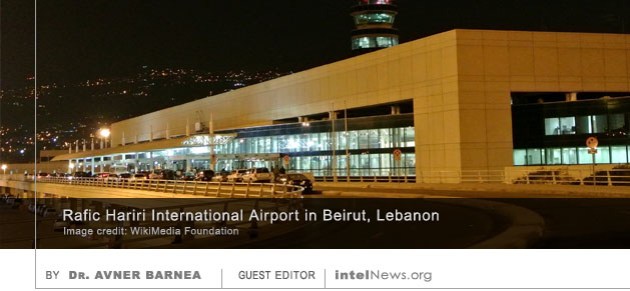 LAST WEEK, LEBANON’S GENERAL Security Directorate
  ONE OF GERMANY’S LEADING universities has suspended researchers funded by the Chinese government, citing concerns about academic freedom and industrial espionage. The Friedrich Alexander University of Erlangen-Nuremberg (FAU) announced the suspension of Chinese government-funded researchers in June of this year. In announcing the measure, the university stated that the move was designed to protect academic freedom and freedom of expression among its faculty and staff. Earlier this week, however, German media reported the contents of an internal FAU email, which expressed concerns that the Chinese state could be utilizing government-funded researches as spies.
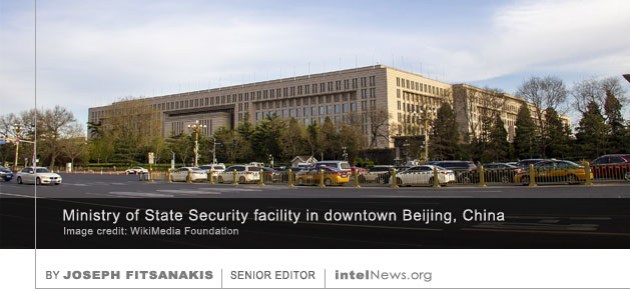
 FOR THE SECOND TIME in 10 days, the government of China has announced the arrest of a Chinese government employee on suspicion of spying for the United States Central Intelligence Agency (CIA). In a statement issued on Monday, China’s civilian intelligence agency, the Ministry of State Security (MSS), said it had launched an investigation into an official of a government ministry, who was allegedly caught conducting espionage on behalf of the CIA.
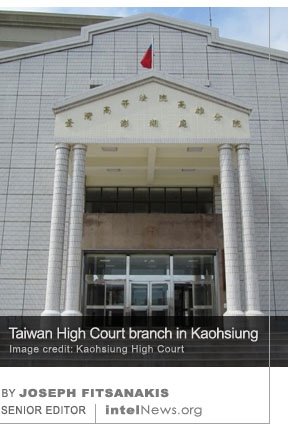 A SEVENTH PERSON HAS been detained in Taiwan as a result of a broadening investigation into a Chinese spy ring that allegedly provided Beijing with sensitive military intelligence. The existence of the investigation was
 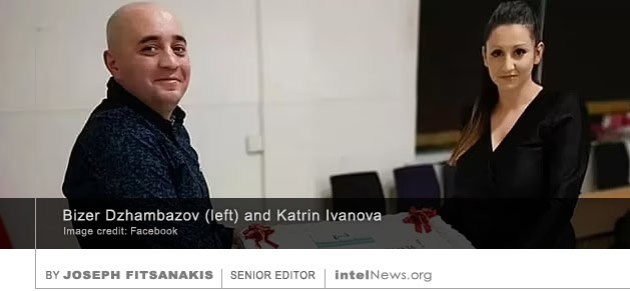 AUTHORITIES IN BRITAIN HAVE charged three Bulgarian nationals with spying for Russia, as part of “a major national security investigation” that led to at least five arrests as early as last February. Two of the Bulgarians appear to be legally married. They have been identified as Bizer Dzhambazov, 41, and Katrin Ivanova, 31, who live in Harrow, a northwestern borrow of Greater London. The third Bulgarian, Orlin Roussev, 45, was arrested in Great Yarmouth, a seaside town in the east coast identity dof England. None of the suspect appears to have a formal diplomatic connection to either Bulgaria or Russia.






 intelNews.org
Israeli couple who spied for Iran made ample use of digital applications
November 11, 2024 by intelNews 3 Comments
The case demonstrates how software that is easily accessible on the Internet makes it possible to encrypt information communicated between a handler and an agent, as well as how money is transferred to the agent. The official indictment reveals details about the couple’s modus operandi, including the identity of the particular software the spies used to communicate with their Iranian handler.
One of the applications the couple used is Zangi, which facilitates the exchange of encrypted instant messages. According to the company’s website, Zangi offers voice and video calling, text messaging, and file transfer services “without registration and without data collection”. In fact, according to Zangi, the data is saved on the user’s device only. In addition to using the Zangi application, the couple also appear to have used the Zolotaya Korona money-transfer platform. The couple allegedly used the platform in order to receive payments by their Iranian handlers, and to transfer funds to other parties involved in Iranian-led espionage activities inside Israel.
Another application allegedly used by the couple is Ecos Dos, a digital wallet for storing and transferring digital currencies. Ecos Dos is a software wallet that can be installed on a computer or mobile phone. It supports a wide variety of crypto-currencies and is used to store and transfer cryptocurrencies. It is known for its simplicity of use and friendly interface. It is popular among users who wish to maintain anonymity when transacting in digital currencies. It does not require identifying a user’s details when operating, so anyone can create an account and receive funds anonymously.
The suspects are also believed to have used a software called Encryptor in order to encrypt information. This software allows files and folders to be encrypted so that only those who have the encryption key can open them. The couple allegedly used Encryptor to encrypt the information they collected before passing it on to their Iranian handlers, thus making it difficult for Israeli authorities to decipher the information.
The use of these applications attests to the sophistication of the Iranian spy network that was recently busted in Israel, and its efforts to hide its activities inside the Jewish state. The recent indictment against the couple details a collection of serious security offenses, including aiding the enemy in war and providing information to the enemy to harm the security of the state. Iran is clearly stepping up its efforts to recruit Israeli citizens for espionage and terrorist activities.
► Author: Avner Barnea | Date: 11 November 2024 | Permalink
Dr. Avner Barnea is research fellow at the National Security Studies Center of the University of Haifa in Israel. He served as a senior officer in the Israel Security Agency (ISA). He is the author of We Never Expected That: A Comparative Study of Failures in National and Business Intelligence (Lexington Books, 2021).
Filed under Expert news and commentary on intelligence, espionage, spies and spying Tagged with encryption, espionage, Iran, Israel, News