News you may have missed #0141

Bookmark and Share

News you may have missed #0139

  • Pakistan tells US diplomat to be quiet. Perturbed by the recent remarks of US Deputy Chief of Mission in Islamabad, Gerald Feierstein, that top al-Qaeda and Taliban leaders are presently hiding in Quetta, Pakistan has summoned the US diplomat and demanded that he stops discussing intelligence issues in media. The move follows a closed-door meeting last week between the director of Pakistan’s Inter-Services Intelligence (ISI), Ahmed Shuja Pasha, and CIA director Leon Panetta.
  • Analysis: HUMINT worries al-Qaeda more than drone assassinations. The CIA-operated drone strikes in Afghanistan and Pakistan get all the headlines. But what’s really worrying al Qaeda are the agents in their midst, says Adam Rawnsley of Wired magazine’s Danger Room blog.
  • Chinese spymaster complains about US news leak. It has emerged that Major General Yang Hui, China’s most senior military intelligence official, recently made a secret visit to the US and complained to the Pentagon over the US press leak on the Chinese submarine that secretly shadowed the USS Kitty Hawk aircraft carrier in 2006. He said senior Chinese leaders suspect the Pentagon deliberately disclosed the encounter as part of an effort to send a “tough” message to China’s military.


Bookmark and Share

Indian government tells telecoms to avoid buying Chinese hardware

Huawei logo

Huawei logo

By IAN ALLEN | intelNews.org |
The Indian government has asked the country’s telecommunications companies to “refrain from buying Chinese telecommunications equipment”, because they may be used by Beijing to spy on India. The request was reportedly delivered to Indian telecommunications industry representatives by officials from India’s Department of Telecommunications, in a closed-door meeting earlier this week. Indian media report that the Department’s request has no legal backing, but is simply a call for Indian telecommunications providers to “self-regulate”. But the government is said to be working on official guidelines to restrict the domestic use of telecommunications hardware and software originating from countries considered “unfriendly” to India, including Pakistan, China and Egypt. Some industry observers have expressed fears that the pending restrictions will severely hinder the growth of India’s rapidly rising telecommunications sector. Read more of this post

Iran has as many as 40,000 spies in Arab world, says defector

Al Arabiya logo

Al Arabiya logo

By IAN ALLEN | intelNews.org |
An alleged former Iranian spy, who defected several years ago, claims that the Islamic Republic has “as many as 40,000” covert operatives in the Persian Gulf. The alleged defector spoke anonymously to al-Arabiya, a Saudi-owned pan-Arabic television network based in the United Arab Emirates. He told his interviewer that the activities of the undercover operatives are coordinated by Iran’s Islamic Revolutionary Guard Corps. Among other revelations, the unidentified defector said that Iranian spy cells tend to work in groups of five and operate independently, usually unaware of the operations or even existence of other nearby cells. Read more of this post

News you may have missed #0133

  • Book examines Central Asian espionage in WWI. On Secret Service East of Constantinople, by Peter Hopkirk (John Murray Publishers), examines the role of German intelligence services in Kaiser Wilhelm’s attempt to gain influence in the Ottoman Empire, the Caucasus, Persia, Afghanistan and India. A very interesting, under-researched aspect of World War I.
  • CIA intercepted communication between Zazi and al-Qaeda. A local TV station in Denver, Colorado, quotes “intelligence officials familiar with the investigation” of Najibullah Zazi, as saying that the CIA alerted US federal agencies after intercepting a conversation between Zazi and a senior al-Qaida operative. No word yet about this from the FBI, which is supposed to handle domestic terrorism cases.
  • US defense secretary hints at more secret nuke sites in Iran. Speaking alongside Secretary of State Hillary Clinton last night at a CNN/George Washington University forum, Robert Gates dropped what seemed to be a big hint that the United States knows much more about the Iranian nuclear program than the Iranians might think.

Bookmark and Share

Israel diplomats angry at ex-Mossad man’s ambassadorial appointment

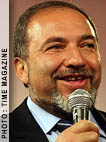
Avigdor Lieberman

Avigdor Lieberman

By JOSEPH FITSANAKIS | intelNews.org |
Israel’s hardline foreign minister has reportedly angered several Israeli diplomats after announcing that a former Mossad official will be Israel’s ambassador to Turkmenistan. Earlier this week, foreign minister Avigdor Lieberman announced the pending appointment of Reuben Dinal as Israel’s first-ever ambassador to the central Asian nation. Intelligence observers probably remember that Dinal headed the Mossad’s bureau in Russia in the early 1990s, until he was expelled by Moscow in 1996 for allegedly engaging in “undeclared intelligence activities”. Since Turkmenistan’s independence from the Soviet Union, Israel has regarded the central Asian nation as particularly sensitive, not only because of its wealth in energy resources and the predominantly Muslim faith of its population, but also because it borders the Islamic Republic of Iran. Read more of this post

News you may have missed #0132

  • Emirates to deport Syrian ex-spy and witness in Hariri assassination probe. A Syrian former spy was on Monday sentenced to six months in jail and deportation for entering the United Arab Emirates on a forged Czech passport. Interestingly, Mohammed Zuhair Siddiq, was a prosecution witness in the inquiry into the assassination of Lebanon’s ex-premier Rafiq Hariri. In 2005, Siddiq claimed that Lebanon’s former pro-Syrian president, Emile Lahoud, and Syrian President Bashar al-Assad, gave the order to kill anti-Syrian Hariri. It is not clear to which country Siddiq will be deported.
  • US national security advisor insists Iran cannot currently build the bomb. US National Security Advisor General James Jones has rejected claims by The New York Times that Iraq has enough information to design and build a functional nuclear bomb. Jones also stood by the conclusions of the 2007 US National Intelligence Estimate, which said Iran’s nuclear arms program is inactive.
  • Book claims CIA-linked network killed anti-drugs campaigner. A new book by Australian researcher John Jiggens claims that a CIA-linked drug smuggling network was responsible for the 1977 murder of Australian anti-drugs campaigner Donald Mackay.

Bookmark and Share

News you may have missed #0130

  • One in three votes for Karzai was fraudulent, says US diplomat. Hamid Karzai was fraudulently re-elected to Afghanistan’s presidency, according to Peter Galbraith, a US diplomat who was sacked last week from the UN mission in Afghanistan. Galbraith also warned that Karzai, who was handpicked by the US to lead Afghanistan following the US invasion, and whose brother is probably a CIA informant, is not credible with many Afghans following the election fiasco.
  • US lobbyist for Rep. of Georgia says Russian agents tried to kill him. Paul Joyal, former director of security for the US Senate Intelligence Committee, and a paid lobbyist in the US for the country of Georgia, insists that agents of the Russian government tried to kill him two years ago outside his Washington, DC, home.
  • Ex-CIA agent says Indian spies operating in Afghanistan. Milt Bearden, former CIA station chief in Pakistan, has told the US Senate Foreign Relations Committee that Indian intelligence operatives were active in Afghanistan, and that “the concerns of Pakistan’s Army are legitimate in this regard”. His words appear to echo complaints expressed last June by Pakistani security officials that Indian intelligence services are helping pro-Taliban warlords fight the Pakistani army in the Afghan borderlands. However, the Pakistanis also said that Israel supplies tribal warlords “with modern technology”, including radio equipment.

Bookmark and Share

Westerners arrested for “spying” in Congo had Kenyan links

Joshua French

Joshua French

By JOSEPH FITSANAKIS | intelNews.org |
The bizarre case of two Norwegian citizens arrested in the Democratic Republic of the Congo (DRC) last May on spying charges is getting ever more complex. Tjostolv Moland, 28, and Joshua French, 27 (photo), were arrested in Kisangani, DRC, after their Congolese driver was found murdered with a bullet wound in his head. Prosecutors also accuse the two Norwegians of trying to kill a murder witness on orders of the Norwegian government, which has denied any connection with the two prisoners. Now, according to an investigation by Norway’s TV2 channel, Moland and French are said to have had a formal contract with the government of Kenya to train a 120-member elite security unit responsible for protecting VIPs in the country. Read more of this post

News you may have missed #0128

  • US government appeals judge’s order in Cuban Five spy case. US government officials are contending a judge’s order because they say it would be detrimental to US national security. The order requires the US government to turn over any national security damage assessments in the Cuban Five case. Washington accuses the Five of spying on the US for Cuba. Three of the five are to be given new sentences on October 13 after an appeals court ruled that the initial sentences they received (ranging from 19 years to life) were too long.
  • Indian spies want access to missed calls. Indian security agencies have told the country’s Department of Telecommunications that they need access to missed calls because “anti-social elements” may be using the system to communicate without actually making a call. Last month, India’s Intelligence Bureau asked for all VOIP (internet-based) calls in the country to be blocked until it figures out a mechanism to track them. It also said it wants access to the content of all mobile phone calls in the country.
  • New book investigates Stasi’s scientific espionage. Documents from the vaults of HVA (Hauptverwaltung Aufklärung), the foreign department of the Stasi, the East German Ministry for State Security, which were purchased by the CIA from a German informant in 1992, were made available in 2005 to Kristie Macrakis professor of history at the Georgia Institute of Technology in Atlanta. Her book, Seduced by Secrets: Inside the Stasi’s Spy-Tech World, offers a rare look into the Stasi’s secret technical methods and sources. Macrakis’s analysis of the CIA material reportedly reveals that about 40% of all HVA sources planted in West German companies, research institutions and universities were stealing scientific and technical secrets.

Bookmark and Share

News you may have missed #0127

  • Is China using Nepal as a base to spy on India? India’s Research and Analysis Wing (RAW) has accused Beijing of using the so-called Nepal-China study centers in Nepal to spy on India. The centers, which are located all along the Indo-Nepal border, are being used to clandestinely gather information on Indian activities, says RAW. It also rumored that RAW is monitoring around 30 Chinese firms which have set up base in Nepal and may be involved in spying on India.
  • Italian lawyers seek jail for CIA agents. Public prosecutors in Italy have urged a court in Milan to jail 26 Americans for the kidnapping of a terrorism suspect in a 2003 CIA operation on Italian soil. They also want a 13 year prison sentence for the former head of Italy’s secret service, Nicolo Pollari. Last week the US government moved for the first time to officially prevent Italian authorities from prosecuting American citizens involved in the CIA operation.
  • CIA director meets Pakistani spy chief. The director of Pakistan’s Inter-Services Intelligence (ISI) Ahmed Shuja Pasha, has met with CIA director Leon Panetta in Washington. Last week, Lieutenant General Pasha yelled at a US journalist for daring to utter the CIA’s allegations that the ISI is withholding crucial intelligence information on al-Qaeda and the Taliban.

Bookmark and Share

News you may have missed #0124

  • Top Russian spy indicted in sex trafficking case. One of thirteen people indicted on Tuesday in an international sex trafficking case is Dmitry Strykanov, a senior intelligence officer with the Russian Military Intelligence Directorate. Immense corruption still plagues Russian intelligence.
  • Colombian intelligence officer detained in Venezuela. An agent of Colombia’s scandal-prone DAS security agency was detained at a hotel in Maracaibo, Venezuela. The agent, Julio Enrique Tocora Parra, says he was invited to Venezuela by the country’s SAIME immigration agency. A classic case of luring?
  • Spain uncovers double agent’s Russian handler. Spain’s National IntelligenceCenter (CNI) says Petr Melnikov, political attaché at the Russian Embassy in Madrid, facilitated the transfer of Spanish classified documents to Russian intelligence. The documents were allegedly supplied between 2001 and 2004 by Roberto Flórez García former CNI agent, who was arrested by Spanish counterintelligence agents in Tenerife in July of 2007.

Bookmark and Share

News you may have missed #0123

  • Get ready for body cavity airport searches! Security officials are concerned over a tactic newly employed by al Qaeda, whereby suicide bombers store explosives inside their bodies to avoid detection.
  • Did the US do a deal with Russia on Iran? Two weeks ago, Russian President Dmitry Medvedev hinted that Russia could back tougher sanctions against Iran’s nuclear energy program. Does this signify a deal with Washington, namely US scrapping its missile shield program if Moscow would back efforts to impose tougher sanctions against Iran?
  • Lebanese mayor accused of spying for Israel. Lebanese authorities say Ziad Homsi, mayor of the city of Saadnayel, was recruited by Israeli intelligence in Beijing, China. Lebanon’s immense counterintelligence operation is widening by the hour.

Bookmark and Share

US State Dept. third highest official was espionage suspect, says ex-FBI agent

Marc Grossman

Marc Grossman

By IAN ALLEN | intelNews.org |
Marc Grossman, Under Secretary of State during the Bush Administration, was suspect in a lengthy counterespionage probe by the FBI, according to a former senior Bureau agent. John M. Cole, an 18-year FBI veteran who worked for the Counterintelligence Division of the Bureau’s National Security Branch, said the investigation into Grossman centered on activities by Turkish and Israeli intelligence in the United States. Cole was speaking to former CIA agent Philip Giraldi, currently of The American Conservative magazine, a paleoconservative publication, which was one of a handful of US media outlets that gave column space to recent revelations of Turkish intelligence activities by FBI whistleblower Sibel Edmonds. Edmonds, a translator for the FBI, spent seven years trying to get a US court to hear her allegations that Turkish intelligence agents penetrated her unit, the State Department, the Pentagon and Congress. Read more of this post

News you may have missed #0122

  • Canada authorities push for Internet spy bill. The push for new Internet surveillance capabilities in Canada –dubbed the “lawful access” initiative– dates back to 1999, when government officials began crafting proposals to institute new surveillance technologies in Canadian fifth-generation networks. Internet Service Providers are skeptical of the initiative, while law enforcement and security agencies argue that the changes are long overdue.
  • Peru’s former leader guilty of spying, bribery. Peru’s former strongman Alberto Fujimori pleaded guilty today to charges of wiretapping opponents and paying bribes to lawmakers and publishers during his rule from 1990 to 2000. Unfortunately, the CIA supported Fujimori and his right-hand man, Vladimiro Montesinos and even suppressed a CIA officer who tried to argue that supporting such lowlifes was politically wrong and ethically immoral.
  • CIA honors two spies. CIA director Leon Panetta awarded the Trailblazer Medal (the supreme decoration in the US intelligence community) to two agents, one of whom is the late John Guilsher, who recruited Soviet scientist Adolf Tolkachev at the height of the Cold War. Are we to presume that Panetta has not read the recent paper by Benjamin Fischer, former CIA clandestine operative and retired CIA historian, who claims that Tolkachev was actually a KGB double agent tasked by Soviet intelligence with providing US military strategists with false information?

Bookmark and Share